http://www.gensler.com requires a more recent version of the Flash player than you currently have installed, and JavaScript turned on to view this content.
Please download the most recent Flash player.
About Us
As architects, designers, planners and consultants, we partner with our clients on some 3,000 projects every year. These projects can be as small as a wine label or as large as a new urban district. With more than 2,000 professionals networked across 32 locations, we serve our clients as trusted advisors, combining localized expertise with global perspective wherever new opportunities arise. Our work reflects an enduring commitment to sustainability and the belief that design is one of the most powerful strategic tools for securing lasting competitive advantage.
Download Gensler's Fact Sheet (pdf) for more information regarding the the services we provide, markets we support, our locations and our leadership.
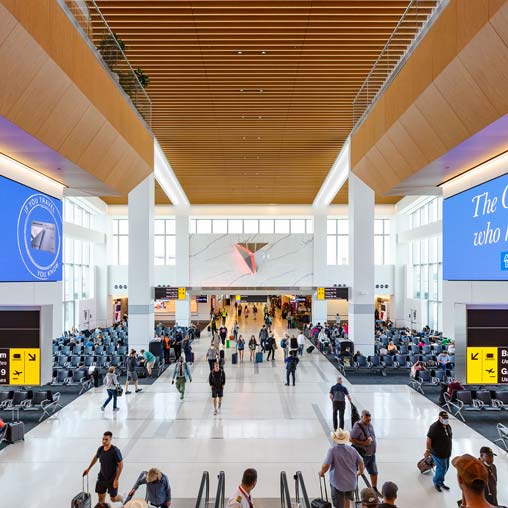
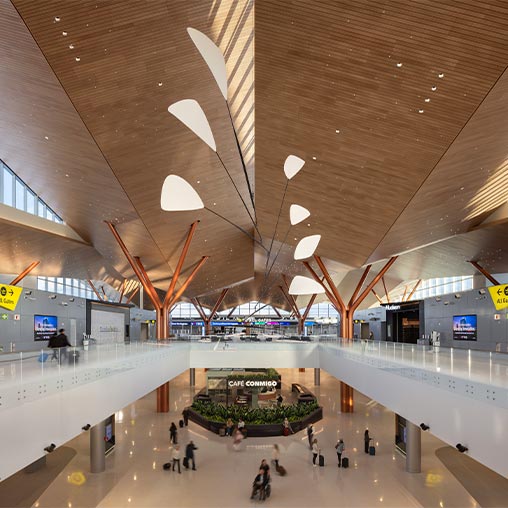
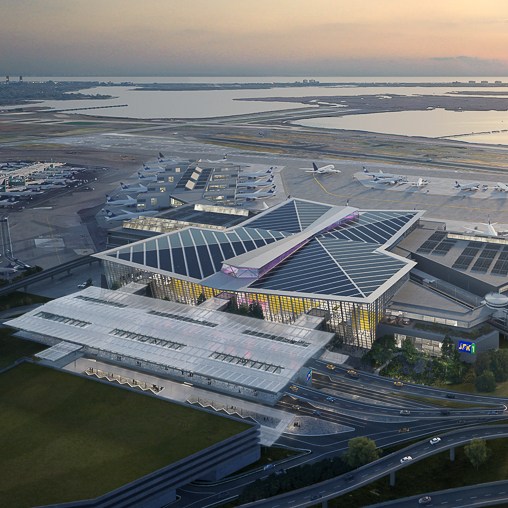
The 26-gate North Terminal replacement project considers the needs of travelers by streamlining security and providing amenities for business and leisure passengers. The terminal accommodates passenger flows with convenient and ample security checkpoints; common-use gates and ticket counters; intuitive wayfinding; and optimized baggage handling and screening systems. Flexibility to accommodate a wide range of aircraft at each gate gives the terminal the capability to adjust to changing operations without costly terminal renovation in the future. The terminal also accommodates four international arrival gates with a new Customs and Border Protection facility.
With its curved rooflines, JetBlue Airways' first terminal responds to its unique location near Eero Saarinen's historic TWA terminal. From a functional standpoint, Gensler designed the terminal to complement JetBlue's business model. The 640,000-gross-square-foot, 26-gate terminal provides exceptional customer service, with a tailored plan for circulation and seating in the concourse. The ticketing lobby and holdrooms are sized as transitory spaces, while concessions areas are larger as JetBlue customers tend to buy food and drink before boarding. Wider space between gates allows JetBlue's Airbus 320s to easily turn around, minimizing delays.
From the moment travelers arrive at Palm Springs International Airport, they experience the natural environment that makes Palm Springs a memorable resort town. The architecture captures the unique character of its site, providing views and fresh air from exterior to interior spaces. Gensler housed the majority of airport functions—holdrooms, ticketing and retail applications—in two octagonal pavilions centered on interior landscaped courtyards. These are linked together by a terraced outdoor patio and garden that are covered by membrane structures of Teflon®-coated fiberglass. New regional jet holdrooms, expanded security screening areas, and enhanced interior and exterior area are in development.
After six years of double-digit growth, San Jose International Airport partnered with Gensler to plan its future around exceptional passenger experience. Having conducted numerous studies to understand traveler dynamics, Gensler developed a flexible terminal concept that anticipates growth and streamlines traveler movement. The terminal accommodates 40 aircraft, 10,000 rental cars and short-term parking. The first phase of the concept plan, the North Concourse, provides space for passenger processing pending completion of the new central terminal.
Although Terminal 2 is relatively new, Singapore Changi Airport decided to renovate the terminal to maintain a competitive edge in the airport market. Gensler and local architect of record, RSP Architects, Inc., recreated the terminal to have a unique sense of place that respects local context. The entry canopy, for example, employs the metaphor of bamboo: thin steel members and glass offer natural light and views while protecting passengers from Singapore's significant rainfall. Within, spaces are light-filled and landscaped with native plants.
Gensler's updated design for the 35th Street Bridge and Station transforms the commuting experience on Chicago's South Side. On game days at nearby U.S. Cellular Field, new canopies, fencing, sidewalks, lighting and landscaping provide a dynamic urban plaza for fans and vendors to gather. Year-round, the station and bridge serve as a vital link between neighborhoods on either side of Chicago's busiest expressway.
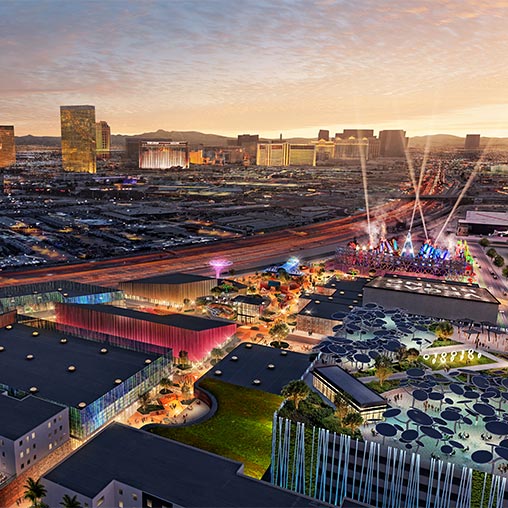
Gensler designed the Automated People Mover to connect the development's diverse programs and reinforce a sense of urbanity. Weaving between CityCenter's buildings, rather than along The Strip, and connecting to the Monte Carlo and Bellagio Hotels, the people mover is designed to facilitate the dynamic movement of residents and guests. At night, the path is illuminated, and the warm glow of elliptical glass stations welcomes passengers.
Home to some of the most acclaimed ad agencies, WPP aims to consolidate operational overhead while cultivating a workplace environment where “creatives” enjoy the freedom to create. The Denver office co-locates four allied firms — J. Walter Thompson, Group M, Ogilvy Public Relations Worldwide, and Young & Rubicam — within a space that celebrates each agency's distinct brand identity as it conveys the transparent “whole” of WPP’s organization. A subtle, yet distinguished use of brand elements reference the print, film and digital media communications for which WPP is renowned.
One Thousand Steps was PacSun's mall-based specialty shoe and high-end accessories store targeted to brand-conscious 20-25-year-old customers. Innovative wall storage units warehoused the majority of stock, allowing for greater on-floor category merchandising and display opportunities. Besides providing immediate product access for sale associates, these movable cabinets also contained illuminated niches to showcase multiple product categories. The center "orb," a molded fiberglass room, functioned as an integrated cashwrap and housed accessories such as bags, belts, wallets and watches.
To celebrate the graphic arts industry's best work in 2005, Gensler collaborated with the American Institute of Graphic Arts (AIGA) to conceive a display system as ingenious as the pieces on exhibit. Highlighted by a simple, iconic lightbulb, each piece is accompanied by a statement from the designer. As visitors view each piece, a light bulb wired to a motion sensor illuminates a translucent credit panel serving as a backdrop for the entry. As visitors trigger each sensor, text containing the designer's "big idea" is highlighted. The exhibit design is organized to showcase both the individual and collective excellence of the featured work.
The Carneros Inn is a 27-acre luxury resort in the Carneros region of Napa Valley, featuring 96 guest cottages, two restaurants, a spa and fitness center, swimming pool, organic gardens and 24 resort residences. Gensler worked with the Carneros Inn team to develop their brand positioning, hospitality identity, business system, print materials, Web site, and residential wayfinding and signage system. All parts of the program were created with the intent of visually communicating the rich heritage of this famous agricultural and wine-growing region.
CityCenter enables people to experience Las Vegas as true insiders in one of the world’s most remarkable settings. As Executive Architect, Gensler provided information critical to the development of a successful residential sales experience. In partnership with the MGM MIRAGE® Residential Sales team, Gensler has set a new benchmark for the world’s greatest luxury sales experiences. A multi-disciplinary Gensler team of brand strategists and interior, graphic and environmental designers collaborated to craft every facet of the customer experience, from designing the actual space and concepting videos to developing the content and design for all of the printed sales collateral.
Gensler's master plan and signage design program for the Houston Downtown Management Corporation strives to optimize pedestrian and vehicular traffic flow in downtown Houston. Four major entry points guide traffic to civic and office complexes at street, skywalk and tunnel levels.
Gensler partnered with Fidelity Investments in the prototype design and national rollout of its more than 100 Investor Centers. To provide an enhanced customer experience and embody Fidelity's brand in a three-dimensional space, Gensler developed a comprehensive design solution that integrates architecture, technology, graphics and fixturing in a branded retail environment. Gensler also developed extensive guidelines for printed collateral that are consistent with the look and feel of the branch environment.
For five years, Gensler has worked closely with Interface, the world’s largest manufacturer of modular carpet, to design the company’s annual report. For each edition, Gensler identified the current “big story” and then developed a strategy to communicate that story. In the 2003 report, Gensler uncovered and highlighted compelling stories within the organization. The 2005 report positions Interface’s products as industry-leading and fashion-forward. For 2007, the report served as the company’s introduction of its new rebranding and commitment to environmental responsibility. Gensler coordinated and directed photography, both on location and in staged environments, to showcase Interface’s products and market segments.
Designers carefully integrated the project's comprehensive graphics package within the overall design concept to create an attractive and functional system. The design scheme uses the building's new location, Paternoster Square, as a graphic mechanism to refer to the world's other global financial centers. Individual meeting rooms are designated by a series of colored squares, representing global map references that were then further integrated with the door signage, glass partitions and wall graphics. Signage wrapped around corners and embedded in the floor serves as a complementary element to the architecture.
Gensler was commissioned to brand, name and design all the communication materials for a new residential tower based in Dubai. The marketing initiative for the scheme was to offer a "contemporary living" style in Dubai. Working with the proposition "Living reinvented," Gensler designed an overall concept to convey the exclusive nature of the development. The name and logotype echoed the proposed architecture by using a custom typeface that is modern in its execution. The chosen color palette reflects the natural aspects of the scheme and can be used as a signature color throughout. Other promotional materials included stationery, brochures, advertising media and Web site design.
Gensler created a series of printed pieces that illustrate Tandus' history of environmental stewardship and innovation in unique and highly visual ways. Key messages were developed into two brochures, an ad campaign, eye-catching shopping bag and graphics in the company's Chicago showroom. The materials have successfully communicated the brand message clearly and modestly, while also establishing an emotional connection with the Tandus sales teams, giving them a feeling of empowerment and confidence in their product.
Virgin Mobile USA was founded on the idea of being irreverent as well as financially successful, an attitude that is demonstrated in its advertising and celebrated by customers and employees alike. Gensler developed a program of environmental graphics and fixturing focused on high traffic and visitor-facing areas. The resulting three-dimensional brand experience creates visual impact that is reflective of the company's casual, youth-oriented vibe.
The American Red Cross of Greater New York is the organization's largest U.S. chapter, serving more than nine million people. As the Red Cross celebrated its centennial, it renovated a former laundry building on the West Side with the goal of accommodating two types of work: daily work and disaster response. Gensler worked with the Red Cross to create flexible areas that function daily as teaming and amenity spaces and can be easily adapted to operate as fully functioning emergency response centers.
Dedicated to the understanding and protection of the world's rivers and estuaries, the Beacon Institute is designed to become a LEED® Platinum center for science and education. "Building One," the first phase of the multi-phase project, functions as a living laboratory for testing and implementing transformational sustainability strategies. The facility also supports exhibitions about the center, global research and remote learning. An existing 4,000-square-foot, 19th-century masonry structure has been re-used and expanded to house the institute's programs.
Chicago's lesbian, gay, bisexual, and transgender community now has a home in the Center on Halsted. Designed by Gensler as a visible symbol of LGBT pride, this environmentally sustainable civic place invigorates its North Side neighborhood. Seventy-five percent of the total façade is clear glass, exposing the vibrant inner workings of the Center and enlivening the streetscape. Certified LEED® Silver, the Center includes an entertainment venue, a grocery store, café, technology center, gymnasium, theater, public roof garden, offices for community service partners and other unique gathering spaces.
The new LEED® Gold Department of Homeland Security facility in Omaha balances security with the comfort and well-being of its users. Gensler embedded security equipment in the building's millwork, permitting a glass façade and more open appearance. Light shelves and skylights further maximize the daylight introduced by the façade. The one-story building wraps around a central, secure open-air courtyard, bringing light to the inner workspaces and providing a private outdoor break area for employees.
When PBS moved its headquarters from Alexandria to Crystal City, it opted for a highly visible and exciting workplace to embody its public commitment. A two-story mobile spanning the staircase recognizes member stations. This art installation has become a conversation piece for all visitors. The headquarters encourages collaboration, facilitates recruitment of creative staff, and provides a flexible framework for organizational change. An open-office plan introduces natural light, outside views, and dialogue among employees. The space is unified by the graphic use of the PBS brand in print, video and backlit images that are easily interchanged and updated.
United Way envisioned its new facility as a place that would facilitate its mission to "improve lives by mobilizing the caring power of communities." Gensler's design incorporates spaces to accommodate campaign volunteers, loaned executives, and community outreach, as well as training rooms and flexible community meeting rooms. The building's open plan and abundant glass provide volunteers and staff with wonderful views of the outdoors, each other, and campaign activities, reinforcing the ideas of team work, collaboration and community.
In response to a recently revised strategic plan, the Alberta College of Art and Design (ACAD) wanted to explore opportunities to develop an urban campus, more closely connected to downtown Calgary. ACAD asked Gensler to help them develop the strategy and tools needed to communicate their vision and to garner support from a variety of stakeholders. After conducting extensive research, the Gensler team developed a repositioning and communications strategy and created a printed brochure that presents ACAD's bold and innovative spirit, and creates excitement about the opportunities for creating a downtown Calgary arts district.
Gensler's 35-year history with the Bank began with architecture and interiors services, but has expanded to include real estate and facility planning, occupancy tracking and retail design. Since 2001 Gensler has served as the Bank's planning partner for the western United States, and international portfolio since early 2007. This role includes strategic planning, tactical planning and space management for 12 million square feet of space in seven states, the United Kingdom and EMEA. In 2006, Gensler launched a new design guidelines project that will guide the planning and design of the Bank's new and renovated administrative spaces throughout the United States, starting with three projects to be completed in 2007/2008.
Gensler worked closely with the California Department of Motor Vehicles (DMV) to develop a strategic facilities plan that facilitated their goal of improving customer satisfaction. The plan recommends service delivery channel changes, a facilities prototype model, and creates a management structure for the real estate portfolio. All of Gensler's recommendations were grounded in primary and secondary research, including focus groups, interviews, and a survey with public customers and research into technology, demographic, and real estate market trends.
Looking to help the client “cultivate a culture of creativity” across its extensive workplace portfolio, Gensler studied 10 global sites spanning five business segments. Gensler used the resulting report, a comprehensive detailing of how people work and use their space, to establish enterprise-wide planning and design guidelines. The report outlines a consistent, disciplined process for executing future workplace design projects, and sets a vision for work environments that support the client's commitment to environmental and fiscal responsibility.
Gensler is designing a strategic communications program for GlaxoSmithKline employees that delivers information about how new work environments support cultural and work process changes happening throughout the company. In addition to providing a platform for employee engagement, the program helps employees understand how to work effectively in new workspaces. As part of the campaign, Gensler is producing newsletters, posters, employee handbooks and facilitating workshops and orientation sessions.
HP called on Gensler to help develop a new, globally applicable workplace planning approach that supports their mobile culture. The "HP Guidebook" resulted from a series of intense collaborative activities delivered in short order, including a five-day charette with HP global workplace leaders and user input collected from worldwide locations delivered through Web-based photo essays. The guidelines advocate a new workplace paradigm — "the whole floor is my workplace" — and create targeted solutions for teaming, learning, heads-down and confidential work, while advancing the HP culture and the company's commitment to sustainability.
For five years Gensler has been collaborating with MetLife on the redevelopment and consolidation of much of their Northeast portfolio. The partnership is resulting in increasingly bold thinking on new workplace strategies intended to drive MetLife's success through a stronger linkage between user needs, corporate goals and their physical spaces. Gensler's work has included design guidelines, design of 1 million+ square feet, change management/communication and detailed move planning. Gensler has also completed a multi-generational workplace study, which led to a better understanding of how to design future work environments that better accommodate diverse work styles.
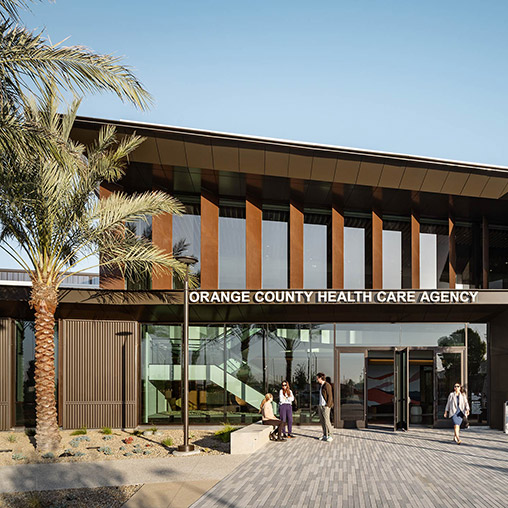
Gensler's Facilities Master Plan for The County of Orange makes recommendations on the most efficient use of County-owned and -leased land, facilities, and parking for the next five, 10 and 20 years. The comprehensive plan concludes that the County would achieve portfolio optimization through disposition, relocation and rehabilitation of their existing holdings, and outlines associated costs and revenue generation opportunities.
After successfully refreshing Columbia College's interior circulation corridors, Gensler teamed with the school to rethink the way its 16 buildings fit into this burgeoning South Loop neighborhood. The first stage of this renovation project incorporated several lobbies and first-floor spaces. Today, the college also boasts a new-student tour center, open-plan classroom environment, faculty resource area, health club, and school of journalism. The college's new and renovated facilities have been repositioned to engage visitors and the surrounding community.
With the opportunity to build a campus from the ground up, Lone Star College-CyFair leaders aimed to craft a new model for collaborative learning and community partnership. The new campus accommodates 10,000 students on a 207-acre site and facilitates an interdisciplinary learning approach on a sustainably designed campus. Lone Star College-CyFair is now a focal point for its community, realizing its vision to create a dynamic learning environment that fosters strong community partnerships.
As part of a nationwide education overhaul, Gensler partnered with the county of Kent to redesign 150 failing schools around the county's new pedagogical model, which focuses on the individual learner. Gensler's analysis of the current schools included providing children with disposable cameras to photograph what they didn't like about their schools. The design prototype recaptures and refocuses space to facilitate both personalized and collaborative learning processes. Each school will be a place of civic pride and gathering for children and adults alike.
The University of Houston Downtown simultaneously pays homage to the main campus across the Buffalo Bayou and embraces the urban experience. The L-shaped, Gensler-designed building, partially clad in the university's signature red brick, opens to the city, the Bayou and a nearby park with its bowed curtain wall. The major public entry at the corner of Main and Commerce is a gateway to downtown and a gesture to the main campus. The new facility houses the University's Urban Education and Criminal Justice departments.
Gensler collaborated with Jones Studio, Inc. to design this new classroom, research and office facility for departments including Political Science, Sociology and Social Science. The client sought to create a signature building as forward thinking as its namesake, past university president Lattie F. Coor, who is credited with elevating ASU's academic stature. The design integrates architecture with the latest digital technology, resulting in a user-friendly, state-of-the-art learning environment.
This K-8 private school for inner city children has brought sustainability to the heart of Newark. Gensler converted an existing industrial building into a learning environment that itself is a pedagogical tool. A building addition incorporates a new core, gymnasium and roof garden. The gymnasium will support a strong program in physical education, and the roof garden will be a living laboratory for teaching ecology and science. Other sustainable features include gray water reclamation, photovoltaic panels, daylighting and healthy, recycled materials.
Biola University teamed with Gensler to design a new library, as its previous library could no longer accommodate its collection or provide adequate study space for its students. Rather than rebuilding on site, Gensler selected a prominent site on the campus quadrangle occupied by a parking lot. This central location enabled designers to complete the academic quad while reinforcing a tree-lined walk connecting the library to Biola's lower campuses.
The renovation of the 20-year-old Woodruff Dining Hall transformed the previously dark dining hall into a cheerful, hip gathering place for students. Using bright colors, new finishes, and both artificial and natural lighting, Gensler created a welcoming space with optimized circulation and improved operational efficiency. The design revived the space and drew in new patrons, increasing revenues by 40% and eliciting an enthusiastic student response.
Gensler sited Notre Dame de Namur University's 200-bed residence hall in the heart of its campus to strengthen the presence of the residential student community and foster activity at the core of campus. The low rise, wood-clad building fits into its park-like surroundings, and yet is a distinctive place on campus. In designing the building, Gensler initiated a highly collaborative design process to meet the university's LEED® Gold sustainability goal.
As part of a 10-year master plan, this new academic and student center will help St. John's University recruit new students, improve retention of its student body, and expand academic facilities. Located in an underutilized part of campus, Gensler's design forms the edge of a new quadrangle, and the fieldstone, brick, and glass facade references existing campus buildings. The center will contain state-of-the-art classrooms, a multi-purpose room, meeting rooms, computer labs, and study areas, as well as student organization spaces and dining facilities.
The Fred Parks Law Library is a flexible, inviting space that considers the long hours law students spend in libraries. With its entry linked to the primary college entrance, a grand stair welcomes students and staff to a two-story lobby on the second floor of the library. This open space is illuminated by a corner curtain wall system that transmits natural light. The upper level of the library includes a conference center and a terrace with views of the Houston skyline for reading and studying.
Gensler's completion of the new Fred Parks Law Library at South Texas College of Law provided the opportunity to design a courtroom of the future at the school. This adaptive reuse project converted the old library facility into a 4,000-square-foot mock court facility. The new facility incorporates features consistent with new courts facilities of major cities, including state-of-the-art technology. This courtroom complex is the heart of the law school, named in honor of the Dean Treece, who established the college's national reputation.
The restored and expanded AFI Silver Theatre transports an audience of 400 to the glamour and excitement of the Golden Age of motion pictures. To restore the 1930s theater, Gensler unearthed photos and news clippings covering its original grand opening and salvaged scraps of fabric from the original wall coverings and carpets to recreate the theater's rich color palette. AFI Silver Theatre now has two additional theaters, exhibit spaces, a café and offices. The theater has renewed the surrounding community and reactivated Silver Spring's historic center.
Club Nokia at L.A. LIVE is a 2,000-seat music hall with a contemporary, dynamic design created to become “part of the show.” Located in downtown Los Angeles, the music hall occupies the three upper floors in a five-story, mixed-use building. In addition to a dance floor, accommodating 1,400 people, and fixed mezzanine seating for 600 people, the venue includes a V.I.P area that connects an exclusive lounge to a seating booth overlooking the performance stage.
The new House of Blues on the Atlantic City boardwalk hearkens back to the city's 1930s and '40s heyday, when it was known as the "world's favorite playground." Gensler renovated the 118,000-square-foot interior and boardwalk facade of the existing Showboat Casino in Streamline Moderne, a popular architectural style of the time. The project consists of a 2,000-person music hall, a "members only" room, a restaurant and nightclub, a poker room and a re-branded gaming area in the existing casino.
Gensler teamed with Motorola to develop Motorola M-Lab, an "edu-tainment" venue that exposes kids to science, technology and innovation at career-focused theme park Wannado City in Florida. Gensler created an experience where tweens aged 8-12 play as "M-ventors" in Motorola's Innovation Lab, solving a unique problem using an interactive video game and working in teams. The result is an experience providing fun, learning and a new and positive connection to the Motorola brand.
Abu Dhabi Commercial Bank's new headquarters enables the Bank to meet global challenges while remaining true to its cultural heritage. The needs, aspirations and cultural sensitivities of customers and of the 600-strong workforce (40% local and 60% ex-pat) are respected throughout the design. The environment includes integrated prayer facilities and an adaptable desk system that respects personal space. The headquarters' lounge atmosphere reflects regional and private banking traditions of hospitality through welcoming spaces.
Beazley's new office space in London embodies the firm's vibrant specialty-risk insurance and reinsurance brand and provides a flexible workplace to support future business growth. Broker areas and conference rooms are designed to accommodate a variety of group sizes. Large windows in the flexible reception area offer views of the City that serve as a dramatic backdrop for parties and events. Meeting rooms with additional support spaces are located on the main circulation paths of the building, encouraging interaction and communication between staff.
A departure from the traditional stock exchange paradigm, the London Stock Exchange is an energizing workspace that embraces new work patterns, technologies and strategic purposes. Gensler's design promotes openness and transparency, showcasing program elements such as the cutting edge media center, and creating workspaces for dialogue and impromptu meetings. In the eight-story atrium, "The Source," a kinetic sculpture by the collaborative artists Greyworld, consists of 729 suspended blue spheres that independently move up and down, reflecting the dynamics of the market.
MarketSite is the public face of NASDAQ, the U.S.'s largest electronic stock exchange. Serving as the epicenter for NASDAQ news, launches and events, MarketSite creates a physical experience for an otherwise virtual marketplace. Part giant billboard, part TV studio, the seven-story Times Square building mixes real-time market data displays with programmable LED lighting, creating buzz for hosting a listed company or launching an IPO.
Rabobank has grown from a 19th-Century Dutch farming cooperative to a global retail and investment bank and the largest agricultural investment bank in the U.S. The bank invests in wind farms and alternative energy as part of its socially and environmentally sustainable business practices. Gensler designed the company's San Francisco offices to reflect this environmental stewardship, carefully choosing sustainable materials such as floors rescued from a former walnut orchard. The office layout is open and transparent in keeping with the company's egalitarian culture.
Since its organization in 1979, TradeLink has traded securities, futures, options, and commodities. Gensler partnered with TradeLink to design a headquarters that evokes a cargo vessel, embodying the trading aspect of the company's business. Like the interior of a cargo vessel, the project's spatial configuration is modular and changes frequently; there is no drywall in the whole project. The container-like spaces can be reconfigured to create entryways, common areas, and corridors, giving TradeLink the flexibility to meet changing business needs.
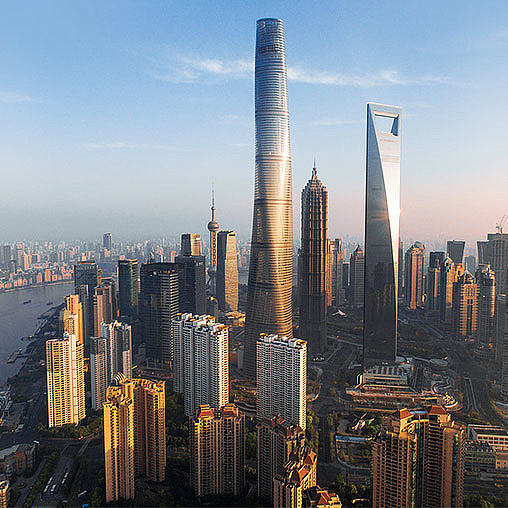
This super-tall, 632-meter tower will be sited in the heart of Shanghai’s Lujiazui Finance and Trade Zone, adjacent to the Jin Mao Tower and Shanghai World Financial Center. As the most prominent icon on the city’s skyline, Shanghai Tower’s transparent spiral form will showcase cutting-edge sustainable strategies and public spaces that set a new standard for green community. Within its 128-stories, Shanghai Tower contains Class-A office space, entertainment venues, retail, a conference center, a luxury hotel and cultural amenity spaces. The tower will be registered for a high level of building certification from the China Green Building Committee and the U.S. Green Building Council.
With its frame-like form, 2000 Avenue of the Stars pays homage to the iconic Century Plaza Towers while maintaining a strong identity on the Los Angeles skyline. Gensler redesigned the existing 30-year-old facility to provide a mix of uses and meet modern standards of energy efficiency. The complex contains 750,000 square feet of office space as well as retail, restaurant, cultural amenities and subterranean parking. Thanks to Gensler's sustainable approach, the project is one of the most energy efficient buildings in the city.
DCCI: Second Deira Building complements the existing Dubai Chamber of Commerce and Industry (DCCI) headquarters and will be an exemplary focal point for business in the city and the wider region. The new complex will be a striking new addition to the Dubai Creek skyline; the geometric arrangement of the tower creates a harmonious and dynamic composition of old and new with a strong architectural identity. The design of the new extension will reinforce the DCCI brand, and give it a clear advantage in an increasingly competitive environment.
The Dubai International Financial Centre (DIFC) headquarters is a gateway to a new financial district in Dubai. The Gate is a global center for leading financial businesses designed to embody the DIFC's vales of integrity, transparency and simplicity. The building is an iconic element of the master plan, which called for a promenade ending in a triumphal arch, modeled after Champs Elysees and Arc de Triomphe. Sitting on an axis with the Emirates Towers and the World Trade Centre, the building frames these two Dubai landmarks.
Located on the west side of downtown Wilmington, Gensler's design for Gateway Plaza responds elegantly and responsibly to its urban context. The thin, crystalline building will direct views toward downtown and create a welcoming gateway to the central business district from nearby I-95. In spite of a highly constrained site, the building form will offer large-span flexible floor plates with abundant access to daylight. Gateway Plaza will include office and retail spaces as well as a public parking garage.
The European headquarters of furniture designer and manufacturer Herman Miller combines office and showroom space to explore new ways of working in a sustainable facility. Called the VillageGreen, the 20,000-square-foot, pavilion-style building sensitively complements its leafy surroundings, while reinforcing the brand for staff and visiting clients. In addition to providing a light-filled workplace, the open-plan facility incorporates sustainable materials in a dynamic "customer experience journey" that promotes Herman Miller's products and ethos of environmental stewardship. For its achievements, the headquarters has obtained BREEAM Excellent and LEED® Gold ratings.
Rather than build a new headquarters on a suburban site, HNI Gunlocke found value in an existing building in downtown Muscatine. This choice not only revitalized the aging city, but the company itself. Once scattered throughout Muscatine, HNI is now consolidated in an open, environmentally responsible building. Gensler helped strengthen the HNI community by lowering workstation heights and removing portions of the floors to create sight lines throughout the building. The renovation opens the façade to main street and the river.
Located at the intersection of the major commercial and cultural corridors of Fifth and Liberty Avenues, 3 PNC Plaza will reinvigorate the heart of downtown Pittsburgh from the ground to the sky. This landmark tower respects its urban context through a highly transparent base that engages and energizes the streetscape. The overall design speaks to the mixed-use nature of the building's program, which includes a 180-key hotel, 30 residential units, and 360,000 square feet of office and retail at the street level. The building will be LEED® Certified.
Located in Pudong, near Century Park and the Shanghai Exhibition Center, the UC Tower represents prime commercial real estate in Shanghai. At 100 meters tall and with 59,000 square meters of office space, this 25-story Grade "A" building responds to the growing demand for high-end commercial lease space in Pudong's Zhuyuang District. The landmark tower has already won a regional award for office building design from the Committee for Contemporary Architecture, Planning and Design.
Beijing Hotel represents a convergence of Chinese architectural philosophy and international standards of hospitality. Located at the heart of the city, the hotel guides its guests from the lively, retail-focused streetscape to serene private spaces through a series of three courtyards. Each is a simple shape: a circle, a square and a rectangle. The courtyards' shapes, symmetry, and orientation, borrow from traditional Beijing architecture and planning principles.
Partnering with Hirsh Bedner, Gensler revitalized this 1955 flagship hotel, the iconic home of the Golden Globe Awards, to help a new owner attract luxury business travelers and local glitterati. Gensler's brand strategy enabled the hotel owner to define its client profiles and identify features suiting their stylish tastes. Inspired by the Golden Age of Hollywood, the renovation brought rich materials and finishes to 570 guest rooms and major public spaces. Additionally, Gensler's brand design team's revived and refreshed the original '50s identity through the property's exterior and interior signage.
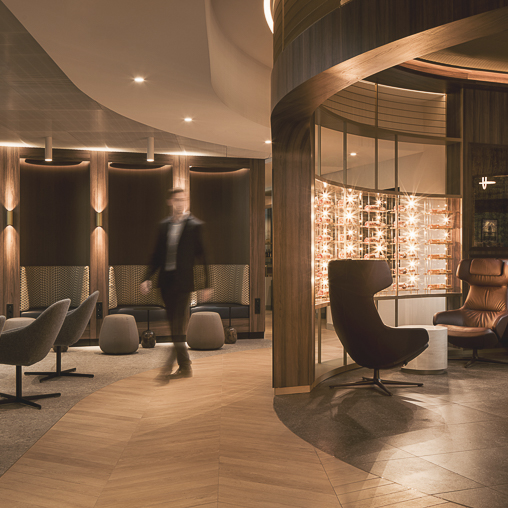
Those looking for a sophisticated social experience in Boston can find it at the Foundation Lounge in the Hotel Commonwealth. Simple, modern elements are formed from rich materials such as zebrawood, leather and polished marble, creating a subtle and elegant space. These textures, colors and patterns are highlighted by integrated light sources. The design balances opportunities to see and be seen with intimate, relaxing spaces.
The Hilton Financial District once discouraged visitors with its imposing, contextually detached concrete aesthetic. Gensler's design helped to reposition the hotel from a well-worn tourist destination to a 3 1/2-star business class hotel. The entrance, now with a luminous glass canopy, glows warmly at night, guiding visitors to the Asian-inspired lobby. A pedestrian bridge, connecting the hotel to the western Financial District and Chinatown, serves as the entrance roof. Gensler clad the underside of the bridge in aluminum to provide a continuous welcoming experience from the outside in.
Lush gardens juxtaposed with a traditional stone façade give The Ritz-Carlton Dubai a desert oasis feel while reflecting the Ritz's longstanding tradition of Western luxury. A full-height atrium, sunken garden, spa, restaurants, bars and retail shops connect the 341 guest rooms and 124 executive serviced apartments to the developer's signature luxury apartment building comprising 323 one-to-four-bed units. A waterfall in the entrance courtyard and several shaded terrace areas create a relaxing ambiance.
The new Nickelodeon Resorts by Marriott hotel pioneers the world's latest school of architecture known as "Kid Modern." With clean lines and vibrant colors, this playful yet highly sophisticated architectural language appeals to kids and their parents alike. The hotel will face the stunning San Diego Harbor and a new public boat channel and promenade. This 650-key, 1.2-million-square-foot hotel will be visible from the nearby airport and will punctuate the San Diego skyline with its 80-foot-high "slime tower," the focal point of an adjacent water park.
Gensler is designing the new 54-story, 874-room JW Marriott hotel, which, along with a Ritz-Carlton boutique hotel and residential condominiums, will be the visual anchor for the larger six-block entertainment district in the heart of downtown Los Angeles known as L.A. LIVE. Adjacent to the Staples Center, the project will create a new level of dynamism and urban living-playing options in Los Angeles, living up to its billing as "Times Square-West." A LEED®-NC Silver rating is being pursued for this sustainable tower.
Located on 48 acres of Potomac River waterfront south of Washington, D.C., Gaylord National® is the centerpiece of a groundbreaking regional mixed-use development that raises the bar for leisure and business travel options near the U.S. capital. A 2,000-key hotel, 825,000-square-foot convention center will include restaurants, bars, retail and a Canyon Ranch spa. A large outdoor amphitheater and marina will offer additional diversions, as well as a water taxi service to downtown D.C.
Gensler redesigned the client's headquarters, which are located in several Washington D.C. buildings, to accommodate its current needs and plan for future growth. Office plans are standardized to create maximum flexibility, while view corridors were opened up to brighten the space. Gensler's warm color palette enlivens the headquarters while complementing existing interior elements and the client's signature red branding.
Gensler designed an addition to an existing facility for Aether Systems, a leader in the wireless industry. In addition to the core architecture, which includes a data center, network operation center, and office space, the facility has a front-of-house signature space that will communicate the Aether brand. The 40,000-square-foot data center and network operation center are 24/7 facilities with strict operational requirements.
Technical highlights:
—N+1 redundancy for mechanical and electrical systems
—Data center equipment areas on a 24" raised floor
—Three 2000Kw generators and fuel storage on site provide a back-up power source
Fannie Mae's commitment to sustainable design is expressed in its new Maryland data center, which is the first mission critical facility to achieve LEED® certification. Located on a 31-acre greenfield site, the building supports the previous contingency data center operations and emerging technologies. The 250,000-square-foot facility includes rack space, infrastructure support, a trading floor, call center, command center with direct visual access to the open data floor, disaster recovery area, offices, and amenity spaces for employees. Gensler designed the new building to fit into the surrounding residential community.
Technical highlights:
—Biometric and state-of-the-art security systems
—Tier IV fully redundant facility
In a triumphant return to lower Manhattan, NYBOT resumed trading two years after its space was destroyed on September 11th. Gensler designed the state-of-the-art, 30-000-square-foot facility to support open outcry commodities trading. The space accommodates 410 trading booths, featuring integrated flat-screen monitors, multiple handset telephones and handheld terminals. Customized trading booth furniture systems fit traders' needs.
Technical highlights:
—Booths size increased 30 percent
—Raised floor conceals ducts supplying fresh air, and cables and wiring for 10,000 electrical outlets
—900+ flat-screen monitors surround 13 trading pits
This client teamed with Gensler to design a facility that is more than just a technology box. Nestled into landscaped earthen berms, the 56,000-square-foot data center creates a park environment for an often fortress-like building type. The thoughtful design will obscure the size and location of the building, enhancing the work environment of the surrounding campus. Visible architecture will be limited to the entrance lobby and office space that enjoy natural daylight and other sustainable design features. A LEED®-NC rating is being pursued for this project.
Technical highlights:
—Tier III data center with N+1 redundancy
—Modular sizing of mechanical and electrical systems support incremental growth
A joint venture between Tatweer, a member of Dubai Holding, the New York Mercantile Exchange and the Oman Investment Fund, the DME commenced trading in June 2007 and is the Middle East's first energy futures exchange listing the Oman Crude Oil Futures Contract. Located in the Dubai International Financial Centre (DIFC), the DME's double-height trading floor represents an innovative hybrid design incorporating open communication between traders and electronic trading. The central feature is a large video media wall that forms the background for live TV broadcasts.
To create two mirrored data centers within 20 miles of one another in Delaware, this financial services client challenged Gensler to design a set of twin 240,000-square-foot, Tier IV, 2N facilities. One primary, the second data center offered a redundant backup for critical electronic data. The first location is a greenfield site adjacent to a historic farm. In contrast, the second site, a brownfield, is located in a light-industrial area just beyond the city limits. The design challenge for the team was to develop a secure, fault-tolerant building with redundant systems that accommodate the significant differences between sites.
21st Century Tower is a mixed-use, 50-story building in the Pudong district of Shanghai, a dynamic international business center. The first 21 floors will be Class-A office space, followed by an 11-floor Four Seasons Hotel, and 12 floors of condominiums managed by the Four Seasons. The office lobby and residential entrance will be at base of the tower, with the hotel's reception and amenities areas located in the adjacent podium. The project is located on Century Avenue, the main East-West Pudong thoroughfare.
Steps away from the Huang Pu River and directly across from the Green Belt promenade of the former shipyards, this mixed-use project connects nature to the city. A prestigious office tower and premium hotel and residences tower stand as a gateway to the retail arcade, welcoming visitors into the project and the park. The project maintains view corridors to the river and green space, and features outdoor walkways that weave throughout the site. Zhong'Ou luxuriously integrates the elements of live, work and play.
Block 37
Located in the heart of Chicago's Loop, Block 37 is planned to feature signature retail, entertainment and dining offerings; a future state-of-the-art transit station providing service to and from Chicago's O'Hare and Midway airports; and eventual accommodations for a residential and/or hotel tower(s). Gensler's design for the downtown destination location is characterized by transparent and reflective materials that engage and enhance the streetscape of the surrounding business, theater and civic districts.
This once struggling suburban mall has been transformed into a lifestyle center with a new entry, façade and stores. Property updates have vastly improved the mall’s overall presence and appeal, attracting a higher caliber of tenants and creating a more compelling retail mix. A central rotunda featuring a new stone fountain acts as a beacon to draw shoppers and diners, while a new generously landscaped circular drive provides improved access. Modern materials and textures, improved lighting and signage, and revitalized plantings all combine to dramatic effect.
BM Plaza is located near the main railway station in the central area of the Zhabei District of Shanghai. This 183,900-square-meter, mixed-use development will include office space, a hotel, and retail. The project's design includes three towers shaped by the nature of the program: a landmark office tower, a mid-height hotel tower, and a lower tower that serves as the office tower. Retail and conference center facilities are located within the two-story base that links the towers together.
Located on the historic Chang'An Road in Beijing's Old City, this mixed-use project includes 188,485 square meters of office space, apartments and retail. Chang'An Center's focal point is a full-height archway sheltered beneath a sky-lit roof, creating an inviting public gateway into its office buildings and central courtyard. The use of a traditional courtyard plan is in keeping with Beijing's historic urban fabric and is an important amenity for the Center's international business clientele and the surrounding community.
Currently a neglected block of Market Street, CityPlace will transform this economically depressed and underutilized area into a lively, safe and shopper-friendly neighborhood. This urban project will showcase five levels of retail, totaling 230,000 square feet. The façade combines layers of clear and translucent glass with mirror patterning that will capture fragmented images of the street life while giving a peek into the development's interior activities. The exposed inner workings of the building are aimed at helping restore and revitalize the streetscape.
Gensler is designing a new residential and office tower in the prestigious Dubai International Financial Centre (DIFC). The sculptural 50-story glass and metal panel tower will include 10 floors of office space, and 320 luxury apartments on the upper 40 floors, all of which will enjoy dramatic views of the Persian Gulf. An adjacent parking structure will accommodate 1,500 cars. A complete fitness center will be located on top of the garage with an Olympic swimming pool, handball courts and a full basketball court.
Wan Chuan International Center is a mixed-use complex consisting of 91,000 square meters of retail, service and office components. The retail podium serves as the backbone to the project by forming a strong curved axis oriented toward the river. The curved roof terrace above the retail area provides an unparalleled setting and modern luxurious lifestyle with 24-hour activity. A transparency of volumes blurs the distinction between interior and exterior spaces. Pedestrians and shoppers can enjoy the amenities in a natural setting while being sheltered from the harsh exterior elements.
Gensler is Executive Architect for CityCenter, the largest private development in the United States. With 18 million square feet of building footprint on 76 acres of land, CityCenter will be a sophisticated, cosmopolitan hub on The Strip, distinguished by world-class design and sustainable urbanity. The world's largest LEED® development, the complex contains six LEED Gold-certified (one CS and five NC ratings) properties. Gensler is representing the owner's interests in the leadership and coordination of all aspects of design, programming, construction documentation, construction administration, common area design, and above- and below-grade infrastructure.
Gensler is developing the master plan for the new 260-acre Oakland A's Ballpark Village. Comprising a state-of-the-art, 32,000-seat stadium and 650,000-square-foot retail, hotel and entertainment center, Ballpark Village seeks to establish new precedents for modern ballpark design and “urban infill” projects developed in suburban settings. Adjacent to the village are 120 acres of mid- to high-density residential development, accommodating 3,150 units in a lush, “Central Park-like” environment. A network of interconnected neighborhood parks, multi-modal trails and alternative transportation options serve to unify the fabric of the village infrastructure.
Influenced by its close proximity to Burj Dubai, the world's tallest tower, Tower 38 will form part of a streetscape neighboring both the Dubai International Financial Centre (DIFC) and Business Bay master plans. Gensler designed this 60-floor residential development in a Modern Islamic aesthetic. The tower is composed of a series of interlocking pieces that step back as the building rises, appearing to ascend toward the Burj Dubai Tower.
As the spiritual destination of Muslims worldwide, Makkah is transforming major areas of the city to accommodate unprecedented numbers of pilgrims. Gensler is planning the redevelopment of Darb Al-Khalil, the historic southern approach to Makkah, creating residences, hotels and amenities for pilgrims. The plan is guided by the sanctity of Al-Haram, the mosque surrounding the Kaabah. Three separate south-north "spines" coexist to ease pedestrian movement from Darb Al-Khalil to Al-Haram and visually connect the development to Makkah's sacred center.
The world’s newest international financial center, DIFC aims to create an environment for progress and economic development in the United Arab Emirates and across the region. A unique mixed-use complex comprising office space, serviced apartments, hotels, shops and restaurants, DIFC promises to enrich the civic experience, attracting visitors with a museum, art gallery and performing arts center. A temperature-controlled environment will enable people to walk from one part of the city complex to another in constant comfort. Gensler is responsible for the entire two-million-square-meter master plan and a number of its flagship buildings.
By creating five new districts in central Shanghai, Gensler's Nan Jing Road West Master Plan will preserve older neighborhoods while making way for modernization. The 400,000-square-meter development program set out in the plan will modernize the prestigious western third of Nan Jing Road, restore it as Shanghai's main shopping street and preserve elements of the "Shanghai style" that made the city famous.
For the 130-hectare Shamiyah district, Gensler prepared a master plan that would improve the urban qualities of Makkah, renowned destination of Muslim pilgrims worldwide. The Shamiyah master plan proposes a major new gateway corridor that will connect the city's northern neighborhoods directly to the Grand Mosque (Haram). The plan proposes to accommodate hundreds of thousands of people, redevelop a deteriorated sector of the city, and effectively guide approaching pilgrims toward the Haram during their visits to Makkah.
Located on the south edge of the Huangpu River on the north end of Pudong's Lujiazui district, the planned 60-hectare Shanghai Shipyard development will have clear views of both the Jin Mao Tower and the Pearl Tower. With 450,000 square meters currently in the plan for construction of residential, commercial, and entertainment space, Shanghai Shipyard links the modern Lujiazui district with an historic area of low-rise housing and industrial manufacturing. The river serves as a distinctive landmark of economic, cultural, and geographic significance.
Realizing its need to grow, while preserving its historic core, St. Petersburg is reclaiming 450 hectares of prime waterfront at the western end of Vasilievsky Island. Gensler has created a plan that offers not only a new financial center for the city, but makes the Island a comfortable place to work and live year-round. To mitigate subzero temperatures, Gensler's plan includes a below-grade circulation level that facilitates movement between buildings and provides Metro access. In addition to parks, many of the buildings feature roof gardens to take advantage of the summer months. The plan calls for compact, walkable, transit-served neighborhoods.
The Wuxi Bin Lake master plan envisions a landmark development on Wuxi's lakefront, reflecting the city's continued growth and evolution. The scheme capitalizes on the significant investment in road infrastructure to provide a balanced mix of both public and private uses on this strategically located site. The master plan concept divides the site into three main uses: a civic district on the lake that takes maximum advantage of the views across the city; residential districts; and a mixed-use center.
Baker Botts moved its London office into a historic building protected by English Heritage, but with a Gensler design that incorporates the latest technology and lifestyle features expected in large law offices today. Thirty-seven private offices, each designed to accommodate two lawyers, are designed for maximum flexibility and efficient use. An extensive contemporary art collection, carefully chosen from portfolios of British and American artists, enhances the elegance of the space and reflects the firm's international profile.
Brown Rudnick, a Boston-based law firm with an international practice, desired a bold workplace to attract new talent and solidify its brand in New York. Gensler created a new workplace on the entire 47th floor of 7 Times Square Tower, including a conference center, attorney offices, library, lunchroom and support spaces. Gensler incorporated clear glass for office fronts and conference rooms to foster teamwork and communicate a sense of openness and transparency. Brown Rudnick's signature red was used as a clear brand element throughout.
Clifford Chance, the world's largest law firm, had a vision to provide state-of-the-art facilities and work-life balance in its new 1-million-square-foot headquarters at Canary Wharf. Gensler designed efficient and flexible offices that enjoy natural light and stunning views from the glass office tower. For amenities the tower offers staff a health club; a restaurant for up to 450 people; an auditorium; a well being center; and client meeting facilities. Additionally, there is a hospitality lounge incorporating a bar, library, showers and private meeting rooms.
Based on extensive planning studies, Dickstein Shapiro relocated to an existing 500,000-square-foot space that Gensler designed to accommodate future growth and work pattern changes. Secretarial and paralegal "flex-zones" allow legal teams to expand or contract based on their needs, as do the standardized attorney offices and furnishings. A dramatic, open stair that connects floors three through 12 fosters a collegial atmosphere and enhances circulation. A multipurpose room with electrically controlled Skyfold partitions and a full-service cafeteria facilitate social interaction among attorneys, staff and clients.
To help Jones Day establish an environment fostering interaction and accessibility between employees, Gensler conducted focus groups to understand the functional, aesthetic and cultural requirements of the firm's six-floor space. The resulting design enhances client service, employee engagement and attorney collegiality. To promote interaction, Gensler placed the lunchroom along the perimeter of the office and introduced a conference center joined by an interconnecting stair. The center's dramatic views serve to welcome clients, and a club-like lounge provides for entertaining, informal meetings, and educational and civic firm-sponsored events.
McDermott Will & Emery relocated its 150 lawyers to a flexible workspace that will accommodate expansion as the practice grows and evolves. Conference rooms range from six-seat caucus rooms to the large multifunction room with seating configurations from 24 to 75. All conference rooms, including a dedicated videoconference room, incorporate state-of-the-art audio-visual systems. Amenities and support include: kitchen, buffet food service areas, administrative support and a lounge/work area for visiting attorneys. The aesthetic is simple, modern and understated.
Nixon Peabody is the first U.S. law office to achieve LEED® certification. With one of the oldest environmental law practices in the country, the firm's sustainably designed office is closely aligned with its core values. The space is, as a managing partner said, "built on a foundation of light": its open, light-filled plan fosters collaboration and transparency. Nixon Peabody chose to implement a universal office size to create a more egalitarian space and reduce churn costs.
Because mentoring is critical to Seyfarth Shaw's culture of teamwork, Gensler designed each floor with a café and lounge space, promoting chance meetings and opportunities to convene. Gensler implemented universal office design to economize space and minimize cost while offering maximum flexibility. Modular workrooms simplify workflow and enhance operational efficiency for litigation and trial preparation. The International Interior Design Association (IIDA) named the relocated office among its prestigious 34th Annual Interior Design Competition winners.
Restaurateur Richard Sandoval looked to Gensler to build this moderately priced Mexican chain from the ground up, developing the name, logo and restaurant design. The chain will be rolled out across the United States, yet each restaurant will be branded and styled as a different destination. The name La Sandia, which means "watermelon" in Spanish, was chosen because of its prominence in Mexican artwork and the popular card game Loteria, which became a strong graphical tool in the restaurant's overall branding.
Wagamama, a U.K.-based international noodle restaurant, has arrived in the United States at Boston's historic Faneuil Hall. The restaurant is known for the quality of its food, speed, convenience and affordability. In keeping with Wagamama's international concept, the 4,600-square-foot restaurant is simple yet stylish and features an open kitchen and communal-style seating. This open plan showcases the fresh preparation of the food and accommodates quick seating and service.
One Thousand Steps was a mall-based shoe and accessories store designed by Gensler for PacSun. Named after a beach known only to locals located in Laguna, California, the store targeted men and women 20 to 25. One Thousand Steps offered an edited selection of denim friendly, fashion-forward merchandise within a modern and sophisticated store design featuring an innovative on-the-sales-floor storage system. An entirely new approach to mall retail, the concept, dubbed "Melrose to Mainstream" brought the boutique shopping experience to mall shoppers across the United States.
For its Northern California Resource Center, Allsteel sought to create a contextually relevant space where product is the focal point and sustainability is inherent to the design. By building fewer walls, using structure as finish, maximizing daylight, and thoughtfully choosing materials, Gensler expressed Allsteel's commitment to environmental preservation. The showroom's energy efficient air delivery system, with sophisticated climate controls, optimizes the showroom atmosphere. The furniture products showcase new innovations in sustainable materials, incorporate recycled content, and meet stringent indoor air quality requirements.
Designed by Gensler in collaboration with Barneys and a cadre of fine artists, the Dallas flagship elevates the mall retail experience to the level of art gallery exhibition. In contrast to the luxe retailer's customary upscale urban settings, the new Barneys establishes an arresting presence at high-end NorthPark Center mall. Employing mixed-media murals and hanging sculptures in a blended expression of art and architecture, the iconic store communicates culture-conscious sophistication for discriminating shoppers. Inside, major interior elements conjoin to set a sumptuous stage for merchandise, while celebrating the luxury and refined taste synonymous with Barneys' brand.
Forever 21's 30,000-square-foot San Francisco store mixes the hip and energetic vibe of its young customer base with a historic Beaux Arts structure to achieve a unique atmosphere to showcase its trend-driven fashions. Gensler preserved the building's historic elements and added new retail features to maximize capacity and generate interest through three floors of space. Custom chandeliers hang from the original coffered ceiling, greeting shoppers as they enter a two-story rotunda. New escalators enliven the space with large-scale graphics, and vibrant lighting illuminates adjacent walls.
In the spirit of HBO's tagline "It's not TV, it's HBO," the new HBO store is a bold and unique brand experience, imaginatively designed utilizing a mere sliver of well-placed real estate in HBO's existing lobby. HBO and Gensler set out to raise the bar for a retail experience in the same way HBO sets the standard for unconventional programming, where the emphasis is on the visit and the brand as much as the purchase.
Designed for a technology-savvy clientele that makes a lifestyle out of connectivity and community, the Helio store promotes discovery, sharing and social networking through its interactive setting. "Pods" where customers can browse, learn and purchase surround a central gathering lounge for entertainment and meeting. Customers come for the products and stay for the experience.
PacSun, a surf and skate apparel retailer, sought to reinvent its stores with a flexible kit-of-parts that could be implemented in ground-up concepts and renovations. A signature element of Gensler's design is the iconic Koa Wood half-pipe entry that evokes the board sport focus of the merchandise. Mannequin-lined runways guide customers to the t-shirt rotunda in the middle of the store, and an internally illuminated footwear wall draws them to the rear. PacSun has reported a direct, measurable increase in sales.
Pat Lobb Toyota is the first LEED® Silver dealership in the United States and a model for other eco-friendly automotive-related facilities. The dealership features a rain harvesting system; energy efficient building systems; regionally sourced materials; a green "living" wall; eco-friendly interior finishes; an innovative carwash water recycling system; and used car oil recycling/heating.
XanGo is the first company to market a premium mangosteen beverage to consumers worldwide. In support of XanGo's venture into the Japanese market, Gensler designed the company's first flagship studio. In addition to designing one floor of office space, Gensler has helped create a new retail and education/entertainment-driven showroom that embodies the creativity and energy with which XanGo's product is branded. The curved forms of the space embody both the mangosteen fruit and the bottle in which its juice is packaged.
Capturing several major U.S. accounts led London-based advertising firm BBH to expand its New York office. BBH relocated and looked to Gensler to design new offices with a distinctive urban look and feel. The design team exposed the raw elements of the 1930s building, using existing brick to complement sophisticated furnishings and light fixtures. Teams work side-by-side at collaborative stations without partitions between staff members. This flexible approach allows team members to pull up a chair to join a work in progress.
Gensler's strategic master plan encouraged Hearst to consolidate its New York offices into a single headquarters tower on 57th Street. The study determined the workplace criteria and ideal planning guidelines for the new tower. Gensler served as Associate Architect to Foster + Partners on the tower's interiors and, in addition to programming and construction documentation, collaborated with Foster through schematic design and design development. Gensler was the lead consultant for the building's interior LEED® certification, and the designer and technical consultant for a broadcast studio, employee fitness center, data center, media lab and a digital photo studio.
With a new corporate presence in Asia, Mary Kay sought to establish a strong brand identity in its Chinese headquarters. Gensler offered Mary Kay a layout system that allows the cosmetic company to expand its office step-by-step, accommodating growth in an emerging market. Inspired by the shape of a rose petal, the lobby's ceiling and wall are one continuous curve that envelops visitors upon entry. Open workspaces, still uncommon in China, maximize natural light and collaboration.
Transparent news reporting is essential to the success of media companies such as The New York Times Company. The Times' new building is a reflection of the newspaper's evolution within this context. Located in the tower's all-glass podium, the newsrooms are closer to the public and engage the streetscape with the energy of breaking news. Gensler designed the tower's energy-efficient interior spaces to be light and open, fostering collaboration among staff. Automatic lighting and shading maximize daylight; and the sustainable materials selected for furniture and finishes further promote a healthy office environment.
Nihon L'Oréal's relocation, which coincided with its 10th anniversary in Japan, provided an opportunity to address the complex and rapidly changing structure of the company. Looking to strengthen its brand, instill pride in its employees, and use its workplace as a recruiting tool, L'Oréal asked Gensler to capture the firm's many brands in the design. Gensler's narrative concept allows L'Oréal employees to point to their surroundings to tell the story of their company. "Café L'Oréal," a meeting place, encourages inter-brand communication and enhances the working environment.
Ricoh Sales sought to improve its workplace to support communication between its workers and their clients, embodying the company's message to "create, share, and think as one." This sales stronghold for approximately 600 workers in Jyosai area is the first project for Ricoh's Workplace Division.
Located in the heart of the Dallas Arts District, Studios 1019 are two photography studios that Gensler refreshed to optimize functionality and allow the client to expand her services to include corporate parties and weddings. With high ceilings, skylights, and full-height windows, the space is characterized by natural light and openness. Gensler also updated the studio's work environment by designing an open kitchen and dining area, conference room, wardrobe room, makeup area, full bath, utility room and secure storage.
As the third largest fitness club operator in the United States, Town Sports International (TSI) recently relocated its corporate headquarters to Eighth Avenue in New York City. Gensler created a flexible, transparent and actively branded workplace setting for TSI's staff and executives. Replacing the original height perimeter windows and maintaining a 14-foot ceiling height reduced heat loads on the building's mechanical system. Sustainable materials and flexible elements such as movable glass walls were used throughout the project.
This cutting-edge advertising agency wanted a workplace that would signal it had grown out of its start-up phase and had arrived as an industry player. Gensler's design inspires creativity and captures the playful wit and memorable subtlety of Venables' award-winning advertising. The primarily open office includes transitional spaces designed to refresh the senses and cleanse the mental palate; spaces for gathering and trading ideas; and quiet corners for reflection. An interior stair, known as the "Tower of Power," displays the company's numerous advertising awards.
WPP Group, one of the world's leading communications companies, came to Gensler to design the consolidation of its Seattle-based agencies. The project brings six WPP companies under one roof, optimizing its real estate efficiency and strengthening its brand identity. Each floor plan is organized with a central spine containing private offices and support spaces. The open space along the perimeter accommodates future market-driven growth or reduction of the individual companies.
Slated for completion in the spring of 2009, this new data center will provide a 60,000-square-foot facility in structural precast concrete on a spread footing foundation with precast skin. The raised-floor area will be supported by a system-plus-system (2N) mechanical and electrical infrastructure with an N+1 generator plant. Support areas include HVAC, generator, switchgear and chiller rooms, UPS and UPS battery rooms, cooling towers, product uncrating/storage, two berth loading docks and a 4,000-square-foot administrative area.
When Austin-Bergstrom Air Force Base became a public international airport, Gensler designers made full use of the 4,600 acres, including a 25-gate terminal with sustainable features such as natural light and night storage of cool air. The Marketplace, the heart of the terminal, brings together cafes, restaurants, stores and live entertainment to create a lively venue for Austin-area musicians.
oneworld® alliance airlines Qantas, Cathay Pacific and British Airways teamed together in creating oneworld Lounge, an oasis for business and first-class passengers within Los Angeles International Airport's Tom Bradley International Terminal. By employing materials including limestone, wood slatted screens and sea grass-embedded resin panels, designers created an atmosphere reminiscent of an outdoor space within the airport's deepest interior. The opening of the lounge dovetails with Qantas' introduction of a fleet of Airbus 380s and will offer amenities including a VIP room, computer banks, showers and a full-service bar.
4-1-Where is a full service facilities management solution that Gensler operates, maintains and updates for our clients. Unlike many systems, 4-1-Where is cost-effective, simple and meets the needs of an ever-changing environment. For more information about 4-1-Where, check out www.41where.com. If you'd like to contact someone directly about this service, please call Christi Van Maanen at 608.796.4371 or email christi_vanmaanen@gensler.com.
ADP handles employee-related functions, brokerage and financial services, vehicle dealer services and claims processing. These functions require extensive processing, recordkeeping and up-to-date technologies. To support ADP, Gensler provided architectural design services for two mirrored Tier IV data center facilities. The 2N uninterrupted power source (UPS) and chilled-water cooling design with N+1 generator plant data centers encompass 185,000 gross square feet. Both data centers provide 40,000 square feet of raised-floor area and 40 watts per square foot, expandable to 60,000 square feet and 60 watts per square foot.
In the age of hoteling and telecommuting, why come to work? The client's answer is simple: to connect with colleagues in person, so they can sustain an environment of transformation, innovation and collaboration—core elements of their culture. The design of the space focuses on reinforcing the strong geometry of the building, with the large building core preserved as a unifying element. Curved collaboration zones break the rigidity of the work environment and create unique spaces for idea exchange and innovation.
Joni and Friends is an international nonprofit organization ministering to the disabled. Inspired by founder Joni Eareckson Tada’s own powerful vision and biography, the center’s new headquarters is a celebration of accessibility and Christian faith. The building’s sculptural ramp—an accessibility solution and symbol for life’s journey—and the chapel it surrounds serve as informal meeting spaces for a workplace that supports collaboration and spiritual reflection. Visual obstructions for employees and visitors in wheelchairs are minimized through low partition work stations and transparent guardrails. Spare, elegant colors and materials evoking the surrounding chaparral combine with floor-to-ceiling glazing to create a serene, soothing atmosphere.
When a tornado hit in 2006, One Indiana Square incurred significant damage to its exterior. The project challenges Gensler to re-skin the tower, converting its exterior into a modern, glass façade, while maintaining the building's current 70 percent occupancy and minimizing tenant disruption. These goals will be accomplished through the use of Building Information Modeling (BIM) combined with an innovative solution that involves welding new out-riggers of steel to the columns, creating a slab that allows re-skinning to occur from the exterior.
This Gensler-designed call center enables the client to be an employer of choice, while providing superior service to more than 700 independent insurers. Set against expansive Rocky Mountains views, the 324,000-square-foot campus nearly doubles the company's former capacity. The call center centralizes conference rooms, break areas and support stations to maximize the open-floor area, effectively minimizing the distance and "time out of seats" for employee amenity access.
Technical highlights:
—Engineering systems provide reliable building functions on a 24-hour basis
—Raised-access flooring with under-floor air distribution allows power and HVAC system reconfiguration
Recreational Equipment, Inc.'s new prototype store serves as a working laboratory for analyzing the performance of green building features and retail concepts. A renovation and expansion of the company's existing Boulder location, the 42,000-square-foot store is certified LEED® Gold. Exterior architecture and interior design elements draw inspiration from nature, while furthering REI's commitment to providing a gateway to the outdoors and reducing its environmental footprint. The store, which incorporates an elevated community center as its focal point, is a pilot project in the LEED for Retail program.
The flagship development for real estate investment company Tameer Holdings is the focal point of the new Shams master plan in Abu Dhabi. Expected to complete in 2011, the five-building complex features a 73-story, diamond-shaped commercial tower, four residential towers, a seven-star luxury hotel, retail, dining, parking and a private marina. The centerpiece of this nine-million-square-foot development is the commercial tower, which is characterized by a signature split near its base that will straddle the canal and pedestrian area that connect the Central Park and the sea. Complemented by the four residential towers' varying heights, the commercial tower will reach 980 feet high and cut a striking figure on the skyline.
After extensive analysis of Wilson's existing workplace, Gensler designed a new work environment that promotes spontaneous collaboration, communication and efficiency. With products creatively showcased throughout the office, a solid sense of branding is evident in the office. Graphics and product signage are used consistently in common areas and workspaces, reinforcing the company's unique identity.
Consisting of two 160,000-square-foot, five-story office buildings, the pharmaceutical client's "sister" properties sit adjacent one other across a curvilinear, tree-lined courtyard. The design concept reflects a new era of organizational "knowledge and innovation," representing these values by balancing innovation with function. Workplace and amenity floors promote efficient planning, flexibility and occupant comfort with a rectilinear, floor-plate centered around an expansive and daylight-filled, five-story atrium. The exterior is inspired by understatement and simplicity with great attention paid to the quality of details and materials. The buildings are expected to achieve LEED® certification.
A new building at MacArthur Airport, this eight-gate, 90,000-square-foot concourse physically promotes Southwest Airlines’ brand. Working with a modest budget, Gensler incorporated design elements that reflect Long Island’s seaside beaches, introduce color and create a sense of refined stability. Variable-height ceilings, simplified skylighting and intuitive wayfinding encourage movement to gates for departing passengers and baggage claim for arriving ones. Gensler designed the concourse’s signage and graphics system, flight information display system, new gate podium and holdroom spaces and standards for future concessionaires.
Moving downtown from uptown provided Absolut the opportunity to refresh its headquarters’ environment to reflect its bolder and more diverse brand. Through rich material, vibrant color and exquisite detailing, the design captures the company’s core values — creative, bold, stylish, engaging — while also evoking ABSOLUT® VODKA’s Swedish heritage. Public spaces are planned to accommodate “around-the-clock” activity. During “work” hours the two-story stair/bar/gallery space supports internal education, helping employees gain a greater understanding and closer relationship to the brands. After hours, the space functions as a quasi-retail setting becoming an in-house bartender training space, a venue for press events and an entertainment environment for evening product launches.
On a site with views to the White House and Washington Monument, owner PNC, developer Vornado and Gensler faced a challenge: designing a building memorable in its own right while respecting the surrounding monumental context. Through a charrette process that called on talent drawn from around the world, the resulting design establishes new benchmarks for the site and for sustainable and architectural design in a city known more for tradition than innovation. When complete, PNC Place will be one of Washington, D.C.’s first LEED® Platinum buildings.
Set in Morris County, New Jersey, this 1,000,000-square-foot corporate campus offers state-of-the-art technology and a superior quality of business life. To attract potential renters to the Morris Crossroads campus, Gensler helped develop a brand and marketing strategy, along with marketing materials and an online presentation. The campaign plays up the positive aspect of the campus’ suburban location as a tranquil place to “get away from it all” in a modern, amenity-rich environment, well-situated between major urban centers.
Building on experience with the airport’s 1990 expansion to Terminals A and B, Gensler designed a new 280,000-square-foot terminal to include six commercial passenger gates and related amenities. The organization of the new Terminal C acts as a linear extension of the existing facility, infusing the airport with new energy and contemporary programmatic elements. Concessions dispersed throughout the terminal complement a Marketplace that bridges the new terminal with the old ones. Similar in concept to the signature design of the Riley complex, Terminal C introduces curved elements that, while referencing the original vaulted forms, project a modern, dynamic facility.
This $20 million, 180,000-square-foot expansion and renovation incorporated the addition of six new aircraft holdrooms, analysis and upgrading of the airport security system, a complete renovation of the terminal’s public spaces, replacement of the airport Flight Information Display System (FIDS), and the development of standards for all new signage. A three-year phased construction avoided any interruption of operations.
Gensler’s design for this airport in North San Diego County drew inspiration from the site’s surrounding coastal zone and celebrates the airport’s connection to the sea. As a consultant to Wadell Engineering, Gensler developed schematic design and planning alternatives to replace and upgrade the airport, which primarily serves general aviation but also several commercial airlines. Key features of the design include a streamlined flow to expedite passenger arrivals and departures; upgraded services and amenities; accommodation for regional jet aircraft; and the implementation of sustainable design strategies to reduce lifecycle costs.
Situated among mature shade trees and lush landscaping at the base of the San Bernadino Mountains, Guasti Vineyard is a planned community that will retain and expand the character of the historic Guasti winery and town. The project will comprise 100,000 square feet of retail and dining space, 400,000 square feet of offices, 400 residential units, and more than 500 rooms in three new boutique hotels. Existing historical stone winery buildings and a central villa will be preserved and integrated into this rustic Inland Empire oasis, maintaining the Tuscan charm and elegance with which the turn-of-the-century town was originally founded.
In the planning and design of this project, Gensler reorganized the functional flow of the airport to improve the traveler experience. The new airport combined and relocated two checkpoints and moved a restaurant so that its previous location — the “Great Hall” — could be restored to serve as a focal point through which all departing passengers travel. At the juncture between concourses, a hidden, 150-foot-long clerestory slot provides varying and dramatic lighting, while at the upper level, an elegant new glass curtain wall cantilevers out from its base to provide stunning views of the outside.
Responding to anticipated growth, this airport expansion increased the number of gates from 17 to 25 and the terminal building by more than 200,000 square feet, all while maintaining continuous operations. The project incorporates a new transportation center, the redesign of parking lots, expansion of the ticketing lobby and a new garden that fronts the terminal. Extensive visioning sessions with airport personnel and the traveling public helped refine functional requirements and an appreciation of the airport’s role as a civic icon. The result is a bright and open terminal that is convenient, engaging and easily navigated.
One of the largest consumer electronics retailers in the Middle East, Alghanim Electronics sought to attract younger consumers without alienating its loyal, established customer base. Gensler developed a comprehensive retail concept, successfully repositioning the company’s brand presence in Kuwait and supporting its expansion into India. New stores encourage customers to test out “live” merchandise and explore their compatibility networking potential. Grouping of similar products facilitates side-by-side comparison. A central “tech-lab” showcases new products and demonstrates a commitment to international design innovation.
Gensler provided concept design, design development and rollout for this one-stop children’s store where kids can learn, shop and play. The design reinvents shopping for the entire family, reflecting various stages of a child’s development and incorporating an array of entertainment options including a play park, arcade, juice bar and sandbox. Central to the interactive experience is a 40-foot-tall sea serpent that reinforces the role playing theme encouraged throughout the store. Children’s areas are considered from a child’s perspective and scaled accordingly. Key amenities include a boutique nail salon, hairdressers, café and party rooms.
Buch Construction, a family-owned, quality construction provider sought to communicate a consistent brand position that reflects its values. In developing new branding that allows the company to differentiate itself, Gensler helped Buch to define three core company characteristics: people-focused, performance and integrity. The new visual identity reflects these values, aligning the company’s marketing materials, Web site and other visual communications with the firm’s values, spirit and attitude.
In developing new designs in the Middle East for freestanding cafés and a larger food-hall store concept, Gensler worked with M.H. Alshaya Co., a Dean & DeLuca franchisee, to leverage the gourmet food purveyor’s existing brand attributes — clean, modern, neo-industrial — and mesh them with concepts observed in analogous venues throughout Europe. The new design infuses the customer experience with an even greater level of quality and entertainment. Gensler also refreshed the company’s logo type and visual identity system and created brand guidelines to ensure the consistent application of the updated designs across retail environments, packaging, and print and Web communications.
This 12,000-square-foot retail prototype is conceived as a gathering space where customers’ experience goes far beyond shopping. Gensler worked with the client to develop the brand concept — including the name and identity — as well as the design concept, geared toward shoppers aged 18 to 28 with sophisticated fashion sensibility. The space juxtaposes rigorously detailed natural materials, organic patterns and shapes. Graphic elements, including an iconic starburst motif, are repeated throughout the space using various materials and treatments to reinforce the brand. Also incorporated is a full-service salon and centrally located café.
In parallel with the design of Dickstein Shapiro’s Washington, D.C. law offices, Gensler undertook a branding effort to develop and convey a new identity as well as update their overall communication efforts. The new positioning is demonstrated in collateral/marketing materials, advertising campaigns and the new office space. Dickstein Shapiro’s innovative approach led Gensler to develop a new tagline — “Experience Innovation” — that serves as the centerpiece of the branding.
In designing a home for The William and Ida Friday Institute, a high-tech research and outreach facility at North Carolina State University’s College of Education, Gensler created a space that embraces the Institute’s mission: “Educate, Innovate and Inspire,” advancing education through innovation in teaching, learning and leadership. Work at the 33,000-square-foot facility is organized into five “collaboratories” that allow faculty members, students, educators and scientists to work together in interdisciplinary teams. A dimensional tribute wall allows visitors to not only delve into the Institute’s mission, history and founders but to experience innovation firsthand and draw inspiration from it.
To reposition its brand to customers and prospective international development partners, IMAX wanted to develop a prototype design for its theater interiors and communications. The design needed to be scaleable for application to a range of new and existing venues. Gensler’s approach emphasizes a bold, bright, clean and modern aesthetic that connects to both the brand’s heritage and its continuing leadership in entertainment technology — challenging the traditional movie theater experience on every level. Examples include illuminated walls replacing traditional movie posters and large-scale graphics integrated with architectural surfaces that serve as the wayfinding system.
In working with developer Monument Realty on the design and development of a 600-foot streetscape and retail zone between the Navy Yard Metro Station and the Washington Nationals’ new home, Gensler facilitated a visioning session, from which emerged the project’s framework and tone. One essential aspect of the session was the creation of a “storybox” in which participants used images, words, colors and objects to visually convey their expectations of Half Street. The resulting design strategy and brand positioning set the direction for all subsequent aspects of the project including retail, outdoor spaces, residential and commercial buildings.
In improving the NBA’s headquarters facilities, Gensler enhanced the organization’s League office brand identity and increased operational efficiencies through a more functional work environment. Support and storage spaces are clustered at building’s centralized core, allowing workspaces access to daylight and city views from perimeter windows. Two sides of the floor accommodate workstation clusters that form collaborative and synergistic team environments; private offices and team rooms occupy the other spaces.
Gensler and Pantone have partnered on a number of projects, including showroom designs for NeoCon 2002, 2003 and 2004 that showcased the Pantone for Architecture and Interiors range of products. In redesigning the literature for that product line, as well as for Pantone for Fashion and Home products, Gensler looked toward encouraging the contract industry to adopt the system, already well-known in the graphic design industry. Print materials included fact-heavy data and pricing sheets as well as image-heavy “concept brochures” that function as an inspirational editorial presentation of products and colors.
This new store concept, intended to be the boys’ answer to the widely popular American Girl Place shopping experience, evokes the excitement of a day at the racetrack. Every detail of the 5,000-square-foot store immerses visitors in the experience of the speedway, from the iconic garage-door exterior to interior elements such as a grandstand, track, pit row, and a racing team’s truck and garage. A simple layout, primary color scheme and kid-friendly graphics appeal to both young and old.
This store is the second of two prototype stores for outdoor retailer Recreational Equipment, Inc. (REI) that tests new retail design and green building concepts. Employing a design drawn from nature, the two-story, 32,700-square-foot space creates a sense of community and reflects the company’s leadership in environmental design. Design elements echo a wide range of sources: earthen strata, thick forest canopies and a towering pinnacle among others. Green building techniques and materials include aggressive daylight harvesting, reclaimed wood, recycled tennis shoes and sunflower seed husks. New signage and wayfinding systems provide clear navigation throughout the store.
Gensler worked with Sun Chemical to create a branded workplace program to enhance the office’s interior design and emphasize its core business of color pigments and inks. The program features a product-display wall showcasing Sun Chemical’s pigments and raw materials in an exhibit-like environment. Other elements include three-dimensional color walls, a timeline mural illustrating the company’s history, and large-scale indoor billboards. Modern, understated furnishings let the colors and graphics take center stage.
Two former Broadway theaters are combined architecturally to create the expansive, column-free, four-story flagship superstore for this renowned retailer. An unprecedented combination of innovative retail design, entertainment architecture and groundbreaking graphic communication has resulted in not just a shopping experience, but a premier tourist destination. A 60-foot-high indoor Ferris wheel greets customers and offers panoramic views of the store. To stand out in media-dense Times Square, the building’s entire façade was transformed into a billboard; the high-tech system is controlled digitally, but allows for views into the store and creates an intriguing experience for visitors inside and out as they watch the six image surfaces revolve.
Working from editorial letters, key regional data, and myriad compelling photos and stories, Gensler responds to The World Bank’s desire for an annual report that resonates with the organization’s stakeholders. Assimilating an immense amount of information into a limited space, the resulting annual report is an engaging, streamlined and easy-to-follow publication that reaches The World Bank’s many audiences — including senior government officials, parliamentarians, nongovernmental organizations and journalists. The design was so well-received that it has been retained and refreshed every year subsequent to its 2005 debut.
The Congress is where retail industry leaders gather annually to discuss key issues and challenges affecting the retail sector. Gensler designed the centerpiece exhibit for the 2008 conference, creating a visual metaphor for the conference’s overarching theme: retailing and sustainability. Constructed from 3,000 cardboard boxes, the display expressed environmental credibility through its use of recycled and recyclable substrate — packed flat for shipping and providing a dramatic visual impact and presence when constructed. During the three days of the conference, designers rotated the boxes to reveal alternative messaging that reflected each day’s topics.
Seeking to reduce the long-term costs of housing its downtown workforce, the City of San Diego and the Centre City Development Corporation (CCDC) engaged Gensler to conduct a Facilities Needs Assessment to evaluate the possible development of a new civic center and mixed-use complex. After quantifying the staff and space needs required over a 50-year period and addressing critical adjacency needs for internal departments and public-facing requirements, Gensler recommended the creation of a new, efficient civic center that reduces occupancy costs, improves public access and governmental transparency, and aligns workspaces to support departmental needs.
This retrofit converted an already successful megaplex theater into a high-end cinema more in character with the transformation of the Sherman Oaks Galleria in which it is housed. Museum-quality finishes blend natural woods and stained concrete with the dramatic use of curtain elements. All 16 auditoriums reflect ArcLight’s state-of-the-art standards for sight, sound and projection systems. New amenities include a full-service café/bar, gift shop, coffee bar and a reservations-only “black box” seating area free of distractions. Several exhibit spaces accommodate a variety of displays ranging from flat art to costumes and props.
Designed in the early 1960s, the Cinerama Dome represented the avant-garde in entertainment architecture for that period. The expanded Cinerama Dome Entertainment Center defers to the character and geometric purity of the existing Dome, striving to preserve its integrity while providing cutting-edge facilities and experiences. New buildings are pulled away from and arranged around the Dome, providing a foreground to the historic structure. The result is a synergistic complex that has helped to revitalize Hollywood and extend the Cinerama Dome’s legacy as an entertainment icon.
Located in the Victory Park development — a 90-acre master planned urban town center in the heart of Dallas — the House of Blues draws music aficionados from near and far. The 50,000-square-foot venue includes a full performance stage, a 300-seat full-service restaurant, and a 400-person special events and outdoor venue featuring stunning views of the Dallas skyline. A members-only Foundation Room, a trademark of the House of Blues brand, offers a fireside lounge, elegant dining and private entertainment venue.
Following a self-funded management buyout, this private equity investment company needed smaller, yet more-efficient premises. Gensler assisted Actis with its building selection then designed a 29,000-square-foot, state-of-the-art space that provides the flexibility and technology needed for the workplace’s physical and aesthetic longevity. The open-plan environment is designed to encourage collaboration, a key strategic shift from the firm’s formerly compartmented work style. The building’s transparent steel-and-glass shell contrasts with natural colors and materials, reflecting the company’s contemporary approach, as well as its connection to investment markets in emerging countries.
The bank is seeking LEED® Gold certification for the Gensler-designed interiors of this 1.7 million-square-foot, 36-floor Manhattan office tower overlooking Bryant Park. To address the bank’s continually changing workplace requirements, the design is driven by a five-foot grid that allows modular desks, light fixtures and partitions to be rearranged as needed. Workplace interiors are bright and contemporary with exceptional air and light environmental quality.
A phonetic translation of an old Kuwaiti word for children’s role playing, Baroue’s core identity expands on this idea with the “O” of Baroue becoming a series character faces. Additional role-playing characters employed in printed applications create a whimsical, kid-friendly brand system that extends to private-label merchandise. Translating parent company MS Retail KSC’s vision to design strategy, Gensler developed the Baroue brand to comprise Baby Baroue, Baroue Kids, Baroue Toys, Baroue Maternity and Club b.me for teenagers. The core brand identity program links individual brand offerings, while subtly differentiating the different stages of a child’s development.
Gensler transformed an Art Nouveau–styled residential building into a corporate headquarters for this forward-thinking bank with a deep appreciation for the past. Accommodating 200 staffers in a modern, open plan, the space merges past and present by introducing turn-of-the-century, period-style architectural elements into contemporary office partitioning, lighting and furniture. Art Nouveau motifs are recreated and reproduced in various materials, including plaster, glass and ironwork, and a modern glass staircase complements a central restored domed skylight.
This new LEED®-Silver certified branch bank incorporates a host of sustainable systems, including green roofs, wind turbines, solar for electricity and water, and geothermal heating and cooling. A signature roof element not only adds dramatic visual interest, it enables daylighting and water collection for irrigation. The modern design aesthetic distinguishes the bank’s presence in the community, while raising awareness of the value of sustainable design.
For its global headquarters, Invesco needed to address a shift in its business strategy — from a loosely connected group of distinct companies to an integrated global investment management business with a strong and cohesive culture. A centralized reception, conference center and trading room are grouped around a dramatic double-height space, evoking a grand hotel lobby or airline club. Glass is used extensively — all offices are transparent — allowing daylight to permeate the space. Brand themes are expressed architecturally through use of materials, a neutral color palette and an international modern style. The project is seeking LEED® Silver certification.
This technology-driven financial trading firm wanted its new space to project a modernist approach while reflecting its Austin roots. The new office is characterized by generous open space and use of locally sourced sustainable materials. A combination of exposed concrete and drywall ceilings, meld smooth and rough vocabularies. Ample space with prominent views is devoted to staff gatherings, and wide corridors promote casual interaction. Innovation in technology is expressed with a playful presentation of robots throughout the space.
To reestablish its presence on Park Avenue and improve customer service, UBS introduced this highly visible, multi-functional lobby space, featuring a palette of richly colored finishes and fabrics. An overlooking mezzanine floor houses a state-of-the-art video conferencing room and three fully equipped computer stations that afford guests privacy when needed. A deep-red, high-gloss wall unifies the 4,500-square-foot space, complemented by dark wood accents, creamy stone flooring and antique bronze detailing. A large, lighted steel-and-glass cube serves as illuminated brand identity, visible from any angle, inside or out, day or night.
This sleek, 244,000-square-foot speculative office building doubles as a roadside attraction and flexibly customizable work environment. Its 480-foot-long north elevation cants outward at the upper east end, inferring movement and acknowledging its site along West Los Angeles’ Interstate 405 and within view of Los Angeles International Airport’s flight path. Inside, the building features a double-height lobby and dual-core plan. Sunshades incorporated into the undulating curtain wall and ribbon windows controlling sunlight represent two features that aim to earn the property a LEED®-CS Silver rating.
This global financial firm relocated to a Western-style office park outside the central city to a Gensler-designed, four-story classic modern office building that introduces a vernacular architecture in modern form. Adhering to a strict planning module that provides flexibility for the firm’s constantly changing needs, the building incorporates open workspaces and offices for 920 in two distinct blocks linked by a spacious atrium. The design is enhanced by ample natural lighting and luxurious and environmentally conscious materials not previously specified in Egypt; the building will be registering for LEED® Gold certification, becoming the country’s first green building.
Adjacent to a new 12-acre “green” park that will activate the eastern portion of Houston’s Central Business District, this new 744,000-square-foot office building is designed as an extension of the landscape. Its all-glass south face capitalizes on views to the park, while the north face is an extension of the cityscape, clad in a combination of stone and glass. Taking a LEED® Gold approach, a primary feature of the tower is a wind turbine farm on the building’s roof. The building’s exterior façade is a high-performance curtain wall with clear glass and a low-E coating.
A Fortune-100 corporation and global leader in building efficiency and power solutions, JCI charged Gensler with transforming its 1960s office complex into a high-performance campus showcasing JCI’s innovative sustainable technologies. Gensler’s work on the campus includes a master plan, historic preservation of a conference center, renovation of two buildings, and design of two new building additions. When complete, JCI’s campus will have the highest concentration of LEED® Platinum buildings in the world. Throughout the campus, increased collaborative space, new focus rooms to support concentration, and individual control of employee work environments are strategies intended to make employees’ time at the office more comfortable, enjoyable and productive.
Situated east of Red Rock Canyon with views of the surrounding mountain range to the west and the Las Vegas strip to the east, this new four-story building houses the 135,000 square-foot corporate headquarters for Station Casinos. Sited on two acres adjacent to a proposed premier hotel and casino, the building maximizes views and serves as a beacon within the new community — communicating Station Casino’s identity as an established, yet forward-thinking company.
Following a series of studies of Tesoro’s 23-acre parcel within a new commercial office park, Gensler designed its 660,000-square-foot headquarters complex on the high ground above a 50-foot limestone cliff with distant views of downtown San Antonio. The building creates a gleaming, iconic presence appropriate to the petroleum refiner’s brand image while respecting the native hill country landscape. Design considerations included phased expansion, sustainable design and operations, and vehicle circulation. Land-use plans for Tesoro’s long-range expansion were also developed for the site’s remaining acreage.
A massive, abandoned manufacturing plant presented the perfect opportunity to create an indoor sports facility housing a family-oriented health club and a separate complex for inline hockey and indoor soccer. Taking advantage of the building’s scale — nearly five acres on a single floor — Gensler designed distinct identities for the two uses. The hockey/soccer complex incorporates vibrant colors and bold graphics, appealing to its youthful clientele; whereas the health club uses a more sophisticated palette of materials, finishes and detailing. Large billboard graphics break up the vast exterior façade and add visual interest.
Situated at the base of the Eagle Express Ski Lift (Chair 15), the facility will provide world-class skier services and day lodge facilities including ski rental and repair, food and beverage services, specialty retail and more than 100 units in an exclusive condo-hotel. The design expresses an “iconic” verticality that echoes the spirit of the mountains combined with architecturally modulated facades defined by changes in the rhythmic pattern of window openings, canopies, balconies, pilasters, arcades and articulated varied roof forms. The building heights vary accordingly to break and balance the overall composition.
In updating this hotel in the heart of Japantown, Gensler drew inspiration from such traditional elements as tatami, circular entries and formal gardens. The design team minimized demolition costs, by enhancing existing details and introducing new elements in a contemporary approach that brings this late-1960s property up to date. Custom furniture and a new palette of finishes enliven the 200 remodeled guest rooms. Warm colors, textures and lighting in public areas serve as unifying elements in the cleanly executed design.
Goals for this expansion project included: extending exhibition space below Lower Wacker Drive and creating a destination riverfront plaza; improving and increasing sustainability of the hotel’s energy, water and waste management systems; and improving connections to the river and surrounding urban environs. Sustainable features, such as the interactive curtain wall along the riverfront, include daylight harvesting to help light the lower-level conference space, and alternative methods of heating and cooling. A master plan for the south bank of the Chicago River will reactivate the city’s once-strong connection to the river. The project is seeking LEED® Platinum certification.
In a designated scenic zone and environmental preservation district on a small island near Okinawa, this new hotel is geared to vacationers seeking to escape the urban life. Amenities include a spa, upscale retail and restaurants. To harmonize with the environment, minimize impact and reduce the building’s apparent mass, a starfish-like plan emanates from a central lobby. A low profile is maintained, and the building is sited to provide views to the dramatic sunsets over the East China Sea from nearly three-quarters of the rooms. Rooms feature clean lines, natural materials and contemporary furnishings.
Gensler is providing architectural and interior design for Phase 2 of this 304-acre community — a vibrant new sustainable development that capitalizes on what has historically made Austin progressive while being mindful of the city’s burgeoning growth and evolving urban lifestyle. Phase 2 includes 180,000 square feet of office space, 750,000 square feet of retail, Austin’s first “aloft” hotel, 488 residential units and a richly landscaped nine-acre community park and pavilion. Driven by the concept of living and working in a single location, The Domain incorporates a wide and progressive mix of experiences and amenities and is being designed to LEED® Silver certification.
Reflecting a new paradigm for Korean commerce, this 150,000-square-meter headquarters is home to four major TV studios, live radio broadcast studios, live-performance spaces, corporate offices, and production and post-production facilities. A 4,000-square-meter plaza, anchoring and connecting the project, is surrounded by retail and restaurants on the first two levels. Radio studios and the entry to the Multi-Purpose Hall are also on the ground floor, with 24-hour spaces such as news stations, production facilities and special-effects studios occupying the floors above. The project’s grand scale and mix of activities result in a vibrant media city.
To enhance Neiman Marcus’ presence as an anchor of the Shops at La Cantera, Gensler created a flagship shopping experience with sleek modernity uncommon in department store design. The edgy, asymmetrical forms in concrete, steel and glass read differently from every angle and project the store’s new image as an ultra-luxury destination.
Across the 610 freeway from the Galleria, Gensler and developer Oliver McMillan are creating the premier luxury retail environment in Houston. More than 200,000 square feet of luxury and boutique retail space will line shade-covered streets in the River Oaks District, evoking the character and elegance of Rodeo Drive. A grand dining terrace will feature numerous bistro, quick-serve and café destinations beneath a flowing canopy, creating an inviting and protected outdoor dining experience. Above street level, four new towers—containing hotels, condos, apartments and office space—serve as both anchors and landmarks.
As the set for 1980s films such as “Fast Times at Ridgemont High,” the Sherman Oaks Galleria is a true pop culture icon, but as a retail destination, the mall had languished. Gensler’s challenge was to demolish and rebuild 90 percent of the outdated mall while retaining the aesthetic character of the classic American shopping center. The revitalized Galleria now houses upscale retail boutiques, a movie theater, a multitude of fine dining restaurants, a fitness club and one million square feet of office space. Open-air promenades, dynamic water features and public gathering spaces add to the vibrancy of the complex.
Gensler won a dual appointment as both master planner and architect for Blackpool’s new Conference and Casino Quarter. Seen as a key part of the £1.4bn master plan to transform Blackpool into a resort with international appeal, the development will contain 2.7 million square feet of entertainment, hotel, conferencing and casino development on a 20-acre site. The United Kingdom’s first “super casinos” aim to be the star attraction of the site and were designed to strengthen Blackpool’s reputation as a destination that evokes fun and excitement.
A partnership of the Glasgow City Council, Scottish Enterprise and South Lanarkshire Council appointed Gensler to prepare a comprehensive development framework for the East End of Glasgow. The project will be one of the largest urban regeneration projects in the United Kingdom and directly affects 2000 acres of some of the most deprived wards in central Glasgow. The study focused on how to reverse the rapid population decline and establish a target for a new resident population. Gensler’s strategy served as the starting point for Glasgow’s successful bid for 2014 Commonwealth Games.
The vision for Delft University Technopolis is to provide an economic development incubator for the university and the town. The plan connects a set of phased Research and Development neighborhoods that will serve as a bridge between the TU academic campus and commercial research enterprise. The new R+D quarter will enhance the identity of Delft Technical University. These places will act together to form a special and recognizable landmark at Randstad, national and international levels.
To catalyze growth and restore the civic and cultural significance of Detroit’s Woodward corridor, a Gensler-led team developed a planning and economic strategy that focuses on “creative economy” businesses, housing and related lifestyle activities. Advocating for and leveraging the possibilities of proposed transit construction, the plan establishes a series of nodes coinciding with significant routes, existing assets and development opportunities. This framework creates regenerative development opportunities along the length of the corridor that will foster a renewed, vibrant urban character. Extensive data was compiled into a matrix of short- to long-term opportunities and matched with suggested funding and implementation strategies.
Gensler led a conceptual study for the Lower Manhattan Development Corporation to examine existing market realities and develop a vision of retail, arts and cultural strategies that sees Fulton Street revitalized as a viable, livable and memorable community. After auditing the corridor’s retail composition — which runs from the East River to the Hudson — planners projected the total retail market demand. Seven distinct districts emerged in the process, and a block-by-block analysis provided an understanding of existing conditions and future opportunities. The study identified a series of success measures, ranging from improving transit to integrating public actions and financial incentives.
One of nine flagship zones overlooking the Straits of Johor between Malaysia and Singapore, the Iskandar Financial District Plan seeks to advance long-term economic development and international investment within Malaysia. Developed for Millennium Development International on behalf of Global Capital, the master plan comprises 46 million square feet of high-density, mixed-use development on a 146-hectare (360-acre) site characterized by gently rolling topography. The plan proposes a balanced juxtaposition between the natural and the manmade, consolidating development in tightly developed neighborhoods and allowing extensive parks and public open spaces. Sustainable elements include innovative stormwater management and building orientation that maximizes natural ventilation.
The Abu Dhabi Tourism Authority commissioned Gensler to prepare a strategic master plan for Saadiyat Island, Abu Dhabi. The master plan provides for a new resort community that can support a population of 150,000 people, as well as offer a full range of hotels and visitor attractions. The comprehensive development of the island as a strategic international tourism destination marks a new era in the rapid evolution of the city. Gensler proposed the creation of a major new “cultural district” on Saadiyat to enhance the tourism offer and establish Abu Dhabi as a major regional destination.
Gensler won the commission to prepare a long-term development strategy for an 11-kilometer stretch along the coastline of Morocco. A series of individual districts and landmarks have been identified, each creating a distinct feature on the coast and acting as a catalyst for the overall development. A comprehensive master plan was developed for a 120-hectares mixed-use development within the study area to include a central retail boulevard, landscaped gardens, extensive water features and magnificent views towards the sea.
The global management consultancy’s need for new offices followed its 2006 buyback from former owner EDS. Housed in the Athenaeum at 215 First Street, A.T. Kearney’s offices reflect its entrepreneurial spirit, facilitating communication and the firm’s “touch-down” work style. The design team leveraged the building’s character — an exposed-structure warehouse space — with a predominately open plan, low workstations and glass office fronts. Natural light, bold color accents and a clean aesthetic create a professional working environment that seamlessly blends old with new.
Gensler and Baker Botts blended creative energies in a renovation of seven floors of prime office space overlooking Dallas’ Arts District. The contemporary, yet timeless design supports the firm’s global brand while capturing the unique flavor of its Texas heritage. Meeting rooms and most common areas are housed on a single floor to increase efficiencies and promote interaction between departments. Another floor combines a state-of-the-art conference center with a gallery housing a newly expanded art collection that welcomes staff, instills client confidence and conveys the firm’s patronage of the arts.
In relocating its offices to the Crossroads Arts District, this 300-person advertising firm sought to increase interaction and embrace the neighboring artist community. Public areas in the agency’s revitalized historic building are consolidated on the first floor to facilitate participation in a monthly gallery tour. Easily adaptable “neighborhoods” on the two middle floors use translucent curtains and shelving components to define work areas. The “tree house” level contains war rooms flanked by indoor and outdoor gathering areas. A white palette provides a crisp backdrop to the furnishings and artwork.
From its roots as a large, Southern California landowner, this private REIT has focused on expanding its portfolio through real estate development and investment. To reflect its commitment to an investment future, the company relocated its offices to a more central location in downtown Irvine. The new space has a classic modern style. Offices and conference rooms feature frameless, sliding glass door entries to maximize light. The open break room, dining and game table areas suit the company’s culture and work style.
After 38 years occupying multiple floors of a San Francisco high-rise, this law firm moved to a new building where it could develop a greater sense of community while taking advantage of attractive lease rates. The building’s large, uniquely shaped floor plates surround a central atrium that — after landscaping — became the focal point of the new space, bringing substantial natural light onto all floors. Glass-fronted attorney offices allow light to filter into interior workstations. Practice areas juxtapose the atrium’s verdant views with a clean, crisp workspace incorporating innovative uses of color.
In the design of its new Denver offices, Deloitte implemented new design guidelines that result in a more universal office plan. Gensler’s design introduces a new way of working: open workstations are located around the perimeter adjacent to windows, with private offices at the interior featuring sliding glass walls that maximize natural daylight throughout the office and provide easy access to staff. The boardroom, equipped with a state-of-the-art audio/visual system, takes advantage of magnificent Rocky Mountain views.
The 140,000-square-foot offices for Dewey & LeBoeuf seamlessly embrace the high-tech requirements of a global legal practice in a pleasing work environment that respects the firm’s rich, traditional aesthetic. An auditorium-style conference center facilitates communication among the firm’s worldwide offices. To adapt to changing metrics of attorney-to-support staff ratios, a “flex zone” features interchangeable furniture. Public spaces encourage informal attorney collaboration.
In relocating its Tampa offices to a downtown office building, DLA Piper sought a timeless design that would take advantage of spectacular views; help attract and retain employees; and promote social interaction amongst its staff. Gensler developed site lines to a remarkable view that immediately draws visitors and employees into the space. Conference rooms are stepped back to create a sense of openness. A large employee lounge promotes social activity with its bright, open day-lit space.
Through a simple connecting stair and a handful of glamorous flourishes, Edelman’s Los Angeles office is an active and collaborative atmosphere that fuses global corporate standards, local flavor and the managing partner’s eccentricity to create an unexpected office space. White walls and splashes of color — deep brown wood, orange candies, graphic walls, a green Xbox signed by client Bill Gates — give the aura of a fun, social space, akin to that of a Hollywood hotspot. Exposed ceilings, a painted-steel stair with concrete treads and anachronistic 18th century furniture further the notion of the unexpected.
When the world’s largest independent PR firm acquired one of London’s hottest consumer brand agencies, it necessitated a new working environment that would unify and consolidate the two distinct yet complementary brands. Gensler’s solution is unconventional — from the reception area with concierge, gallery, bistro bar, meeting area and library to open work areas with highly flexible furniture solutions that can rapidly expand or contract as business needs dictate. Designed to attract and retain highly talented staff, the 25,000-square-foot office provide a dynamic and engaging work environment.
The new headquarters of advertising giant Fallon Worldwide is a dynamic environment befitting a world-class agency. An in-depth visioning and programming process helped drive the design, clarifying Fallon’s strategic business drivers. The resulting design establishes a workplace that celebrates the firm’s creative genius, enabling individuals to collaborate with colleagues or work independently within a single, inspiring space. Workplace neighborhoods foster a sense of belonging within the larger space, complemented by both personal spaces and abundant gathering places.
In this extensive remodel of two floors of a Denver high-rise — designed and phased to avoid disruption to operations — this law firm re-crafted its image; created diverse spaces for a multitude of uses; and improved overall circulation. A modern reception area, relocated to the upper floor to capture stunning Rocky Mountain views, maximizes natural lighting and creates a sense of openness. Private offices and conference rooms meet stringent requirements for client confidentiality and accommodate a range of communication technologies.
Gensler partnered with law firm Goodwin Procter to identify a building and design new offices to house its expanding practice. The new offices, comprising 200,000 square feet in six floors of The New York Times Building, bring together rich materials and hues with planes of translucent glass, warm-toned wood paneling, light-colored marble flooring and luminous lighting elements. Each practice floor combines an informal gathering space — with pantry — with private offices. Generous corridors run the full length of the building, framing sweeping city views.
In a twist from the traditional design process, Goodwin Procter’s new San Diego office was designed before staff existed to inhabit it; the firm’s recruitment efforts depended heavily on the creation of an “established” image. Using internal benchmarking data, Gensler developed a space program, executing it through the use of rich, dark materials accented by polished white marble, custom millwork and accessories. Adding a bit of whimsy, one wall of a main corridor portrays a ghostly image of a well-stocked law library, a nod to the technology-driven changes that have rendered such amenities nearly obsolete.
Hakuhodo, Japan’s second-largest ad agency, aimed to physically demonstrate its creative energy in new offices in one of Tokyo’s hottest areas. Gensler designed the highest-profile office areas: the main reception floor, executive floor and a floor housing a café, library and “university.” The central uniting concept is “Ugoku, Deau, Tsukuru,” or “Move, Meet, Make.” A dramatic gallery-like space is the heart of the office. Casual meeting areas and breakout spaces are generously incorporated. The resulting space combines a powerful image with cool understatement and a high level of flexibility.
King & Spalding’s new 420,000-square-foot offices at Symphony Tower are a significant departure from the traditional space it previously occupied. Light, natural finishes dominate, and glass walls in private offices and conference rooms draw in natural light. Administrative support is housed in beautifully appointed workstations with views to the outside. Each practice floor features flexible spaces planned around a core that accommodates changing firm priorities. The centralized conference center supports client meetings with state-of-the-art AV and video-conferencing facilities; and an all-staff dining room on the upper floor surrounds a light well overlooking the site of the proposed Symphony Hall.
This international law firm traded the conventional status of upper floors for a commanding presence at the base of a Class-A office building after the design team demonstrated how an existing 30-foot-high, ground-floor retail space could be repositioned into a dynamic conference center by adding a mezzanine. The mezzanine is held off the perimeter and appears to float thanks to tension rods from which it hangs, revealing a dramatic, two-story glass promenade along the façade. A monumental, black granite staircase connects the three-level conference center, while bright and lively corner cafés on each floor creatively exploit an otherwise irregular space. The offices are certified LEED®-CI.
Inspired by Gensler workplace research that establishes how well-designed offices can help attract talented staff, this legal firm held internal focus groups to determine how best to shape its new space. The results established four key areas of importance: personal space, control over that space, access to daylight and outstanding design. Gensler delivered the new 165,000-square-foot offices, adapting the base building to incorporate all of the firm’s desires. The new space increases collaboration and the feeling of community, and the contemporary design aesthetic reinforces the company’s brand, which was refreshed to align with the new space.
When relocating to new office space to accommodate future growth, this American law firm explored new ways of defining its business and operations. The resulting space challenges conventional perceptions of what law offices should be with design solutions tailored to Morgan Lewis’ distinct needs. Throughout the interior, wood and glass paneling, and the firm’s corporate colors are subtly revealed, creating a soft aesthetic that evokes a welcoming feel for clients and staff alike.
In the redesign of Reed Smith’s regional New York office, Gensler created a dynamic center that supports the firm’s new approach to business. An inviting reception area features olive and walnut woods and glass etched with organic patterns. A new private office suite for visiting attorneys incorporates its own dedicated lounge and support spaces. The large, flexible multipurpose room accommodates special events with Skyfold partitions that can transform it into more intimate meeting rooms. Two new informal meeting rooms encourage collaboration.
A Gensler-led building analysis resulted in this law firm’s relocation to 100,000 square feet on three floors of The New York Times Building. Gensler’s design accentuates transparency, capitalizing on the building’s glass curtain wall to maximize natural daylight and frame skyline views. Perimeter private offices feature clear glass fronts, and all workspaces have visual access to windows. Public areas feature a rich, warm palette of brown, white and deep red, with walnut, anigre and zebrawood. A great room on each practice floor provides a welcoming space for informal conversation or quiet reflection.
For this leading litigation firm, Gensler’s charge was to revitalize conference and support areas and create an entry that projects a progressive, forward-thinking image for the firm. More than 80 percent of design incorporates reused, existing materials, and are mixed with new elements including glass and lighting. In the entry corridor, multicolor LED lighting changes throughout the day, creating a memorable and inviting space. The result is a seamless integration of old and new that will serve the firm for decades to come.
This international real estate company sought a bold change to an open plan in its new London offices, but was concerned about issues of noise and personal dynamics. The increased collaboration fostered by the new space alleviates these concerns with acoustic interference minimized by a zigzagging workstation plan. The workplace’s few closed offices are situated at the floor’s interior, allowing natural light to infuse the workstations. Numerous meeting/briefing rooms and quiet rooms are available for impromptu use by all staff; and a gallery-like reception area easily transforms to accommodate business events.
Gensler planned, designed and managed a phased, 400,000–square-foot in-place reorganization and renovation for the Houston headquarters of this large law firm. The firm desired a fresh design that would hold up over the duration of its new 20-year lease. The overall space is characterized by an abundance of natural light, soft palette of furnishings and materials and oversize corridors. The most dramatic change is a new 47,000-square-foot, state-of-the-art conference center comprising 20 conference rooms, presentation rooms and a variety of breakout and lounge areas. Efficient planning consolidated the practice floors to 13 from more than 16.
Gensler is designing this six-floor, 160,000-square-foot LEED®-CS Gold headquarters building to be the home of Hollywood’s oldest talent house. The design team developed a formal strategy to appropriately scale the building to its surrounding environment — adjacent high-rise office and low-/mid-rise retail — by shifting the buildings massing along the horizontal axes. This shift creates two programmatic volumes that stack to create outdoor gardens for talent events and executive meetings; breakout halls that serve as pre-function for a 200-seat screening room; and a multi-story atrium lobby stacked above a retail base.
To renovate the Real Estate practice group’s workplace at 60 State Street, Gensler devised a new planning approach to address the building’s challenging floor plates. Rather than reflect the odd angles of the building, the interior support spaces are oriented to optimize a sense of openness and facilitate interaction. Perimeter offices feature frosted sidelights to bring more light into the workplace and yet retain a sense of privacy. Common spaces connote a clean, contemporary aesthetic that is linked to the long history of the firm with dark wood accents. Partners personalized their workplace by selecting their own furniture for private offices.
WPP’s new offices consolidate six separately operating advertising agencies in one location. Drawing inspiration from the creative nature of advertising and the character of Michigan, Gensler’s design stripped the suburban office buildings down to its shell to gain ceiling height and a more loft-like feel. While each agency’s brand is maintained, common areas and entrances reflect local Michigan culture. The new offices change the way the agencies operate, collaborate and produce advertising solutions, creating a true cross-agency community.
This new, evolved store prototype of A|X Armani Exchange retains key elements of the store’s previous design, while introducing a more flexible fixture program and revised plan. A meandering path leads shoppers through the store experience, offering opportunities for discovery along the way. Illuminated panels distinguish venues for featured merchandise and graphics that tell a cohesive lifestyle story. Projecting the brand values of young, urban and sexy, finishes convey the contrasts of urban youth —streetwise yet polished — with shiny metals or smooth surfaces alongside matte or rough ones.
This new freestanding flagship store offers shoppers an innovative design and lifestyle experience in one of Tokyo’s most fashionable and eclectic shopping areas. Gensler created a fresh new concept for Armani Exchange’s customer base — young, urban, sexy — that expresses the brand’s position as a shopping destination for stylish clothing that remains true to its parent Giorgio Armani brand. The new design is sleek, sophisticated and dramatic, with bold graphics and innovative lighting.
Gensler is currently developing a global retail prototype design with Dockers San Francisco’s senior creative executives that will establish a consistent look and feel across Europe, Asia and Latin America. Building on the lessons of the Westfield San Francisco Center prototype store (pictured at left), the goal is to clarify and strengthen the retail environment in order to reflect the quality, value and heritage of the Dockers San Francisco brand. The updated prototype will be a smaller footprint and will leverage the most current evolution of the company’s brand strategy.
Gensler’s design of Guess’s first U.S. retail shoe outlet readily captures the brand’s sexy, youthful appeal. Located on a prime corner of an upscale mall, the boutique bestows a seductive, high-end interior that was achieved at a surprisingly reasonable cost. A play in black and white, the space features the legendary photographs of Guess models translated into large-scale graphics; sheer black curtains ringing the perimeter; and Lucite and acrylic pedestals and shelving that highlight the merchandise. To add a bit of glitz, a painted gold cupola houses a dramatic, blown-glass chandelier.
In this facelift for Neiman Marcus’s Beverly Hills store, Gensler redesigned the entire Women’s floor and created a new Children’s shop on the plaza level. On the Women’s floor, Contemporary Sportswear anchors one end, incorporating modern, loft-like elements. In this department, soft color was applied to perimeter walls, creating a spectrum effect across the overall space with large pivoting walls providing flexibility. A series of boutiques balance the rest of the floor, visually tied together with a modernist façade. A café incorporates bold colors and patterns to draw attention yet complement the rest of the floor.
Dating to the early ’70s, this Neiman Marcus in the Houston Galleria required a significant refresh. A key effort in the redesign was to soften the existing architecture, merging it with fixturing to blur the lines between the two and focus attention on merchandise. A series of “shops” lining the perimeter help to scale the massive first-floor space, while adding a hierarchy and an element of discovery for shoppers. The bold Men’s World and expanded Gift Galleries were created from former office space on the lower level. The resulting renovation yielded increased sales, and the store once again enjoys its position as an important anchor tenant.
Gensler provided design and brand strategy services for this new state-of-the-art flagship store that brings the excitement, speed and spirit of hockey to life. The store’s design, materials and fixtures evoke a hockey arena and the game itself: white poured epoxy floors recall the ice rink, while custom-designed stainless and maple fixtures allude to skate blades and hockey sticks. Unique features engage consumers through the sights, sounds and action of the game, such as larger-than-life graphics of NHL players, a huge video wall, and an XM Satellite Radio on-air studio.
In creating a trade show exhibit for this yoga and climbing apparel designer/manufacturer, Gensler focused on the firm’s deep sense of responsibility to nature and sustainability. Recycled and natural materials are used extensively, and wherever possible, in their raw form. Hanging knotted hemp rope serves as the booth’s perimeter walls, providing a semi-permeable glimpse into the space while maintaining a sense of calm inside. The bold design is a true expression of prAna’s brand and has greatly increased its visibility in trade show settings. The exhibit won the Best of Show award for booth design at the Outdoor Retailer trade show (2006) and the Northern California IIDA Honor Award (2007).
This new shoe boutique exudes the essence of California chic. High ceilings and large windows create a light, airy atmosphere. Materials are clean and minimalist, while incorporating interesting textures to add a feeling of luxe — white and silver terrazzo floors, pendant light fixtures and curving interior walls. An eclectic collection of chairs and couches evokes the feeling of a comfortable living room. To maximize space, designers eliminated a stockroom by employing the company’s distinctive silver shoeboxes on a library-like wall, veiled by a shimmering curtain of polished stainless steel beads, which is reminiscent of the original Soho store.
Gensler developed the concept, logo and design for this new experiential retail destination that includes designer merchandise along with a vinotherapy spa, café, mozzarella bar and art gallery. This inaugural store features a central “boulevard” lined by intimate spaces delineated by high screens, which may be translucent, transparent or opaque to segment the merchandise. Materials are rich and warm — bronze-framed fixturing, mahogany tables and a light wood floor — but also textural, with rough stone next to carpet and rusted steel. The space is flexible so as to easily accommodate special events.
In relocating from suburban Maryland to downtown Washington, D.C., the ACC purchased a 1970s office building to house its new 160,000-square-foot headquarters. Five floors accommodate staff in a range of inviting spaces that meet goals of promoting collaboration, integration and education; responding effectively to change; respecting the environment; and communicating the value of health. Design features include: maximized natural light and views; a neutral, natural color palette; and a calming, Zen-like fountain. The ACC “Heart House” provides an inviting workspace where doctors and staff collaborate.
Gensler and Added Value agreed on the importance of respecting the legacy of the historic building they were moving to, the famed home of the Hanna-Barbera animation studio. The design adapts the iconic shapes, colors and forms from the Hanna Barbera era to bring to life the client’s culture, goals and desire to improve the way it works. This was achieved by leaving the building infrastructure as untouched as possible, creating clear contrast between the old and new. By strategically repeating iconic design elements throughout the space, the workplace provides structure for a more open environment that celebrates collaboration but provides space to focus.
Located in the heart of GW’s Foggy Bottom campus, the Smith Center is home to NCAA Division I athletic programs and a host of academic and special events. The Gensler-led renovation and expansion of the facility focused on enhancing visitor experience and University prestige. Beginning with structural modifications, the project included upgrades to building systems and improved accessibility, as well as updated and expanded athletic venues. The Center houses meeting and conference rooms, numerous food and entertainment areas and an academic center.
When the Atlanta and Georgia AIA chapters restored a late-19th century building to house their new offices, they seized the opportunity to blend old construction with an innovative and environmentally sensitive use of materials, lighting and furnishings. The renovation restored all original exterior walls and windows. Natural light floods offices and meeting areas from an existing skylight; and new light shelves provide indirect light at dusk. The overall result is a creative, efficient and inspiring space for staff and visiting professionals.
AP relocated its Washington, D.C. newsroom operations and administrative groups, to house its video, radio and photography operations in a single space for the first time. The design of the 50,000-square-foot newsroom, the largest in the global AP organization, required coordination of a raised-flooring system, roof-top satellite layouts, redundant generators and an extensive UPS system. Other facilities in the clean, modern offices include a 100+ rack network operations center, convergence desk, news desk, camera studio, green room and multiple audio recording booths.
By expanding its offices to a full floor in San Francisco’s Embarcadero Center to accommodate growing staff size, Chemoil promotes internal communication and celebrates its unique brand. The design capitalizes on stunning 360-degree views, concentrating enclosed spaces at the building’s core. Private offices and conference rooms provide a sense of transparency through extensive use of glass, enhancing views and natural light. Colors and finishes reference the adjacent bay, with strategic splashes of complementary color referencing various foreign cultures — reflecting the company’s diversity and global presence.
Situated in the heart of center city Philadelphia, Comcast Center unifies the media corporation’s operations in one 56-story vertical campus. Designed in conjunction with Daroff Design, Gensler’s lofty workplace accommodates nearly 3,000 Comcast employees previously scattered across various city locations. The workplace — complete with the Comcast University training center, a conference center, and broadcast studios, as well as a cafe and fitness center — fosters a lively, collaborative environment across 39 floors. Clear glass walls, bold colors, low-partitions, and light wood furnishings combine to create a vibrant and welcoming atmosphere that enhances communication, celebrates the brand and serves as an important recruiting tool.
A change in ownership and consolidation necessitated a thorough makeover of not only this client’s workspace, but its corporate image as well. Seeking to forge a single identity fostering unity and intra-company communication, the design respects the discrete identities of five separate business units. Each of five natural elements — wood, water, metal, fire and stone — provides a distinct identity for each business unit, with handmade objects serving as focal points at each workspace’s entrance. The overall concept stems from traditional Japanese kumiki toys, wooden puzzles characterized by intricate joinery that can be reassembled in different ways.
In acquiring a two-story building adjacent to its existing offices for new programming space, this Girl Scout Council sought identity, visibility and attitude that would make a clear statement and appeal to young girls. Open ceilings, contemporary finishes, new furniture and bright colors characterize the new space, which houses a museum, library, video room, stage, lounge and café. A retail space resembles a mall boutique, drawing girls in, and a colorful, symbolic entry mural creates a bold first impression that is sustained throughout the bright new space.
In designing the new 360,000-square-foot headquarters for one of the world’s leading privately held oil exploration and production companies, Gensler initiated a pre-design process explored the latest in office planning and design. The result is a workplace that uses a neighborhood planning concept and “right to light” principles, shifting the ratio of open to closed workspaces to 60/40, with private offices set off the perimeter to maximize the infiltration of natural light. To create a sense of “company family,” an employee cafeteria occupies the prime viewing area at the building’s apex.
In consolidating its North American offices into a single national headquarters, Lenovo wanted an environment that reinforces its brand attributes and personality. Gensler responded with a space that exudes innovation, imagination, entrepreneurial spirit and approachability. In two five-story buildings and one four-story building, open planning enhances communication with “touchdown stations,” team rooms, informal meeting areas and a central conference zone on each workplace floor. The palette is neutral — from natural stone to exposed concrete — to contrast the thematic graphics and nature imagery. The complex also includes a customer center, cafeteria, café/store, full conference center and auditorium, training rooms, product showroom and labs.
Understanding the correlation between training and sales, medical equipment manufacturer Medtronic put its training facility at center stage in its new 1,500-square-meter headquarters. The facility incorporates state-of-the-art AV equipment, including simultaneous translation, along with training and classrooms. Plush lounges and other spaces evoke a five-star hotel to appeal to visiting physicians. Office areas demonstrate flexibility with a single workstation adaptable to a variety of work styles. Gensler worked closely with the base-building contractor to incorporate tenant improvements into the building’s design, resulting in considerable cost savings for Medtronic.
The key design accomplishment for the 8,800-square-meter offices of this German pharmaceutical company is the fostering of collaboration and teamwork. Two internal stairs connect the three floors and facilitate vertical movement within the firm. Four conference rooms accommodate frequent videoconferencing with the company’s headquarters in Germany. Huddle rooms, break areas, a café, gallery and lounge encourage communication and informal meetings among employees. Private offices integrate visually with the use of clear-glass partition, and the resulting space fosters employee communication, catalyzes workgroups and clearly conveys the company’s corporate image.
The new headquarters for this restaurant operator took its inspiration from the company’s tagline, “nourish and inspire.” The result is an innovative workspace that stimulates employee creativity, innovation and collaboration. Designed as a village with an informal sensibility, the space features activity hubs and elements integrating abstract concepts drawn from objects in the restaurants and the ingredients used in signature dishes. An undulating circulation pattern guides visitors to a test kitchen at the heart of the space.
From building analysis through interior design, Gensler worked closely with Pixar to develop this new “creative factory.” The design capitalizes on the 19,000-square-foot warehouse’s industrial feel, high volume, truss ceilings and abundant light. To maintain the warehouse’s character, classic modern furniture complements exposed brick walls, concrete and metal window frames. The entry opens into a large communal space replete with gaming consoles. A single artery — along with centralized coffee, lounge seating and meeting areas — encourages employee interaction. Changeable colored gels on light fixtures add an element of whimsy to white walls and a neutral palette.
Designed to provide the ultimate experience in continuing education, the Scottsdale Center for Dentistry is one of the most cutting-edge dental teaching facilities in the world. Outfitted to world-class standards, the facility incorporates a 278-seat, stadium-style auditorium equipped for filming and broadcasting, a fully functional six-station “dental practice of the future,” and a 10-station/36-bench training facility. Other amenities include a catering kitchen, café, business center and outdoor amphitheater. Classic, high-end finishes and design are in keeping with the refined image of the facility.
In relocating and consolidating its offices, Warner Music Japan aimed to establish a unified identity under a single brand that demonstrated a respect for diversity and creativity, while conveying its music culture. To reflect the ingenuity and energy of the company’s business, Gensler reconfigured ceilings, floors and walls in a 1960s-era building to create a public square — a non-traditional reception and meeting space that reinforces the brand. The resulting space updates the firm’s image, allowing it to conduct business in a manner appropriate for a multi-national music industry leader.
A renovated 100,000-square-foot building and a new 30,000-square-foot addition serve as a new anchor for the campus’ southern gateway. Where the updated 1960s-era structure, re-clad in brick, houses administrative functions, the new computer science classroom and faculty building accommodates offices, academic space and conference areas. The Gensler-designed addition features floor-to-ceiling glass on the plaza-fronting sides, maximizing natural light and creating a modern face for the state-of-the-art building. A pedestrian bridge connects the building to a new 1,100-car parking structure.
Created for a design competition, this transit-oriented development plan establishes an urban mixed-use gateway between the university and neighboring residential community. Located at the campus’ southwest corner adjacent Rice Eccles Stadium, the eight-acre site is planned as a community focal point with office, retail and residential components anchored around a Utah Transit Authority (UTA) TRAX station. Leveraging the pedestrian traffic generated by the transit element, the development is designed to be a destination location replete with amenities facilitating the stadium’s use, including surface and underground parking, an open plaza for game-day gatherings, and nearby retail and restaurants.
As part of a three-stage competition organized by Montenegro’s Ministry for Economic Development, Gensler and Buro Happold partnered in the plan of a sustainable resort community located on the Adriatic Coast north of the Albanian border. The plan presents a vision for the phased development of a series of village-like precincts appointed with two- to five-star hotel properties that cater to a broad spectrum of tourists. Balancing the preservation of a fragile ecology with the demands of a contemporary resort environment, the plan proposes the means to operate efficiently and ecologically while establishing a Mediterranean destination.
Located on 700 acres northeast of the state’s capitol, this redevelopment master plan creates a vibrant, environmentally friendly mixed-use community on the California Exposition and State Fair grounds. New state-of-the-art fair facilities and an NBA arena will create a regional destination, providing year-round access to professional and collegiate sports, performing arts, concerts, trade shows and other entertainment. The plan incorporates such sustainable design principles as energy-efficient buildings, public and alternative transportation, and walkable districts in a program that also encompasses retail, hotel/conference center, office and residential components.
This new 225,000-square-foot home for Detroit’s professional football team incorporates a 95,000-square-foot indoor practice field, state-of-the-art training and treatment facilities, and offices that serve as the headquarters of the Lions organization. High-quality player amenities and an office and coaching environment designed to enhance communication and efficiency demonstrate the organization’s commitment to the team and its operations. Green features of this LEED®-certified facility include natural daylighting, intelligent mechanical systems design and energy conservation, as well as the use of renewable and recyclable materials.
A vital component of the entertainment and cultural center of the city, the 16,000-seat Istanbul Super Arena is expected to become one of Europe’s leading venues for sports and entertainment. The arena emerges from the earth, creating a green park setting with a dramatic view to the Bosporus River. The roof will comprise a series of landscaped pedestrian walkways and experiences connecting to the river; knit together, these pedestrian paths enhance the urban public park experience on both sides of the Kadirgalar Caddesi. Work completed by Gensler staff while employed with RTKL Associates, Inc.
Conducted for a new NFL team and USC football, this complete renovation study for the Los Angeles Memorial Coliseum also incorporates an athletic training center and a health and wellness center that showcase the NFL and USC brands. A series of semi-public spaces are designed to be used as ticketed, revenue-generating venues on game days, while serving as public parks on non-game days. Work completed by Gensler staff while employed with RTKL Associates, Inc.
This new complex is a transformation of a former industrial site into a campus of sports, recreation and leisure facilities in a park-like environment. Anchored by indoor and outdoor multi-purpose venues for basketball, hockey, football and concerts, the complex will be home to the professional CSKA Euroleague basketball and hockey teams and the Torpedo soccer team. The development also integrates hotel, conference, health, wellness and spa facilities that capitalize on the sports teams' established brands. Work completed by Gensler staff while employed with RTKL Associates, Inc.
Currently under construction, this new multi-purpose indoor entertainment and sports venue will be a jewel in the crown of the city’s premier entertainment precinct, driving the revitalization of the area and re-establishing a connection between commercial and entertainment districts. Accommodating up to 14,000 people, the facility features a retractable roof that will allow Perth to continue hosting tennis’ popular Hopman Cup. Work completed by Gensler staff while employed with RTKL Associates Inc. in collaboration with Ashton Raggatt McDougall (ARM) and Cameron Chisholm and Nicol (CCN).
Home to the French Open tennis tournament, the stadium will have a striking look with this new center court complex. Incorporating world-class amenities for spectators, VIPs, players and the press, the main court will accommodate 15,000 fans (with 35 luxury suites) and features a retractable roof — allowing for play in inclement weather and a greater variety of events year-round. Two additional indoor courts will seat 2,000 and 1,000 spectators, respectively. The facility is intended to be the permanent home for the ATP BNP Masters Tennis Tournament. Project design is in collaboration with Atelier Christian de Portzamparc.
Located off the main entry drive on this pastoral campus and adjacent to an intramural field complex, this new 85,000-square-foot recreation center comprises a two-court gymnasium, a multi-purpose athletic court, weight and fitness room, aerobics and dance studios, locker facilities, and an outdoor pool with deck and barbecue area. The center includes a 145-car subterranean parking level. The use of photovoltaic cells and solar thermal heating for the outdoor pool is being explored by the design team.
This two-story, 55,000-square-foot building fulfills the university's vision to create a focus for student life on campus. Housing a 700-seat event space, student and executive dining, a student pub, bookstore and offices, this new facility responds architecturally to the campus’ historical context with brick façades complemented by glass entries, clerestory windows and skylights to maximize natural daylight in the interiors. The LEED® Silver-certified building introduces a contemporary space to the campus while complementing its existing character.
This premier child development graduate school occupies the first four floors of a renovated Chicago building that serves as a 75,000-square-foot vertical campus. As a catalyst for discovery and change, the Institute’s new home reflects its cutting-edge programs, research and community service. Classrooms, student services, research facilities and faculty offices are intermingled with numerous spaces that encourage casual interaction and collaboration. The school’s showpiece, a 30,000-volume research library on the second floor, is fully visible from the street.
A popular community college with one of the state’s highest transfer rates to four-year programs, the school’s student body and educational offering had outgrown the original campus plan and physical plant. The new Humanities and Social Services (HSS) building serves as a catalyst in the updated, 41-acre main campus master plan. An educational building with an articulated elevations and pass-through circulation, HSS provides an essential gateway between the urban campus entry and the Quad, the hub of campus life. The LEED® Silver-certified HHS incorporates a host of sustainable features including: vegetative open space; water-efficient landscaping; 83 percent of construction and demolition waste recycled; natural ventilation; and 95 percent daylighting.
Gensler modified Bank of America’s retail banking center prototype to produce the world’s first LEED®-NC Platinum-certified retail banking center. The 5,000-square-foot building features a chevron roof with photovoltaic panels that generate 60 percent of the building’s power. Clerestory windows flood the interior with natural light. The teller line features individual controls for temperature and lighting. The design incorporated earned points for recycling segregation, green cleaning service and filtered drinking water. Gensler and Bank of America also have established a checklist for site selection to give new projects a head start on the path to LEED certification.