What Designing for Mars Taught Us About Building a Better Earth
How a self-sustaining habitat with embedded food production for Mars reshapes how we think about resilient buildings, real estate, and the future of food on Earth.
The U.S. gives up roughly 2,000 acres of farmland a day. Across cities, competing demands for energy, water, vacancies, housing, food, and essential infrastructure continue to challenge real estate models. The future of land use may depend on asking buildings to do more. The question is: what new value can architecture create?
We explored that question in one of the most extreme testing grounds imaginable: Mars. There, a single wasted resource can compromise an entire mission, and every design decision carries consequences. Space, water, energy, labor, and food must be one resilient system.
This was the premise of NASA’s Deep Space Food Challenge: Mars to Table, which invited teams to envision an integrated food system for 15 astronauts across 500 sols of Mars habitation. With only limited provisions arriving from Earth, teams needed to create closed-loop concepts in which food would be grown inside the habitat, processed safely, prepared efficiently, and incorporated into the rhythms of daily life.
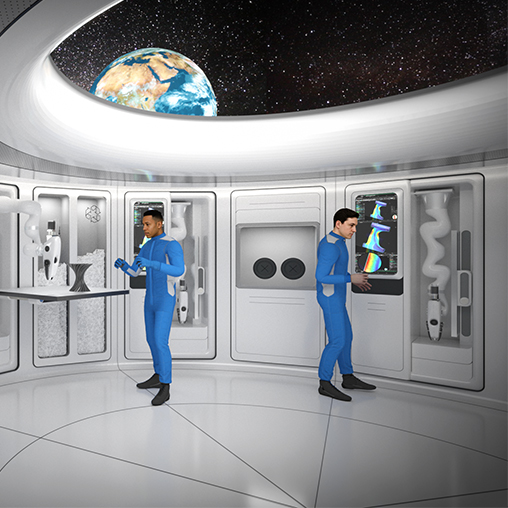
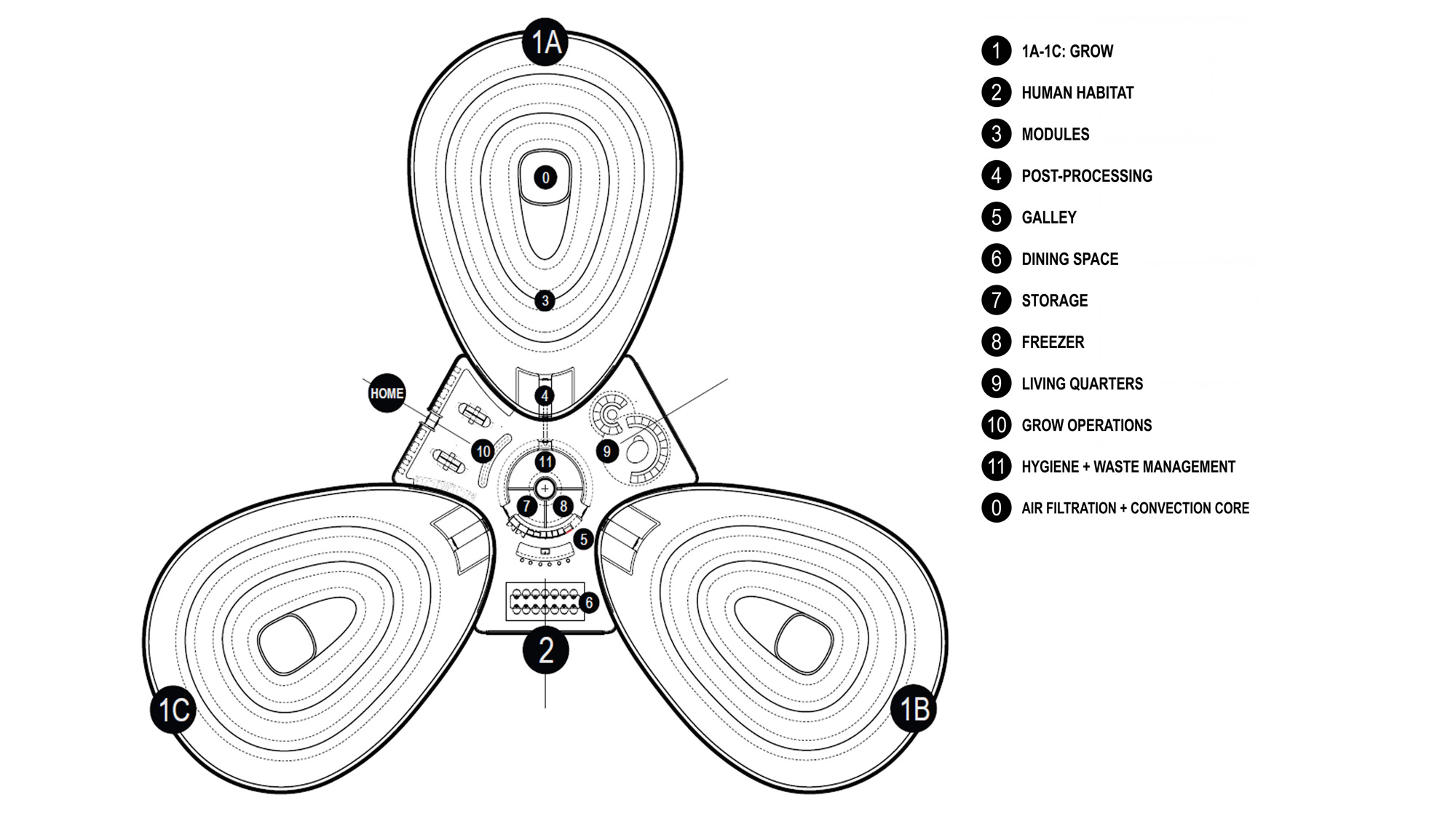
In response, Gensler’s Advanced Concepts team developed GROW: an integrated, biophilic food system in which architecture supports the entire cycle of cultivation, harvesting, processing, storage, cooking, dining, and resource recovery.
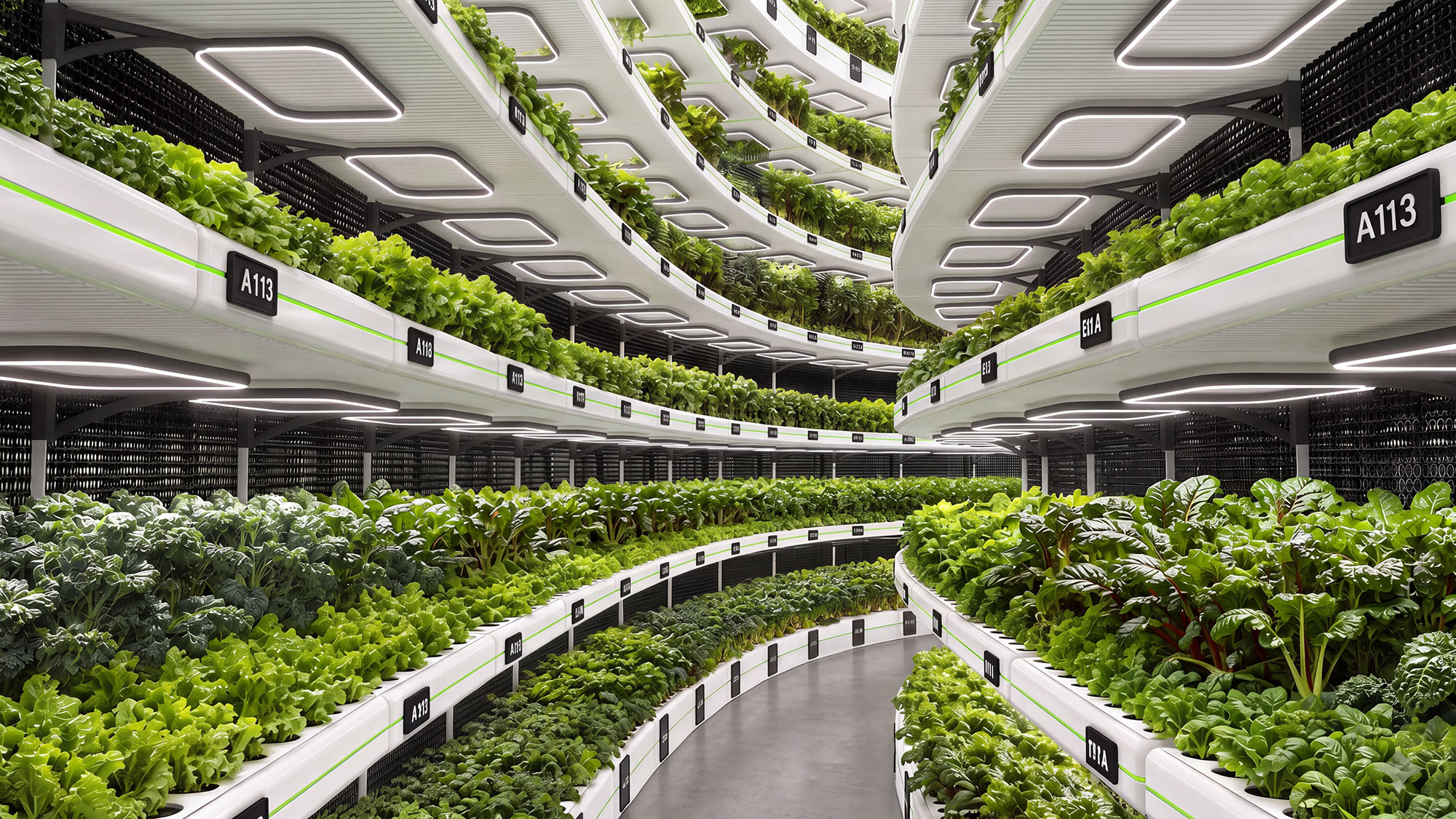
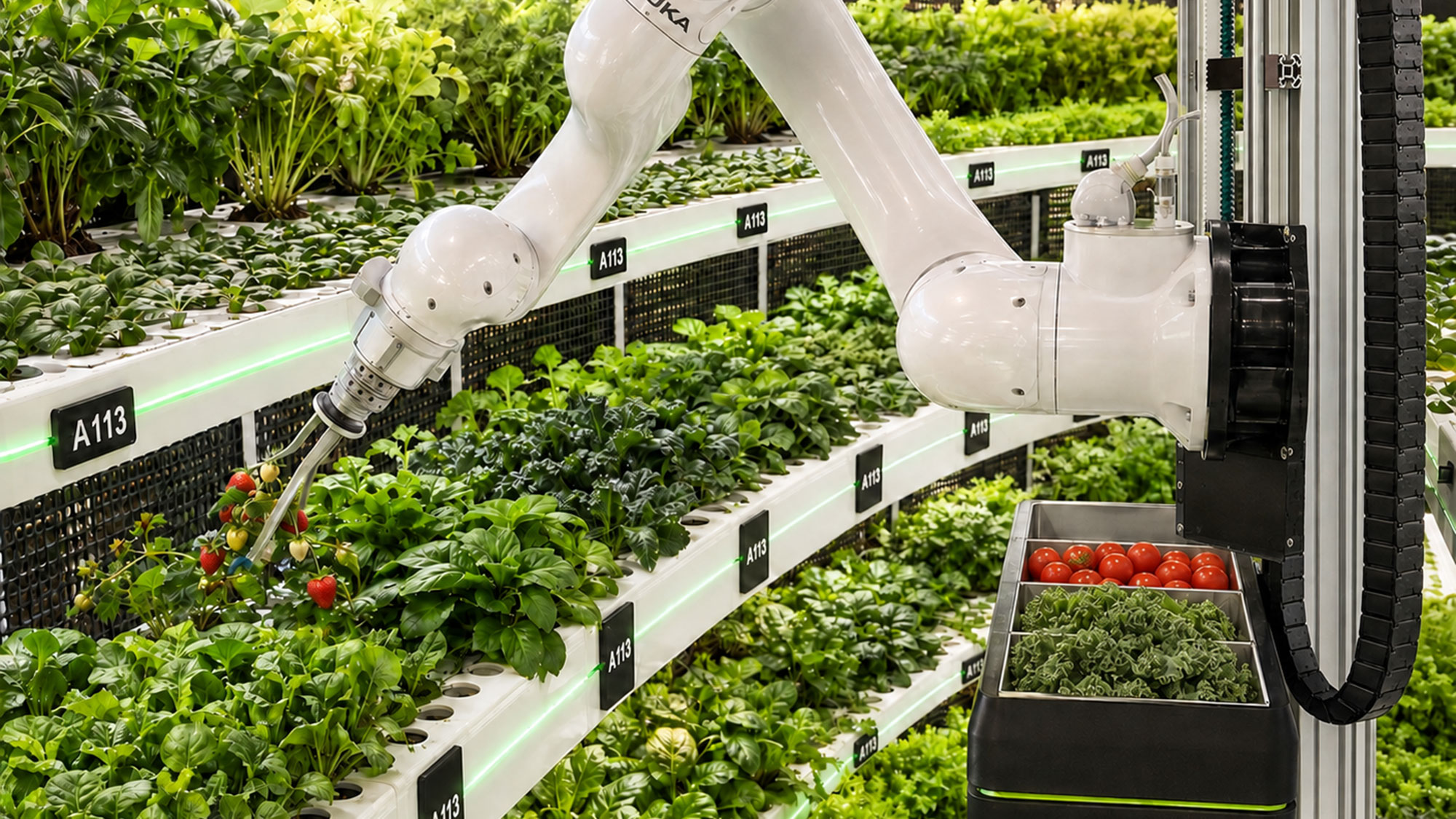
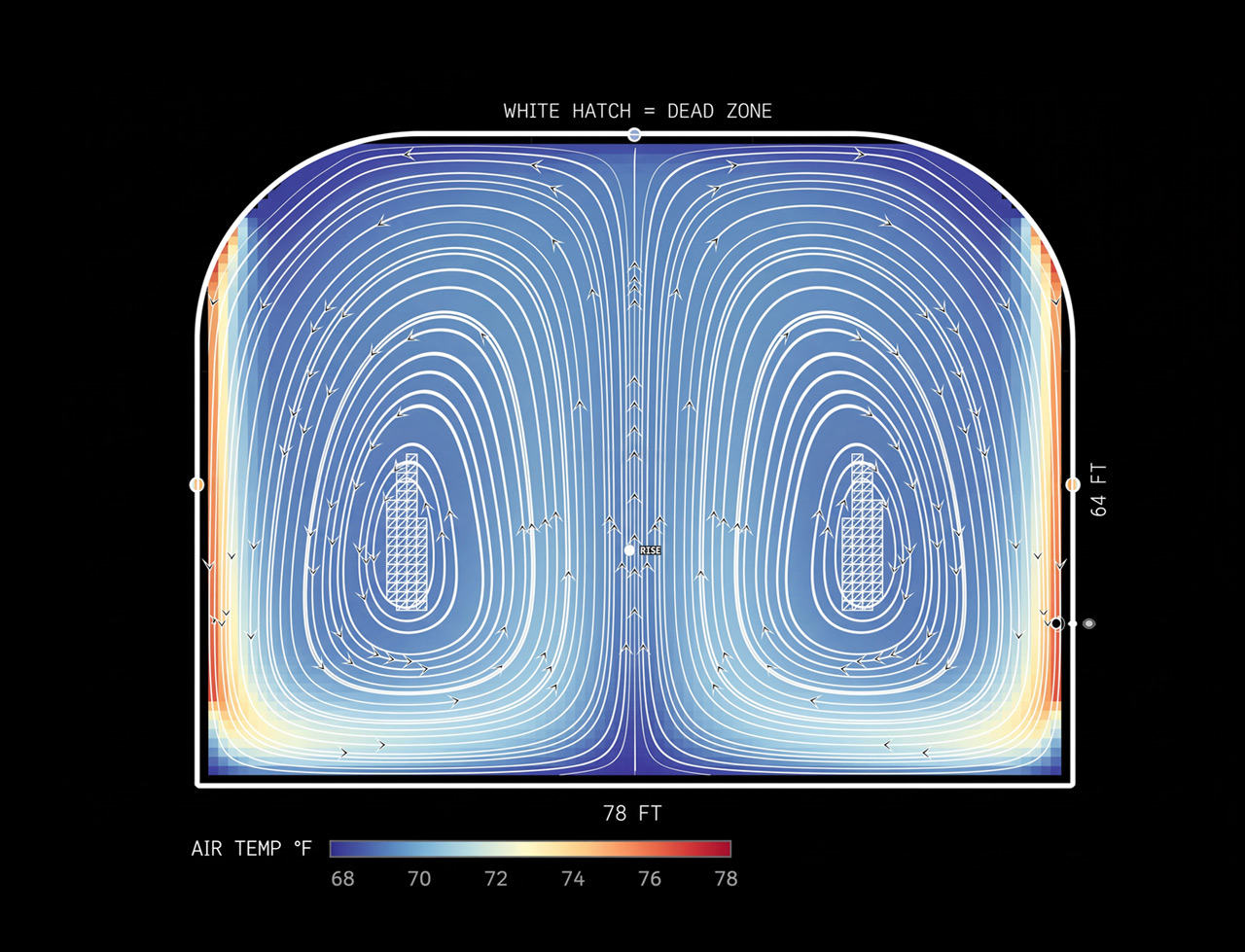
GROW reimagines agriculture as essential architecture for food security, resource recovery, human health, and mission resilience. The habitat is organized as a tri-radial bioregenerative system, with three cultivation wings arranged around a compact, protected crew core. Each wing functions as an independently controlled growing chamber with concentric vertical racks and high-efficiency hydroponic cultivation, allowing food production to continue around the clock — even if one chamber is isolated, repaired, or replanted.
Beyond production, GROW is designed to support the psychological and social needs of long-duration crews. Crew members live alongside the crops that sustain them, with vegetation, filtered light, warm materials, in-between gathering spaces, and shared meals bringing biophilic qualities into everyday life. These elements help transform a highly engineered environment into one that supports connection, restoration, stress relief, and a stronger sense of home.
Designing for Mars gave us a new way to consider some of Earth’s most urgent challenges, and the opportunities they may create for cities, communities, building owners, and developers.
When every resource matters
Mars makes resource constraints impossible to ignore. Every liter of water, watt of energy, square foot of growing area, hour of labor, and shipment from Earth carries enormous value. Systems cannot afford to operate independently or serve only one purpose.
That same principle is becoming more relevant on Earth. Communities are confronting food insecurity, water scarcity, extreme weather, vulnerable supply chains, aging infrastructure, and rising energy demands. At the same time, many cities contain buildings and properties that no longer perform as they once did. What if we considered these challenges together?
GROW proposes that food production can become part of an interconnected architectural ecosystem. Instead of placing agricultural equipment inside an isolated greenhouse or warehouse, it considers how cultivation could connect with water, energy, environmental controls, waste recovery, human health, and community life.
This integrated thinking can help owners see resources differently. Waste from one system may become an input for another. Infrastructure that supports one use may also support a second. A building designed around multiple complementary functions may create forms of value that a conventional single-use property cannot.
Designing resilience around people
A resilient building must support the people who depend on it. GROW answers both demands. Plants provide nourishment, color, texture, and sensory variety. Automation reduces repetitive work while preserving meaningful activities such as tending plants, cooking, and sharing meals.
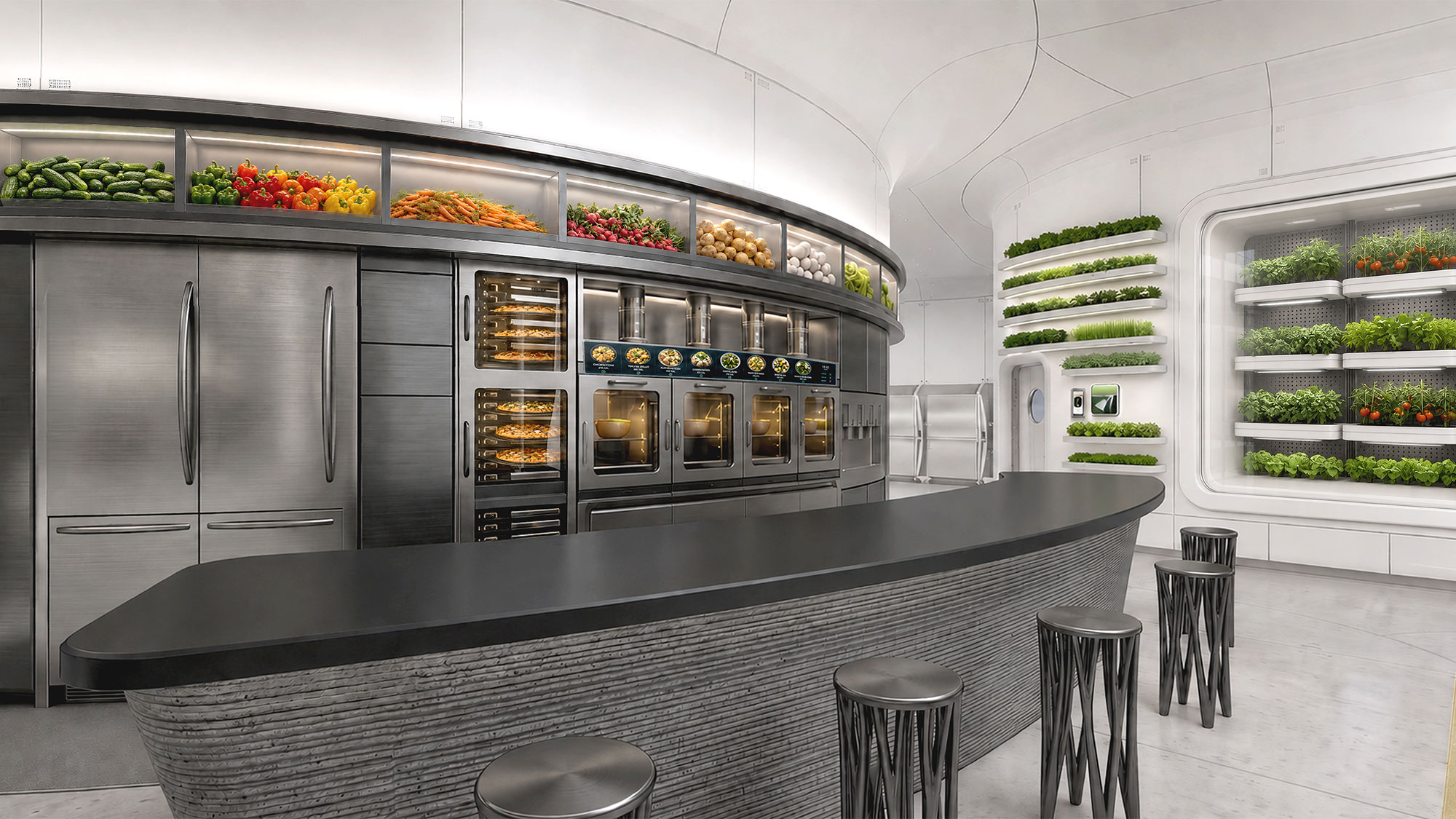
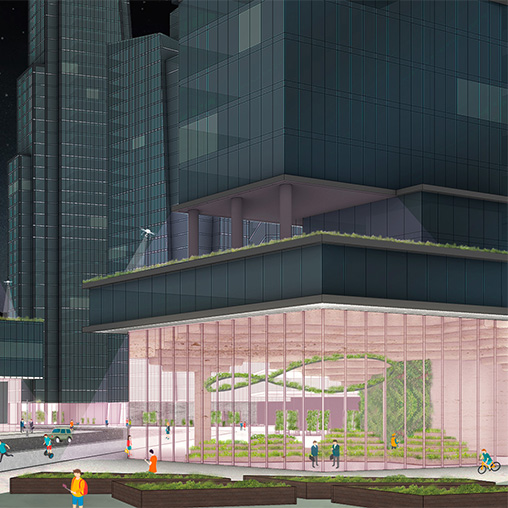
The same principle can inform Earth-based projects. In a mixed-use development, controlled-environment agriculture can be co-located with dining, wellness, residential, or community uses to create a visible relationship between production and daily life. If demand shifts over time, these spaces can expand into larger urban farms that serve the same neighborhood or catchment area rather than becoming vacant or underutilized.
The system can also be co-located on site with data centers or other heat-generating facilities, where recovered waste heat, shared water systems, and coordinated environmental controls improve resource efficiency. By co-locating food production into or alongside existing building infrastructure, the concept adds productive value to single-purpose sites while strengthening local resilience and community access to fresh food. In a school, the same system can become a hands-on learning environment, allowing students to engage directly with food systems, science, technology, and sustainability.
The real opportunity lies in considering how food infrastructure can support health, education, employment, social connection, and a stronger relationship between people and the resources that sustain them.
Mars as an innovation sandbox
The challenge gave our team permission to question assumptions that can limit thinking on familiar building types. This kind of speculative work provides a space to investigate emerging technologies, test unconventional partnerships, and imagine how developments can perform differently.
Vertical farming still faces significant questions involving energy, cost, labor, crop selection, and scale. Designing a habitat for Mars does not resolve all of them. It does, however, suggest that the future of controlled-environment agriculture may depend on integrating it more intelligently with other building uses, infrastructure, and sources of value.
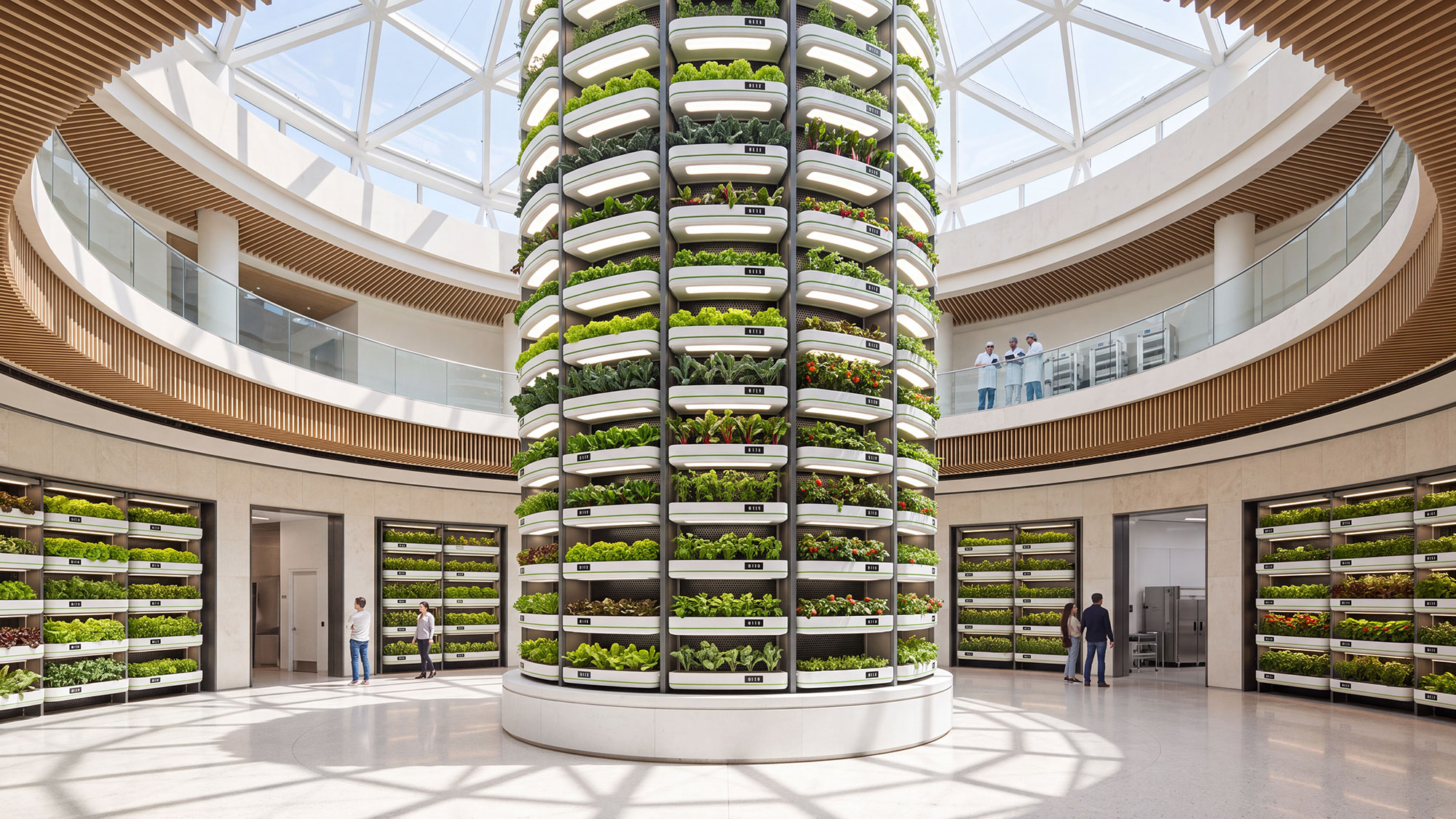
When nothing can be wasted, and every system must support human life, architecture serves as productive infrastructure that connects resources, technology, and human experience to help communities adapt and thrive. Mars may be the testing ground, but Earth is where these ideas can make their greatest impact.
For media inquiries, email .