How to Build a Future-Ready Workplace for Every Generation
Forward-thinking organisations bring every generation into the conversation to help shape what comes next.
What if the people best positioned to shape your future workplace are the ones who have been in the workforce the shortest time? Today’s organisations span up to five generations simultaneously — each bringing distinct strengths, expectations, and working styles. This diversity creates a powerful opportunity that organisations can harness. The challenge isn’t managing those differences. It’s designing a workplace, both physical and digital, that draws on all of them.
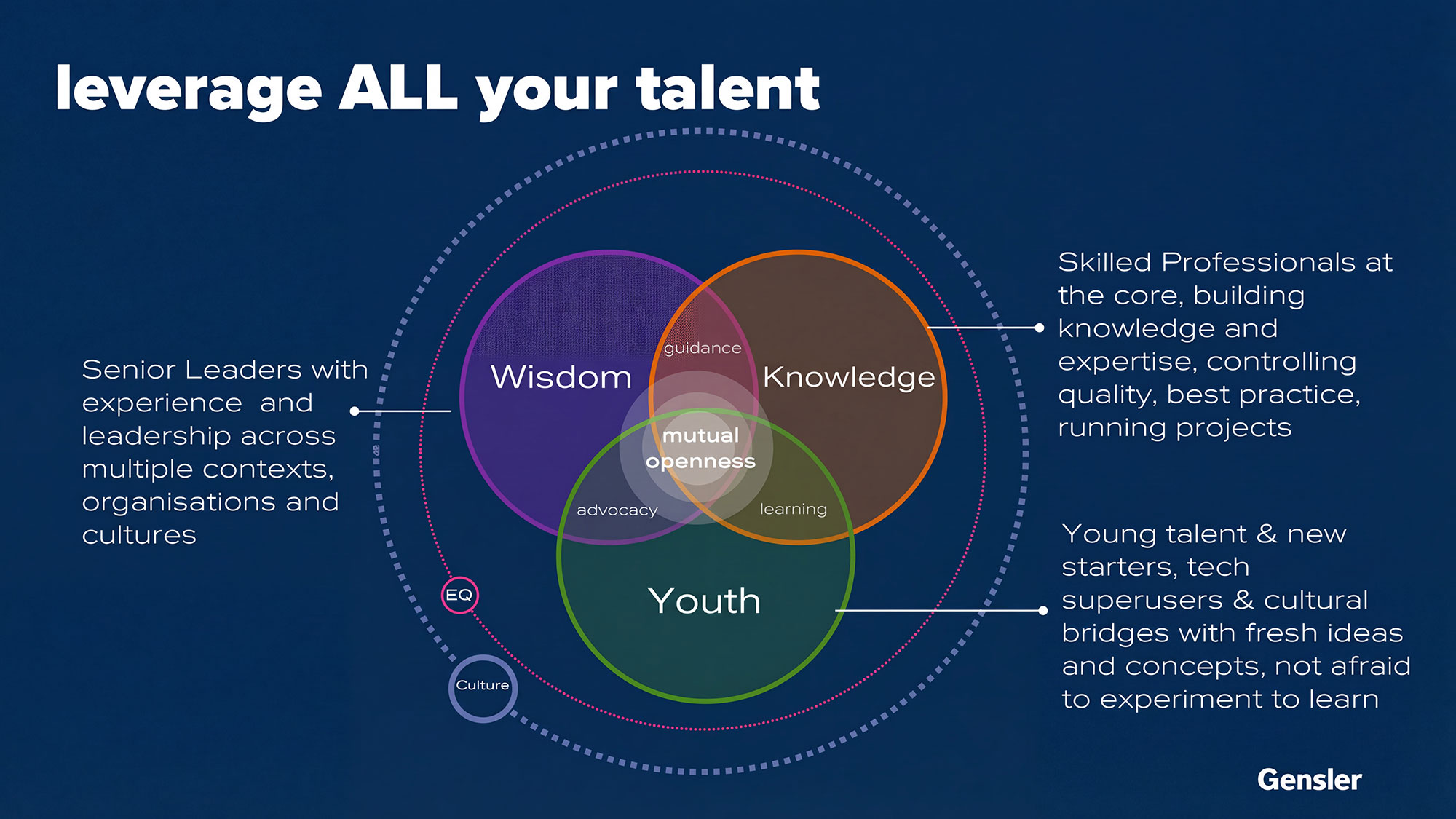
One unique way to think about generational roles in organisations is through the lens of three overlapping “knowledge bubbles.” These bubbles are not a hierarchy, but different forms of value that evolve and overlap throughout an individual’s career.
The Wisdom Bubble: Late Career
Senior professionals bring something no onboarding programme can manufacture: the accumulated judgement of decades. They’ve navigated crises, made mistakes, and built the client relationships that sustain organisations through turbulence. We call this the “wisdom bubble.” Their role can be to guide and mentor younger generations and help them avoid common pitfalls. Their value isn’t technological fluency — it’s their ability to recognise patterns and solve problems through past experiences that aren’t yet visible to others.
Older workers are now the fastest-growing segment of the global labour market. Organisations that fail to engage them aren’t just losing experience — they’re overlooking a growing portion of their workforce entirely.
The Knowledge Bubble: Mid-Career
Mid-career professionals are the connective tissue of most organisations. They sit in a “knowledge bubble,” translating strategies into delivery, managing teams, and holding deep operational knowledge and practical expertise. Often the first generation of digital natives, they have spent their careers bridging analogue institutional knowledge with new tools and innovative processes.
This group frequently manages teams; however, they may not always have been explicitly taught how to be effective managers. In hybrid workplaces, they can become less visible as they balance leadership responsibilities with flexible working patterns that increase the risk of stress and burnout. Organisations that want to retain this cohort need to invest in their development, not just their output.
The Youth Bubble: Early Career
Early-career professionals bring something the other bubbles cannot replicate: proximity to the future. This cohort occupies the “youth bubble,” bringing curiosity, fresh perspectives, and new technical capabilities to the workplace. By 2040, Gen Z is expected to make up around 40% of the global workforce. As second- or third-generation digital natives, they are naturally proficient with new tools and technologies, and are often the first to apply them in ways that simplify complex workflows.
Growing up in a digital world brings its own challenges, too. Practical problem-solving experience takes time to accumulate. Reading the subtext of in-person interactions can be harder for those who have spent formative years in digital spaces. Good mentorship and intentional workplace design can close these gaps.
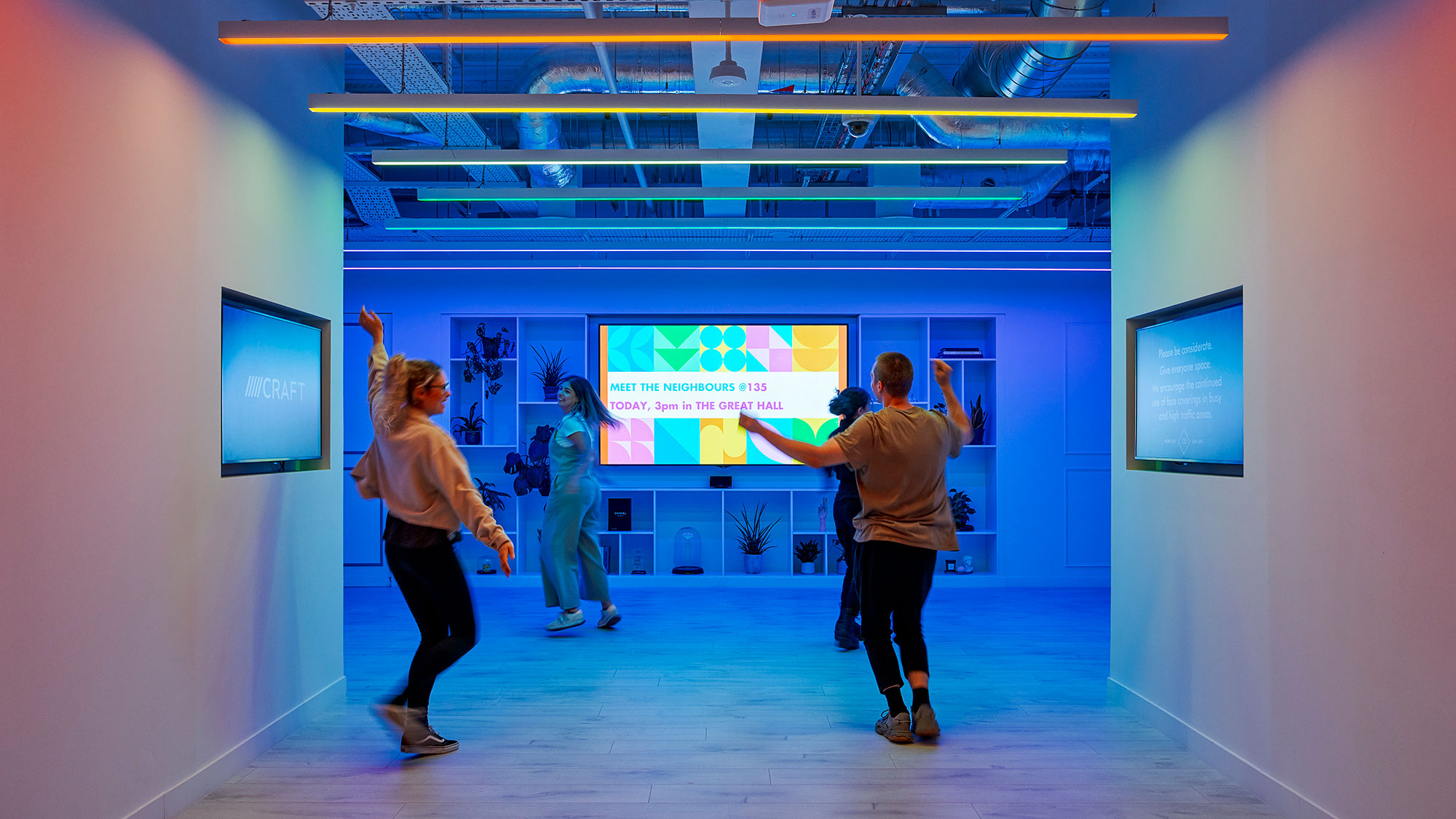
Designing for Generational Balance
Challenges arise when the ecosystem becomes unbalanced — for example, when younger employees interact with senior leaders but lack consistent guidance from mid-level managers, or when generational groups work largely in isolation.
Senior leaders provide long-range perspective, and midcareer professionals understand how strategy plays out in practice — but both are informed by the environments in which they built their own careers. Relying solely on these established viewpoints can make it harder to anticipate future talent’s expectations.
Younger employees are often the first to spot emerging social behaviours and technology trends, making them essential to long-term planning. This generation of professionals expects faster decision-making, clearer communication, and greater transparency. Their understanding of the digital world and cultural shifts offers insight into what future workforces will need.
Designing for the future means intentionally bringing younger voices into the room to help build spaces, systems, and cultures that will remain relevant and adaptive over the next decade and beyond.
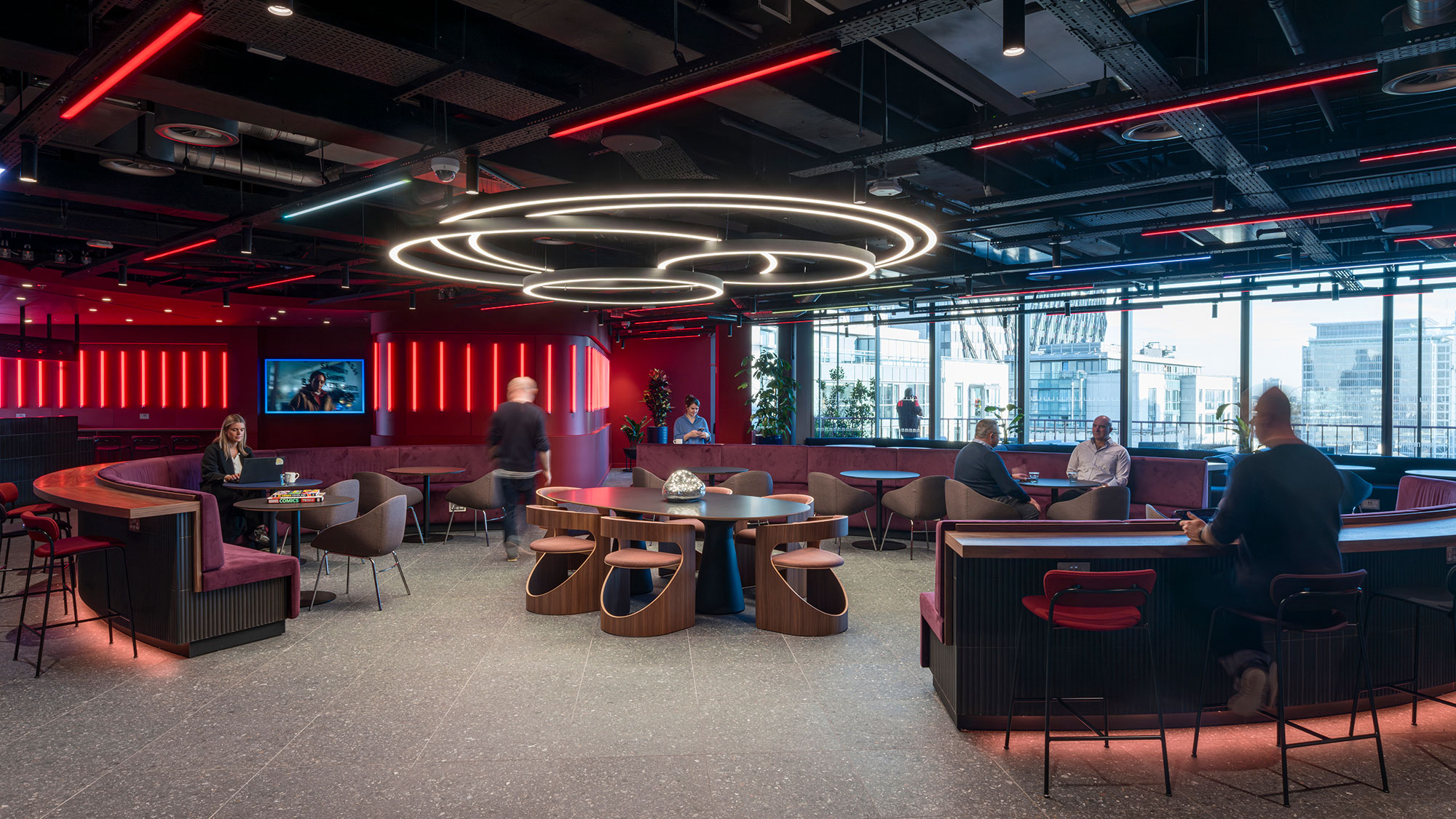
Collectively Shaping What Comes Next
According to Gensler’s 2025 Global Workplace Survey, only 21% of global office workers who recently experienced an office update felt meaningfully included in workplace design decisions, highlighting a major gap in employee engagement. That means the vast majority of employees — across all generations — are being designed for rather than designed with.
Closing that gap requires a shift from consultation to cocreation. Employees at every stage contribute something irreplaceable to workplace design: senior professionals shape culture and long-range vision; mid-career professionals stress-test ideas against operational reality; early-career professionals anticipate what’s coming. All generations also share common ground — they value spaces for collaboration, focus work, community building, and creativity.
Successful organisations tap into those insights by involving employees in design discussions early — through prototyping, workshops, and feedback cycles. This keeps solutions aligned with the people who will use them.
Generational diversity becomes a strategic asset when it’s intentionally built into workplace design and leveraged across teams to strike the right balance. The most future-ready and differentiated organisations invite every generation, even the youngest, into the conversation to help shape what comes next.
For media inquiries, email .