How Forecasting Helps Leaders Take Control of the Future
Developing realistic future scenarios turns uncertainty into a competitive advantage.
Forecasting is the process of using real-world data to create plausible future scenarios to inform decision-making in the present. Predicting the future isn’t the point — it can’t be done. By analyzing current information and trends, Gensler strategists are leading client organizations to take greater control of what could be. And by collaboratively developing realistic futures, we’re resolving uncertainties and cementing consensus today.
Forecasting is like buying an insurance policy before making significant investments or strategic decisions. By carefully considering factors — even those beyond our control — in advance, we can intentionally prepare a building, office, or store design for a wider range of possibilities.
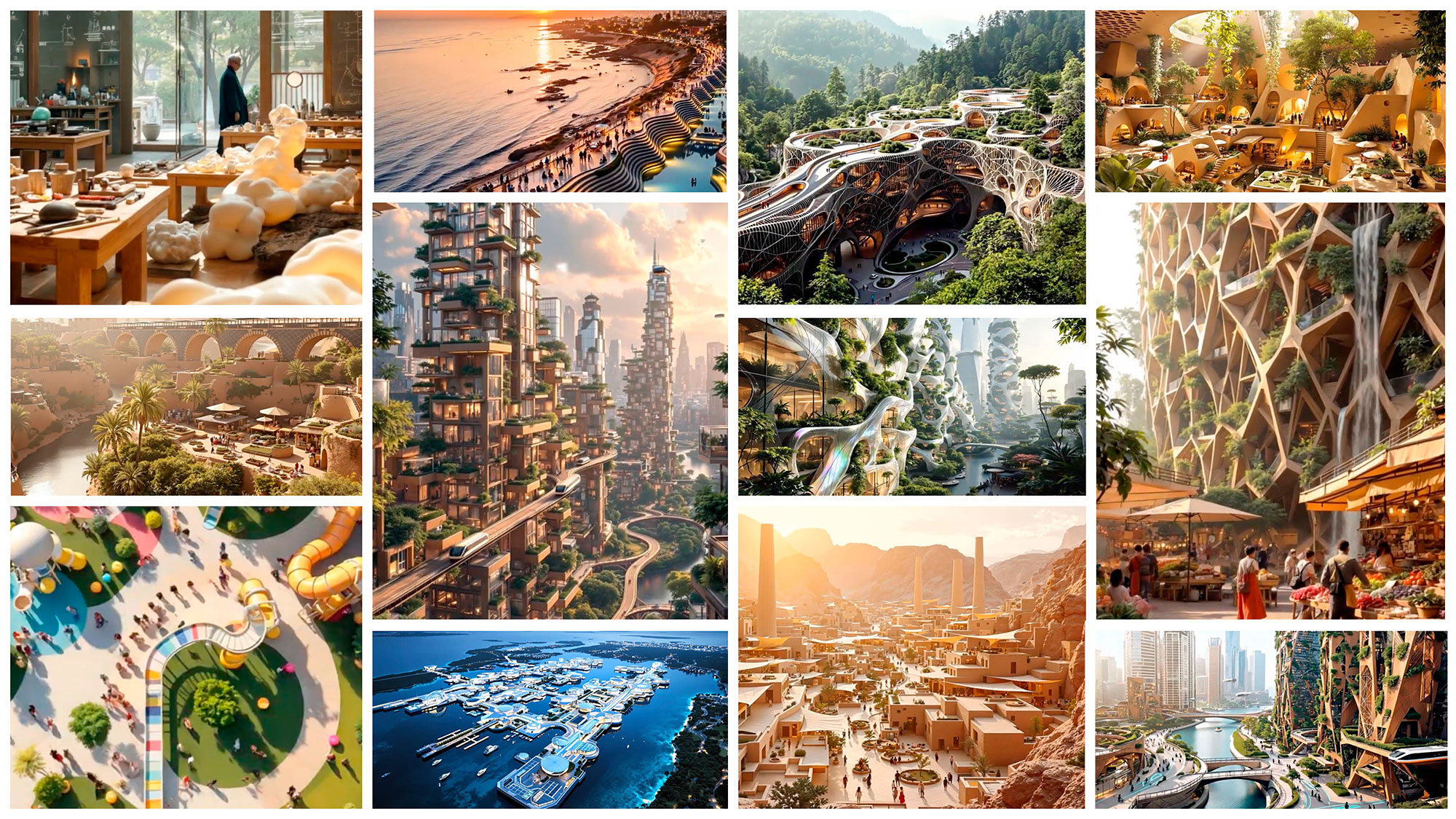
Forecasting’s product is a vision of the future: a custom narrative depicting what the business climate, demographics, geopolitics, economics, technology, and culture could be in 10, 15, or 20 years. While governments, NGOs, think tanks, and large corporations have used forecasting for decades, Gensler brings a bespoke approach to this practice.
Recently, our strategy team has conducted research for world-leading financial, telecommunications, transportation, and product companies, interviewing global subject matter experts and scrutinizing thousands of reports and publications to understand what the future may hold. We then theorize the implications of this data and analysis for corporate headquarters, mixed-use developments, and entire real estate portfolios.
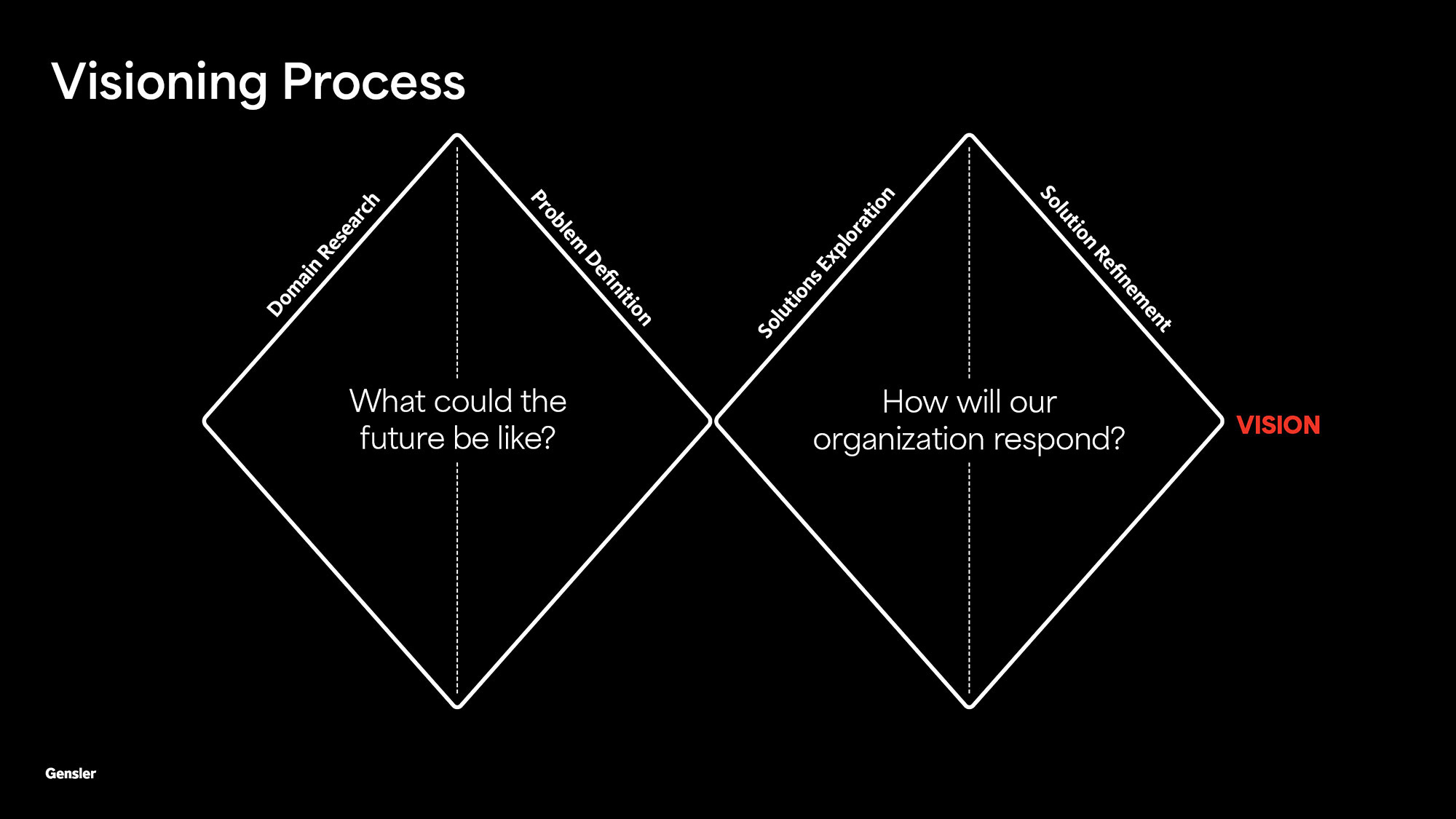
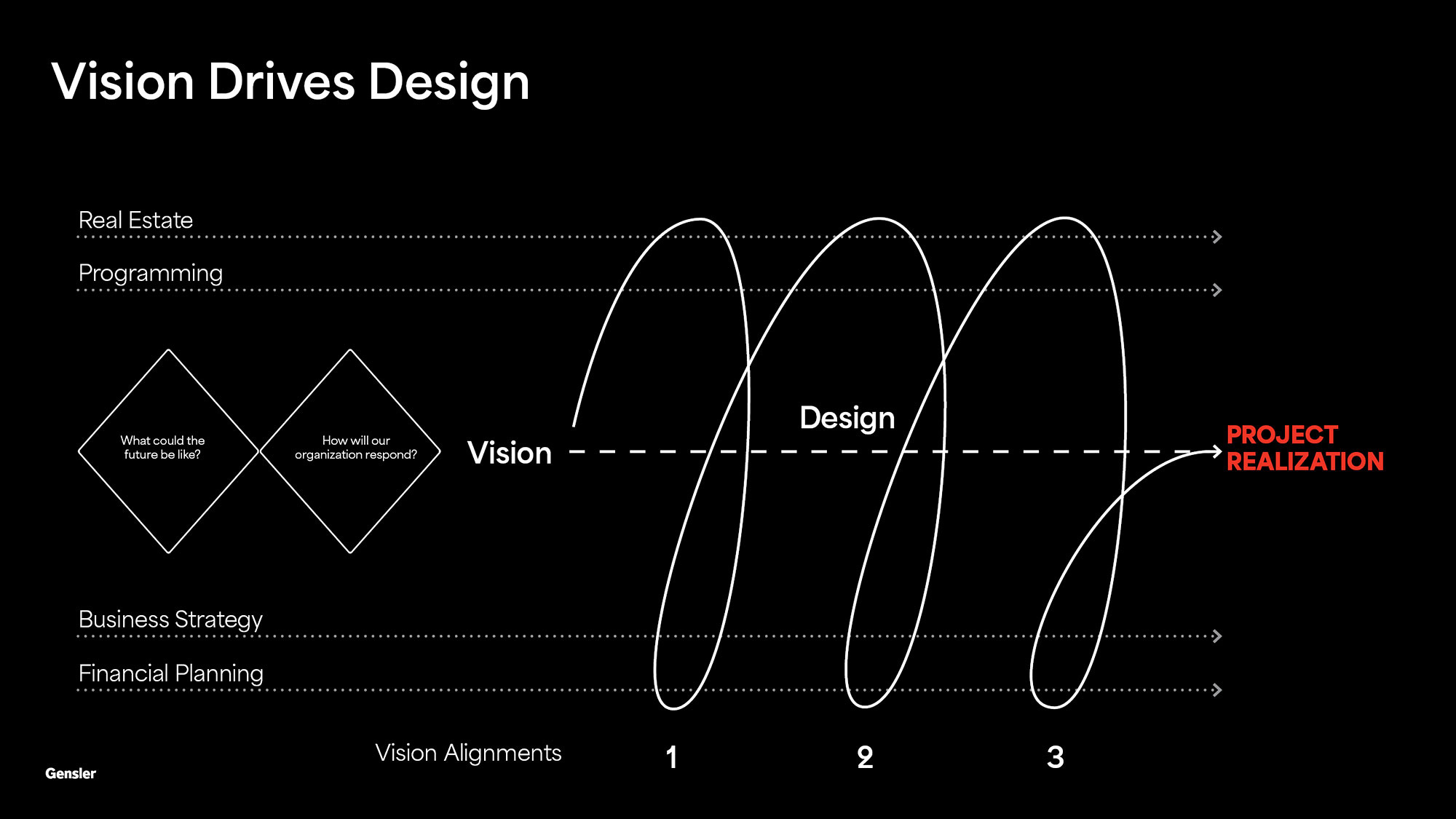
The vision that results from cross-disciplinary stakeholder collaboration is a proactive statement of an entire organization’s aspiration for its spaces and experiences. Vision statements make brand and business strategy tangible, continuously aligning diverse stakeholders throughout lengthy, complex development undertakings.
Specifics are where forecasting gets interesting. The world is in constant flux, so Gensler teams begin the visioning process by creating multiple future scenarios that depict different outcomes. A single variable can shape an entire scenario because of how factors interrelate and compound, as in the butterfly effect. For example, let’s posit that AI and automation could point to smaller (human) workforces in the future. For an individual workplace, that could mean fewer offices or less square footage devoted to rows of desks. But the spatial implications go far deeper for a new central business district office building. What will that look like?

Economics would be impacted in this future as well. With fewer people working in an AI-driven workforce, more people might rely on comparatively low fixed incomes. Customer service teams could respond to requests through a tiered system, providing automated support to lower-value customers and high-touch face-to-face assistance for a smaller, high-value group.
Another scenario might focus on the infrastructural implications of extreme weather. Given the unpredictability of increasingly severe weather events, keeping systems up and online will become even more critical. In this future, we might depict the building as a renewable power generator, producing and storing enough electricity to power its entire block during utility fluctuations or blackouts. Liquid cooling is essential for chips and servers, so the building could be designed to harvest rainwater and purify it enough to satisfy its human occupants’ needs, while keeping critical technologies functioning.
A fourth scenario could focus on the sociocultural implications of AI-driven agents and bots as coworkers. In this future, maintaining connections with other people in the organization will be even more crucial. Design could respond by creating a centralized area for life-sized telepresence, making workers separated by miles or oceans feel like they are still working side by side.
The result is a comprehensive story our client brings to leadership — a clear, evidence-based case for design decisions made today that will keep the building relevant and resilient for decades to come.
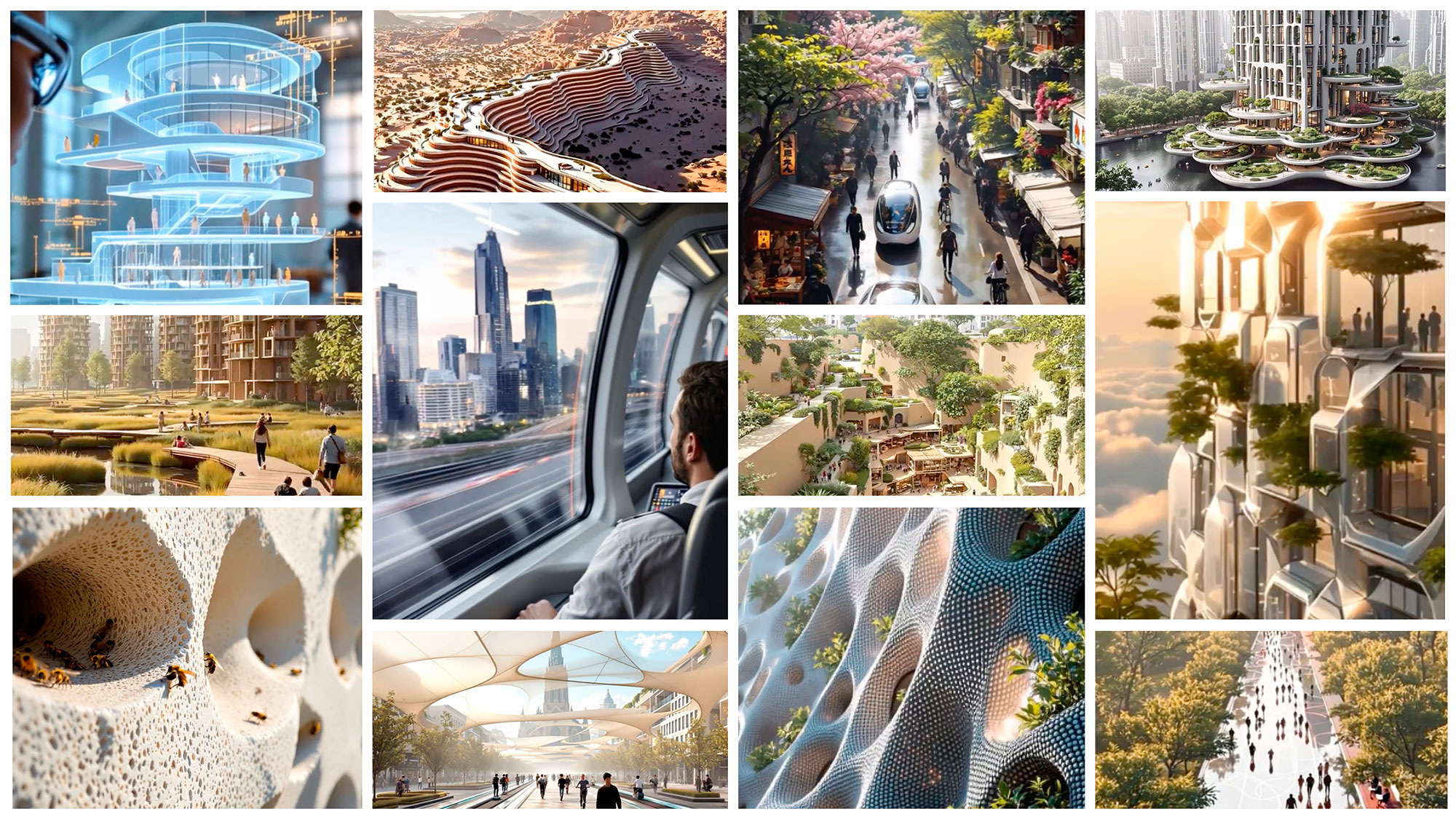
Forecasting enables structured conversations around wide-ranging, often polarizing topics. It also unifies stakeholders with widely divergent interests around what truly matters for the residents, employees, or customers who will use the new or renovated space.
The greater the uncertainty around future variables, the more decision-making is strengthened by forecasting. Gensler’s bespoke approach is helping clients, including developers, retailers, and airport authorities, apply today’s trends to lead through uncertainty, informing the design of facilities that will perform for decades to come.
For media inquiries, email .