Trends to Watch: What’s Next for the Future of Senior Living
Gensler’s Senior Living leaders examine the trends shaping the future of senior living design and explore what’s next for the industry.
Editor’s Note: This blog is part of our Design Forecast blog series, looking at what’s next in 2026 and beyond.
According to the World Health Organization, one in six people globally will be 60 or older by 2030, and this cohort has no intention of slowing down. This demographic shift has major implications for senior living design, from creating intergenerational communities at scale to protecting vulnerable older adults from extreme weather and climate risks.
We sat down with Gensler Senior Living Leaders JP Emery, Brooks Howell, and Soo Im to take a closer look at this year’s senior living trends in 2026 Design Forecast and discuss what’s next for the future of the industry.
TREND 1: Cities repurpose vacant commercial space into intergenerational care centers.
How does intergenerational care benefit cities and caregivers?
JP Emery: There is so much interest in bringing older adults and children together into shared care and community, and a desire to build these communities at a commercial scale. Despite the proven market demand within individual communities that combine family housing, senior care, childcare, and senior housing, the challenge is in proving to institutional capital that this is a long-term societal trend that will remake how we plan housing and care.
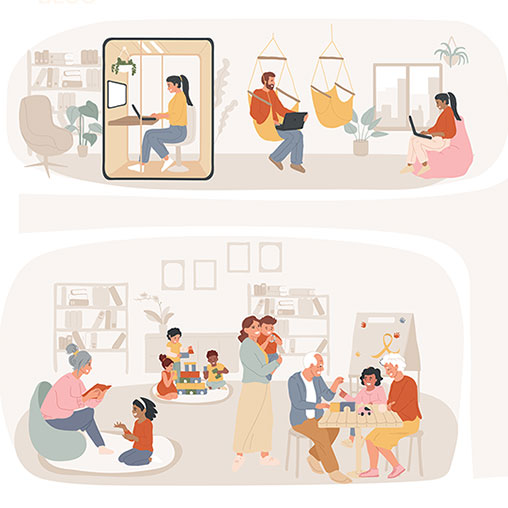
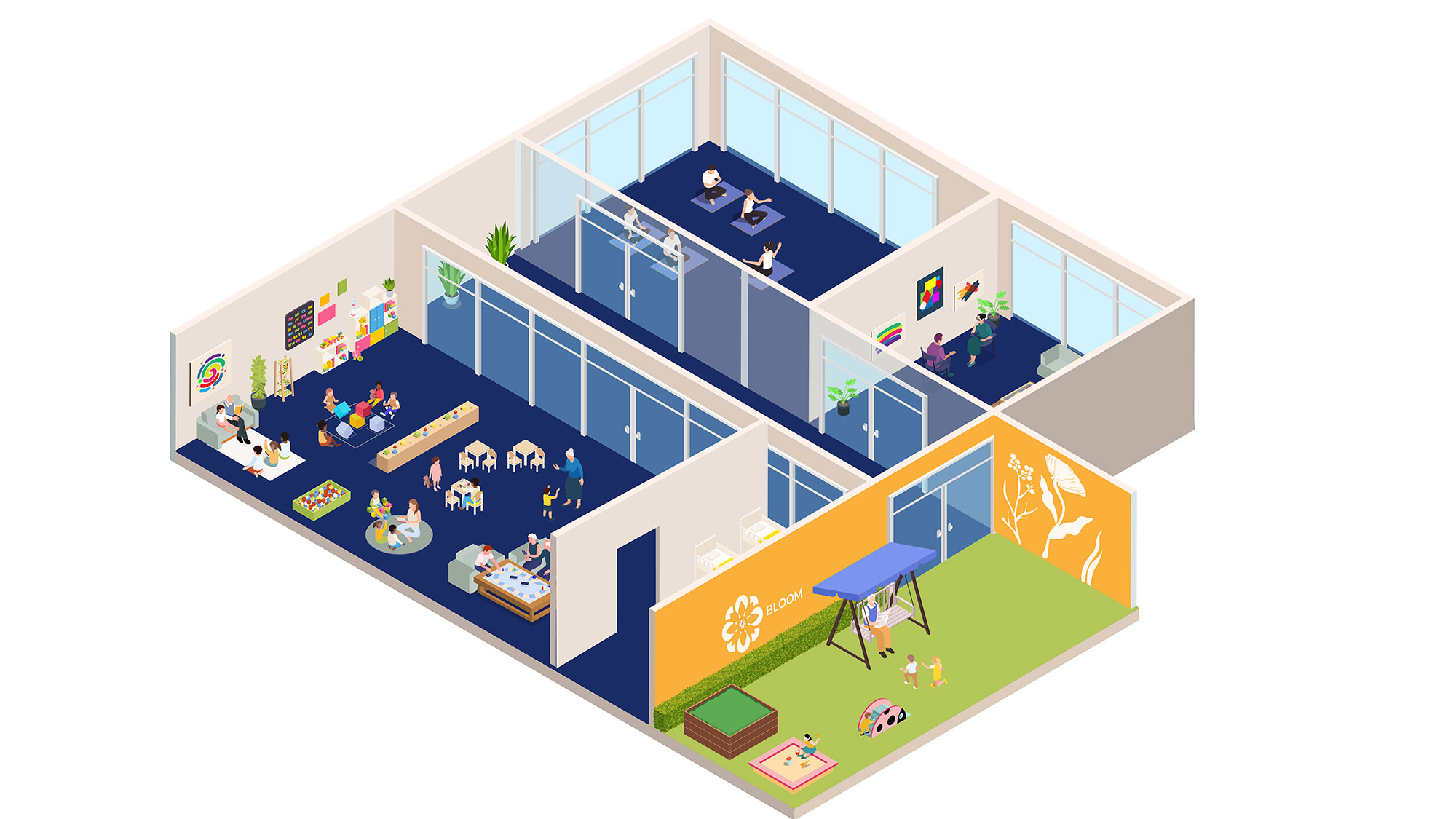
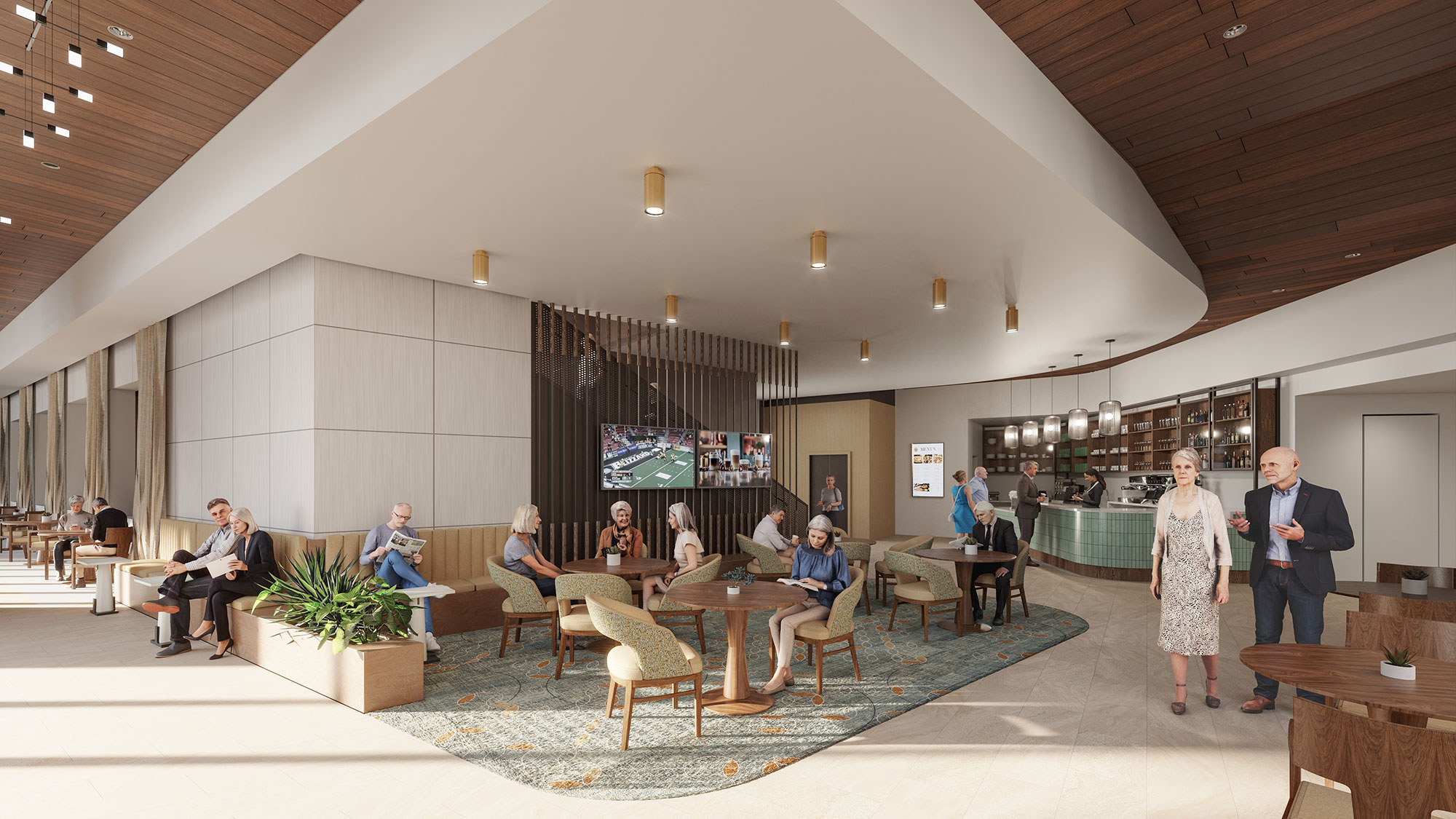
The closest the institutional market is getting to this right now is through mixed-use development that combines senior housing and multifamily residential units on neighboring sites. Our intergenerational care concept takes this approach much further, reimagining how we deliver care through intergenerational centers that combine childcare, senior day care, and wellness services in vacant commercial spaces where caregivers work. In the future, we believe we’ll see developments where multiple generations live in the same building and share the same amenities. It’s a much better experience.
It’s also about creating really successful and viable commercial spaces. How do we address all this vacant commercial space? When it’s tailored to people who know the neighborhood they want to live in and are connected to the programming, it makes it that much more meaningful.
Soo Im: Repurposing vacant commercial space as intergenerational communities is a win-win for developers and residents. Having access to city amenities, rather than building them under one roof, makes these communities more financially accessible for mid-market residents. Intergenerational living fosters social connection and well-being. It’s about creating environments where people of all ages thrive and revitalizing our business cores as 24-hour cities.
TREND 2: Extreme weather and climate risks reshape senior living design.
How can senior living communities ensure safety and continuity of care during disasters?
Brooks Howell: If a natural disaster strikes, how do you get senior living residents out of these communities? In many cases, you can’t. The ideal solution is to make the building resilient enough that you can wait out a five-day disaster.
JP Emery: The industry is accustomed to providing emergency power and food, but its scope is set to expand. With extreme weather events increasing in frequency and intensity, operators are now looking at how they’ll continue to operate the building on a limited basis with limited staff and no power for several days. When designing and building these communities, it’s essential to address energy and resilience. This includes reducing energy use intensity while increasing backup power sources. It also means hardening structures against floods, winds, fires, and smoke, and introducing refuge for caregivers to continue delivering services during longer periods of isolation.
Soo Im: Recent wildfires in Southern California highlight the shifting attitude towards fire readiness in the construction and insurance industry. New communities are much more likely to choose non-combustible materials and other fire and smoke management features, even when they are not required by the building code. In addition to the power reliability issues identified earlier, onsite water storage and treatment capacity should be considered to increase the availability of domestic water in emergencies as well.
TREND 3: Advanced technology and robotics reimagine aging-in-place.
How are advanced technologies reshaping senior living spaces?
Brooks Howell: Robotics and AI technology will play a huge role in senior living, from health monitoring to mobility aids. The challenge is in integrating these tools seamlessly into the environment and overcoming consumer privacy concerns. Japan, China, and South Korea are likely ahead of the U.S. in this respect, as they face even more significant demographic challenges, including a growing aging population and major care labor shortages.
JP Emery: Ironically, employing advanced technology is about increasing human interaction, rather than decreasing or eliminating it. Caregivers and administrators spend countless hours on record keeping, monitoring residents, cleaning, and other laborious tasks that aren’t directly interactive with coworkers or senior living residents. When we use an AI camera to make sure a resident leaves their unit for breakfast, or a language model to transcribe medical notes, this gives caregivers time back to focus on what matters.
Soo Im: Caregivers often spend only a few minutes a day with each resident, but technology can help give them time back. AI monitoring and analytics enable preventative care and safety so that care is delivered when it is most effective, while robotics are already being used in dining for delivery and bussing, and our clients are seeing positive ROI on these investments. As robotics achieves greater adoption and skepticism fades, we expect the number of uses in care environments to increase. Transportation will see the biggest shift: seniors who already struggle to drive independently will adopt autonomous vehicles to maintain independence, and autonomous ride-share programs will reduce the need for personal cars, freeing up space and eliminating the costs of building parking.
For media inquiries, email .