What Engagement Really Means: Insights from Gensler’s 2025 Education Engagement Index
New research reveals how campus presence, learning mode, and space shape engagement in higher education.
Editor’s note: This blog highlights findings from Gensler’s 2025 Education Engagement Index survey. Learn more about our survey method.
Few terms are used more frequently in higher education than student engagement. Yet despite its importance to student success and institutional outcomes, engagement can be difficult to define and even harder to measure.
Now in its fourth iteration, Gensler’s Education Engagement Index (EEI) builds on years of research exploring how students, educators, and staff experience higher education. Drawing on responses from more than 2,400 people across the United States, the 2025 EEI explores three questions: What drives engagement? How does campus presence influence it? And what do those findings mean for the spaces colleges and universities provide?
When we began the Education Engagement Index, we addressed learning activities, relationships, motivation, and emotional well-being. Inspired by conversations with institutions, we have expanded our question set to explore engagement more deeply.
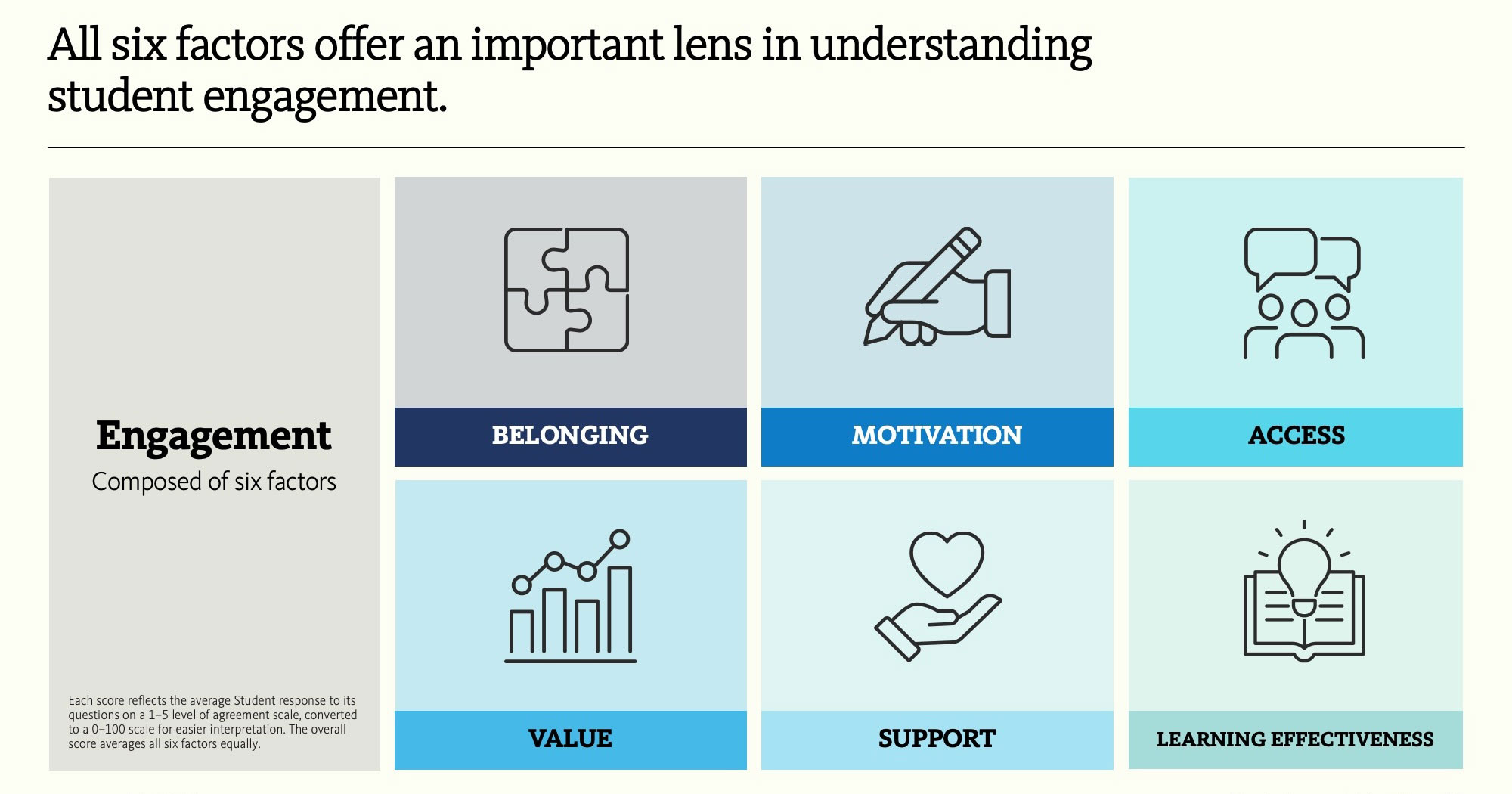
Through factor analysis, six engagement factors emerged:
- Belonging measures social connection and emotional well-being.
- Motivation reflects feelings of growth, autonomy, and mastery.
- Access evaluates the ability to navigate physical conditions, accommodations, and environmental needs.
- Value measures whether students believe their education is preparing them for the future.
- Support reflects academic support systems and student services.
- Learning Effectiveness measures how effectively students can participate in a range of learning activities, both in person and remotely.
Together, these factors provide a more holistic framework for understanding engagement and offer institutions multiple ways to evaluate and improve student experience. By averaging all six factors, we can also identify an overall engagement score. These scores can give colleges and universities a consistent benchmark for evaluating and improving student experience.
Being on campus matters, but not in the way we expected.
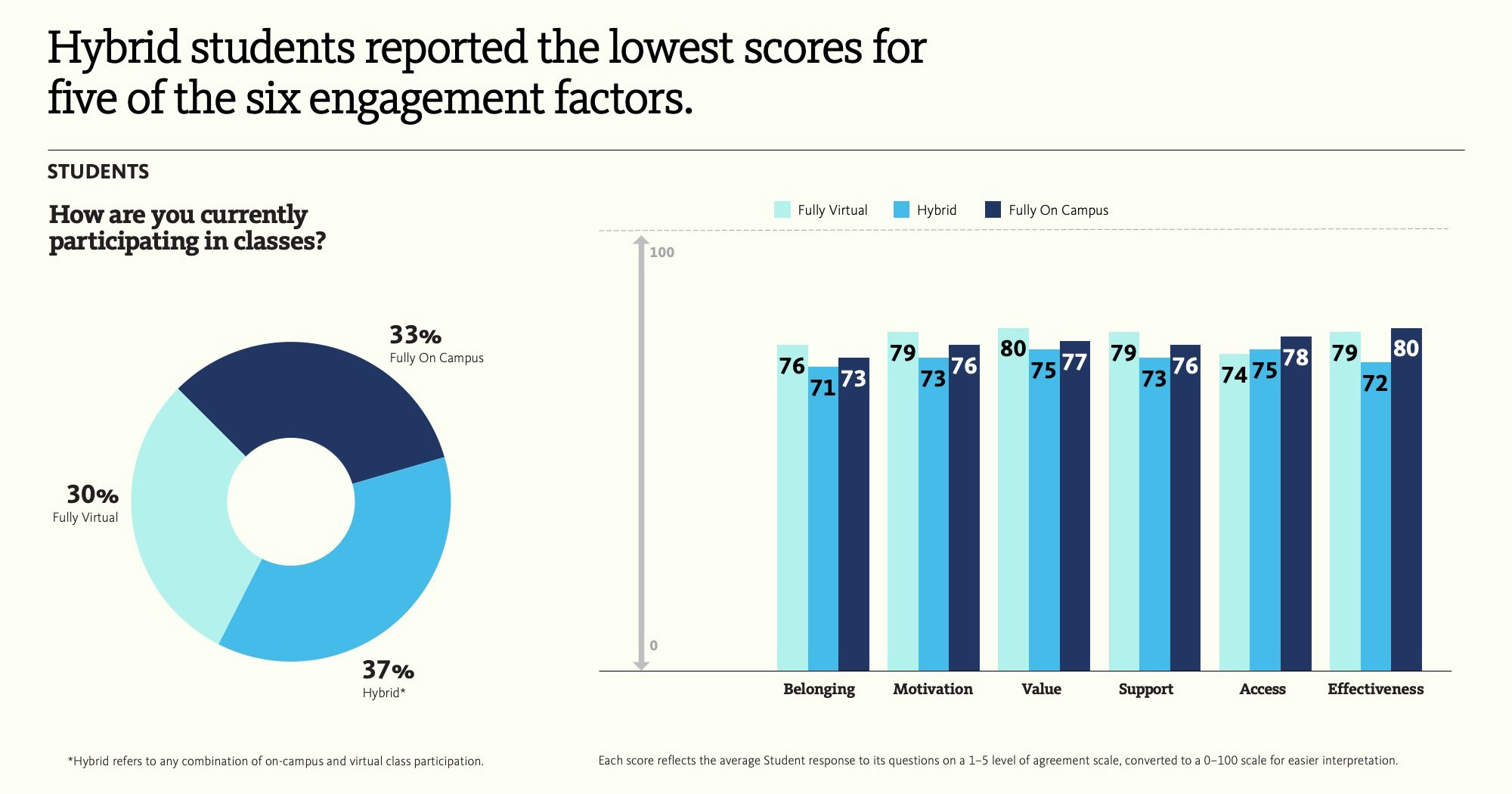
Student respondents were nearly evenly divided among fully on-campus, hybrid, and fully virtual learning experiences. Among students who come to campus, those who attended three or more days per week reported stronger Belonging, Motivation, and Value scores than those attending less frequently. Within that same group, students attending campus four or more days per week reported stronger Access scores, while those attending five days per week reported the highest Learning Effectiveness scores. Notably, students with a fully virtual schedule reported higher scores than students with any on-campus presence in all factors except Access.
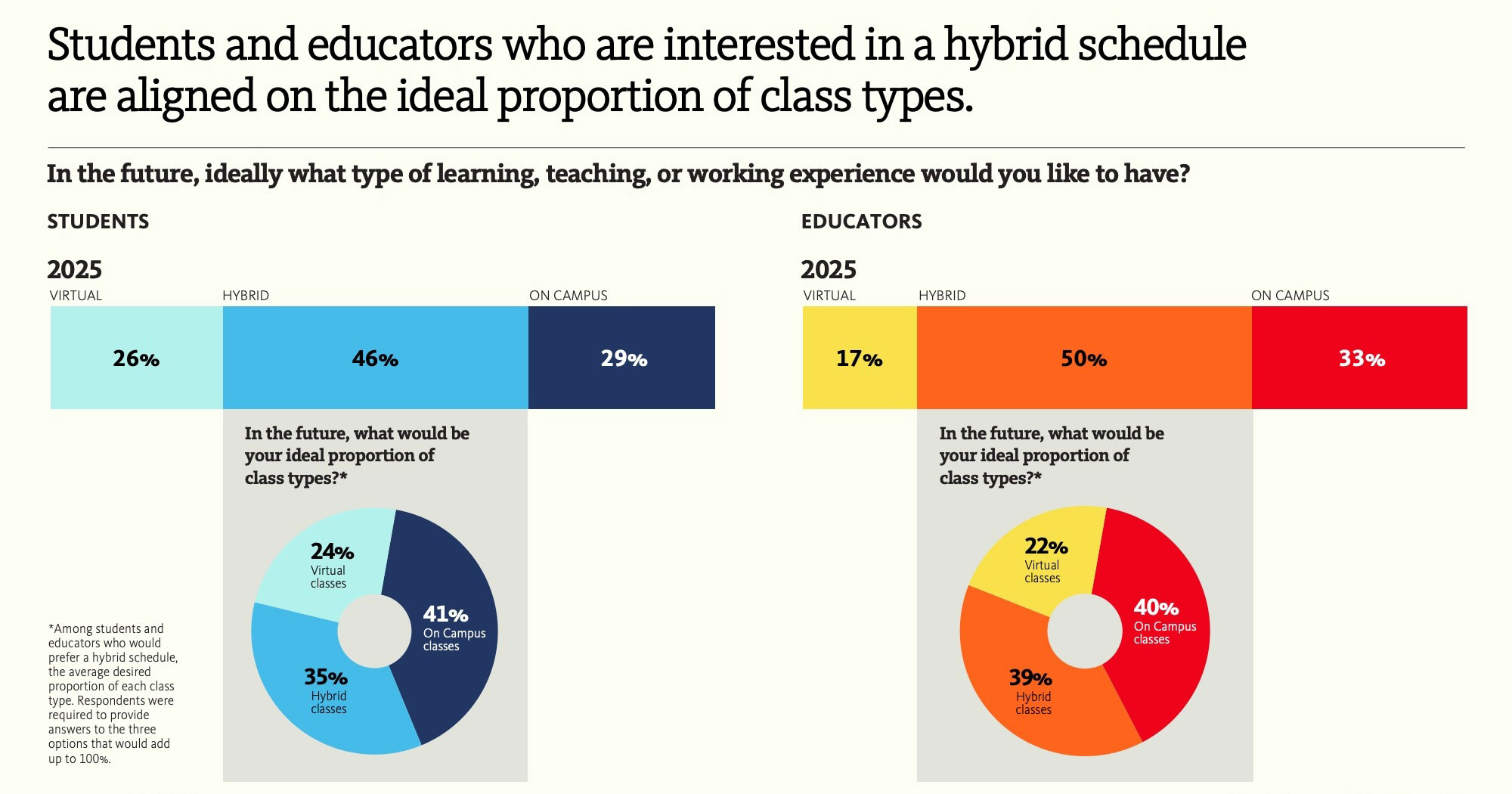
Despite the benefits of being on campus and high engagement of virtual students, hybrid learning remains the preferred model for the future among students, educators, and staff. That tension prompted a closer look at the range of hybrid experiences and how often students actually come to campus.
Not all hybrid experiences are created equal.
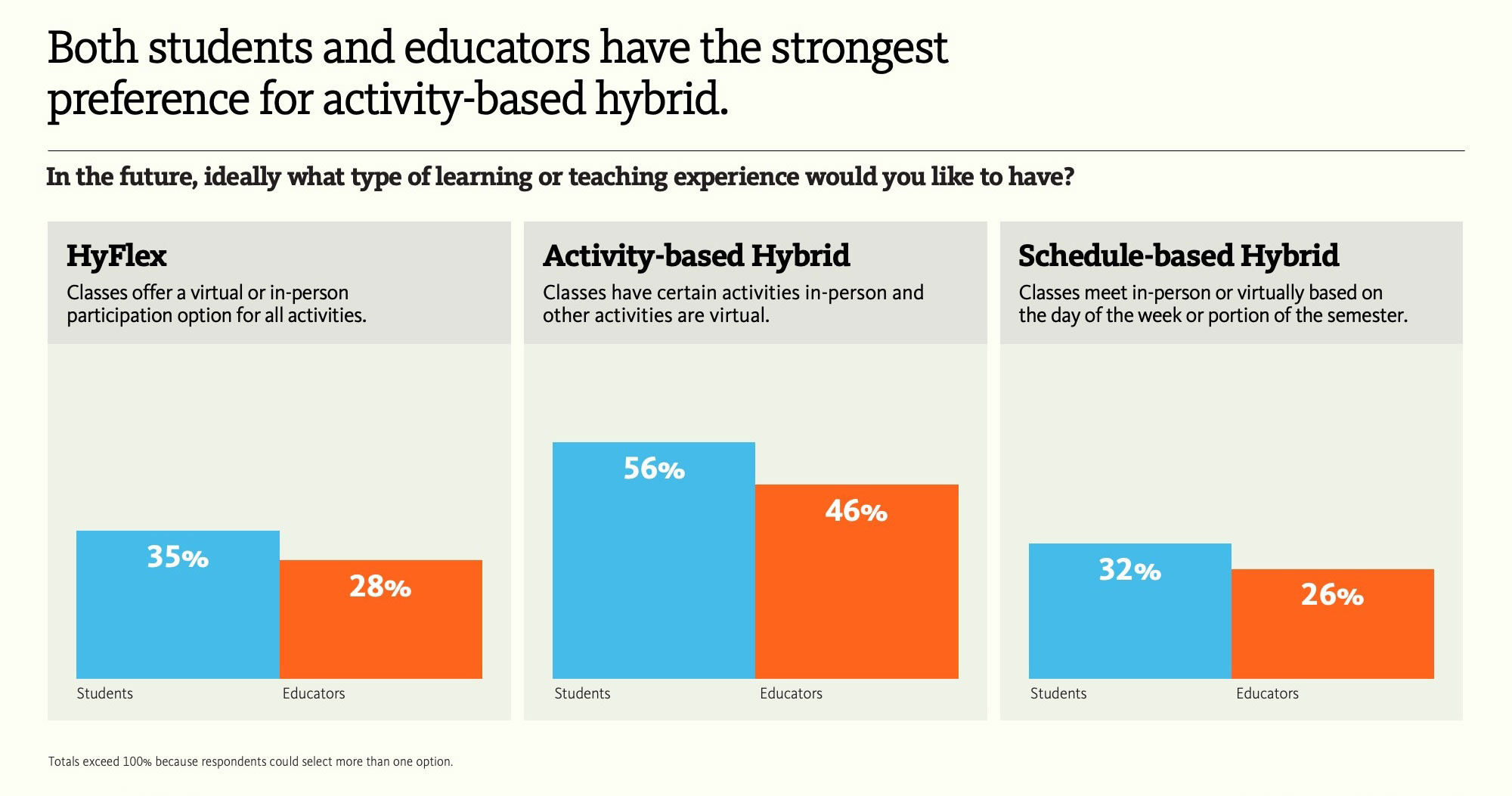
One explanation may be that the hybrid model encompasses a wide range of learning experiences. In the survey, respondents distinguished among three different models:
- HyFlex: Classes offer a virtual or in-person participation option for all activities
- Activity-based hybrid: Classes designate certain activities in-person, and others as virtual
- Schedule-based hybrid: Classes meet in-person or virtually based on the day of the week or portion of the semester
More than half of students and nearly half of educators preferred activity-based hybrid classes, making it substantially more popular than either HyFlex or schedule-based approaches. While flexibility often drives the choice of virtual or hybrid formats, the preferred hybrid model is less about convenience and more about aligning learning activities with the environments where they’re most effective.
It’s time to decouple campus presence and learning mode.
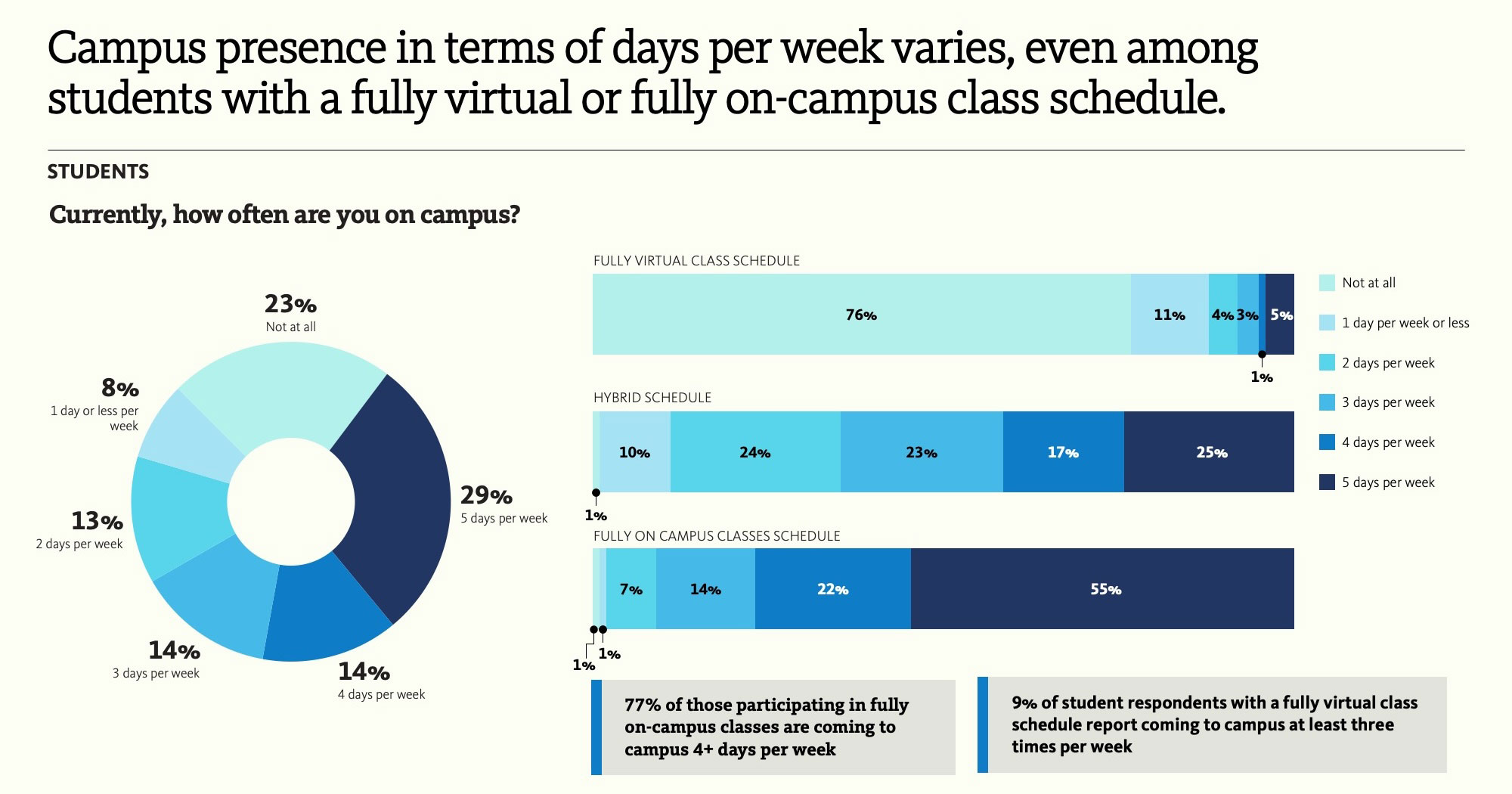
Ultimately, campus presence and learning mode no longer necessarily indicate the same educational experiences. Some students taking a fully virtual course schedule still come to campus regularly, while others enrolled in fully on-campus programs spend relatively little time on campus outside of class. We need to move beyond asking whether learning is virtual, hybrid, or in-person, and instead understand how campus experiences can support engagement regardless of delivery mode.
Learning is happening everywhere.
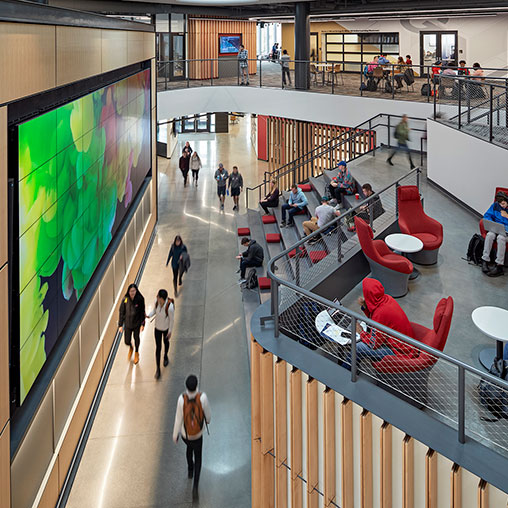
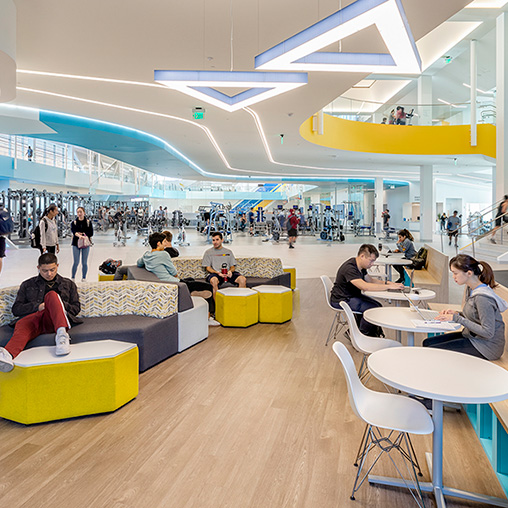
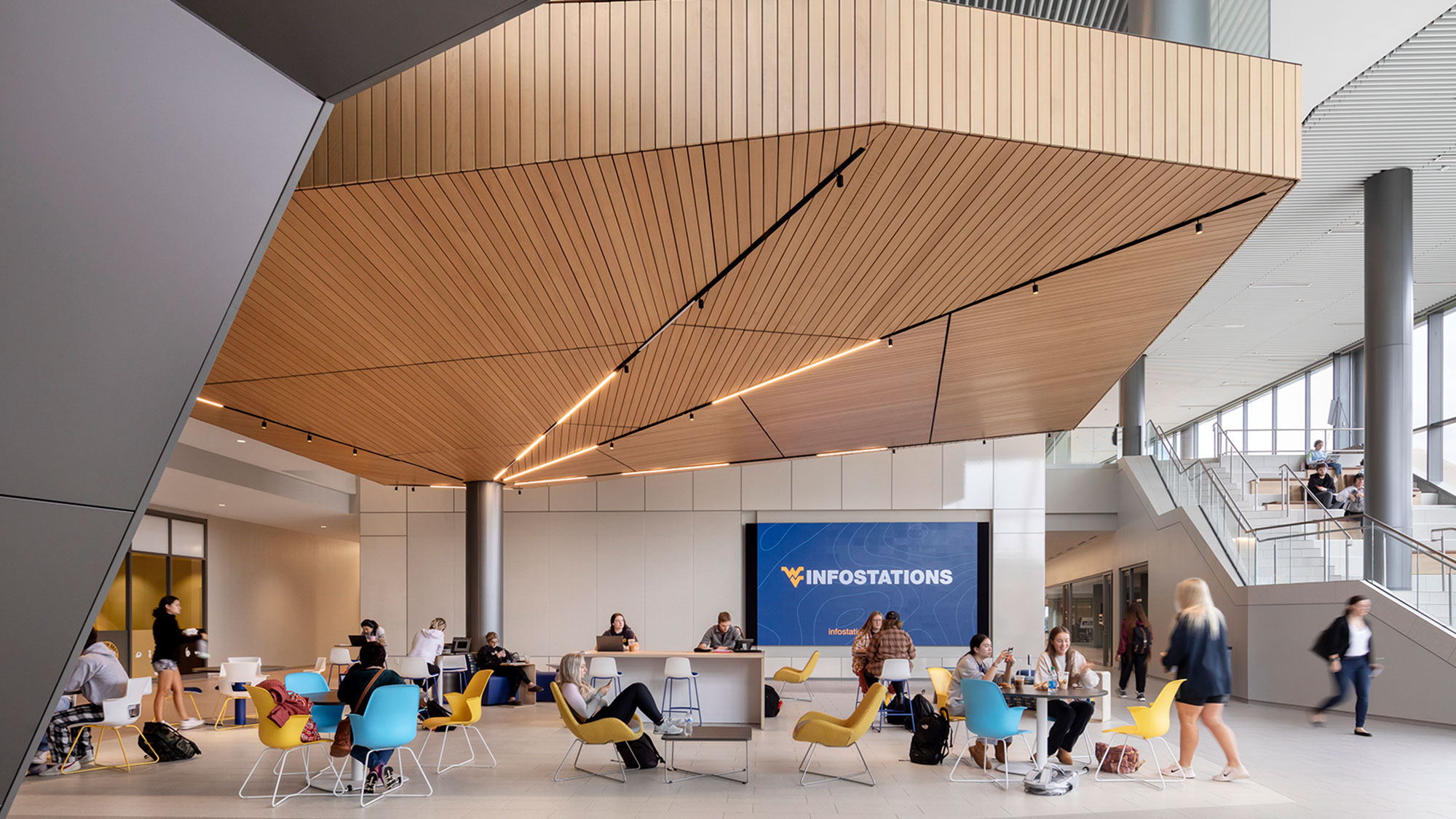
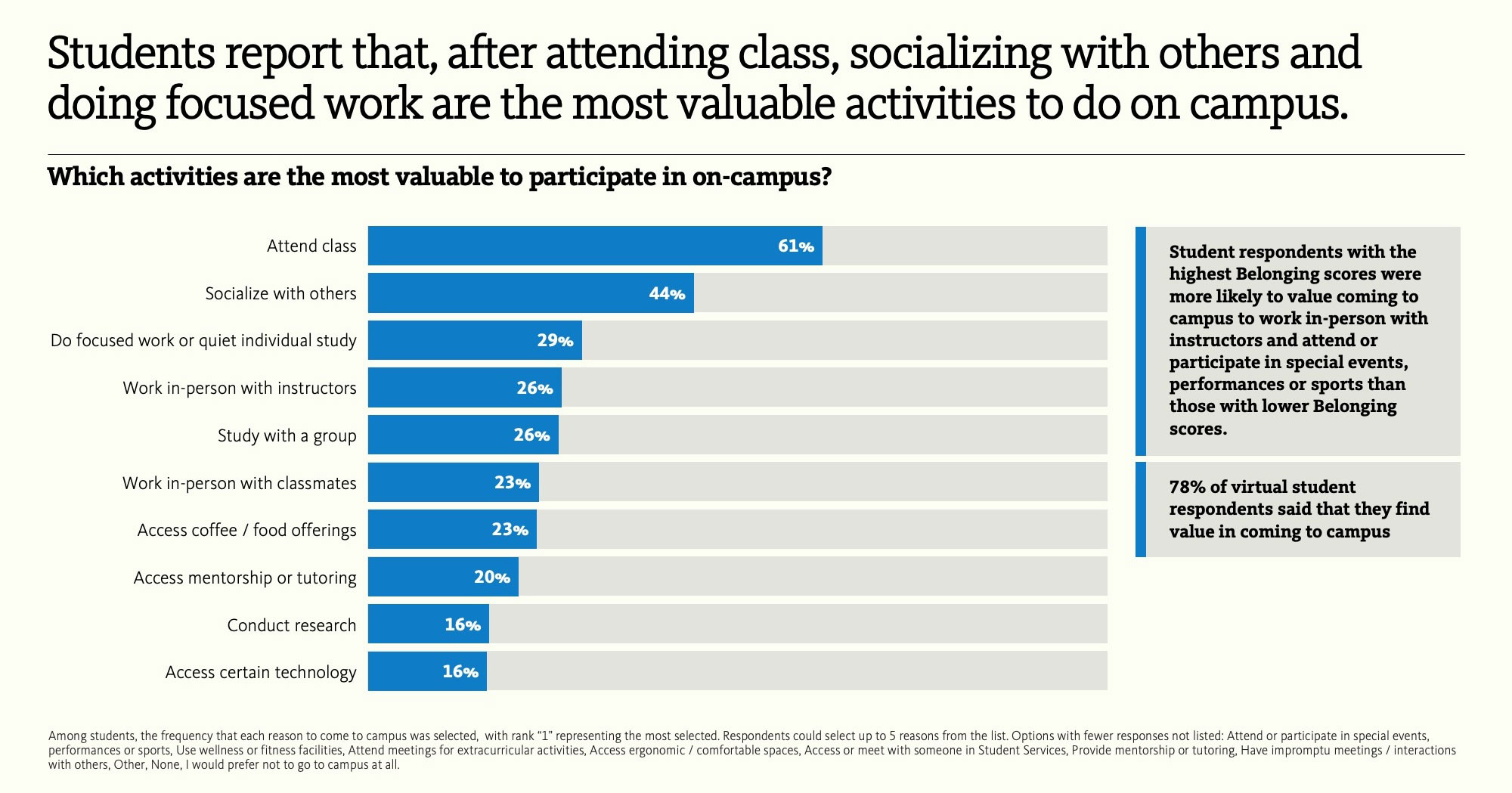
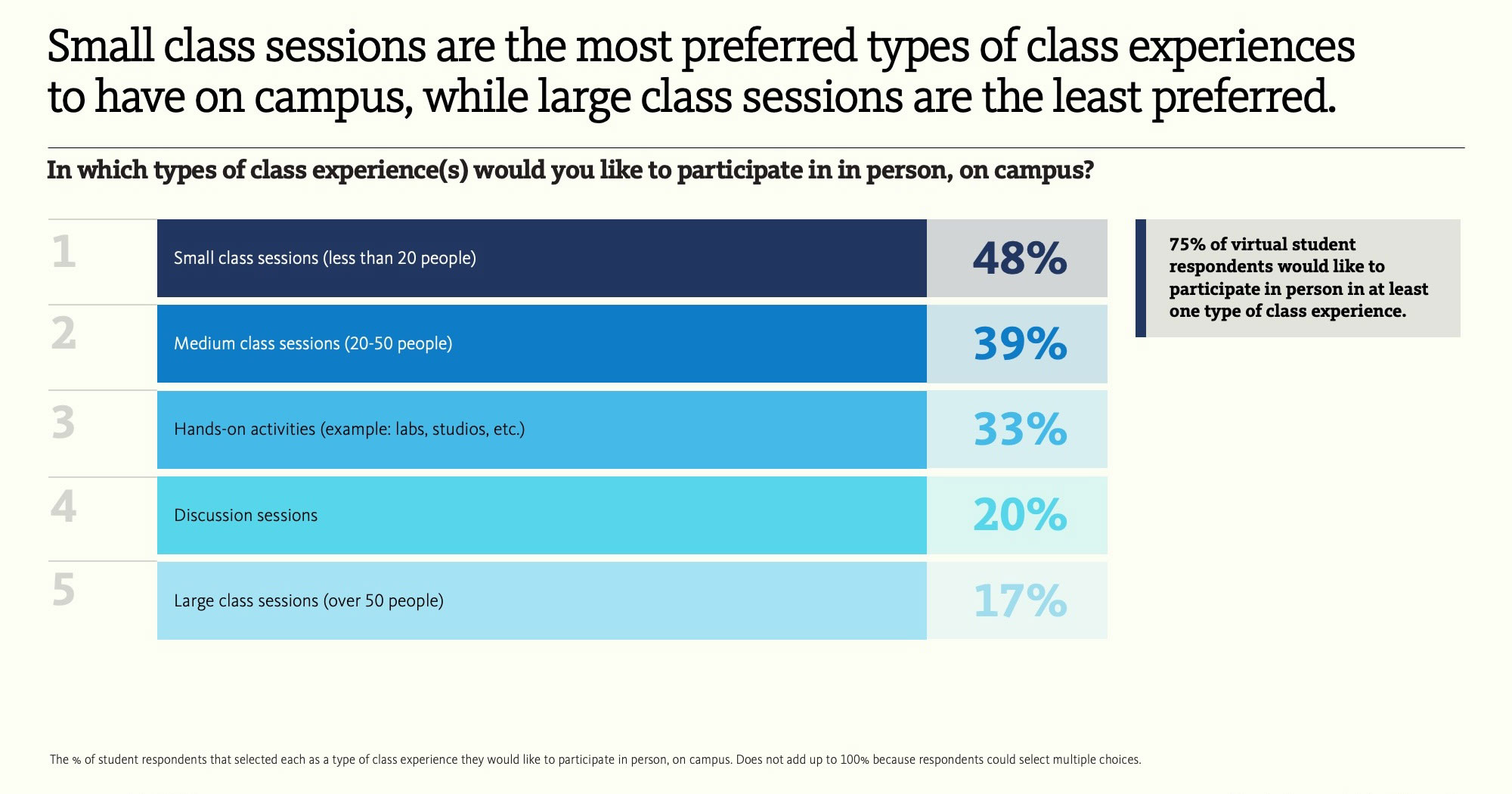
Students still value being on campus, but they move fluidly between physical and virtual environments throughout the day, choosing spaces that suit the activity at hand. Small class sessions remain the most preferred on-campus learning experiences, while large class sessions rank lowest. At the same time, students expressed interest in attending classes and collaborating virtually from a wide range of locations, including residence halls, libraries, outdoor spaces, student centers, and cafés.
Housing remains an important part of the campus experience.
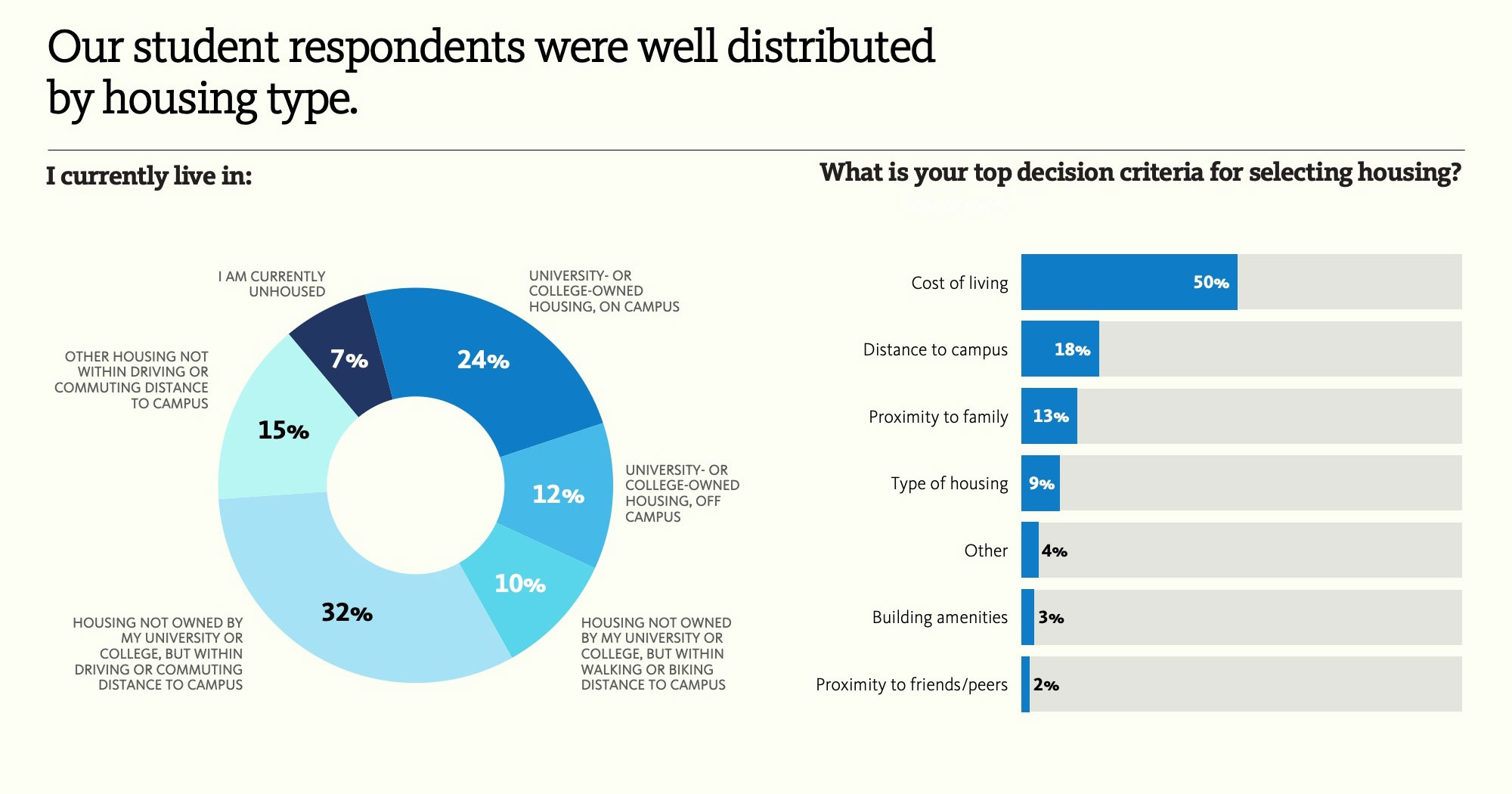
Students living in university- and college-owned housing generally reported more positive experiences than those living in non-university housing. The largest differences were in areas that support both academic and social life, including access to space for group collaboration, common areas for socializing, and the ability to balance school and personal responsibilities.
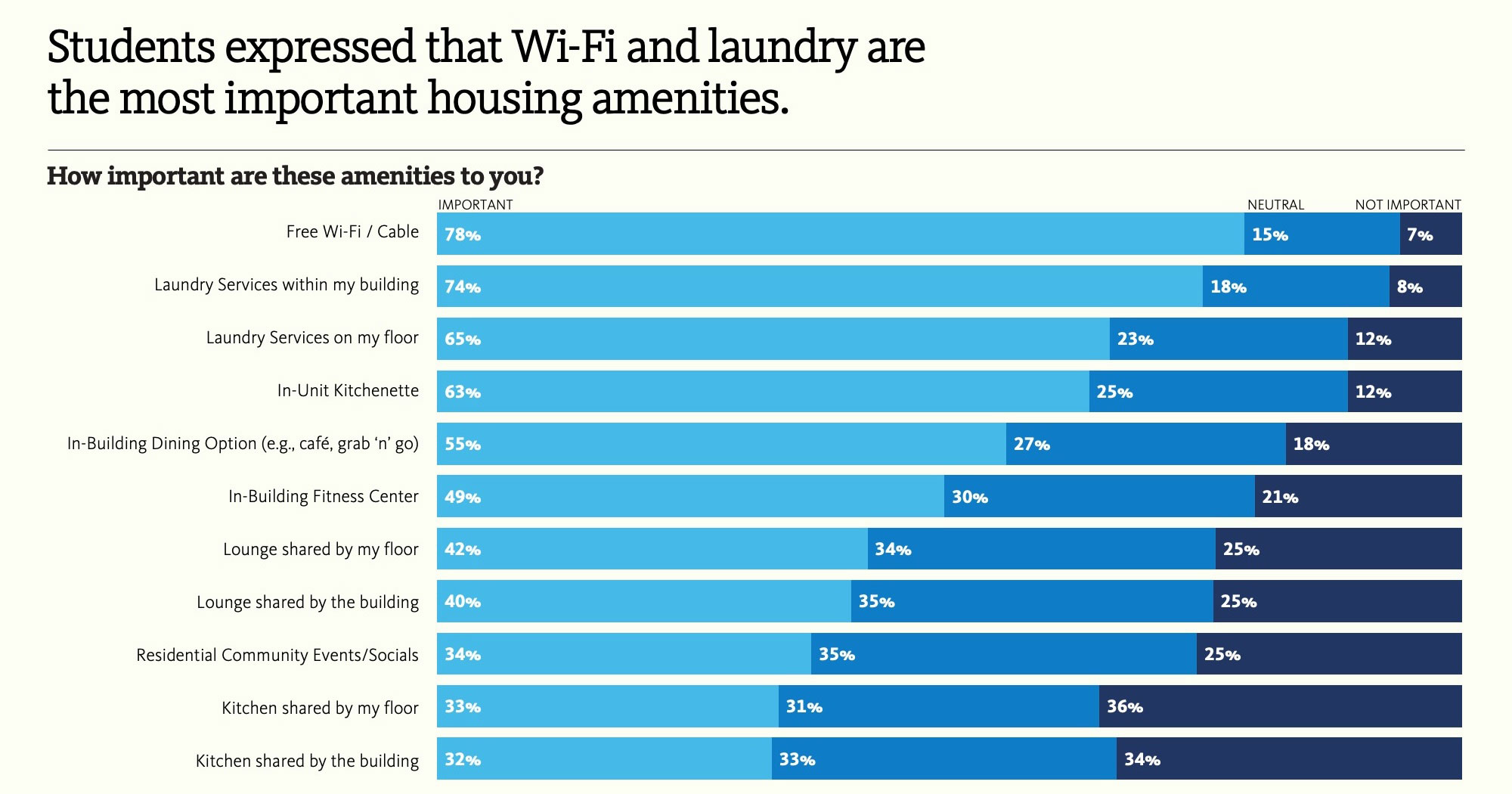
One exception was cost: While the cost of living was cited as the biggest factor in selecting housing, students living in non-university housing were more likely to feel they received good value for what they paid. Regardless of where they lived, students consistently identified reliable Wi-Fi and laundry either within their buildings or on their floors as the most important housing amenities.
The academic workplace is evolving.
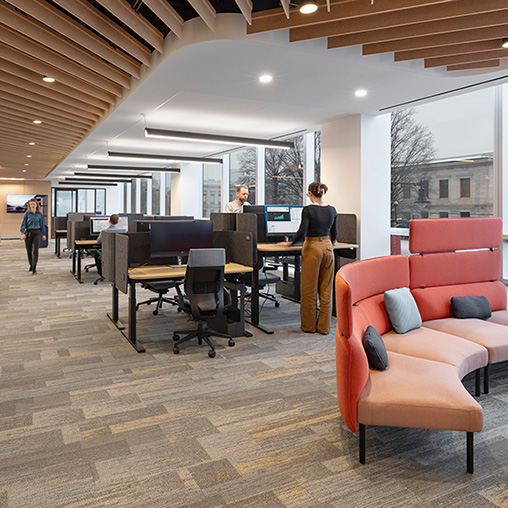
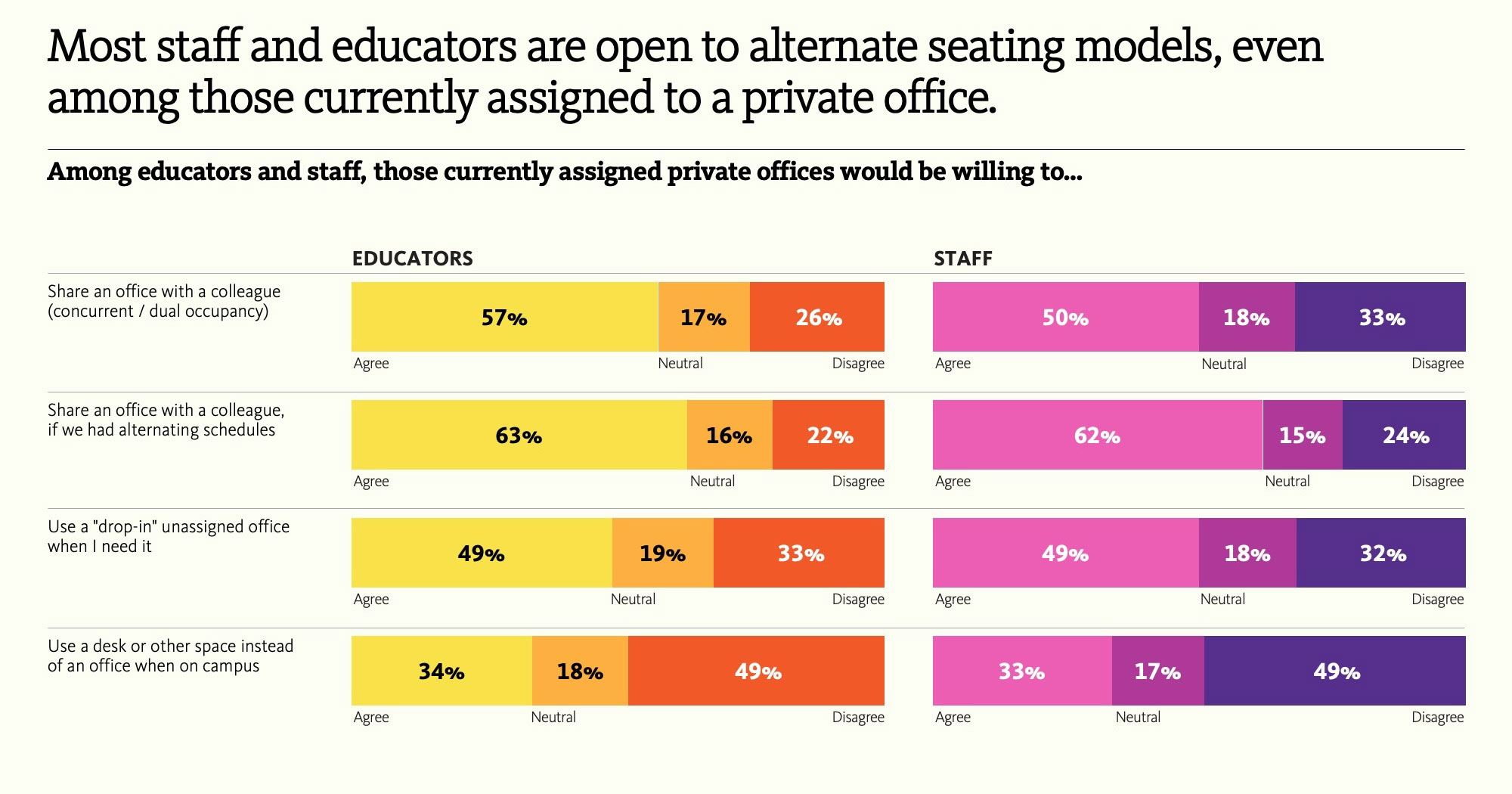
Along with the student experience, the EEI also examines educator and staff engagement. Most of these respondents currently work from private or shared offices. Yet many of those assigned private offices expressed a willingness to consider alternative workplace arrangements, including shared offices, drop-in offices, and other flexible workspace models on campus. For institutions navigating competing demands for space, this indicates that academic workplace planning might be more flexible than previously thought.
Looking Ahead
The 2025 Education Engagement Index shows that engagement, presence, and space are deeply interconnected aspects of the student experience. As colleges and universities continue to balance in-person, hybrid, and virtual experiences, the challenge is to think beyond choosing a single mode of learning or working. Creating conditions that support belonging, motivation, value, support, access, and learning across a range of campus experiences will yield the best outcomes for students and institutions.
Education Engagement Index 2025 Methodology
We deployed an online survey to an anonymous panel of 2,477 students, educators, and staff members at U.S.-based colleges and universities. Responses were collected from October 17 to December 1, 2025. This study was conducted through the Gensler Research Institute — a network of researchers and thought leaders who create insights that our education designers and strategists can use to tackle campuses’ toughest challenges, such as the student, faculty, and staff experience.
To learn more about the 2025 Education Engagement Index and how the findings relate to your institution, please contact .
For media inquiries, email .