The Fandom Effect: Sports Urbanism 2026

GENSLER RESEARCH INSTITUTE
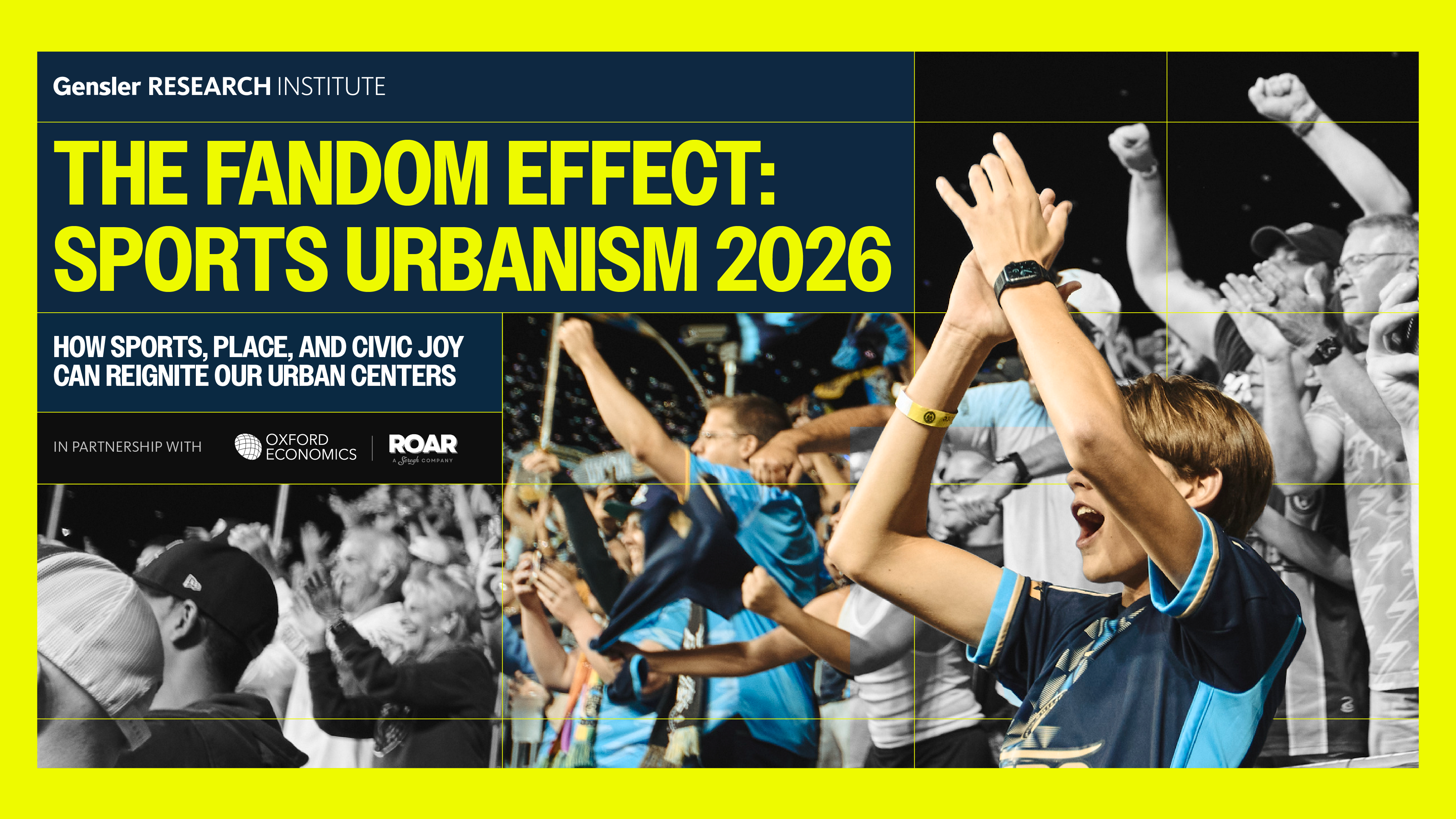
A group of people celebrating a sports outcome
Subaru Park, Philadelphia
How sports, place, and civic joy can reignite our urban centers

Live sporting events are a powerful force. They unify us across cultural divides. They compel us to pay attention for longer than just a few minutes. And they bring us together for heightened experiences. It’s no wonder that cities are looking to sports teams to ignite engagement. Tapping into fans’ passions can galvanize a community and forge a shared identity. It’s also good for business and great for people.

Sports-anchored mixed-use districts (SMDs) are expected to attract well over $100B in investment over the next 15 years globally as cities, teams, owners, and universities recognize the enormous potential of real estate to unlock new streams of revenue. In North America alone, 37 teams across major sports leagues announced they would be developing SMDs in the last two years.

Before another golden shovel goes in the ground, we wanted to understand: What do fans want? Do SMDs actually offer the best fan experience? What’s the right mix of uses to generate repeat engagement? And what is the real potential of stadiums and other venues to become economic engines and platforms for community — on game day and beyond?

Chapter 1
Residents loved what the World Cup brought to their cities. Now they want more.

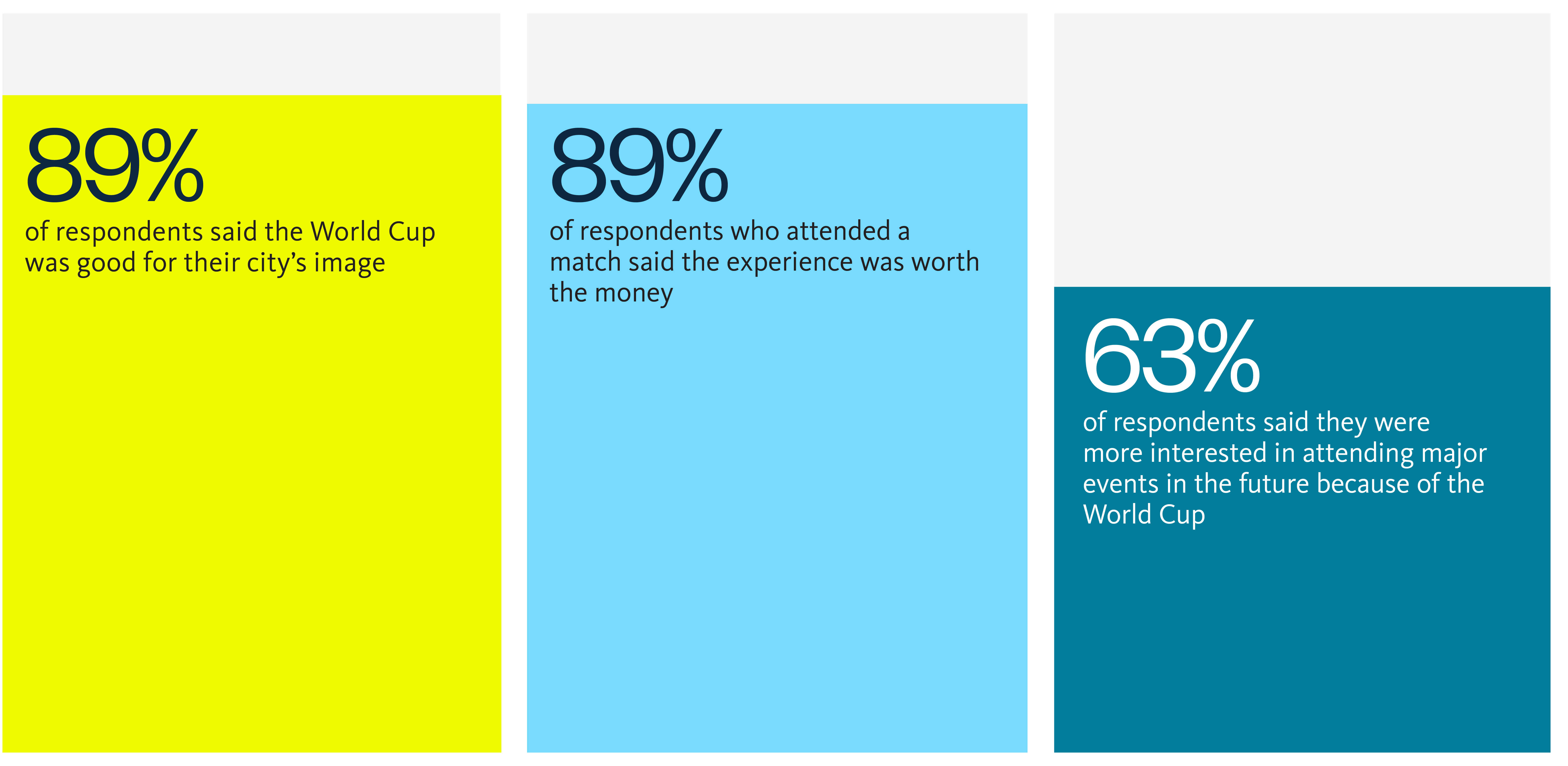
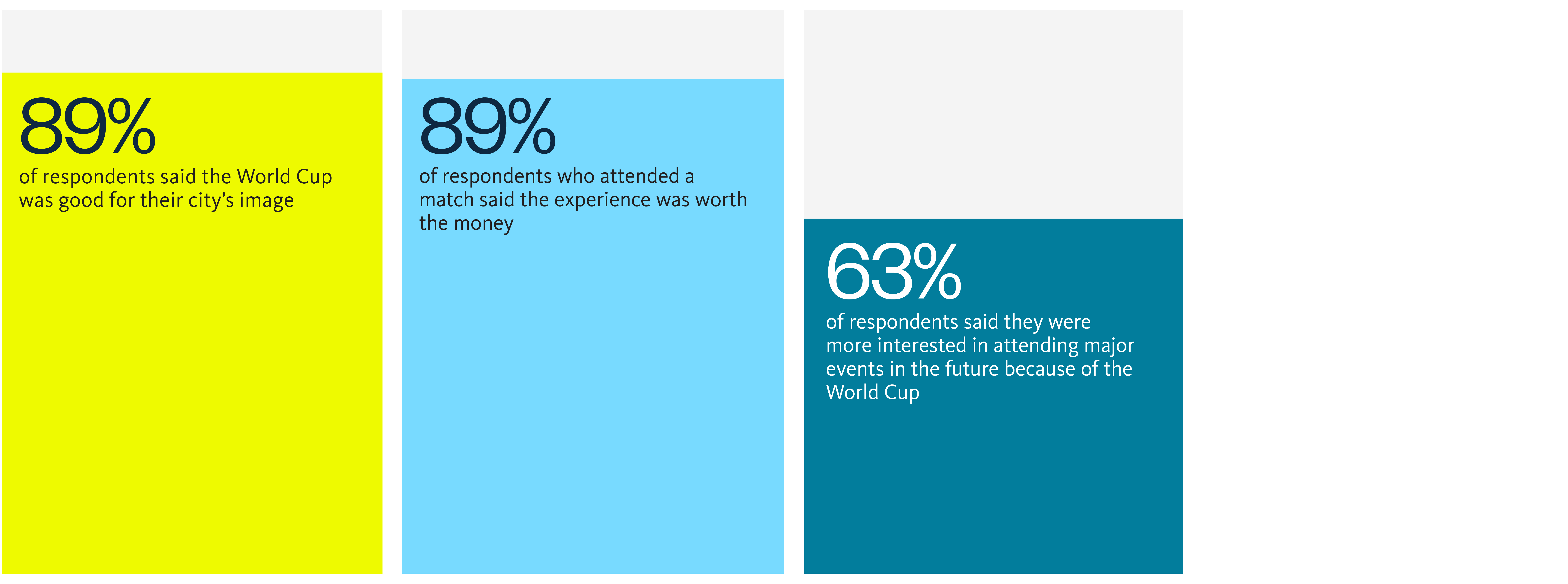
Despite initial fears that a North American World Cup would fall flat, our research found the tournament was a resounding success across multiple dimensions. It delivered an excellent fan experience in the moment, but it also created a durable halo effect, giving host cities a reputational boost and elevating the national mood. Even in the face of sky-high ticket prices, the vast majority of World Cup attendees we surveyed said their experience was worth the price. What’s more, nearly two-thirds of respondents became more interested in future events.

The World Cup captured hearts and changed minds.
 
Chapter 2
The public realm is where a crowd becomes a community.

Following the fan conversation revealed the dynamics behind belonging. An analysis of social media posts made by fans at the tournament showed that they used collective, first-person-plural language (“we,” “our,” or “us”) 70% more often when posting from the public realm, compared to the language they used inside the bowl. This was true across every venue and at every stage. What’s more, when a post included words associated with awe and wonder, like “goosebumps,” “unreal,” and “electric,” fans used collective language 189% more often, regardless of where they posted from.

+70%

more collective language is
used by fans in the public realm

+189%

more collective language is used
when fans experience awe or wonder

 
Chapter 3
Friction starts before fans reach their seats.

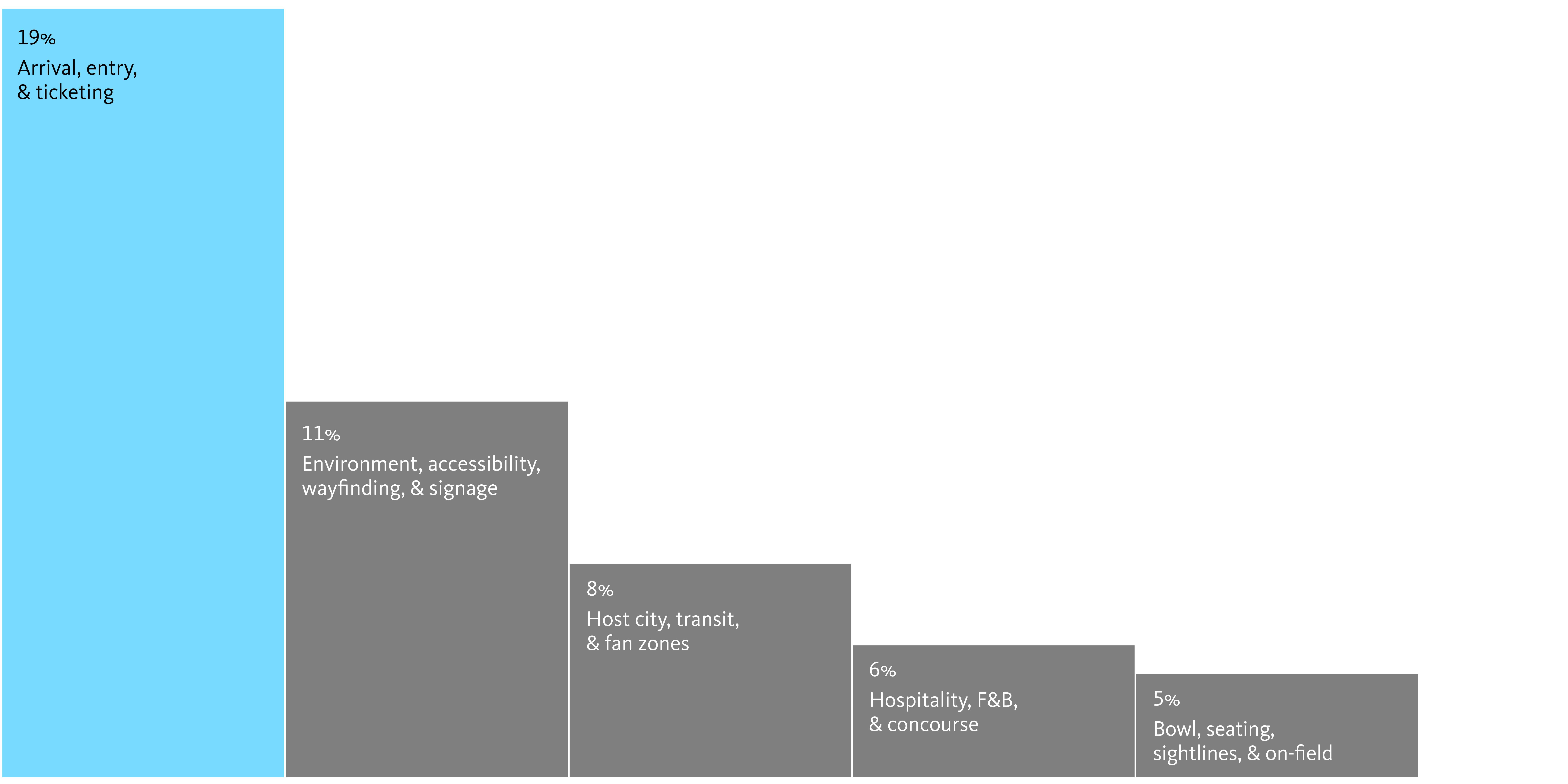
Arrival, entry, and ticketing were the only consistently negative themes that emerged from our social listening study. They were also the one stage of the fan journey where language associated with awe was almost entirely absent. Once inside, 80% said it was easy to view the action from their seats. The entry sequence was the lowest-risk, highest-return place to invest in design, both for major events and for everyday use.

The worst part of the match experience was getting in.
Within each topic, the percentage of negative sentiment of fan conversations.
 
Chapter 4
Outside of a global event, districts fall short.

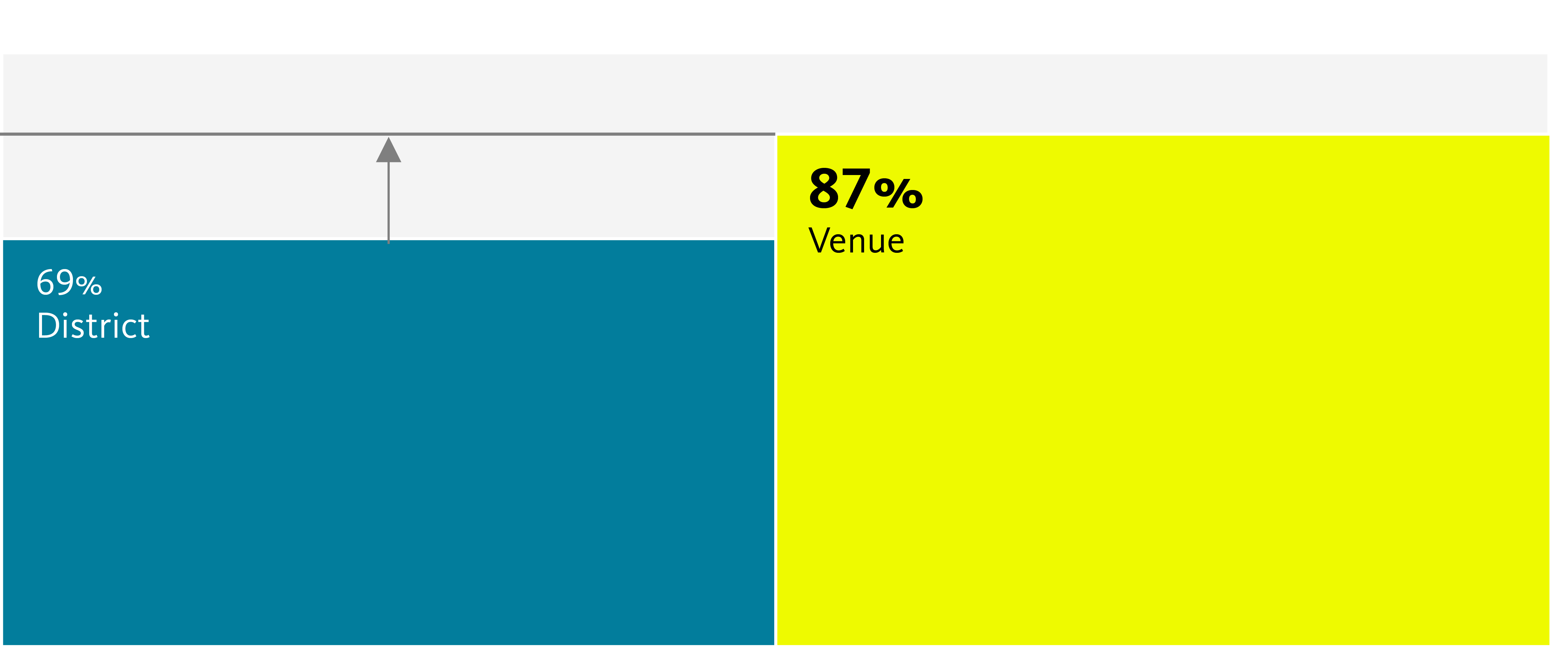
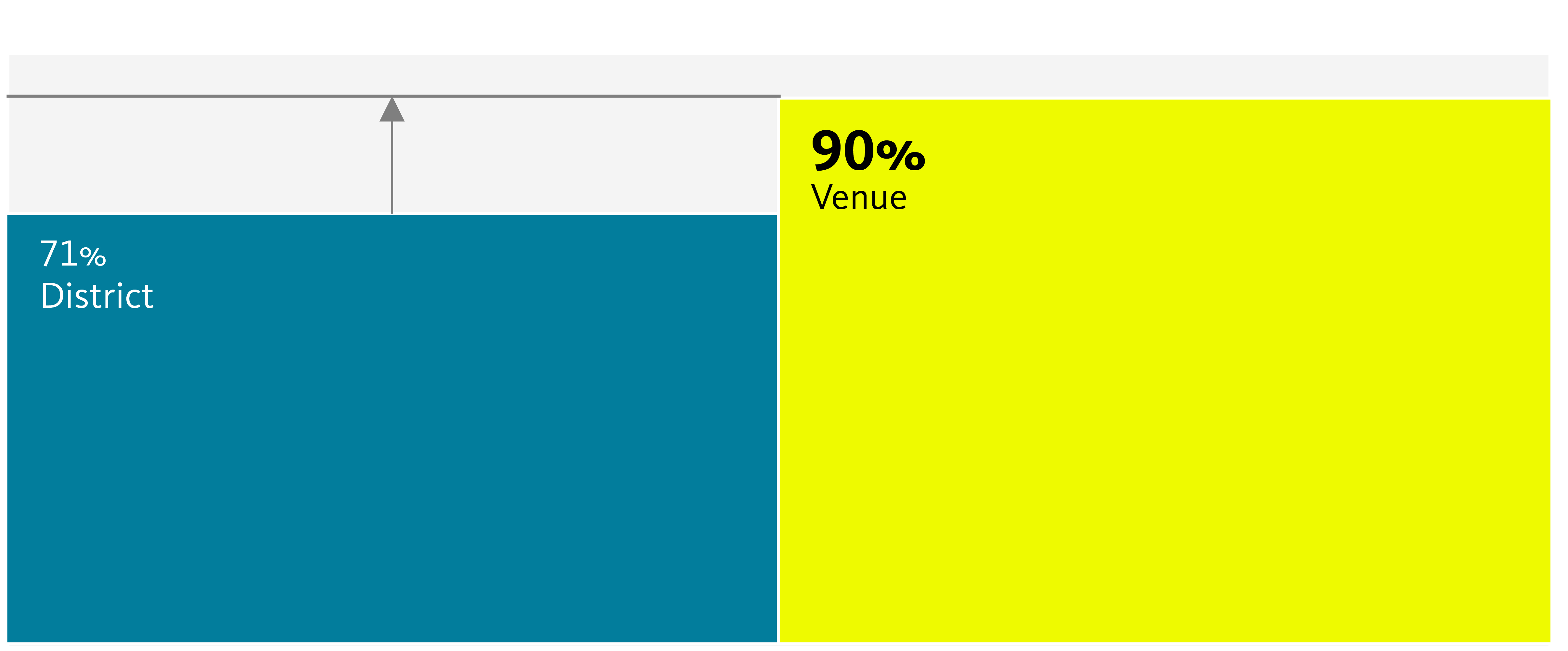
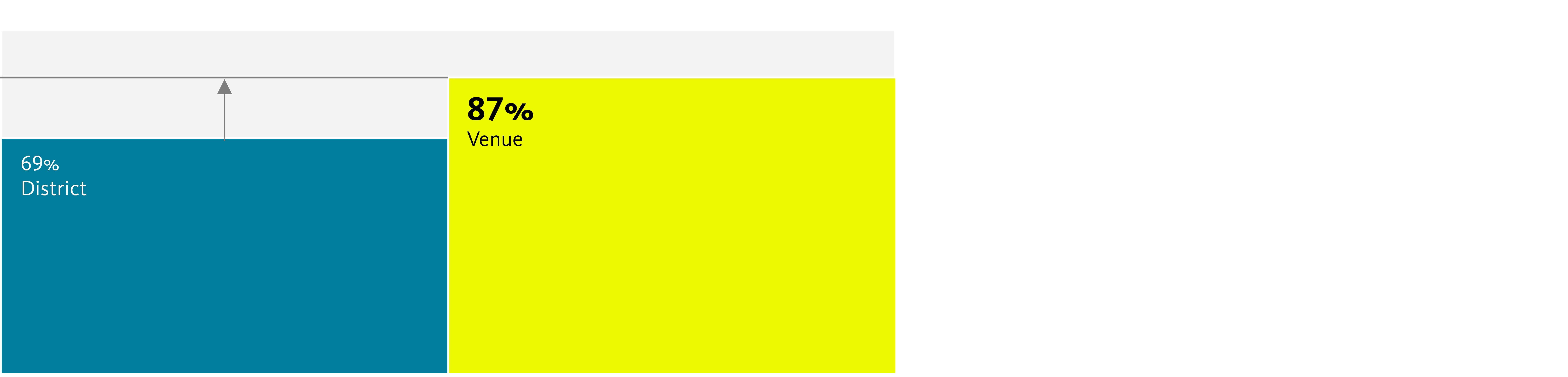
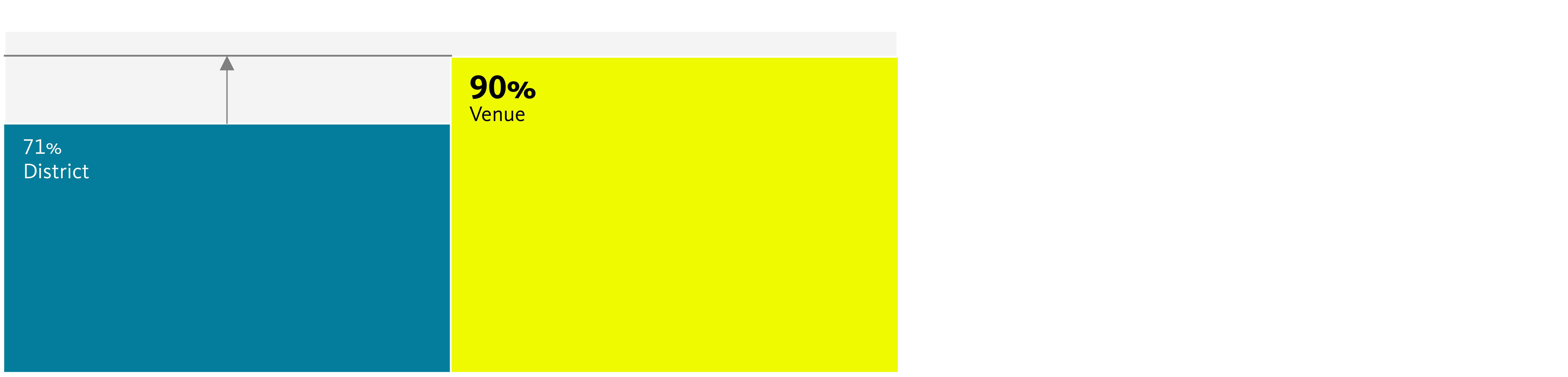
The baseline survey conducted prior to the World Cup showed that the areas around venues are not yet delivering the same experience as the venues themselves. On average across the 73 venues and their districts, 87% of respondents who recently visited rated the venue experience positively, compared with 69% of respondents for the surrounding district. An average of 90% would recommend the venue, compared with 71% for the district. Gaps of nearly 20 points on both measures show how much room districts have to improve the experience outside the venue and build on the goodwill created inside it.

The venue or district I recently visited provided a good experience.
Percentage of respondents who selected "Good" (4) or "Very Good" (5) when asked to rate the experiences offered by the local venues they recently visited, and the distrcts with which they are familiar.
I would recommend the venue or district I recently visited to someone I know.
Percentage of respondents who selected "Good" (4) or "Very Good" (5) when asked to rate their likelihood to recommend local venues they recently visited, and the districts with which they are familiar.
Conclusion
Better events start with better cities.

Host-city residents drew a clear line between event-day operations and everyday city life. For future events, respondents to the post-World Cup survey want cities to prioritize traffic management (41%) and safe public areas (39%). Over the long term, they want more reliable public transit (42%), cleaner and better-maintained public spaces (41%), and investment across neighborhoods rather than only in event areas (38%). Make a city work for its residents, and it'll work for event-day crowds, too.

 
Methodology
Data for this study was gathered through a three-part, mixed-methods research program conducted before, during, and after the 2026 FIFA World Cup™. In partnership with Oxford Economics, Gensler surveyed 5,800 respondents across 17 U.S. markets in spring 2026. During the tournament, a social listening study, conducted with ROAR, a Seregh company, examined hundreds of thousands of fan posts. A post-event survey of 2,750 residents across all 16 host cities measured the tournament's impact.
THE FANDOM EFFECT: SPORTS URBANISM 2026
GENSLER RESEARCH INSTITUTE
DOWNLOAD

Download our 2026 report on the fandom effect here to learn how sports districts can become economic engines and platforms for community.