The World Cup Is Here. Is Your Airport Ready?
How flow, flexibility, and experience design enable airports to absorb mega-event surges.
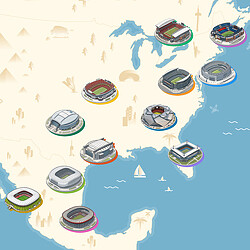
Over the next several years, major sporting events will bring unprecedented passenger volumes to host cities around the world. In Canada, the U.S., and Mexico, the 2026 FIFA World Cup alone is expected to draw about 6.5 million attendees, including a significant influx of international travelers. For most fans, the airport is their first impression of the host city, but many terminals aren’t ready to put their best foot forward.
Airports are designed for mass movement — from major hubs already moving stadium-sized crowds daily to mid-size airports where a single match’s attendance can nearly double typical daily volume. What happens when one-off mega events push the terminal beyond its design capacity?
Upcoming Global Sporting Events
2026 FIFA World Cup - Mexico, U.S., Canada
2027 Asia Games - Riyadh
2027 Cricket World Cup - Johannesburg
2028 Olympics - Los Angeles
2030 FIFA World Cup - Spain, Morocco, Portugal
2032 Olympics - Brisbane
2034 FIFA World Cup - Saudi Arabia
Elastic Planning — built on three interconnected design strategies of Flow, Flexibility, and Experience — creates a pliable terminal that absorbs event-scale surges without breaking daily operations.
Here is a deep dive into all three strategies:
1. Flow: Moving People at Event-Scale
Designing for flow at event scale means thinking beyond the terminal. It’s about guiding people smoothly through the entire airport ecosystem — from terminals to transportation modes to landside infrastructure. True event readiness starts at home, moves seamlessly through the gate, and ends at the match.
Spread the Load - The goal is to leverage 100% of the campus, spreading the load across multiple routes so that no single path becomes a bottleneck. More ways through means the airport can handle massive surges without throwing off daily operations or creating infrastructure that goes unused most of the year.
Key circulation strategies:
- Surge-informed circulation planning taps into modeling and simulation to predict busy arrival windows and spread passenger traffic across terminals. Smart building technology helps staff adapt in real time, keeping the terminal balanced even at peak capacity.
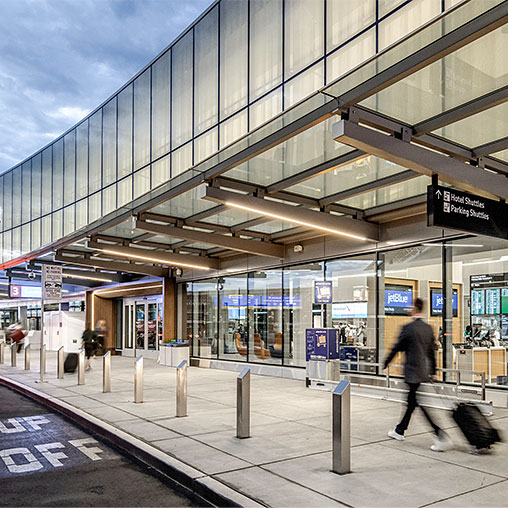
- Curbside and landside reconfiguration keeps traffic moving during major events. Rethinking how landside areas are used can make a big difference. Imagine checking your bags in a parking garage and walking straight to security and skipping the crowded terminal altogether.
- Vertical strategies grow the airport upward when expanding outward isn’t an option. Stacking security levels, opening upper-level concourse zones, and connecting directly to parking and transit gives passengers more ways to move through the airport and takes pressure off the busiest bottlenecks.
Case Study: LAX is Getting Ready for Its Olympic Close-Up
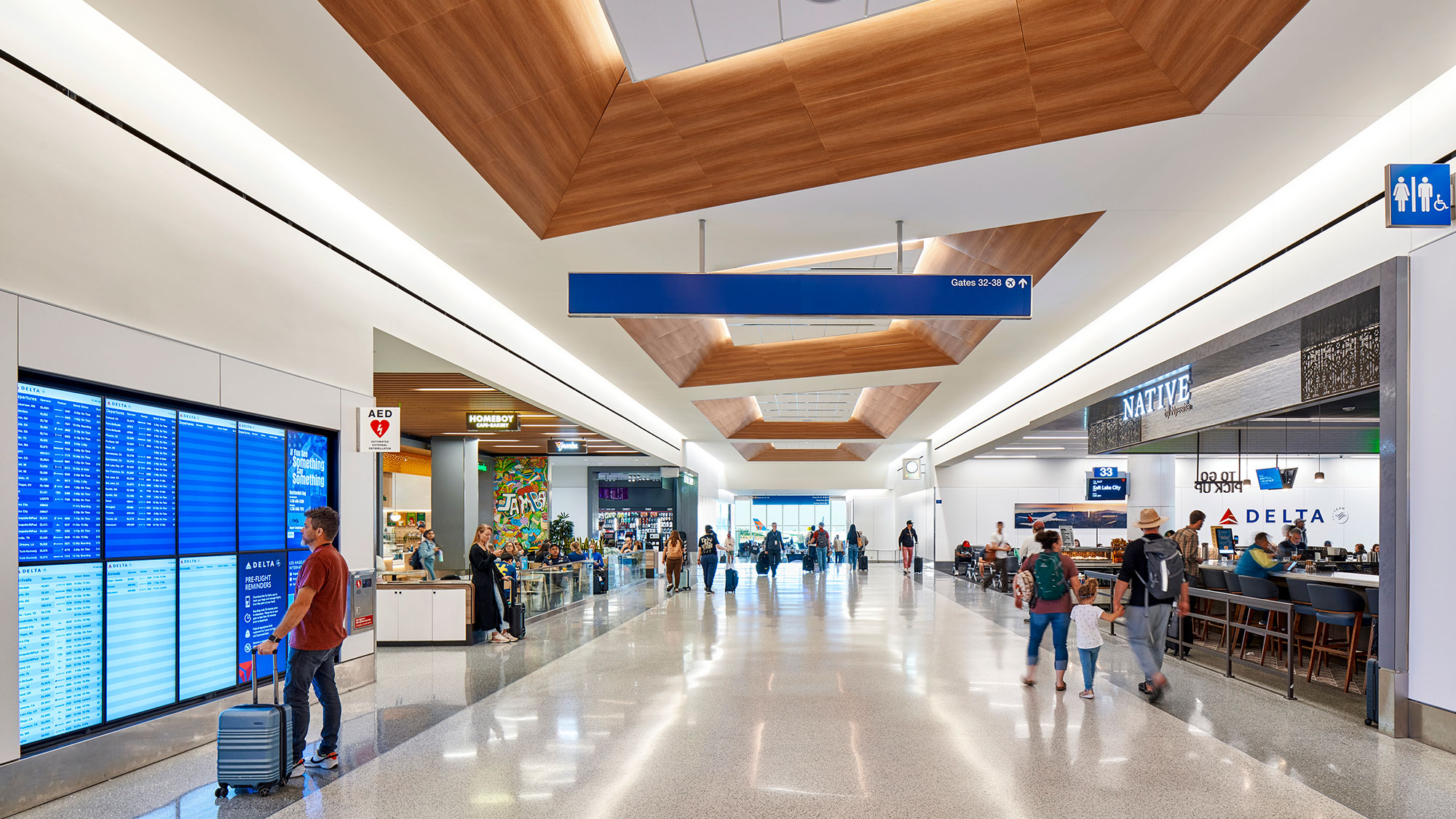
As a gateway to the LA28 Olympic and Paralympic Games, LAX will welcome several million visitors over just two weeks. Years of growth have left the airport with a patchwork wayfinding system built terminal by terminal — helpful in places, but inconsistent overall. A comprehensive program aims to fix that by bringing clear, reliable information to every step of the journey, from parking and transportation to the new Automated People Mover. Beyond signage, a future proposed air taxi infrastructure will help ease congestion. But for 2028, the bigger opportunity lies in connecting LAX to the regional rail network — a long-term priority that could transform how the city and the airport work together during the Games.
2. Flexibility: Architecting Space That Adapts
Flexible design allows terminals to respond to peak demand without overbuilding. The goal isn’t just more capacity. It’s to create spaces that can shift, adapt, and service different needs as needs shift. A truly pliable terminal can reinvent itself not just for mega-events, but across its entire life.
Three approaches make this possible:
- Modular and reprogrammable spaces use moveable walls and flexible furniture to support pop-ups, fan activations, and temporary overlays to essentially scale up for events without costly retrofits or permanent buildouts.
- Multimodal operational design allows the same space to function as a lounge on a quiet Tuesday, an expedited processing area during peak arrivals, or a VIP hospitality zone when the moment calls for it.
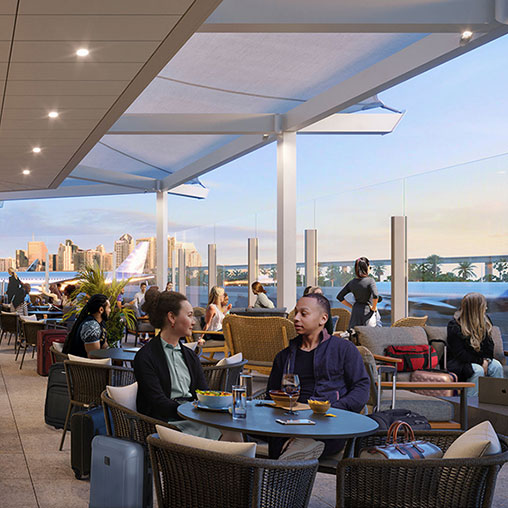
- Thinking beyond the walls uses the surrounding site to extend terminal capacity. Outdoor amenity spaces are a growing opportunity here, letting the terminal stretch beyond its baseline footprint when it needs to.
Case Study: Building PIT for Whatever Comes Next
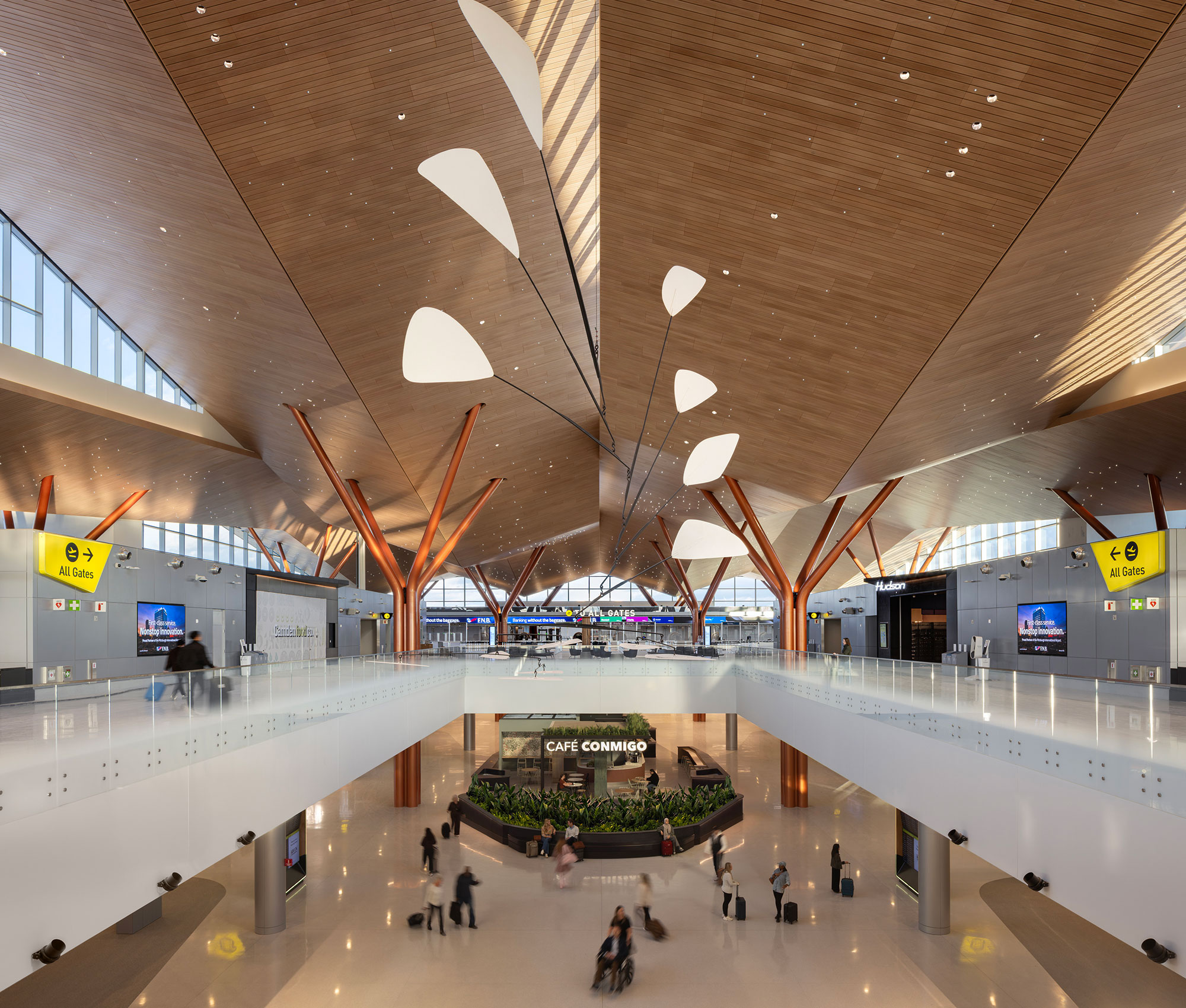
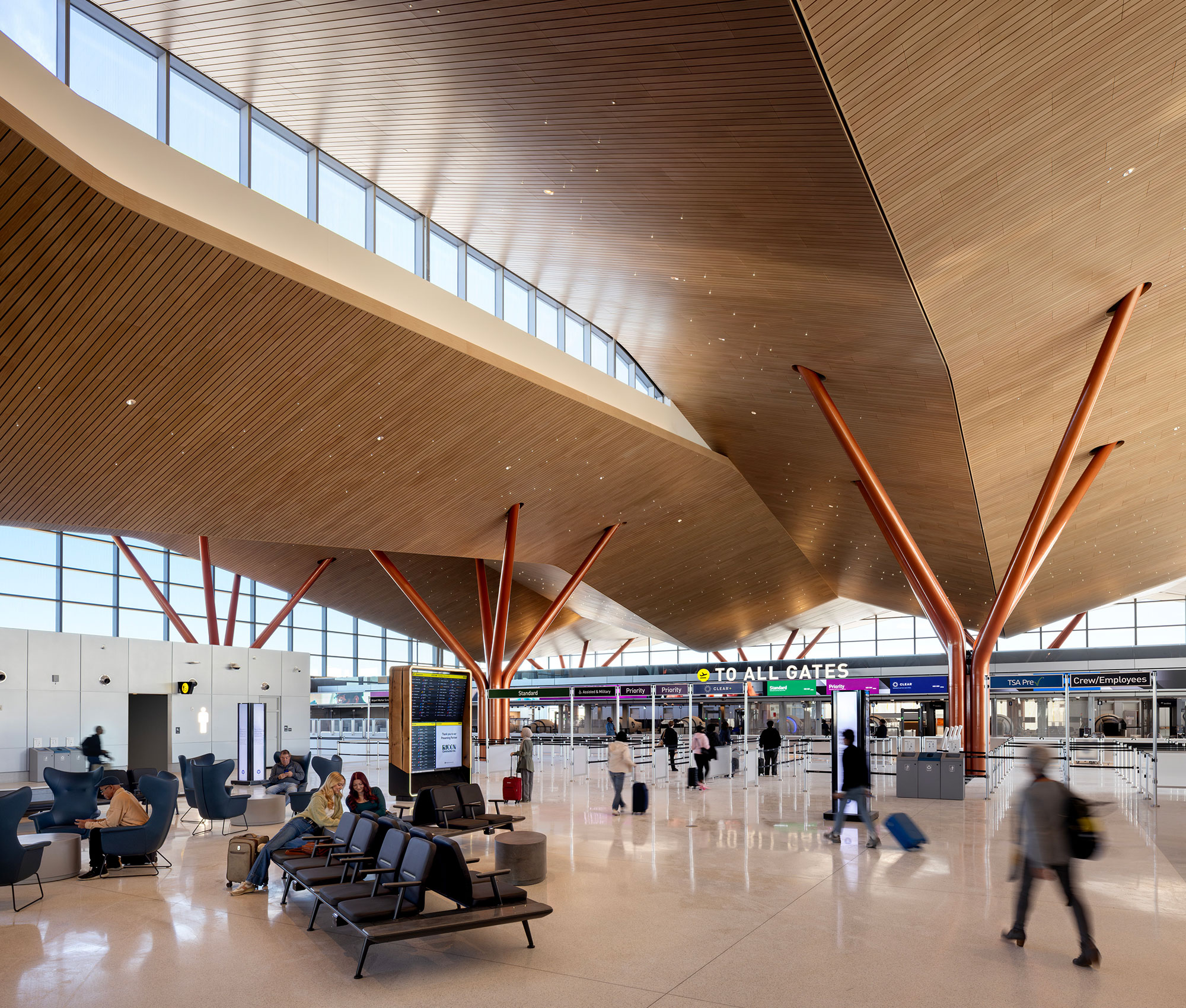
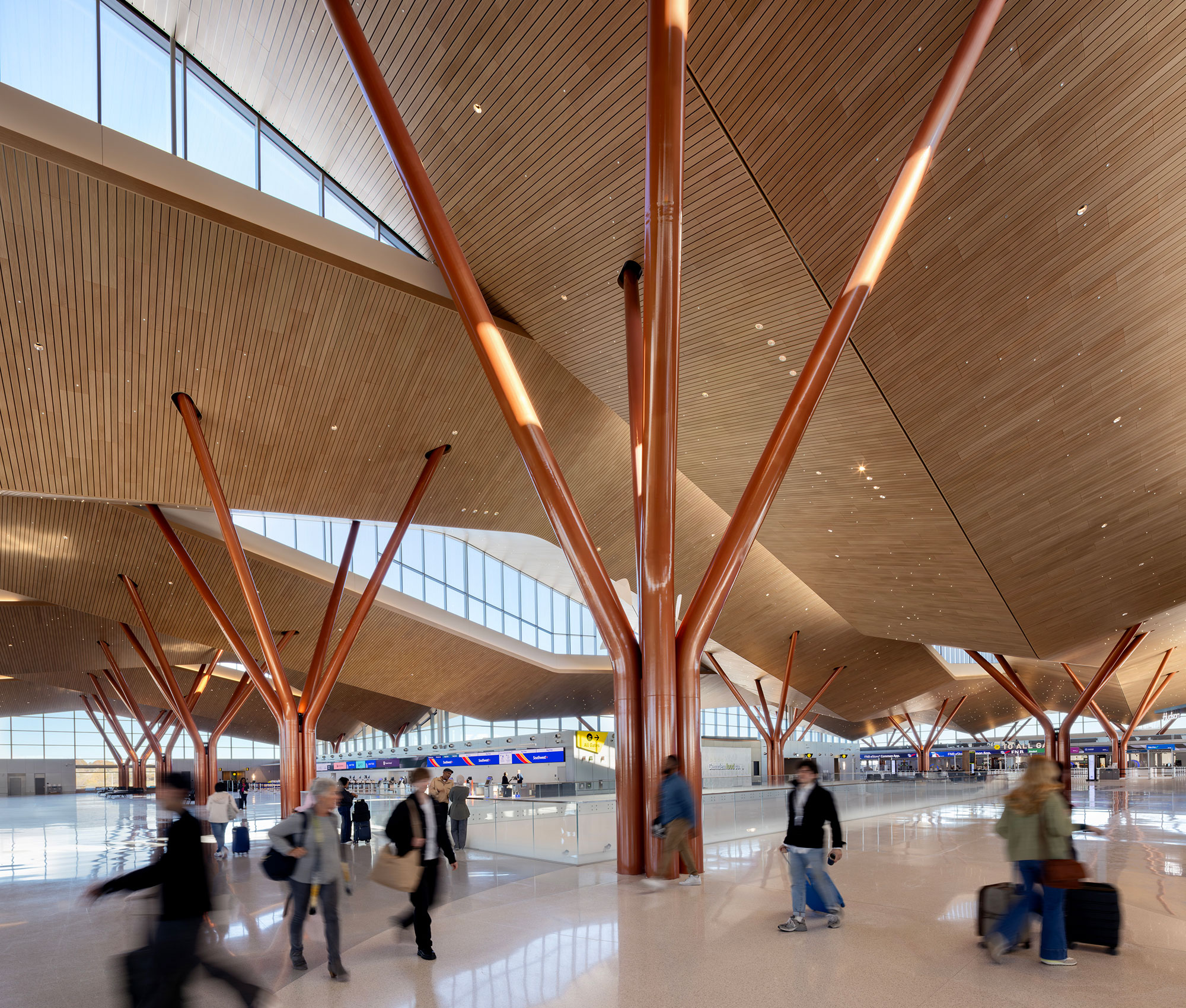
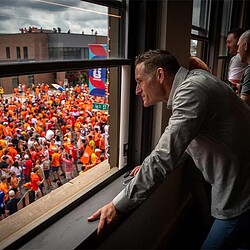
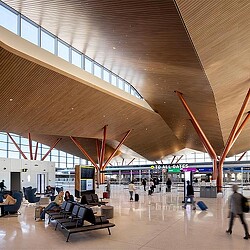
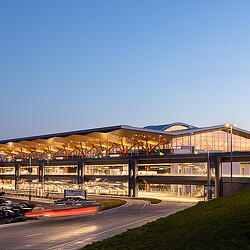
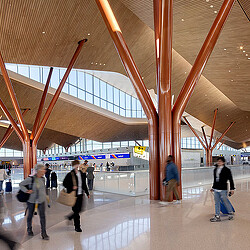
Pittsburgh International Airport’s (PIT) modernized terminal recently put its flexible design to the test during the city’s historic hosting of the 2026 NFL Draft, which drew more than 800,000 fans over three days. The terminal’s expansive layout — featuring indoor multipurpose spaces for fan activations and flexible outdoor terraces that offer fresh air and moments of relief during peak periods — was built to serve as both an everyday amenity and a high-capacity venue for major regional events.
3. Experience: Making Every Corner Count
Great airport design leaves a lasting first impression. For host cities, the arrival sequence is a chance to express local identity and set the tone for what’s ahead.
During surge events, experience design becomes a practical tool. Compelling spaces in less-trafficked parts of the terminal draw passengers away from congested areas, spreading the load naturally and making every square foot work harder.
Four ways to make it happen:
- Express local identity through architecture, art, food, and cultural storytelling. This gives arriving and departing passengers an authentic sense of place from the moment they land.
- Design for dwell time in underused areas of the terminal to create environments where passengers want to linger. This opens the door for retail, hospitality, and local businesses.
- Build in activation-readiness with integrated power, flexible walls, and modular display systems so brand partnerships and fan activations can plug in without disruption.
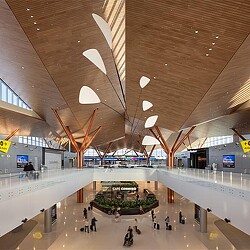
- Use landmarks to guide rather than relying on signs only. Art installations, grand staircases, or sightlines to the air traffic control tower give passengers intuitive anchors so they can explore freely, knowing they can always find their way back.
Case Study: The Bay Area, Right From the Gate at SFO
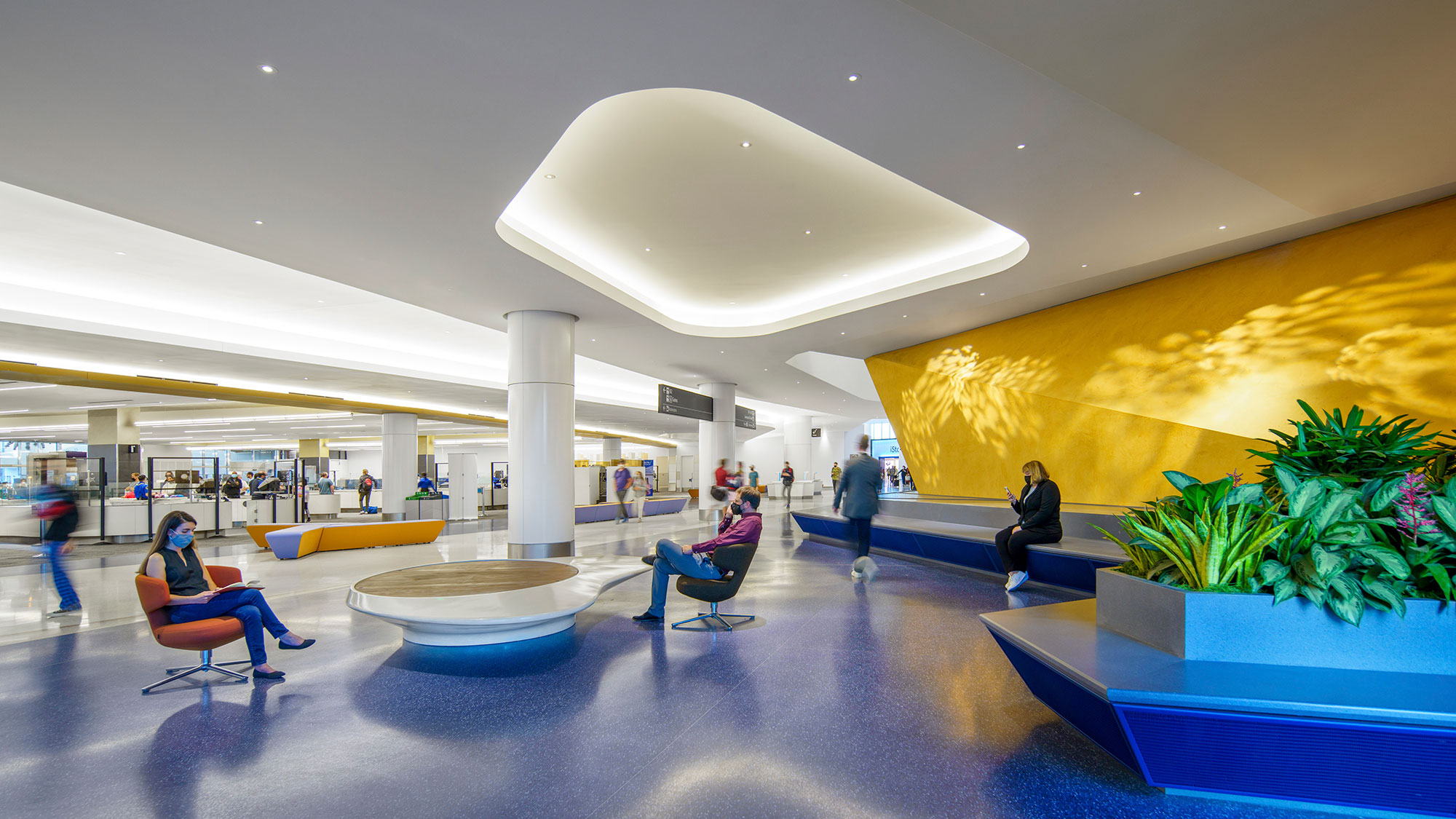
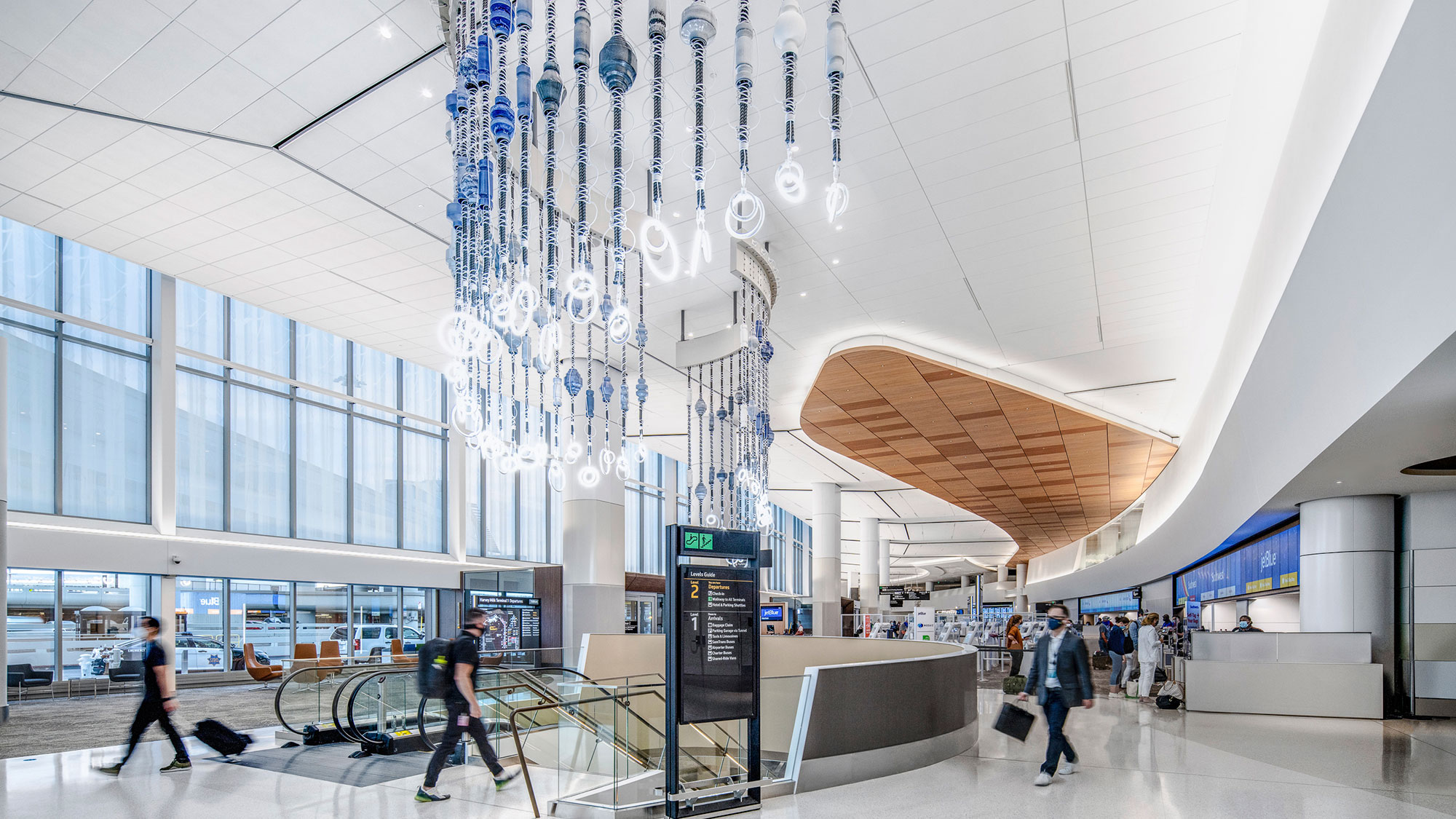
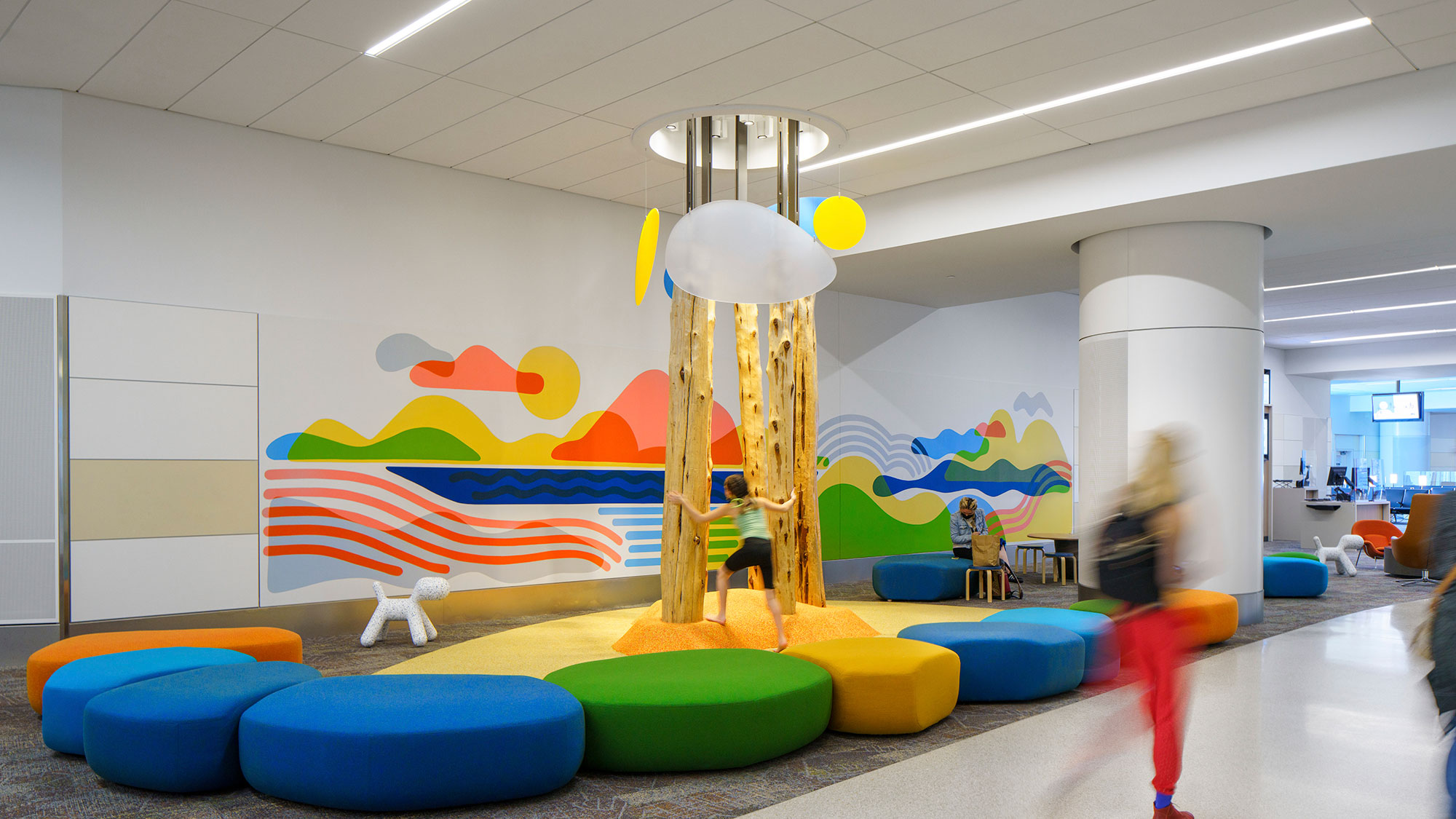
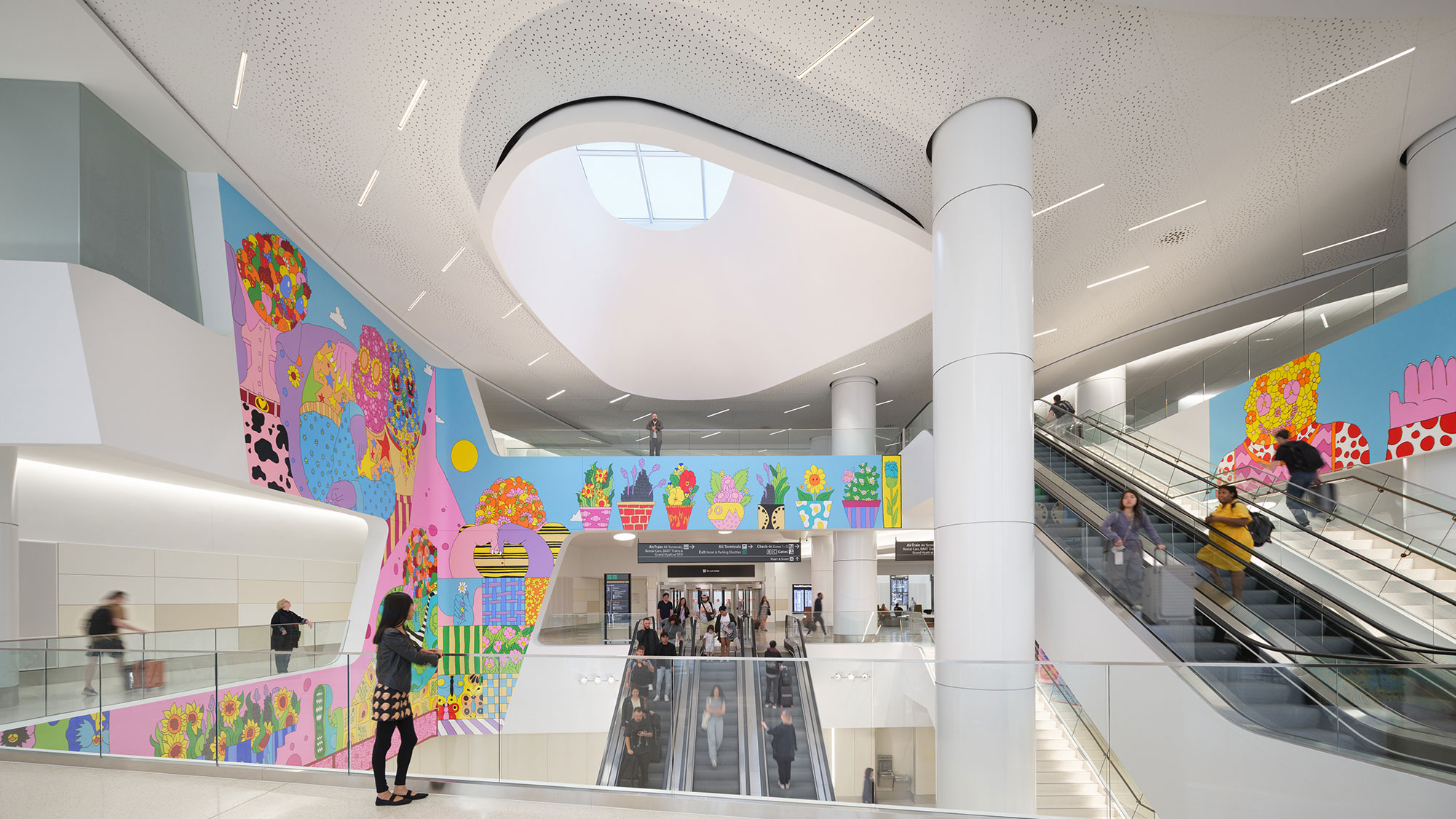
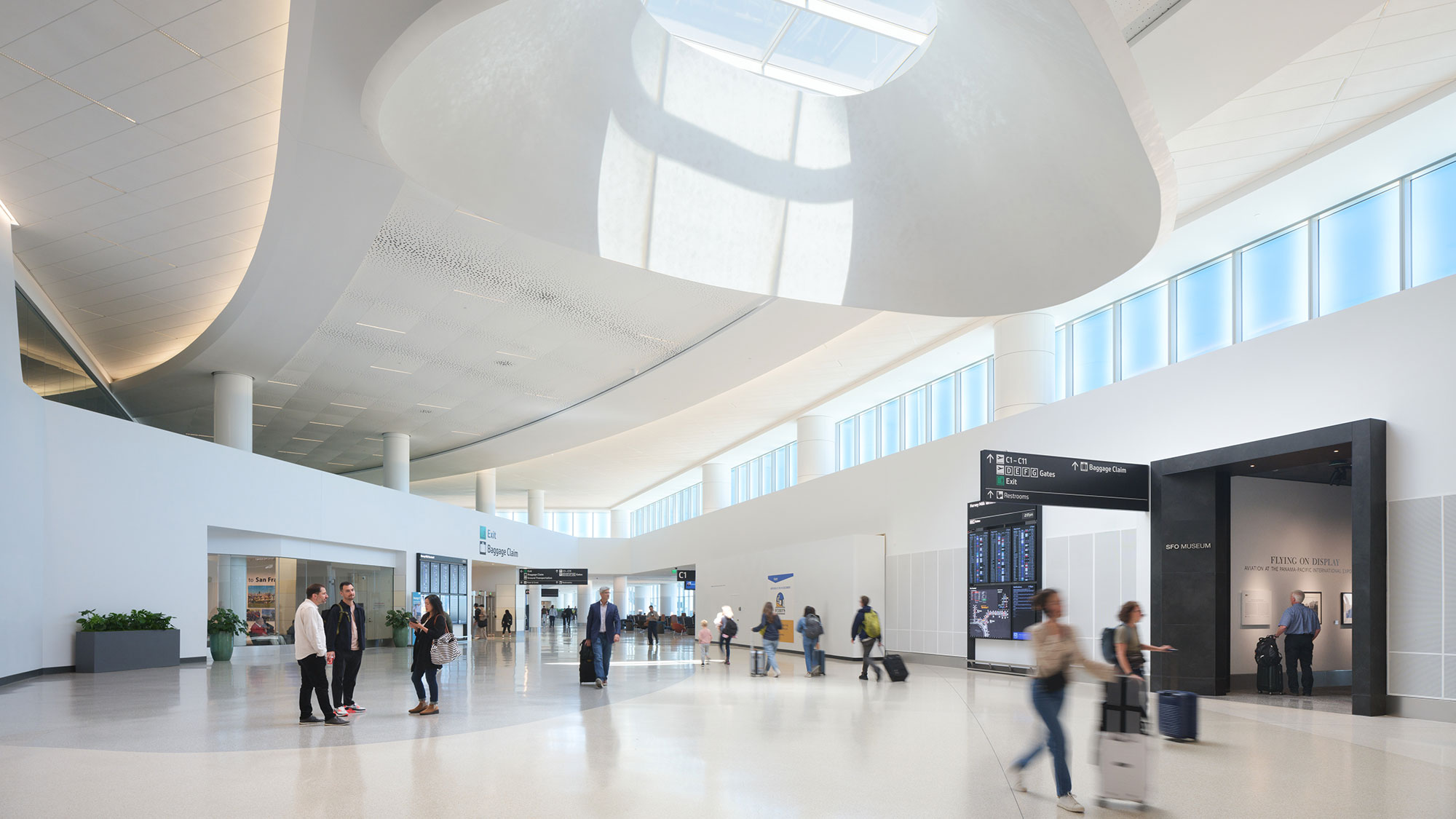
As the Bay Area prepares to host six World Cup matches at Levi’s Stadium, San Francisco International Airport (SFO) is readying a passenger experience worthy of the moment. Expanded food and beverage options and thoughtfully designed comfort zones give travelers a reason to slow down and settle in. These enhancements will drive retail revenue during peaks. Local food vendors, art installations, and sustainability messaging weave Bay Area identity into every corner of the terminal, turning a layover into an event itself.
Design Implications for Decision Makers
As airports prepare for upcoming mega-events, the Flow, Flexibility, and Experience design strategies point to three concrete decisions that shape long-term investment.
- Optimize before you build. Enhance circulation and wayfinding through a campus-wide plan of temporary overlays, untapped landside potential, and stronger ground transportation links, before committing to permanent capital projects. Airports with robust transit access are structurally better positioned to absorb surges than those relying on roads alone.
- Find the stretch. Look for opportunities to flex and adapt existing space. Reprogrammable interiors and a blurred line between inside and out give operators more tools to respond with when demand spikes.
- Make experience do double duty. Use destination branding to activate the entire terminal — not just the busiest corridors — and turn great spaces into a natural way to distribute passenger load.
Airports that weave together Flow, Experience, and Flexibility will be ready for the world’s biggest sporting moments, and they’ll be better off for it every day. They’ll be more resilient, more responsive, and more capable of turning a first arrival into a lasting impression.
For media inquiries, email .