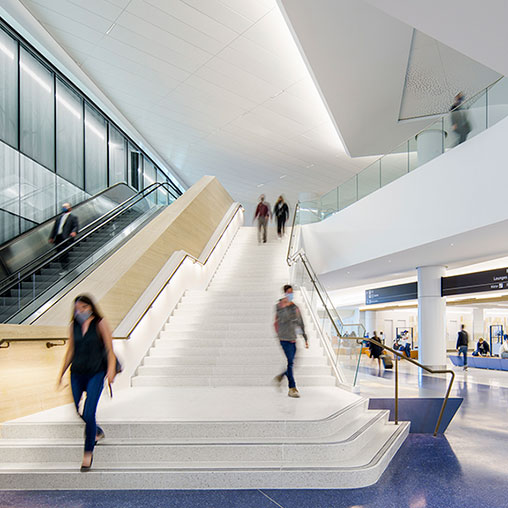
Trends to Watch: What’s Next for Airports and Aviation
Gensler’s Aviation leaders take a closer look at the trends shaping the future of travel, and what’s next for the industry.

Editor’s Note: This blog is part of our Design Forecast blog series, looking at what’s next in 2026 and beyond.
As air travel rebounds and evolves, airports face a critical inflection point. Aging infrastructure, rising passenger demand, and emerging technologies like electric aircraft and AI are transforming the way terminals operate. Airports that innovate and adapt will lead the way in shaping tomorrow’s travel.
We sat down with Gensler Aviation Leaders Tim Sullivan, Charles Morley, and William Jenkinson to take a closer look at this year’s aviation trends in Gensler’s 2026 Design Forecast and discuss what’s next for the future of the industry.
TREND 1: Airports generate and manage their own clean power.
What does it mean for airports to act as power generators?
William Jenkinson: When you change the fuel of a fleet from using gasoline to electricity, it completely changes the way that a facility must be designed to operate. Changing the fleet of cars at an airport to electric is one thing, but if you change the fleet of aircraft, that’s a much bigger deal; you have to figure out how to power and service them. There’s a whole new dimension of design and redesign that is required — a wholesale infrastructure change.
Tim Sullivan: We’re talking about short-haul, regional jet-type aircraft being powered by electrical hybrid, as well as electric vertical takeoff and landing (eVTOL) aircraft, but probably not long-haul aircraft. We’re currently working on an eVTOL project at Los Angeles International Airport (LAX) for point-to-point connections. The current airport infrastructure doesn’t really support that type of electrical charging. So, how do we integrate this type of aircraft with its infrastructure into an airport environment?

William Jenkinson: Does that make airports basically huge generators of power through green sources for the future? From a power-generating perspective, how it fits within the community is a significant consideration. How could the fact that the airport is generating vast amounts of energy benefit the community? Will airports become the power stations of the future?
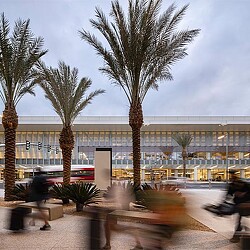
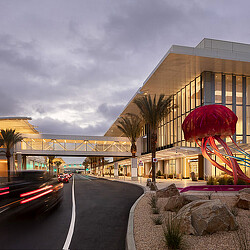
Tim Sullivan: It will depend on their location and jurisdiction, but we’re seeing more airports that are interested in self-generating as much power as possible. Unlike other airports that have contractual limits with utilities, San Diego International Airport’s jurisdiction allows self-generation.
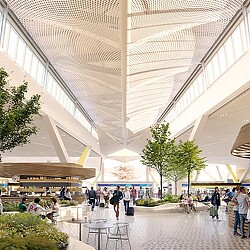
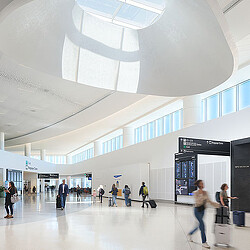
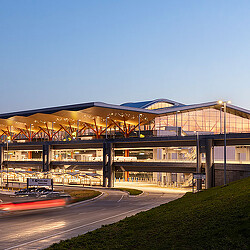
For San Diego International Airport’s new Terminal 1, we’ve designed the roof to generate four megawatts of power with battery systems to support it. Regional airports in areas like Hawaii may consider installing solar power, as their infrastructure is often fragile.

TREND 2: AI, biometrics, and digital twins transform travel.
How will advanced technologies optimize the passenger experience?
Tim Sullivan: Some airports are considering digital twins to simulate operations, manage passenger flow, and more. Everyone is looking at AI, and airline operators are setting up cameras to study how to support movement around the airport, from the airplane to the service, to figure out how to optimize it.
William Jenkinson: When we design an airport, we always simulate passenger processing. We build parameters into the model that allow for processing times at security, check-in, and at the curb. If AI can streamline these processes, it could significantly reduce the amount of space that’s required to process the same number of people. It could also give time back to the customer and put them back in control of their journey. They’ll have more time for leisure, dining, shopping, or working. There could be a huge benefit, both in terms of revenue and customer experience.
TREND 3: Leisure travel sets the brief for airport innovations.
How is leisure travel reshaping airport design?
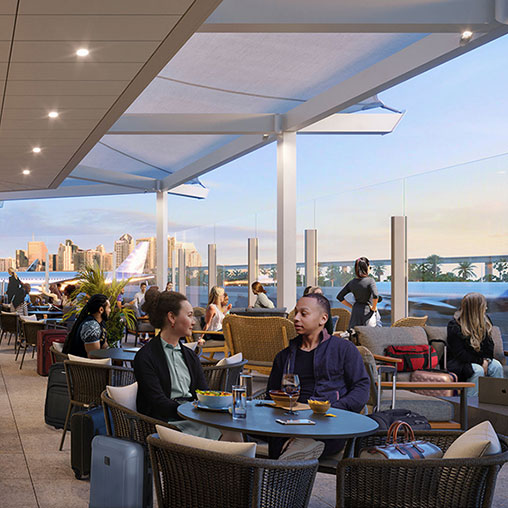
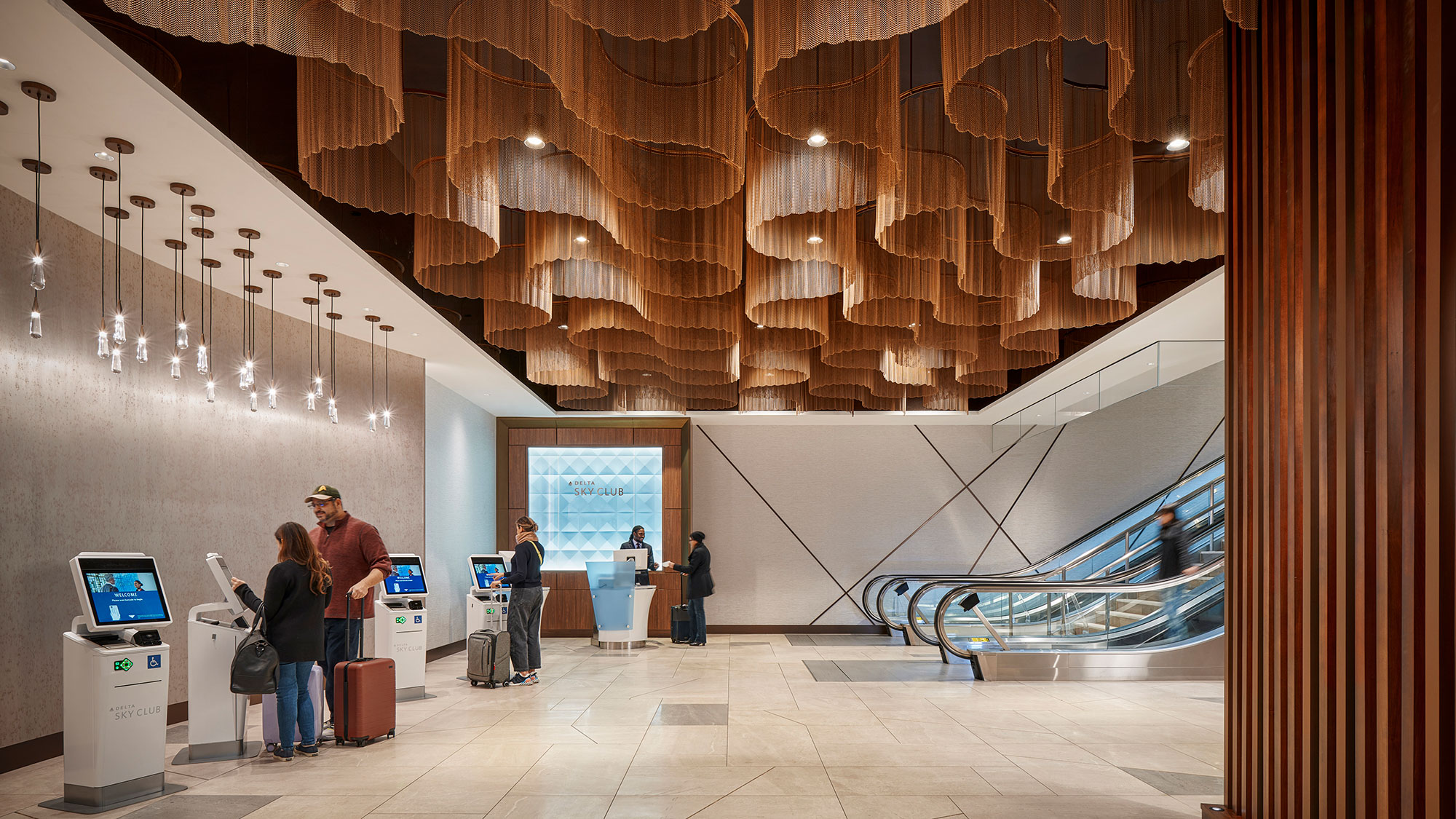
Charles Morley: In a world of instant gratification, time is our most valuable asset. An airport where our time is valued and not wasted waiting is the experience that we’re all gravitating towards. Enjoyment at every moment of the journey is at the heart of the leisure market. A big component we’ve been seeing is the trend for the “escape” of outdoor space at airports. The opportunity for operators lies in harnessing its revenue generation potential — not just having vacant roof decks, but livable terraces with concessions and restaurants that enhance the passenger experience. And it’s not just an external opportunity; we also need to integrate biophilic elements into the terminal itself as an integral part of terminal design. The natural world engages and calms us. What could be better for a weary traveler?
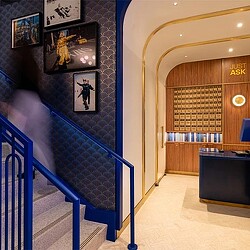
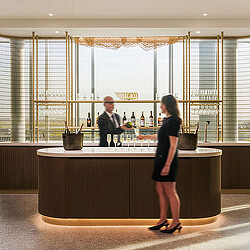
We see terminals moving away from creating a singular experience to a menu that allows you to create your own adventure. The heart of the idea is a bespoke passenger experience, where the concourse becomes a lounge for everyone. This envisions transitioning from a more functional facility to one where the entire airside resembles a series of lounges, where every traveler feels special. When you feel like you’ve been respected and the focus on your comfort has been made paramount, you feel valued. This terminal knows how you want to travel. Relaxed and at ease, pampered, you feel free to spend more because you’re already making that personalized splurge on yourself.
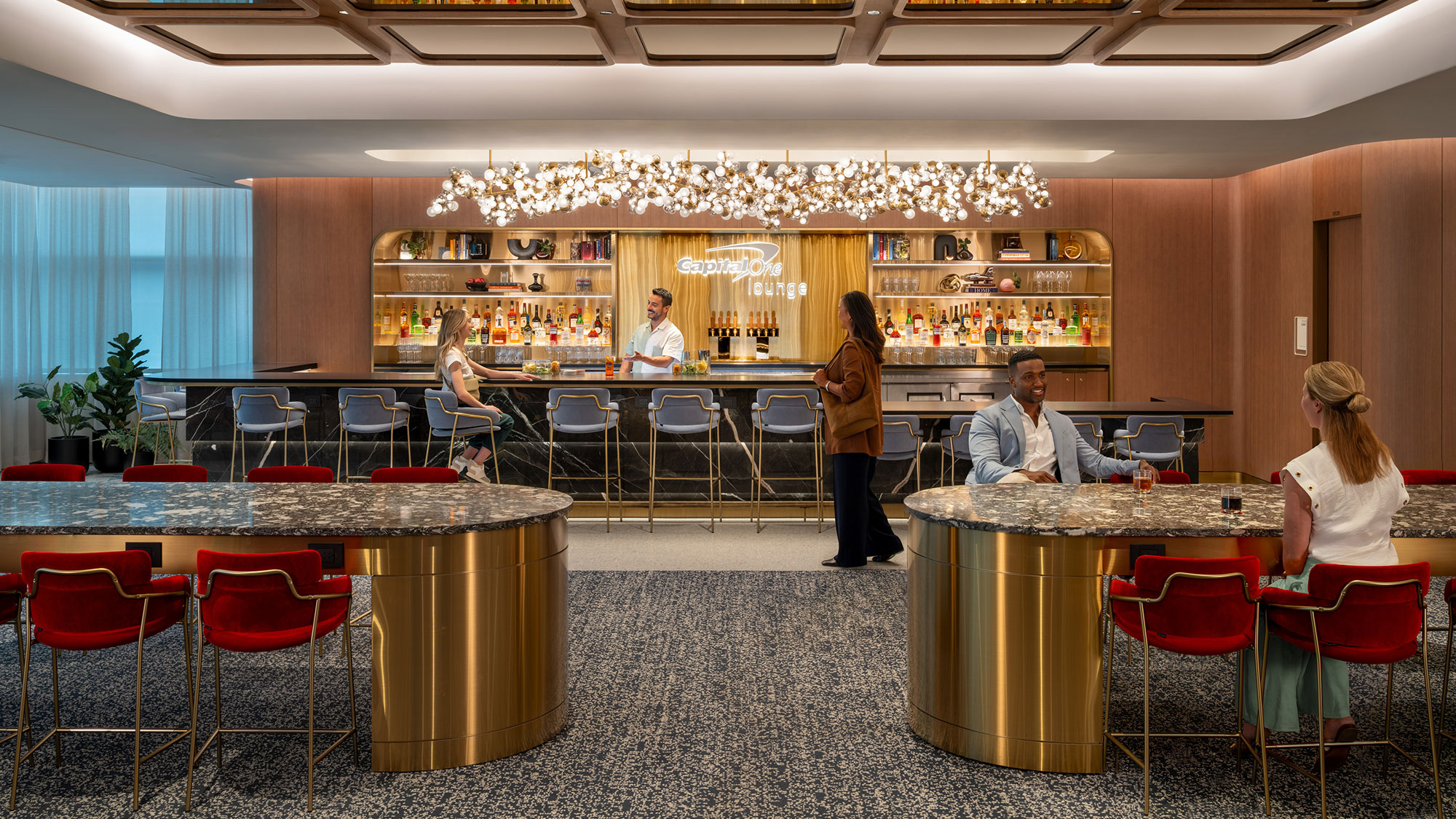
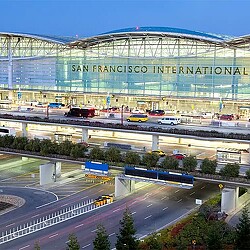
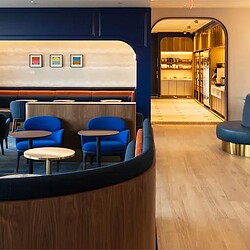
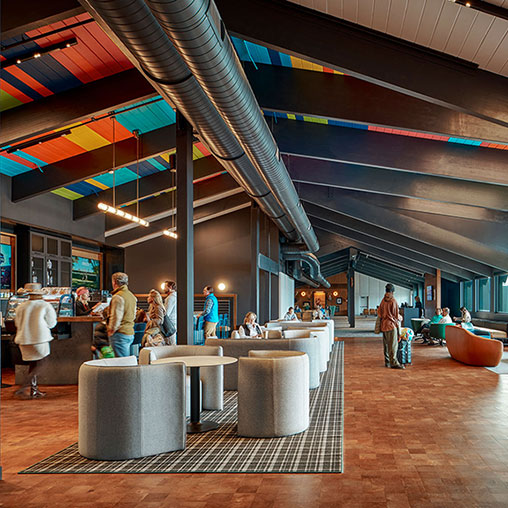
William Jenkinson: When we designed San Francisco International Airport (SFO) Terminal 2, the brief from the client was to design the gate lounges as if they were a premium lounge for everyone. Once passengers are in the space, they can enjoy lunch, dinner, or drinks in an environment that feels like an exclusive lounge, complete with comfortable furniture and lighting. It worked so well that they’ve renovated every terminal at SFO to follow this model.
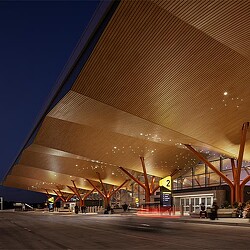
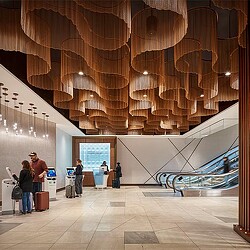
All these studies around sensory design are really interesting because they really benefit most of us. Acoustics are a critical component of journey comfort. For example, if you go through a security experience and it’s quiet, it makes such a difference — it’s just calming. And relaxed, calm passengers are returning customers.
Charles Morley: This idea of the “quiet terminal” is resonating throughout the industry. More and more, our clients tell us to focus on acoustics. The industry’s focus on the visual environment is now translating to the other senses. This impacts our material choices, as well as the size and proportions of the terminal. Spectacle isn’t a bad thing, but it needs to happen at the appropriate moment. Part of the create your own adventure idea is not just choice in offerings and activities, but also the environment and surroundings.
TREND 4: Built-in flexibility allows terminals to adapt to surges, seasons, and changing needs.
What do you mean by ‘built in flexibility’?
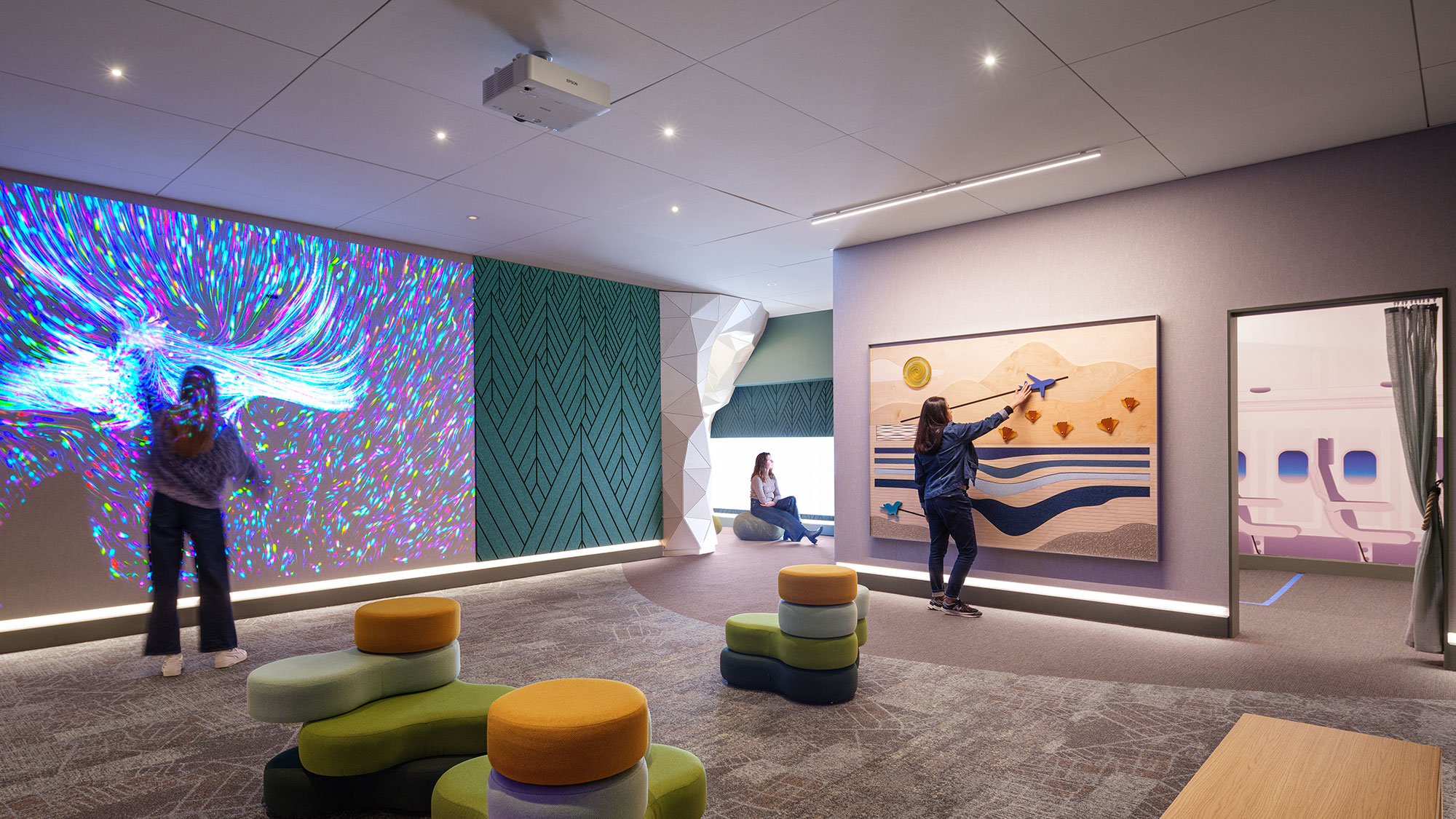
Charles Morley: That really goes to smart planning, instilling resilience from day one. Great planning is half science, half art. We have to balance the quantifiable things we know with the unknown future. I think an interesting idea is using perimeter buffer space or a soft space that is easily accessible to create an instantly self-responsive terminal that can intuitively flex and bend to irregular operations.
The increasingly popular outdoor spaces are wonderful opportunities to imbue the terminal with inherent flexibility. These spaces can offer terminals the ability to accommodate crowding or temporary surges. For example, an open-air terrace as an alternative to a holdroom filled with a delayed flight. It can also be strategically located for future expansion. Another example would be soft-programmed terraces designed for immediate use that can easily accommodate future-built expansion.
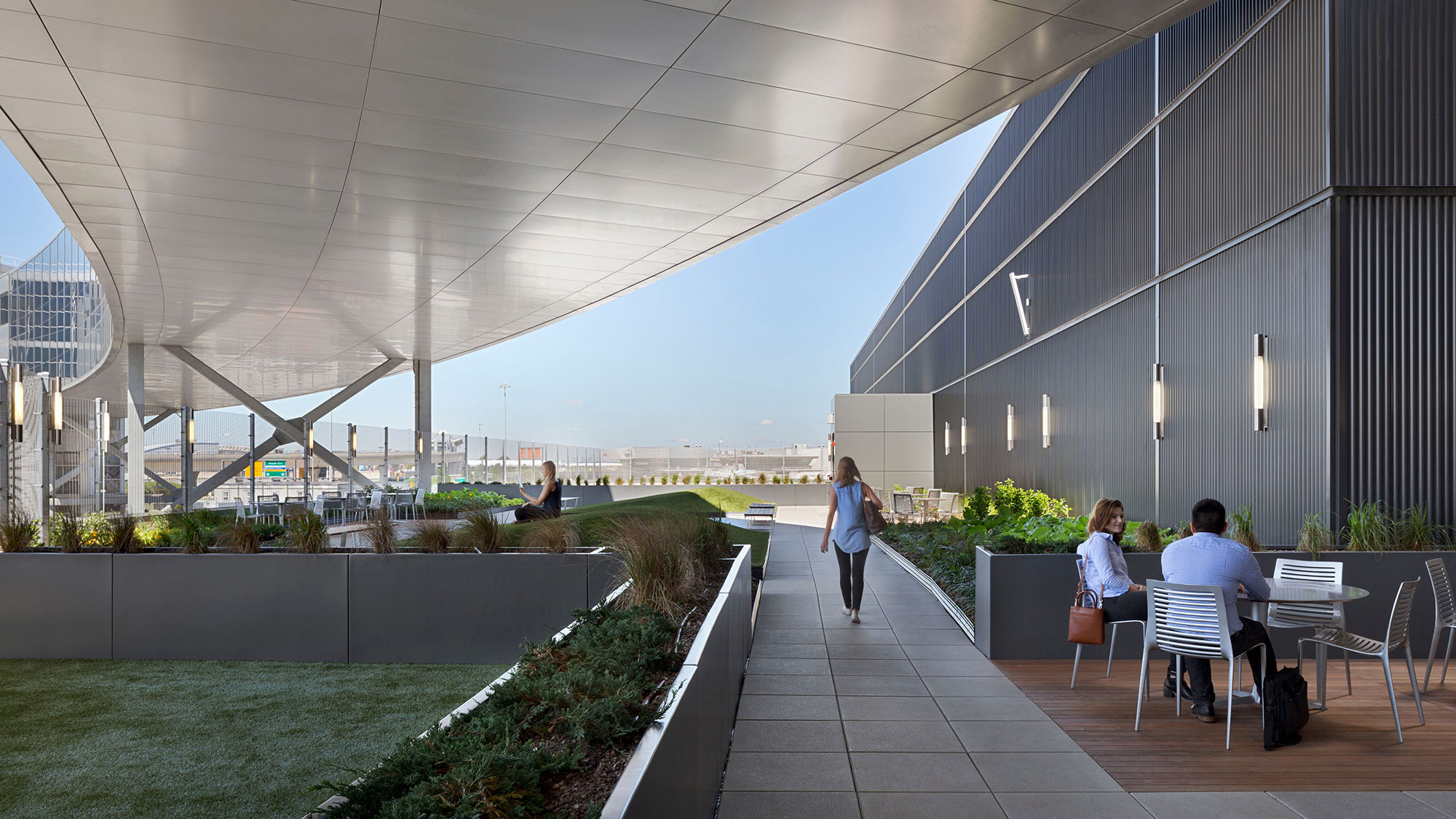
William Jenkinson: Imagine if you could have a terminal that has a roof that retracts, so one day, there’s an outdoor space and an outdoor marketplace. And then it starts to rain, you pull the roof up, and you’ve got an indoor space and an indoor mall. It would make for a wonderful flexible terminal space. So, let’s say you’ve got a tourist airport in the Mediterranean, and you need twice as much space in the summertime as in the wintertime. What if you could have an outdoor space that was sheltered, and you could use it seasonally to flex the building?
For media inquiries, email .