Rethinking the Mall: How Simons and Eataly Are Rewriting Eaton Centre’s Future
Breaking up a legacy floorplate to revive a long-dead stretch of Toronto’s Yonge Street.
In the last two decades, cities across North America have witnessed the demise of the traditional retail model. While a gradual shift towards innovation is underway, with new retailers rethinking how their spaces interact with the public, the problem is far from fixed. Foot traffic has migrated online, anchor tenants have shuttered, and the enclosed, inward-facing mall — once a symbol of civic modernity — has become disconnected from the streets surrounding it.
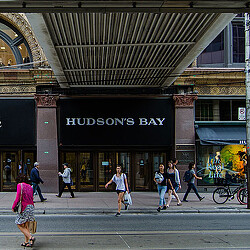
Toronto’s Eaton Centre is one such example. Originally designed to create an indoor street, bringing people inside and sheltering them from our harsh Canadian winters, the Eaton Centre of the 1970s even included trees and ample foliage to mimic the outdoors. But while the inside was bustling and full of life, this self-contained shopping centre effectively killed the business along Yonge Street, as there were no shops along the centre’s exterior facade.
Various tenants later attempted to add more entry points to the northern block to allow the public to flow in and out of the space. However, these extra entryways proved operationally problematic due to the high rates of theft. Management sealed them up, leaving hundreds of feet of dead wall along one of our busiest streets.
The root of these operational challenges lies in the size of the floorplate. Historically, one tenant has leased the mall's northern block — first Eaton’s, then Sears, and later Nordstrom. The sheer size of the space forces the tenant to hire enough staff to visually secure each entry. Today, with three tenants splitting this floorplate, it’s much more feasible to operate more entry points and reopen these spaces to the street.
Retail Is Changing — and That’s an Opportunity
As I’ve written about before, the traditional department store model is no longer viable. But we must seize this moment as an opportunity to adapt. Retail as a whole is changing. Consumers no longer want a one-stop shop to buy a microwave and tailor a suit; instead, they need experience-rich retail spaces.
The deadening of retail corridors like Yonge Street is felt by retailers, consumers, and residents. According to Gensler’s City Pulse Survey, only about half of Toronto residents say they are happy living in our city, and only 35% think we sufficiently invest in our neighborhoods. We see in our research that a city with satisfied residents, ones who choose to stay and build a life here, prioritizes connection rather than separation in their built environment. These cities invest in their public realm and prioritize walkability over sprawling, isolated city plans.
By investing in areas that strengthen identity, foster community, and connect neighborhoods, Toronto can successfully cultivate lasting relationships with its residents — and it can start with the Eaton Centre.
Two Tenants, One Solution
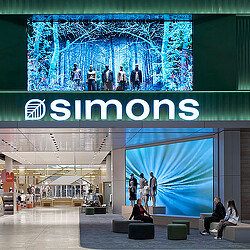
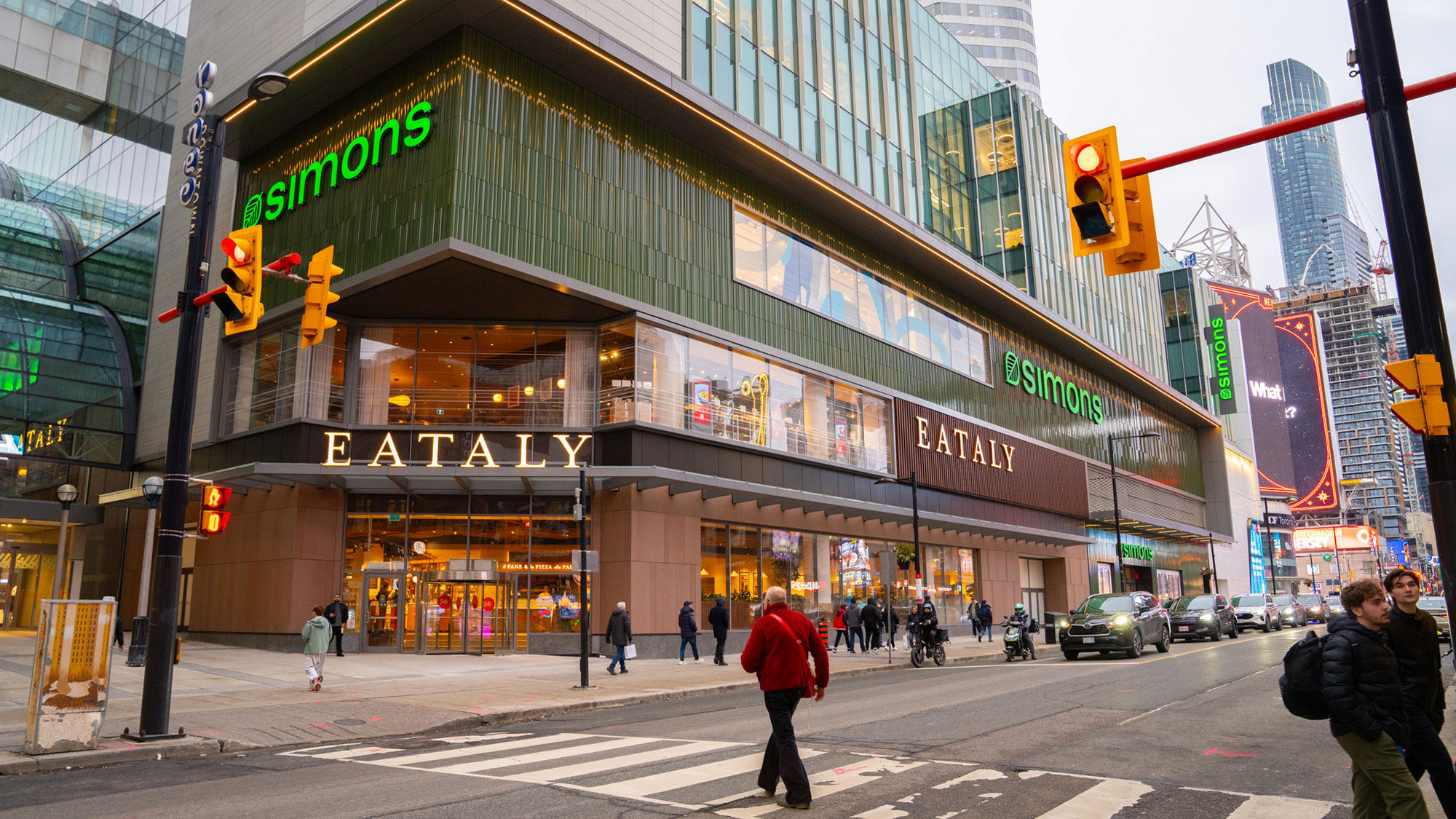
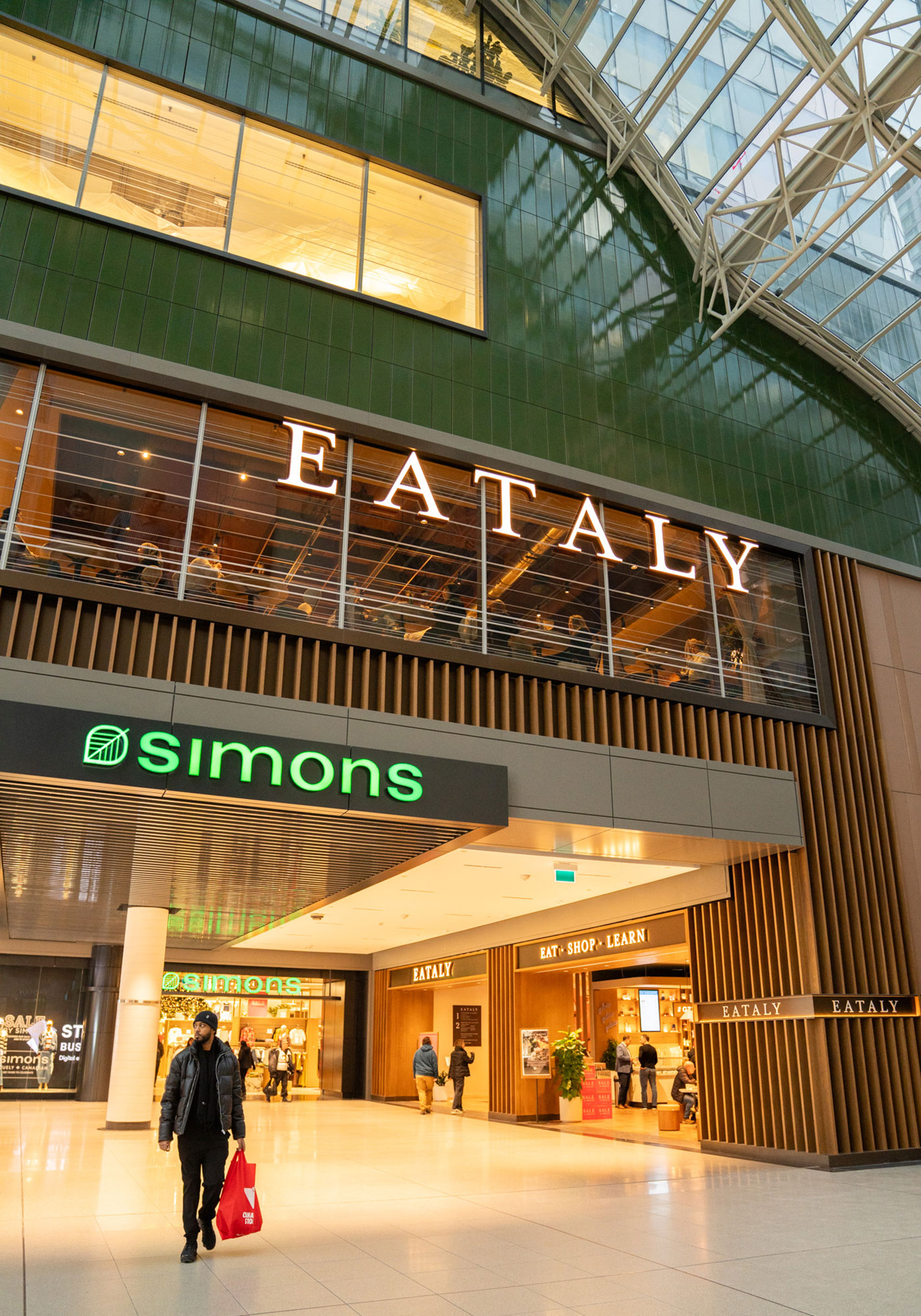
For Quebec-based retailer Simons and Italian marketplace Eataly, we reanimated a long-dead interaction between mall shoppers and the life on Yonge Street. By splitting the floorplate of the former Nordstrom space into two unique and complementary retailers, we reopened a door that had been closed for many years and revived the connection to the street. Vibrant new facades now line the once-blank wall, injecting life back into the dead space. Windows into Eataly’s ground-floor café allow pedestrians to see the activity and excitement inside that entices them to come closer.
Breaking up this floorplate created an expansive space to lease, an unlikely outcome for any landlord seeking a single tenant to take up that much square footage. It also created a unique relationship between the tenants. Eataly and Simons are rethinking the consumer experience and, as a result, they interact differently with the surrounding neighborhood than the rest of the mall’s shops.
Reconnecting the Urban Fabric
The strategies for retail success that worked 50 years ago no longer meet today’s consumer needs. This shift is leaving our community feeling disjointed and separate. Cities, developers, and retailers must reimagine our retail centres to create pockets of rich experiences, while reconnecting our built spaces to our urban fabric.
With a much more robust focus on experience-driven design, retailers like Eataly and Simons are stimulating the social cohesion malls once gave our community, benefiting residents, consumers, and retailers alike.
For media inquiries, email .