Using This Moment to Improve City Life
April 03, 2020 | By Nate Cherry
Editor’s Note: This post is part of our ongoing exploration of how design is responding to the COVID-19 pandemic.
A version of this post was originally published on LinkedIn
Right now, as I work out of my house in Los Angeles because of the city-wide lockdown, I’ve been contemplating how the COVID-19 crisis will affect the idea of urbanism and density. I think many would agree that the fundamentals of urbanism are a strong preference for most people living in cities around the world. And yet, people are understandably nervous about living in such close quarters. The current crisis raises serious questions that we’ll need to address before we get back to anything resembling normal: How well-suited are cities to a post COVID-19 world? How prepared are we to handle a health crisis in the future? And how can we use what we’re learning now to improve the quality of life in cities?
Planners and government officials have dealt with health crises of significant impact before. In the 1870s, a worldwide Cholera outbreak killed more than 600,000 people over the span of about 10 years. Eventually, planners were able to collect enough data to prove that overcrowded living conditions, substandard sanitation, and rapid movement of contaminated goods had to be tracked and addressed to eliminate the spread of the disease. At the same time, political leaders forced reforms that ultimately saved lives and improved the quality of life in rural hamlets, port towns, and urban centers. In the end, all kinds of modern reforms were born of the cholera disaster — from how city development is planned to how buildings are built.
Granted, our current situation is more complex. Our mobility and global access have exposed real weaknesses in our healthcare system, our food supply, the supply chain, mobility patterns, information systems, open space networks, air quality, the sharing economy, and more. And yet, there is an opportunity to learn from this pandemic and adjust accordingly. Here are a few provocations for planners and urbanists to contemplate so that we can strengthen our communities and cities:
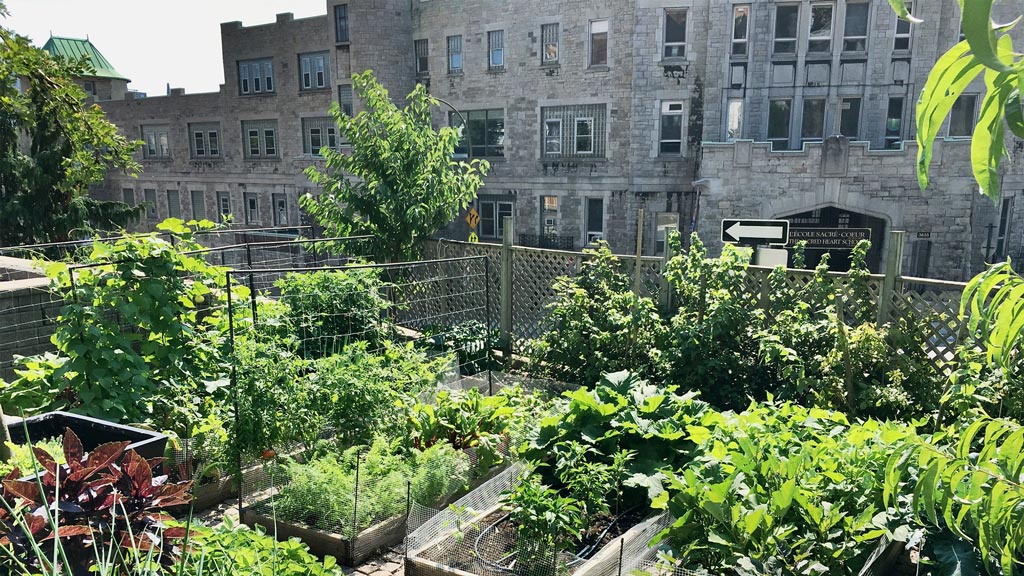
1. Urban FarmingIn WWII, private victory gardens in front and backyards around the country produced 40% of all the fruits and vegetables consumed by US citizens. In contrast, today’s leaders are encouraging us to order more drive-thru fast food, despite the fact that it appears more Americans are starting to grow their own food. With 4 in 10 Americans considered obese already, is this the right message?
More importantly, the recent disruption in global supply chains makes a strong argument for a bigger investment in urban farming: vertical farms, food coops, and community-supported agriculture. A staggering 14% — or roughly 70 square miles of LA’s land area — is dedicated to surface parking. With car ownership a low priority for many urbanites, could at least some of this parking be used for food production? In a recession, urban farming might be a great way to keep people working until the nation gets back on its feet.
2. Community ConnectionIn the 1920s, Clarence Perry and Clarence Stein did groundbreaking work showing how the neighborhood unit could be designed to provide all the essentials of urban life within a five minute walking distance — a place to live, essential shopping, recreation, community and educational services. Today, almost 80% of Americans shop online. What happened to the neighborhood convenience store? Studies have shown that local retailers are important to maintaining social cohesion and a sense of local community, and we’re feeling that lack of cohesion now that most stores are closed because of the health crisis.
To their credit, some industrious restaurants are converting their dining rooms into bodega-style markets to provide staples in addition to take out food. I think we will see a resurgence in this type of local neighborhood market as more people choose to work from home in the aftermath of this crisis.
What other elements will we need to think about as people are looking to their local neighborhoods to provide entertainment, community connection, and a place for self-expression? Areas such as Hayes Valley in San Francisco and Abbott Kinney in Venice provide glimpses of what a community-oriented, highly functioning neighborhood might look like. One thing is clear in these areas: parking is not a primary concern to their success. People either walk, ride bikes, park on the street, or at a friend’s house. The anchor draw is primarily community connection — the desire to be part of a “tribe.”
3. A Park Outside Your DoorWhen the Olmsted Brothers’ landscape firm designed a bold open space plan for Los Angeles in the 1930s, they established a regional park network to preserve natural land features such as the Santa Monica Mountains, Griffith Park, and LA’s surrounding beaches. Today, LA has more public open space than many comparable large cities, but the city’s open space network is mostly divided into large clumps of land — which causes people to overpopulate regional parks, especially on evenings and weekends.
An alternative would be to create a series of smaller ones combined with wider sidewalks. This would increase the number of public spaces, while making them safer and easier to access. The pandemic has exposed how our streets are over-designed for private vehicles. Making certain streets car-free at least for portions of the day is an idea New York is instituting through a pilot program for daytime use as linear parks. It would have the multiple benefits of providing active alternatives to using regional parks for recreation, while providing viable alternatives to automotive mobility.
4. Cleaner Air and Healthy CommutesStudies show that poor air quality is a major contributor to the spread of COVID-19, especially to those with compromised respiratory systems. In 19 of the last 20 years, the American Lung Association has listed Los Angeles as the smoggiest city in the United States. Because of the city’s shelter in place order, LA will see its third straight week of clean air on Monday. Already, many are seeing less cars on the road as having real health benefits. While a shutdown and the resulting economic crisis is not a good way to achieve cleaner air, it could become an opportunity to reposition the city and change its image from a smoggy and expensive place, to a post-recession investment hub with unique opportunities for startups and families.
To that end, I think there is a real opportunity to invest now in cycling infrastructure as an alternative form of mobility in the city. We have the weather, the healthy attitudes, and the flat geography for it. A robust cycling infrastructure would transform roadways such as Venice Boulevard and turn the city’s waterway infrastructure into mobility corridors for bikes and scooters. Portions of the LA River and Ballona Creek are already being used that way.
For long-haul commuters, biking in LA can be time consuming, but we could borrow ideas from cities like Copenhagen, which have incorporated a green wave system that coordinates traffic lights for cyclists, allowing them to maintain a moderate 12 mph clip all the way into the center city. These bike-friendly strategies would position LA in the post-recession economy to attract progressive and smart companies looking to relocate or expand — and it will improve the quality of life for current locals as well.
Of course, all of these issues are interconnected. If it wasn’t clear that urban planning is significantly about the design of systems, it should be to all of us now. Those systems can either promote or hurt the health and wellness of our communities. For a variety of reasons, we have created an urban fabric and a system of behaviors that are worthy of reconsideration and perhaps redefinition. The one thing that planners cannot do is absolve themselves from taking responsibility for proposing some workable and common-sense solutions. What kind of future city do we want? Let’s not let this disaster go to waste.
For media inquiries, email .
