Designing for Dignity: What We’ve Learned from 5 Years of Creating Housing for the Unhoused
Insights from five years of partnership with DignityMoves spanning 12 communities and more than 800 doors opened across interim and permanent supportive housing.
On any given night across the United States, more than 750,000 Americans don’t have a place of their own to sleep. They are our neighbors — living on our sidewalks, in our parks, under our freeways. Many of us see homelessness in our communities and feel a complicated mix of compassion, helplessness, and a nagging question: What are we doing about this?
The honest answer is not enough, and certainly not fast enough. For decades, cities have largely focused on developing permanent supportive housing (PSH). PSH gives people homes, but it’s too expensive, slow, and can’t scale to meet the urgency of the homelessness crisis. Congregate shelters often prohibit partners and pets, limit privacy and autonomy, and put up other barriers that make them feel less like refuges people so desperately need. Given the option, many people experiencing homelessness instead choose to stay on the streets.
Between the street and a permanent home lies a significant gap. Interim supportive housing (ISH) is a powerful tool to bridge it.
Five years ago, DignityMoves challenged Gensler to answer an urgent question: Can we build housing that’s fast and cost-effective while bringing the dignity that will make it work for people? Can urgency and care coexist?The idea was simple: build temporary communities that give people the dignity of a door that locks, essential supportive services, and a sense of belonging — quickly and cost-effectively. Not a permanent solution. A bridge. A chance to come inside while the longer-term housing pipeline catches up.
Tonight, more than 800 Californians who were living on the streets are safe inside, living in communities we designed together, with another 70 beds expected by the end of the year. We have our answer: interim supportive housing works. Here’s what we’ve learned along the way, and why now is the time to scale it.
Good Design Doesn’t Have to Cost More
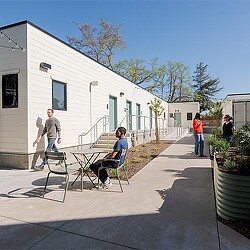
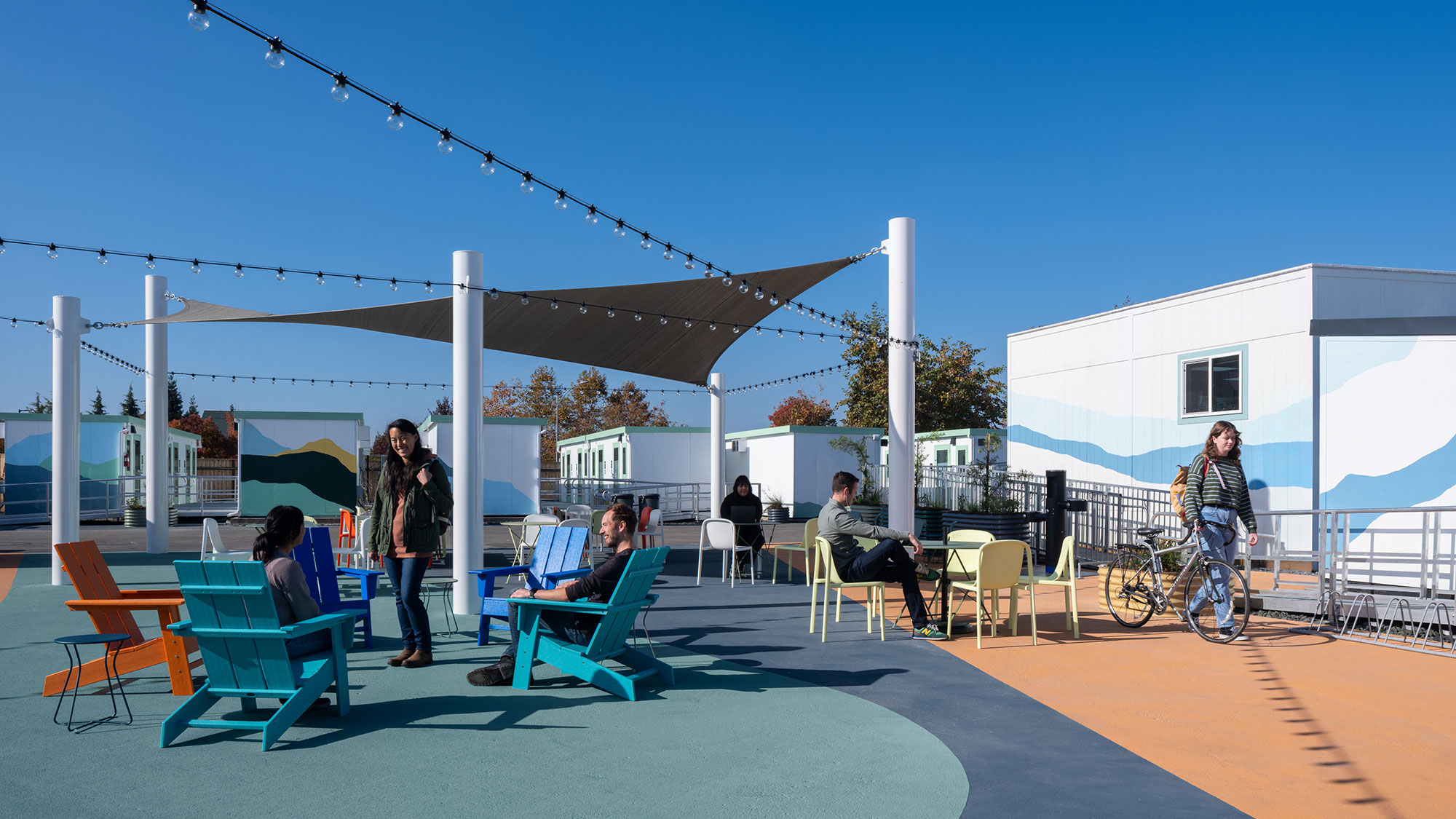
With our interim housing projects, we begin with trauma-informed design principles, asking: what does this space, this color, this chair feel like for the people who will live here? People who have spent years living on the street have experienced their most private moments in public. Many have learned to scan constantly for danger, to distrust spaces that feel institutional. We design for the opposite — clear sightlines and a door that locks; common areas for community; and color, light, and beauty that signal care and hope.
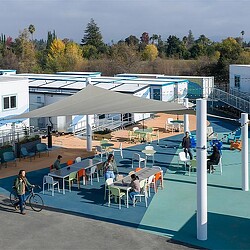
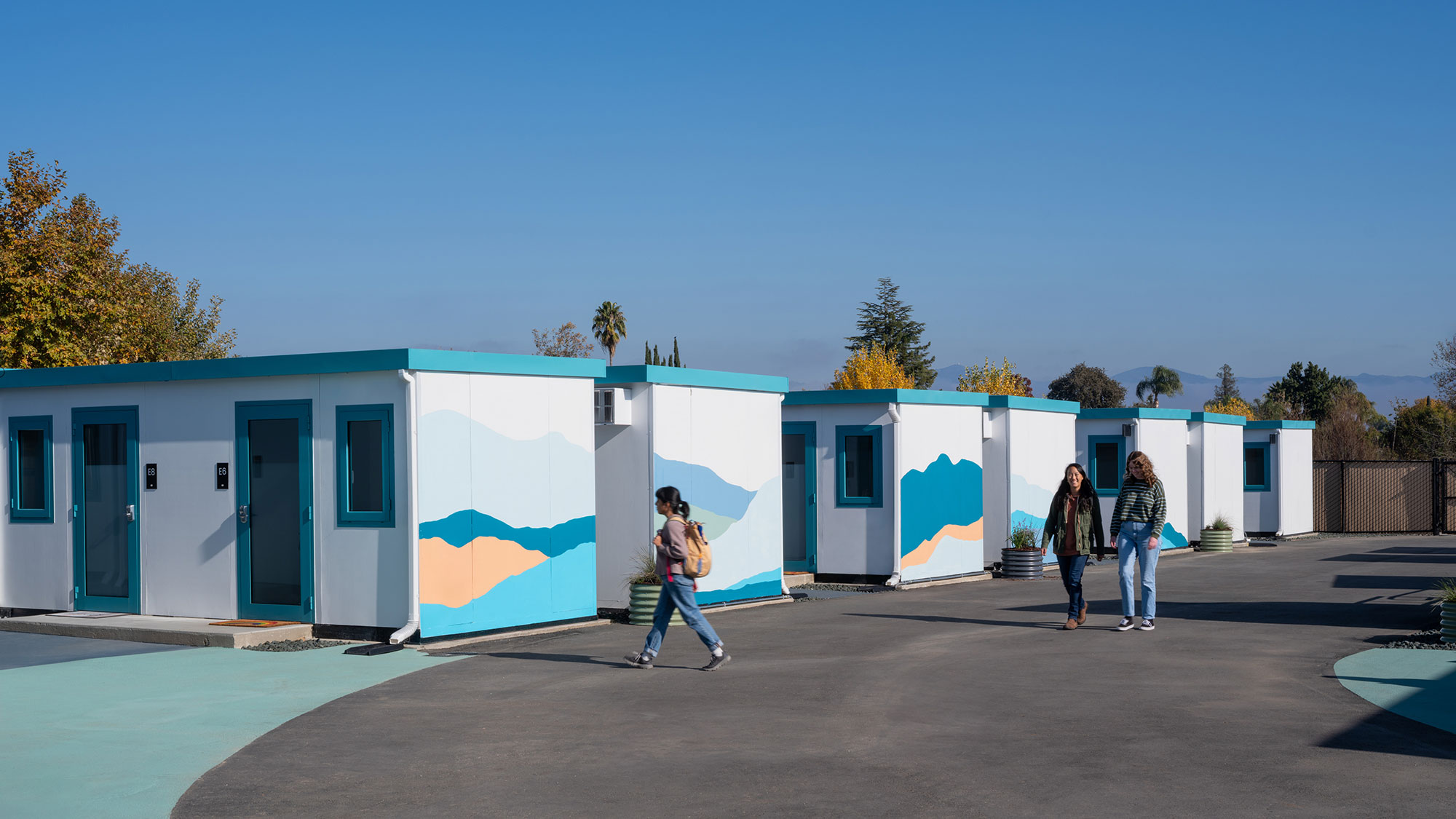
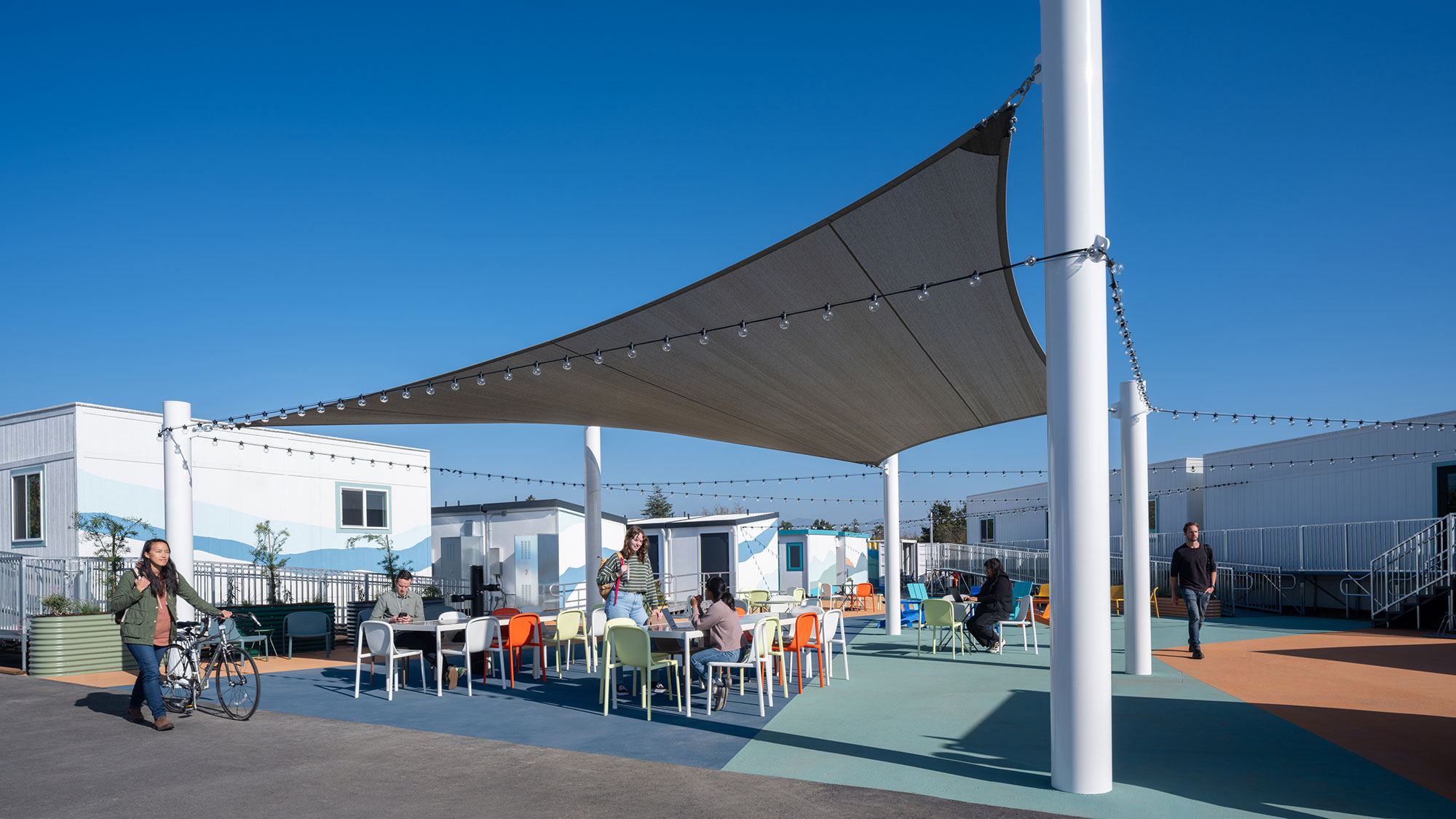
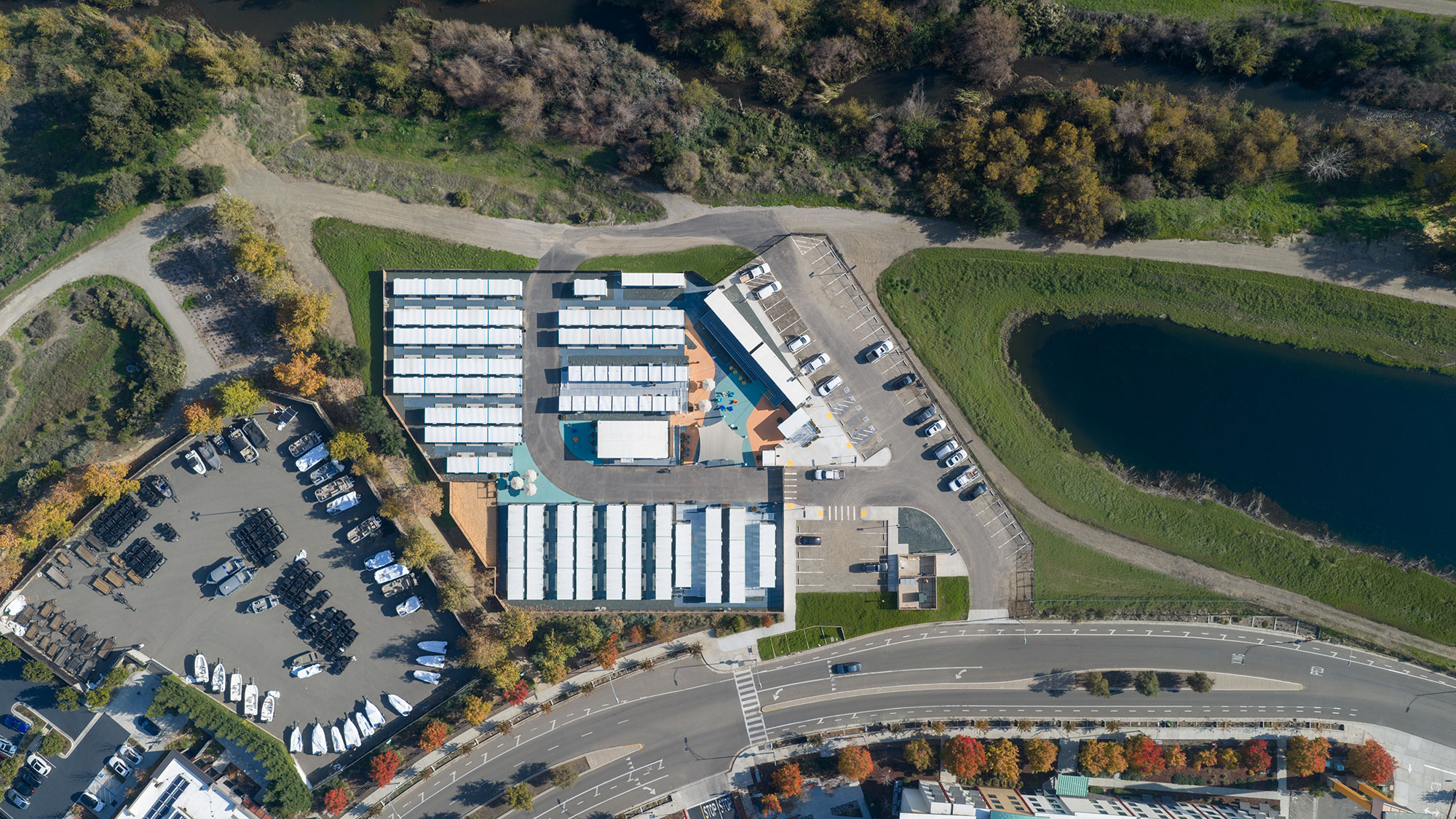
At our Cherry Avenue village in San Jose, California, Gensler designers and volunteers designed and painted murals inspired by the mountain ranges surrounding the city, turning a blank site into one that feels rooted in its place and welcoming. Thoughtful design touches, such as pleasant lighting, colorful furniture, and planters, work together to create a place where people are happy to land. Choice matters: a community that feels warm, safe, and human makes people willing to come inside. We learned early to be strategic with invisible sitework and infrastructure, allowing us to invest more in the things residents will see, touch, and experience.
Designed to Scale
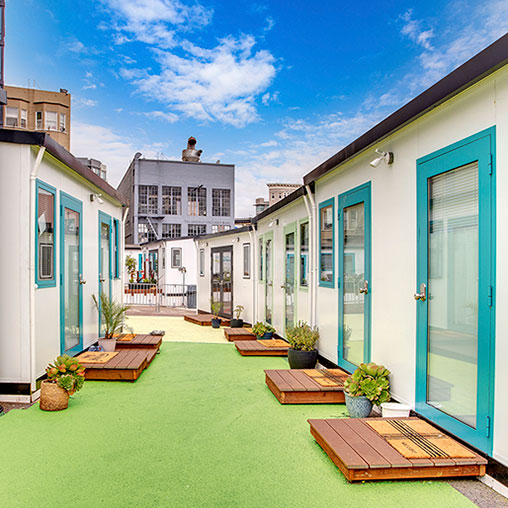
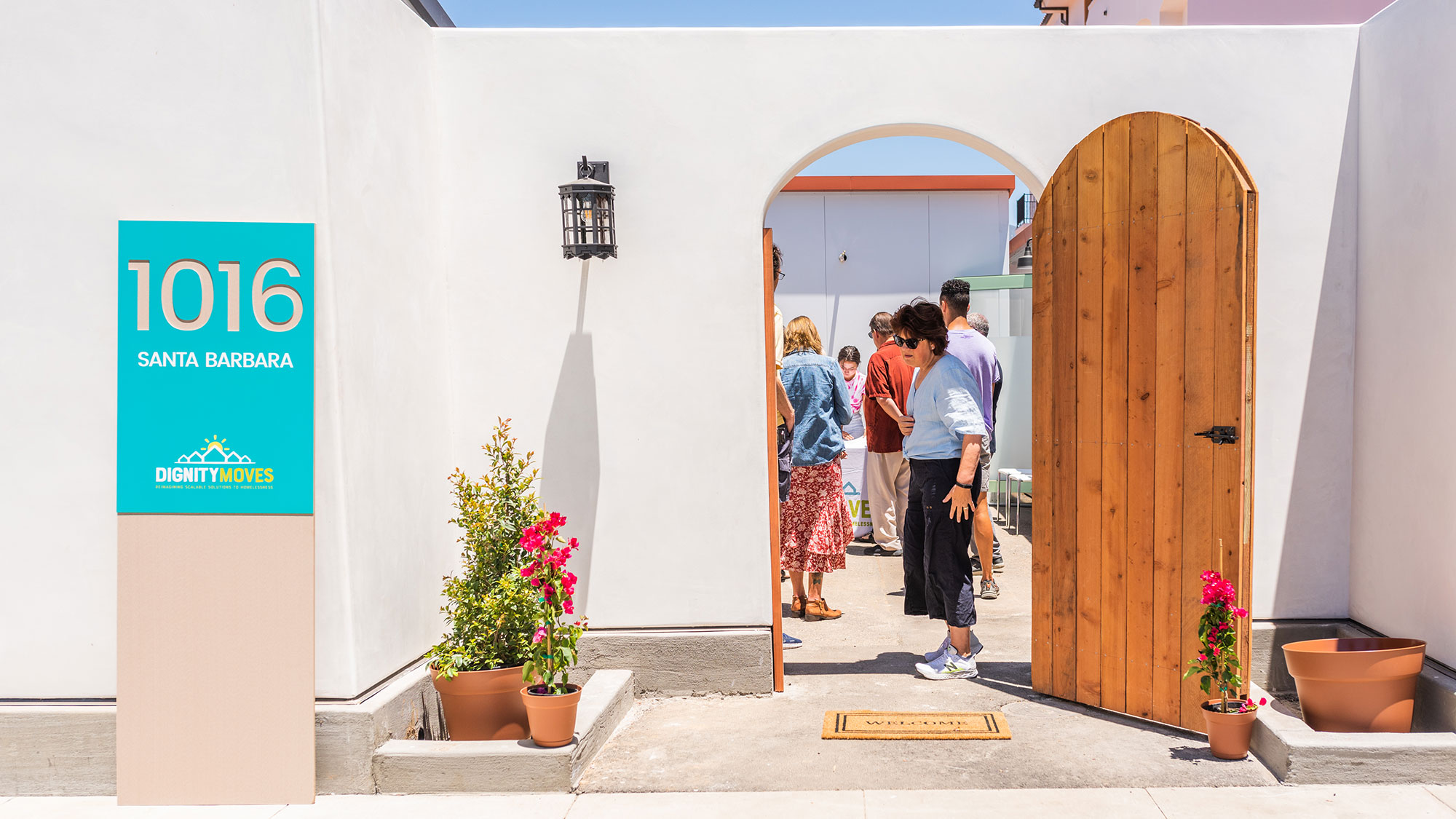
We started with two communities — 33 Gough Street in San Francisco and downtown Santa Barbara — to test our hypothesis and identify the sticking points. Those first communities were proofs-of-concept: could we deliver quickly and cost-effectively, while keeping the heart and dignity intact? Feedback from residents, service providers, governments, and neighbors confirmed that we were on to something.
With each community, we’ve refined our approach and expanded our kit of parts into a flexible design system that adapts to any site. Now 12 projects in, we’ve built deep expertise in the unique permitting and code pathways that make these communities possible.
Interim supportive housing remains a relatively new typology, and many of the jurisdictions we work in have never permitted one before. Knowing which emergency codes apply and how to work with local building officials on novel interpretations saves scarce resources and compresses project timelines without cutting corners — sometimes by months.
Every village is unique in its neighborhood, site constraints, and the population served. But the trauma-informed design approach and community values at the core of our work remain constant.
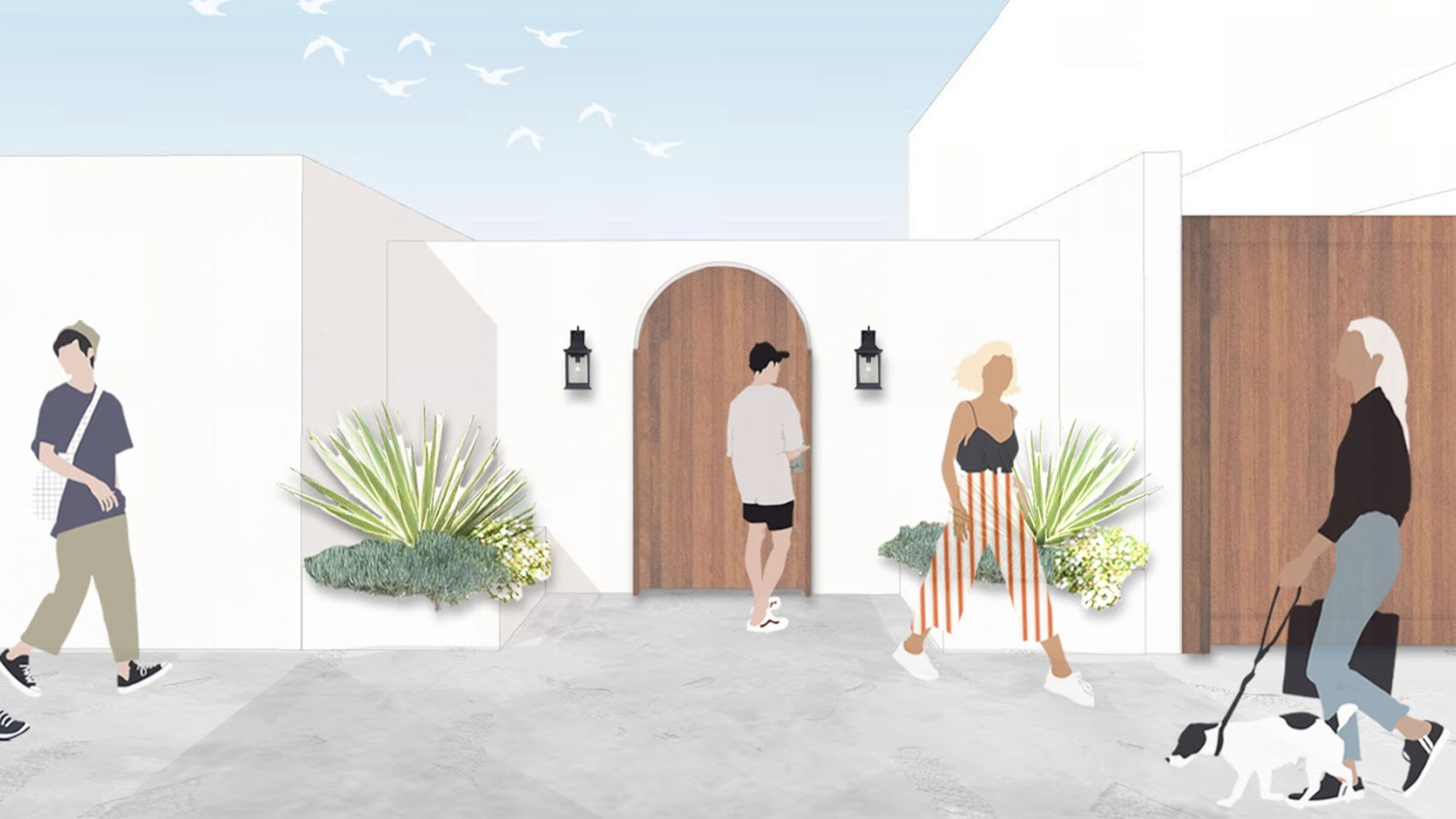
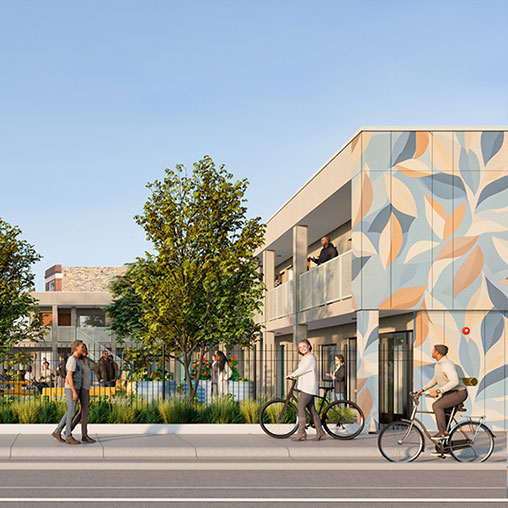
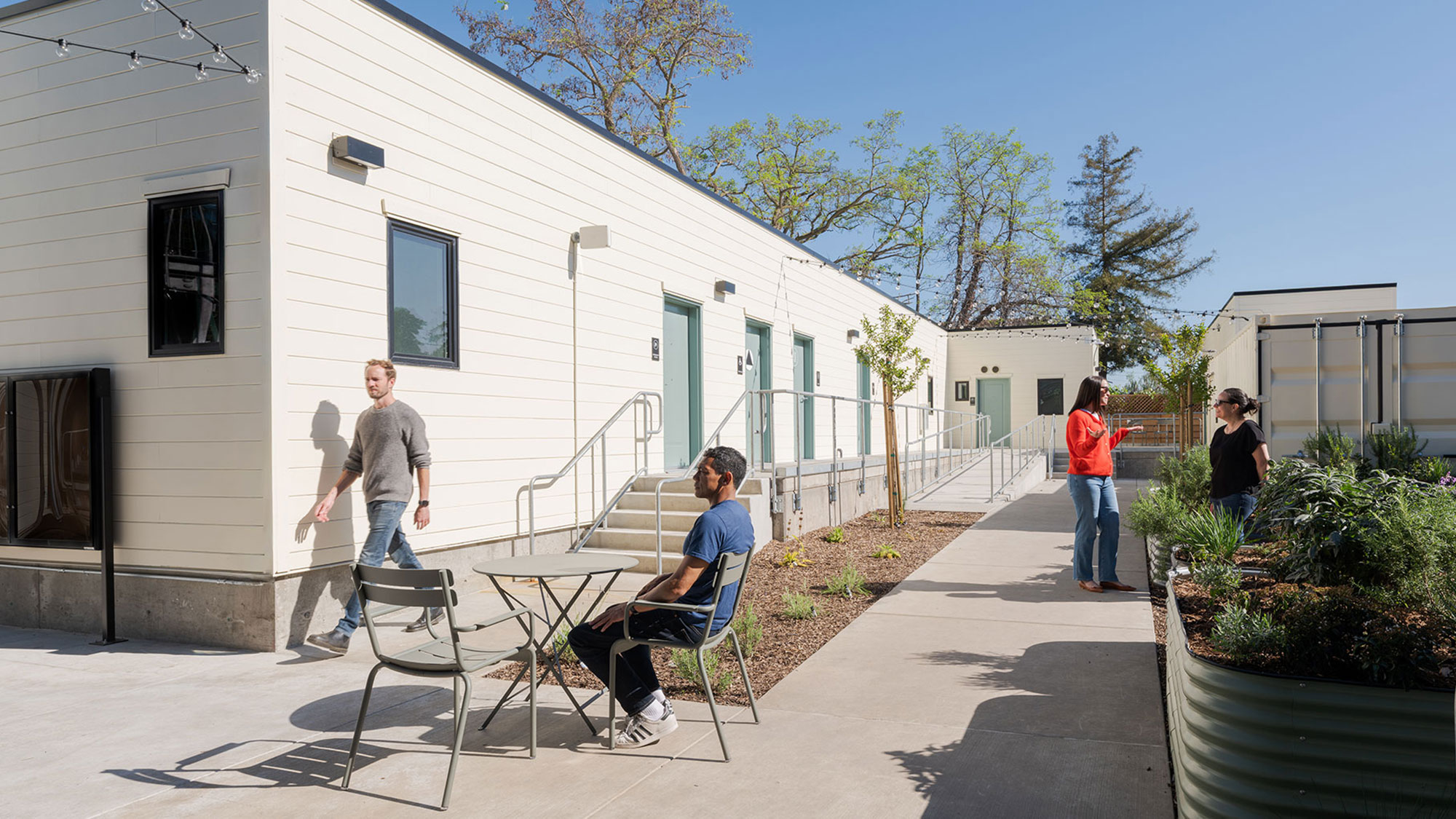
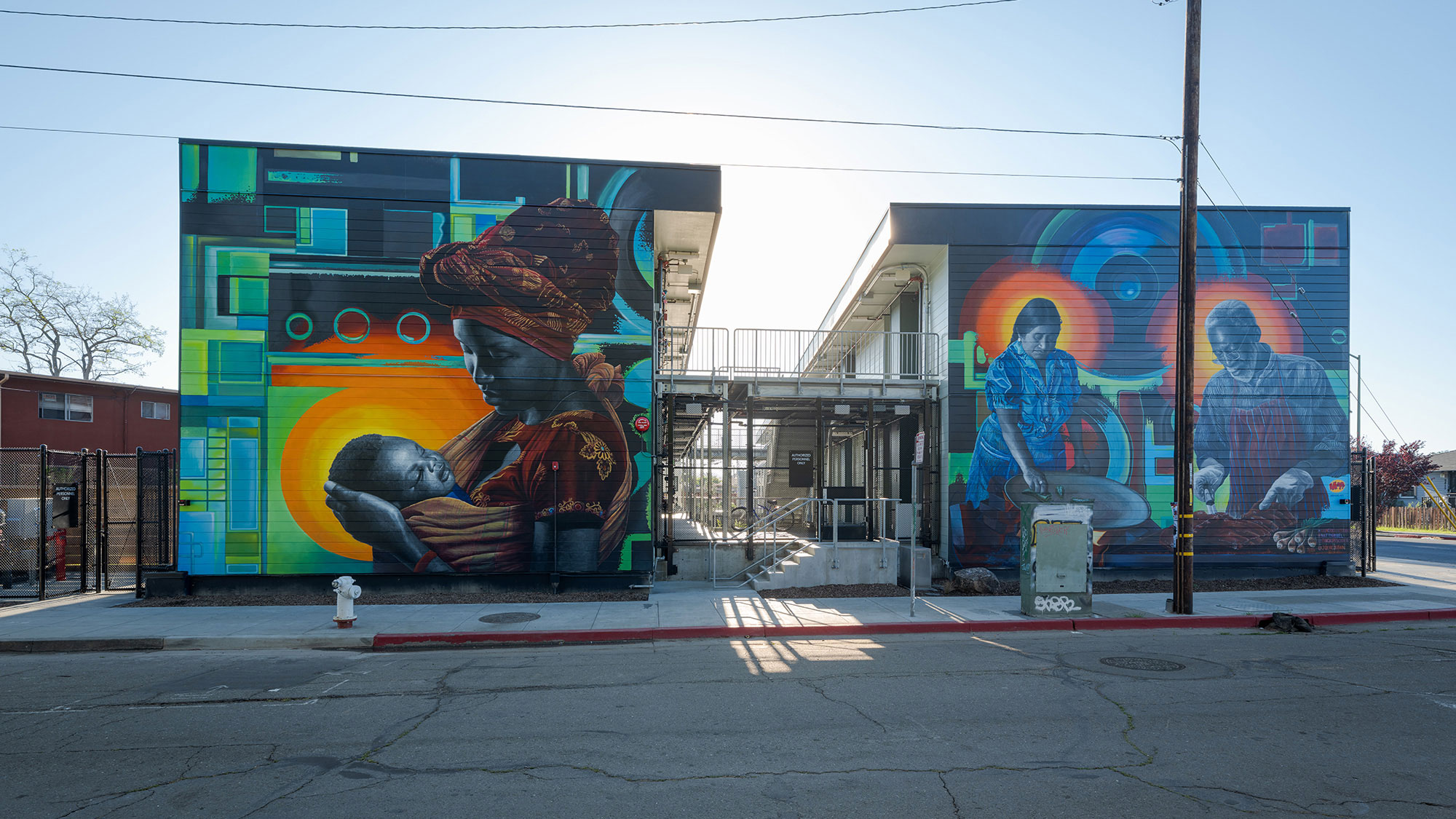
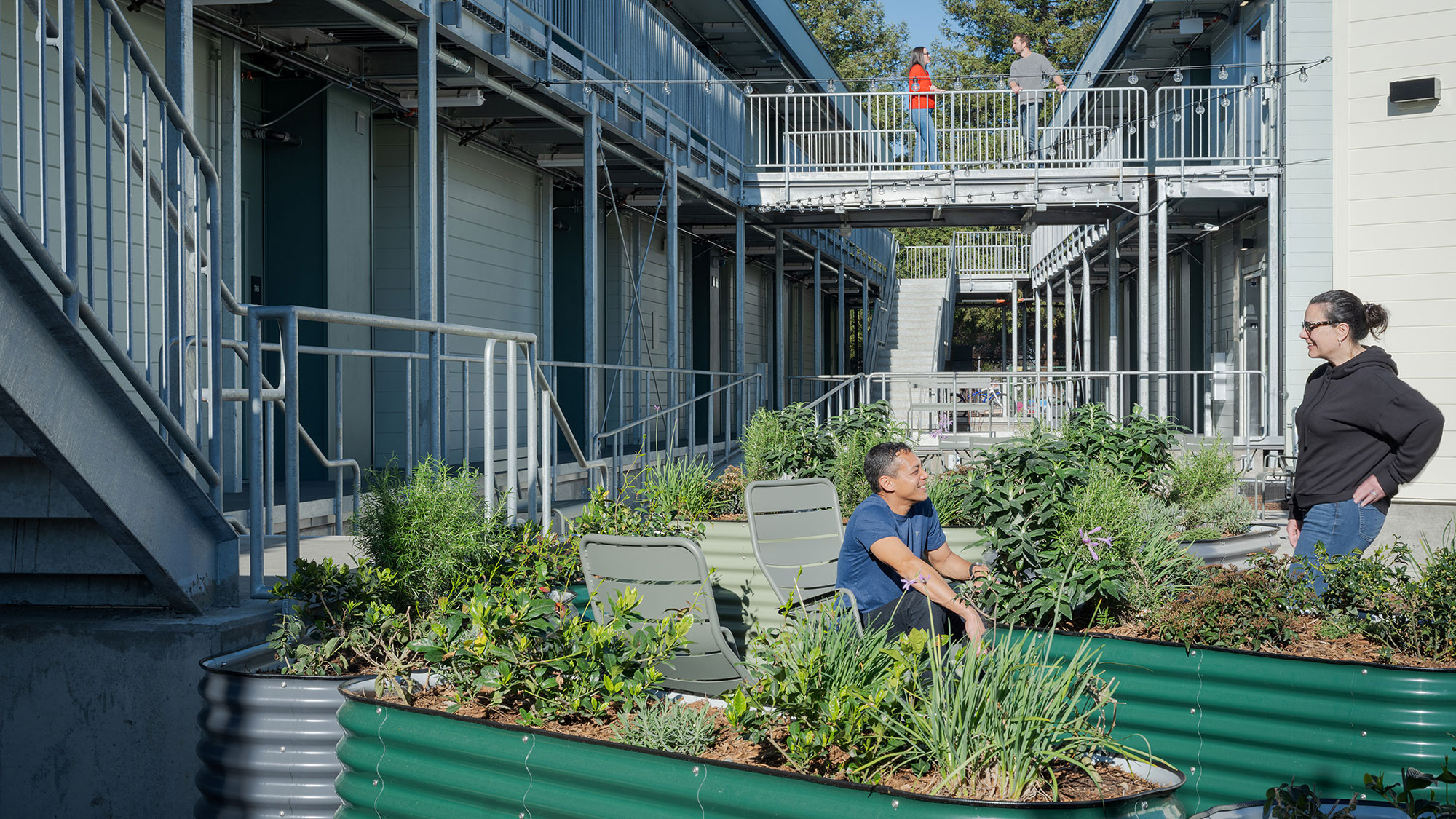
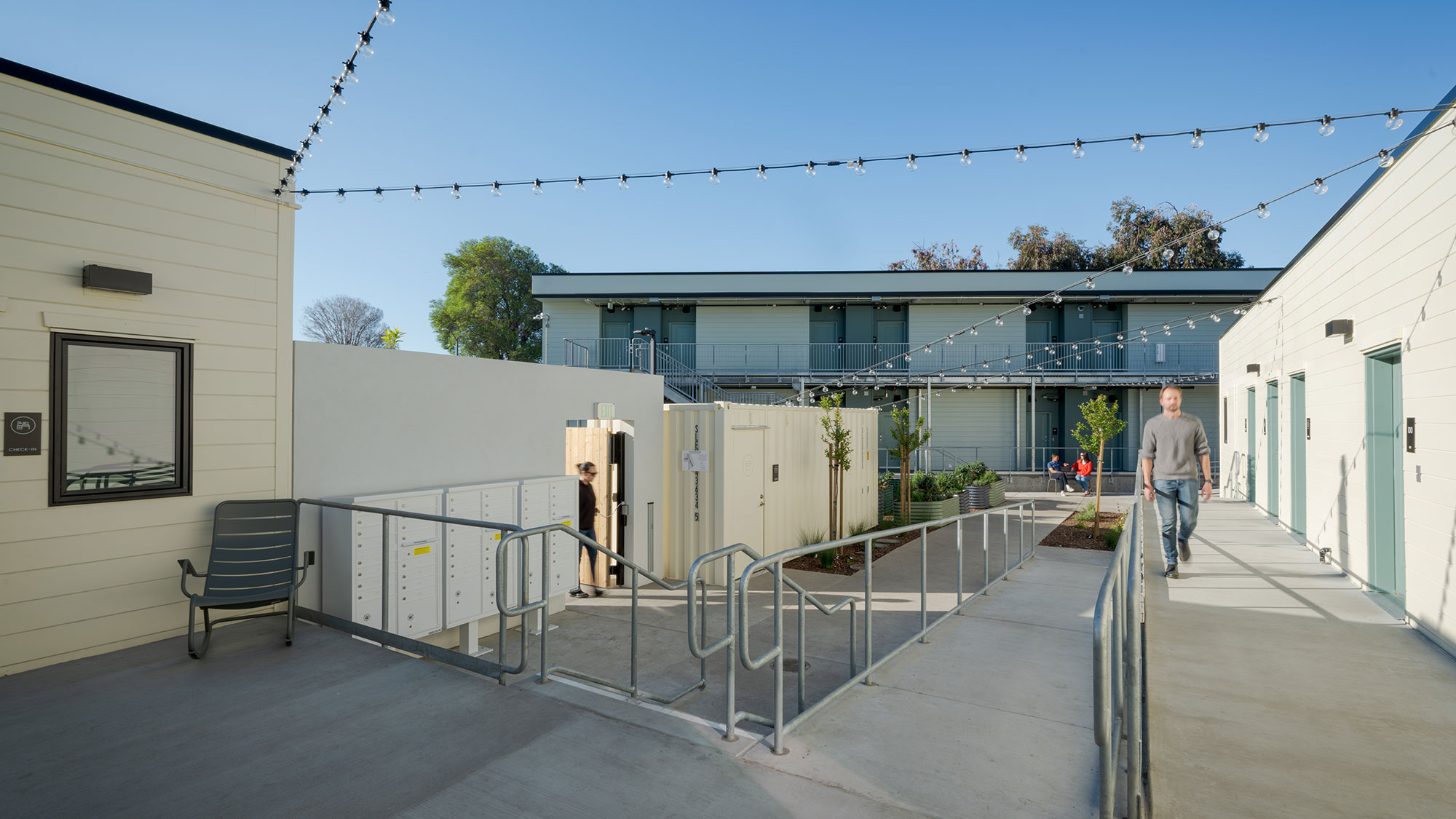
In several cities, DignityMoves challenged us to pivot from interim to permanent supportive housing. Brookfield Senior Gardens in Oakland, California, offers 40 permanent studio homes with ensuite bathrooms and kitchenettes for older adults experiencing housing instability. Our site design creates a variety of outdoor courtyards — some social and energetic, others quieter and contemplative — giving residents a choice in how and where they spend their time.
Collaboration Is Everything
This work demands extreme collaboration. The funding, design, permitting, and construction are all unique to this typology, requiring deep stakeholder engagement and a dedicated team. Each project draws on its own constellation of local and state government partners, neighborhood organizations, nonprofit developers, service providers, philanthropic partners, architects, engineers, contractors, modular manufacturers, and more.
Our projects succeed by bringing everyone to the table from the start. Shortcuts in stakeholder engagement cost more time than they save. Rushing neighbor outreach or underinvesting in early alignment with city partners often creates challenges later when they’re harder and more expensive to solve.
Most of our 12 projects have been the first of their kind in their cities and counties. Because there’s no official playbook, we can co-create one together. Building trust with building departments and city agencies early — and showing up with the institutional knowledge of what’s been done before — is how we get projects to “yes” faster.
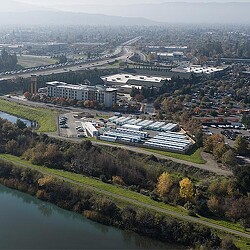
Our work at Cherry Avenue demonstrates what that collaboration looks like in practice. The local water district donated the site, while funding came through a mix of state programs, city funds, and philanthropic partners. Neighbors were initially skeptical, but by opening day, they were on-site preparing the community for its first residents — and have since become its most vocal advocates.
Interim Housing: A Critical Bridge
Interim supportive housing alone is not THE solution to homelessness — there is no single, easy answer. But after five years of developing these communities, we’re confident that interim supportive housing remains one of the most powerful and underutilized tools we can deploy to address unsheltered homelessness today, while the hard, long-term work of building affordable housing continues.
Critics sometimes call interim supportive housing a distraction, but we don’t see it that way. A bridge doesn’t compete with the destination; it gets you there. Well-designed, interim housing creates the stability, safety, and dignity that allow people to begin rebuilding their lives — restoring the sense of agency and choice that life on the street often takes away. Ultimately, it makes the transition to permanent housing more likely to succeed.
We’ve Proven the Model. Now Let’s Scale It.
California has moved quickly, but tens of thousands still live unsheltered. After five years, 12 communities, and more than 800 doors opened, we know what it takes — design, collaboration, speed, and care.
There is so much more work to do. But we’ve proven the model, and it’s ready to scale. We’re proud of what we’ve built with DignityMoves — and we’re ready to keep going.
If you’re a city, a nonprofit, or a community partner, let’s talk!
Gensler has partnered with DignityMoves since 2020 to design supportive housing communities across California. To learn more about DignityMoves and the interim housing model, visit dignitymoves.org . To explore a collaboration with Gensler, contact us.
For media inquiries, email .