Are Malls Making a Comeback? Simons is Betting on It. Here’s Why.
The Quebec retailer is betting that experience and accessibility can do what legacy anchors could not.
Growing up, I loved the mall. It was where my mom and I spent weekends hunting down the best sales, where I snuck out after school to hang out at the food court with my friends, and even where I landed my first job at Aeropostale at the CF Toronto Eaton Centre.
That mall doesn’t really exist anymore — at least not the version I grew up with. For over a decade, malls struggled as e-commerce surged and anchor tenants like Sears, Hudson’s Bay, and Nordstrom shuttered across North America, leaving empty storefronts where the energy used to be.
But the mall may be coming back — with younger shoppers driving the revival. Simon Property Group CEO David Simon noted the trend in late 2024, saying his company was seeing “a rejuvenation of the younger consumers wanting to hang out at the mall.” A Wall Street Journal report found retailers like Pacsun expanding their store footprints for the first time in years, with its CEO crediting the shift directly to Gen Z. It turns out digital natives still want to touch, try on, and show up — they just need a reason to.
That said, not every mall is having a renaissance — and not every large-format retailer is set to benefit. The malls that failed lost customers because they were overwhelming, undifferentiated, and designed around inventory rather than experience. The question now is which retailers have figured out how to do it differently.
Quebec-based retailer Simons never gave up on the mall. While legacy anchors retreated, Simons moved into the very spaces they vacated — betting that a more experiential, curated approach could succeed where they had failed.
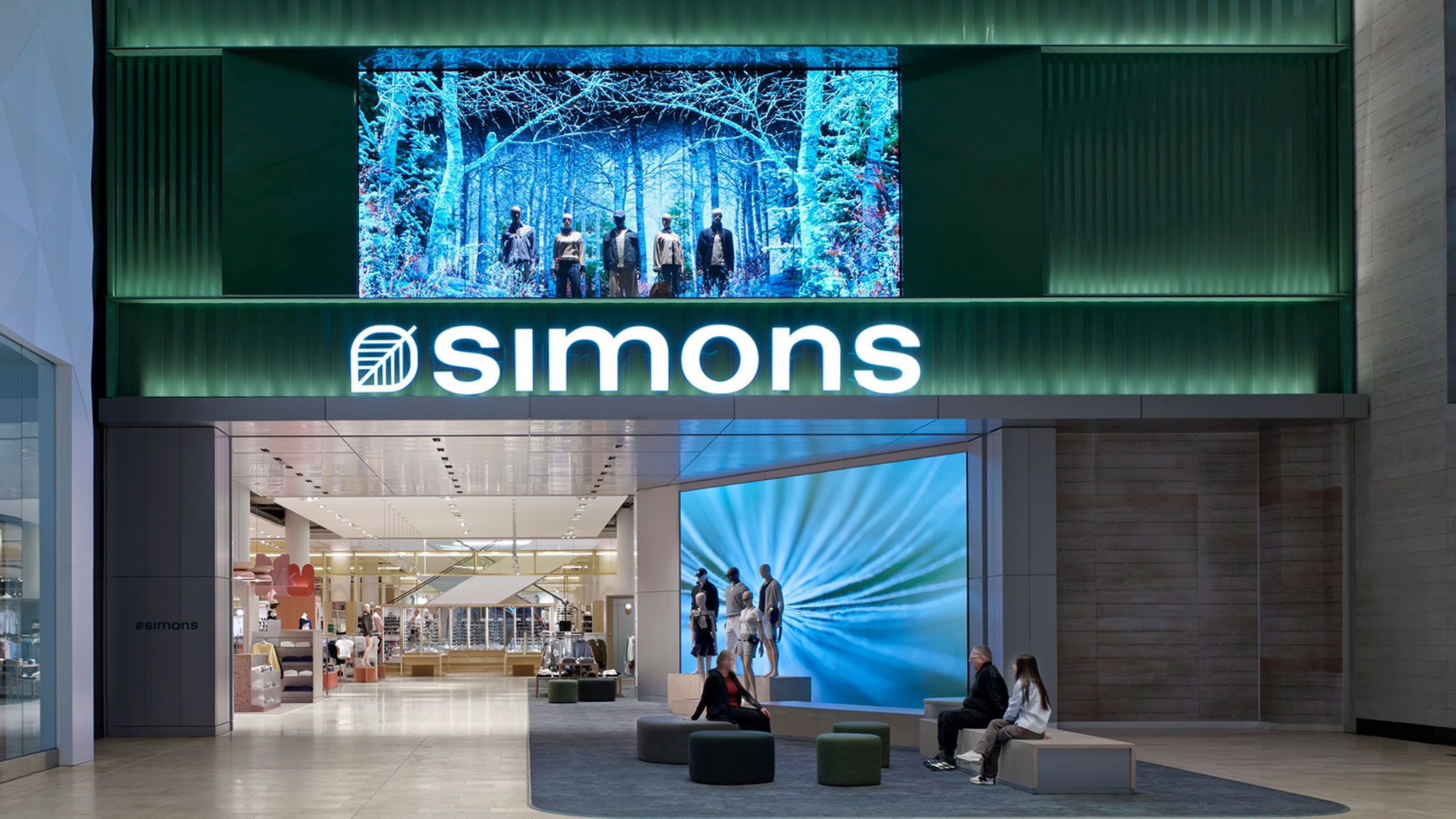
That strategy is already on display in its two new Toronto locations — at Yorkdale Shopping Centre and CF Toronto Eaton Centre — designed to draw customers in and adapt to evolving consumer behaviours.
Sightlines and attention spans
While Simons is not a department store, it does share a common trait — scale. The Yorkdale location spans approximately 118,000 square feet, while the downtown Eaton Centre store is just over 110,000 square feet — yet both are designed to feel curated instead of overwhelming, a balance many traditional department stores have failed to strike.
In a retail environment shaped by speed and choice, the currency of consumer attention is at an all-time high. While designing as minimally as possible to maximize product variety and availability was once the goal, it isn’t what consumers need anymore. In fact, they’re avoiding it. As online retail has trained consumers to filter and refine instantly, large physical stores have to replicate that sense of control in space.
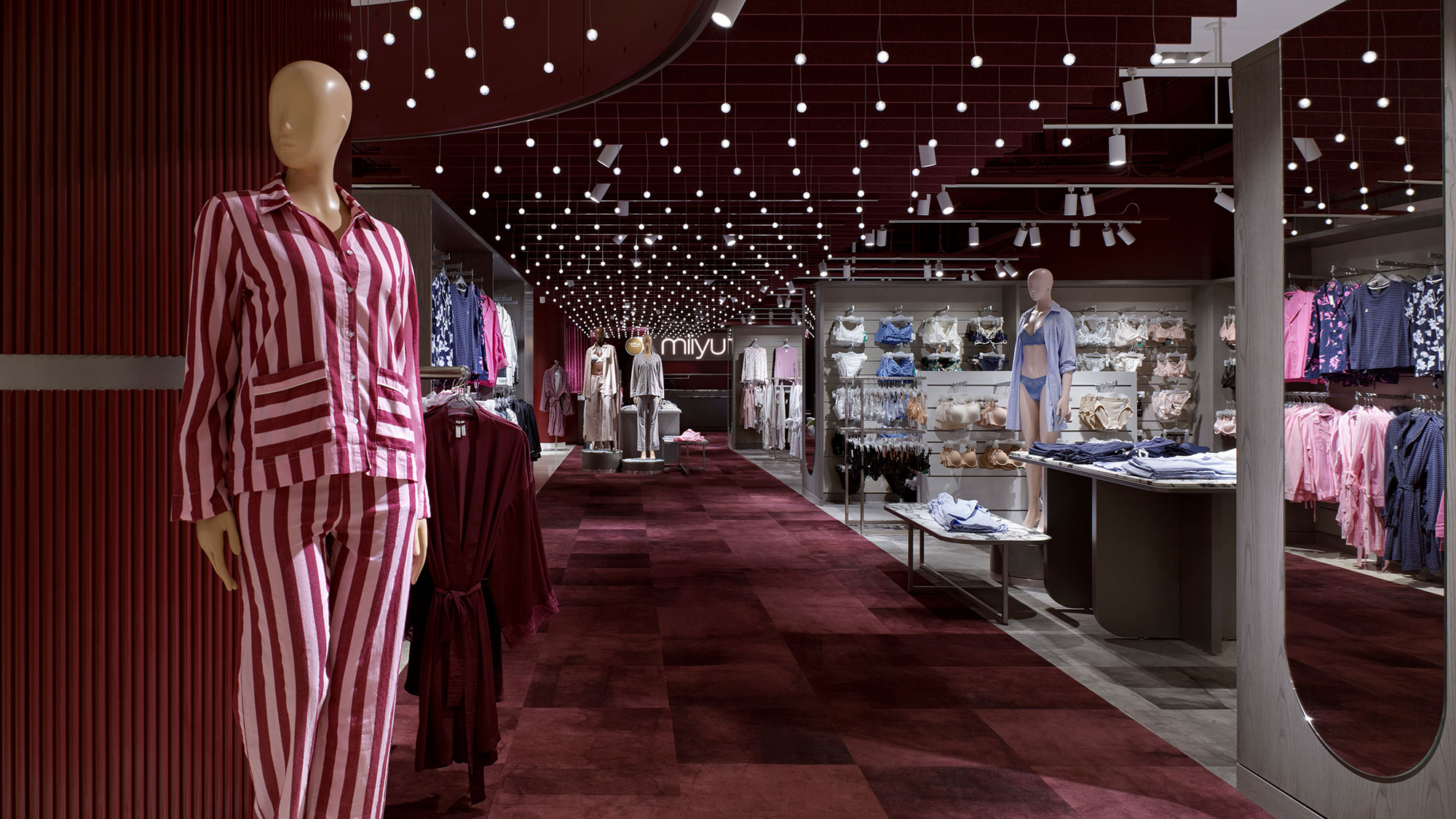
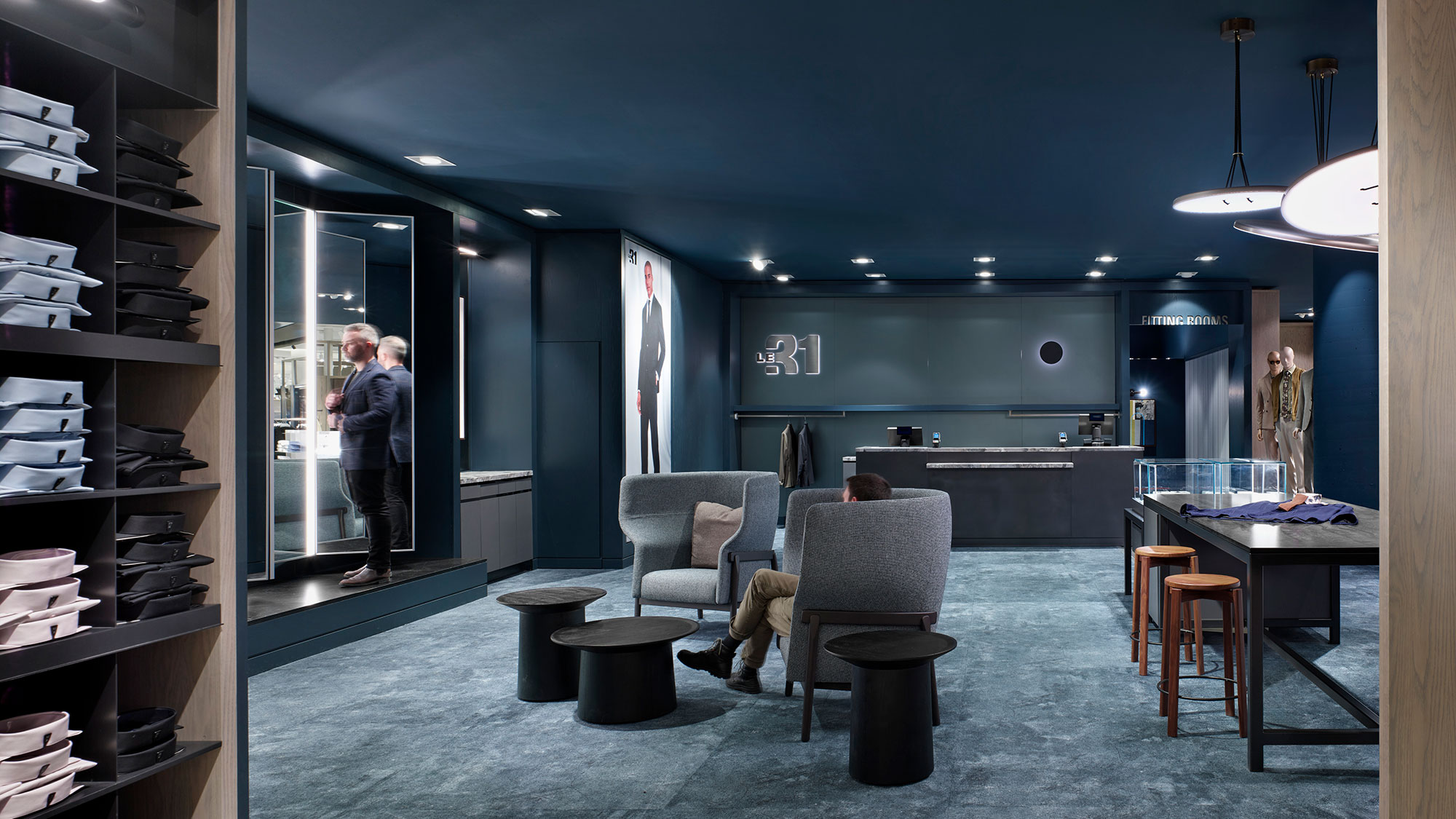
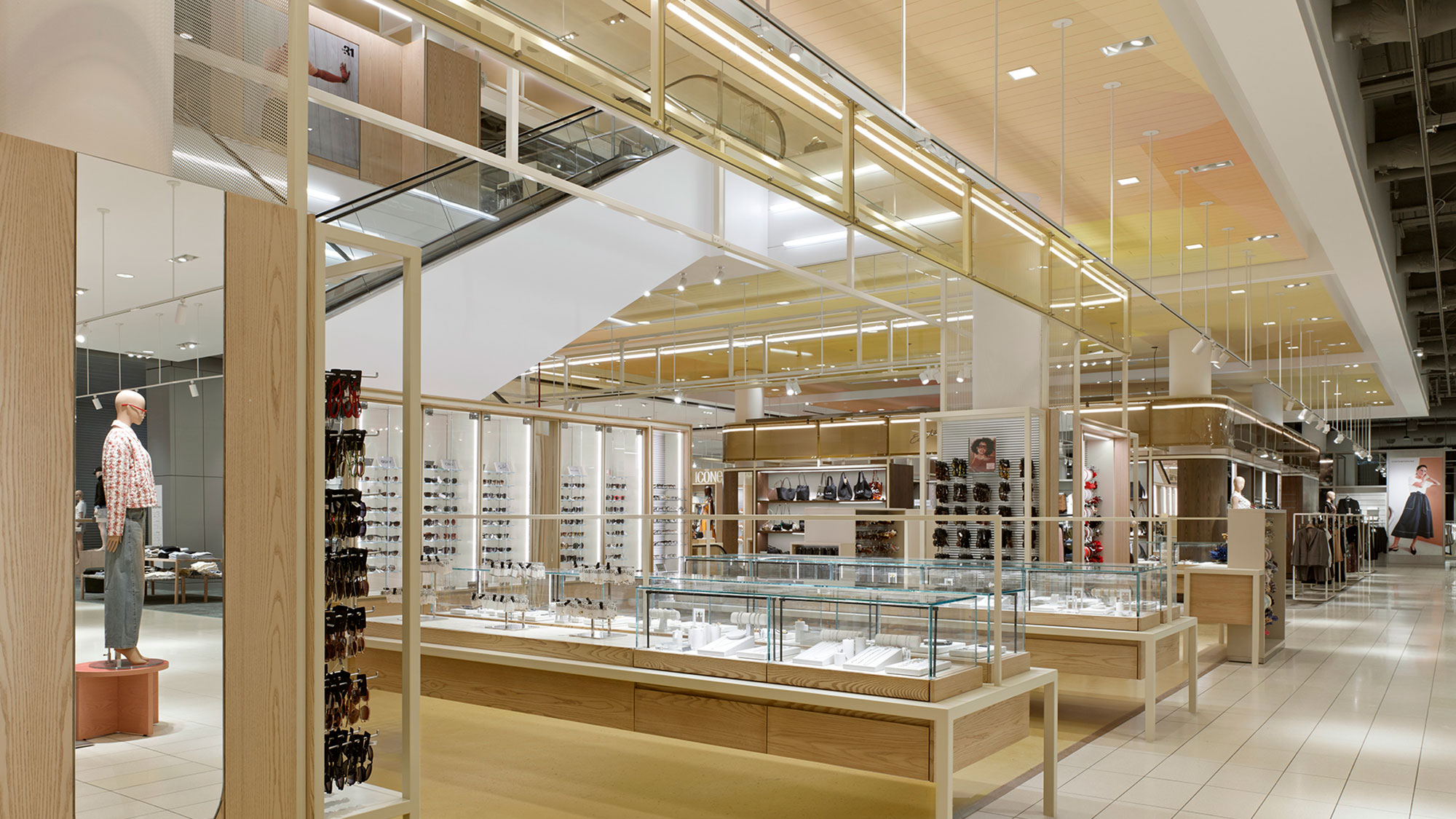
Cue Simons, where daunting and overwhelming just aren’t the vibe, and that’s by design. From day one, Simons’ new stores planned to break up the traditional sightlines found in large-format stores. By introducing pavilions, Simons is tailoring sightlines within its collections, providing visual breaks that foster movement and exploration, similar to experiencing exhibits in an art gallery. These modular pavilion structures frame moments that spark curiosity, while showcasing a curated variety of merchandise at a digestible scale. Think of it as a real-life filter for in-person shopping, bringing a small convenience of online retailing to the brick-and-mortar experience.
High concept meets accessible retail
Embedding memorable moments into retail spaces is no longer a “nice to have” — they’re central to keeping brands culturally relevant and, hopefully, viral. Retailers are increasingly competing for customers’ attention with high-concept stores like Gentle Monster, the luxury Korean eyewear company, which opened its first Canadian flagship in Toronto. Gentle Monster offers more than simply a place to buy sunglasses; it provides immersive experiences with iconic “Instagrammable” moments.
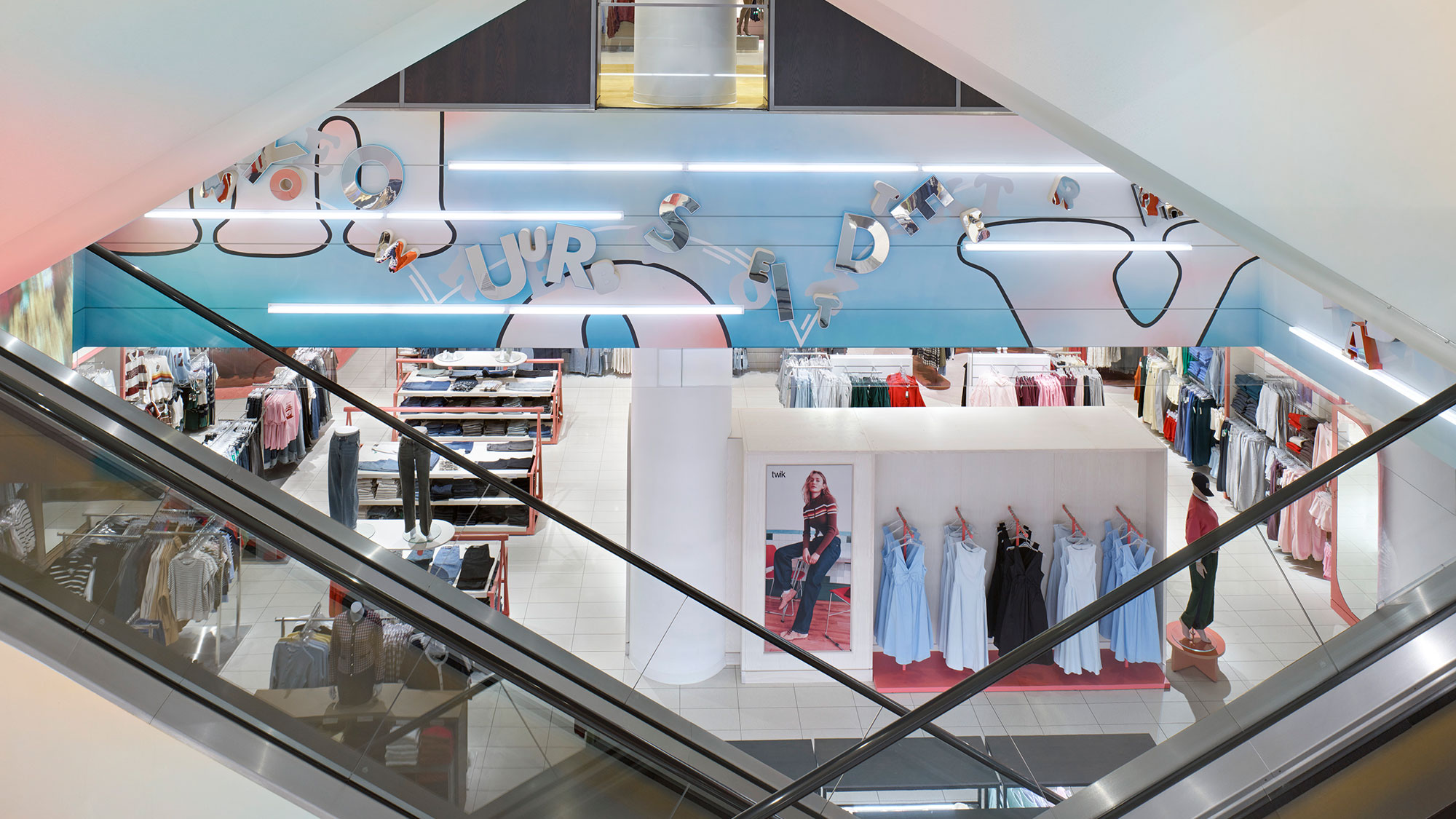
While Simons may not be filling its space with thought-provoking “Haus Nowhere” installations, it does display a range of accessible installations to attract and inspire. At the Eaton Centre, the design includes a series of narrative elements, including a 3D mural by artists Trevor Wheatley and Cosmo Dean, designed to compel customers to venture deeper and higher. The Walk of Frames also offers shoppers a map tour via QR plaques of all the artworks in-store, many of which are created by Canadian artists.
At the Yorkdale location, the immersive tactics take the form of a 10,000 square foot, free-form ceiling mural, which bathes the store’s centre in a sun-like glow. Commissioned by French artist Nelio Riga, the mural pays homage to the process of adaptive reuse in retail by buffing out elements of the former Nordstrom space, and guiding customers through the store via its colour gradients and scale.
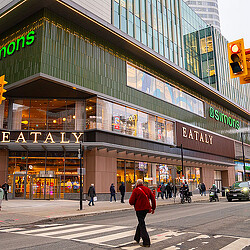
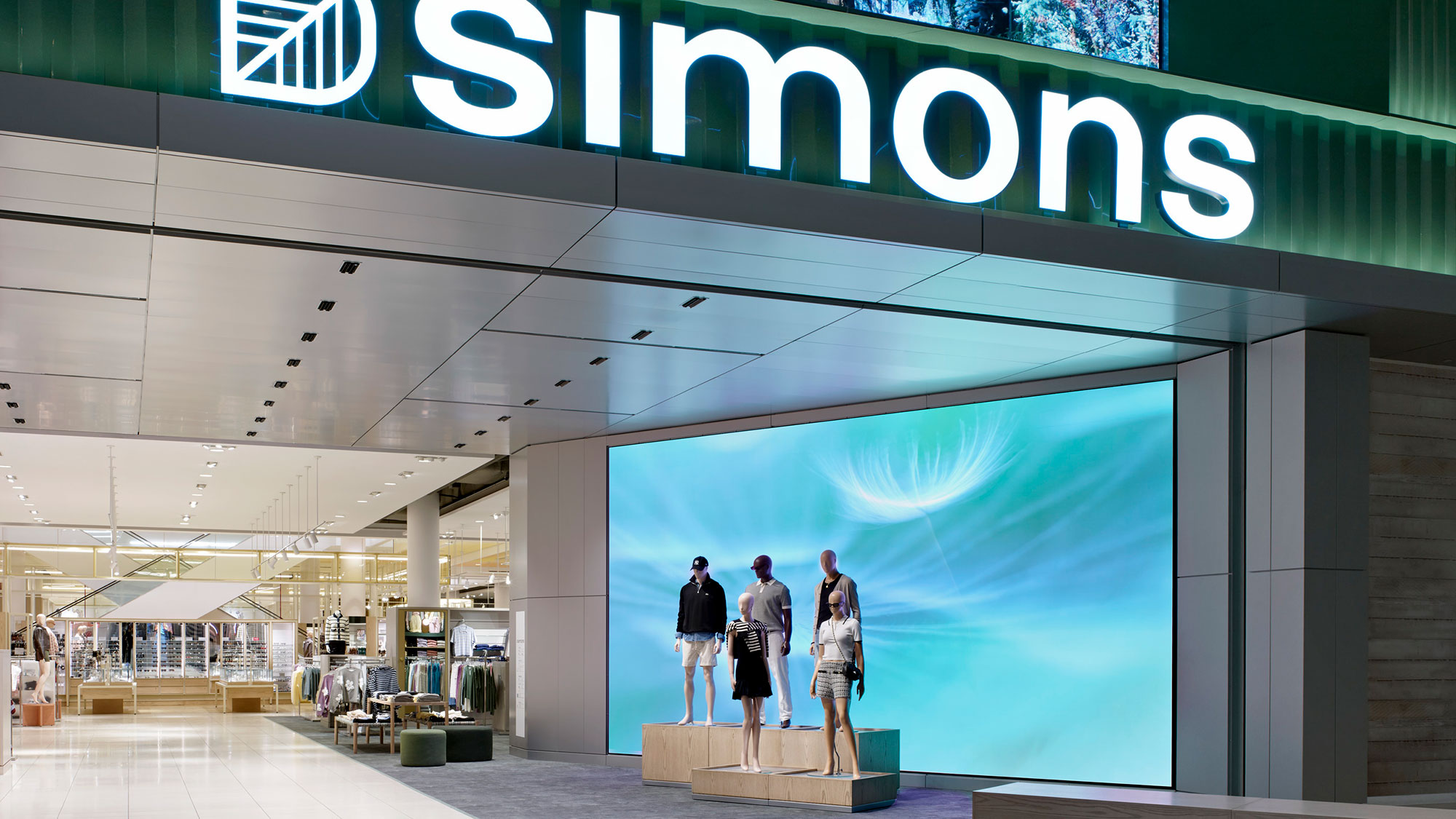
Both locations draw customers in immediately, before they ever step foot inside the space. At Yorkdale, visitors are greeted by a shimmering green façade and two large, stacked LED screens, which visually project into the mall. In contrast, the Eaton Centre location embraces the energy of downtown through an extensive reinvention of its façade, essentially reopening a former “dead wall” to Yonge Street.
Simons proves that not every retailer has to be high-concept. Design that welcomes the approachable brings just as much impact.
Some things can’t be bought online
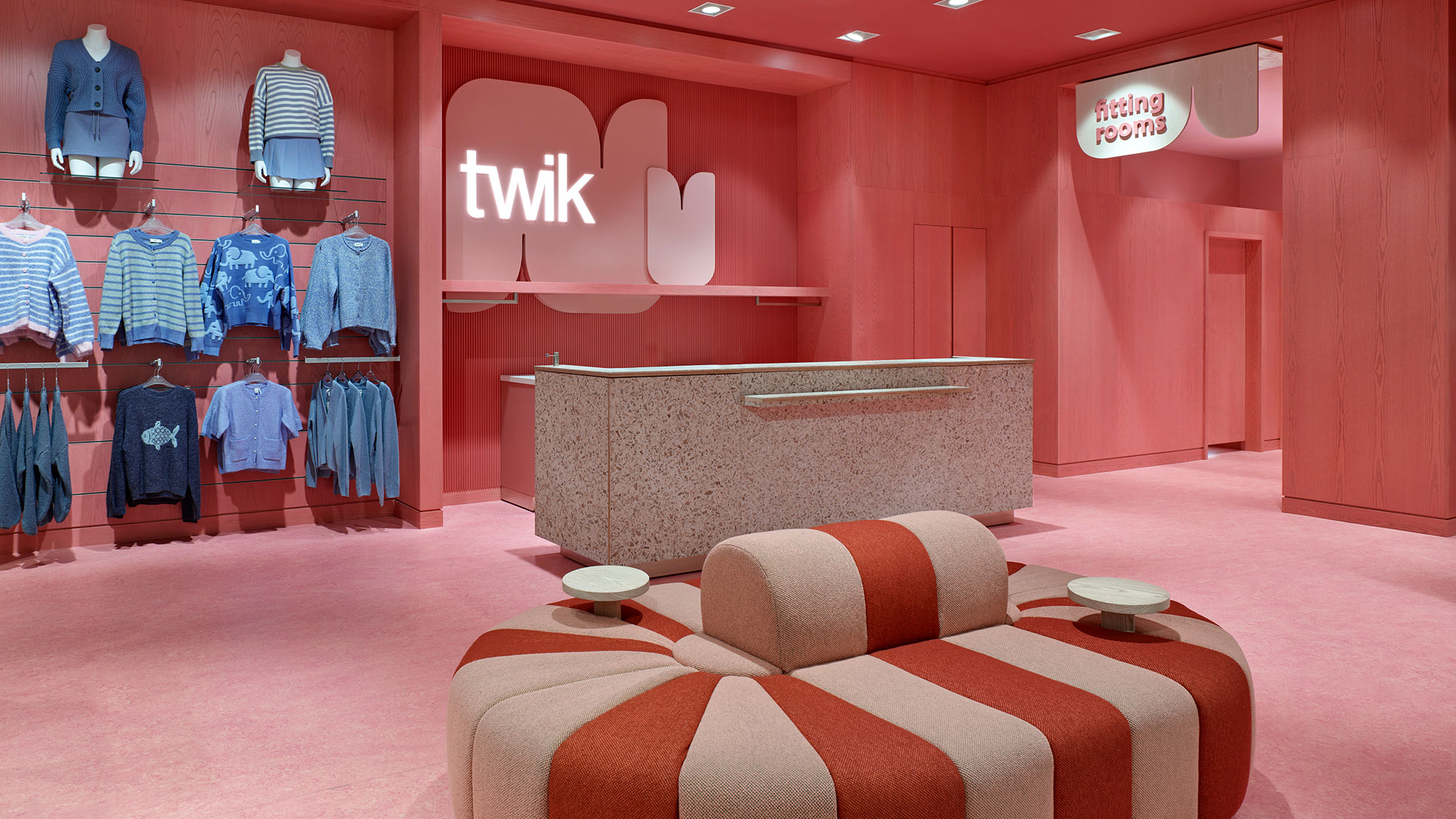
For Simons, which is competing with its own online presence as much as other retailers, the physical store provides something irreplaceable. Yes, it’s a place to see, touch, and try on, but it’s also a destination — a one-stop-shop that offers something for everyone in the family, a place for solo retail therapy, or a gathering spot to find the perfect prom outfit with your friends.
While other anchors have found that size is a liability, Simons is proving that scale can still work — if it’s calibrated for curation, experience, and the kind of accessibility that brings people back.
Simons embodies what the mall always had the potential to be: a destination that brings people together. It captures the very reason I fell in love with the mall to begin with, a magic once forgotten during the rise of convenience and innovation. I’m so here for it.

For media inquiries, email .