Designing Tomorrow’s Airports Across Asia and the Middle East
From major international terminals to smaller regional airports, airports in Asia Pacific and the Middle East are reshaping global connectivity.
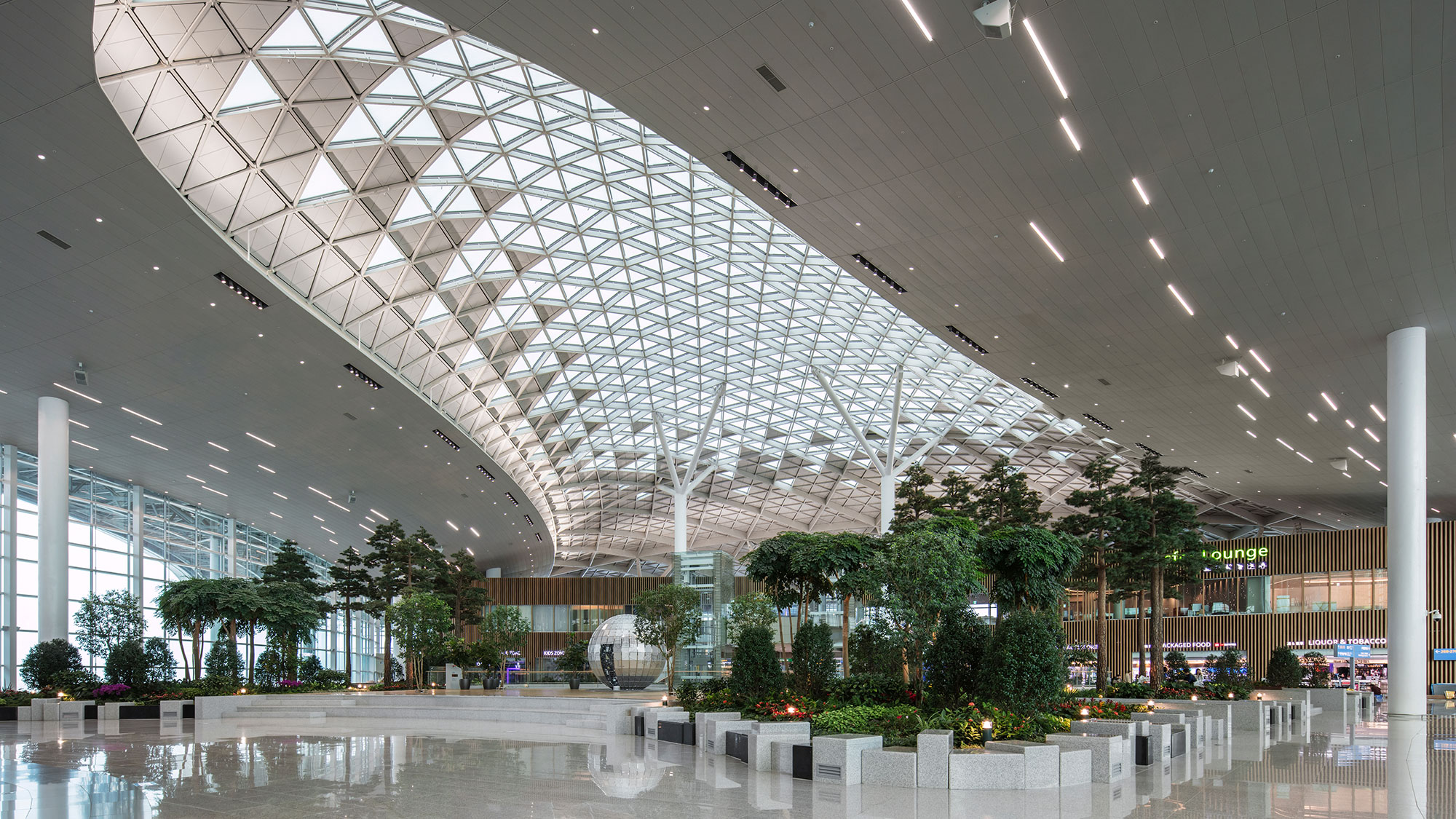
Asia Pacific and the Middle East are in the midst of an unprecedented airport boom, with US$240 billion investment projected over the next decade. From major international terminals to smaller regional airports, these projects are reshaping global connectivity. Many occupy strategic locations, poised to become the next generation of global transit hubs.
But ambition alone isn’t enough. The race to deliver these projects at record speed brings its own set of challenges. Rising passenger expectations, complex site conditions, and regional construction environments don’t always align with ambitious design. These terminals must be built to perform for the next 50 years. The challenge is delivering that longevity at speed without compromising quality. Getting that balance right is essential for terminals experienced by millions each year.
Rising Expectations for Airport Design
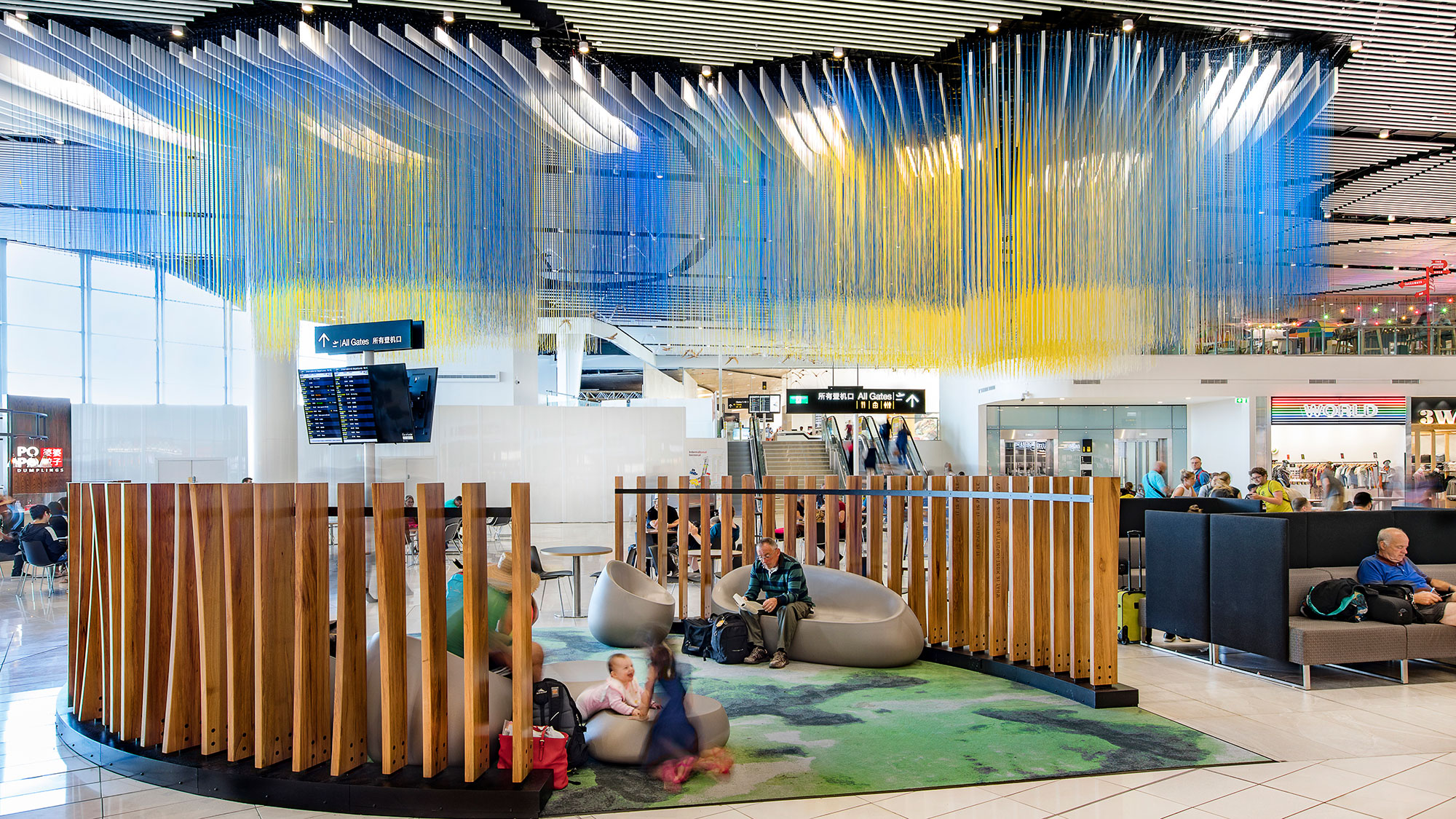
Travelers today expect more from airports than ever before. The creative advancements emerging from global hospitality, workplace, and leisure design now define what passengers look for in the airport experience. People expect intuitive layouts and calm interiors. Authentic food and retail, places to work, zones to relax, and moments of delight make long journeys feel more human.
For airport operators and owners, meeting these expectations while managing surging demand is increasingly complex. The bar keeps rising: many clients now require 5-star Skytrax ratings as contractual deliverables. Delivering high-performance, human-centric terminals requires precision and coordination. It also requires an understanding that airports are no longer just transport infrastructure. They are civic spaces, cultural expressions, and national statements on the global stage.
When Speed Meets Reality
In many APME markets, the pace of development is rapid, but projects can move forward before every aspect of delivery is fully aligned. The question becomes: how fast is too fast?
Achieving speed without sacrificing quality starts with partnering early with local design and delivery teams. Local partners bring deep knowledge of construction methods, regulatory frameworks, and cultural nuances. Those relationships bridge the gap between global design ambition and on-the-ground delivery, allowing the concept to thrive within local realities.
Designing for Buildability and Beyond
The best airport design teams think about construction from day one. Early design decisions can either create or mitigate downstream delivery challenges. At Gensler, we approach this through two complementary lenses:
1. Modularity, Prefabrication, and SystemizationIntegrating modular systems and prefabricated components into the creative process helps ensure faster, more predictable delivery. Off-site fabrication reduces on-site complexity, minimizes waste, and gives airports flexibility to adapt as travel patterns evolve.
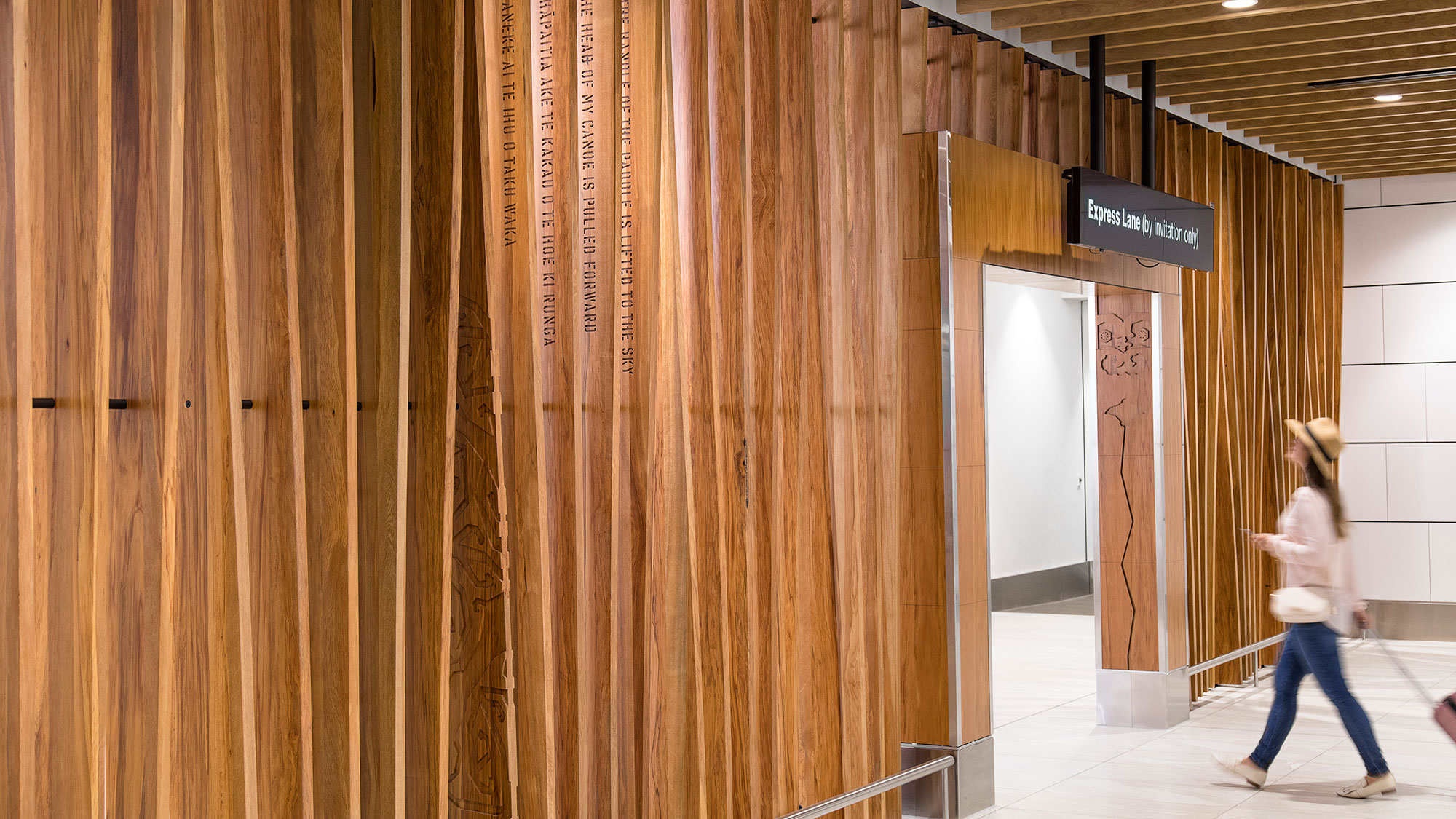
2. Cultural Identity and Functional HarmonyAn airport must perform flawlessly as a functional system, but it must also express the culture and spirit of its place. When designed together, cultural identity and operational performance create airports that work seamlessly and feel distinctive.
This begins with the functional diagram — the “chassis” of the terminal. In early stages, terminal planners map the operational wiring diagram: flows, adjacencies, and distances that allow the airport to run smoothly. Architects work alongside planners from the start, ensuring that the chassis not only performs but also has the latent potential for cultural expression and spatial delight.
Once the functional foundation is strong, architects shape the envelope to infuse identity and a sense of place. As the design evolves, the partnership continues — refining and elevating form and function together.
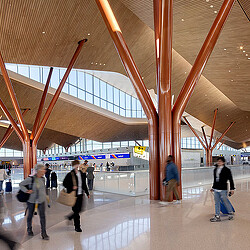
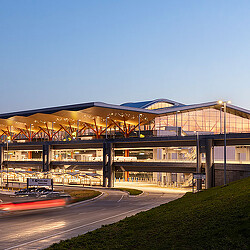
This strategic approach forms the backbone of successful terminals such as San Francisco International Airport’s Harvey Milk Terminal 1, Pittsburgh International Airport’s Terminal Modernization Program, and New Terminal One at JFK International Airport. For each of these projects, technical rigor and cultural identity work in tandem.
The Symbolism Spectrum
Across Asia and the Middle East, clients often aspire for terminals to become national symbols. A successful airport can uplift a nation’s image and embody its confidence. But symbolism doesn’t need to be literal. Designs informed by local culture, landscape, and values often resonate more and endure longer than motifs. Authenticity and restraint create terminals where culture is experienced, not forced.
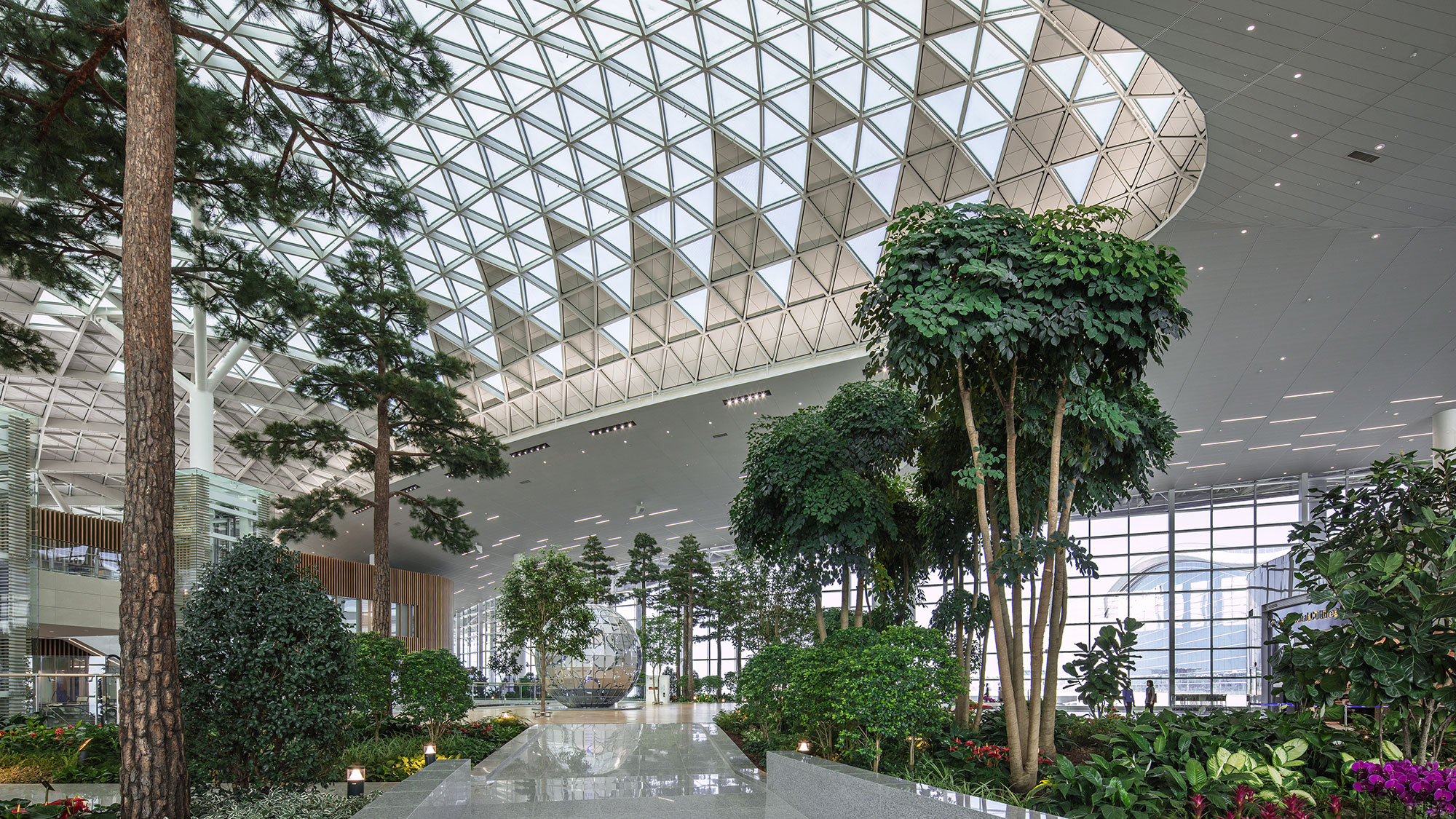
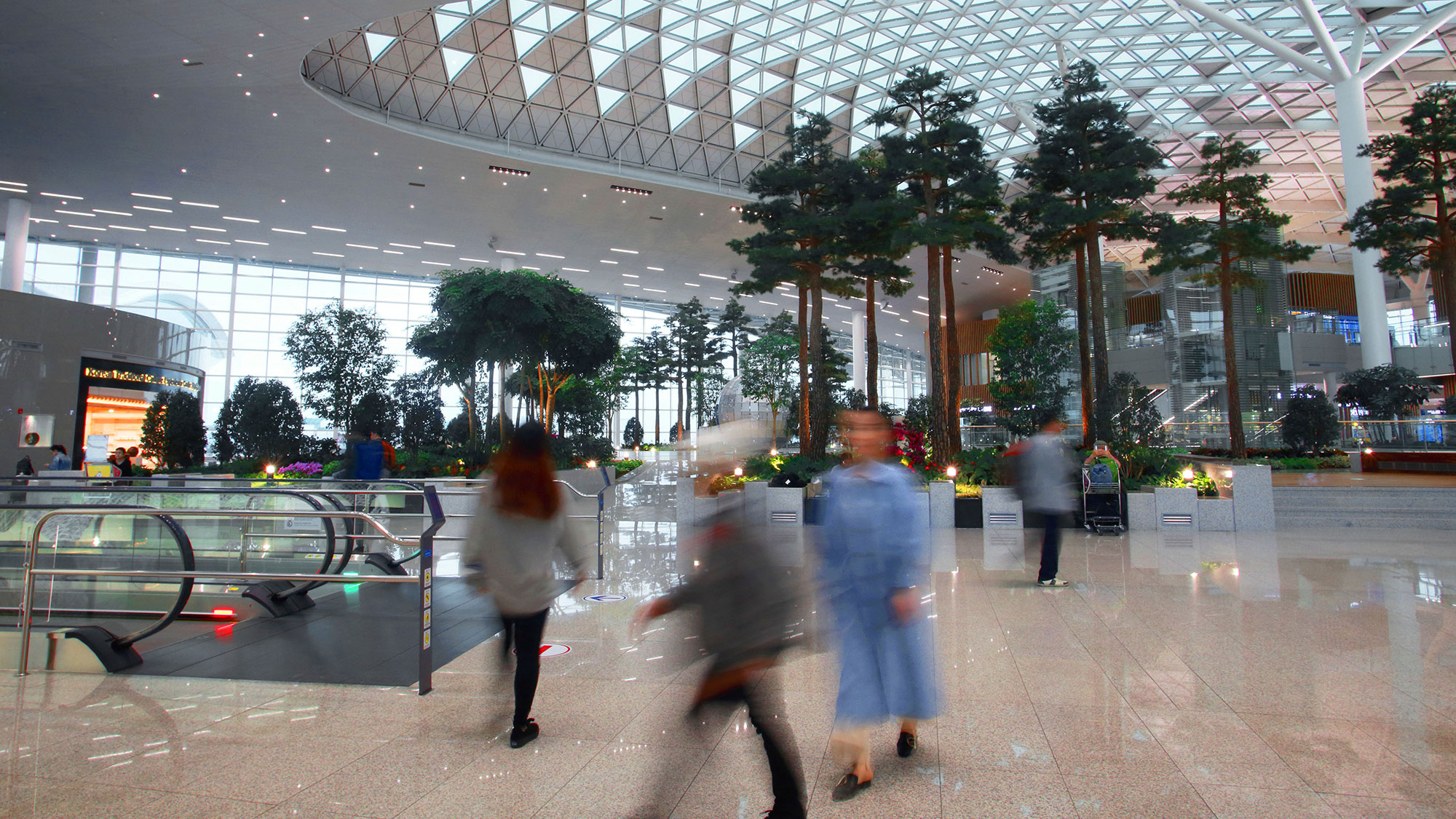
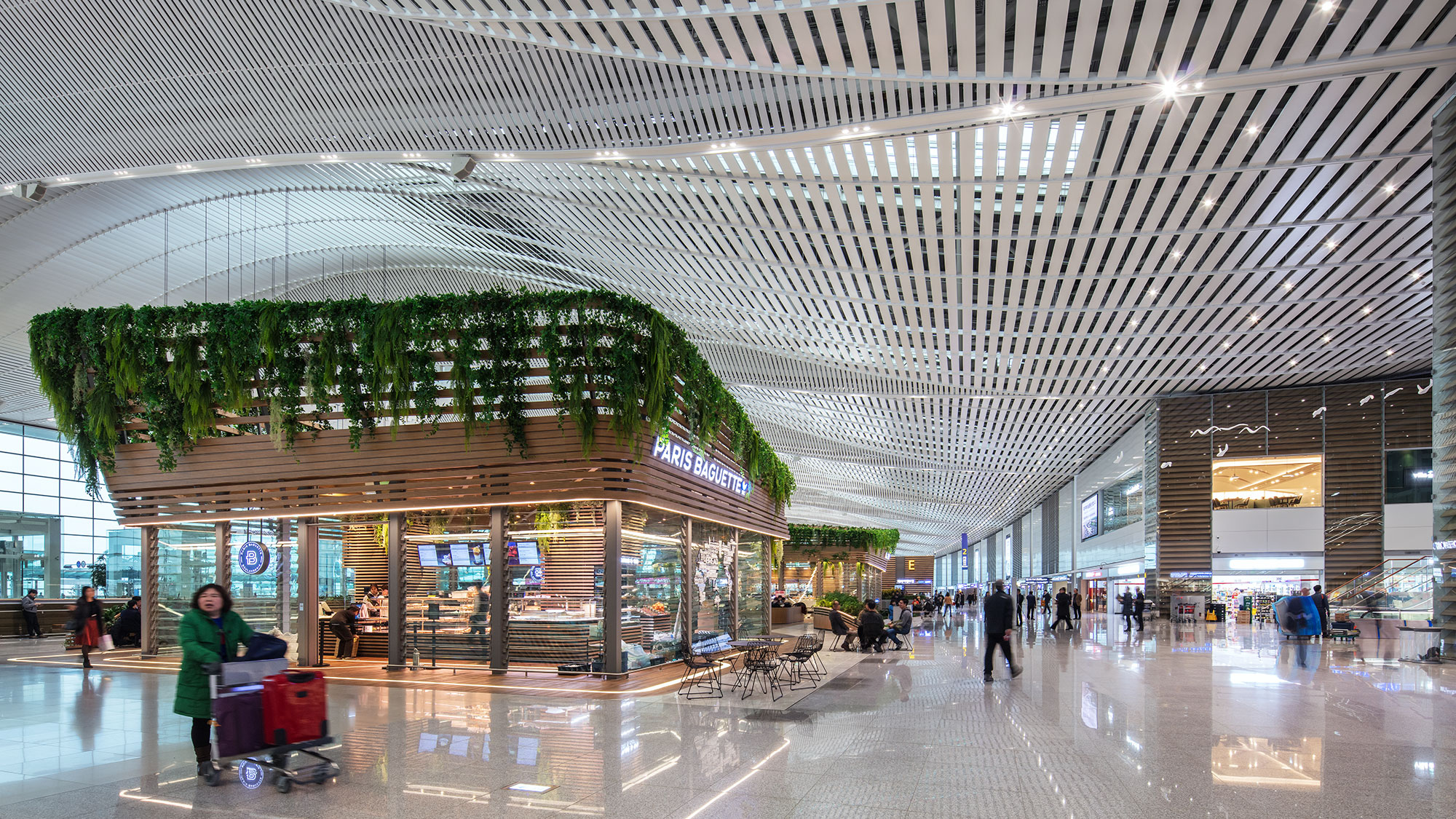
In Korea, Incheon International Airport’s Terminal 2 demonstrates this approach. Its winged roof, inspired by the mythical phoenix, is structurally efficient and culturally resonant. With lush indoor gardens and waterfalls, as well as local materials, such as traditional Korean wood, the terminal evokes a distinct sense of place.
Building Together, Building Better
Delivering the next generation of APME terminals depends less on how bold the vision is and more on how well teams collaborate to bring it to life. The best terminals emerge when global expertise and local insight work in sync. Speed must come from smarter processes, not shortcuts. And ambition must be grounded in practical delivery from day one.
When these elements align, airports become more than infrastructure — they become platforms for connection. To learn more about what’s shaping the next generation of terminal design, explore our 2026 Design Forecast Trends in Aviation.
For media inquiries, email .