India’s Airport Cities: A Prototype for the Next Generation of Urban Development
How airport-adjacent developments are becoming a new prototype for Indian cities.
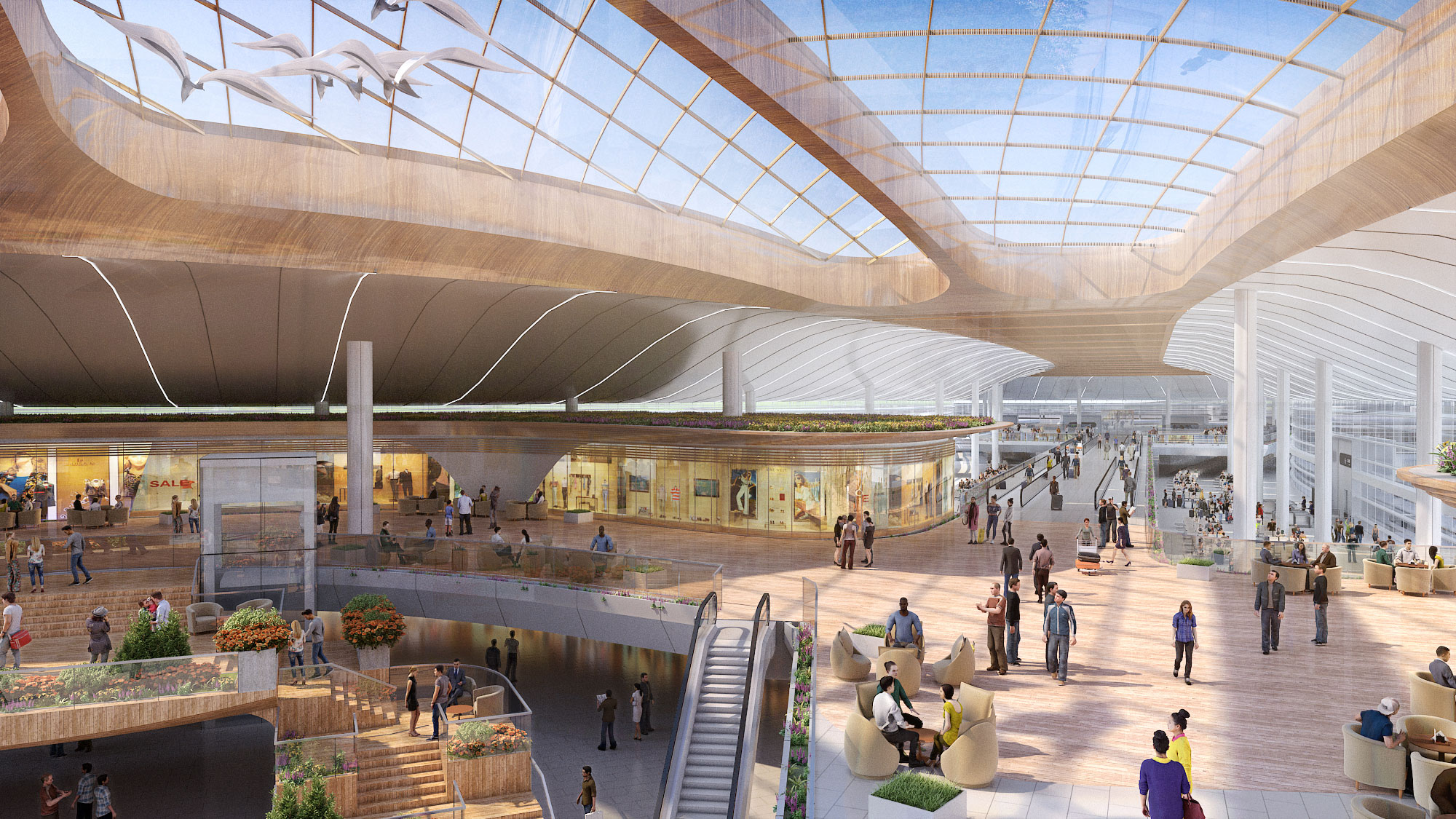
India’s aviation sector is expanding at remarkable speed. New airports are emerging across the country, and with them comes a significant opportunity: large-scale landside developments that could redefine how Indian cities grow.
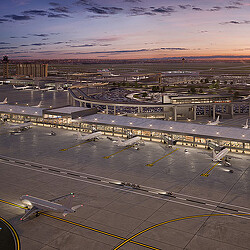
These landside districts can include office campuses, hospitality, retail, logistics hubs, entertainment venues, residential neighborhoods, and public parks, effectively forming entirely new urban quarters at the edge of cities. At a scale rarely available in dense metropolitan cores, they offer a rare opportunity: to design infrastructure, mobility, and urban life in tandem.
Airport-adjacent development is not new to India. What is new is the intent. Shravan Bendapudi, co-managing director at Gensler Mumbai, sat down with Max Connop, regional leader for Gensler’s Aviation Practice in the Asia Pacific and Middle East (APME), to explore why airport cities may become one of India’s most significant urban experiments, and what that could mean for the future of city-making.
Shravan: Development around airports has always existed in India, but much of it evolved organically. Today, we’re seeing something different: a deliberate effort to create entirely new urban districts around aviation infrastructure. From your perspective, what fundamentally distinguishes this new wave of airport cities from what we’ve seen before?
Max: What makes this moment different is scale and governance. Airports often sit on vast, contiguous land parcels. When development is controlled by a single authority or a coordinated group of stakeholders, it allows for long-term thinking that’s difficult in fragmented city centres.
Shravan: That’s critical in the Indian context. Large cities rarely have access to land that can be planned holistically. Airport-adjacent land offers a rare blank slate, an opportunity to think about infrastructure, mobility, density, and public life in an integrated way from day one.
Max: Which is why airport cities can act as prototypes, real-world testing grounds for new models of urban development.
Infrastructure as the Foundation
Shravan: In India, infrastructure often follows development. Airport cities give us the chance to reverse that sequence. How can they become experiments in better transport integration?
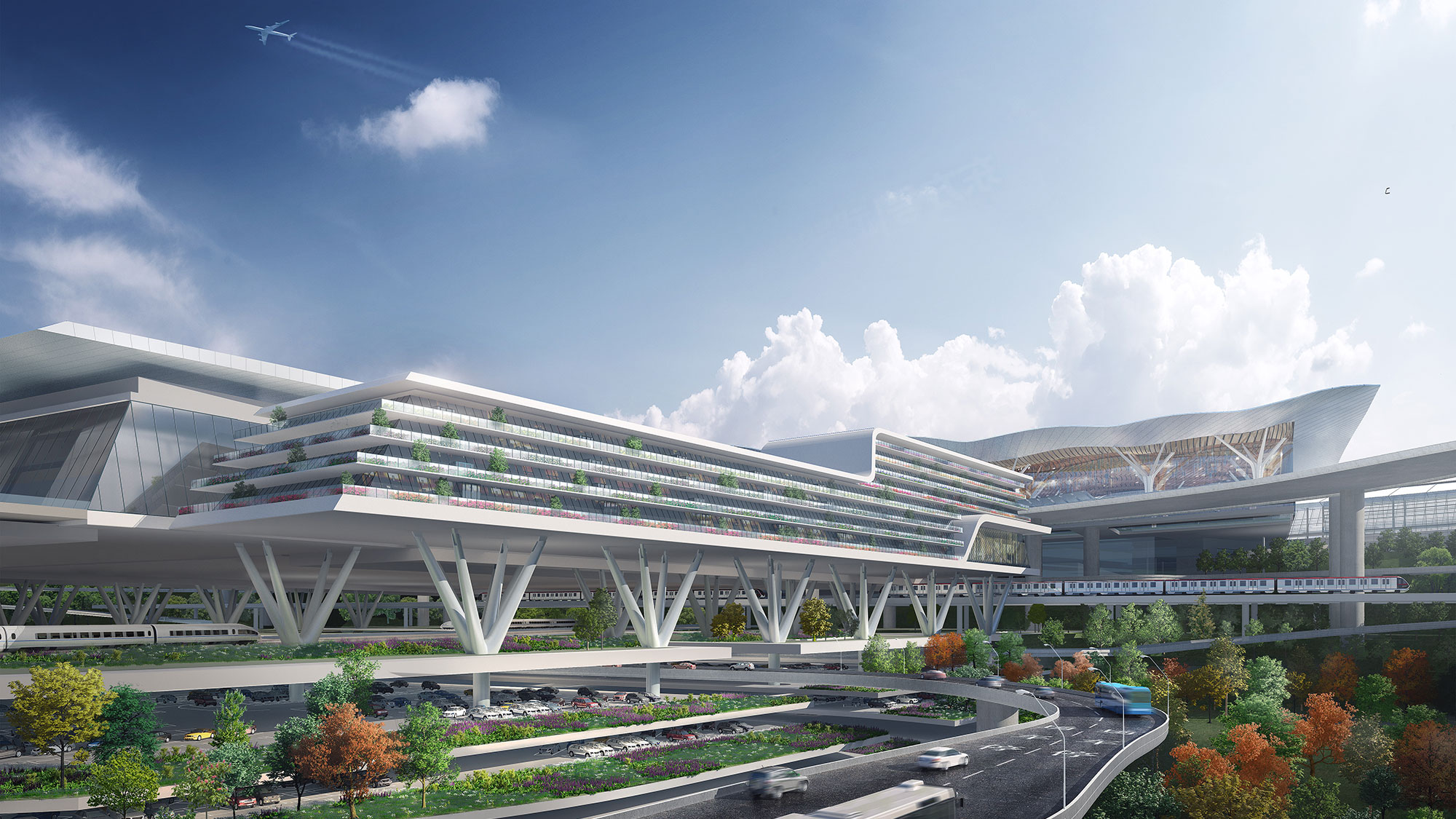
Max: Retrofitting multimodal infrastructure into an existing city is always constrained. At airport sites, you can design road, rail, metro, and air connectivity together from the outset. Kunming Changshui Airport in China is a strong example. Multiple transport modes are integrated into a cohesive, human-scaled ecosystem, linking the airport seamlessly to the wider region.
Shravan: That kind of sequencing is powerful. When mobility is resolved early, it frees planners to focus on creating livable, walkable districts rather than simply managing congestion.
Climate and Environmental Resilience
Shravan: Climate resilience is becoming urgent across India, particularly with extreme heat and flooding. Airport developments operate at massive scales. How can they lead in sustainable design?
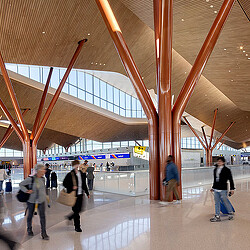
Max: Terminals themselves are constrained. Orientation is driven by flight paths and prevailing winds, which can limit passive design strategies. But intelligent façades, calibrated glazing, shading systems, and solar integration on expansive terminal roofs can significantly reduce operational energy loads.
Shravan: Airport cities are less constrained?
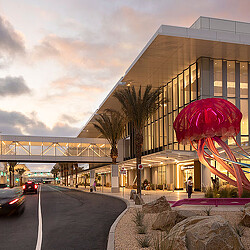
Max: Exactly. Landside developments can orient buildings for prevailing winds, maximize passive cooling, and integrate landscape strategies that support water absorption and reduce runoff during heavy rainfall. Selective planting, compatible with aviation operations, can create natural watersheds that ease pressure on drainage systems.
Shravan: Many of these strategies echo traditional Indian architecture, colonnades, shaded courtyards, and thermal mass. Reinterpreting those principles at scale allows airport cities to be both environmentally resilient and culturally grounded.
From Transit Hub to Urban District
Shravan: In India, airports are rarely just infrastructure. They’re social spaces. Families gather to see loved ones off, people meet for meals, and departures become shared moments. At the same time, airport townships are becoming home to permanent residents. That changes the brief entirely.
Max: It does. Once people begin to live in these districts, the airport city can’t be defined by retail and transport efficiency alone. It has to support everyday life, workplaces, schools, and recreation, all functioning as part of a coherent whole rather than scattered add-ons.
Shravan: And that’s where scale becomes an advantage. In dense Indian city centres, meaningful open space is rare, and large-format public amenities are difficult to integrate. Airport townships have room to think differently.
Max: There’s also something unique about the way these districts concentrate movement. Because airport journeys often involve multiple modes of transport, they naturally cluster activity. If planned well, that proximity creates a layered urban experience.
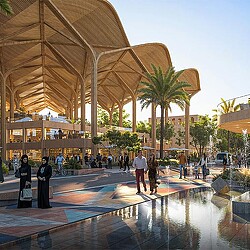
Shravan: The result can be something Indian cities often struggle to provide: breathing room. Shaded boulevards, landscaped plazas, water features, and tree-lined streets introduce calm into daily life. Airport cities can offer an alternative to the intensity of traditional urban cores.
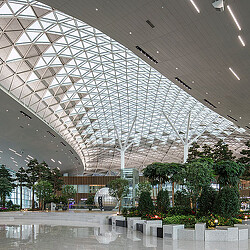
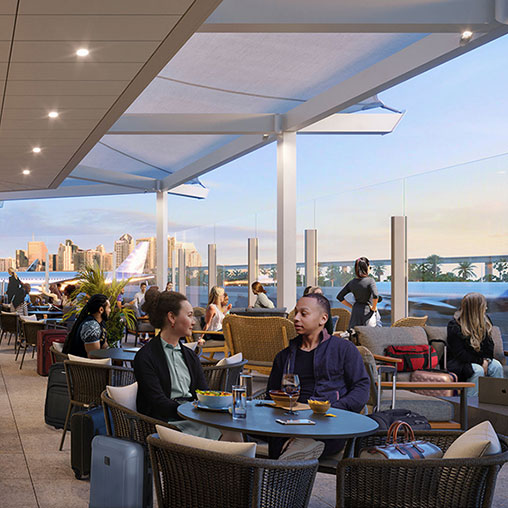
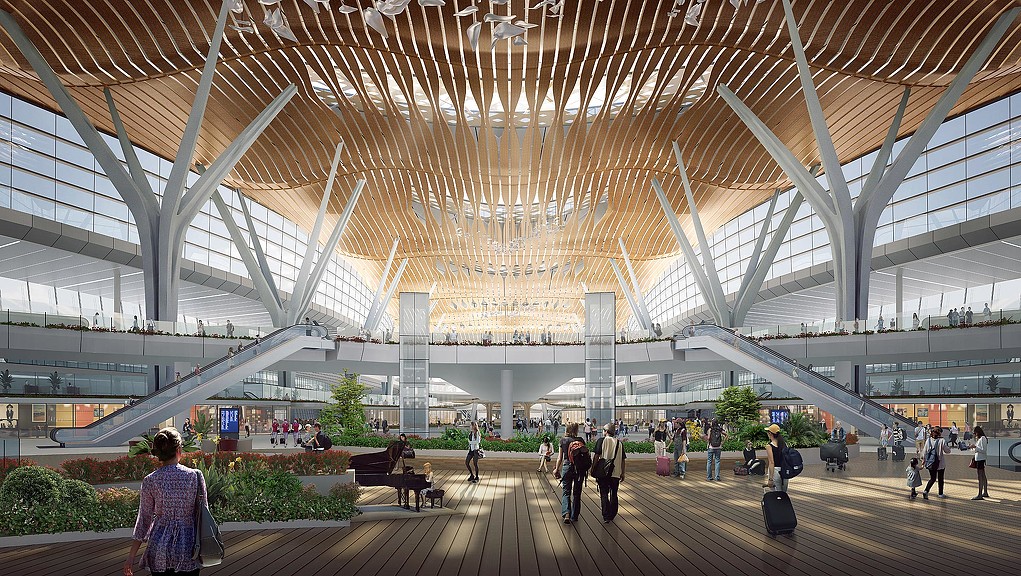
Max: And that sense of generosity shouldn’t stop at the outdoors. Interior public spaces, atriums, arcades, and shared terraces can feel like extensions of the landscape. Carefully integrated greenery, filtered daylight, and water elements can transform commercial environments into places people actually want to linger in.
Bridging the City and the Airport
Shravan: Airports have traditionally felt separate from the cities they serve, a shift from urban chaos into a controlled, curated world. But that divide is narrowing globally. How should Indian airport cities approach integration?
Max: It starts with connectivity. Fast, reliable express rail links, dedicated road corridors, and seamless multimodal transfers reduce not only travel time, but psychological distance. When access is intuitive and efficient, the airport district stops feeling peripheral and begins functioning as an extension of the city.
Shravan: Yet infrastructure alone won’t create belonging. For airport cities to feel truly integrated, they must reflect the identity of the places they inhabit.
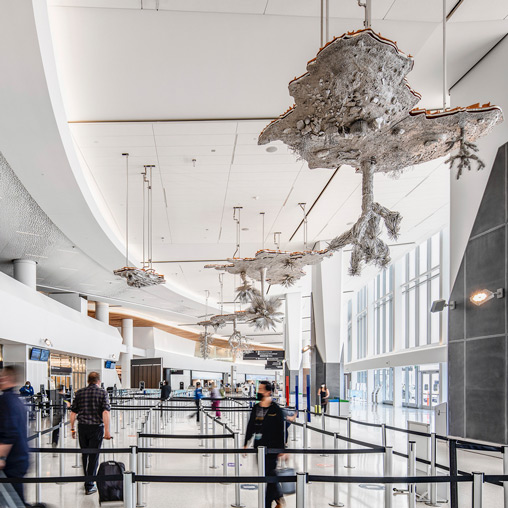
Max: Exactly. When airport districts embed local culture into their public realm, through art, events, retail, and design language, they evolve from gateways into destinations. They become places residents choose to spend time in, not just pass through.
Shravan: If infrastructure, climate resilience, placemaking, and social life are conceived together from the beginning, airport cities can become more than real estate ventures. They can operate as test beds, proving that large-scale development in India can be integrated, resilient, and human-centric.
Max: They won’t replace historic city centres, nor should they. But they offer something rare: the opportunity to design deliberately, at scale, and with long-term intent.
Shravan: And perhaps that’s the real shift. The next chapter of Indian urban growth may not emerge from increasingly congested cores, but from thoughtfully planned districts rising at the city’s edge, demonstrating that infrastructure-led development can still produce vibrant, livable urban life.

For media inquiries, email .