Flex, Focus, Flourish: The Evolving Asia-Pacific Workplace
February 02, 2026 | By Nayan Parekh
Last year, Gensler was engaged by a central government agency in Asia to answer a deceptively simple yet profound question: How much workspace does the public sector really need?
At first glance, this seems like a calculation of square meters per person. But as we soon discovered, it was really a question of purpose. Across the Asia-Pacific region, hybrid work has reshaped what people expect from the office and what companies and cities now need from their workplaces.
The real question isn’t how much space we need, but what kind of space helps people do their best work. Our research across Asia reveals that the “right” amount of workspace goes beyond just headcount; it depends on culture, policy, and, most importantly, the type of experiences people seek when they come into the office.
To unpack this, our teams combined on-the-ground research with insights from Gensler’s anonymized BIM data intelligence dashboard, drawing from millions of square meters of workplace data across the region. The findings were clear: space use isn’t converging, it’s diversifying. Each city is finding its own equilibrium between flexibility, culture, and performance.
Regional Patterns and Cultural Influences
In Greater China, Korea, and Japan, office utilization rates hover around 70%. Physical presence remains a marker of collaboration and accountability, reflecting a cultural emphasis on visibility and shared work rituals. Tokyo provides a clear example of this dynamic. Despite Japan’s national work-from-home adoption rate of approximately 50%, corporate culture in Tokyo continues to prioritize in-person collaboration and team rituals.
In contrast, Pacific markets such as Australia average around 60%, indicating a greater acceptance of flexibility and trust-based work models. Sydney, for instance, represents a model of balance: organizations are embracing flexibility while reinforcing the value of shared experience.
Gensler’s 2025 Global Workplace Survey found that employees in hybrid environments that balance collaboration and focus time report three times higher performance outcomes than those in offices optimized purely for efficiency. What this means for designers is that there is no one-size-fits-all benchmark. Instead, space planning must flex to cultural patterns, from high-density collaboration zones in Tokyo to purpose-built hybrid hubs in Sydney.
Singapore’s Adaptive Approach
Singapore offers a glimpse into the next chapter of workplace evolution. With flexible work now enshrined in government guidelines, employers are reevaluating office design through a policy lens.
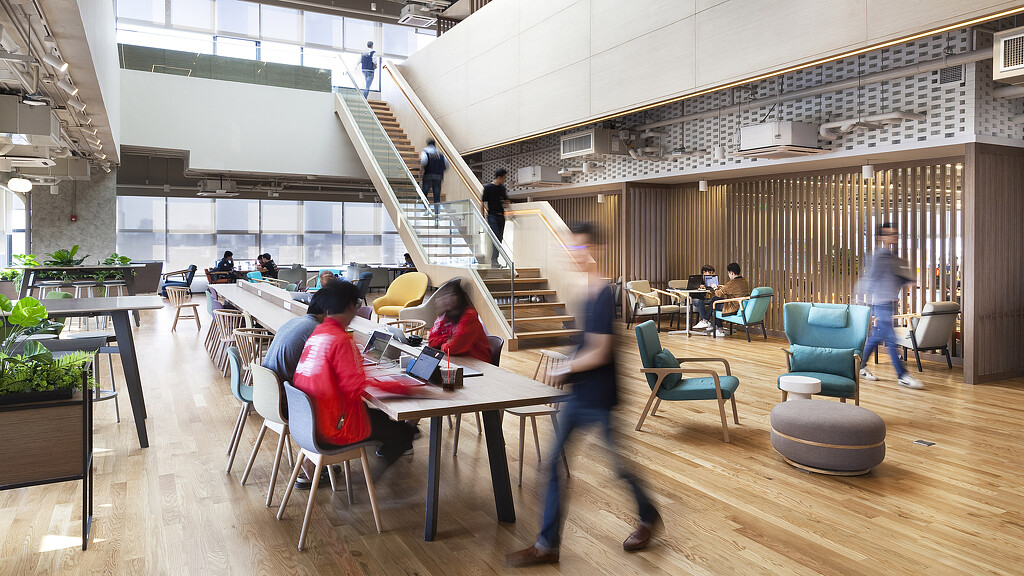
Today, 23% of Singaporean professionals work remotely, the highest in the region. But the real change lies in how organizations are redesigning their offices. Public sector workplaces, for instance, are moving away from fixed desks toward “collaboration neighborhoods”: modular zones equipped for both digital and physical interaction.
Gensler’s data shows that when employees can choose where and how to work, engagement and performance rise dramatically. The Singapore example underscores a key principle: policy can drive design transformation when coupled with data.
Emerging Economies, Emerging Flexibility
Across Southeast Asia and India, hybrid work is evolving through a different lens, one shaped by infrastructure readiness and organizational culture. In Bangkok, Kuala Lumpur, and Manila, companies are experimenting with hybrid arrangements, but formal frameworks remain relatively nascent. Meanwhile, in India, contrasts are stark: Bangalore’s tech-driven ecosystem has embraced hybrid work, while Mumbai’s traditional sectors continue to favor office presence.
For designers, this means planning for future flexibility. Workplaces must be modular and reconfigurable, allowing spaces to evolve as organizations mature. In these markets, designing for adaptability is both key and essential.
Beyond Efficiency: Designing for Human Flourishing
If the pandemic era asked, “Can we work anywhere?”, the next era asks, “How do we make work better wherever it happens?”
The answer lies in designing ecosystems of spaces that flex around people, balancing focus, connection, and well-being. High-performing workplaces are not defined by occupancy levels but by how they support belonging, creativity, and purpose.
Gensler’s research consistently shows that employees who have choice in where and how they work are three times more likely to say their workplace supports their productivity, and twice as likely to stay with their organization.
Looking Forward: The Human-Centered Metric
Across the Asia-Pacific region, the question of how much workspace is needed has evolved into a deeper conversation about why we need space at all. High-cost cities like Singapore and Sydney must strike a balance between flexibility, productivity, and well-being, while emerging markets focus on digital readiness and inclusion.
The path forward is clear: the future of work is human-centered, data-informed, and purpose-driven. Ultimately, today’s workplace is no longer defined by its footprint, but by its impact on people. Designing for flex, focus, and flourish is about empowering individuals, strengthening organizations, and enabling cities to thrive.
For media inquiries, email .