Investing in the Arrival Experience Boosts Long-Term Returns for Residential Developers
How the residential arrival experience drives leasing, retention, and value in a supply-constrained market.
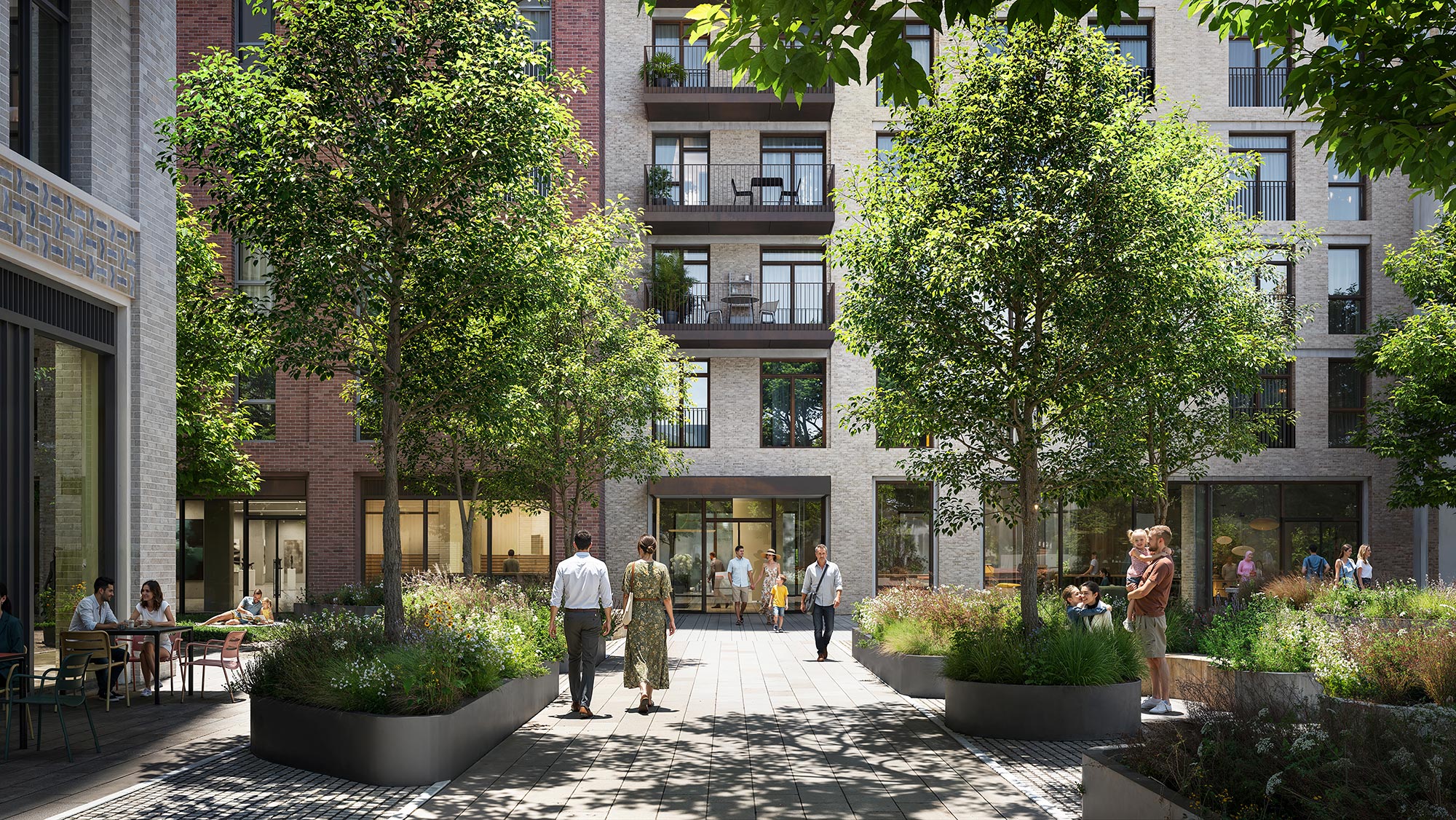
Across global markets, housing supply is falling short of demand. Construction costs remain high, rental growth has flattened across many markets, and viability is being tested at every stage of delivery. In this context, the arrival sequence is not just a design moment — it is a decisive factor in a scheme’s success. A weak arrival undermines leasing, erodes trust, and diminishes the sense of home that residents seek.
For developers and funders, the entrance experience is one of the clearest opportunities to create distinction, shape desire, and improve commercial performance through thoughtful planning rather than additional cost.
The Journey Begins Online
The resident journey begins long before anyone reaches the building itself. The first layer of arrival now takes place digitally, through researching the neighbourhood, reading reviews, and forming an instinctive sense of whether the place aligns with a particular way of living. At the same time, the development presents its own offer through price point, service, amenity provision, unit types, imagery, and tone, all of which combine to establish whether the scheme feels coherent, desirable, and worth the trip.
People rarely compare buildings in isolation. They compare lifestyles, routines, and neighbourhood identity. The schemes that succeed at this stage create a convincing picture of life in and around the asset, giving a prospective resident enough confidence and curiosity to move from digital research to physical experience.
The Neighbourhood as First Impression
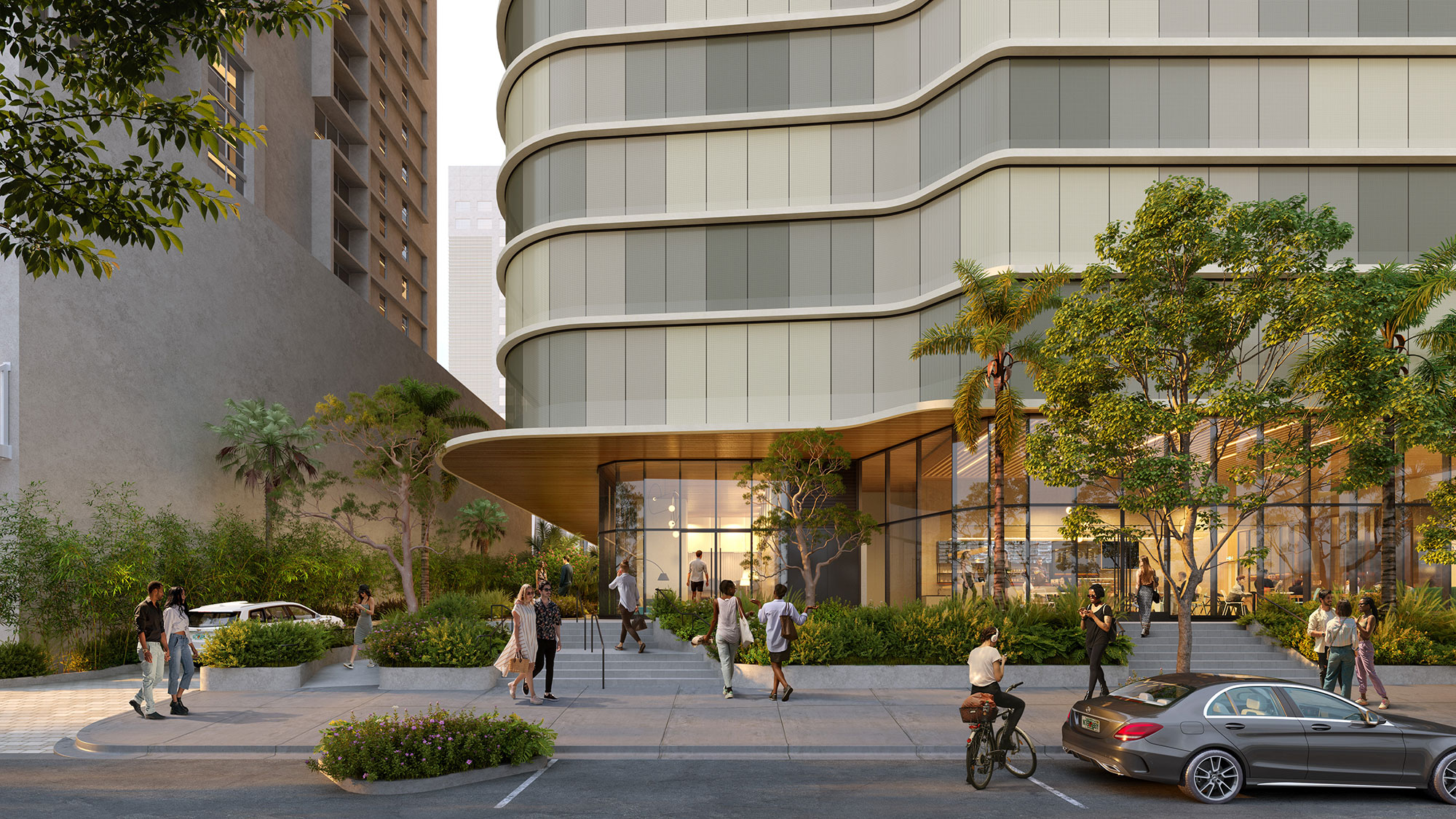
Once that journey becomes real, the neighbourhood begins to speak for itself, and the walk to the building becomes a live test of the promise made online. The quality of the landscape, the convenience of the local retail, the presence of everyday services, and the energy of the cafés and shops all contribute to whether the place feels embedded, relevant, and supportive of daily life.
People judge a home through the experience of getting to it as much as through the apartment itself. Above all, the route has to feel safe, clear, and comfortable, in every season and at different times of day. This is where placemaking, ground-floor activation, and stewardship become inseparable from the asset’s success.
The View In
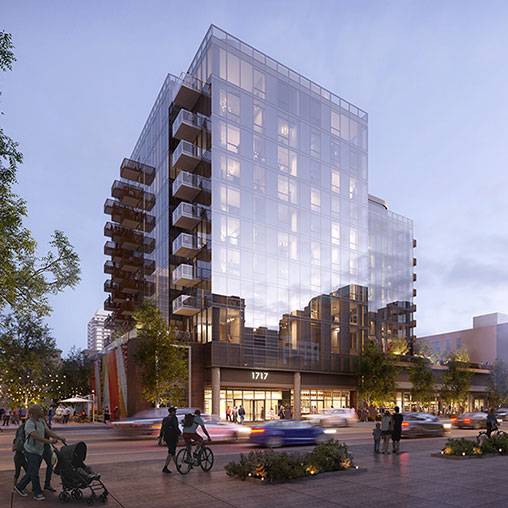
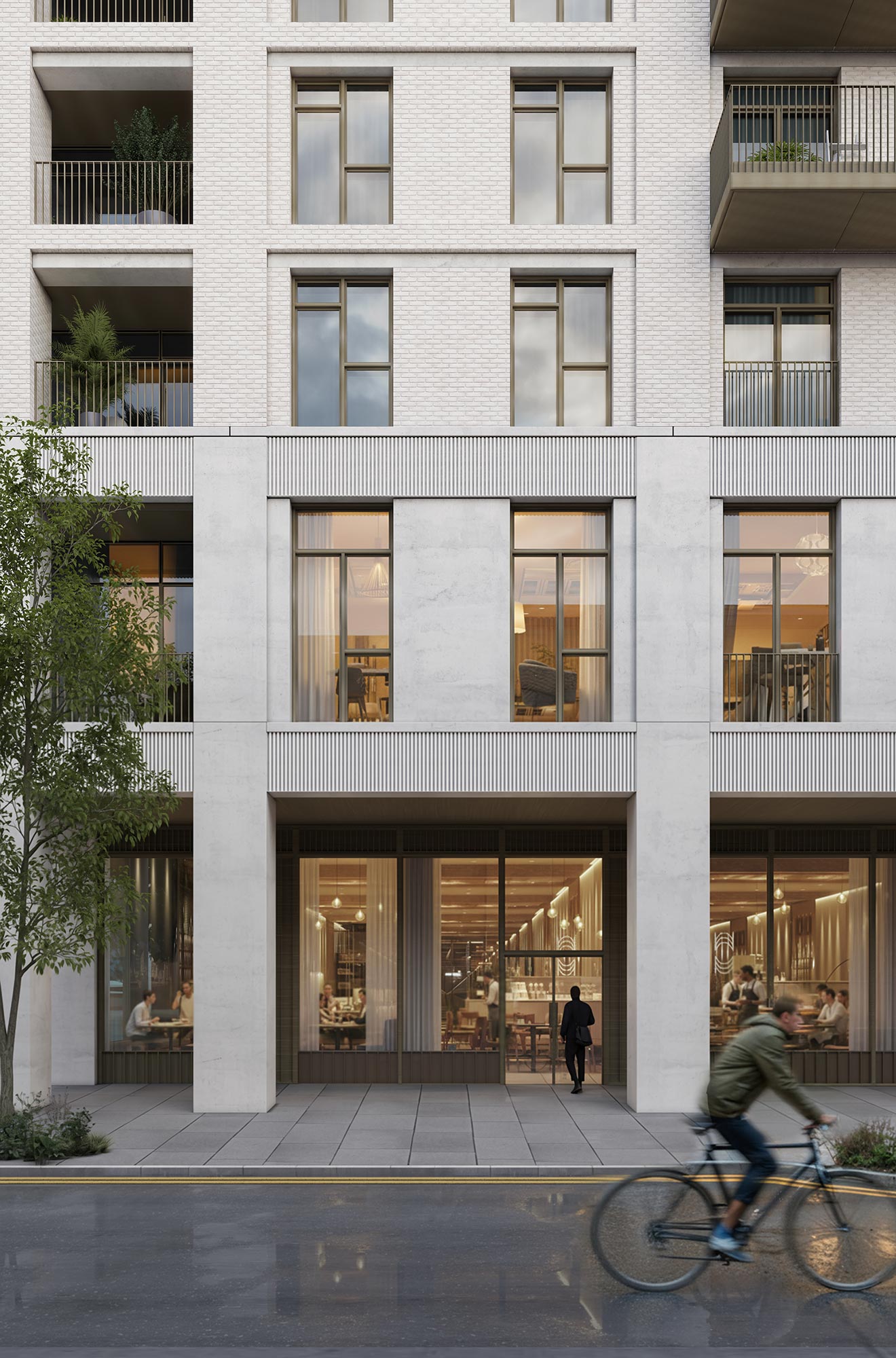
As the visitor approaches the entrance, the building starts to reveal whether it understands the lifestyle it is selling. From 30 feet away, the view through the glazing can communicate warmth, order, activity, and confidence in a matter of seconds. A lobby with visible life, clear reception presence, and a sense that the building is functioning well immediately begins to shape trust.
Hospitality has long understood how to use this moment to build anticipation, while retail understands how visibility and atmosphere influence desire. Both offer valuable lessons for residential development, where the entrance often determines whether the rest of the tour feels like a persuasive reason to move in, or merely somewhere to pass through.
The Threshold
The threshold is where visual impression becomes physical experience. The way the door opens, the feel of the handle, the weight of the entrance, the change in temperature as you step inside all contribute to how a building is understood on a deeply instinctive level.
On a cold day, warmth at the entry point matters. After a difficult day, calm matters. In any weather, clarity matters, because the building should help you understand immediately where you are heading and how to move through it without effort.
This is one of the reasons the arrival deserves greater strategic attention across every residential typology, from for-sale and rental to co-living, student housing, and senior living. A build-to-rent building should signal service and community, a co-living or student housing scheme must communicate belonging, and a senior living community requires calm and visible support. The moment is the same — its resolution is specific.
The Lobby Experience
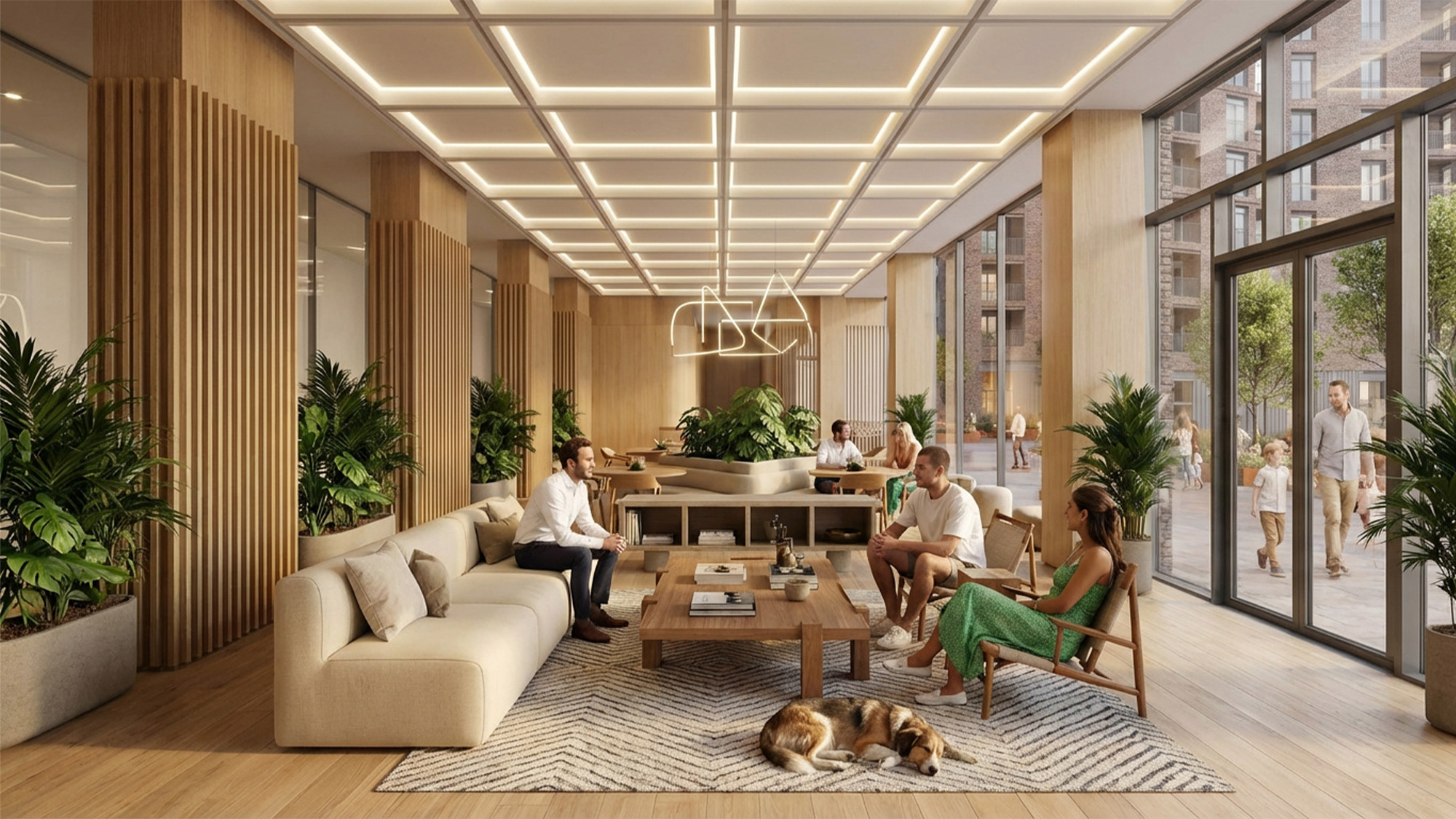
The lobby is where the resident begins to experience the building as home. A successful lobby carries a clear sense of place through light, sound, scent, materiality, planting, artwork, and seating. It must also support the daily practical needs that define contemporary living, including post, parcels, waiting, informal conversation, and visible front-of-house support.
This is where design begins to influence the ordinary rituals that drive satisfaction over time, and where the lobby becomes a key part of the service model and a visible expression of the relationship between resident, operator, and community.
A critical question for the sector is how to deliver more housing, at pace, and at price points that remain accessible without eroding viability. In that context, arrival cannot be treated as a luxury add-on or a premium layer reserved for high-end schemes. Instead, it should be understood as a repeatable, scalable design strategy that can be applied across portfolios.
How Design Decisions Drive Value
The strength of an arrival sequence depends on how well certain design moves are executed. Clarity of layout, visibility into active spaces, well-resolved thresholds, and efficient integration of operational functions are not cost-intensive, but they are often overlooked.
When designed well, they support leasing performance by creating stronger first impressions, establishing brand clarity, and creating better conditions for operators to deliver service effectively. Over time, this translates into stronger resident retention, smoother day-to-day operations, and more resilient asset performance. This is particularly important in mid-market and build-to-rent models, where long-term value depends on balancing upfront cost with sustained occupancy and operational efficiency.
In a market where competition is intense, these factors become critical. The developments that perform best are not necessarily those that spend the most, but those that align design, operations, and experience in ways that support long-term value.
If you are shaping a residential project and want to think more carefully about how arrival can strengthen identity, improve performance, and create a stronger sense of home from the very first moment, I would welcome the opportunity to discuss it with you.
For media inquiries, email .