A Playbook for Sustainable Design Education
How Gensler and the University of Tennessee, Knoxville, created a replicable curriculum model to prepare architects for climate-conscious design.
What if the most powerful tool we have to address the climate crisis isn’t a product or policy, but a partnership? The challenges facing our industry and our climate demand deeper alignment between academia and practitioners. To accelerate decarbonization, we must invest — collectively as an industry — in the next generation of sustainable design leaders. The Gensler Charitable Gift Fund supports academic initiatives that develop future-ready curricula, equipping emerging designers and architects with the tools to lead.
In an era of global warming, both practitioners and universities have a shared need to increase sustainable design training. Practitioners need designers who can blend creativity with environmental performance, and universities need new curricula that teach students sustainability concepts, skills, and tools.
To address this need, Gensler launched a pilot program through the Gensler Charitable Gift Fund that provided a one-time philanthropic donation to select universities to create a new sustainable design course. The fund aims to support faculty in developing courses that equip future design professionals with the skills they need to implement viable, sustainable design strategies in professional practice.
As one of the fund’s recipients, the University of Tennessee, Knoxville, College of Architecture and Design created a new course, Zero|Spec Workshop, shaped by Dean Jason Young and Distinguished Lecturer James Rose. After running this course for two consecutive years, a playbook is emerging that could help other firms and universities collaborate to scale decarbonized curriculum.
Here are five key strategies to train the next generation of sustainable design practitioners:
Strategy 1: Invest in curriculum development
Funding the time for teaching staff to create a new curriculum presents a common barrier. With the pilot funding in hand, the University of Tennessee, Knoxville, provided summer funding to faculty member James Rose and graduate research assistant Hannah Bowman to develop the Zero|Spec Workshop prior to the fall semester. They aimed to create a course that could be repeated without pilot funding and could teach students to apply new technical skills.
They came up with a solution: a semester-long design project in which students work together in small, interdisciplinary teams. The pilot funding allowed them to clean up digital models from four selected precedent student projects from a previous advanced design studio, which were of outdoor recreation centers in Knoxville along the Tennessee River. At the start of the Zero|Spec Workshop, each student team received a digital model of a precedent project and set out to develop the design for higher sustainability performance. The university reused these digital models when running the course the following year without recurring funding, proving that one-time funding can create multiyear impact.
Strategy 2: Curate student enrollment
The course sought to give students experience with a multidisciplinary approach to high-performance design to reflect how sustainable design strategies are successfully navigated in practice. To achieve multidisciplinary enrollment, the course was offered as an evening elective and cross-listed for registration in departments across the College of Architecture and Design and the Tickle College of Engineering. Despite high demand, the university capped enrollment at 16 students per year so that faculty could closely guide project teams.
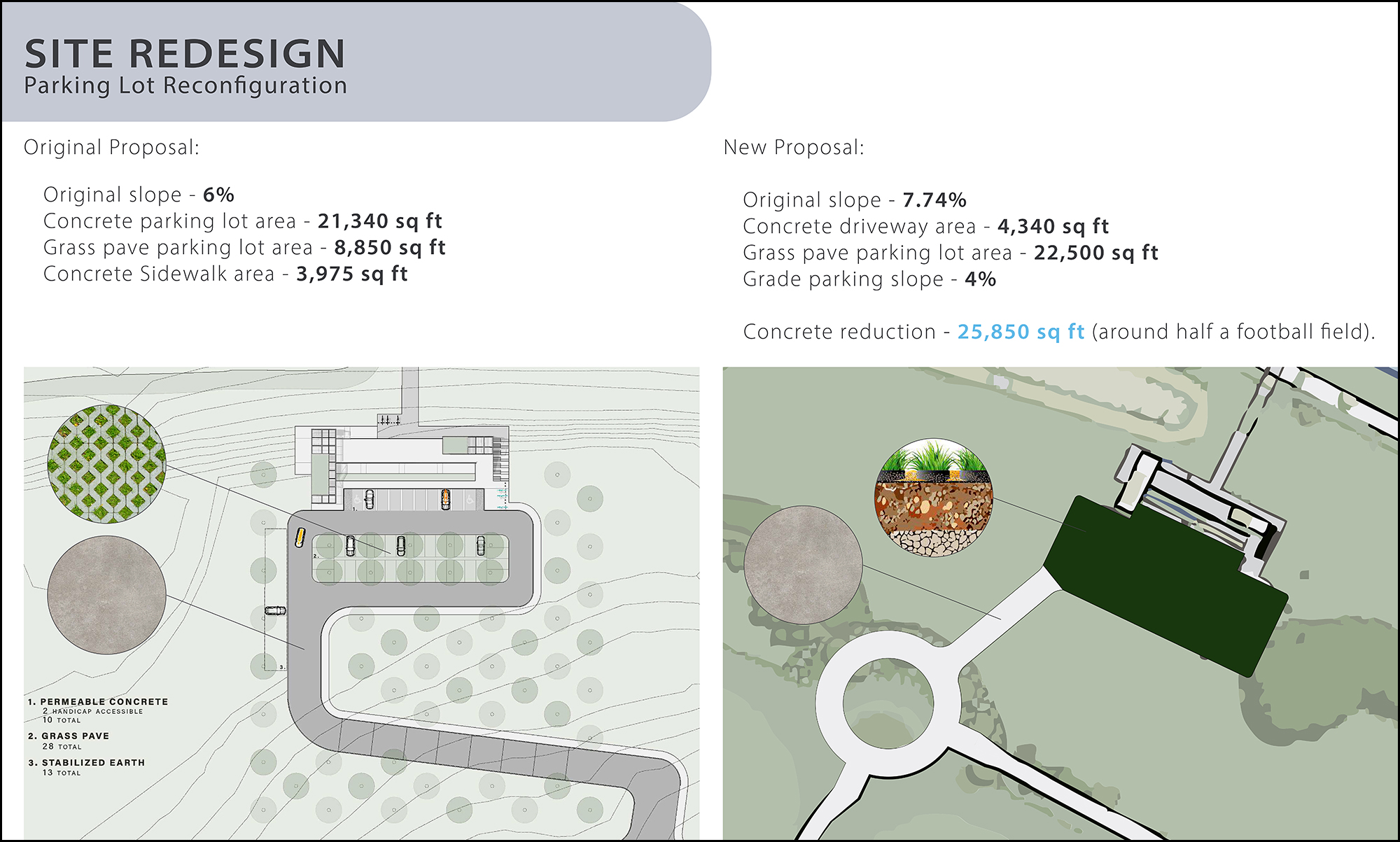
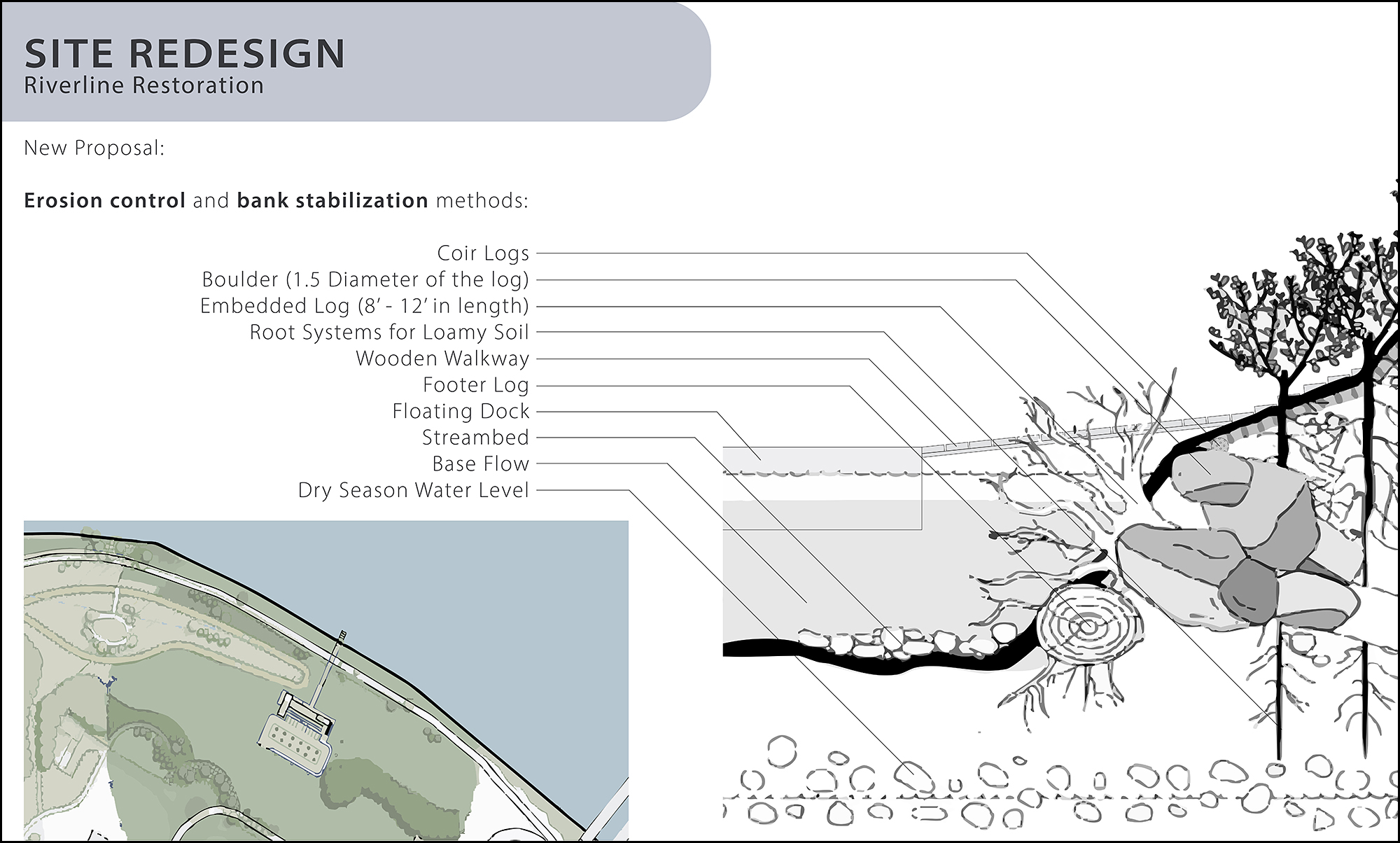
One of the multidisciplinary teams worked together to redesign the site access to minimize grading, add permeable paving, and channel remaining surface drainage through bioswales instead of underground piping. The team also proposed including a floating dock to minimize disruption, rootwad and coir logs to break the hard wake, and a restorative approach of creating mussel habitat to help filter the water. These multidisciplinary interactions became a cornerstone of the student learning outcomes and encouraged innovative, comprehensive design thinking.
Strategy 3: Break down silos between academic departments
Design programs are often siloed from engineering programs at universities, which can limit the multidisciplinary collaboration that is more common in practice. In addition to engaging students from multiple programs, staff organized the Zero|Spec Workshop to include guest speakers and critics from departments across campus.
These guests included faculty from Architecture, Landscape Architecture, Geography, Civil Engineering, and Mechanical Engineering to share content from their specialty that they felt was most relevant to the course. For example, physical geography lecturer Matthew Kerr delivered a fascinating history of the Earth’s climate. The following year, he became the first geography lecturer to serve on a thesis committee for a landscape architecture student, demonstrating how this multidisciplinary approach creates meaningful connections.
Strategy 4: Embrace analysis as a design tool
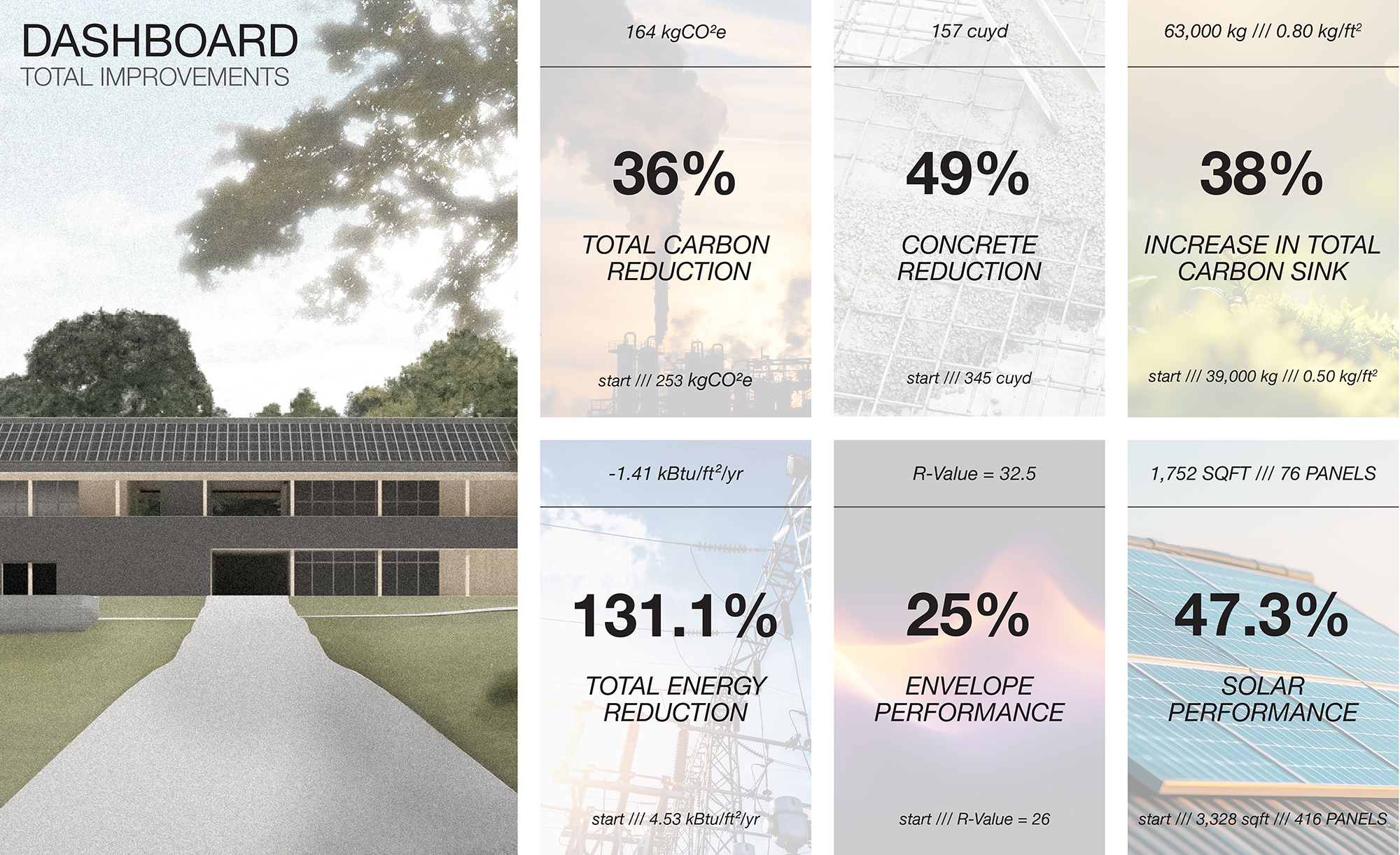
Sustainability-focused design curriculum must unite creative vision with environmental performance goals. Throughout the course, students learned analytical tools and software to estimate how design iterations affected operational energy performance, embodied carbon, water, and habitat restoration. Throughout the semester, students applied their new analytical skills to iterate on the precedent design concept to achieve a higher level of sustainability performance.
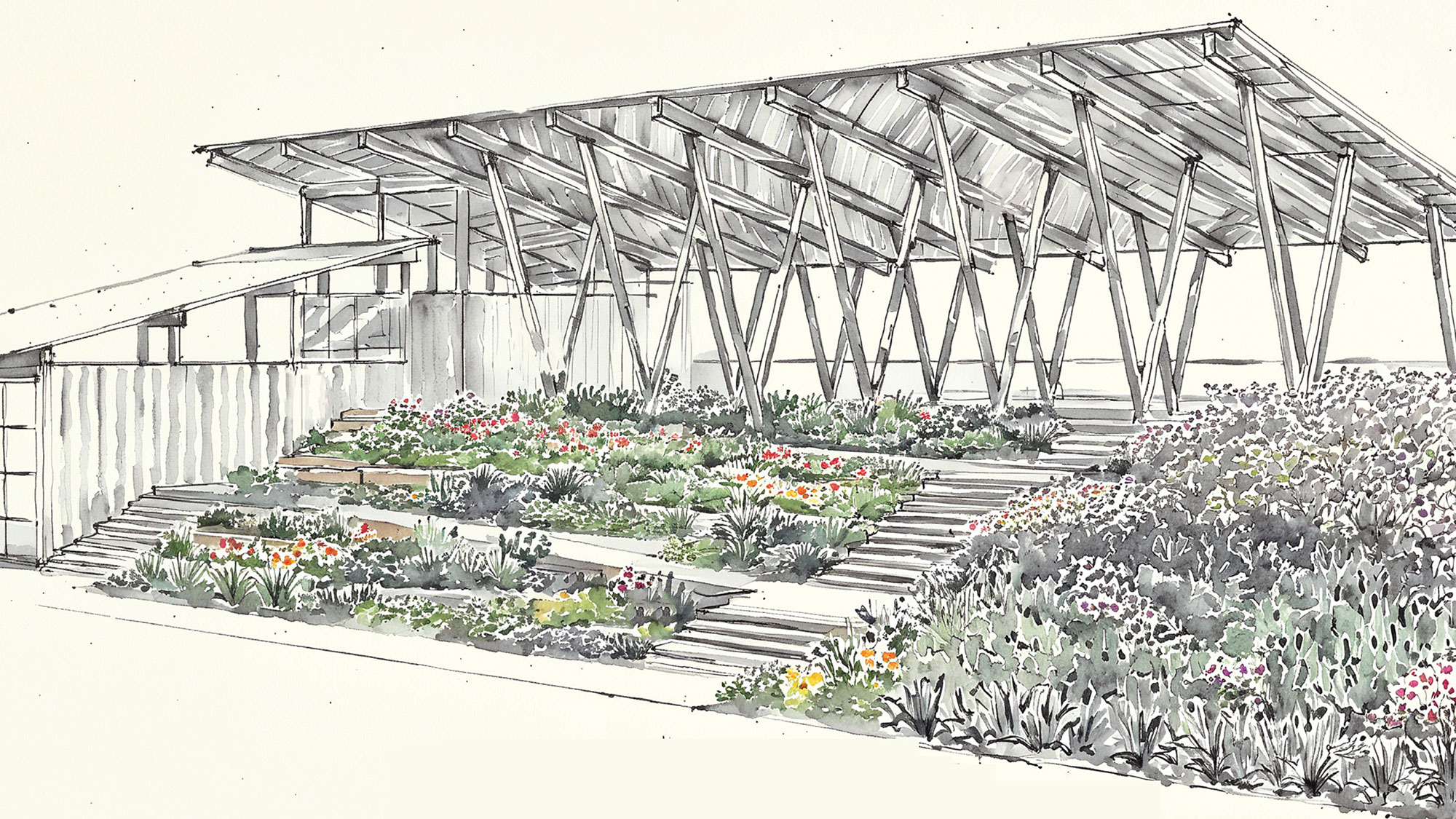
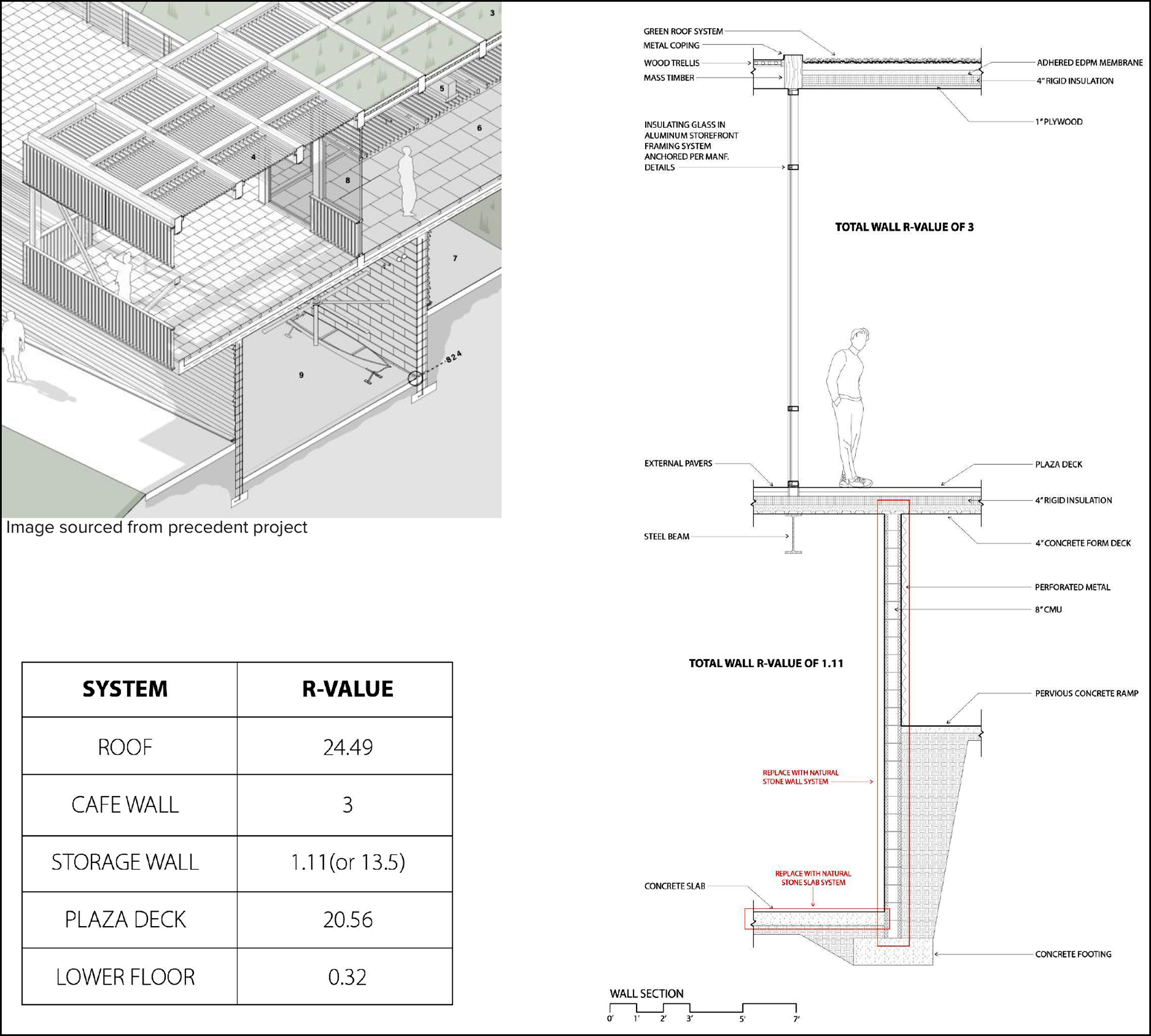
Another team received a precedent project with horizontally striated metal skin to register the historical strata against the sloping hillside. The team proposed replacing the metal skin and concrete masonry structure with site-sourced rammed earth. This iteration preserved the concept of striations while quantifiably reducing operational energy and embodied carbon. By learning to quantify environmental performance, students develop an iterative, data-driven design process that prepares them to collaborate with specialists in practice.

Strategy 5: Close the gap between academia and practice
New curriculum benefits both academia and practice. The pilot funding supported guest lecturers from leading practitioners from across the country, including Gensler, ZGF, Sanders Pace, SOM, and Oak Ridge National Laboratory. These guest lecturers introduced a broad range of concepts to motivate discussion and exploration. While Gensler delivered pro bono guest lectures, the pilot funding supported other industry leaders in creating lectures they could use in future years with only incremental updates. In the second year of the course without the pilot funding, the university provided stipends to guest speakers, demonstrating that some ongoing investment may be helpful to make it easier for leading practitioners to share their time.
Guest lectures by practitioners and faculty from other departments often extended well beyond class time, reflecting strong student interest. Just as these conversations connect students with leaders in the practice, firms also benefit by gaining access to talented graduates with the skills essential for advancing innovation in sustainable design.
A replicable playbook
Design in an era of climate crisis requires strong partnerships at both project and industry scales. The Zero|Spec Workshop offers a replicable playbook of how academic and industry partnerships can develop the talent required to collaboratively design buildings for a more sustainable future. Centering sustainable architecture education on multidisciplinary experience teaches the timeless value of a truly integrated design practice in which design for the human experience and design for sustainability go hand in hand.
About the Gensler Charitable Gift Fund
The Gensler Charitable Gift Fund is dedicated to advancing education and training within the architecture and interior design professions and strengthening the resilience of our communities in times of crisis. Through philanthropic support for curriculum innovation and by channeling financial assistance to team members impacted by natural disasters, the Fund embodies Gensler’s commitment to education, resilience, and shared purpose.
For media inquiries, email .