Beyond Blueprints: What Happens When Students Redesign Cities
December 19, 2025 | By Joan Capdevila-Puig, Emma Grün, Giacomo Mari, Atilla Tasan, and Michaela Winter-Taylor
Gensler research shows that while the desirability of cities remains, residents feel increasingly threatened by climate change. The urban planners and architects of today and tomorrow must offer strategies that tackle complex, cross-cutting urban challenges — including climate risk, equity, and mobility — with creativity. This presents the perfect opportunity to harness the transformative power of youth-led innovation through programs like Gensler’s growing partnership with the C40 Students Reinventing Cities competition.
Local Vision, Global Lessons
This year, at the invitation of five cities, Gensler team members supported and reviewed the work of 114 teams — more than 450 individual students — as they explored diverse local challenges. By providing students with an industry perspective, their results demonstrate how interdisciplinary student work can translate local visions into globally resonant, scalable solutions rooted in reality.
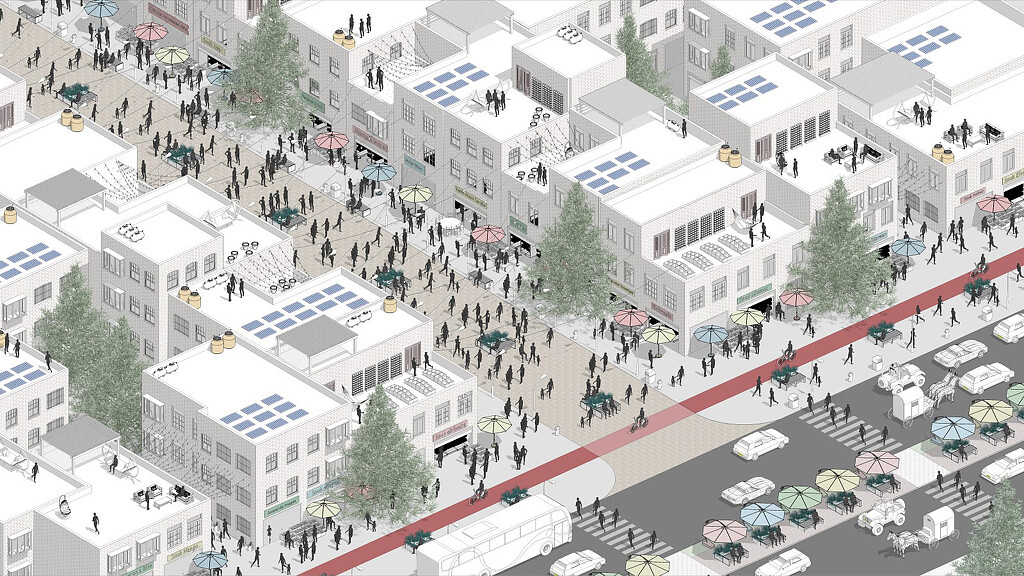
For example, city planners in Amman are actively balancing rapid urbanization with efforts to create and protect high-quality, vibrant, and green neighborhoods. The winning proposal from Urban Purifiers presents a fresh vision: a walkable, climate-resilient district shaped by an eco-pedestrian network and nature-based solutions. By blending cultural heritage, integrated mobility, and social spaces, it reimagines streets as lively, people-focused hubs where nature is visible, and community life thrives. Grounded in local priorities and supported by a delivery-focused approach, it offers a scalable model for other fast-growing cities.
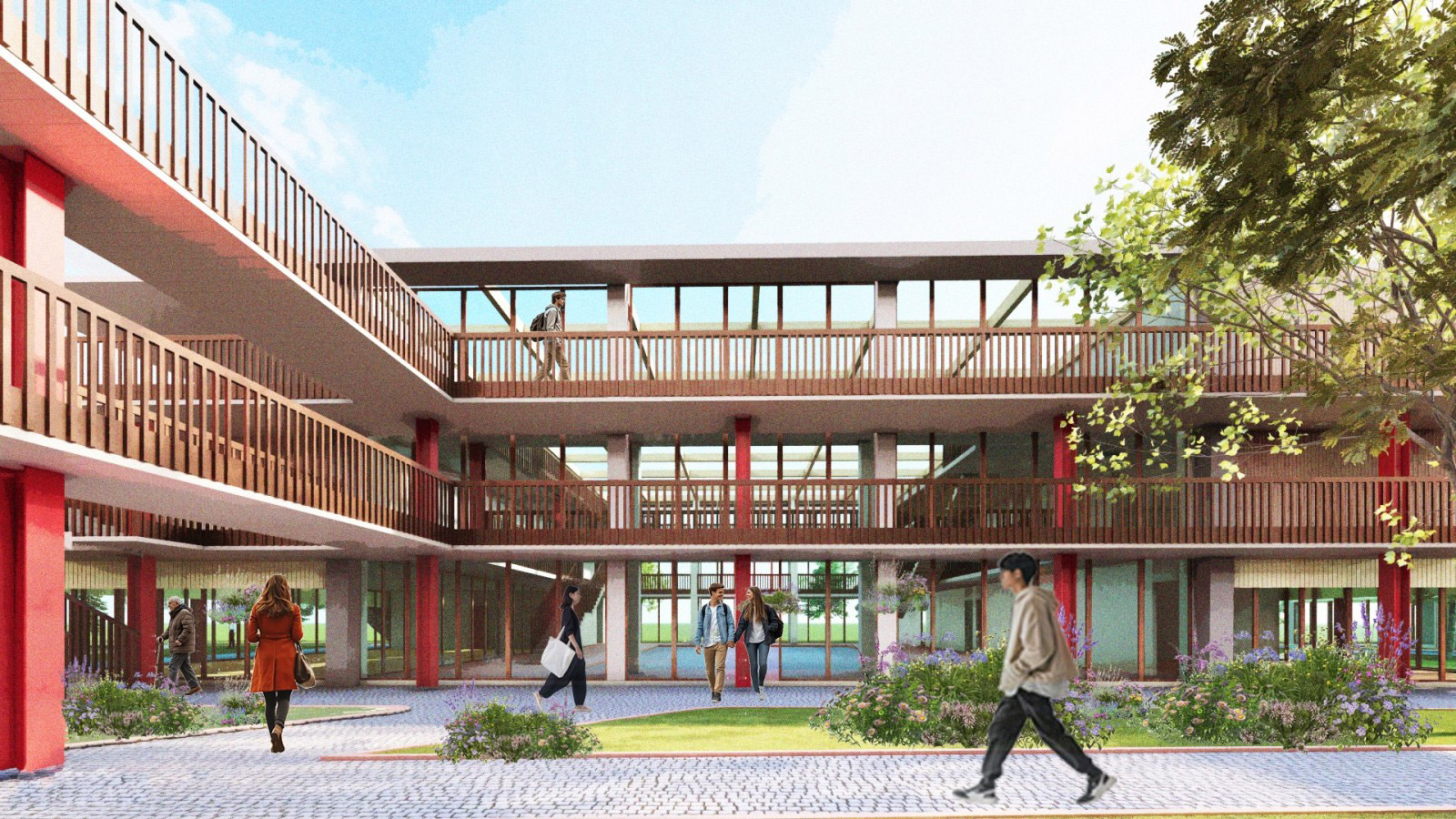
Milan faced similar challenges, with the Marconi District of Segrate seeking to meet increasing demand for student housing while enhancing livability and sustainability along the Green Kilometer. What emerged was a clear desire not just for housing, but placemaking: spaces that foster well-being, creativity, and inclusive growth.
In contrast, communities in Jakarta are seeking to attract more tourists by redeveloping the Onrust Archaeological Museum islands into an accessible, inclusive, and green destination. 22 student teams delivered extensive research on the islands’ past, demonstrating deep respect for their heritage and historical significance, while acknowledging the growing threat of rising waters.
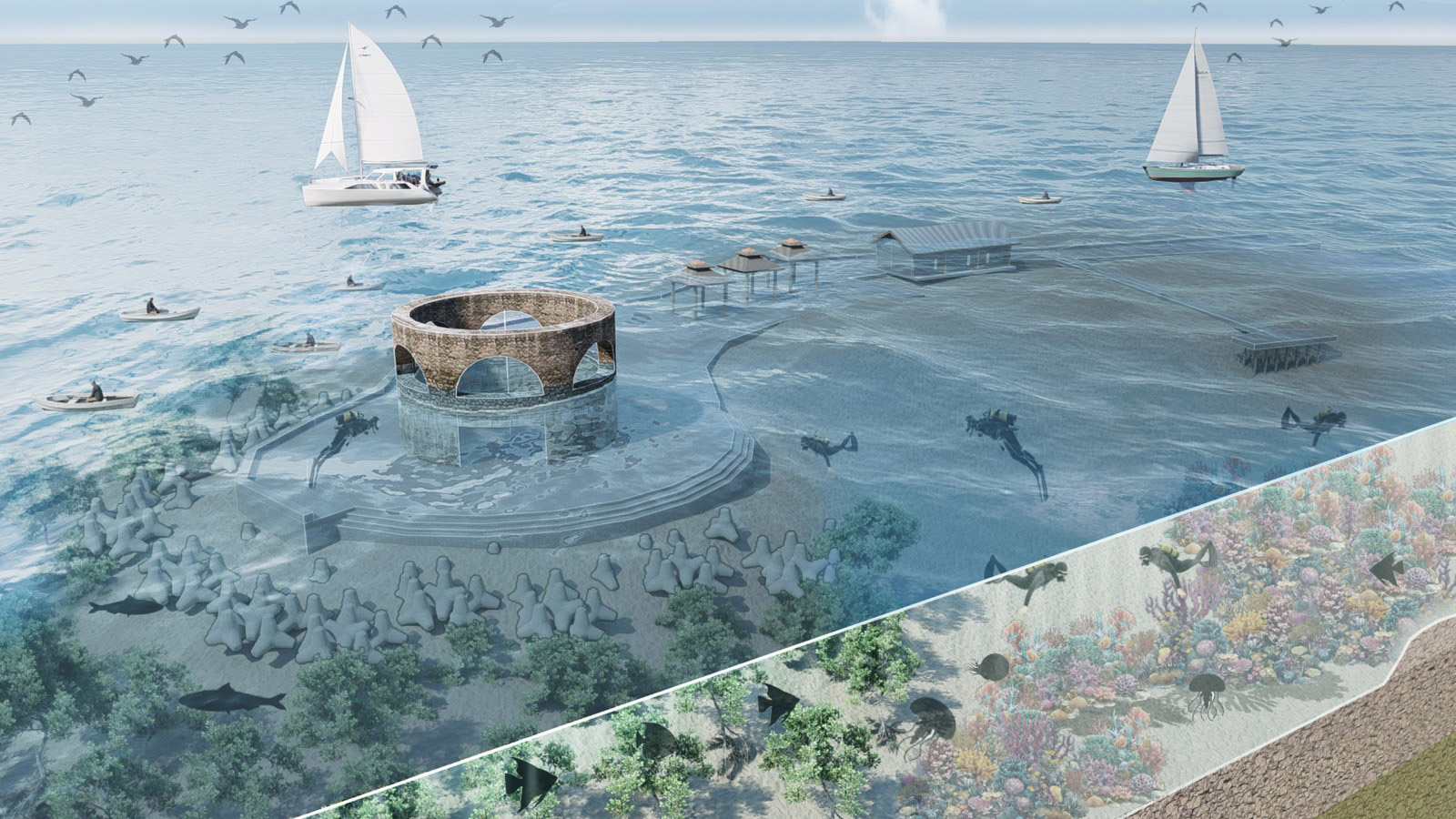
Proposals included the use of modular construction methods (designed for assembly and disassembly) and a sensitive understanding of the tropical environment, both above and below water. These approaches emphasize building an ecosystem where design, program, and experience carry equal weight, and where teams actively integrate sustainability across experiences and physical spaces.
Urban Infrastructure as Ecological and Cultural Repair
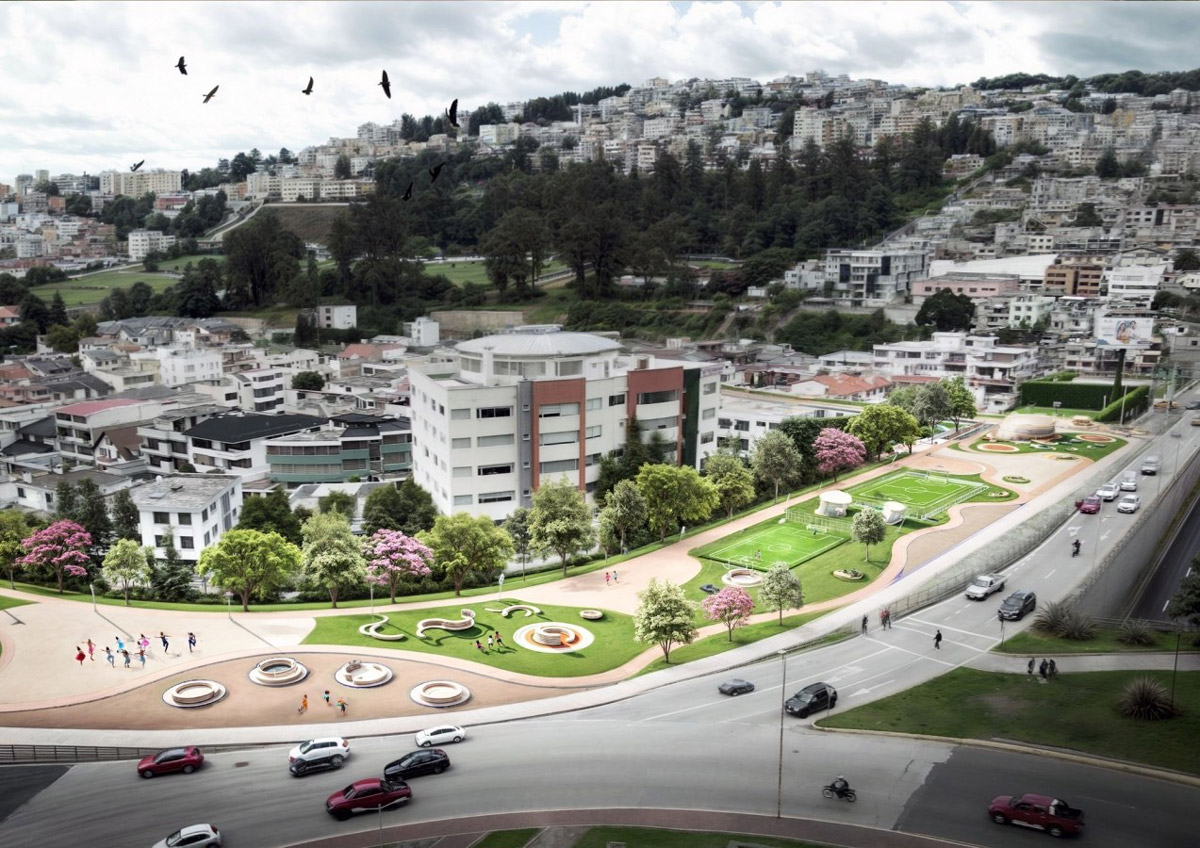
Many student proposals addressed more than just urban function; they aimed to connect people and land in a community. Consider the efforts of the winning team, BIO URBANIC, to address flooding in Quito, Ecuador, transforming a flood-prone river corridor into a resilient urban ecosystem.
By combining social participation, ecological restoration, and technical precision, the proposal transforms the degraded Río Monjas edge into a “corridor of life,” where runoff is reduced by 75% while solar energy and circular economy initiatives enhance local self-sufficiency. The relocation of at-risk families to municipal lots and the creation of urban gardens reinforce social equity and community stewardship.
The project’s strength lies in its multi-actor governance, where municipalities, NGOs, academia, and residents co-manage risk and regeneration. Beyond mitigating floods, the proposal reframes the adaptation as an opportunity for inclusion and dignity. The model of linking hydrological resilience, community empowerment, and circular urban systems offers a replicable blueprint for other cities confronting climate and social vulnerability.
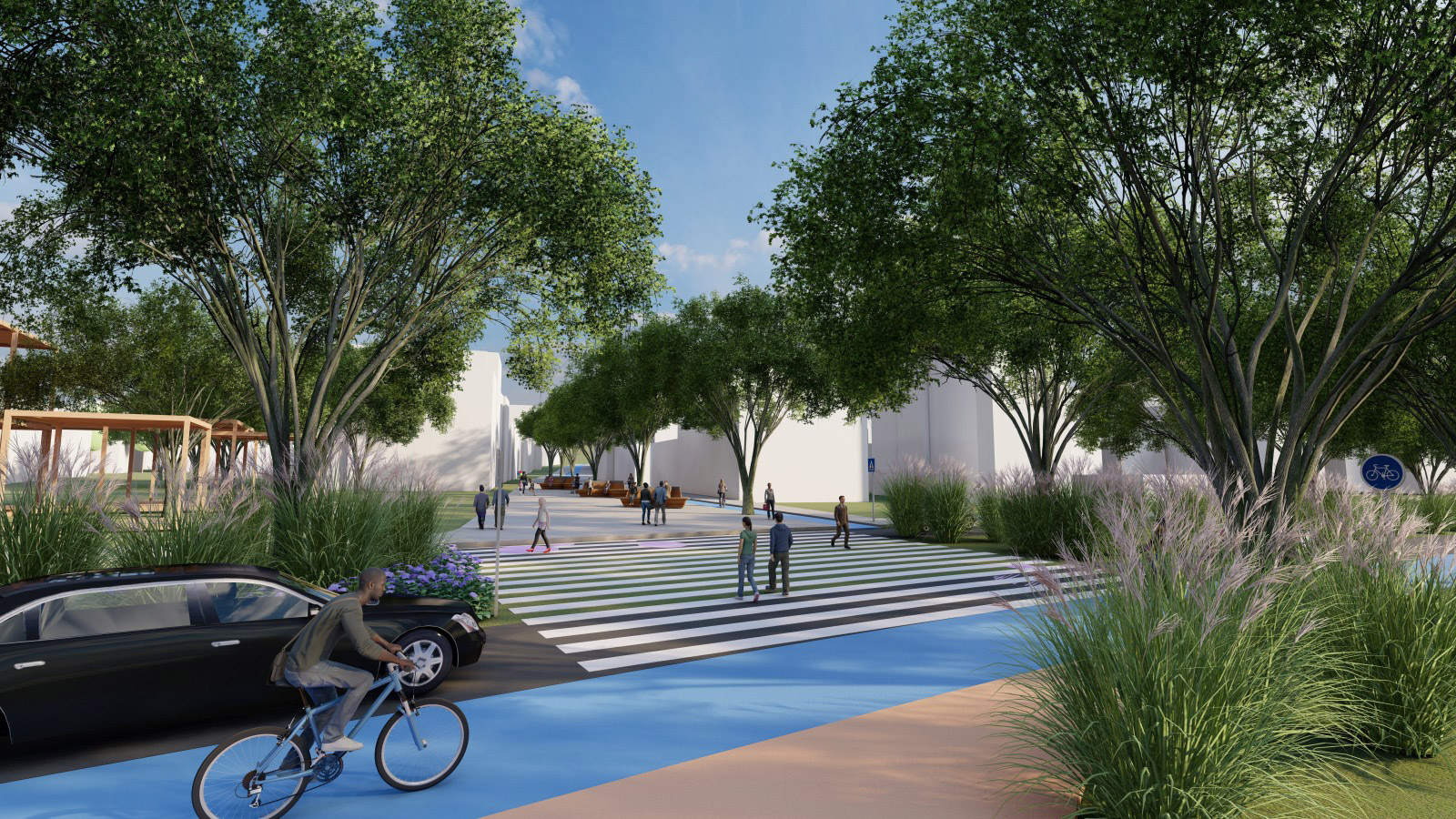
Students in Istanbul also approached the Büyükçekmece Lake Natural Habitat Park with impressive sensitivity toward restoration, regeneration, and community access. The winning proposal stood out not only for its ecological awareness but also for its ability to frame the site within a broader social, environmental, and spatial system. Rather than proposing an isolated architectural intervention, they envisioned a comprehensive regeneration strategy that reconnected the lake with its surrounding urban fabric and ecological networks.
This systems-based approach — looking beyond the immediate boundaries to reconnect ecological and social networks — illustrates a globally transferable model of urban regeneration. The team’s restraint in architectural intervention demonstrates that meaningful transformation can occur through light-touch design that works with, rather than over, the landscape. Their use of small but high-impact steps achievable with limited resources offers a pragmatic strategy for cities everywhere seeking to balance ambition with feasibility — a compelling model for sustainable urban futures.
Reflecting on Gensler’s Role in Scaling Solutions
The power of this process lies in how all stakeholders came together — not in a theoretical exercise, but with a genuine interest in developing bold, implementable ideas. The Students Reinventing Cities competition framework helped create a dialogue across generations and disciplines, which felt especially powerful in the face of the climate crisis. By learning from one another, these teams, cities, and regions can exchange knowledge on climate resilience and sustainable design, turning shared vulnerabilities into shared strengths.
Yet scaling projects like these requires institutional muscle. With its reach across public, private, and civic spheres, Gensler acts as a convener of systemic change, aligning community innovation with policy and investment. By translating participatory resilience into actionable urban standards, Gensler can help stakeholders shift from reactive adaptation to proactive regeneration, making climate resilience both a design language and a civic right.
From Inspiration to Implementation: What’s Next?
The new edition of the competition has launched, and cities across the globe are inviting students to reimagine urban areas and address real challenges in Amman, Barcelona, Bogotá, Bucharest, Chicago, Jakarta, Lagos, Lisbon, and Nairobi.
Our ongoing collaboration with student teams through C40 reaffirms that the future of design practice is rooted in interdisciplinary approaches that enable the co-creation of sustainable solutions at scale with holistic approaches to urban planning and climate resilience that go beyond design thinking, bringing skills and perspectives from social justice, ecology, and community engagement to bear, and they deserve our attention and our resources.
For media inquiries, email .