Why the U.K.’s Former Power Stations Are Its Most Underused Urban Asset
Britain’s disused power stations should anchor its next generation of cities.
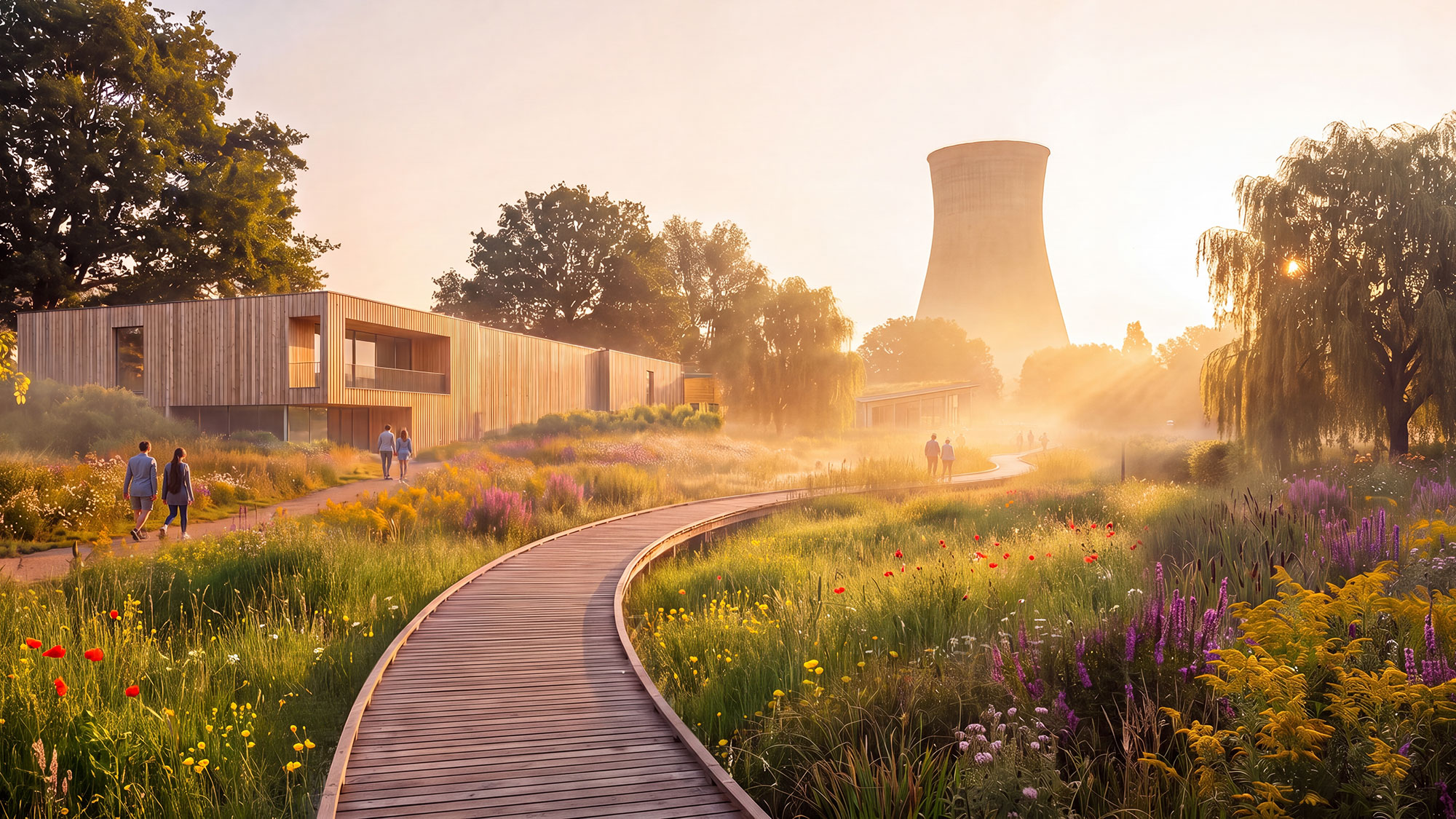
Across the U.K., dozens of former power stations remain physically connected to the national grid, retaining the infrastructure, capacity, and strategic positioning that once powered our cities. Wired but dormant, they are the country’s most valuable yet underused regeneration assets.
The U.K. is under pressure to deliver more housing, accelerate decarbonisation, and restore biodiversity. Former power stations offer a rare opportunity to advance all three through a single act of regeneration. With the scale, infrastructure, and identity that few other urban assets can match, they are uniquely placed to reshape how cities grow.
A design-led approach to regeneration reimagines former power stations as mixed-use destinations, transforming once-isolated industrial compounds into connected places defined by experience and belonging. Together with extensive surrounding landscapes, they offer a rare platform for ecological restoration and economic growth.
Redevelopment and renewal in practice
What sets power stations apart from many other brownfield sites is their ability to address multiple national priorities at once. Their scale supports significant development, and their grid connections create opportunities for clean energy and innovation. Their existing infrastructure reduces the cost and complexity of development, while their prominent locations — often on waterfronts or at the edges of city centres — give them an urban significance that cannot be replicated.
Many of these sites retain existing grid connections, making them natural anchors for renewable energy generation, battery storage, and clean-tech industries. This creates the potential for energy-positive communities and innovation clusters that support economic growth and climate objectives. Their industrial character, meanwhile, gives them a distinct identity that developers and occupiers increasingly value.
The redevelopment of Battersea Power Station in London demonstrates how industrial heritage can serve as a catalyst for large-scale urban regeneration. WilkinsonEyre led the restoration and adaptive reuse of the power station, with support from heritage consultant Purcell and engineering firm Buro Happold. The project transformed a derelict 42-acre site into a mixed-use district, delivering homes, workplaces, and an extensive public realm, all anchored by a historic structure and supported by major transport investment.
Elsewhere, projects such as Lots Road Power Station in Chelsea and the former Rugeley Power Station in Staffordshire demonstrate how this typology can be applied across different scales and contexts — from dense urban infill to landscape-led regeneration on former coalfield land. Lots Road Power Station is being reimagined as a residential-led waterfront neighbourhood, while Rugeley Power Station is being transformed into a new sustainable community of around 2,000 homes, schools, public open space, and riverside parkland. Together, they show the full range of what these sites can deliver: new communities, restored landscapes, and lasting economic value.
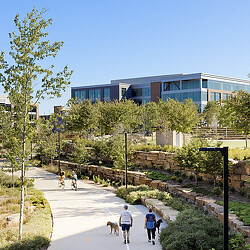
The landscapes surrounding power stations are often as significant as the buildings themselves. Frequently expansive, disconnected, and inaccessible, they present a rare opportunity to create walkable public realms and green corridors that reconnect neighbourhoods and repair historic urban divisions. Even industrial remnants such as cooling towers can support wildlife and create unique microclimates. Wetlands, native planting, and restored water systems actively improve environmental performance and restore habitats.
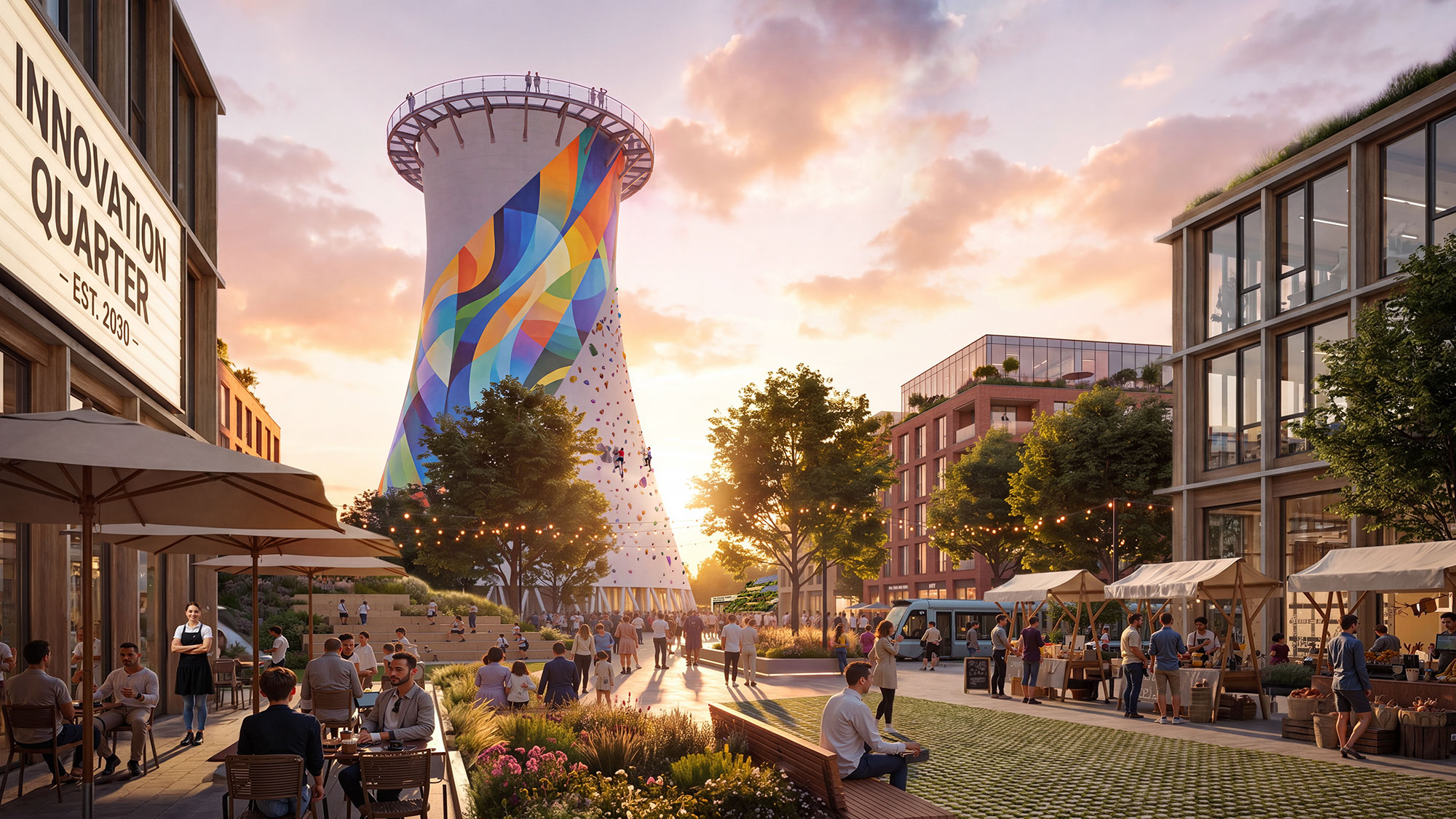
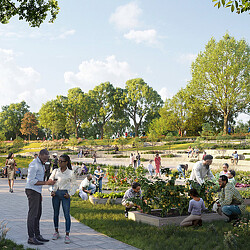
Successful regeneration creates places that people actively engage with. Public spaces, markets, and visible clean-energy infrastructure can make sustainability tangible, turning what was once hidden infrastructure into an accessible part of everyday life.
The transformation of Bankside Power Station into Tate Modern stands as the defining U.K. precedent for conservation-led industrial regeneration. Today, it is one of the world’s leading cultural destinations, attracting millions of visitors while catalysing wider regeneration along London’s South Bank. Its success demonstrates how industrial heritage, thoughtfully activated, can create cultural value and civic identity that outlasts any single use.
A new platform for civic infrastructure
The most profound shift lies in who these places are designed to serve. Power stations once operated behind fences and security perimeters in neighbourhoods that have long lived with the environmental impacts of industrial activity. Well-designed regeneration places community at the centre, opening up green space and shared amenities for both existing residents and the communities that follow.
The sites that powered industrial Britain are ready to power its next chapter. The question is how boldly we imagine their collective future, and how meaningfully we reconnect them to people, place, and the natural world.
For media inquiries, email .