Research Project Name
Redefining the Future of Urban Wellness (Phase 2)
What We Did
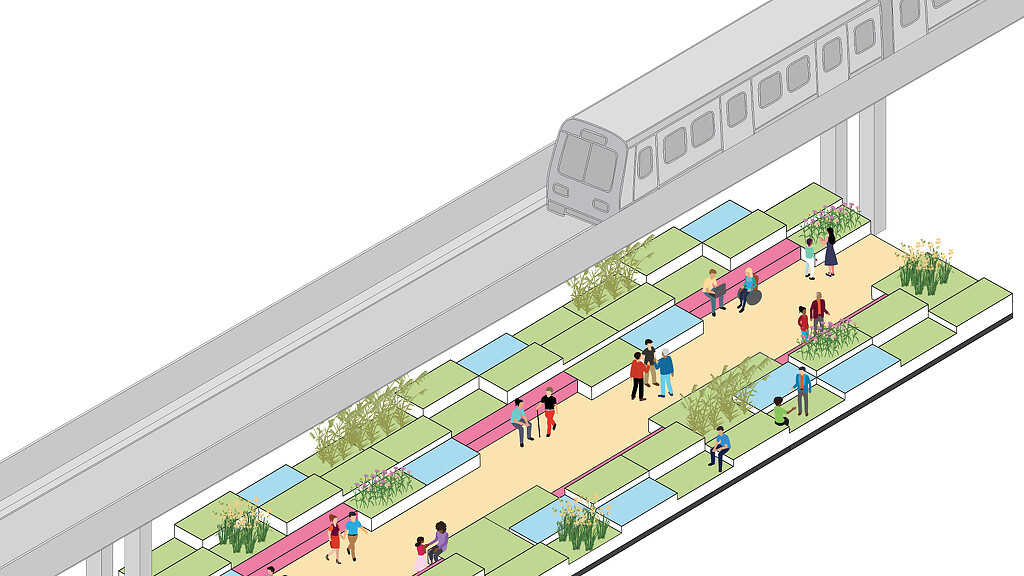
The COVID-19 pandemic dramatically reshaped global perspectives on urban wellness. Vulnerabilities in public health, social equity, and community resilience were laid bare, prompting communities to demand more effective responses to real wellness challenges. Cities everywhere are now asking how urban design strategies can improve public well-being. In Shanghai, these issues are particularly pronounced. The city has invested heavily in open space, yet faces constraints from density, underutilized infrastructure, and fragmented urban systems. Elevated rail lines embody this crisis — they divide neighborhoods and create unsafe, inactive environments, yet they hold the potential to reconnect communities and extend green networks across the city.
This research investigates what constitutes great green spaces in a post-pandemic world, explores how overlooked urban gaps might be reimagined as green assets, and develops a design toolkit to guide transformation. Tomorrow’s green infrastructure will go beyond isolated parks and one-off interventions to become highly connective, economically vibrant spaces that foster wellness and promote climate resilience across entire cities.
Learn More
Team
Hai Tran, Jing Jing, Shirlin Zhuang, Peter Chang, Jojo Jiang, Cathy Chen, Yamei Chen, Yijia Zhao, Xiaomei Lee, Xiao Fu
Year Completed
2025
Comments or ideas for further questions we should investigate?
