5 Proven Strategies Creating an Office-to-Residential Conversion Boom in New York
While policy is critical to making conversion projects feasible, design strategies that turn constraints into viable projects are essential for creating thriving, dynamic residential communities.
The nation’s office-to-residential conversion pipeline has reached 90,300 units, and one city is driving the momentum more than any other. New York is on track to start roughly 9.5 million square feet of office-to-residential conversions in 2026 alone, more than double 2025 levels, according to CRE Daily.
The surge of O2R projects came after important policy shifts. Zoning reforms under the City of Yes initiative expanded the pool of eligible buildings, and the state’s 467-m tax abatement offers up to a 35-year exemption for projects that obtain their change-of-use permit by June 2026 — giving developers a compelling reason to act now. That combination of flexibility and urgency is what moved the market in New York. It’s also what other cities are beginning to study and replicate.
Policy makes conversions possible, but design is what makes them great — turning feasibility into fully leased, high-performing residential communities.
Skeptics cite familiar challenges — deep floor plates, the lack of operable windows, poor building infrastructure, and regulatory hurdles. Our experience tells a different story. These constraints, approached creatively, are often where the best design opportunities live. And as completed projects multiply, the playbook keeps expanding.
Here are five strategies that make conversions viable:
1. Rethink the Floor Plate — Don’t Accept It as Given
Traditional residential development benchmarks — floor plate efficiency and unit size standardization — often don’t apply in conversions. Trying to force those metrics onto an existing building is usually what makes a project fail at feasibility. For owners and developers, conversions are an opportunity to reassess their metrics and planning approach.
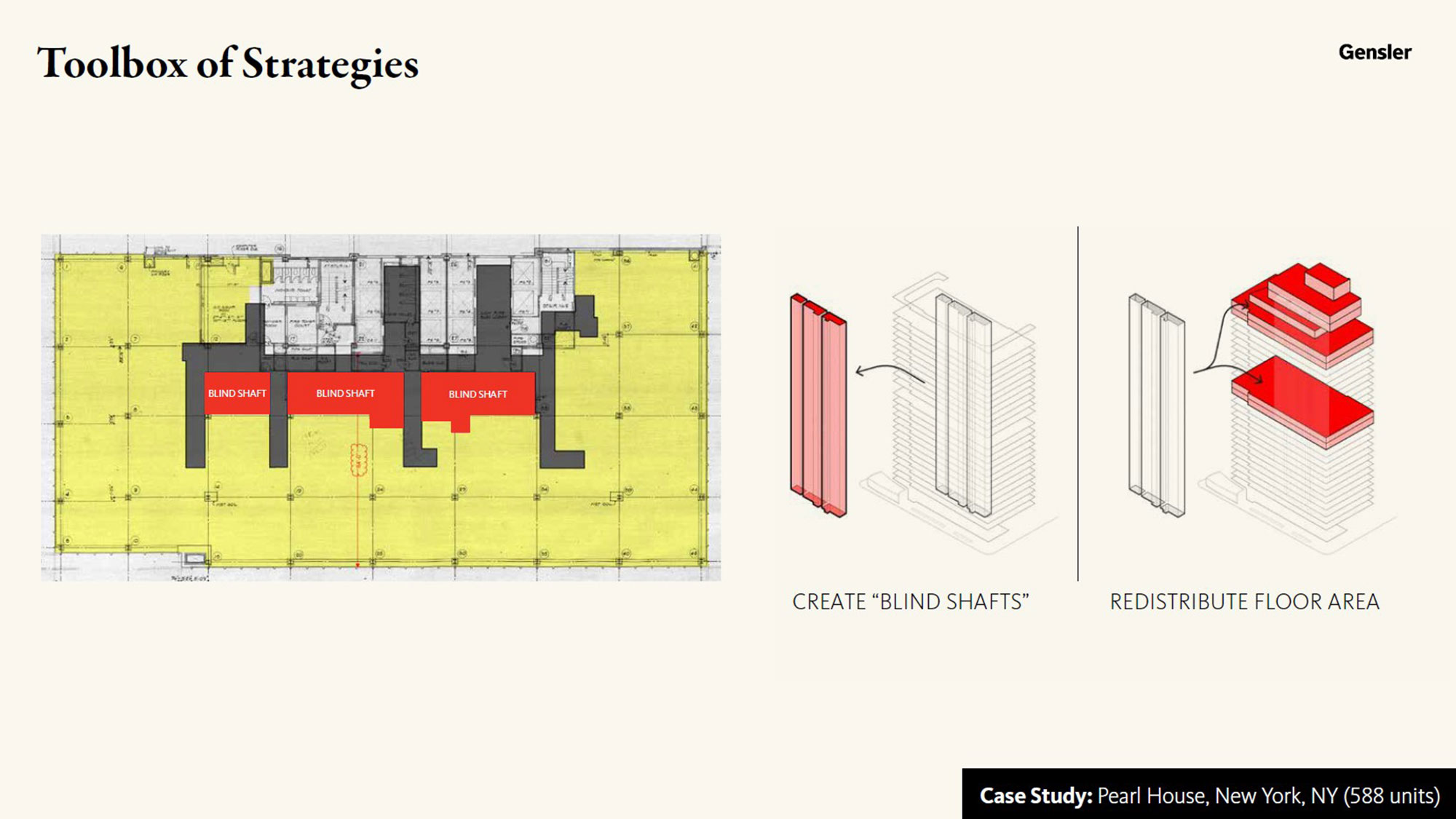
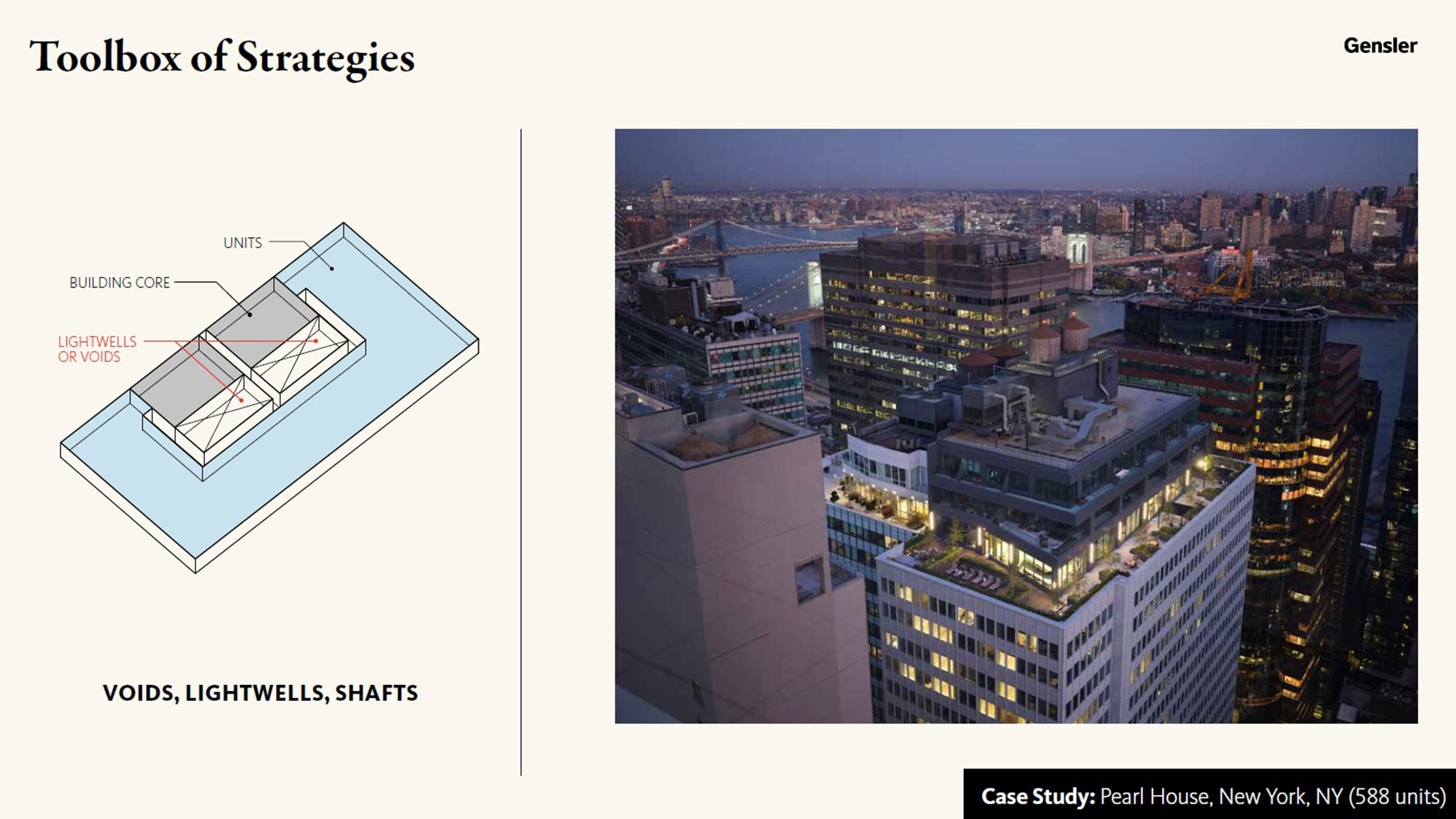
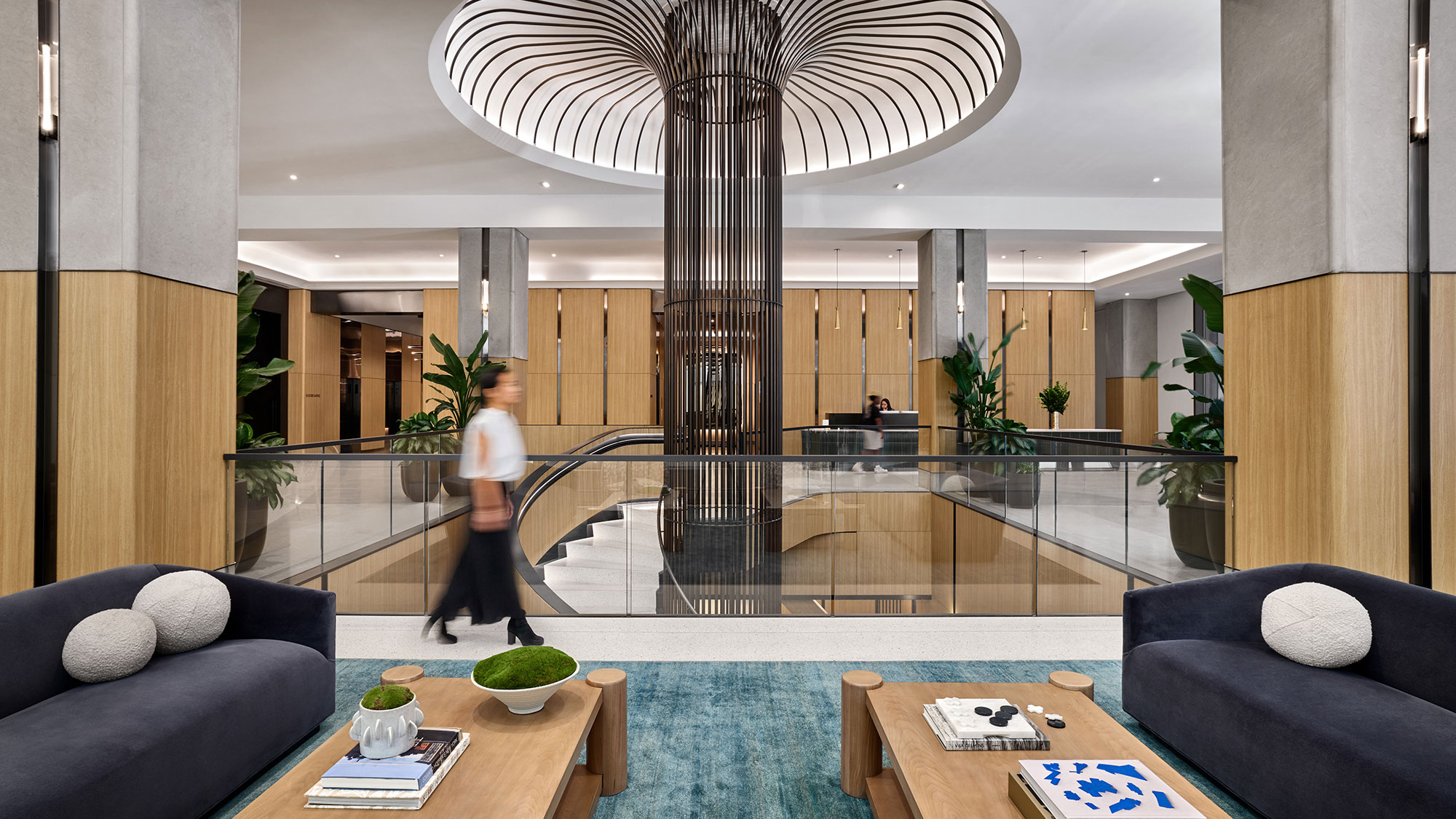
At Pearl House, the team created “blind shafts” through the building’s core and redistributed that floor area to the upper floors, where it could be used for higher-value units and amenity space.
2. Embrace Unit Diversity — Leave Cookie-Cutter Layouts Behind
In ground-up residential development, standardization is a tool for efficiency. This approach doesn’t work for conversions. Office buildings have column spacing, façade modules, and floor depths that rarely align with typical residential layouts. Rather than fighting that reality, the best conversion designs lean into it.
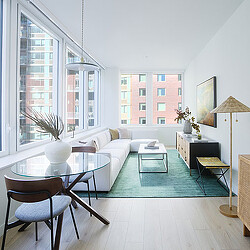
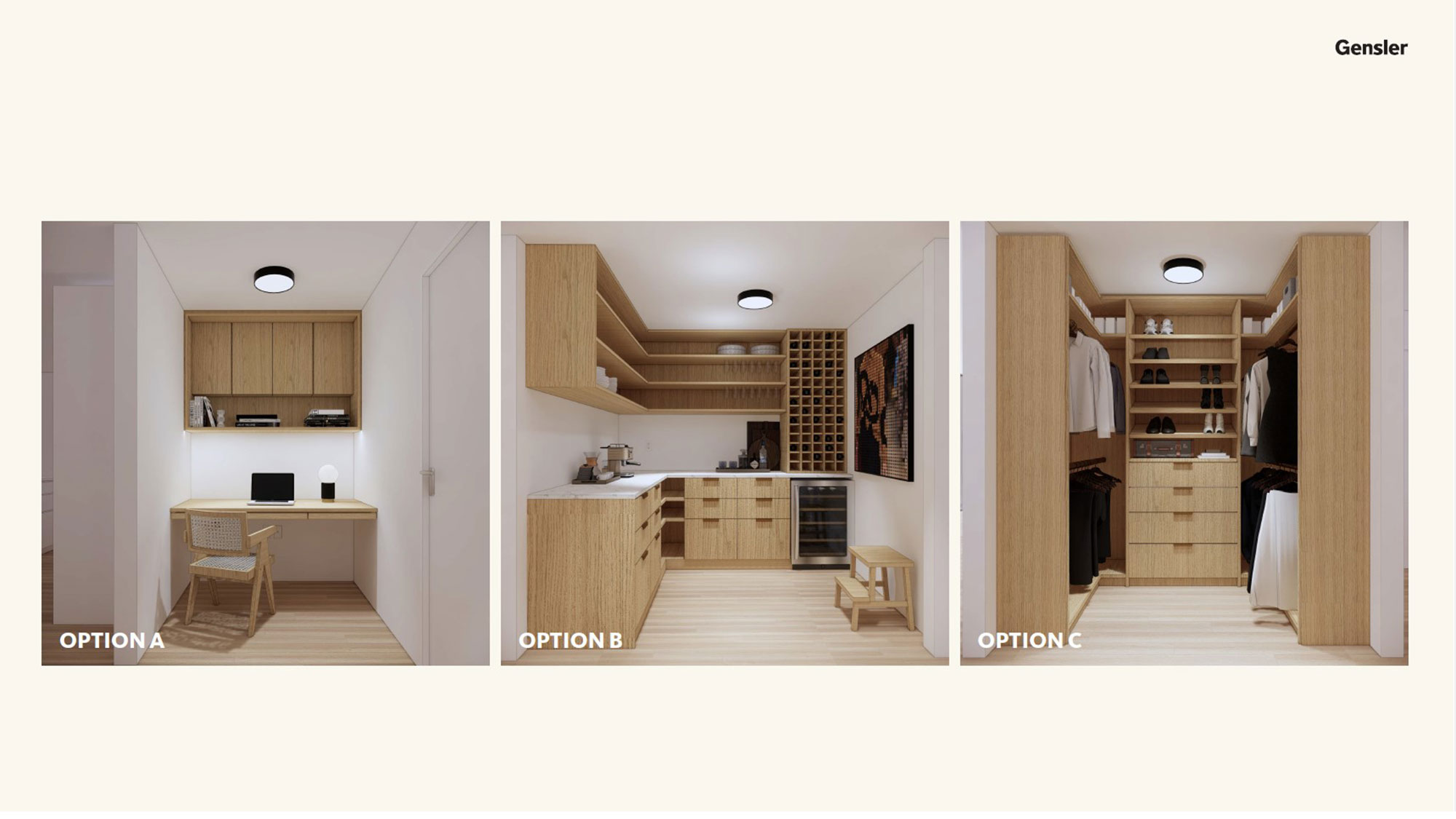
Across Gensler’s conversion projects, unit designs range from layouts with dedicated work zones to configurations optimized for social living — all shaped by the building’s structural particularities. Dens, home offices, and built-in storage niches appeal to renters who can’t find this variety in new construction. That diversity of unit types also broadens market appeal, which matters when a developer is underwriting a project that has higher upfront complexity than a ground-up build.
3. Activate Deep Floor Areas with Amenities
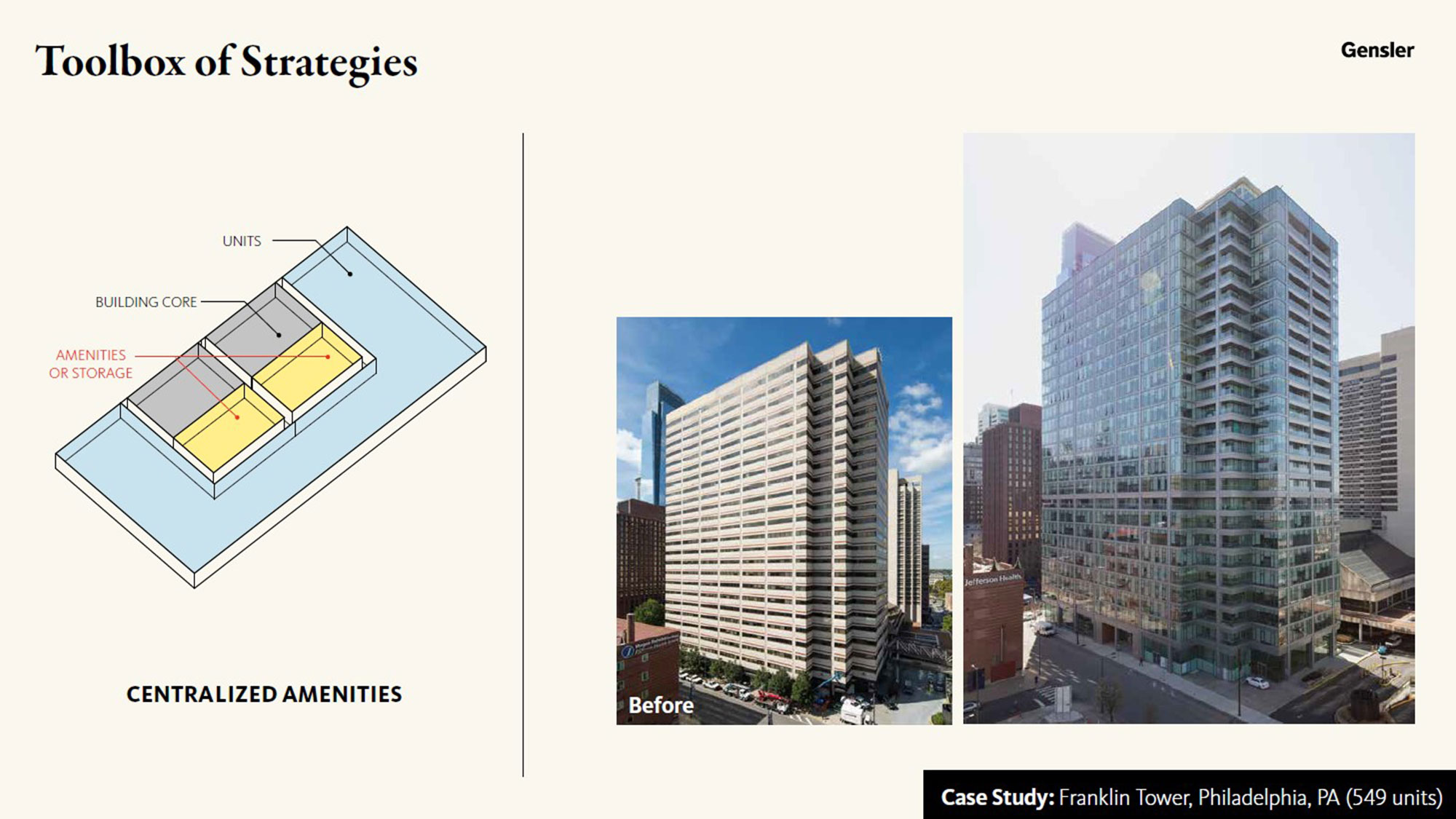
What do you do with the central areas of a deep floor plate that can’t get direct access to light or air? The conventional answer — leave them as circulation — wastes significant rentable area. A better answer: program them.
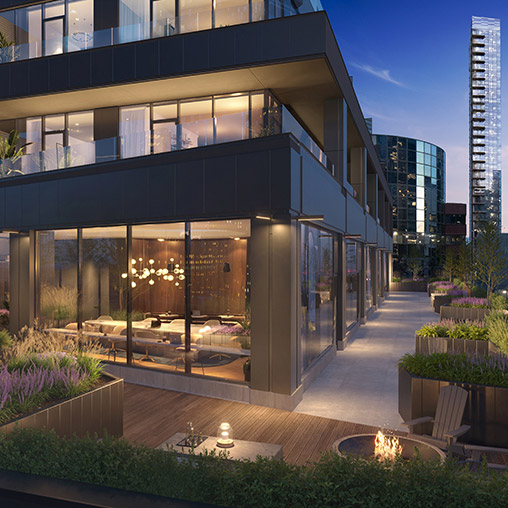
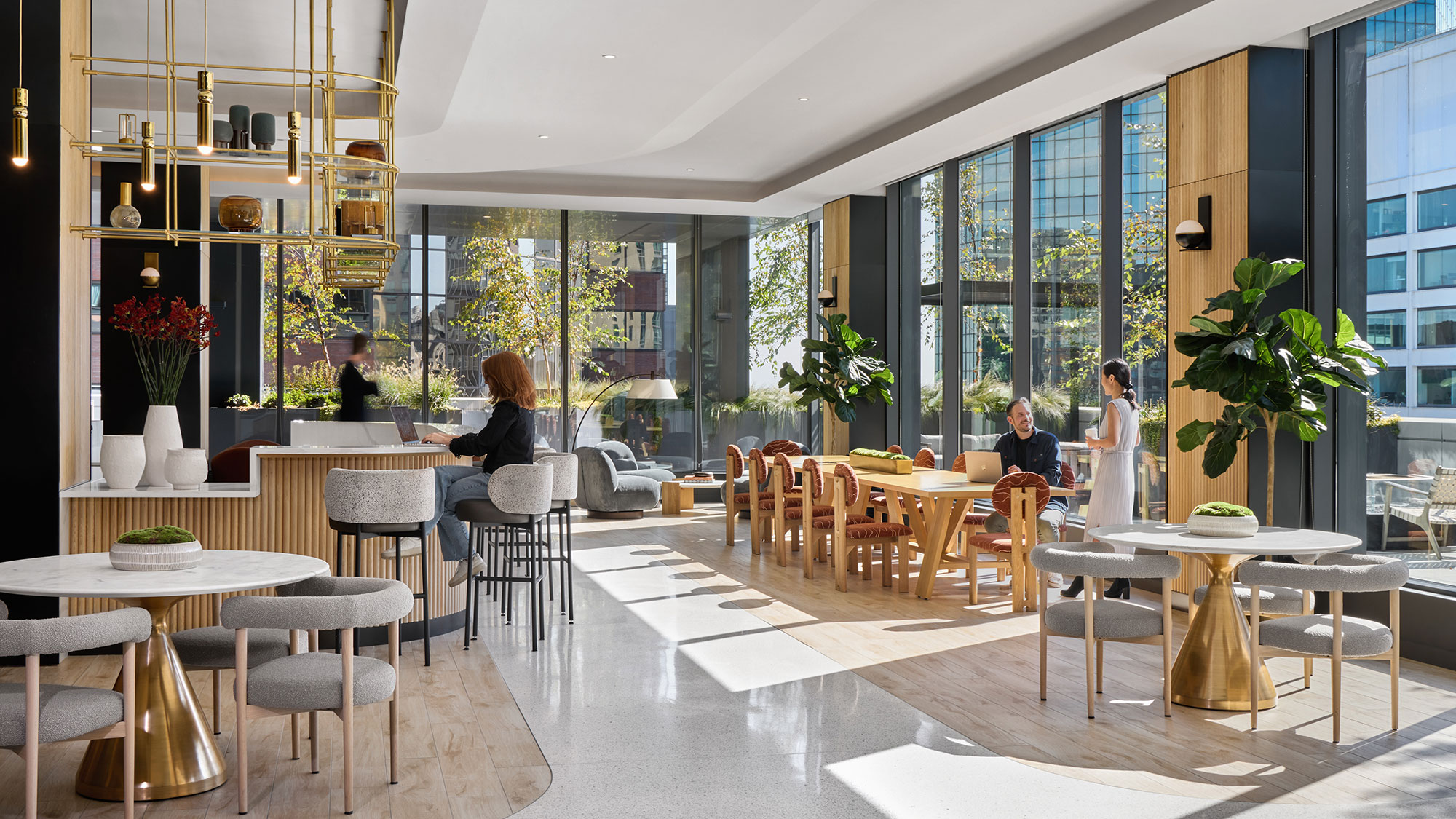
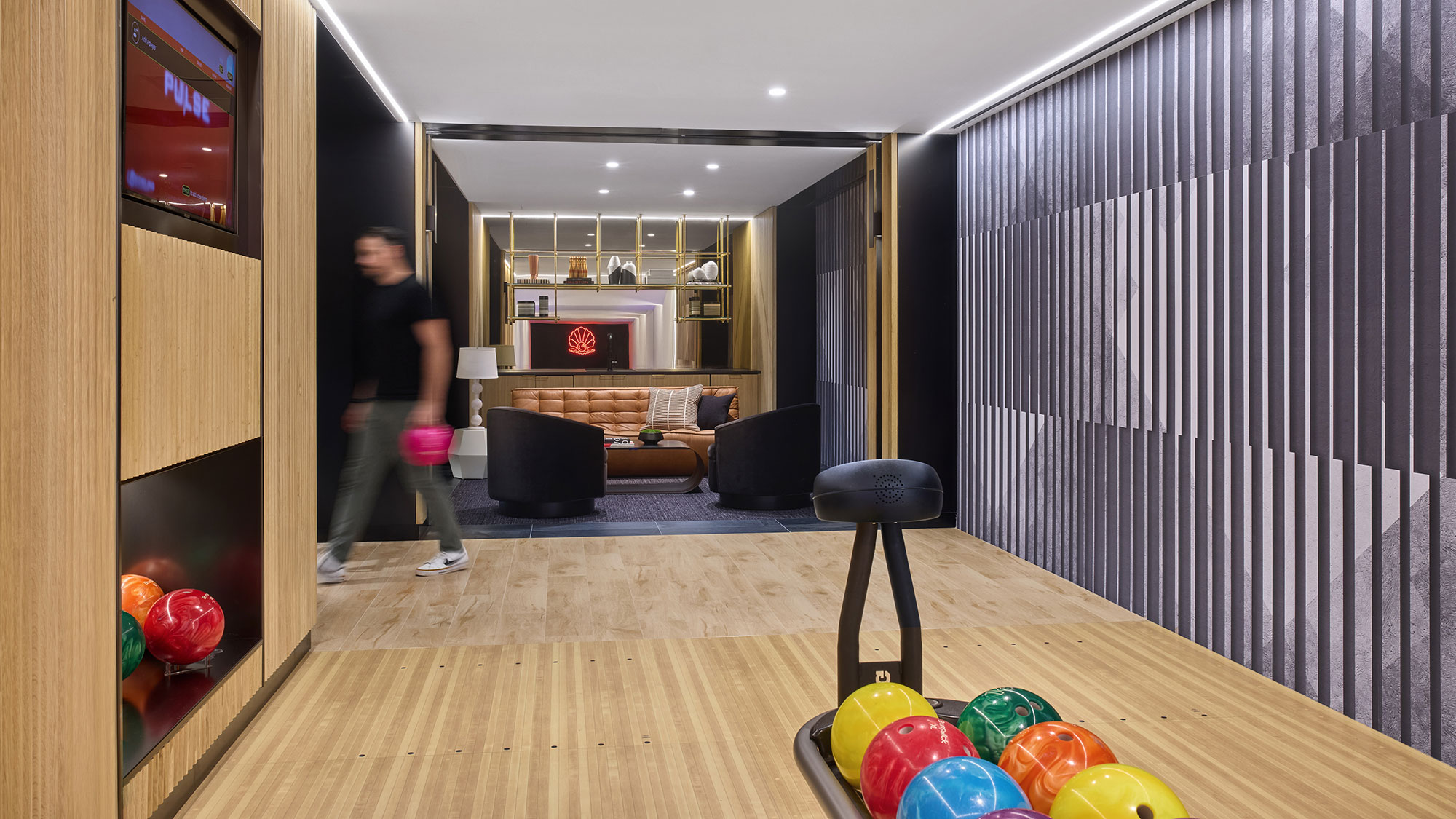
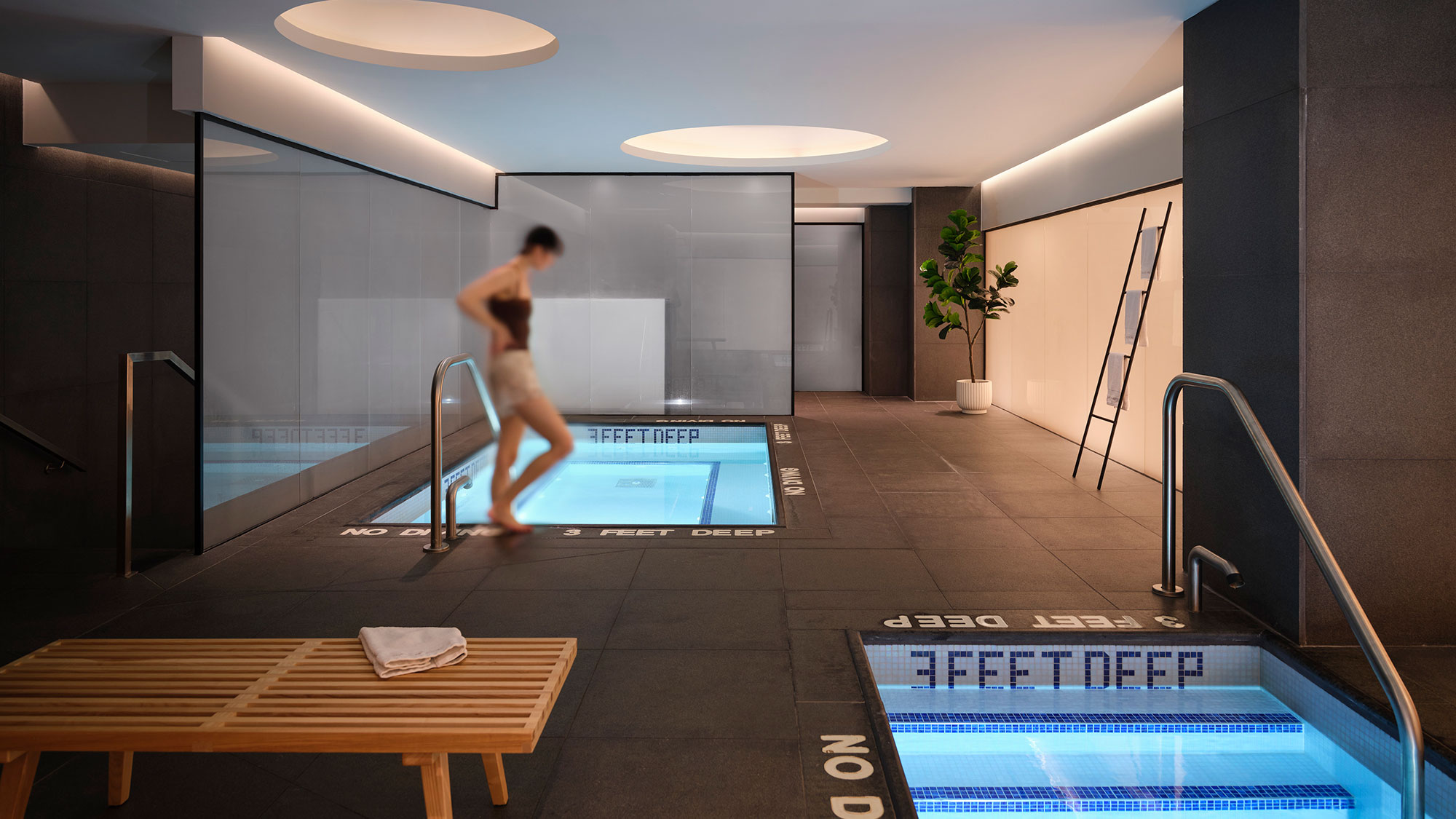
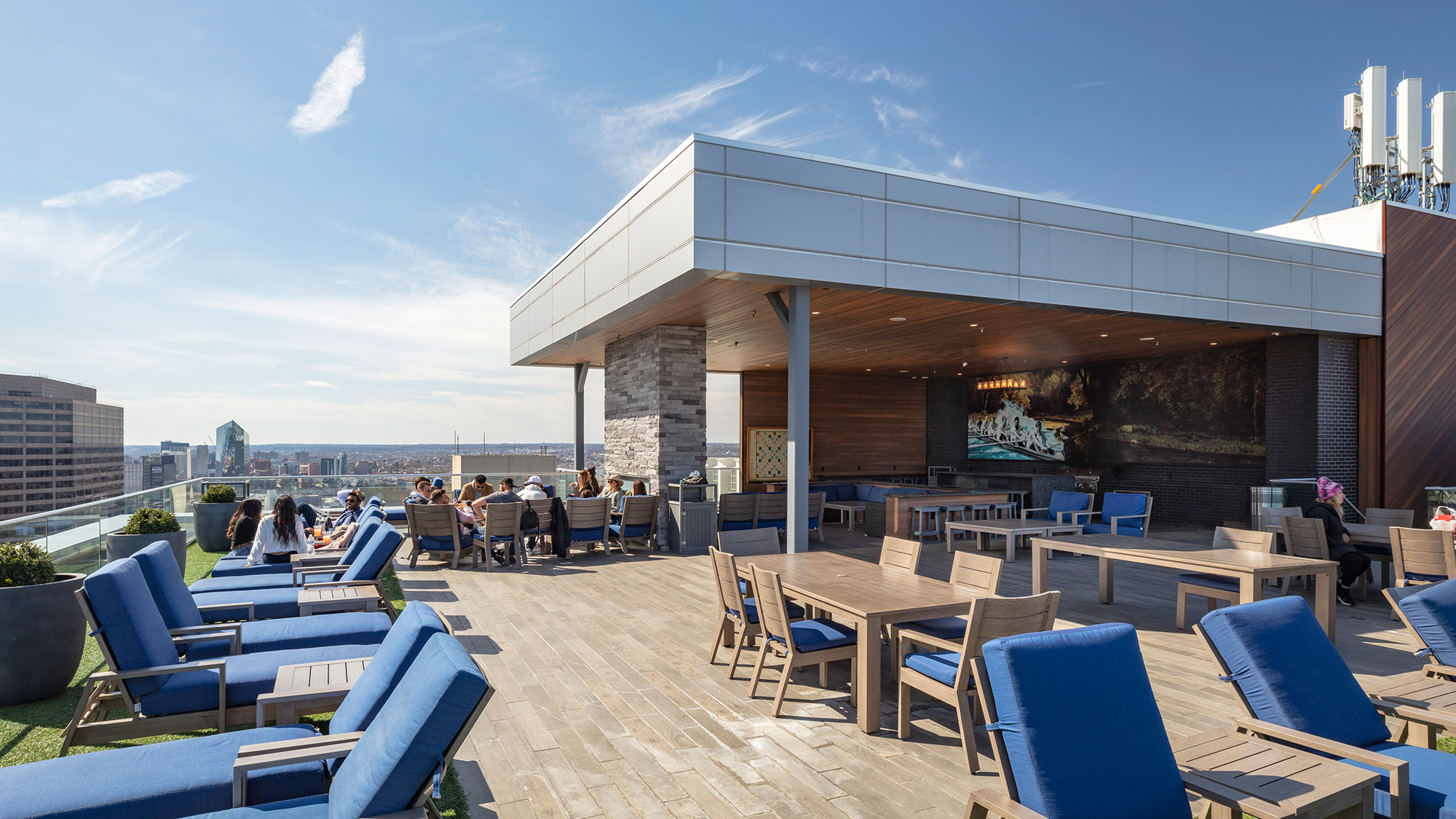
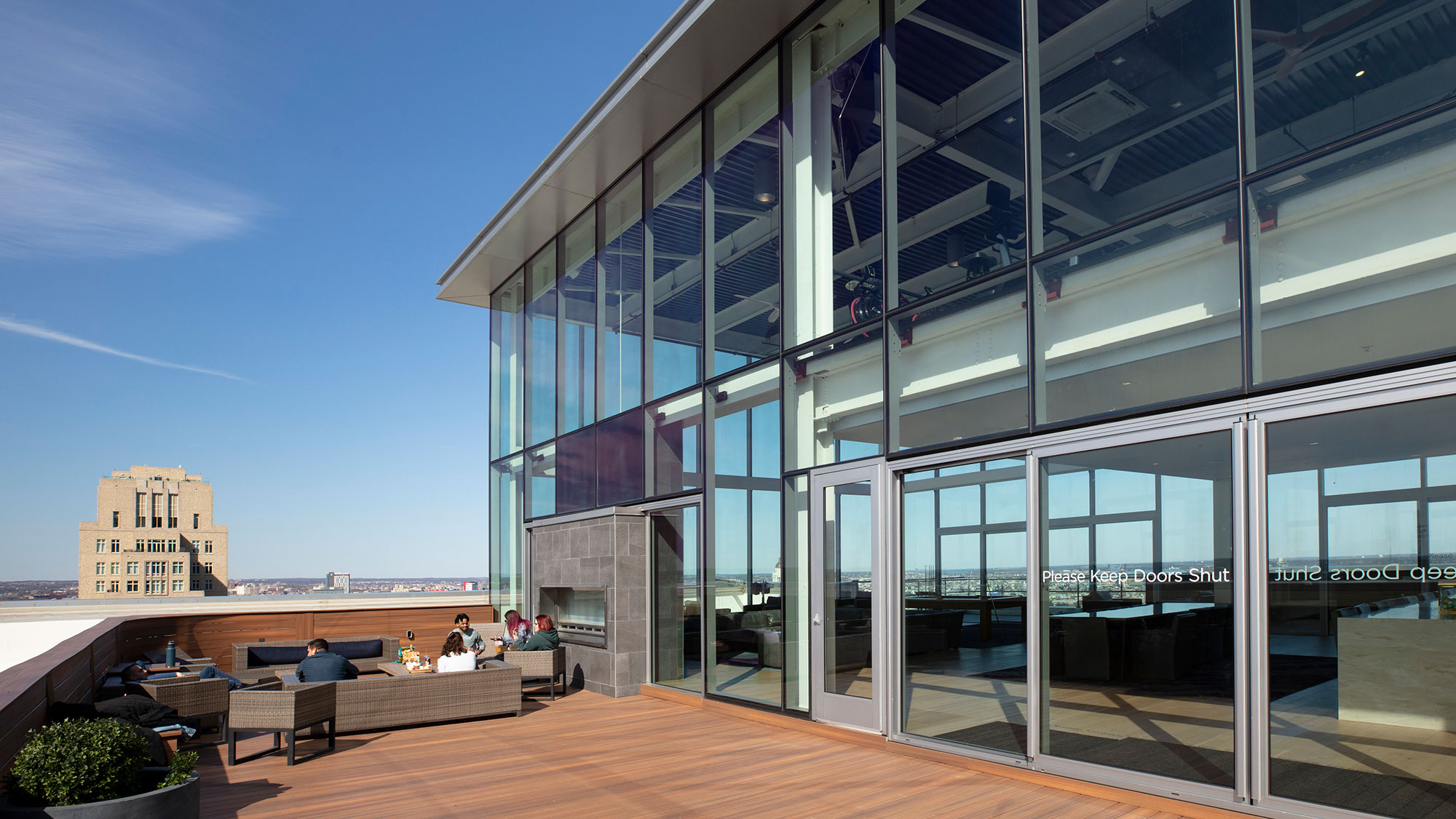
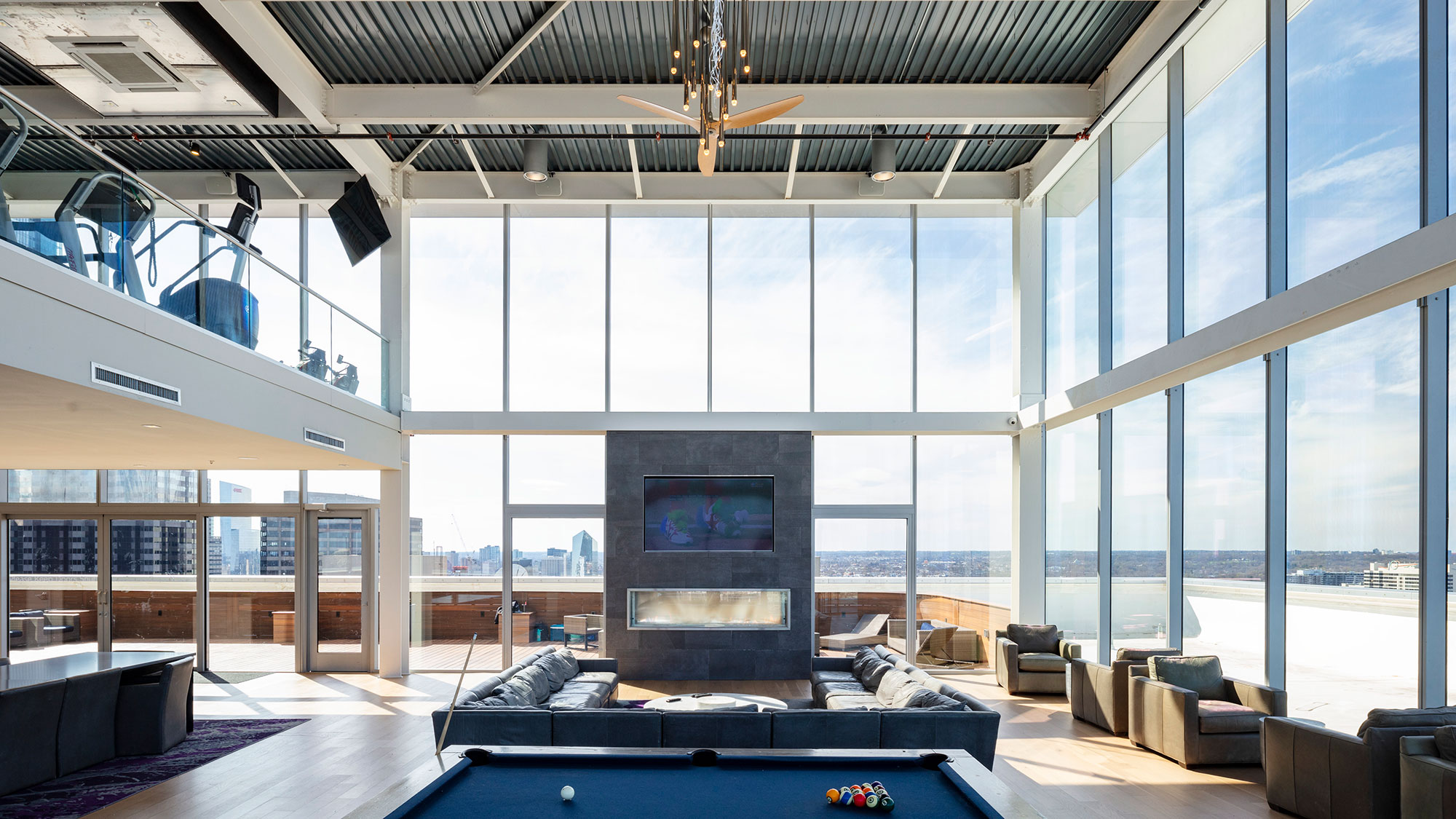
At Franklin Tower in Philadelphia (549 units), the team activated interior floor areas that couldn’t support residential units as on-floor amenities: fitness centers, a spin room, an indoor basketball court, theater rooms, coworking spaces, a kids’ playroom, and more. By stacking amenities vertically throughout the building rather than dedicating entire floors, the project preserved perimeter area for residential units that benefit most from natural light and views, enhancing both use and experience.
4. Use Selective Demolition to Unlock Value
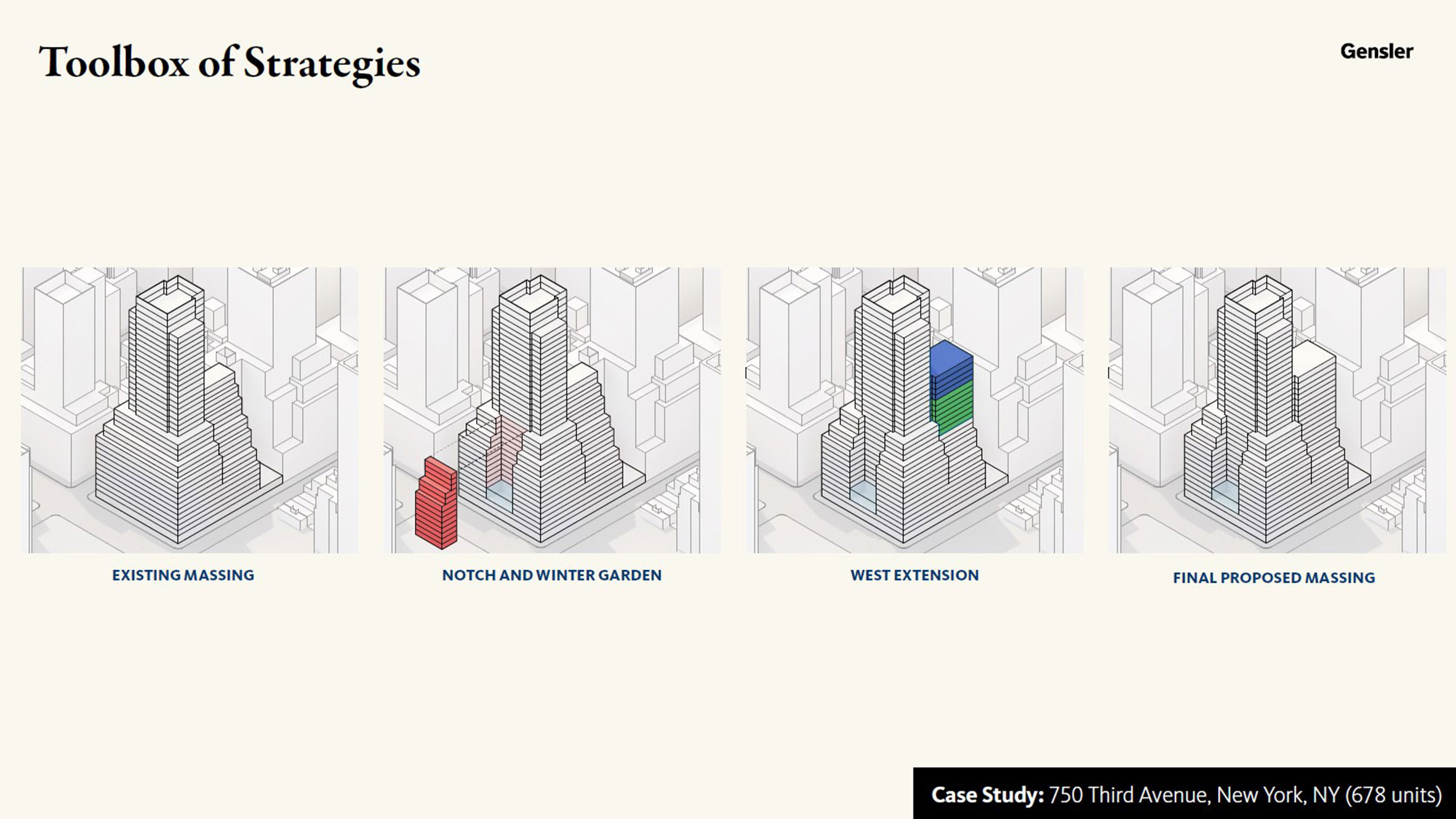
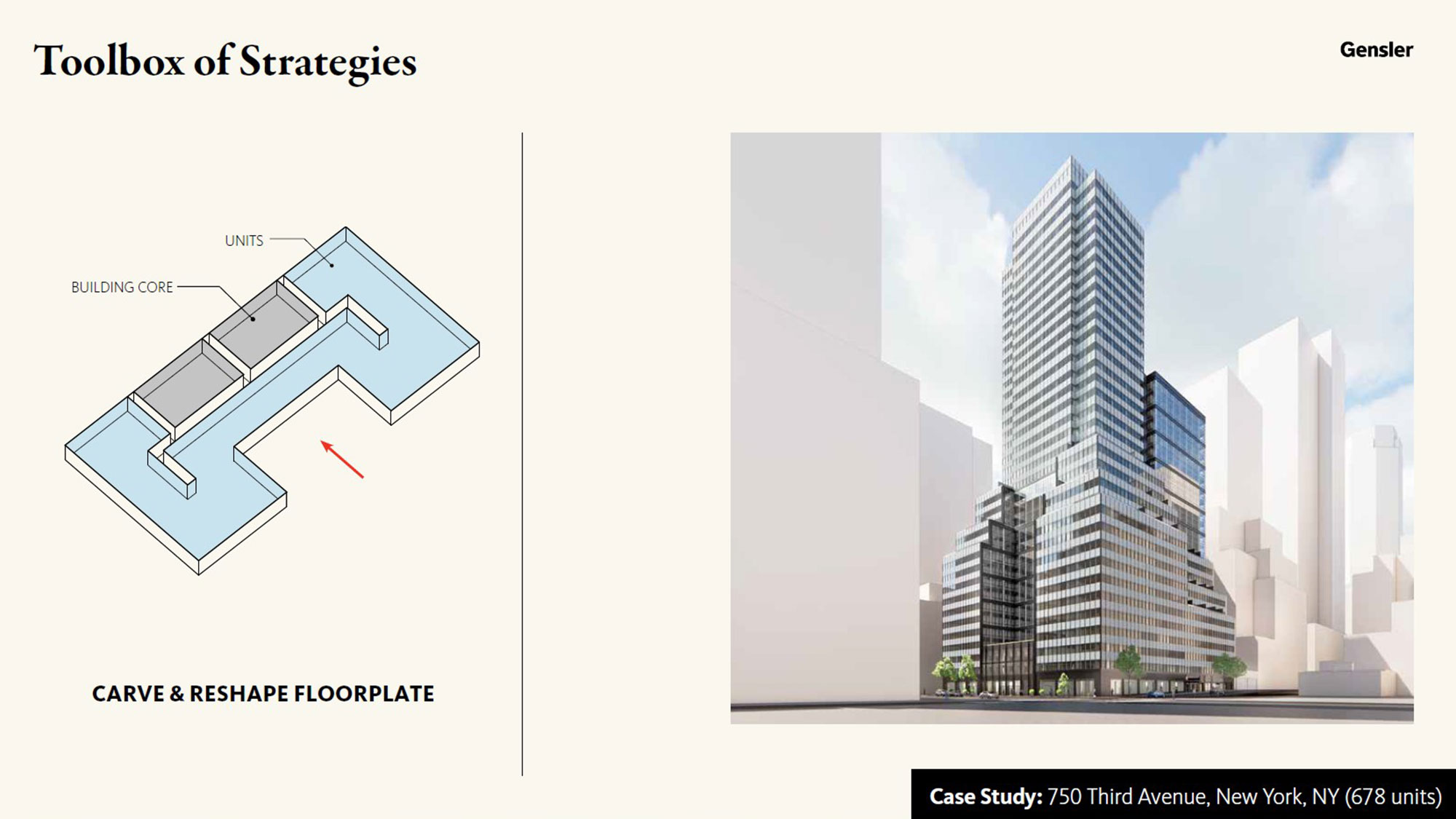
The instinct in adaptive reuse is to preserve as much as possible to control costs. But targeted demolition — removing structural bays, introducing lightwells, or carving voids through the floor plate — can dramatically improve a building’s residential quality and unlock additional unit count.
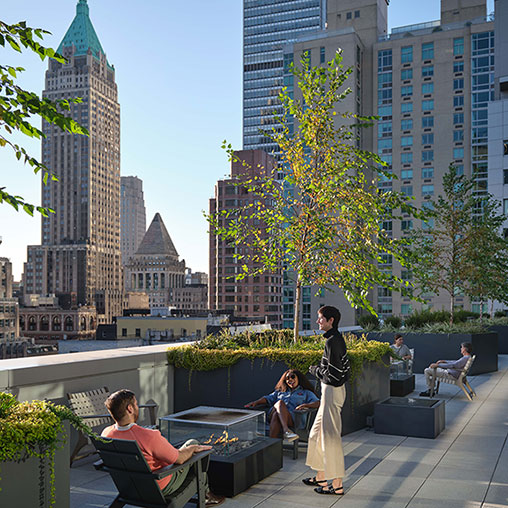
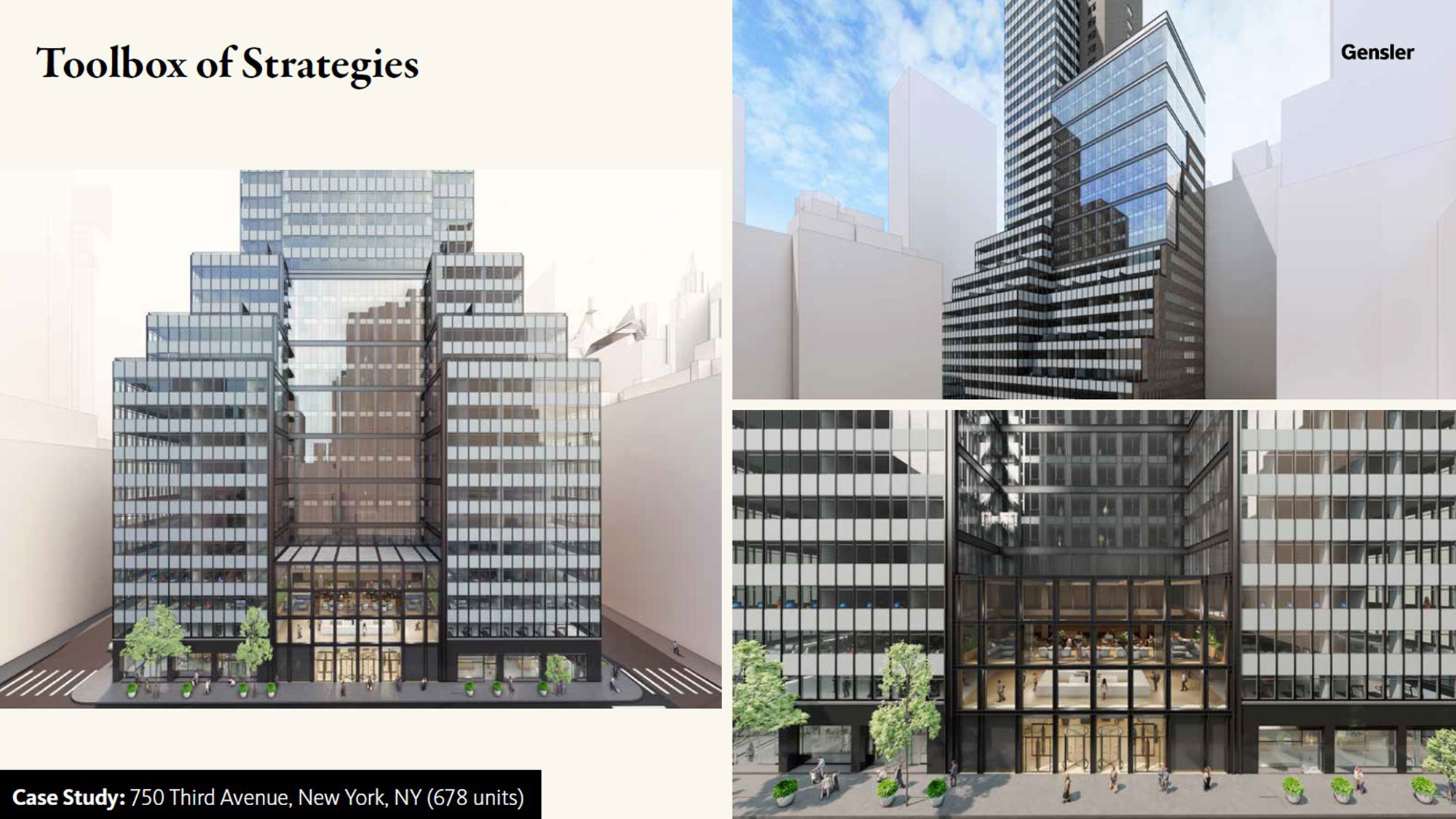
At 750 Third Avenue (678 units), what initially looked like an unfeasible podium became the design’s central opportunity. By strategically carving out portions of the floor plate, the team improved daylight access and created efficient unit layouts. The demolished floor will be relocated to more valuable areas of the building: the creation of additional floors and rooftop amenities.
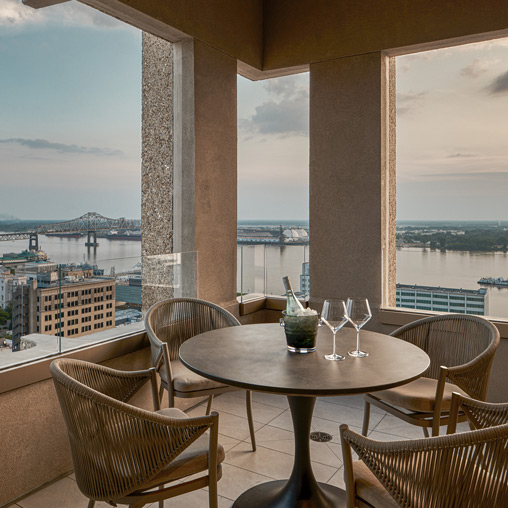
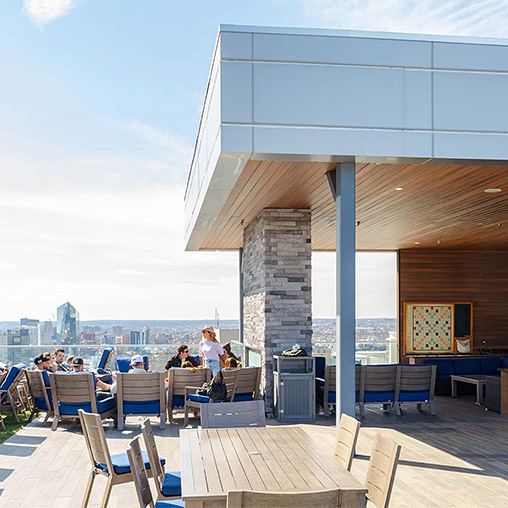
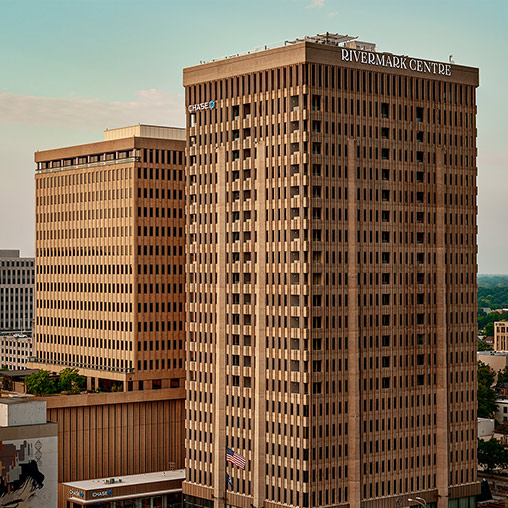
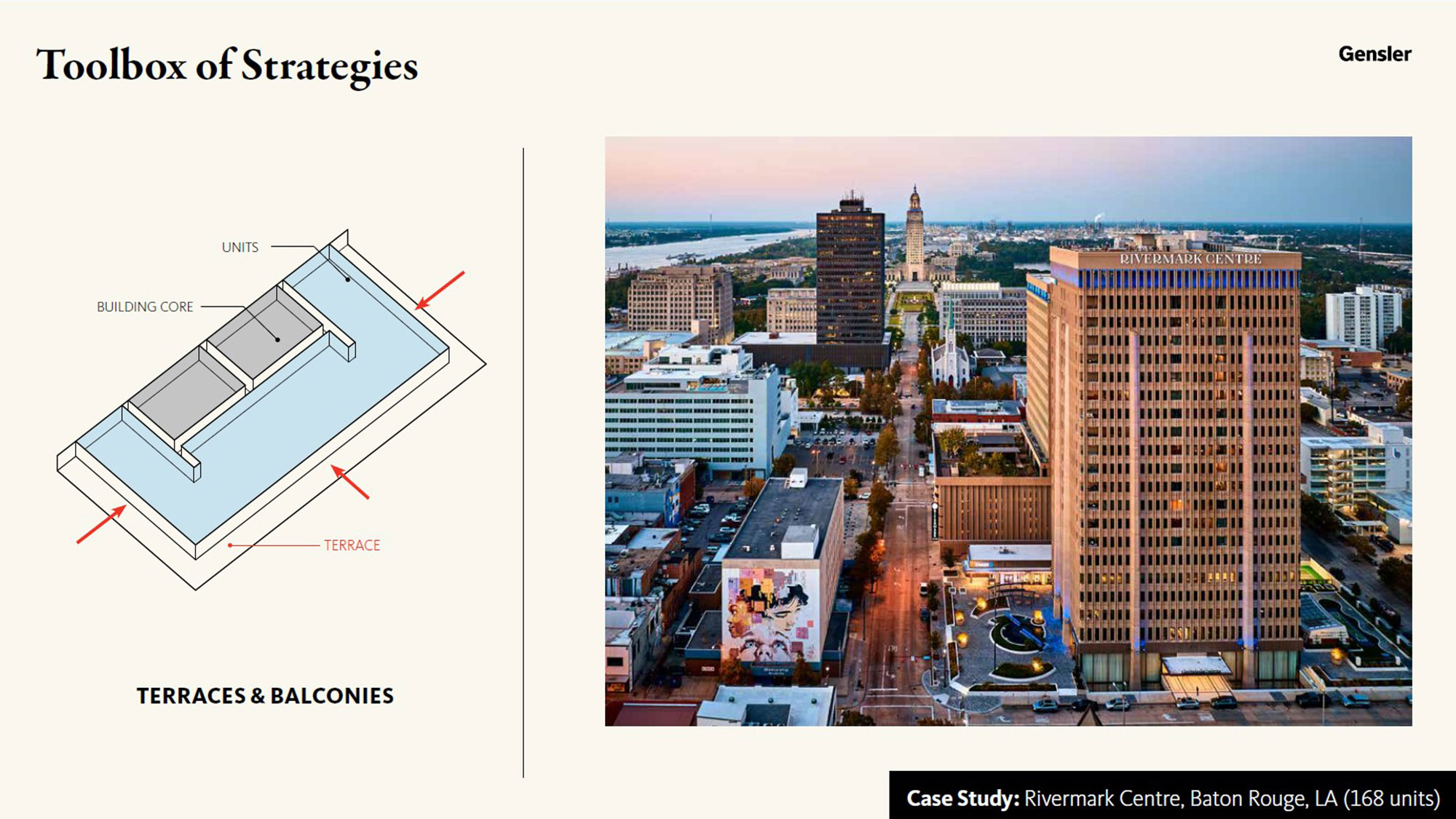
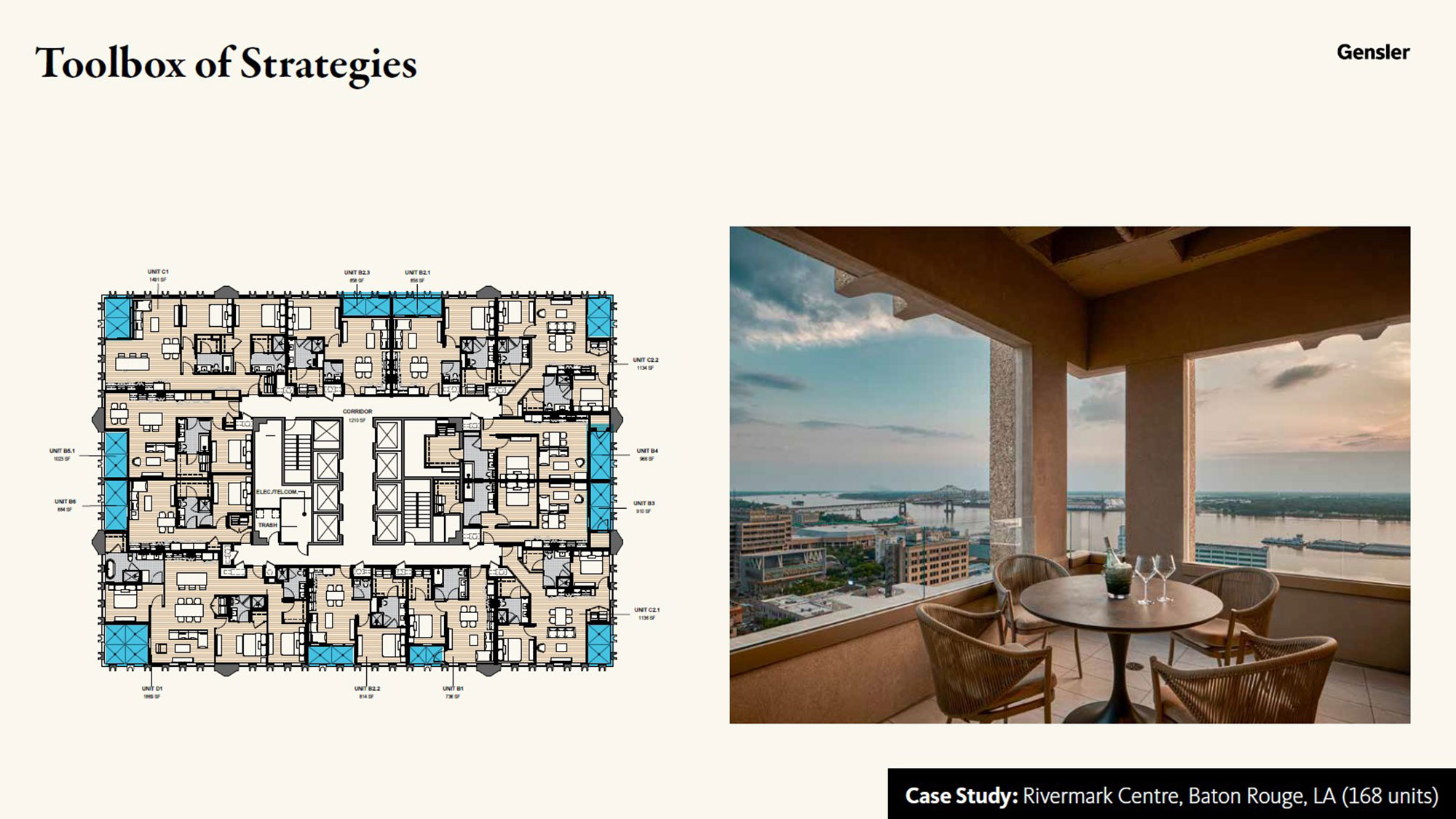
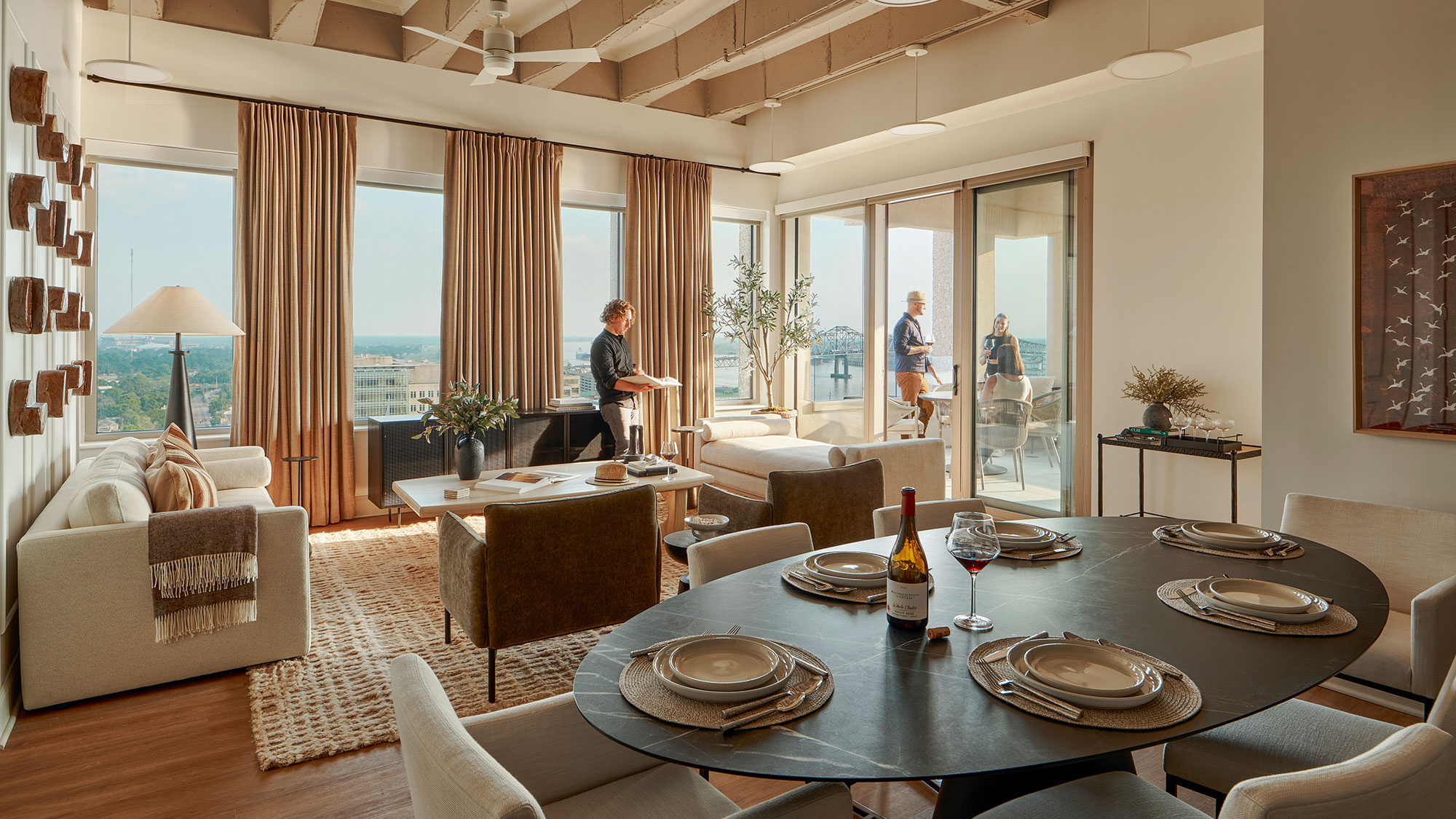
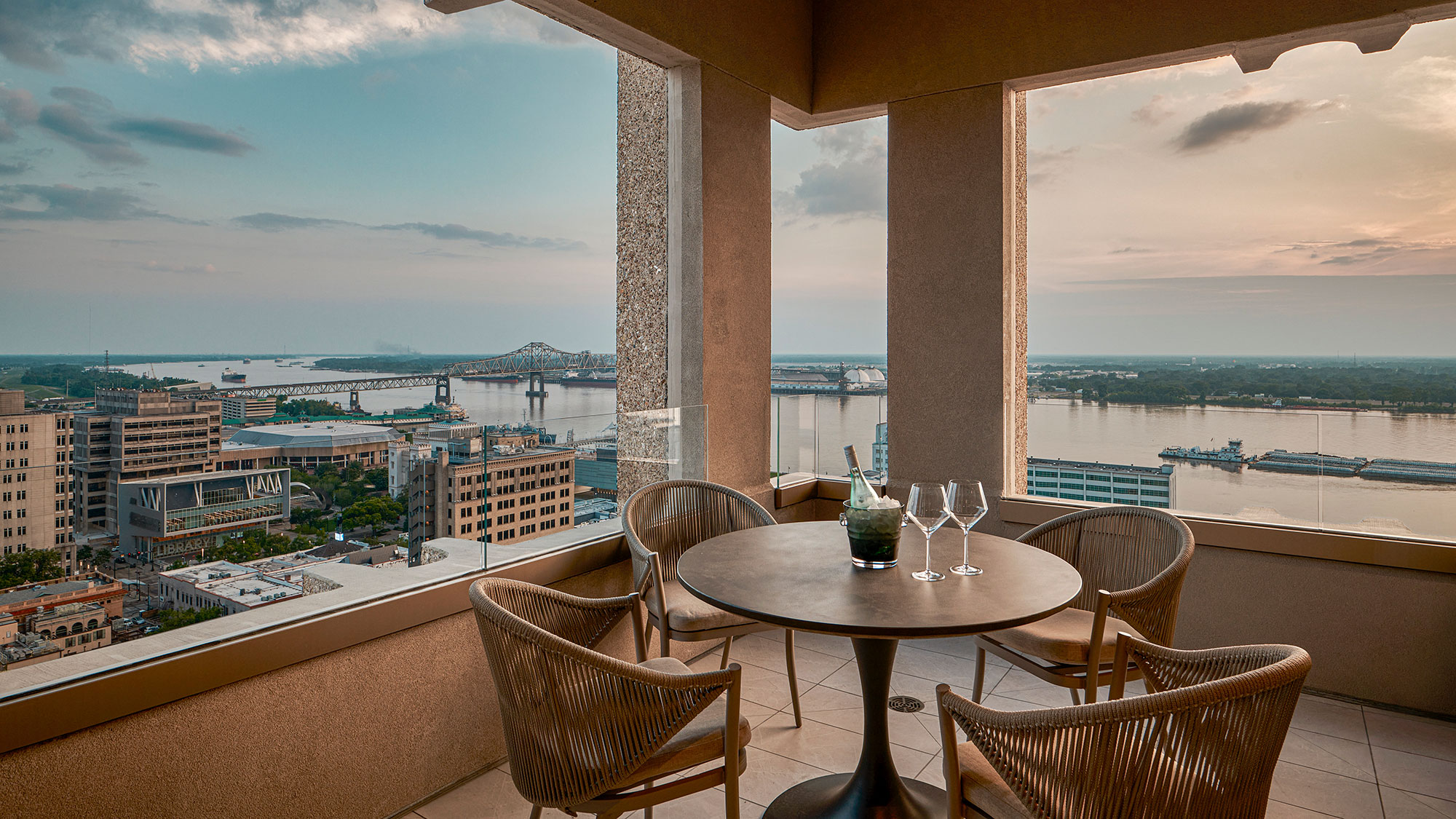
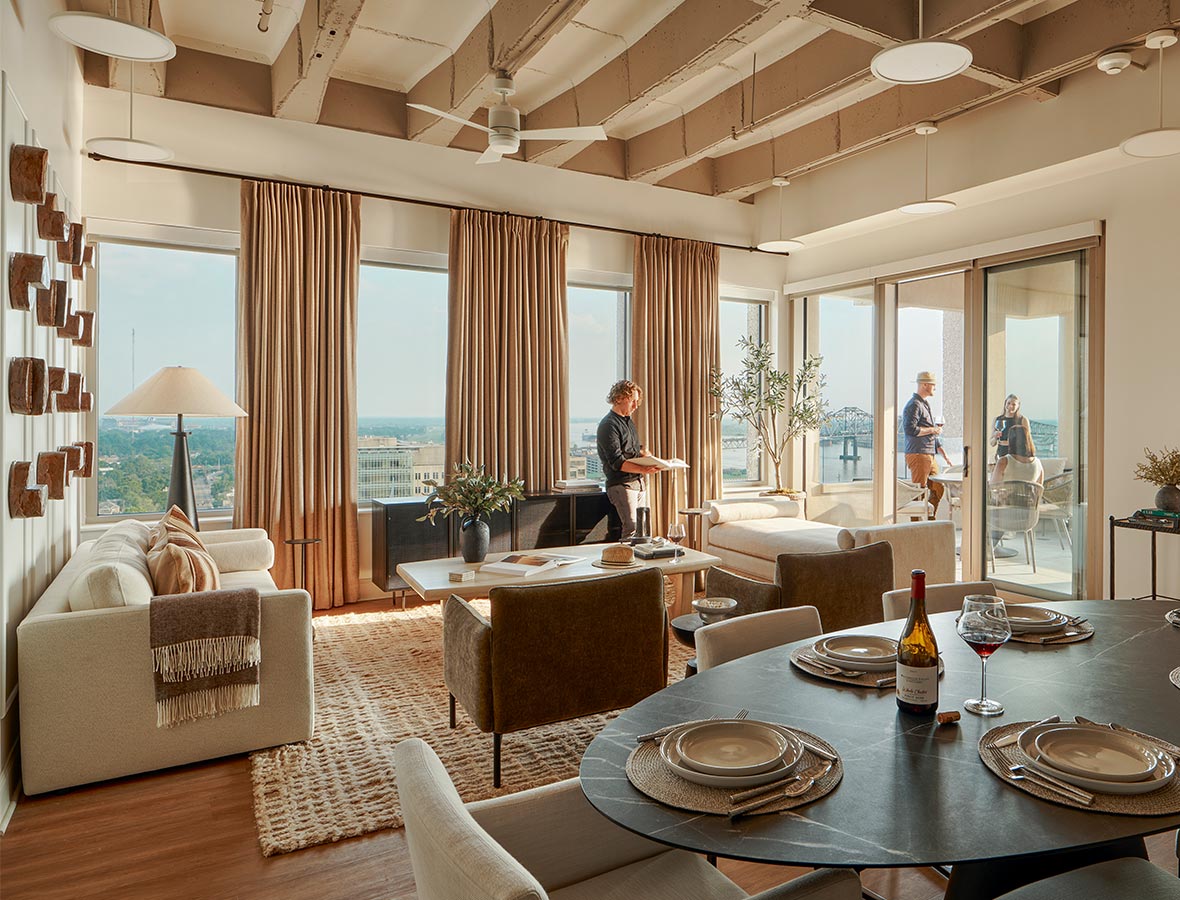
At The Residences at Rivermark in Baton Rouge, Louisiana (168 units), terraces carved from the floor plate edge gave tenants private outdoor space with river views, transforming a commodity tower into a destination address.

5. Treat the Façade as a Performance Upgrade, Not Just a Cost
Façade work is often where conversion budgets become especially challenging. Most office buildings have non-operable curtain walls that must be replaced to meet residential light, air, and energy code requirements. The instinct is to treat this as a line item to minimize. The smarter approach: treat it as an investment with a return.
With stringent energy conservation and carbon emissions regulations taking hold in major cities, it is likely that most buildings — even if they remain offices — will need significant façade and infrastructure upgrades soon. For example, New York’s Local Law 97 imposes carbon emissions fines on noncompliant buildings beginning this year. A conversion project is an opportunity to future-proof the asset and ensure regulatory compliance ahead of schedule.
Before assuming a full replacement is required, it’s worth evaluating whether the existing façade can be upgraded. In some cases, it’s possible to add operable windows and insulated panels to the existing frame at significantly lower cost.
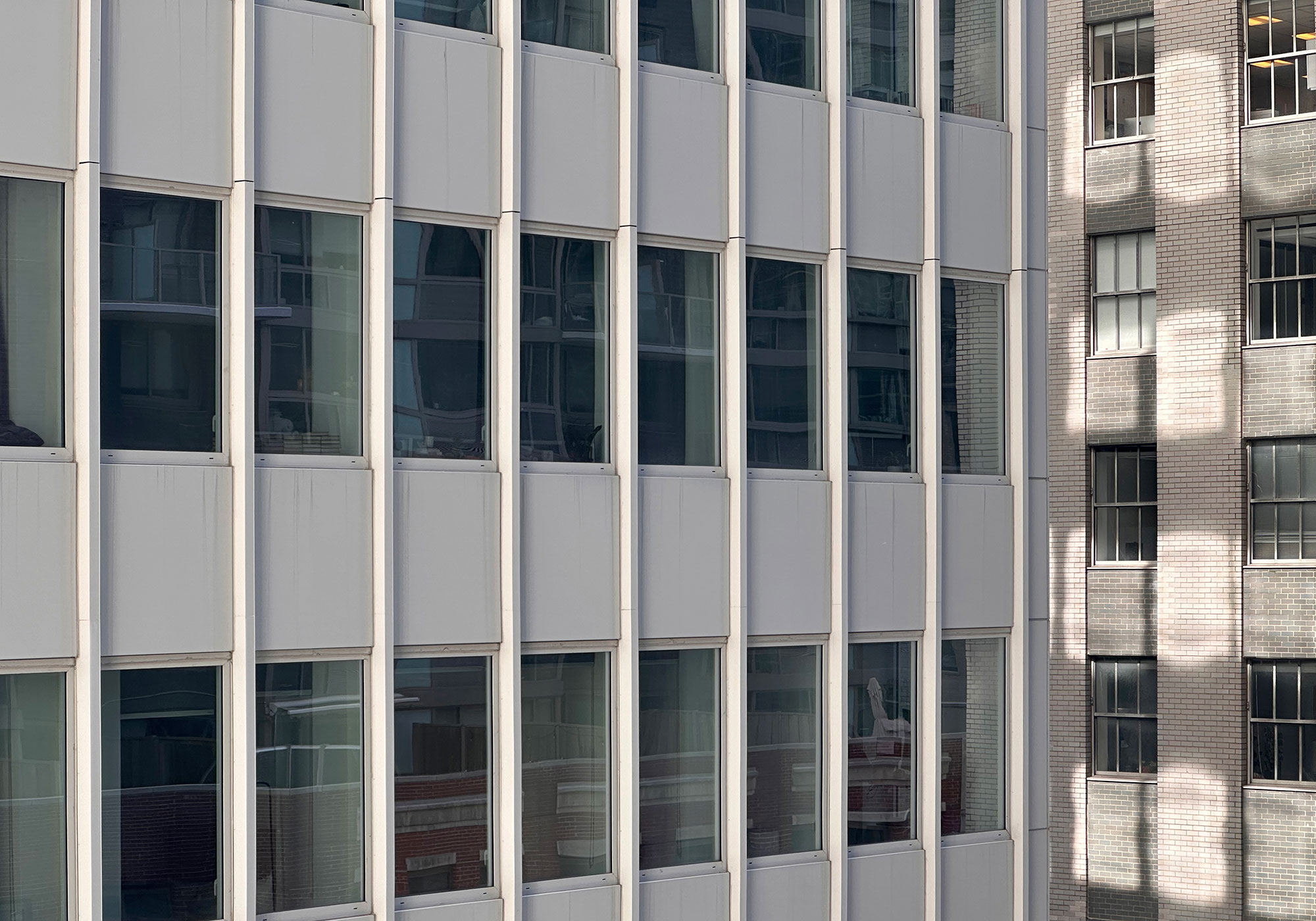
A reimagined façade also markets the building. At Pearl House, the team retrofitted the existing facade, replacing the fixed, uninsulated window panels in the curtain wall with operable, double-pane windows for better performance.
What New York’s Conversion Boom Means for Other Cities
New York City’s combination of zoning flexibility, targeted tax incentives, and time-limited policy windows created the conditions for design creativity to follow. The result is a body of built work that proves, at scale, what’s possible: reworked floor plates, activated cores, and outdated façades upgraded into residential amenities.
The design breakthroughs being made in New York can be applied to other cities across the country — and the pattern holds wherever policy and design move together. Where zoning reform expands eligible buildings and incentives give developers a reason to act, these same tools unlock value and produce housing.
For cities, developers, and investors evaluating potential conversions, the building that looks unworkable on first pass is often worth a second look. The constraint is frequently the opportunity.
For media inquiries, email .