From Capability Centres to Innovation Centres: Designing Workplaces for Innovation
How space, culture, and choice are shaping India’s next-generation GCCs.
Editor’s note: This is part of a blog series on India’s Global Capability Centres (GCCs). Read part 1 here.
India’s Global Capability Centres (GCCs) are entering a new phase of maturity. What began as a model for operational scale and efficiency is increasingly becoming a platform for enterprise innovation, global leadership, and strategic transformation.
The evidence is visible in both scale and mandate. India is now the world’s largest GCC hub, with more than 2,100 centres employing approximately 2.36 million people and generating nearly $100 billion in revenue, according to a 2026 Nasscom-Zinnov report. These centres are no longer limited to back-office support. Many manage higher-value functions across product development, engineering, analytics, AI, cybersecurity, R&D, enterprise platforms, and transformation programmes.
In some cases, work once anchored at headquarters is now owned and executed from India. This shift is also creating a new leadership geography. Global roles within Indian GCCs are expected to grow from around 6,500 today to more than 30,000 by 2030, signaling a transition from distributed execution to distributed leadership.
For organizations, this raises an important question: if India’s GCCs are becoming engines of enterprise and innovation, what enables innovation to scale?
Innovation needs a system, not just a spark
Historically, innovation was often concentrated within specialized teams, exceptional individuals, or dedicated R&D units. That model is increasingly insufficient for large, multidisciplinary GCCs with global mandates. As these centres take on more complex roles, innovation can no longer be treated as an occasional breakthrough. It must become an organizational capability.
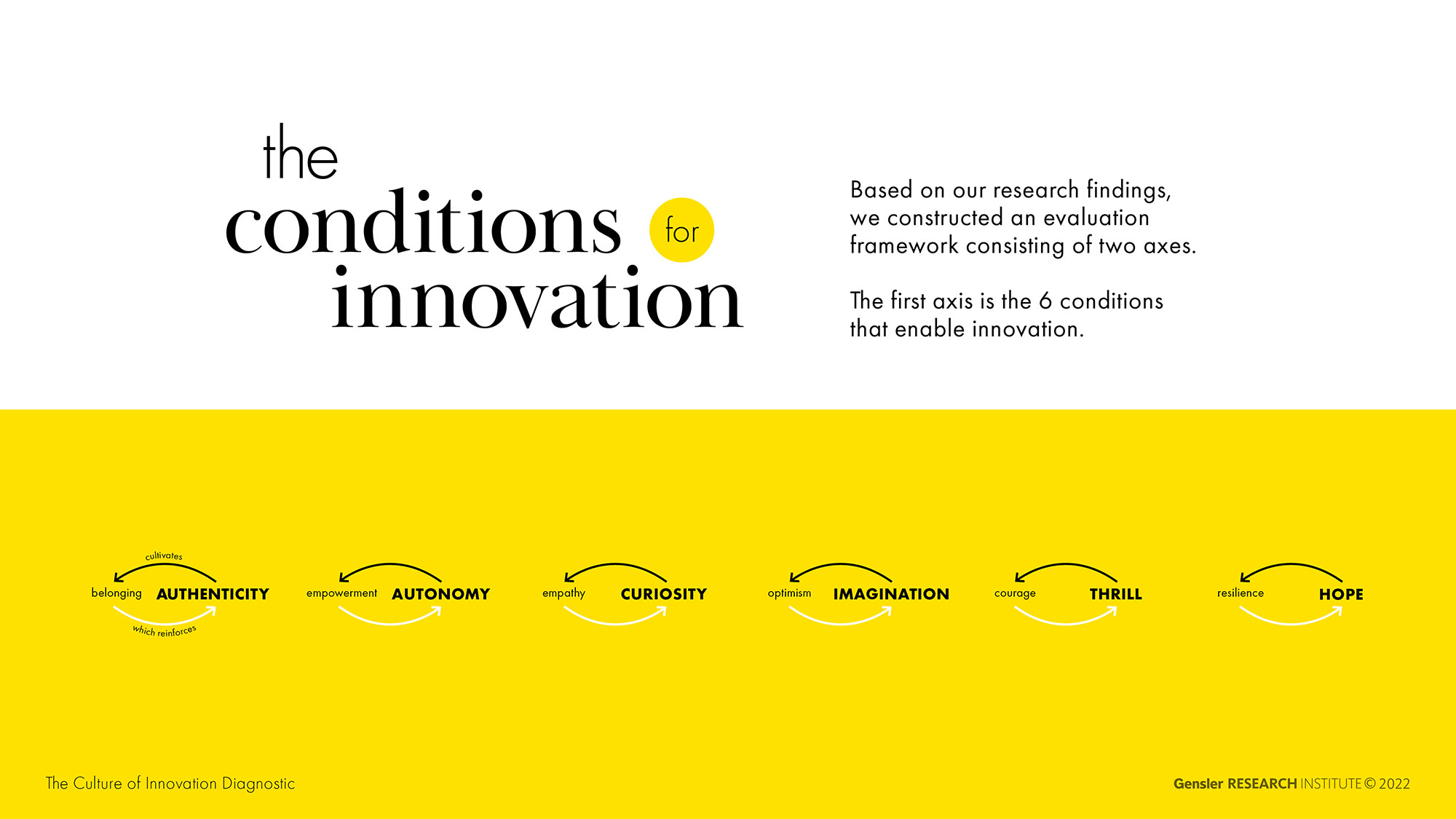
Gensler’s Culture of Innovation diagnostic reinforces this idea. The framework identifies six conditions that drive innovation: curiosity, imagination, autonomy, authenticity, hope, and thrill. These are organizational conditions that can be deliberately enabled through leadership, culture, operations, and the workplace.
For GCCs, this is especially relevant. The workplace is one of the few organizational systems people experience every day. It influences how knowledge flows, how visible leadership is, how teams learn from one another, and how confidently people experiment. If the next generation of GCCs is expected to generate ideas, develop their own products, solve enterprise challenges, and shape global transformation, then the workplace must be designed as part of the innovation infrastructure.
Designing workplaces that spark discovery
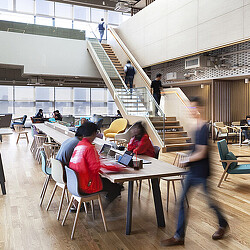
Innovation depends on people being exposed to different perspectives, disciplines, and ideas — whether they are developing a product, solving a technical challenge, improving a customer journey, or rethinking an enterprise platform. This means workplaces need to do more than accommodate collaboration. They need to create the conditions for meaningful encounters.
Curiosity grows when employees interact beyond their immediate teams. Imagination expands when environments balance collaborative energy with space for reflection. Informal exchanges often become the starting point for formal innovation, especially in large organizations where knowledge is distributed across functions, levels, and geographies.
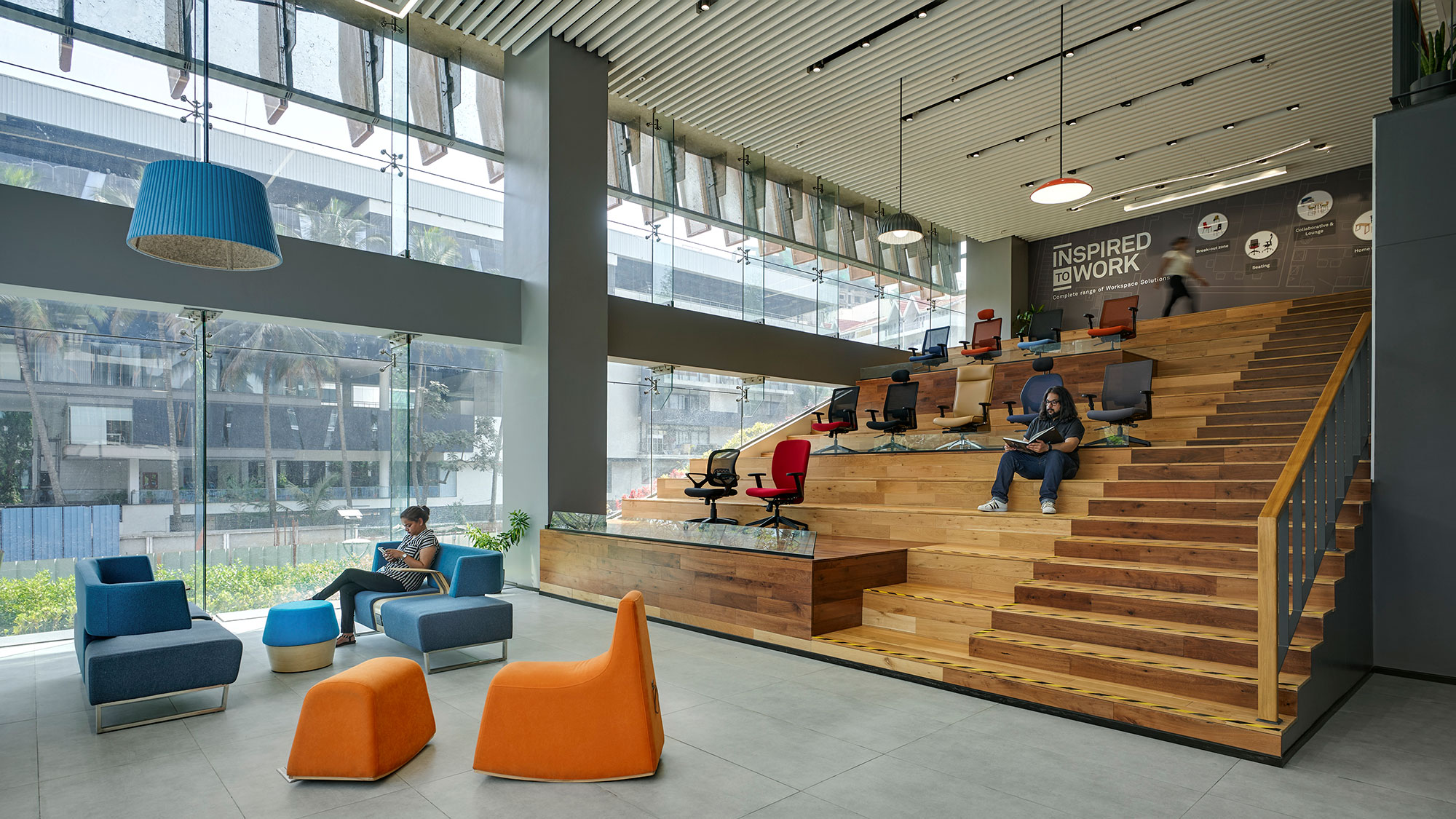
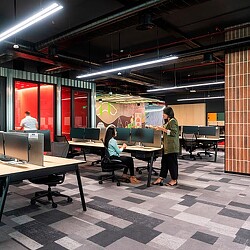
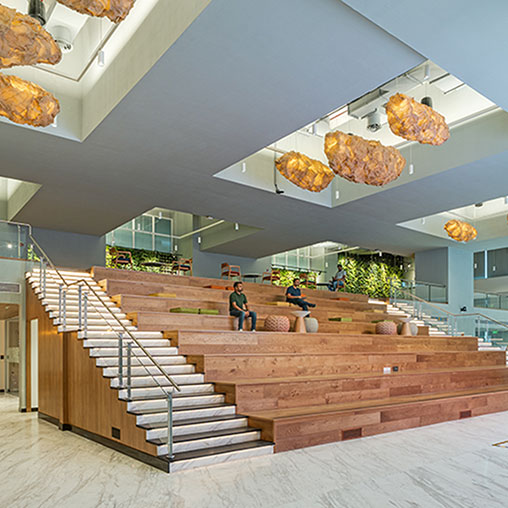
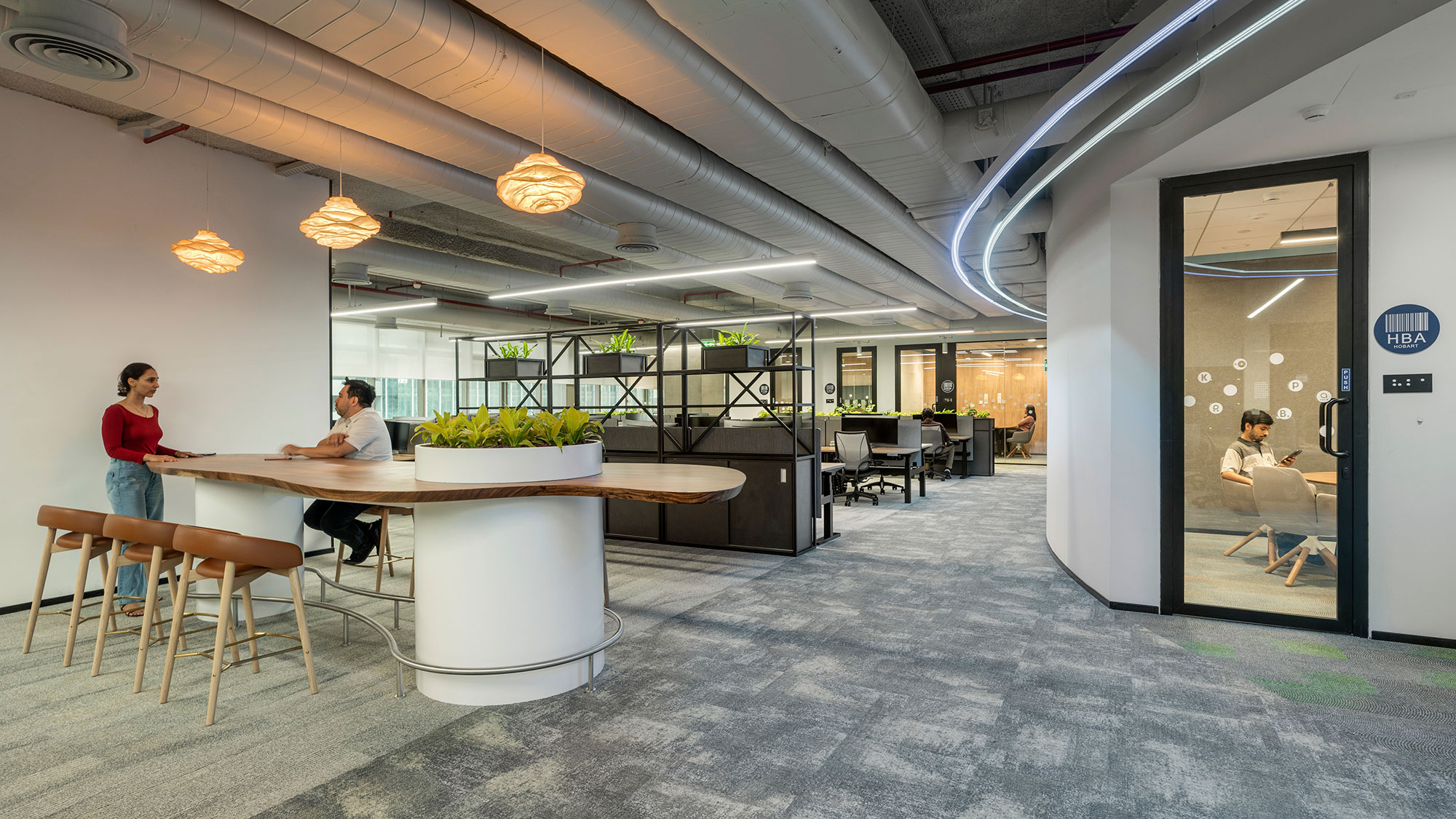
The implication for GCCs is clear: a workplace designed for innovation should create more opportunities for people and ideas to converge. Cafés, project hubs, learning spaces, terraces, maker environments, internal streets, and visible collaboration zones can all help build a culture of discovery when they are intentionally connected to the work people do. Innovation rarely emerges from isolated brilliance; it unfolds when people, ideas, and experiences collide through deliberate design interventions.
Yet discovery alone is not enough — the conditions that spark an idea must be matched by environments that give people the agency to pursue it.
Designing workplaces that empower action
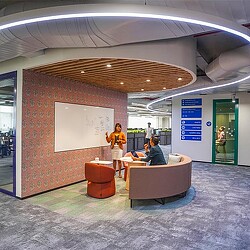
Innovation depends on giving employees meaningful choices not only in what they contribute, but in how they work. Different activities require different environments. Deep concentration, rapid problem-solving, mentoring, co-creation, prototyping, storytelling, and reflection each benefit from different spatial settings. If curiosity generates ideas, autonomy enables people to act on them.
For GCCs, this is critical because teams are increasingly working across complex, high-value mandates. A product team may need focused engineering time, rapid sprint collaboration, access to customer insights, leadership reviews, and informal mentoring within the same workweek. A cybersecurity team may need secure focus environments, war rooms, and high-trust collaboration spaces. An AI or analytics team may need access to immersive technology, experimentation zones, and cross-functional review settings.
Choice is a key enabler of innovation. The most effective GCCs foster trust, make leadership accessible, and create environments where experimentation and collaboration can thrive across teams.
AI is making innovations more human
Early conversations about AI often imagined a future with less human interaction and a reduced need for the physical workplace. Gensler’s 2026 Global Workplace Survey suggests a different direction. The survey found that AI power users spend less time working alone and more time learning and socializing than late adopters. They also report stronger team relationships and more meaningful friendships at work.
AI power users spend less time working alone and more time learning and socializing than late adopters.
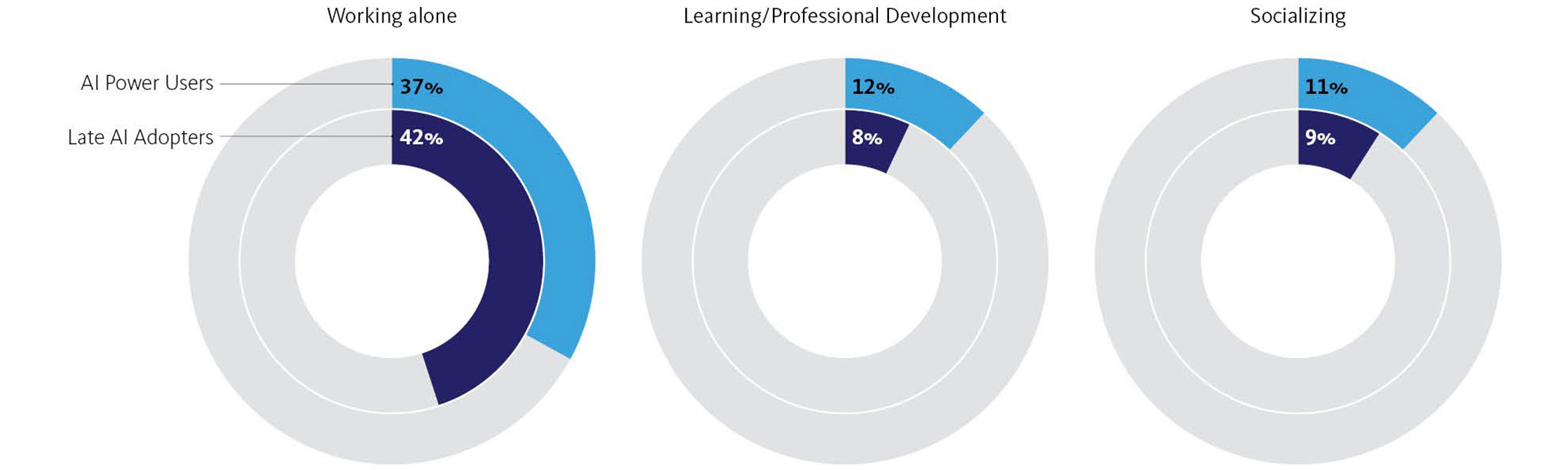
AI power users spend less time working alone and more time learning and socializing than late adopters.
In other words, AI is not making work less human. It is increasing the value of human behaviors that technology cannot replace.
For GCCs, this is especially relevant. Many future mandates will sit at the intersection of technology, business judgment, and human creativity. AI can accelerate routine work, but innovation still depends on how people interpret information, challenge assumptions, learn from one another, and connect ideas across disciplines.
The research further links workplace effectiveness for learning to design factors such as flexible furniture, manageable noise levels, access to up-to-date technology, focus spaces, and places to rest and recharge. This points to a powerful shift, as AI changes how work happens, the workplace becomes more valuable as a setting for learning, judgment, trust, and collective discovery.
Designing workplaces that sustain momentum
Within Gensler’s Culture of Innovation framework, hope reflects the belief that ideas can make a difference, while thrill captures the energy from experimentation, progress, and discovery. These conditions are reinforced when organizations invest in learning, make innovation visible, and provide access to the people, tools, and spaces required to test new ideas.
For GCCs, this means moving beyond isolated innovation labs or occasional workshops. Innovation needs to be embedded into the everyday workplace experience. That could mean project rooms where teams can leave work in progress visible over time. It could mean learning hubs that support coaching, upskilling, and peer exchange. It could mean immersive rooms for AI-enabled collaboration, maker spaces for prototyping, quiet zones for deep thinking, and wellness environments that help people recover from cognitively intense work.

From Scale to Innovation: The Next Competitive Advantage
India’s GCCs have already demonstrated their ability to deliver at scale. Their next competitive advantage will be determined by how effectively they enable innovation at scale. For workplace leaders, this changes the conversation. Success is no longer measured only by headcount or square footage alone. It depends on whether the workplace intentionally creates opportunities for discovery, empowers people with greater autonomy, and sustains innovation through continuous learning, experimentation, and meaningful human connection.
The next generation of GCCs will not be defined only by the scale of talent they house, but by the quality of innovation they enable.
For media inquiries, email .