How India’s GCCs Are Redefining the Workplace
India’s Global Capability Centers have evolved from execution centers to global innovation hubs. The workplaces that support them need to catch up.
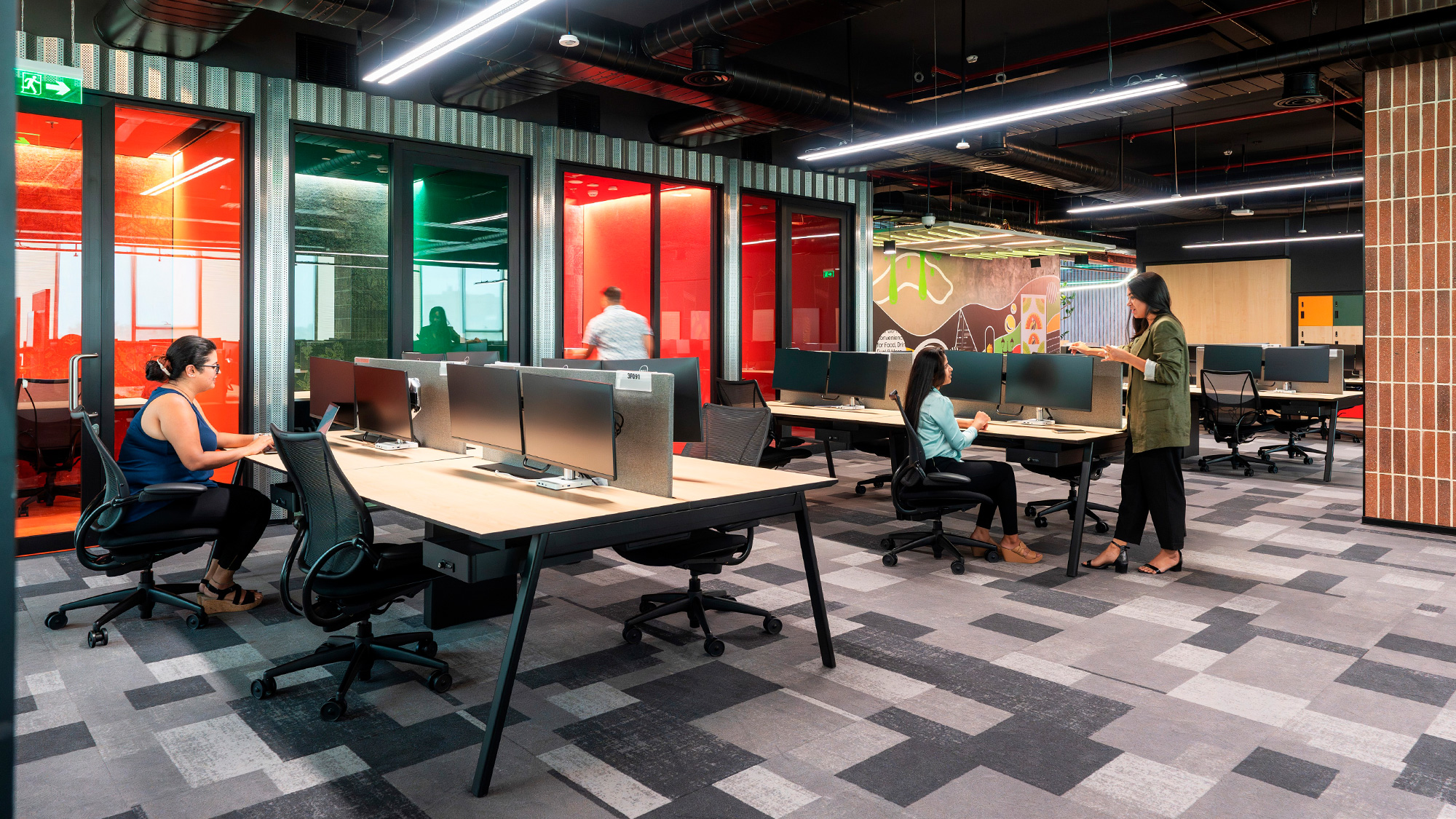
India is now home to more than 1,700 Global Capability Centers employing nearly 1.9 million professionals. These facilities, originally built for efficiency and scale, have become hubs where products are developed, platforms are built, and global innovation agendas are shaped. With a concentration of co-located talent that few other locations can replicate, GCCs have moved from execution to ownership — defining organizational outcomes, rather than simply executing them.
The nature of work and the workforce is evolving just as fast. Gensler’s 2025 Global Workplace Survey shows that employees in India spend more time learning, collaborating, and socializing than they did a decade ago as the workday becomes increasingly interactive and collective. While India continues to rank among the highest countries globally in overall workplace performance, effectiveness across key work modes has gradually declined. The mandate for GCCs is growing; their environments are not keeping pace.
As GCCs assume more complex, innovation-driven mandates, the workplace must evolve accordingly — enabling the behaviours that support innovation, express organisational mission and identity, and support the lifestyles that attract and sustain top talent. Given their scale and influence, India’s GCCs are uniquely positioned not only to respond to this shift, but to redefine workplace models that can inform global standards.
In India, time spent learning and socializing has increased over time.
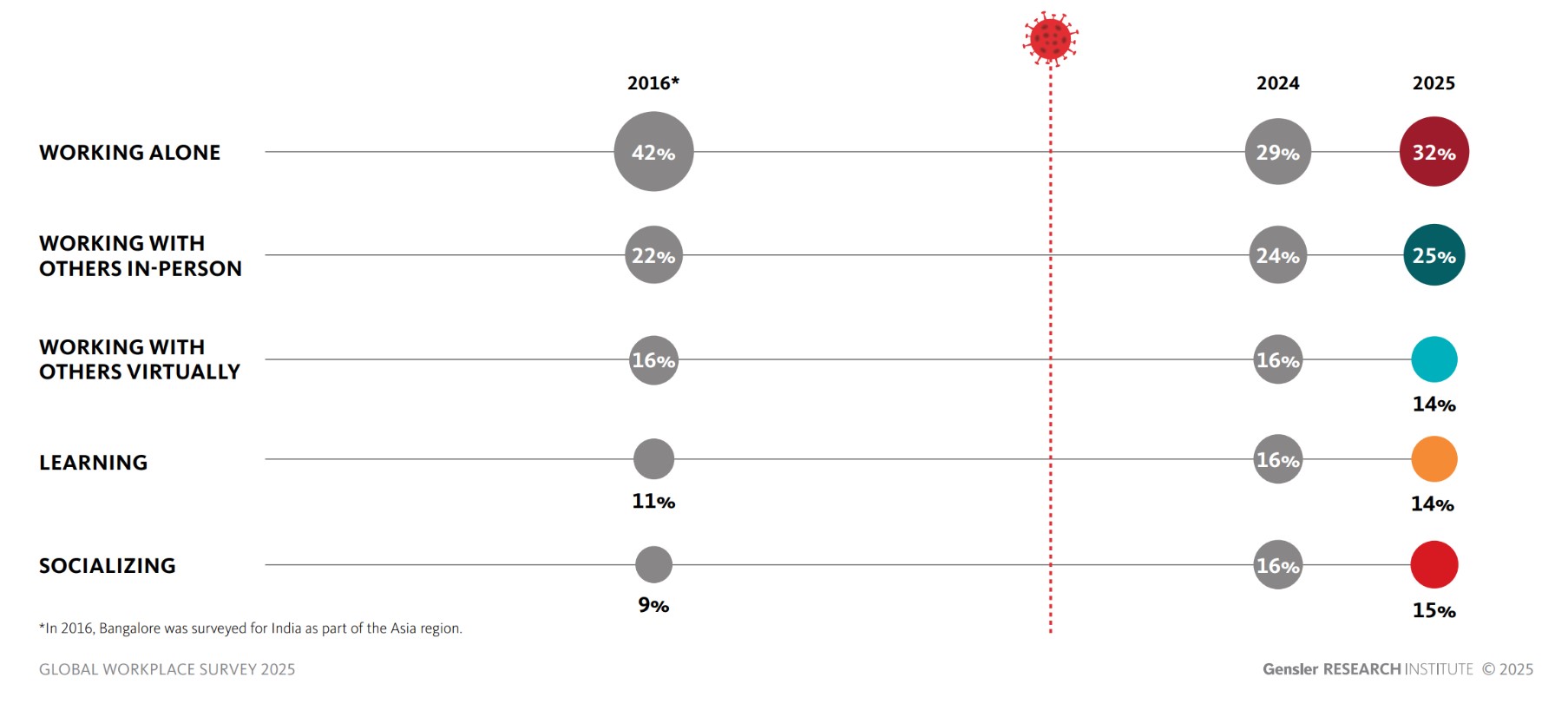
In India, time spent learning and socializing has increased over time.
Culture as a Design Mandate
Organizational culture is shaped through everyday behaviors — how decisions are made, how information flows, and how teams solve problems. In GCCs, these dynamics unfold at scale. Thousands of employees across multiple verticals often operate in close proximity, contributing directly to global products and platforms. Interaction is visible, collaboration is frequent, and decision-making becomes more accessible. The workplace influences how easily these exchanges happen, and how often they occur.
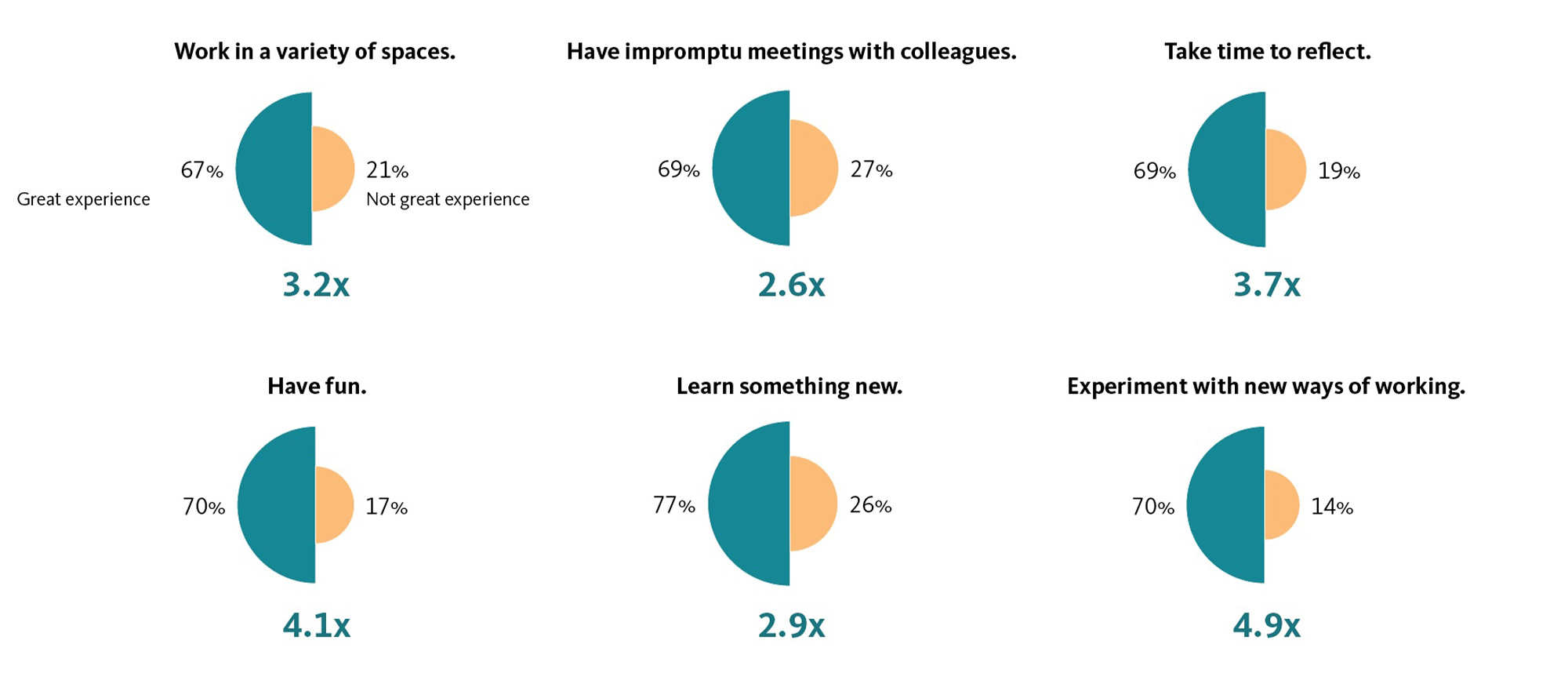
How often do you do the following at the office? The percentage of respondents who do these activities often or very often, segmented by those who strongly agree their workplace provides a great experience and those who disagree or feel neutral.
Source: 2025 Gensler Global Workplace Survey
Gensler’s 2025 Global Workplace Survey highlights the impact of workplace experience on these behaviours. Employees who report a great workplace experience are significantly more likely to experiment with new ways of working, have impromptu meetings, learn from colleagues, and take time to reflect. These everyday behaviours are how culture strengthens and evolves.
As GCCs take on greater organisational responsibility, they become powerful environments for shaping how work is practiced. At scale, they can serve as laboratories for testing global initiatives — deliberately designed spaces that influence behaviour and define organisational culture.
Workplace as a Signal of Purpose
The workplace is one of the most powerful ways to make purpose visible. Employees, leadership, and prospective talent read signals the moment they enter a space. Increasingly, those signals matter. Employees want to understand the purpose of their work and how it connects to the organization’s broader mission.
This is especially relevant in GCC environments, where many employees may not directly interact with the organization’s products, services, or end customers. The workplace becomes a primary medium through which they understand what the organization stands for and how their work contributes to the larger enterprise.
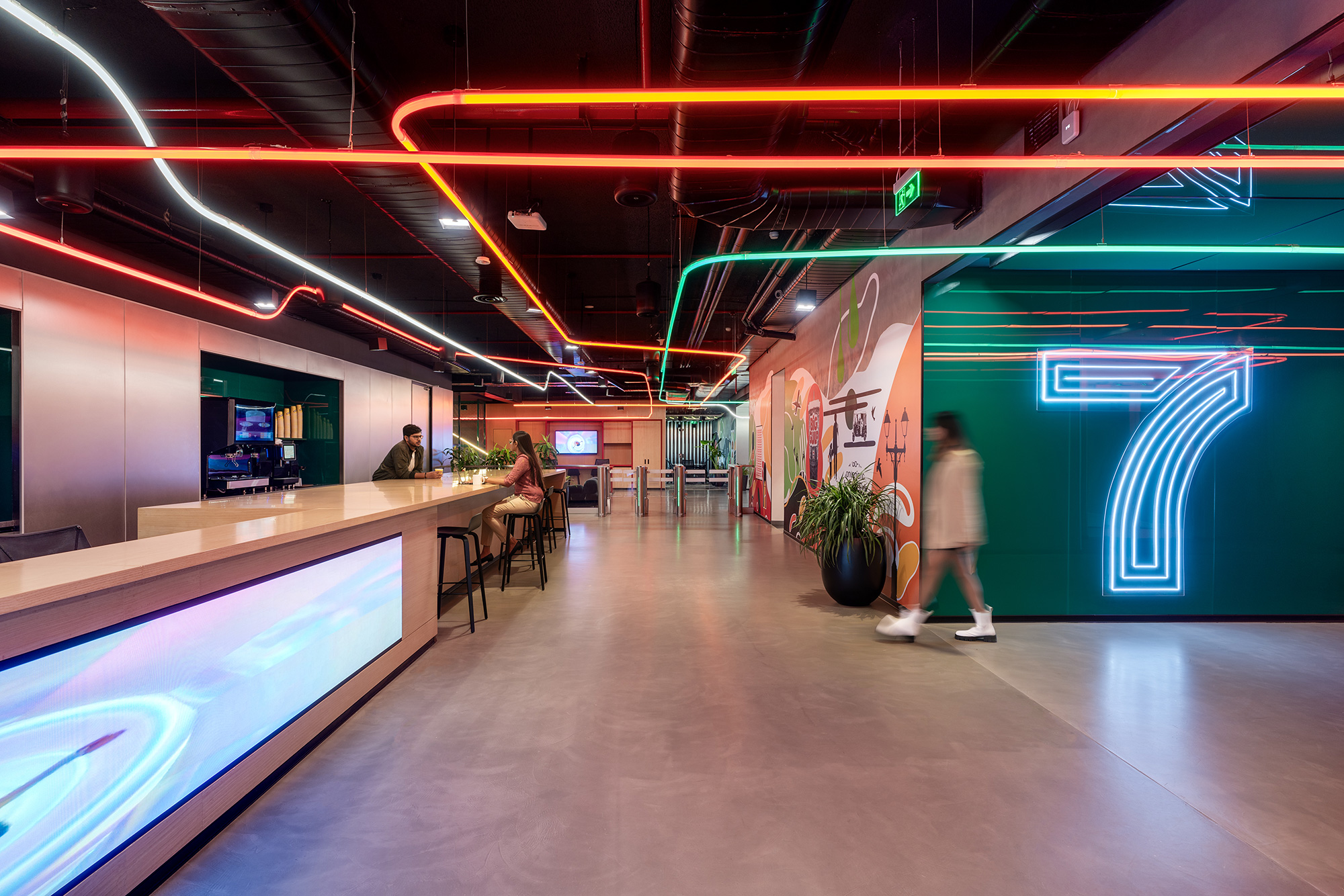
According to Gensler’s 2025 Global Workplace Survey, 68% of employees say that working in the office strengthens their connection to their organization’s mission or purpose. When environments visibly reflect organizational identity through spatial priorities and shared experiences, that connection becomes tangible. In competitive talent markets, workplaces that clearly express purpose help reinforce why the work happening there matters.
The Workforce Has Changed. Now the Workplace Must Evolve.
Gensler’s City Pulse 2025 research highlights the growing pull of Indian cities as places people move toward — not just for employment, but for opportunity, well-being, community, and personal growth. As GCCs grow within these urban ecosystems, workplaces play an important role in supporting that lifestyle.
According to Gensler’s Global Workplace Survey, employees who report a great workplace experience are significantly more likely to feel energized at work, find their work meaningful, and go beyond their formal responsibilities. In the competition for innovation talent, workplaces that support how people want to live, not just how they work, have become powerful talent beacons.
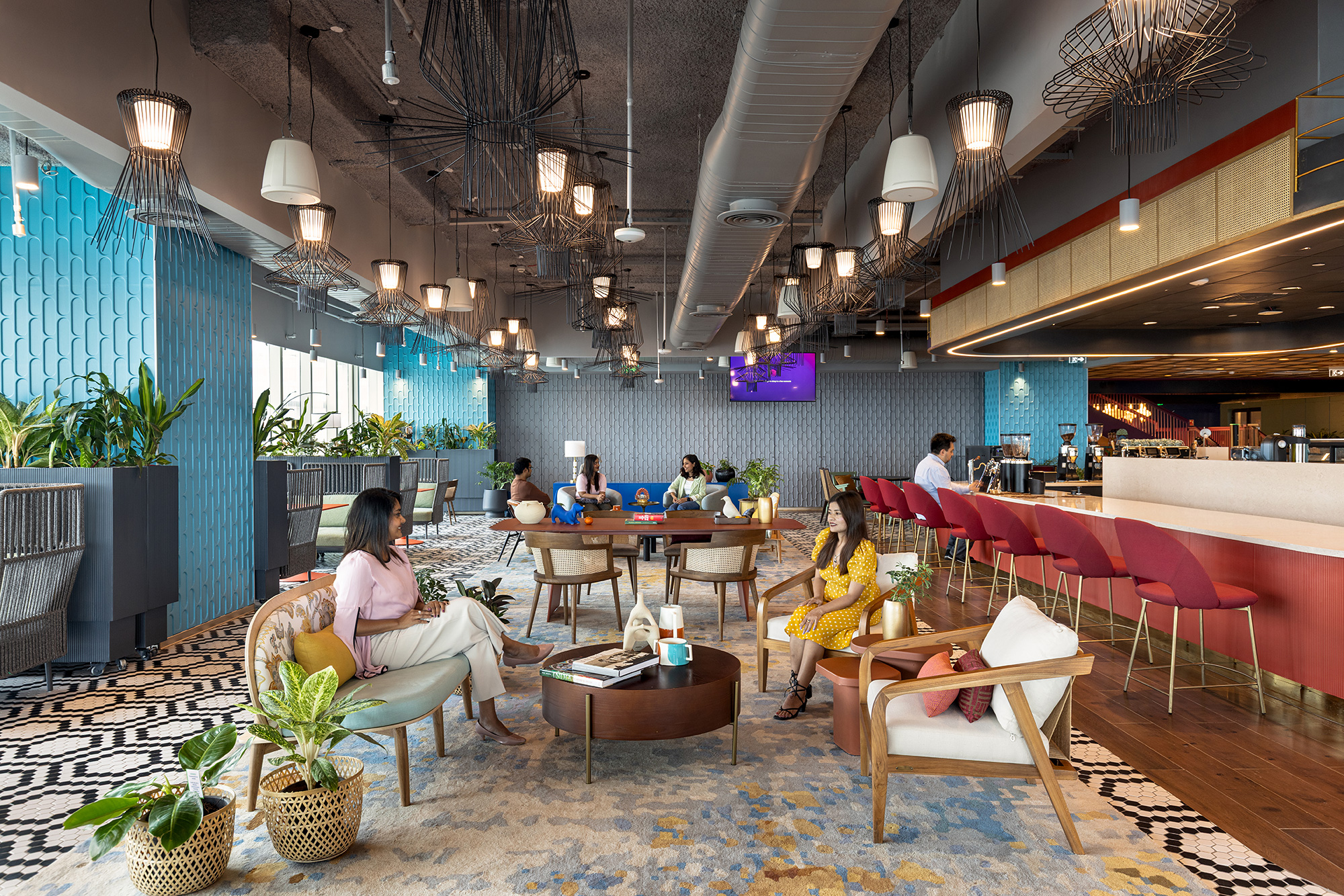
India’s GCCs are no longer catching up to the world. In many domains, they are helping shape what comes next. The workplaces that support them should reflect the same ambition, not through scale or spectacle, but through clarity of purpose and the experiences they enable every day.
In the articles that follow, we explore what that looks like in practice: the design strategies that enable innovation and cross-disciplinary collaboration, the environments that help shape culture and identity, and the operational approaches that keep workplaces dynamic long after they are built.
This article was produced by Gensler’s India Workplace Practice, partnering with global capability centers across Bengaluru, Hyderabad, Mumbai, Pune, and Chennai.
For media inquiries, email .