The Workplace as Civic Infrastructure: How Companies Can Use Space as a Public Good
Forward‑thinking organizations are using their workplaces as civic resources to turn corporate purpose into community impact.
For decades, public libraries, community centers, town halls, and civic gathering spaces served as the connective tissue of neighborhoods and cities. Today, many of these forms of public infrastructure are underfunded, downsized, or have limited accessibility. At the same time, informal “third places” where people once gathered outside of home and work — cafes, social clubs, and local institutions — have become harder to find, more commercialized, or simply out of reach for many communities. The result is a growing gap in places where people can convene, learn, exchange ideas, and build relationships across sectors and backgrounds.
At the same time, large portions of the modern workplace now sit underutilized due to the shift to hybrid work. Offices built for daily density often operate below capacity for much of the week. Meanwhile, many organizations have a desire to demonstrate purpose, social value, and civic responsibility — not only through philanthropy, but also through how they use their resources.
This creates a powerful opportunity: workplaces have space, infrastructure, and convening power that many communities lack. The question leaders are now grappling with is not just how to bring people back to the office, but how corporate environments can help fill the void left by shrinking public and community spaces.
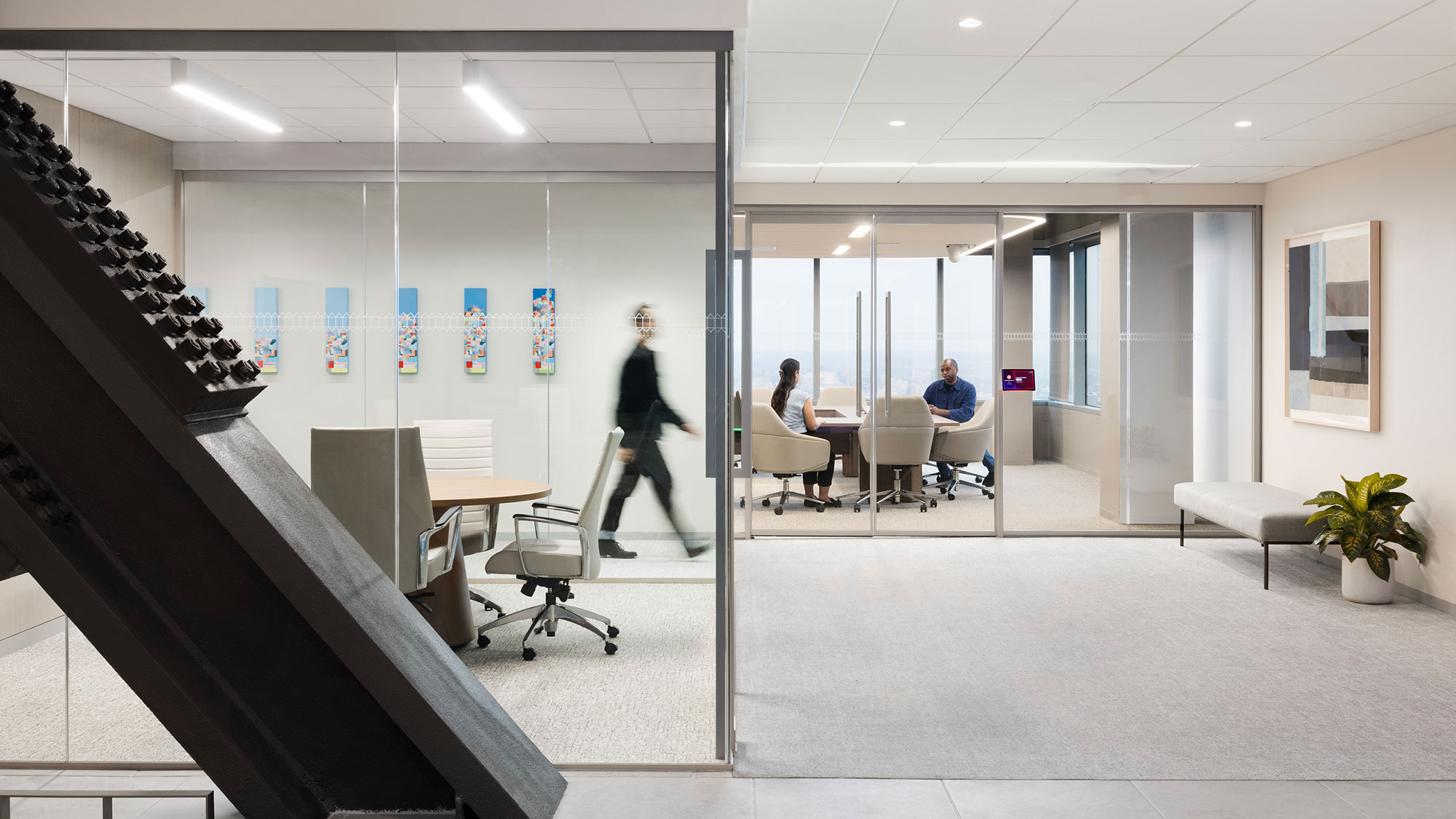
In response, a growing number of organizations are intentionally opening portions of their workplaces to serve broader civic functions. Conference centers host nonprofit convenings. Ground floors become gathering spaces for neighborhood dialogue. Amenity spaces support community programs, education, and cross-sector collaboration. In these models, the workplace becomes more than a private environment for employees; it becomes a shared resource — one that helps rebuild civic life by offering space, access, and infrastructure to groups that need it.
This shift reframes the workplace as more than real estate. It becomes civic infrastructure. When organizations use corporate space as a public good, the office ceases to be a closed system and becomes a connector between private enterprise and the communities they depend on.
The Workplace Serving a Higher Purpose
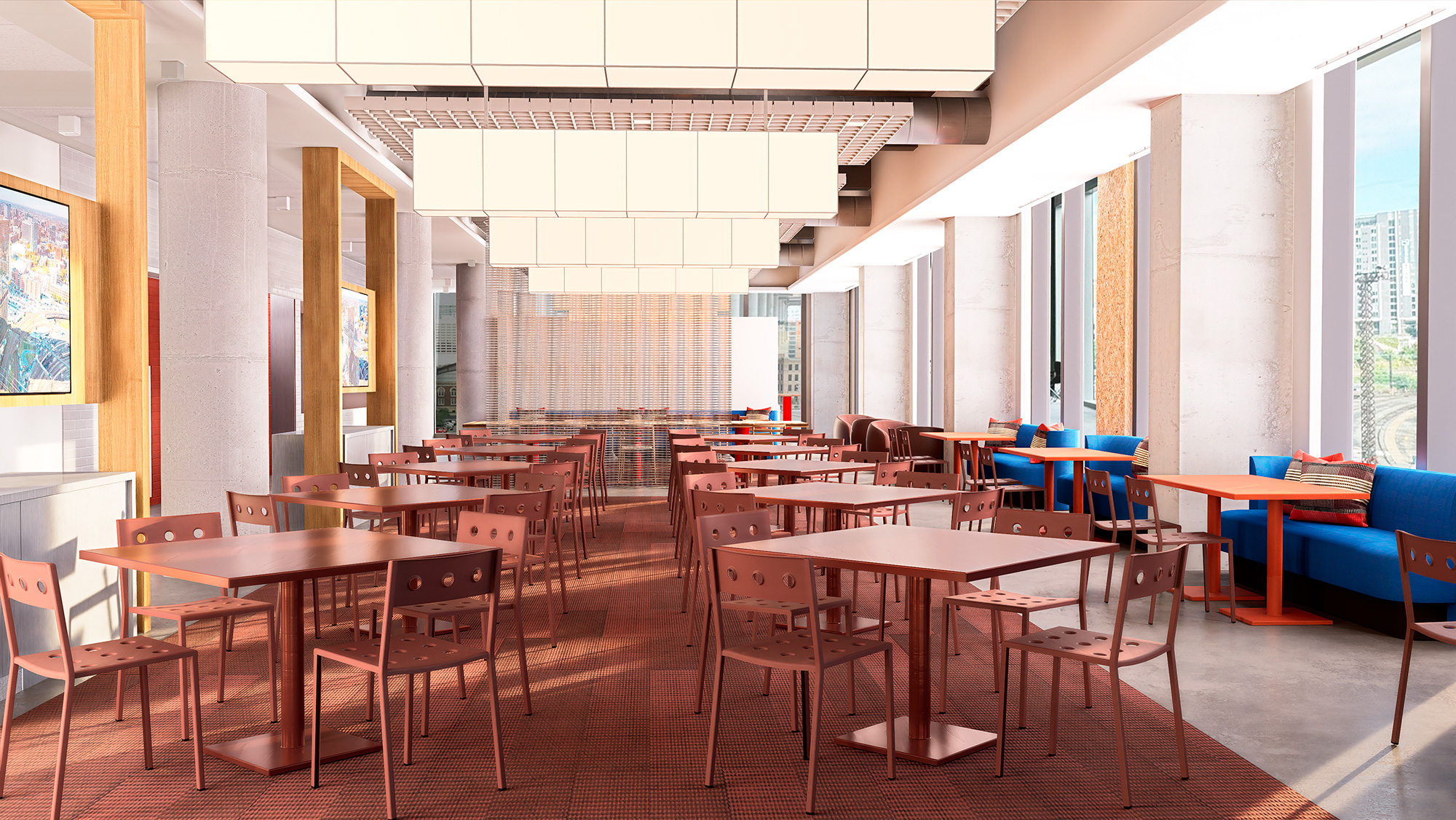
When a workplace serves a higher purpose, it moves beyond supporting internal operations to actively contributing to the civic life around it. This is not about opening the doors indiscriminately or turning offices into third spaces by default. It is about intentionally allocating corporate resources — space, technology, hospitality, and staff support — to help address the growing shortage of accessible community gathering places. When community use is embedded into the planning of front-of-house spaces, circulation, and gathering areas, the workplace becomes a reliable civic asset without compromising daily performance.
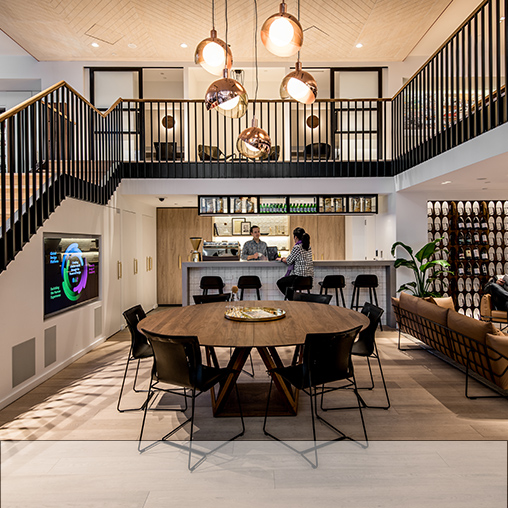
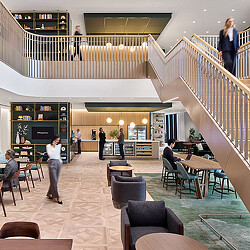
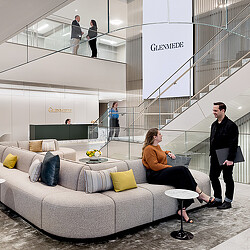
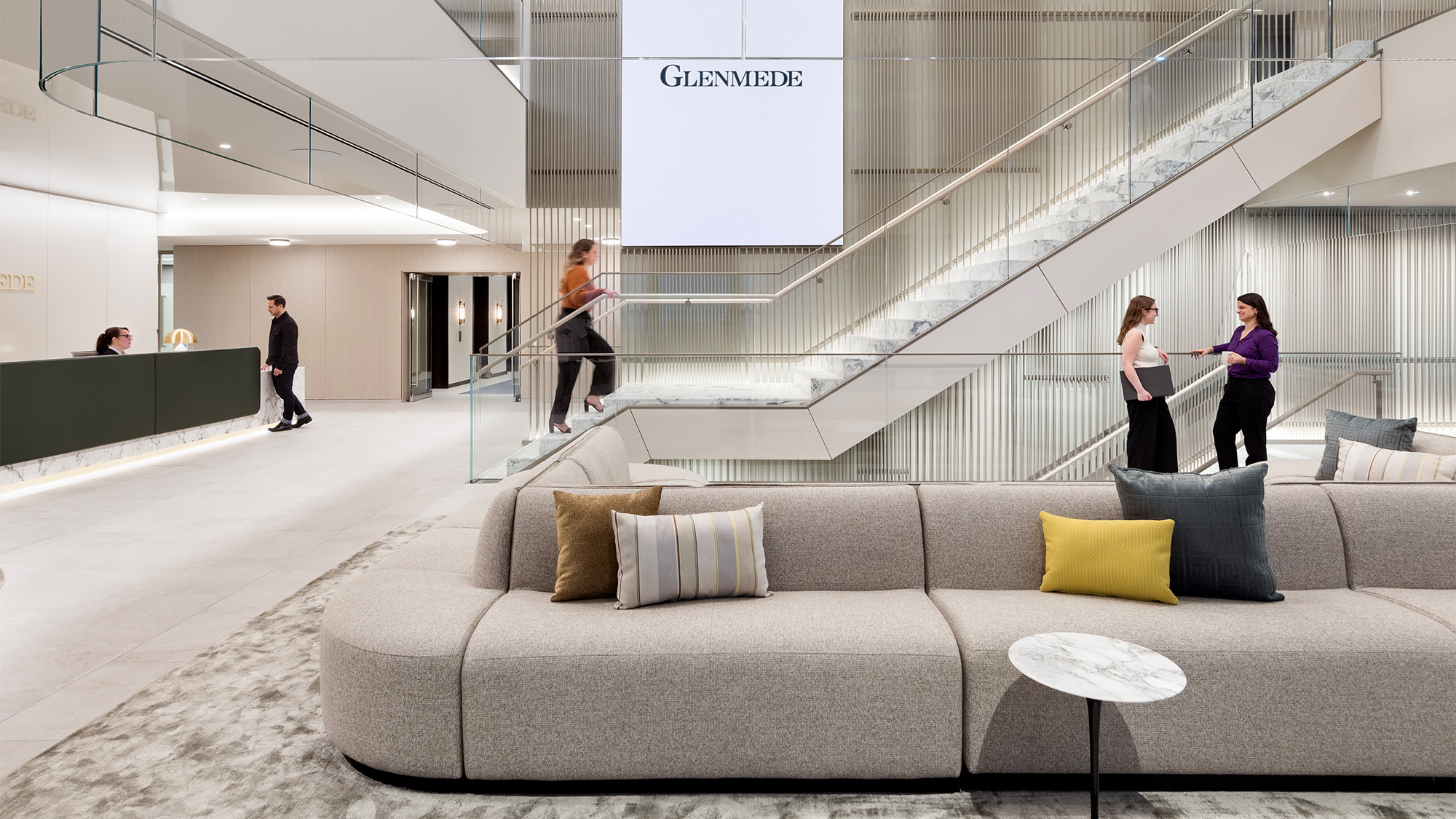
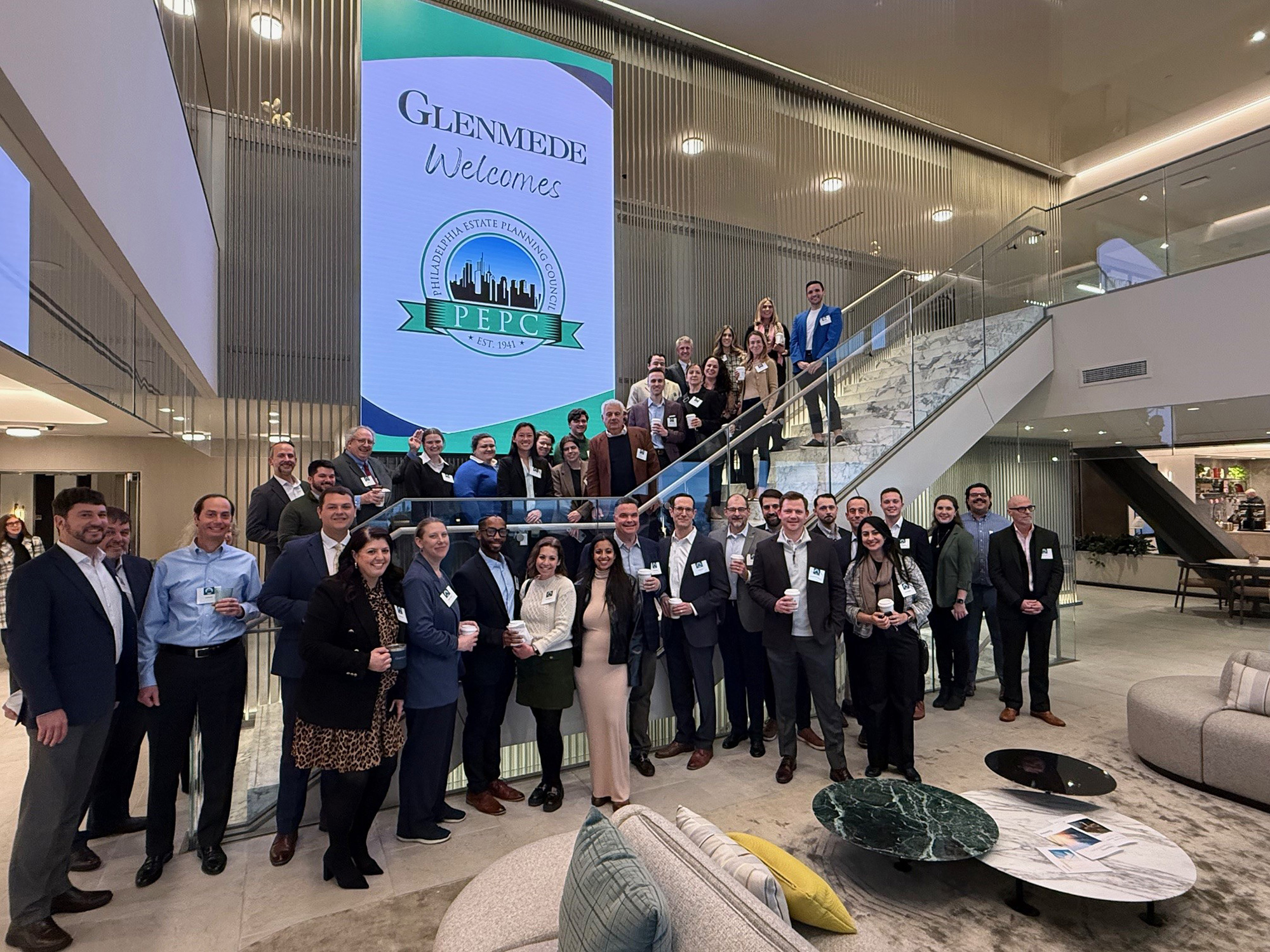
This mindset is reflected in our work with Glenmede, a boutique investment and wealth management firm in Philadelphia with a long legacy of stewardship and community commitment. As part of a recent rebrand, the firm sought to align its physical environment with its values around commitment to agility, serving clients and community, and operational excellence.
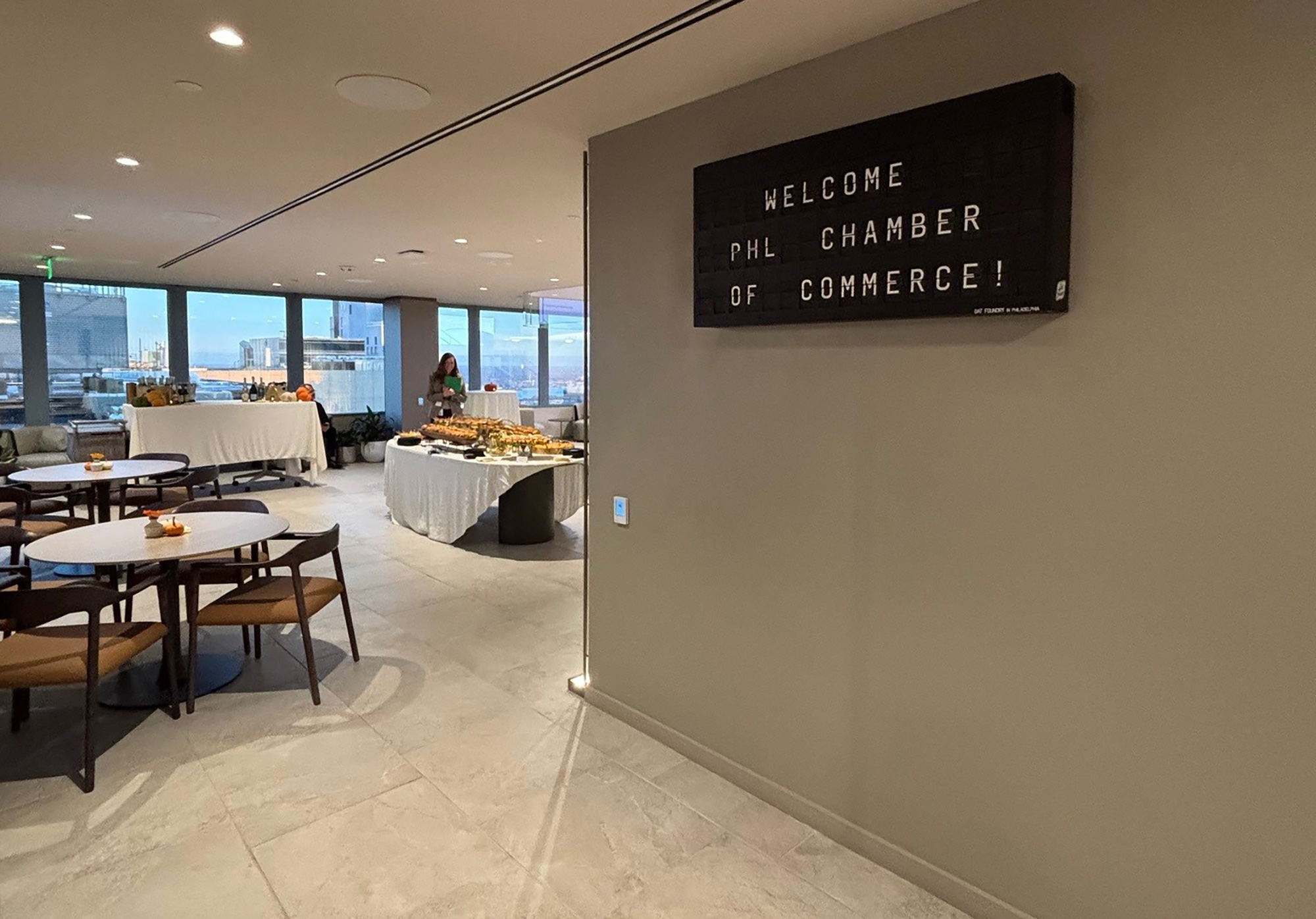
From the outset, the design team designed key gathering spaces to function as shared civic rooms, welcoming internal teams, clients, nonprofit partners, and community organizations alike. Since their January 2025 opening, Glenmede has hosted more than 100 events with organizations ranging from nonprofits to civic engagement groups, demonstrating how intentional design can transform a workplace into an active civic asset.
For organizations committed to corporate social responsibility, opening space becomes more than a branding gesture. It becomes a tangible way to reinvest corporate resources into the public realm.
Designing the Workplace to Participate in Community Life
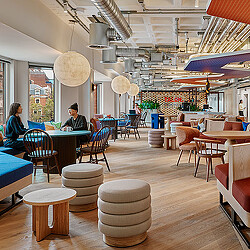
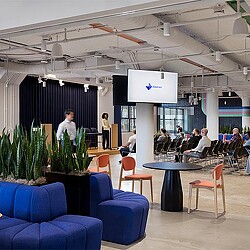
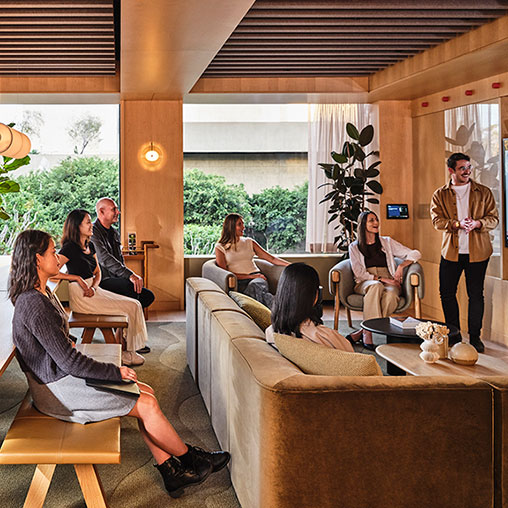
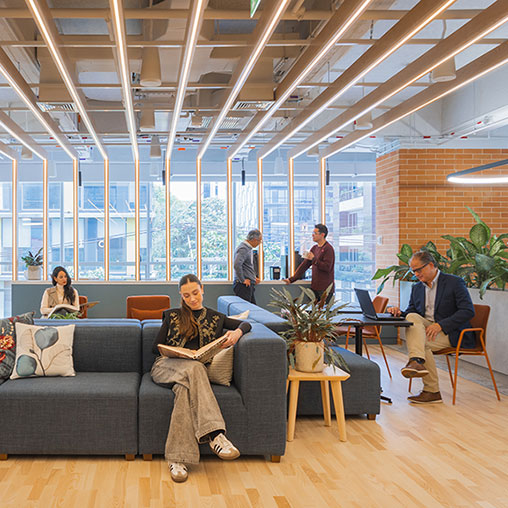
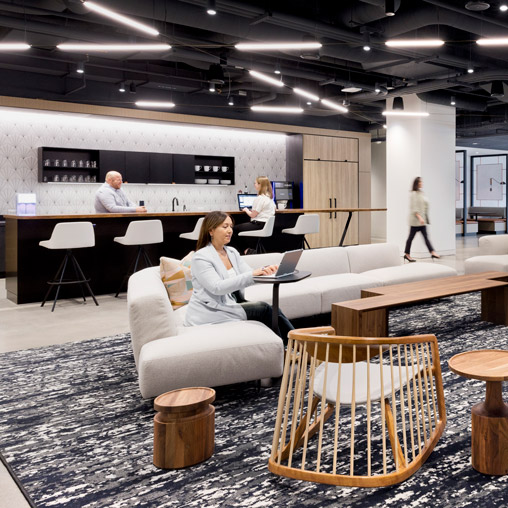
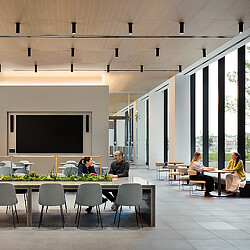
Community-serving workplaces share a clear DNA. They are intentionally layered, with public, semi-public, and private zones that allow organizations to open their doors without sacrificing security or focus. These environments operate as modern “third places” — offering accessible, welcoming spaces for dialogue, learning, and collaboration that many communities lack elsewhere. Ground floors act as true civic thresholds, hosting events, workshops, and public-facing programs. Conference centers flex between internal meetings and external convenings, while amenity spaces extend beyond employee use to support community use after hours.
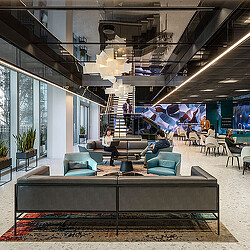
At the TTX Company headquarters in Charlotte, nearly 25% of the 16th floor area is dedicated to shared, public-facing space designed for the community. Large conference rooms — specifically the corner training room — are in constant rotation with groups such as the Charlotte Regional Business Alliance, nonprofit partners, and industry groups. Purpose-built features such as adjacent furniture storage, dedicated catering zones, and flexible room configurations reflect a deliberate shift toward “we space” rather than “me space,” allowing the workplace to evolve into something far more civic-facing than originally envisioned.
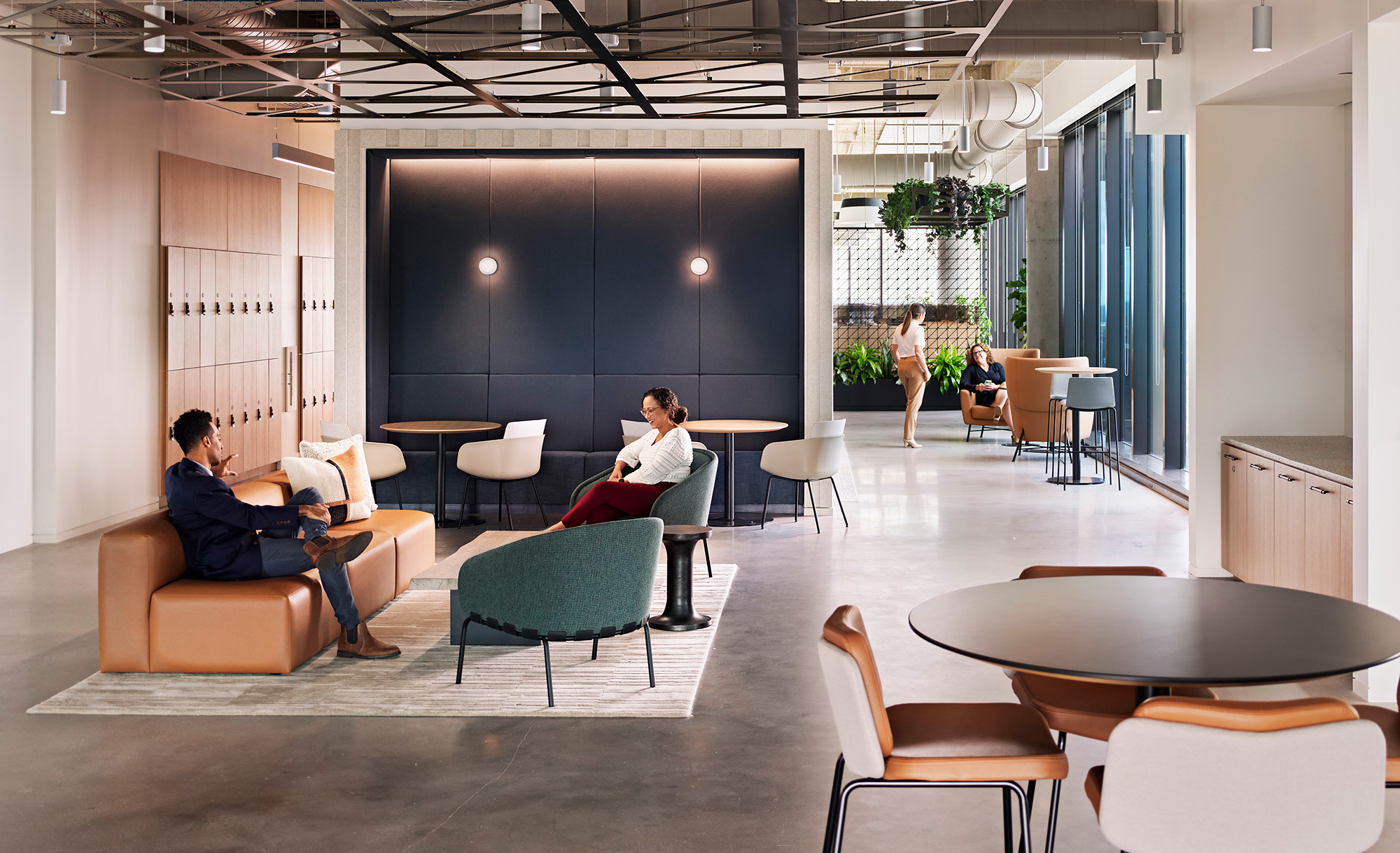
Operations matter as much as architecture. Early coordination with food service, AV/IT, and event teams ensures community use is sustainable over time. When logistics, security, and hospitality are embedded from day one, corporate workplaces can reliably function as modern civic rooms, not just occasional third places.
How Opening the Workplace Builds Trust and Belonging
Opening workplace spaces to the community reshapes internal culture while helping fill the gap left by declining community infrastructure. Employees gain new ways to engage with causes and organizations they care about, while community groups gain access to high-quality, well-equipped spaces they might not otherwise afford. This exchange builds trust, strengthens local relationships, and gives employees a more visible connection to their organization’s purpose in the world.
At Future Standard, civic engagement is foundational to leadership and culture. The firm regularly opens its space to convene civic and business leaders working toward equitable economic mobility in Philadelphia. Its nonprofit residency program provides free or reduced-cost workspace to community organizations, offering them infrastructure they might otherwise lack. Groups such as Philadelphia Financial Scholars and College Unbound rotate through the office, transforming the workplace into a shared civic resource where missions and perspectives intersect.

Success in these environments is measured through repeat use, sustained partnerships, and accessibility and equity. When workplaces support public dialogue and cross-sector collaboration, they become more than offices; they become dependable civic rooms embedded in the fabric of the city.
Looking Ahead: A Lasting Shift in How We Define the Workplace
Leaders are right to ask hard questions. Using corporate space as a public good introduces real considerations around security, liability, brand alignment, and balancing employee needs with public access. The most successful organizations address these risks through phased pilots, limited-access zones, and clear governance models that allow civic use to grow responsibly over time.
Rather than treating openness as an all-or-nothing gesture, they develop it as a long-term capability. As cities continue to face shrinking public infrastructure and fewer accessible community gathering places, workplaces are uniquely positioned to help fill that gap. This shift signals a lasting redefinition of the workplace — one that will influence future headquarters, renovations, and real estate strategies as organizations increasingly see space not only as an operational asset, but as a civic one.
For media inquiries, email .