How Privately Owned Public Spaces Can Impact Your Social Health
When intentionally designed, POPS can act as a social extension of the workplace.
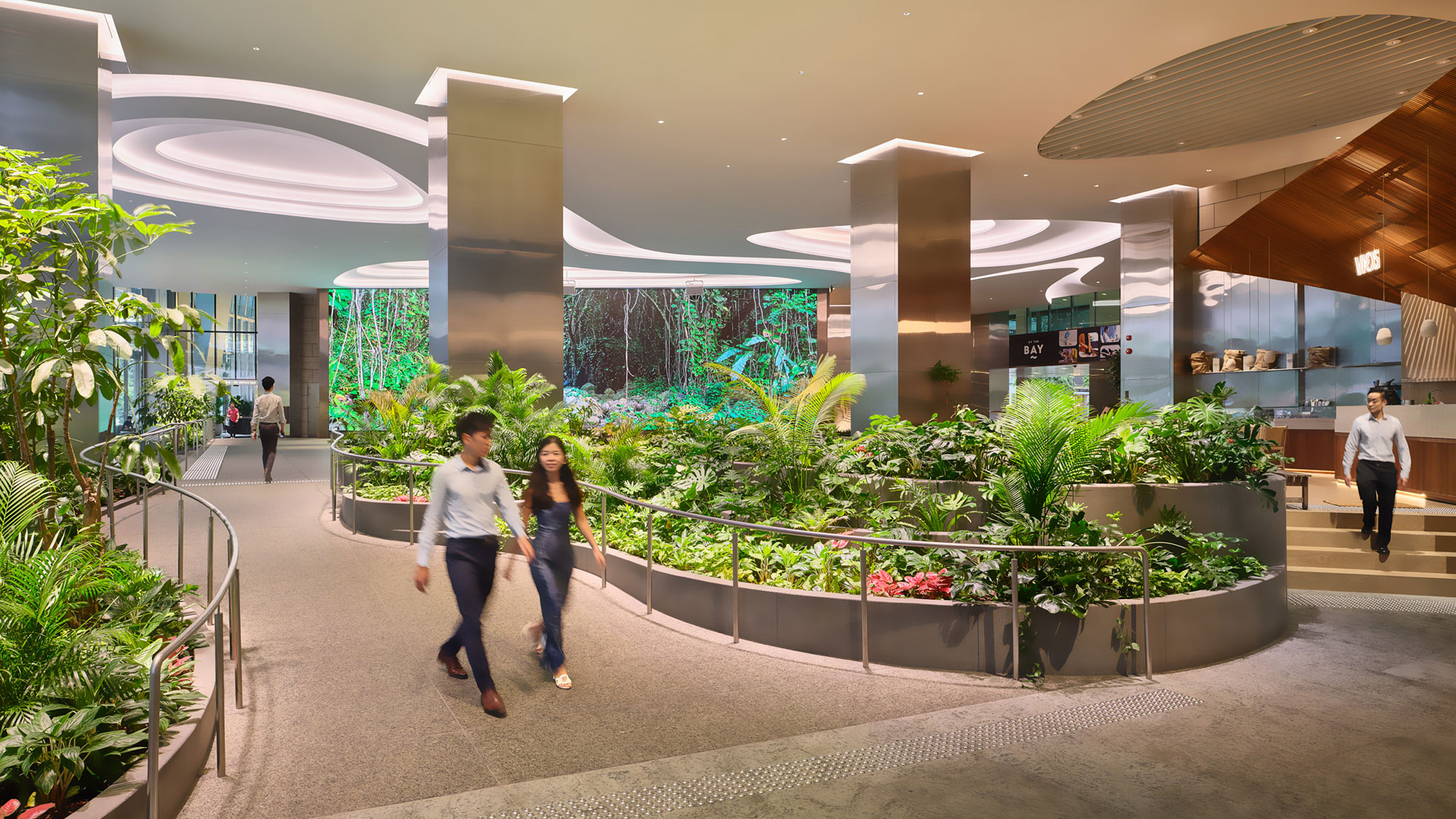
If you live in a fast-paced city and often feel lonely, isolated, and disconnected from social life, you are not alone. Humans are inherently social, and social connections — spending time with family and friends or meeting new people — are fundamental to how we thrive. Yet in many cities around the world, work and other responsibilities limit free time, and many people increasingly turn to digital platforms to fill the gap.
Digital connections cannot replace face-to-face ones. In-person social engagement is essential for a person’s overall well-being. The quality and frequency of social interactions impact our social health — an aspect of health that focuses on our relationships.
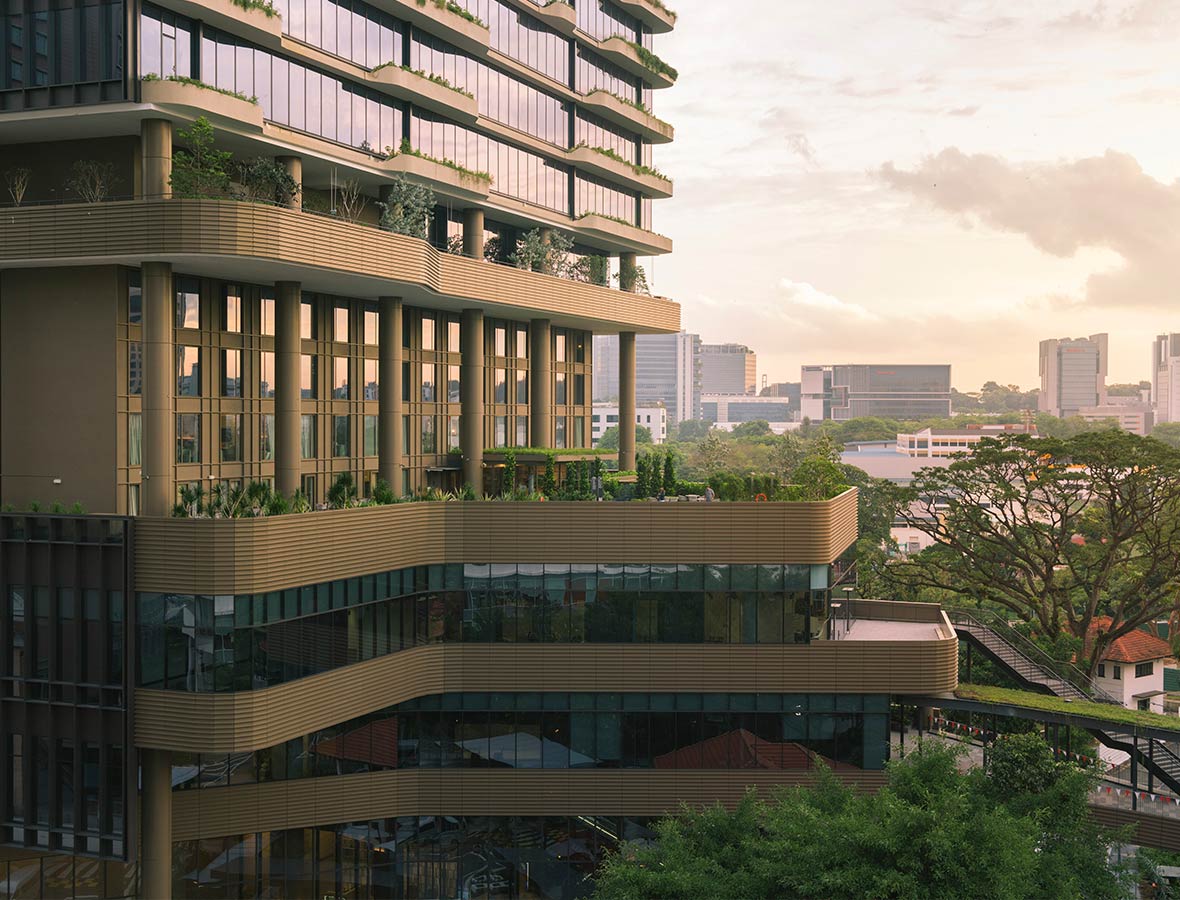
The World Health Organization (WHO) included social well-being as a core component of overall health in its constitution in 1948. More recently, social scientist Kasley Killam has argued that social health is an often overlooked but distinct pillar of public health, interconnected with physical and mental health. A lack of connections is detrimental to all three.
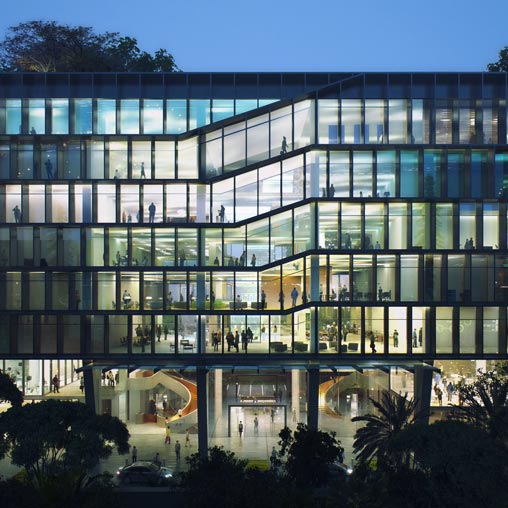
As companies bring employees back to the office, the workplace and its adjacent spaces are opportune areas to foster social connections. Inside workplaces, social spaces are intentionally designed to support different work modes. Workplace-adjacent spaces present a more interesting opportunity. Just outside the office, these spaces are close enough to offer workers a quick escape but far enough to feel like a complete departure.
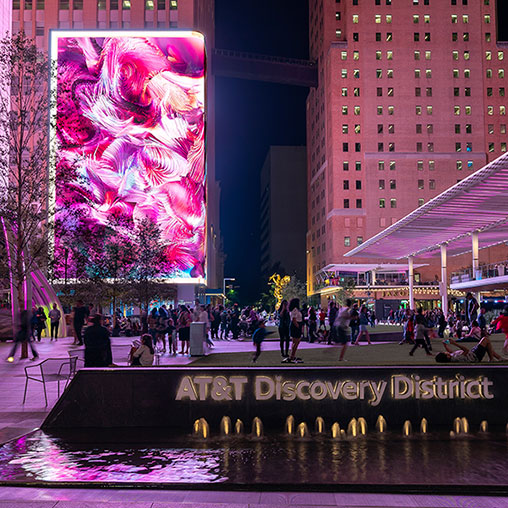
Privately-owned public spaces (POPS) fall under this category of workplace-adjacent space, functioning as thresholds between the office and the city. When intentionally designed, they can become vibrant hubs of social interaction.
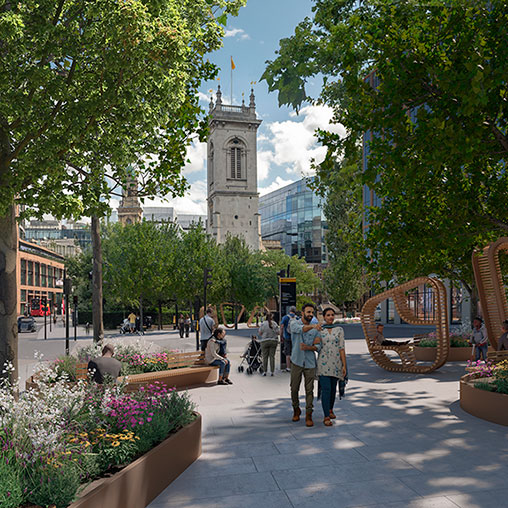
Historically, public spaces have always been spaces for interaction, celebration, and even political activity. Think of town squares and plazas. POPS are their modern, urban forms. In dense cities and Central Business Districts (CBDs), these open, public spaces offer relief from the built environment. In cities like Singapore, New York, and London, incentive programs encourage private developers to provide and maintain publicly accessible open spaces around the clock. Thoughtful design can unlock this social potential.
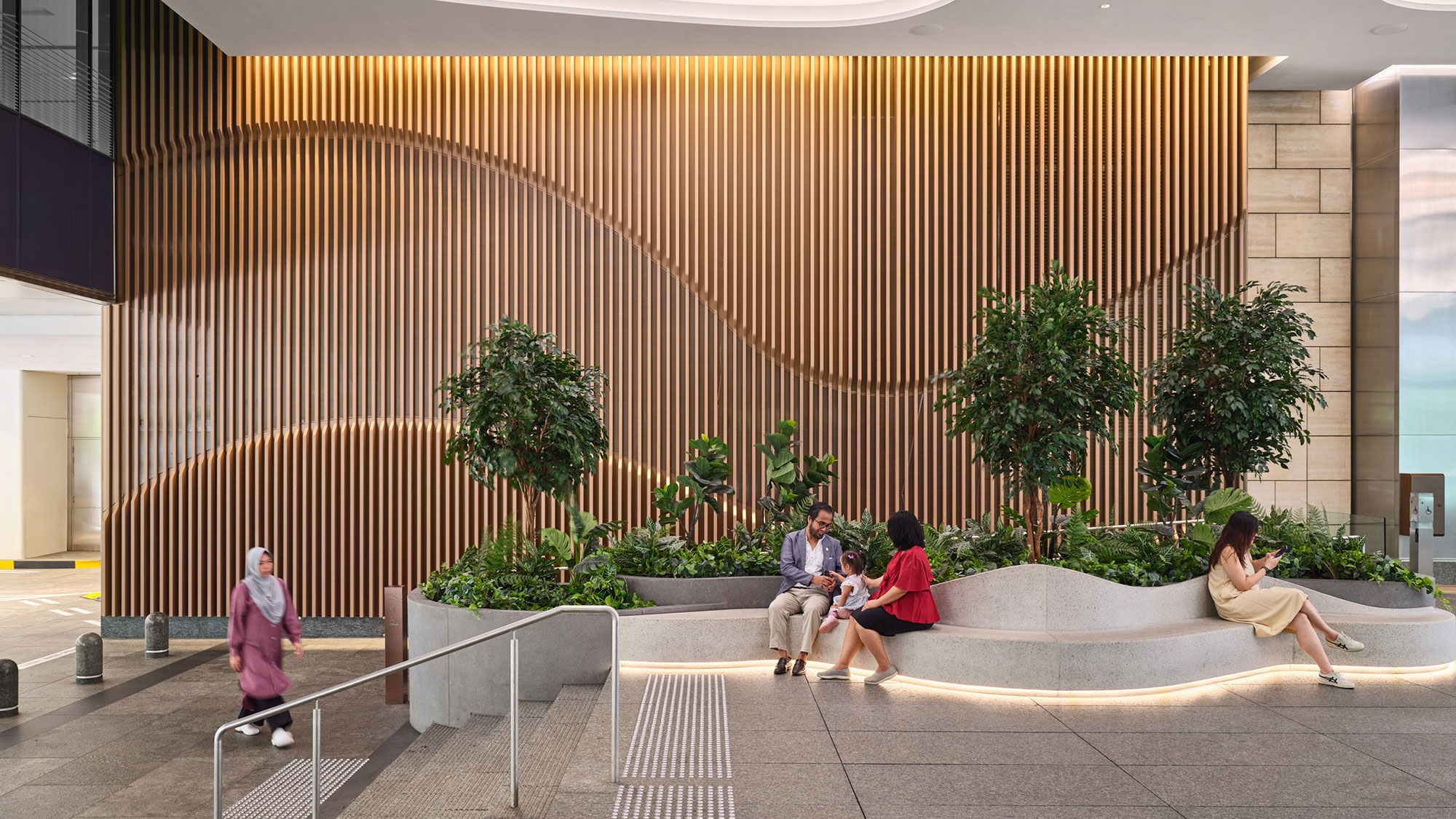
A research team from Gensler’s Singapore office studied five local POPS to understand their design elements, congregation patterns, and user perceptions. The study surfaced eight key insights for elevating POPS into socially successful spaces.
Here’s what we found:
- POPS must be designed to make people want to linger. People move through POPS constantly, especially when they are located at building entrances, but connections rarely happen in transit. Meaningful interaction depends on lingering, which happens around anchors in the space that allow people to be alone by themselves, alone among others, or actively interact with each other.
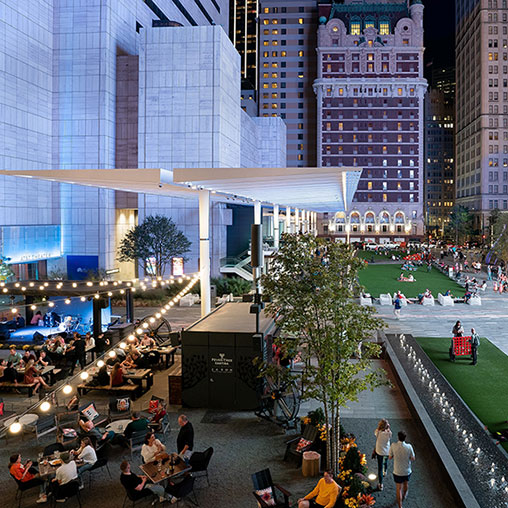
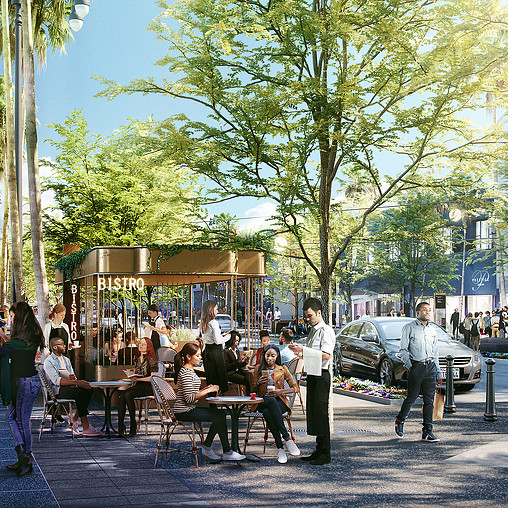
- F&B provisions are a consistent social engine. Food & beverage (F&B) provisions are among the most reliable anchors for social activity. Survey respondents who regularly interact with others in POPS also tend to eat there regularly. We observed the highest level of social activity in POPS around the F&B areas. When paired with the right seating, food transforms daily needs into social rituals.
- Different seating types support different interaction types. Shaped benches support larger group interactions, or people who want to be alone together. Shorter benches support smaller groups or pairs. Some POPS have beanbags that encourage socializing. Lightweight, movable seats allow users to reconfigure the space to match their group’s size and activities. Variety is key: the more seating types, the more kinds of interaction a space can support.
- Edge seating allows users to comfortably socialize. In our study, users preferred seats backed by a solid surface, such as a façade, low wall, or planter, over seating in exposed central positions. Being on the edges with a view of activities in the space allows users to be part of the shared public life while still providing a sense of privacy and safety.
- Events and activations act as social catalysts. When planned events and temporary activations happen in POPS, they draw interest, make people pause, and inspire people to interact with one another. These interactions may be short or long, and may happen while standing or sitting, depending on the activation or event. Developers should schedule a regular cadence of social events to drive social activity.
- Shelter and thermal comfort encourage people to stay longer. People lingered more within the sheltered portion of POPS, and respondents identified shade and protection as critical to the space’s success. In a hot climate like Singapore, large ceiling fans, greenery, and water elements also improve thermal comfort.
- Service staff who act as hosts create positive social outcomes. Unlike cleaning or security staff who focus solely on tasks, hosts are approachable, have relaxed body language, smile at users, and welcome them into the POPS. When positive interactions are built into their role, staff become a social asset — easily identifiable and enhancing social interactions in the space.
- People need nudges to interact with, especially with new people. Most people visit POPS with colleagues as lunchtime destinations or to take a break. Strengthening existing connections is important, but so is creating new ones. Compelling activations and unusual design features can invite curiosity and encourage people to forge new bonds.
These eight insights offer practical guidance for designers and developers shaping POPS in their developments. Together, they form the building blocks of a socially successful POPS, supporting people to be together, nudging them to interact, and giving them a choice to be alone among others — all of which are important to social health.
When intentionally designed, POPS can serve as a social extension of the workplace, offering valuable moments of connection and respite.
In 2025, our team began conducting a research study on Social Health in Privately Owned Public Spaces in Singapore’s CBD in partnership with Future Cities Laboratory, Singapore-ETH Centre, and three developers in Singapore. In our research, we explore what makes a POPS socially successful by developing a framework of design and activation strategies that encourage social engagement. Our findings are drawn from observations across five privately owned public spaces in Singapore. Research Team: Nivedhitha Ravi, Jia Neng Seah, Haziq Roslany, Lara Gregorians, Adam Roberts, and Nayan Parekh.
For media inquiries, email .