Small Moves, Big Impact: Nudging Culture in Your Workplace
Simple, small interventions in the workplace can create a big impact.
When it comes to nudging behaviors, many people have heard of the fly in the urinal — an image of a fly near the drain that prompted users to reduce spillage in Schiphol Airport’s toilets. Economist Richard Thaler and professor Cass Sunstein later popularized this as a prime example of nudge theory in their book, Nudge: Improving Decisions About Health, Wealth, and Happiness.
In behavioral economics, a nudge is any aspect of choice architecture that alters people’s behavior in a predictable way without removing freedom of choice. It doesn’t force or offer a significant incentive; it subtly encourages better choices.
So, how can we use design to nudge employees towards mission-centeredness, health and well-being, creativity, sustainability, and consideration for others?
Nudging a Culture of Mission-Centeredness
Nudges can be powerful tools for reinforcing a company’s values. When built into the physical environment, they can transform a static statement into a lived experience.
Roche’s workplaces demonstrate this well. In some offices, every chair in a meeting room is the same color — except one. That seat, called the “patient’s chair,” represents the patient in the room. This nudges teams to always keep the patient top of mind during discussions and decision-making. It’s a simple, visible expression of Roche’s mission: “Doing Now What Patients Need Next.”

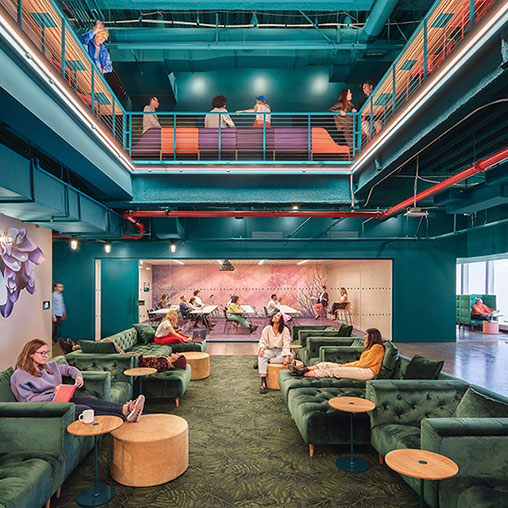
On a larger scale, Airbnb offices introduced entire meeting rooms designed as exact replicas of real listings. Their San Francisco headquarters feature cozy cabins, homely living rooms, and other spaces drawn directly from their platform as spaces for collaboration. By placing employees inside their “product” for daily meetings, Airbnb nudges employees to center conversations around their mission to “create a world where anyone can belong anywhere.”
In both examples, these nudges use priming — subtle environmental cues that subconsciously anchor employees in the organization’s mission and remind them of the communities they serve.
Nudging a Culture of Health and Well-Being
Nudges can also steer employees towards healthier choices — from what they snack on to how often they move and connect with colleagues.
Over a decade ago, Google made small changes in its New York office’s micro-kitchens. The company placed healthy snacks in clear jars at eye level, and moved sugary treats to opaque jars on lower shelves. This simple move reduced M&M consumption by 3.1 million calories over seven weeks.
This nudge worked through visual salience — we’re more likely to choose items that catch our eye — and the power of defaults, our tendency to take the path of least resistance.
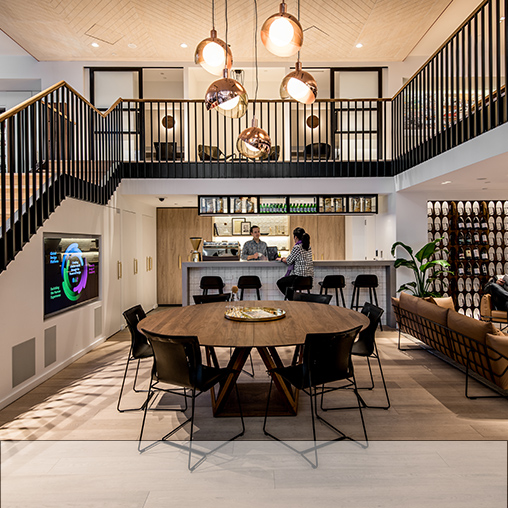
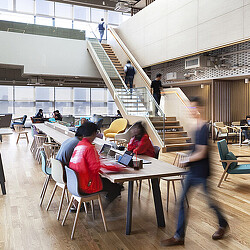
Physical layout can nudge movement and social connection too. Rather than placing pantries on every floor, centralizing them — or adding connecting stairs between floors — encourages employees to move, take breaks, and cross paths with colleagues they wouldn’t otherwise encounter.
This taps into the propinquity effect — people naturally form relationships with those they encounter frequently. Designing spaces for these serendipitous interactions can break down knowledge silos and combat workplace loneliness.
Nudging a Culture of Creativity
Simple sensory nudges can also shift mindsets and boost creativity.
Some LEGO offices have a bowl of LEGO bricks in meeting rooms for employees to play with during discussions. Fidgeting has been shown to reduce stress and increase focus by subtly stimulating creative thinking.

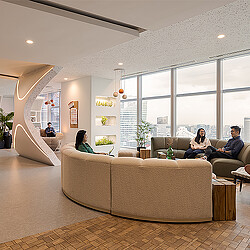
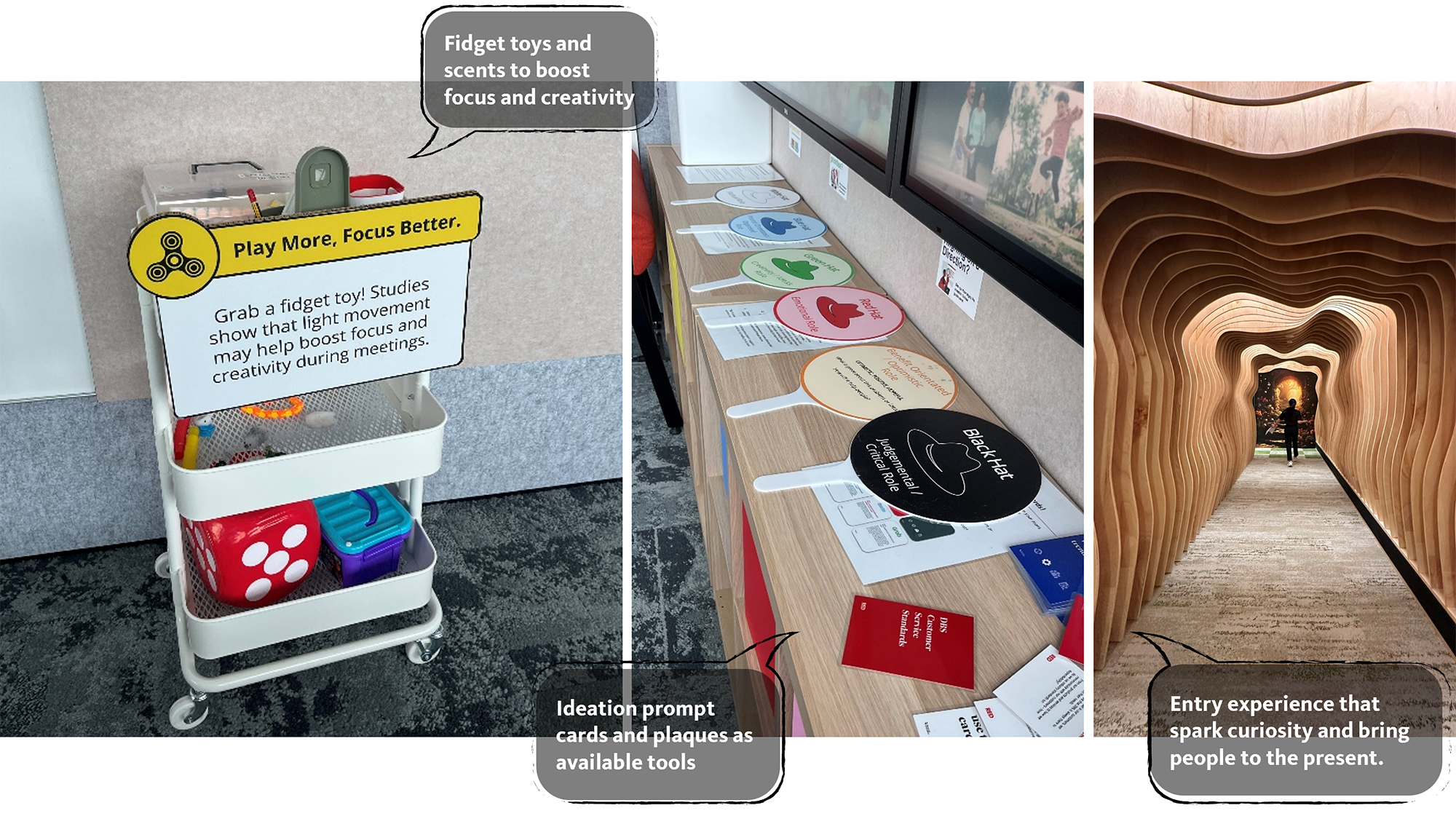
Multiple DBS offices in Singapore take this further, with dedicated brainstorming rooms stocked with fidget toys, curated scents, and ideation prompt cards to boost focus and creativity. Some rooms have unique entry experiences that play with perceptions of compression and expansion. These nudges help employees shift from task-oriented thinking into a more open, discovery mindset.
Nudging a Culture of Sustainability
Nudging sustainability-consciousness is another common workplace strategy. Concentrating waste bins at a few locations per floor, rather than at every desk, helps reduce waste. Choosing office locations with easy public transit access encourages sustainable commuting.
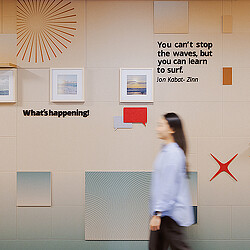
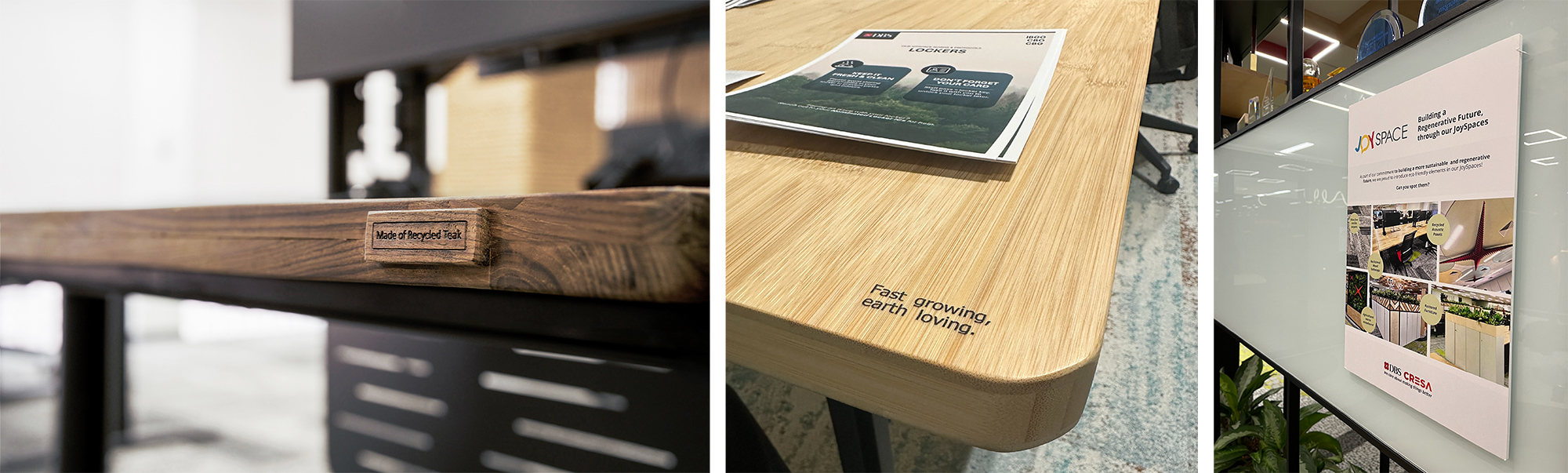
The DBS Singapore office has implemented visual reminders to keep sustainability top of mind. The office showcases the stories behind upcycled furniture, from reclaimed wood tabletops to recycled bamboo surfaces, with signage that explains each material’s origins.
Nudging for a Culture of Consideration
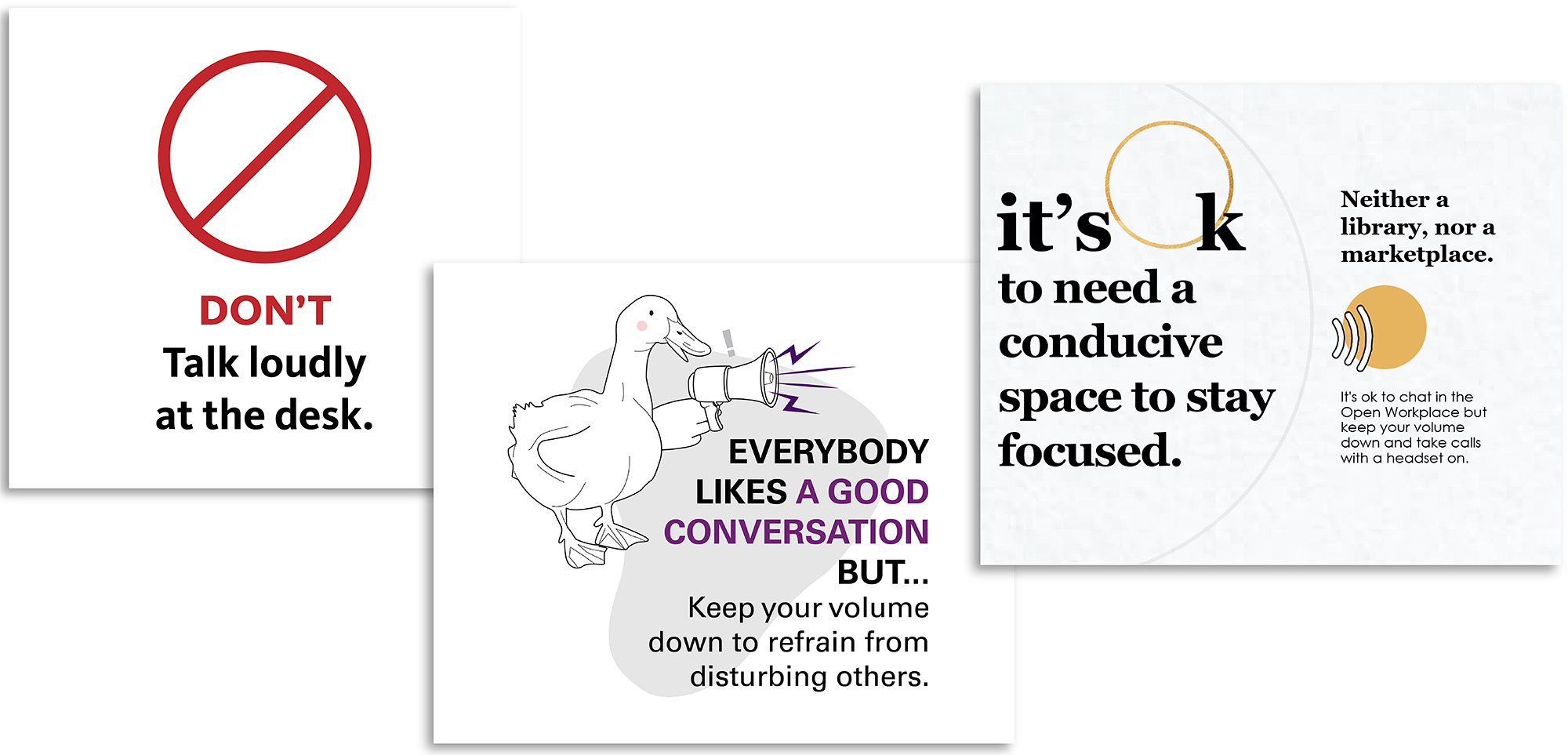
Visual cues and digital communications can also address “Tragedy of the Commons” issues, where individuals overuse or misuse a shared, limited resource, whether monopolizing phone booths or leaving pantries untidy. Nudges aren’t just physical; they are also linguistic. Posters and placards are simple, low-cost interventions, but how they’re worded is critical. Tone, framing, and personality all shape whether a nudge is embraced or ignored.
What behaviors would you like to nudge in your workplace?
From healthier eating habits to keeping shared pantries tidy, design can nudge employees toward better decisions. Nudges work best when they’re intentional: set clear objectives, consider what’s right for your culture, and boldly prototype away.

For media inquiries, email .