How to Build Downtowns Where Residents Want to Visit — and Stay
Gensler’s City Pulse 2026 research reveals a surprising gap between how people feel about their downtowns and how often they actually visit.
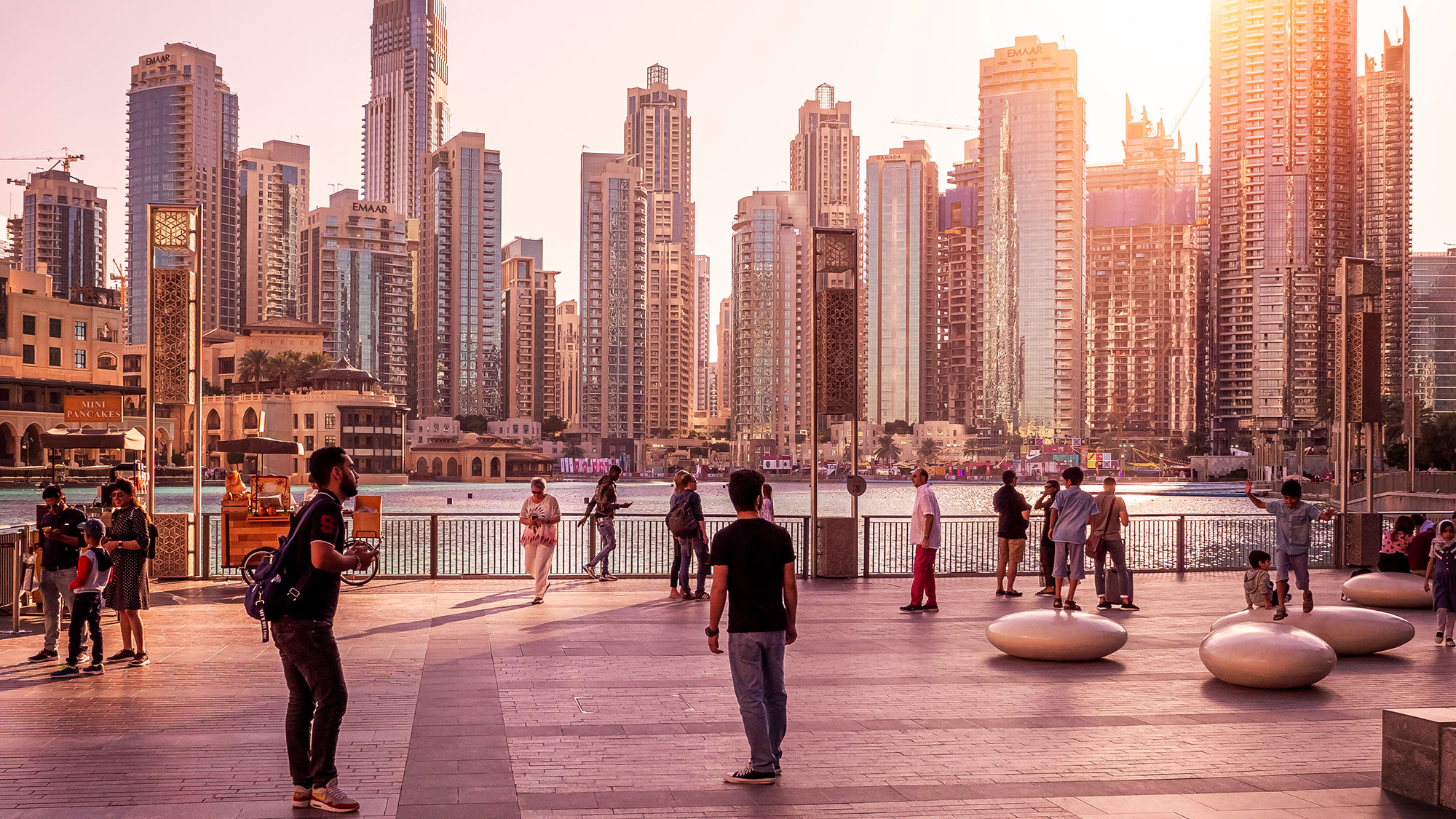
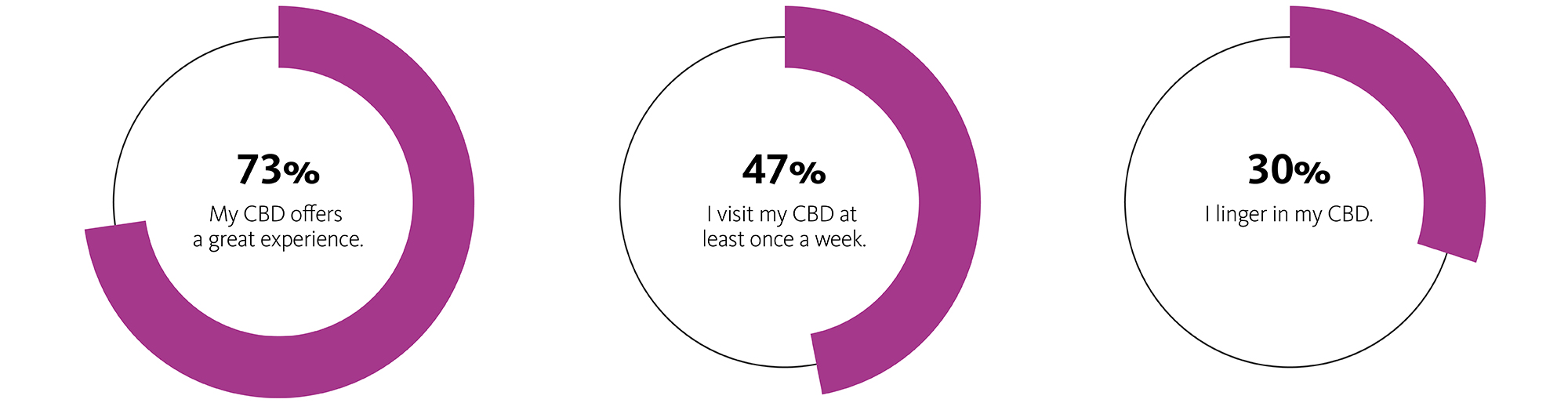
Nearly three-quarters of global urban residents say their downtown delivers a great experience. Yet, according to Gensler’s City Pulse 2026 research, fewer than half visit even once a week, and only a quarter choose to linger. That gap — between what people believe about their city center and how they actually visit — is the central challenge facing downtowns today.
Gensler’s City Pulse 2026: The Downtown Report examines how cities can close this gap by focusing on one of the most effective levers for strengthening a city’s brand, building a thriving economy, and ensuring population stability: improving the downtown experience.
Gensler’s City Pulse has surveyed more than 150,000 urban residents since 2020. This year’s study collected data from over 35,000 respondents across 133 business districts in 75 global cities — our largest sample to date — making it one of the world’s most comprehensive investigations of how people experience urban life.
For real estate developers, the perception-behavior gap signals latent demand. For city governments, it is a call to reimagine downtowns as habit-forming destinations.
Here’s a look at some of the key findings:
1. Design for dwell time, not just foot traffic.
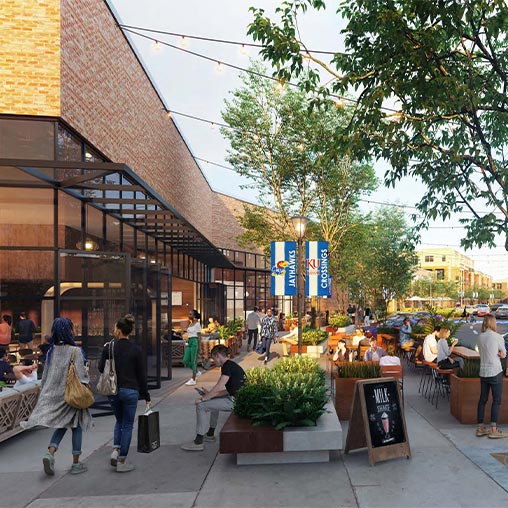
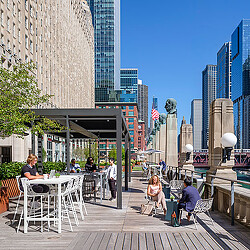
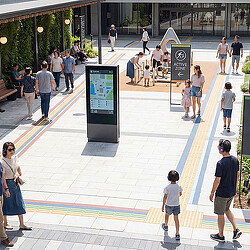
How long someone stays downtown matters more than how often they come. Our data shows that dwell time — not visit frequency — is the strongest predictor of whether a resident feels their CBD delivers a great experience. And the benefits compound: longer stays drive retail, food, and beverage spending; more people on the street create a sense of safety. That safety, in turn, attracts more visitors, deepening the vibrancy that keeps people coming back. Shade, seating, ground-floor activation, and pedestrian-friendly streetscapes create the physical conditions for comfort that make lingering possible — and set that cycle in motion.
2. Invest in after-hours activation.
Vibrancy on evenings and weekends gives residents reasons to make downtown a habit, building the mix of working and visiting populations needed to sustain local amenities. Downtowns that stay attractive, safe, and well-lit after hours give people who came for a single task a reason to slow down and find one more thing to do.
3. Reduce the friction of getting downtown.
A resident can love their downtown and still not go. Three types of friction act as barriers. Mobility friction — heavy traffic, scarce parking, unreliable transit — makes getting there too difficult. Physical friction — no shade, nowhere to sit, no affordable place to eat — makes staying uncomfortable. And social friction, where people feel the district isn’t meant for them, whether it’s too expensive, too culturally narrow, or too oriented toward a single demographic, keeps entire populations away. Minimizing friction across all three is often where developers and city leaders have the most direct lever to pull.
4. Design for all audiences.
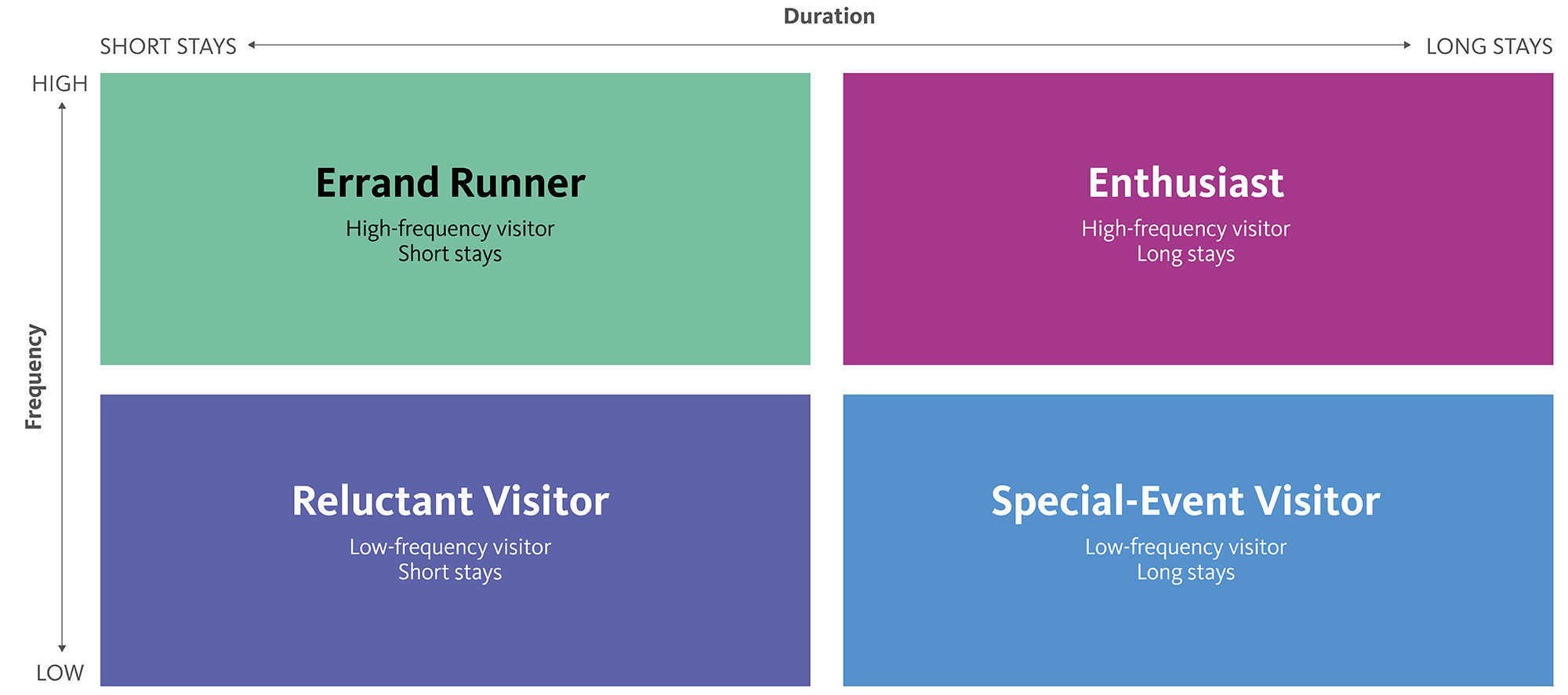
We found that city residents interact with their CBD in fundamentally different ways. Our research identifies four resident personas based on how frequently they visit and how long they stay: the errand runner, the enthusiast, the reluctant visitor, and the special event visitor.
Each persona represents a different relationship with downtown — and different opportunities for design and policy interventions. When we design for the full spectrum of residents, we create downtowns that attract more people and keep them there longer.
But the data points to one group with outsized potential: the Reluctant Visitor. Representing 42% of residents globally, they already believe in their downtown. To convert reluctant visitors into loyal enthusiasts, cities can reduce friction, improve comfort, and give them a reason to return.
5. Build what residents are actually asking for.
Community events, independent shops, everyday conveniences like grocery stores, and cafés connected to the street ranked far above traditional office amenities. Decisions grounded in local data will outperform generic playbooks every time.
6. Prioritize safety above all else.
No amount of programming, comfort, or access improvement will matter if people don’t feel safe. Safety is the prerequisite that makes every other strategy in this report possible.
The goal is not to replace the business function of the CBD but to build districts where commerce, culture, community, and daily life reinforce one another. The data is clear. The demand is real. The cities that embrace this opportunity will define the next era of urban life.

For media inquiries, email .