Strip Malls Are America’s Overlooked Cultural Infrastructure
How immigrant entrepreneurs build America’s “districts of belonging” one strip mall at a time.
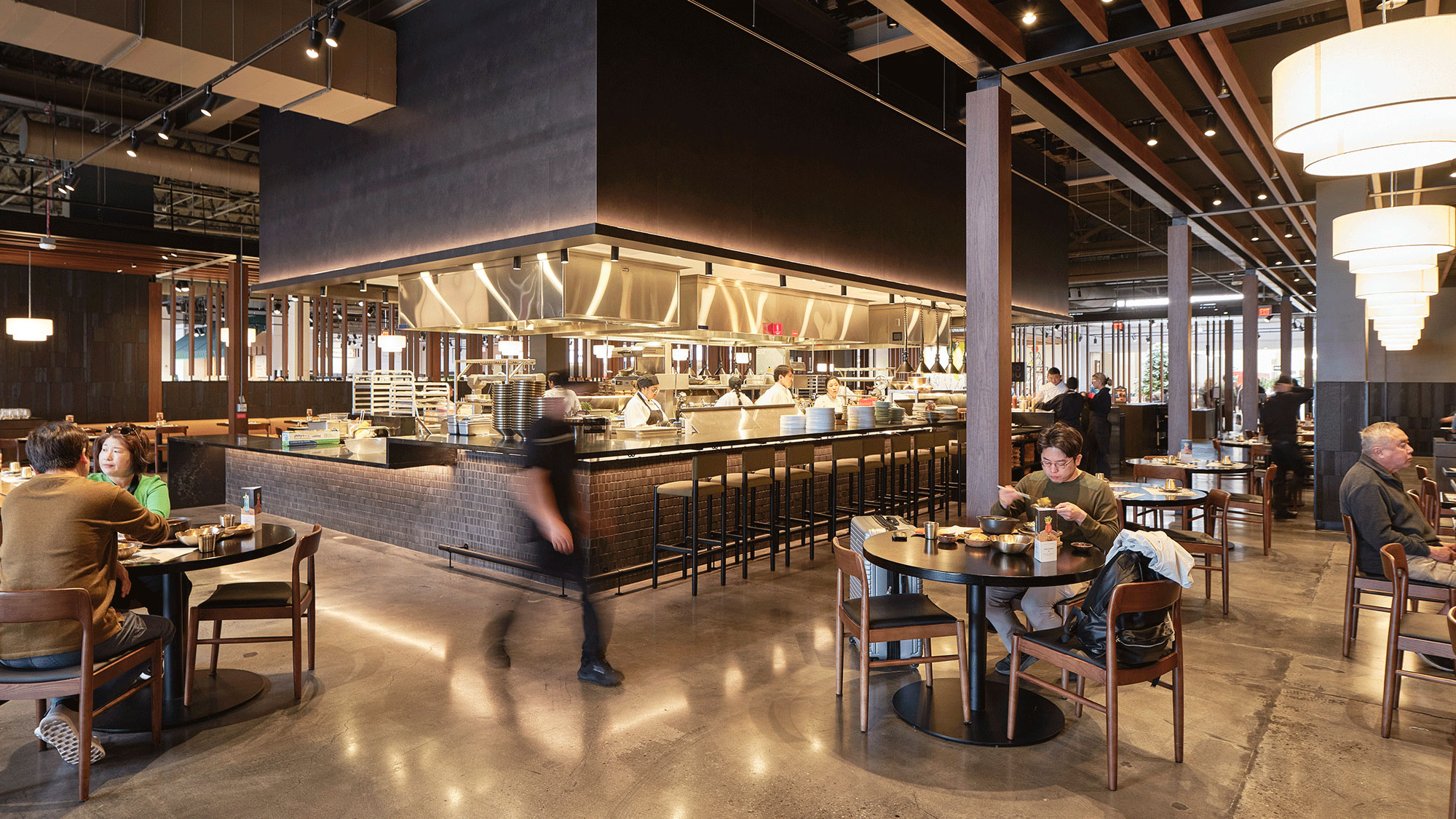
Hong Kong City Mall, suburban Houston. As a kid, I thought it was gloriously weird: plastic dragons, faux-terracotta roofs, traditional Chinese motifs bolted onto an open-air strip center, a koi pond or lotus garden out front. For many second- and third-generation kids, that kitsch was the closest we got to a homeland across the ocean.
Those chintzy gables were the backdrop to more than two decades of Houston Chinese life, and a serious path to wealth for immigrant families.
For many, the humble strip mall is vital cultural infrastructure, giving entrepreneurs from diverse backgrounds a practical foothold in America and an opportunity to start businesses close to the communities they serve.
One restaurant, then the whole block
Where is American culture today? Try an easier question: where’s the best food? You already know. It’s in the strip mall.
Occupying these centers is a quiet protagonist: an immigrant who bet everything on a cheap lease in a building others passed over and built a culture (and often a fortune) on top of it.
Immigrants make up 14-15% of the U.S. population but own 27% of Main Street businesses, including 34% of restaurants and 33% of grocery stores, according to data from the Immigration Research Initiative. Many of those businesses start in a strip mall.
The arc is familiar: an immigrant family opens a business, saves, and buys the strip mall they started in. Some become developers, reshaping the cities they now call home. It’s an American story, with the strip mall as its first chapter.
Cheap land, efficient materials
Strip centers spread across the Sun Belt from the 1960s on, often built on overlooked parcels that were cheap to acquire. The affordable rents these centers offer lower the barrier to starting a business.
Hong Kong City Mall started on exactly that kind of land. According to Houstonia, developer Hai Du Duong bought 25.5 acres for $1 per square foot in 1999. That land became a cultural center for Houston’s Chinese community, with fountains, pagodas, and even a lotus garden.
The construction of these cultural centers is often just as humble, relying on basic materials like tilt-up concrete panels, cinder blocks, and wood or steel frames. The economy of these methods helps keep sites cheap enough for immigrant entrepreneurs to lease or buy and easy to adapt over time. Building method and cultural occupation aren’t a coincidence here. They’re the same story.
What the last tenant leaves behind
The building is only the shell. What makes the alchemy work is adaptation. Messy, fast, always leaving a trace.
A dim sum hall gives way to Sichuan hot pot as neighborhood tastes shift. The space is rebuilt, but the old exhaust hood and lantern hooks remain, traces of the restaurant that came before.
That residue is the raw material of cultural identity: faint, layered, and legible only to those who were there — the raw material of cultural identity. Residue makes a place feel lived-in instead of installed.
Why people actually stay
Gensler’s City Pulse 2026 surveyed 35,000 urban residents across 75 cities. Globally, 73% say their downtown offers a great experience, yet only 30% report staying longer than necessary. Longer stays are associated with more positive experiences. Feeling welcome is the strongest predictor of a great experience among “reluctant visitors,” low-frequency, short-stay visitors who represent the largest and most underserved downtown audience. The report also identifies comfort, safety, and mobility as conditions that make lingering possible.
Applied to neighborhood retail, these findings suggest that belonging grows when familiar places are also easy and enjoyable to use. For strip malls, that means protecting affordable entry while improving the experience that brings people back.
Food critic Jonathan Gold understood why people return. Writing about the strip-mall noodle joints he chased for decades, he knew the food was only part of the story. It was how a city that “can all too easily fray” held itself together. The strip mall is where immigration turns into memory, and memory turns into belonging.
Cultural anchors make the district
All over the country, small immigrant-owned businesses are creating belonging. A Sichuan spot in Alhambra. A Japanese bakery in Little Tokyo. A Filipino market that’s been in the same Daly City family for 30 years.
Those tenants are cultural anchors. They are the fixed points a whole community organizes itself around. Connected, they form districts of belonging.
Cultural strip malls still have room to improve. Real design work remains: shade, signage, lighting, parking-lot activation, and a public realm that protects the culture already on site.
Four design principles for building places of cultural belonging
City Pulse 2026 points to the importance of comfortable public spaces, independent businesses, and community activities.
For owners and developers repositioning a center, four design principles put those lessons to work.
1. Preserve the anchors people recognize. Start by mapping the businesses, signs, gathering spots, and daily routines that customers value. Retain distinctive storefronts and familiar landmarks where they still serve the community. Phase construction to maintain access and visibility for existing tenants, and coordinate improvements with lease renewals. Keeping a trusted operator preserves relationships that a replacement tenant needs years to build.
2. Give people room to gather. Place shared seating that’s open to everyone beside active storefronts. Pair everyday shopping with reasons to sit, eat, and explore. Equip a modest courtyard or parking-lot edge with moveable furniture for tenant-led markets, pop-ups, or dining. Let local operators help shape the calendar. Budget for maintenance and management. A gathering space earns its value through regular use.
3. Keep the next adaptation affordable. Preserve useful building fabric and offer smaller, flexible bays with service capacity suited to local operators. Reuse viable kitchen infrastructure where feasible, and evaluate improvements by their effect on total occupancy costs. Owners should value tenants for what they contribute to the place’s identity as well as the rent they pay.
4. Plan centers as districts of belonging. Treat each strip mall as a district, where everyday routines bring different people together. Cluster complementary businesses and connect them with shaded walkways, shared seating, and places to linger. These overlapping routines create opportunities for strangers to become familiar faces. Design for that familiarity to grow into belonging.
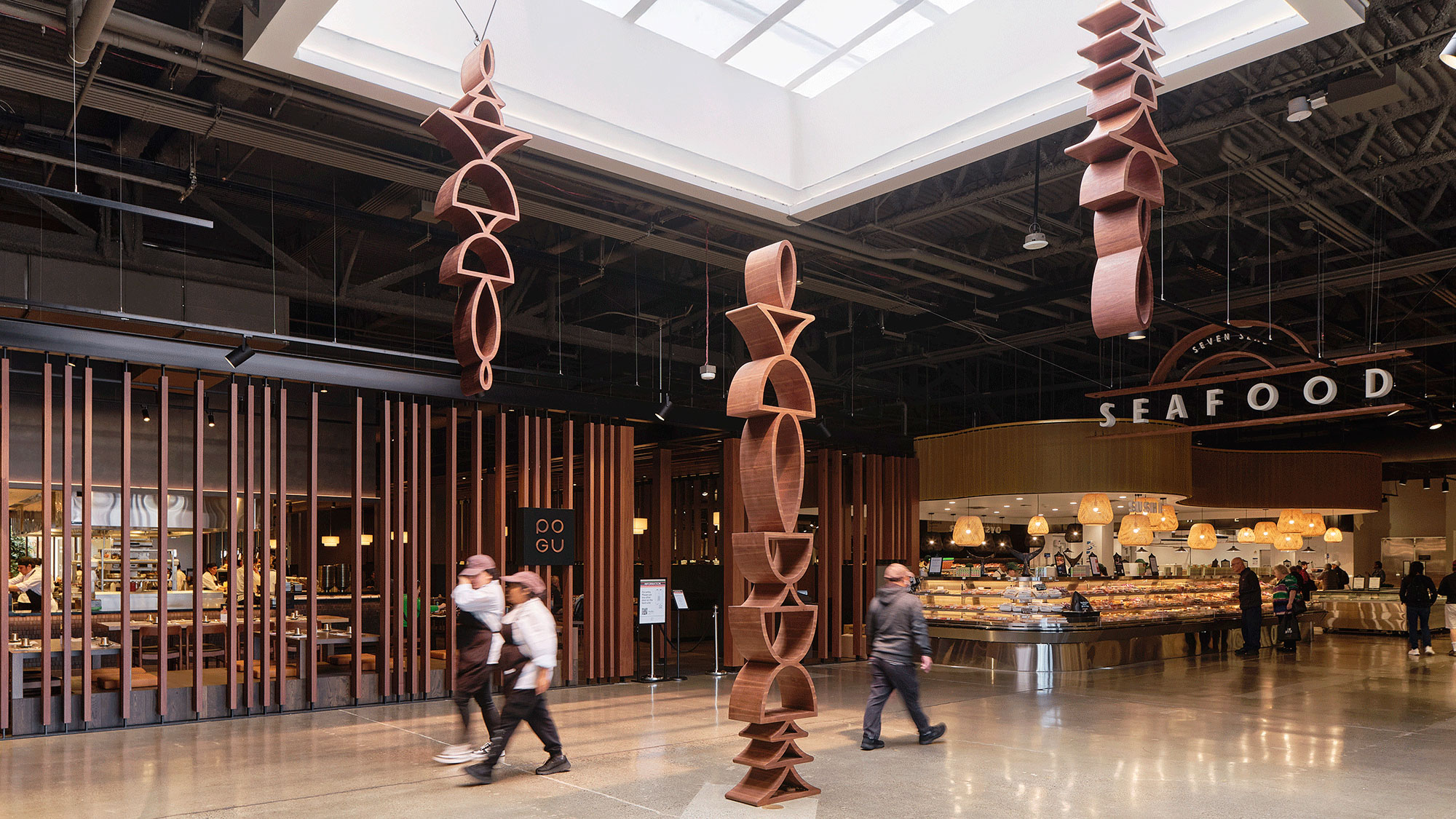
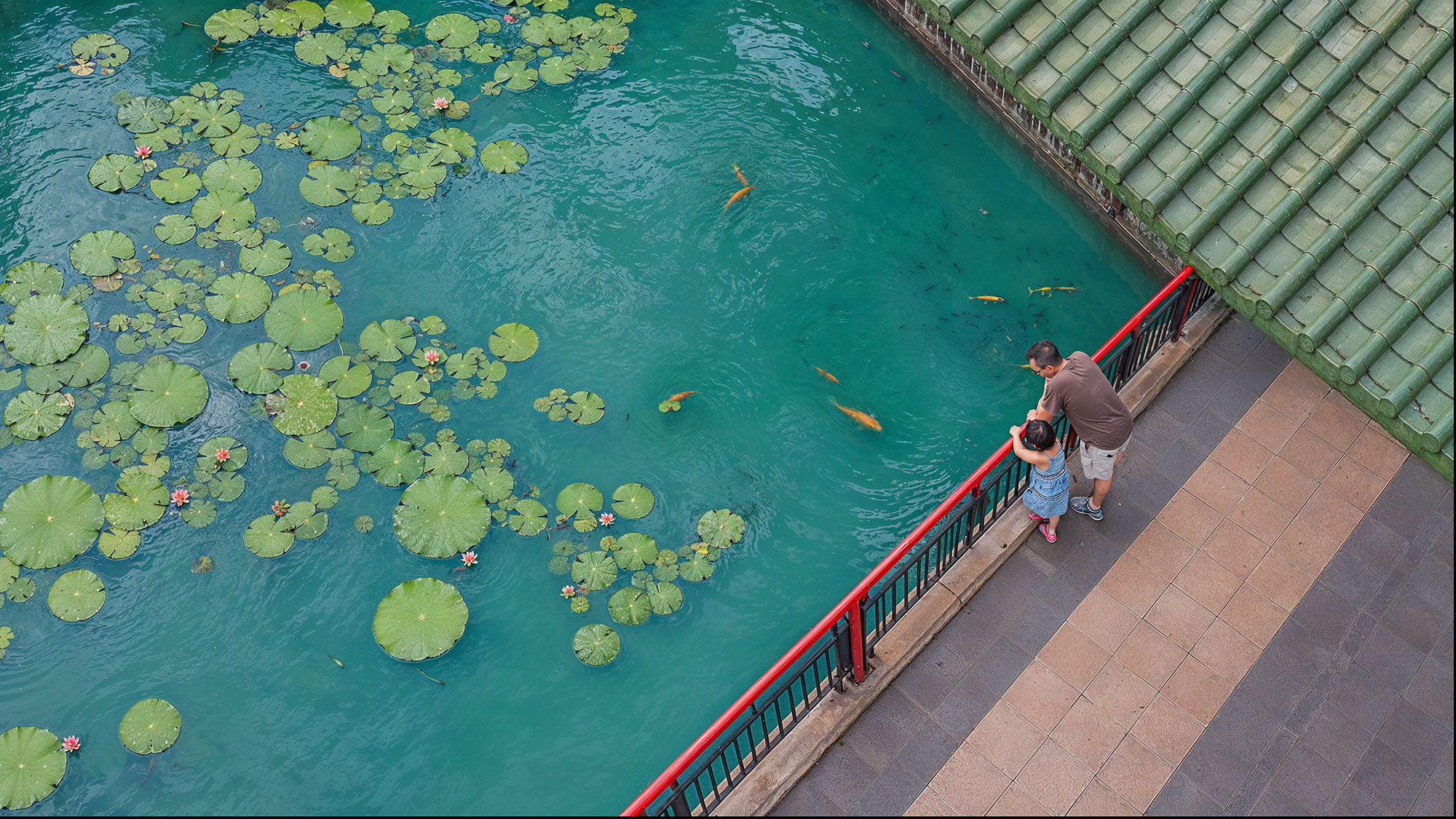
In Daly City, California, Jagalchi puts these principles into practice. The former JCPenney at the enclosed Serramonte Center is now a 75,000-square-foot Gensler conversion that combines a Korean market, restaurant, and rice-flour bakery. Reusing the shell creates room for several food experiences; skylights bring daylight into the deep floor plate, while coordinated signage helps visitors navigate and learn about Korean cuisine. In the restaurant, a contemporary interpretation of pyung-sang seating adapts a traditional low platform so diners can share the experience at eye level. Cultural expression becomes part of how people use the space.
Any owner or developer willing to understand and invest in the communities that already make a center valuable can build places of cultural belonging. That means recognizing that seemingly frivolous koi ponds and lotus gardens can make a place memorable, and that a familiar tenant is often part of the reason people return.
Owners can strengthen long-term value by giving tenants room to evolve and customers more reasons to stay. That builds the infrastructure of belonging, one strip mall at a time.
For media inquiries, email .