Why Worker Well-Being Is Core Infrastructure
The next generation of workforce infrastructure needs to reach people not just where they work, but where their daily lives unfold.
For much of the last century, worker well-being was treated as an add-on: a gym membership, an employee assistance hotline, or an annual wellness campaign. Work happened in one place, while life happened somewhere else. Today, that separation is increasingly unrealistic.
Careers are getting longer. Technology is changing jobs faster than traditional training systems can respond. Caregiving responsibilities are intensifying during workers’ peak earning years. Together, these shifts are creating a workforce that needs support more continuously, more locally, and across the course of the working day.
Our 2026 Gensler Health & Wellness Fellowship research began with a simple question: What will workers need to remain healthy, capable, and economically resilient throughout a changing and increasingly extended working life?
Across labor data, institutional research, systematic reviews, and ethnographic studies, three forces emerged.
Careers are getting longer.
The workforce is aging. By 2034, nearly one in four U.S. workers is expected to be 55 or older. A longer career means workers’ needs, abilities, and contributions may change significantly within a single professional lifetime. Physical capacity may shift, while judgment, mentorship, institutional memory, and decision-making become increasingly valuable.
Yet many workplaces are still designed around a static idea of “the worker” with one schedule, one set of abilities, and one way of contributing.
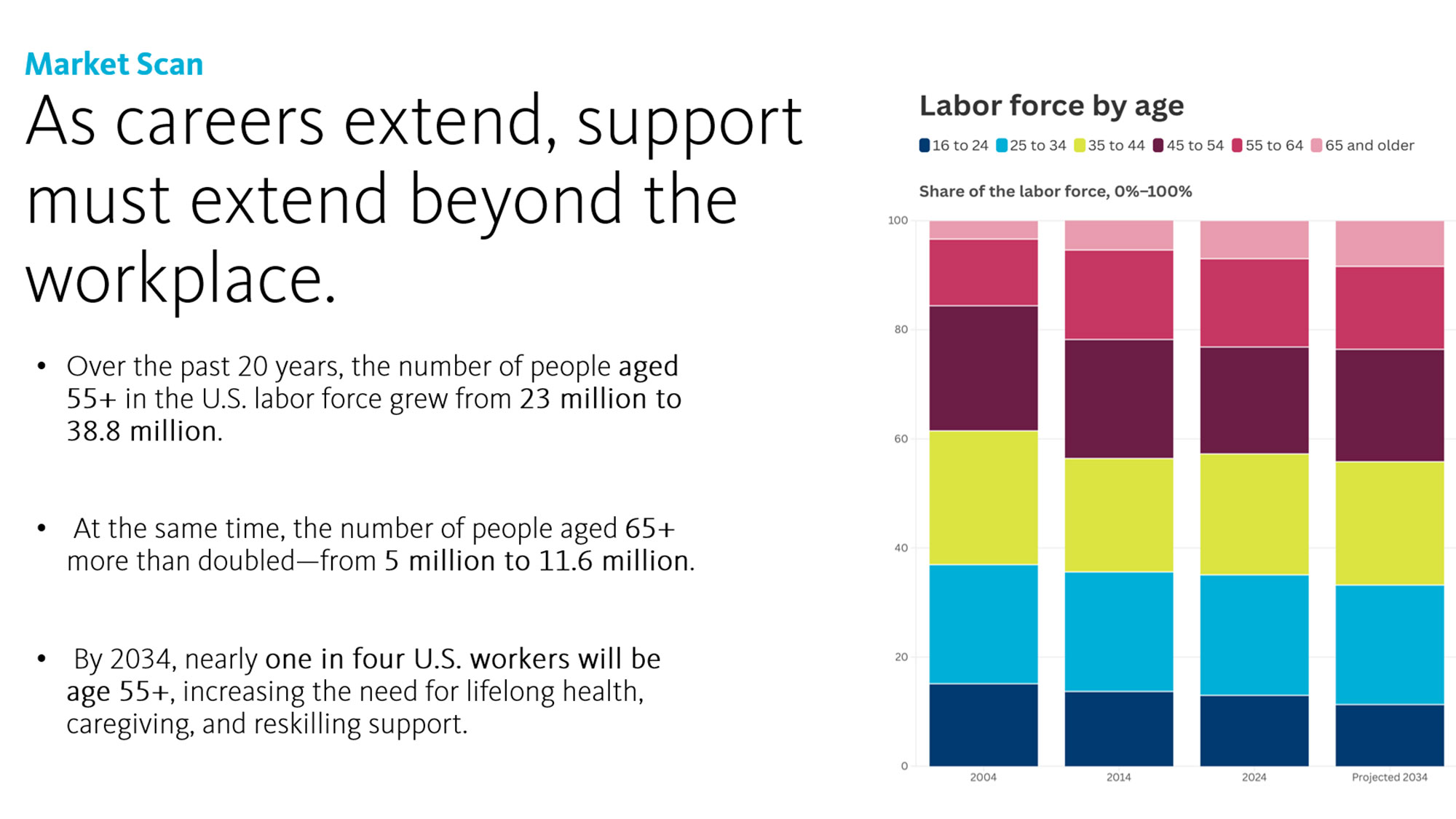
Organizations that cannot adapt work to people’s changing needs risk losing experienced talent at precisely the moment their knowledge is most valuable. The future workplace must support changing careers within the same lifetime.
Task change is outpacing traditional training.
Artificial intelligence and automation are reshaping routine work across industries, from healthcare and hospitality to customer service and logistics. As responsibilities rapidly evolve, learning can no longer be treated as an occasional event.
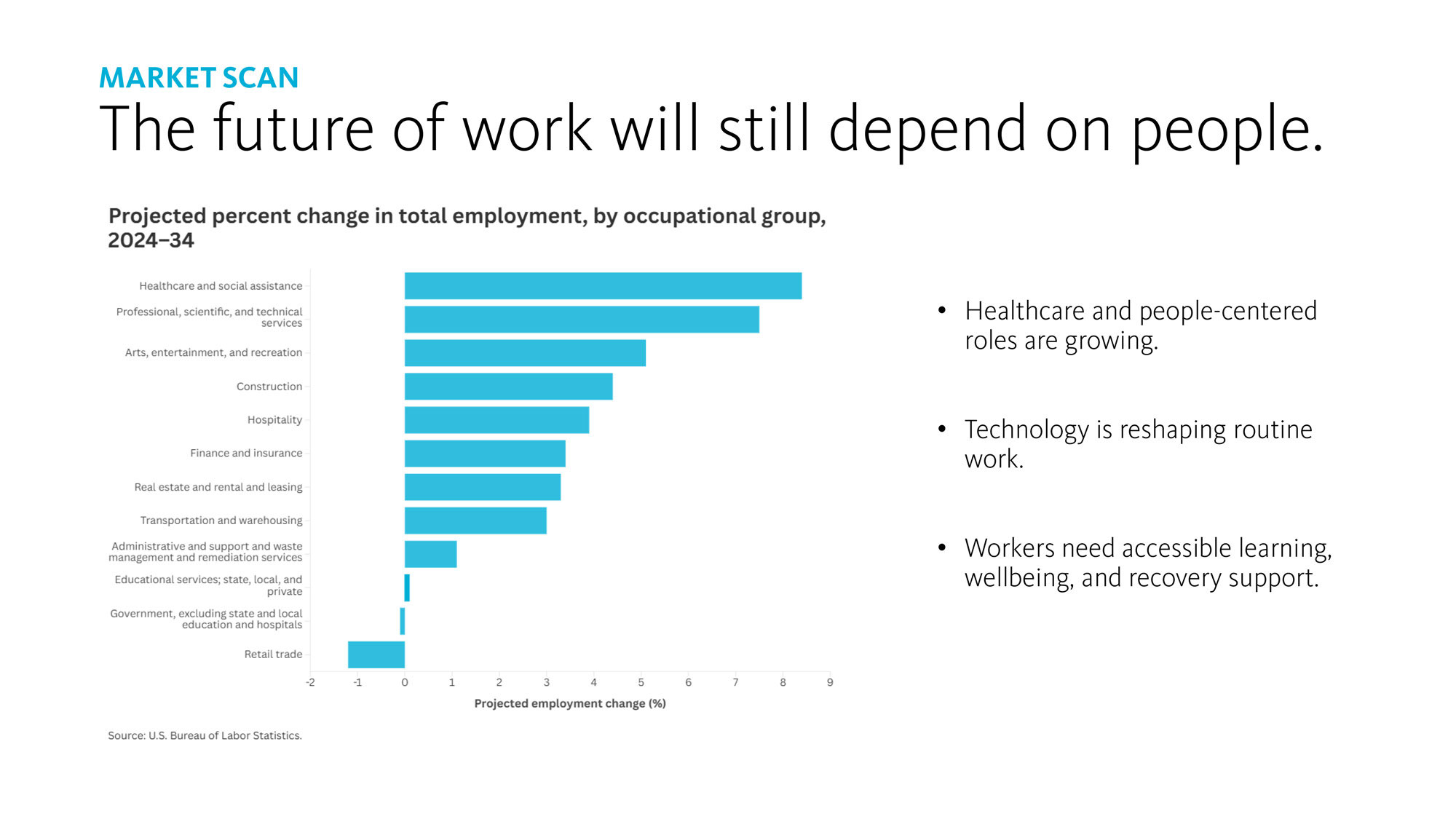
Trust, empathy, judgment, communication, and care remain essential in many of the occupations projected to grow. That makes workers’ health, adaptability, and capacity to recover operational concerns rather than purely personal ones.
Care pressure is colliding with peak working years.
Today, 54% of Americans in their 40s are part of the broadly defined “sandwich generation,” balancing career growth with caregiving responsibilities for both children and aging parents. These obligations often overlap with the years when employees are at their peak earning power and organizational value. Yet many are also carrying an enormous logistical burden that remains largely invisible at work.
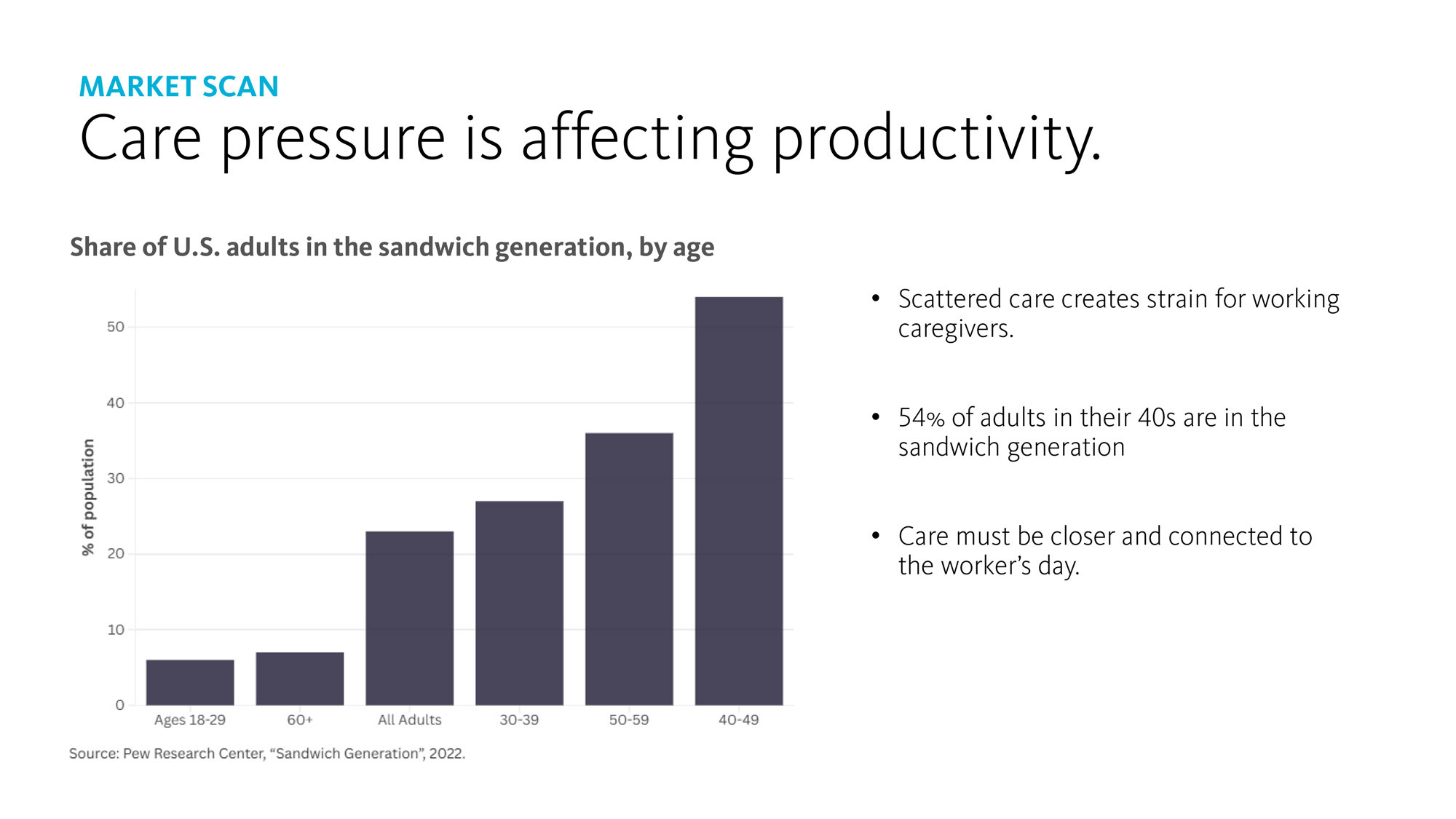
Support services are often fragmented, out of reach, or disconnected from workers’ daily schedules. Every additional trip, appointment window, and scheduling conflict creates friction that accumulates into missed work, delayed care, lost productivity, financial strain, and burnout.
Work has moved, but support systems have not.
These pressures are being intensified by a broader shift in the geography of work.
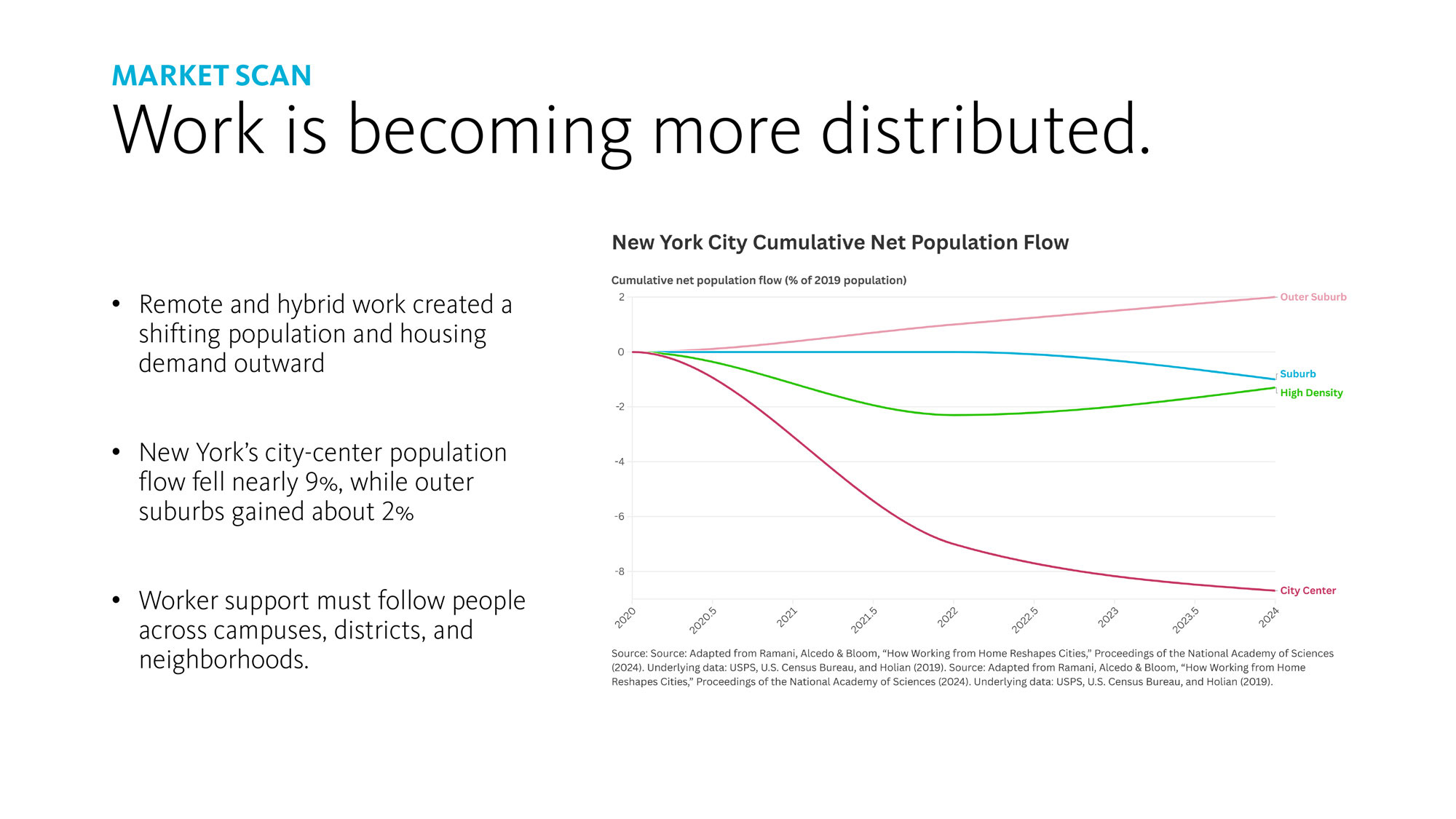
Remote and hybrid work have altered where many people live and how often they travel to central business districts. Yet many worker-support systems remain anchored to the traditional headquarters.
A clinic, learning center, childcare program, or employee resource located downtown may be technically available, but increasingly distant from where employees spend most of their time.
The result is a growing mismatch: work has become more distributed, while support remains centralized.
This realization led us to a hypothesis: proximity matters, but proximity alone is not enough.
A healthcare service that operates only during business hours may not serve a shift worker. A training program delivered during the middle of a workday may be inaccessible to employees with inflexible schedules. A childcare center near the office may provide little value to a hybrid employee who commutes there only once or twice a week.
Support must be both physically accessible and operationally coordinated around people’s schedules, daily routines, and caregiving responsibilities. That coordination is where design and operations intersect.
A new model for workforce infrastructure.
To explore what this might look like in practice, we developed a concept we call the Whole Life District.
Traditional mixed-use development is often organized around destinations. The Whole Life District starts from a different premise: how can the built environment reduce friction in a worker’s everyday life?
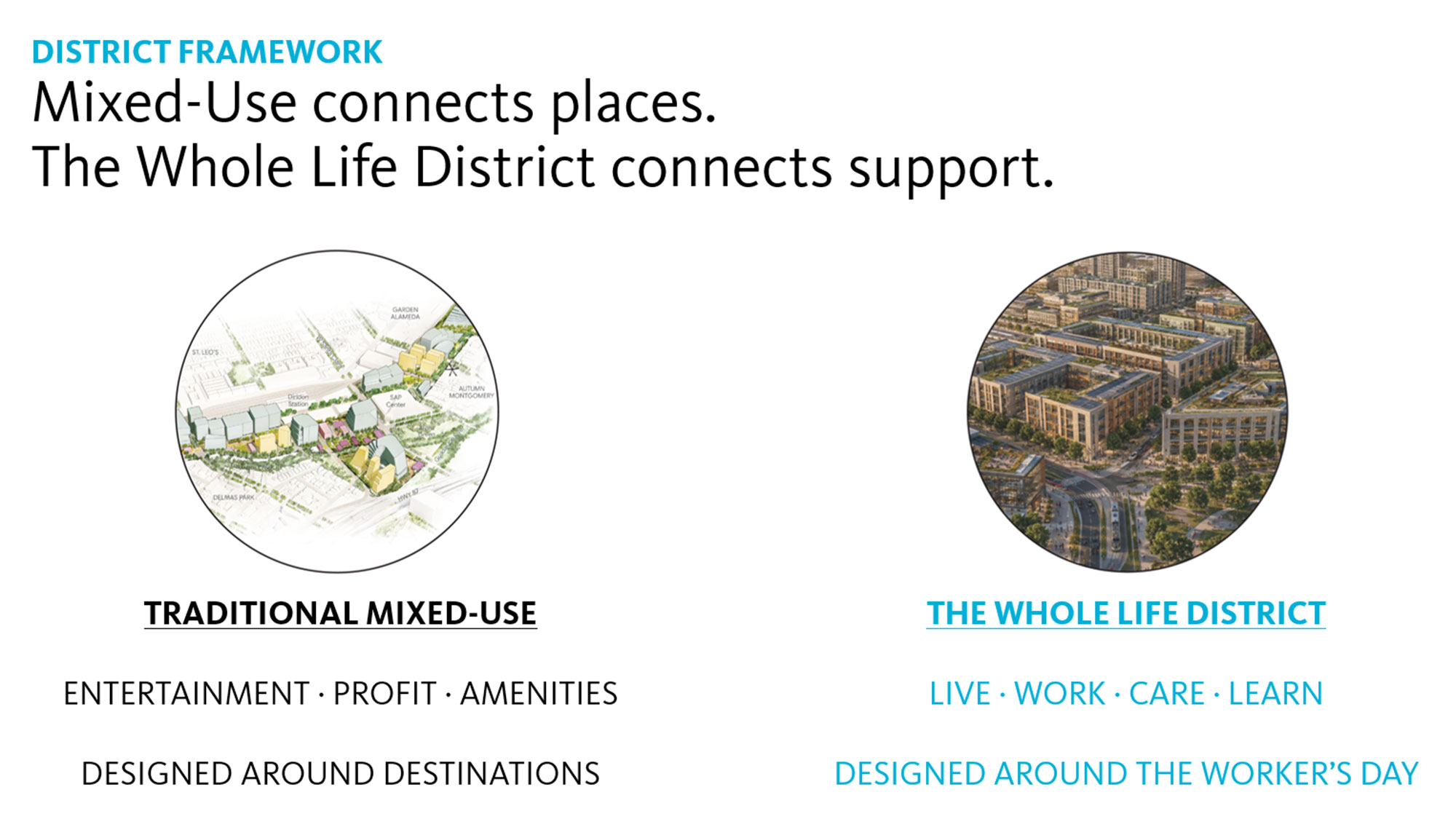
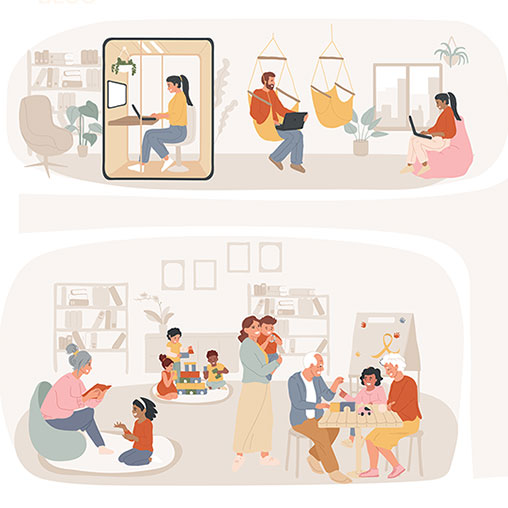
Instead of treating care, learning, and well-being as separate amenities, the model integrates four interconnected functions: live, work, care, and learn.
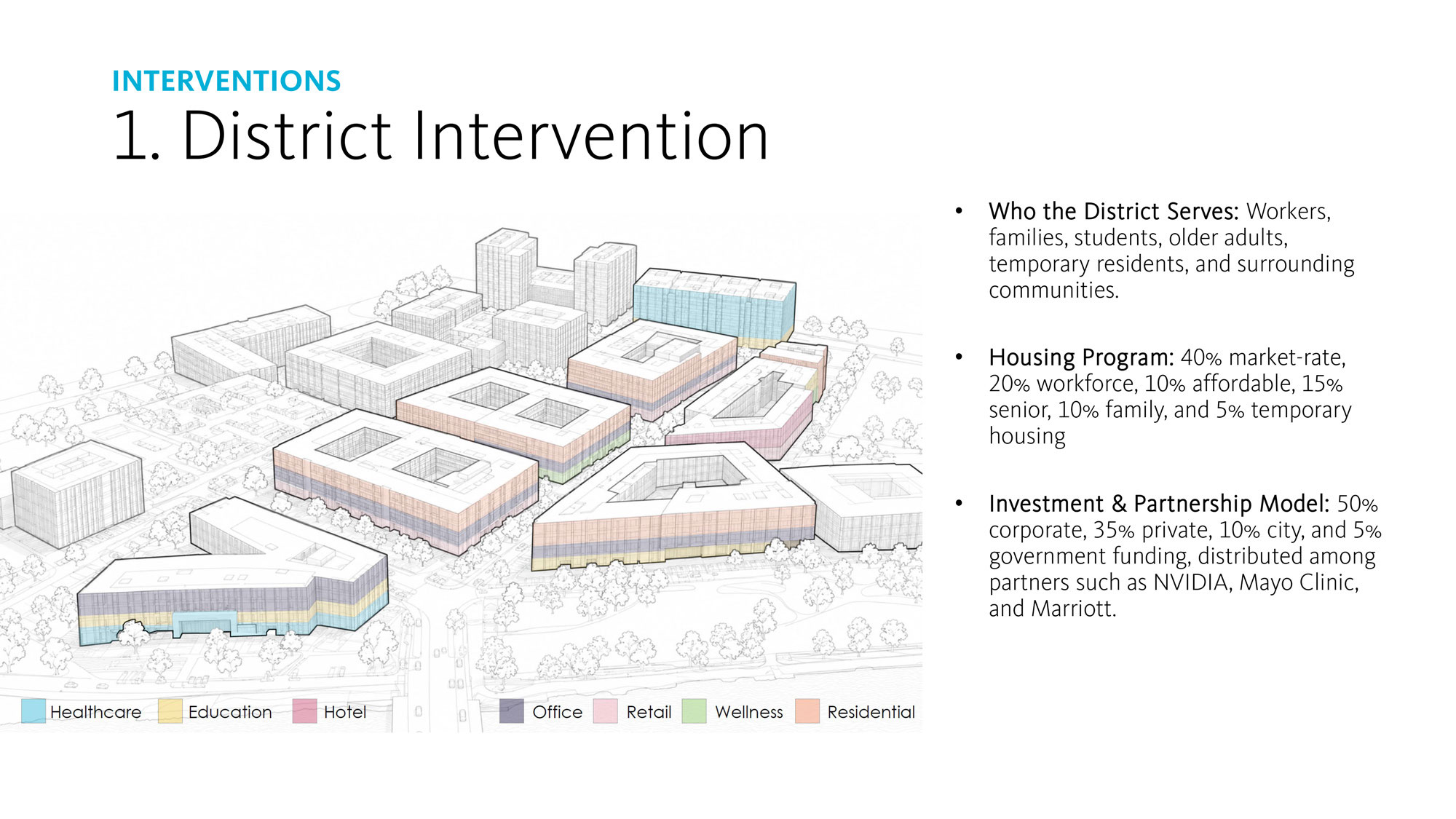
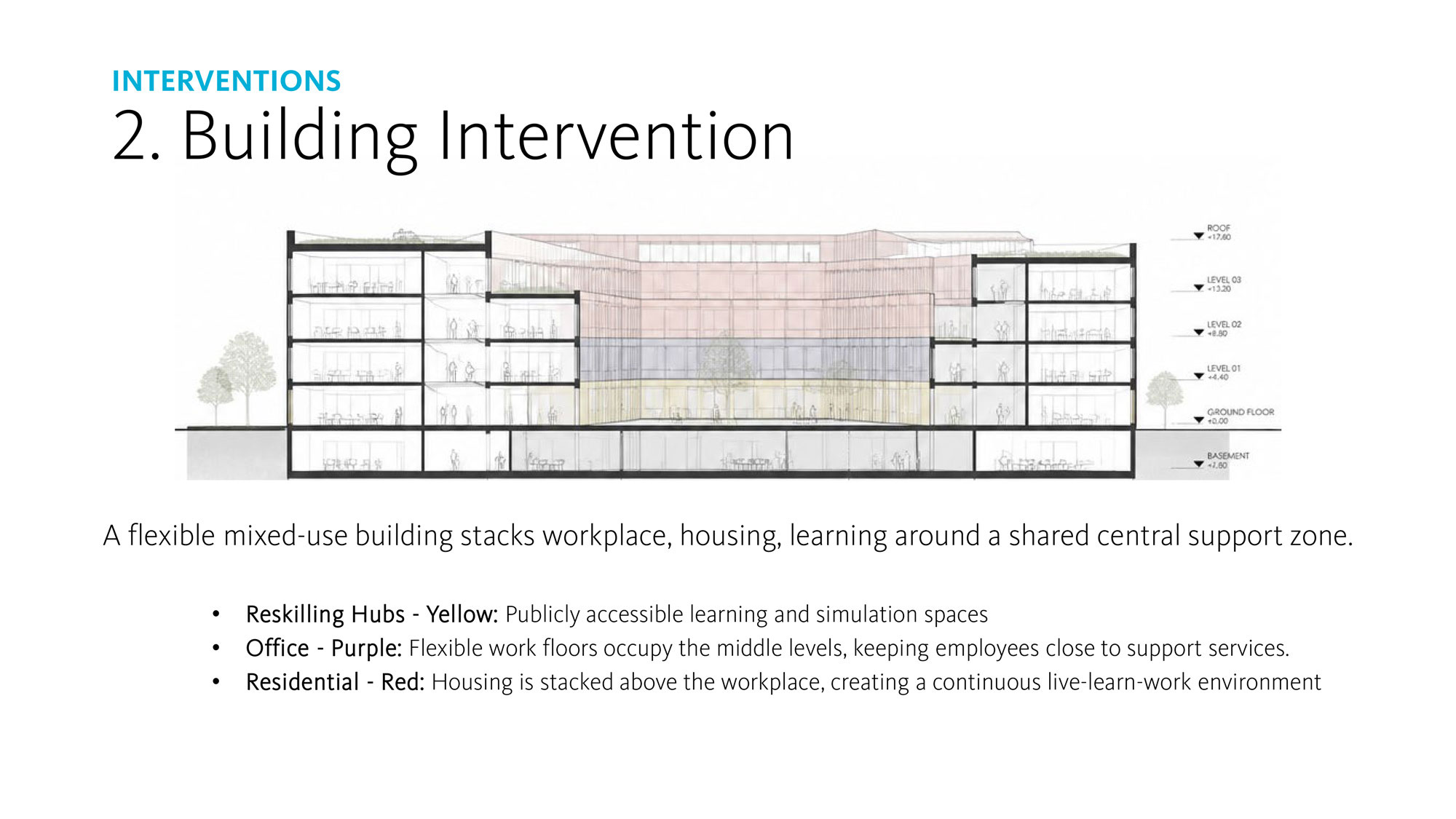
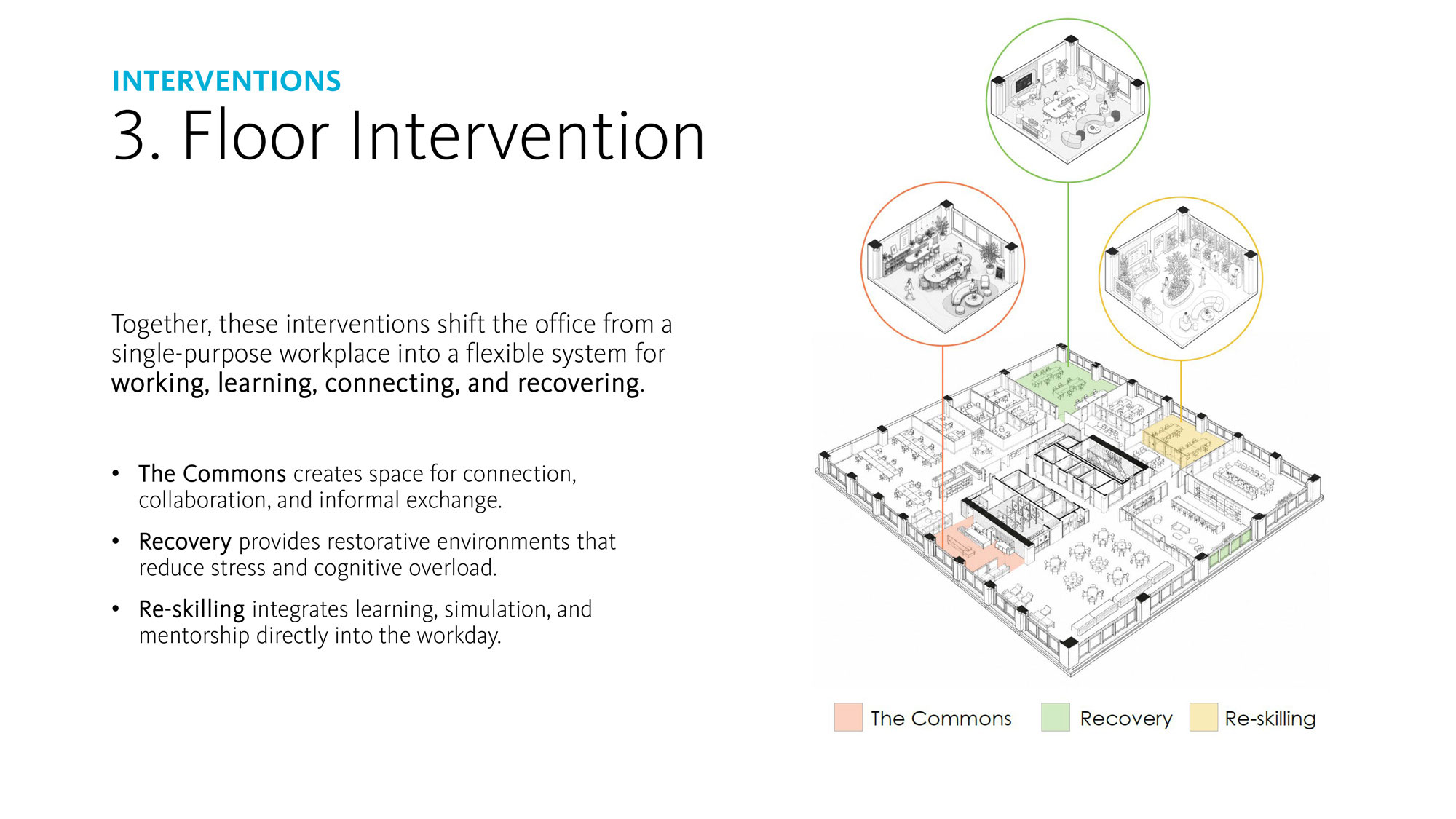
The concept operates at three scales, from districts and buildings to individual workplace floors, creating opportunities to embed worker support into everyday life rather than delivering it only through programs or policies.
Worker well-being is critical infrastructure.
For years, discussions about worker well-being have centered on benefits, engagement, and employee retention. Those concerns remain important, but they only address part of the challenge.
Organizations that thrive over the next several decades will be those whose people can remain healthy, keep learning, manage care responsibilities, and adapt as both their lives and their work evolve. That capability is shaped by the environments workers move through every day.
The next major real estate disruption may begin with a more fundamental shift. The built environment must support workers as effectively as it supports work.
Research Team: Michael Schur, Blair Petrilli, Foliba Lima, Chesley Strain (Summer Fellow), Charles Samake (Summer Fellow), and Lance Kammerlocher (Summer Fellow).
For media inquiries, email .