The Workplace That Listens: Sound as an Employee Experience Strategy
New research with Delhom Acoustics explores how intentional soundscapes can support focus, comfort, and connection at work.
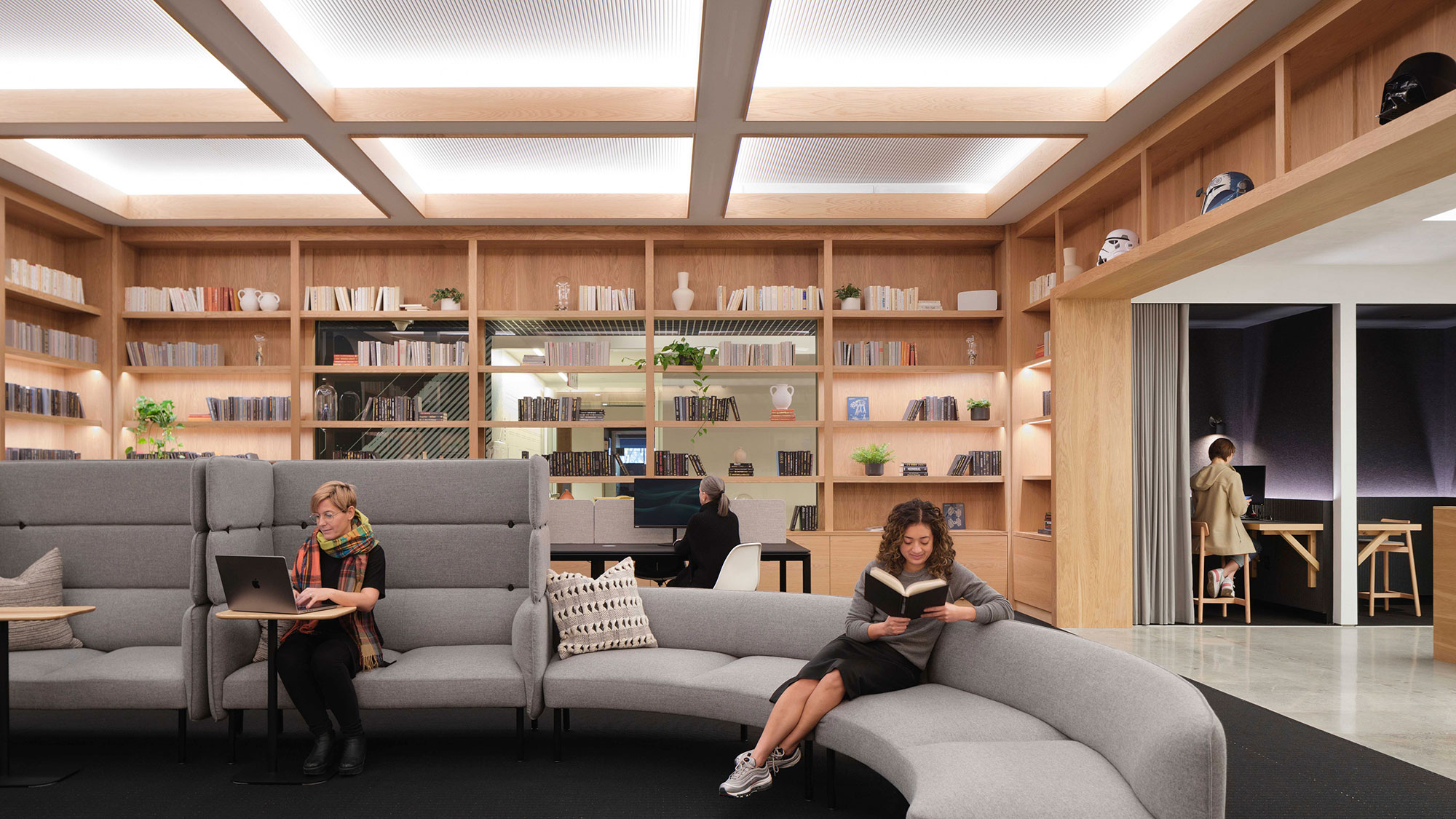
Sound is the missing layer of workplace experience. Workplace design has long focused on the visible and physical environment, from layouts and amenities to technology and branding. Sound has received far less attention, despite its influence on how people concentrate, collaborate, recover, and connect.
To understand how employees experience workplace sound today, and what they want from it in the future, we partnered with Delhom Acoustics to conduct a global survey of more than 300 respondents across 11 cities.
The workplace has an acoustics problem, not just a noise problem.
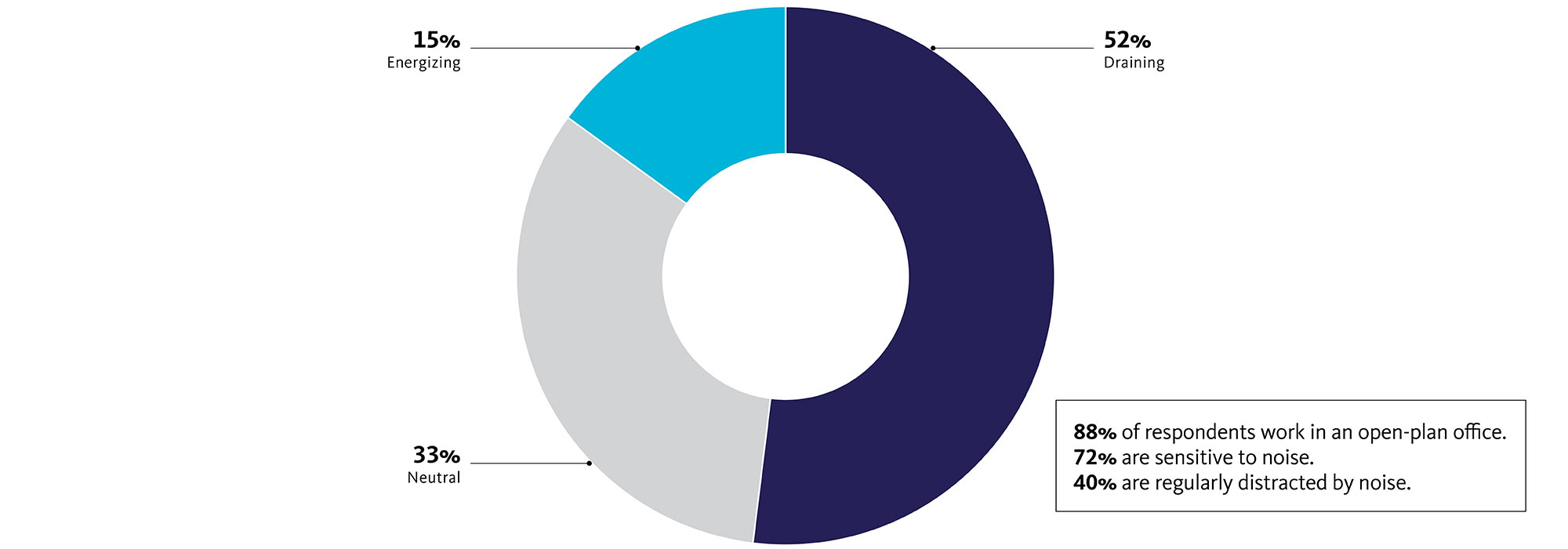
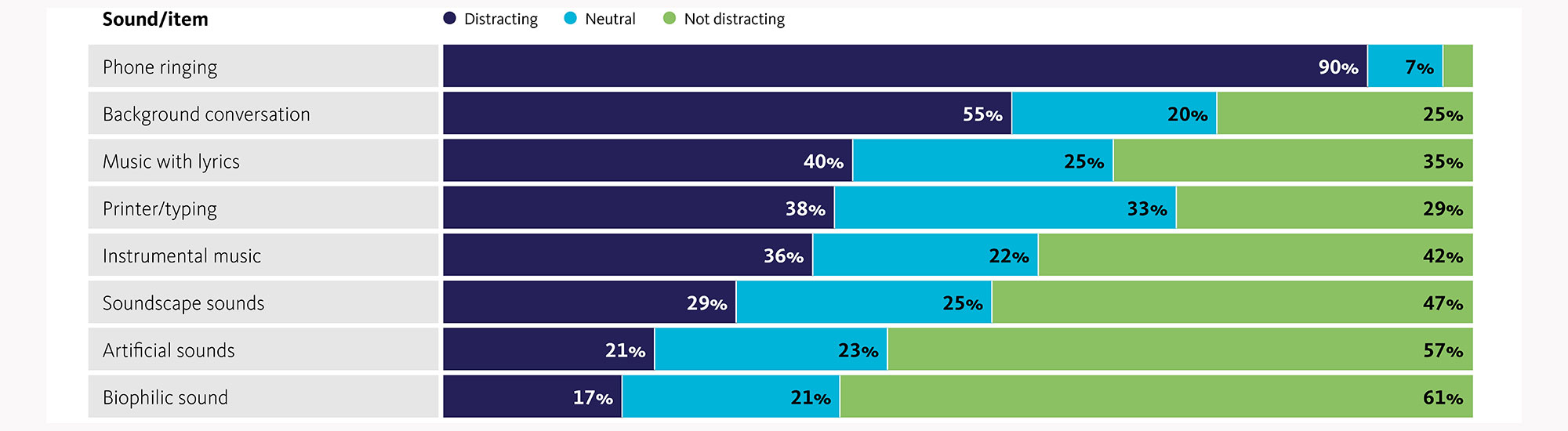
Among the employees we surveyed, 88% work in open-plan environments, 96% describe themselves as having some level of sensitivity to noise, and 40% are regularly distracted by it. Yet most rated their workplaces as moderately, rather than excessively, loud.
The greater problem is often a mismatch between the task at hand and the surrounding sound. Half of respondents said their workplace soundscape leaves them feeling drained, while three-quarters were interested in adjusting it according to their task, mood, or work style.
When workplaces fall short, employees tune out.
More than two-thirds of respondents listen to music or soundscapes while working, and more than 80% regularly use headphones or earbuds. Though many offices are designed to promote interaction, most employees feel the need to create personal sound environments to control what they hear.
The right sounds support focus.
Contrary to what we assumed when we launched the survey, employees aren’t only putting on headphones to mask distractions. The most common reason for choosing music or other sound atmospheres was to support focus and work activities, while coping with distraction ranked second. For many employees, sound has become a practical tool for creating conditions that allow them to do their best work.
When workplaces fall short, employees tune out.
More than two-thirds of respondents listen to music or soundscapes while working, and more than 80% regularly use headphones or earbuds. Though many offices are designed to promote interaction, most employees feel the need to create personal sound environments to control what they hear.
The right sounds support focus.
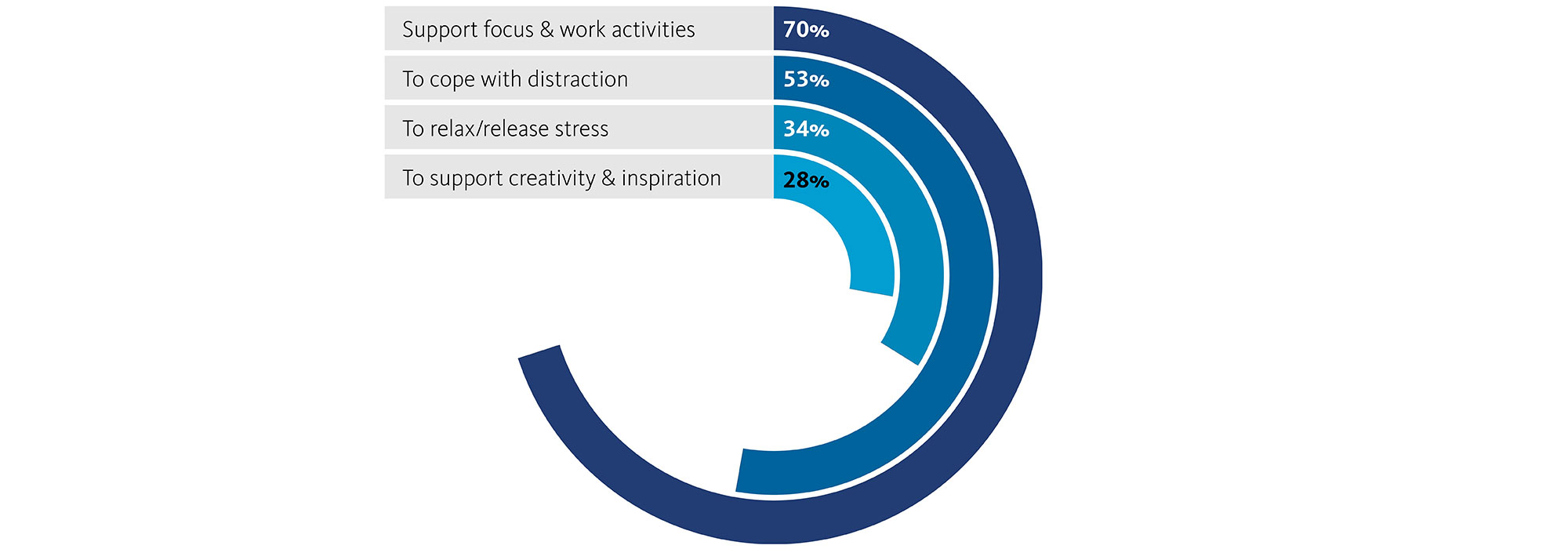
Contrary to what we assumed when we launched the survey, employees aren’t only putting on headphones to mask distractions. The most common reason for choosing music or other sound atmospheres was to support focus and work activities, while coping with distraction ranked second. For many employees, sound has become a practical tool for creating conditions that allow them to do their best work.
Each space needs its own sound strategy.
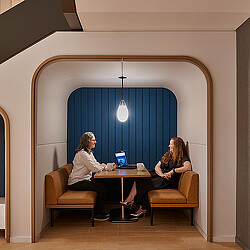
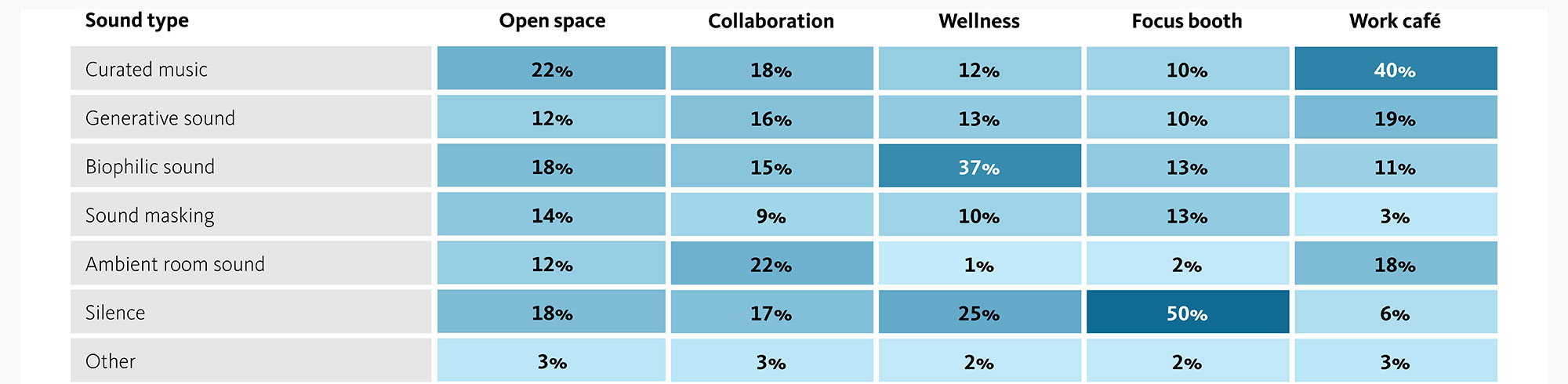
Many of today’s workplaces include focus booths, wellness rooms, collaboration areas, and work cafés, but acoustic design is often applied uniformly across them. The research points toward a more tailored approach.
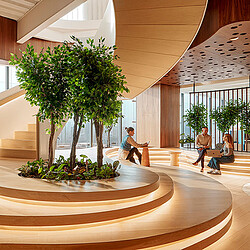
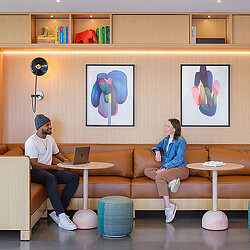
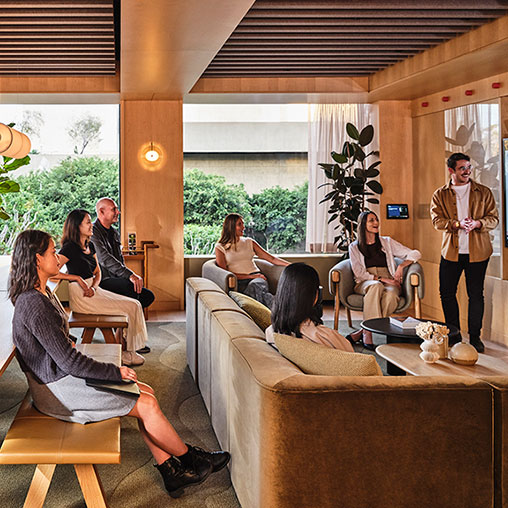
Respondents showed strong interest in biophilic sounds and curated audio for wellness rooms. They associated work cafés with more energetic, music-driven environments and also welcomed intentional sound in collaborative areas. Preferences for focus spaces were more divided. Half of respondents preferred silence, while the other half wanted a choice of sound atmosphere — including sound masking and biophilic, generative, or curated sound — underscoring the need for individual choice.
Open-plan spaces and collaborative areas showed the widest range of preferences, suggesting that no single sound atmosphere suits everyone. Input from employees could help identify spaces where soundscapes would be welcome, while preserving quiet options for those who prefer silence.
It’s time to move from noise control to sound strategy.
Soundscaping does not, and should not, replace architectural acoustics. Speech privacy, zoning, sound absorption, spatial separation, and equipment-noise control remain fundamental and must be addressed first. Intentional sound adds another layer, along with new considerations around volume, distraction, insulation, and neighboring zones.
A successful sound strategy brings together workplace design, acoustic engineering, psychoacoustics, and sound curation. This collaboration can turn sound from an unmanaged by-product of office activity into a purposeful part of employee experience, performance, and well-being.
Ultimately, the goal is to create a sound atmosphere suited to each space, task, and moment. Employees are already shaping their own soundscapes. The next step is to holistically design them with intention, and this research is where that conversation begins.
With special thanks to our peer review partners — University of Toulouse (CLLE), IRCAM, IRCAM Amplify, and Altaura — for their valuable contributions and insights.
For media inquiries, email .