A Field Guide to Workplace Microdiversity
Exploring the workpoints of our modern world — and those to come.
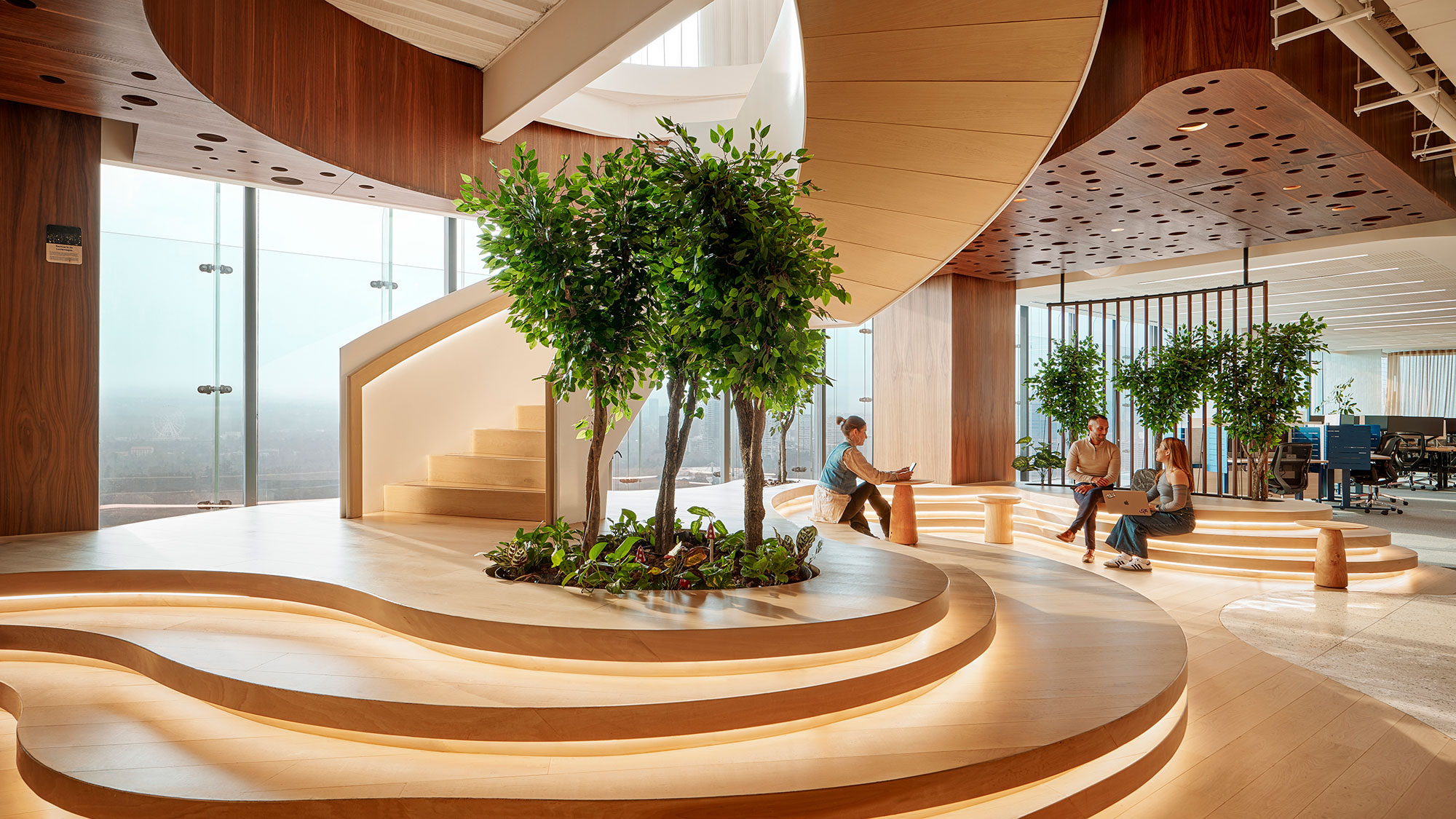
Our workplace discourse continues to debate the merits of assigned vs. unassigned workstations, in-office vs. hybrid attendance policies, and — more recently — tech-enabled vs. tech-free work zones.
Within that conversation, and in parallel with it, are a host of new variables and considerations. These factors comprise a much broader context in which our clients are evaluating workplace performance — one that includes evolving talent demographics, increasing job automation, and shifting geopolitics.
Perhaps not surprisingly, AI has brought to the forefront many of these considerations. And this phenomenon isn’t exclusive to the technology industry; its impact extends across all sectors, geographies, and job functions. Its influence on workplace design is becoming increasingly visible, too.
Within the workplace, we’ve observed that the evolving design of individual workpoints perhaps best signals this shifting context. So, in the spirit of previous Gensler field guides, we’ve documented and illustrated a wide-ranging ecosystem of workpoints, including existing ones, emerging ones, and potential future ones.
This is what we’re calling Workplace Microdiversity: the recognition that each person has unique sensory, cognitive, and physical needs that go well beyond job function or team structure. These micro-level differences shape how people register and respond to their environment — and they’re changing how we think about the individual workpoint.
To better understand this microdiverse ecosystem, we explore the meta-trends shaping this workplace future: talent trends, design trends, and renewed research on neurodiversity and mental health.
01 | Dynamic Demographics
The explosive growth of the AI industry and the emergence of high-growth, high-profile AI companies contributed to a demographic reversal of what we saw in the early post-COVID years. Initially, many technology workers departed tech hub cities for locales that were more affordable, family-friendly, and wellness-promoting. A few years later, a segment of these employees found themselves compelled to return to these same cities, excited about the prospect of working in-person, side-by-side with colleagues who were shaping the future.
Concurrently, a separate segment of tech talent migrated to cities sight-unseen to work for these same companies. Many of these employees came directly from academia; others from non-technology industries and far-ranging geographies. As a result, with a limited network of friends, family, and other familiar faces, these employees found themselves building communities from scratch.
Enter the workplace, which now takes on the task of community building. What once were “nice to have” amenities like boutique hotel-style lounges and speakeasy-inspired gathering spaces have now become significant epicenters for forming friendships, promoting wellness, and fostering belonging.
02 | Automation & Allocation
Beyond demographic shifts, AI continues to have a far-reaching impact on work itself. AI is incredibly effective at minimizing and eliminating many rote tasks, especially those performed by entry-level workers. With this increased speed and efficiency, many of the parts of the office previously dedicated to these activities — including open office workstations — are at a crossroads, in search of a new purpose for a different kind of work.
But the purpose of the workplace was never exclusively about the efficient execution of tasks. It was, and continues to be, a place in support of those activities that make us fundamentally human: learning, critical thinking, creativity, and networking. As a result, the workplace footprint that previously supported rote tasks can be reallocated to these “human” skills. With that, workpoints evolve as well. They’re reshaped to support innovation over execution, mentorship over menial work.
03 | Accommodation & Adaptation
As AI-enabled work and AI-empowered workers reshape workplace design, this shift also resurfaces research on mental health and neurodiversity that takes on renewed meaning today.
Research around the workplace Experience Gap maps the varying cognitive loads of neurodivergent and neurotypical employees over the course of a single day. It explains why two colleagues at neighboring desks may have radically different experiences of the same space.
Designing for that gap starts with understanding how people process their environments. Dunn’s Model of Sensory Processing clarifies the sensory stimuli that shape our workplace environments and the self-regulatory behaviors that inform our comfort, safety, and productivity.
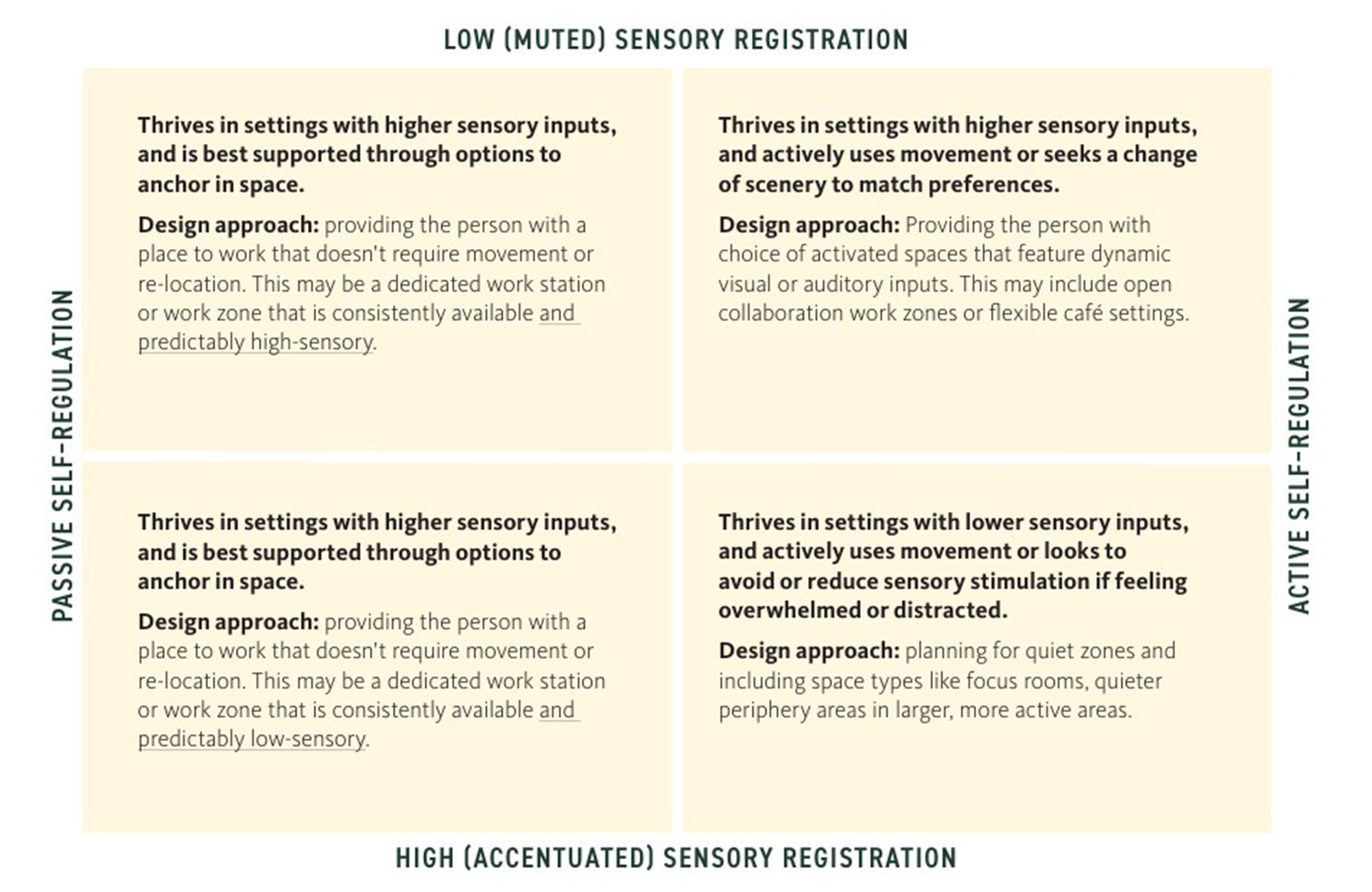
With these insights, individual workpoints and group collaboration areas are recast according to sensory and self-regulation criteria. Some provide enclosures that mitigate distractions and support psychological comfort; others welcome workplace “buzz” and provide ergonomic and environmental flexibility.
A Microdiverse Ecosystem
Using these three trends as the lens through which we imagine workplace futures, the Microdiversity Matrix documents and illustrates what’s currently in the market, what’s in development, and what we might see in the future.
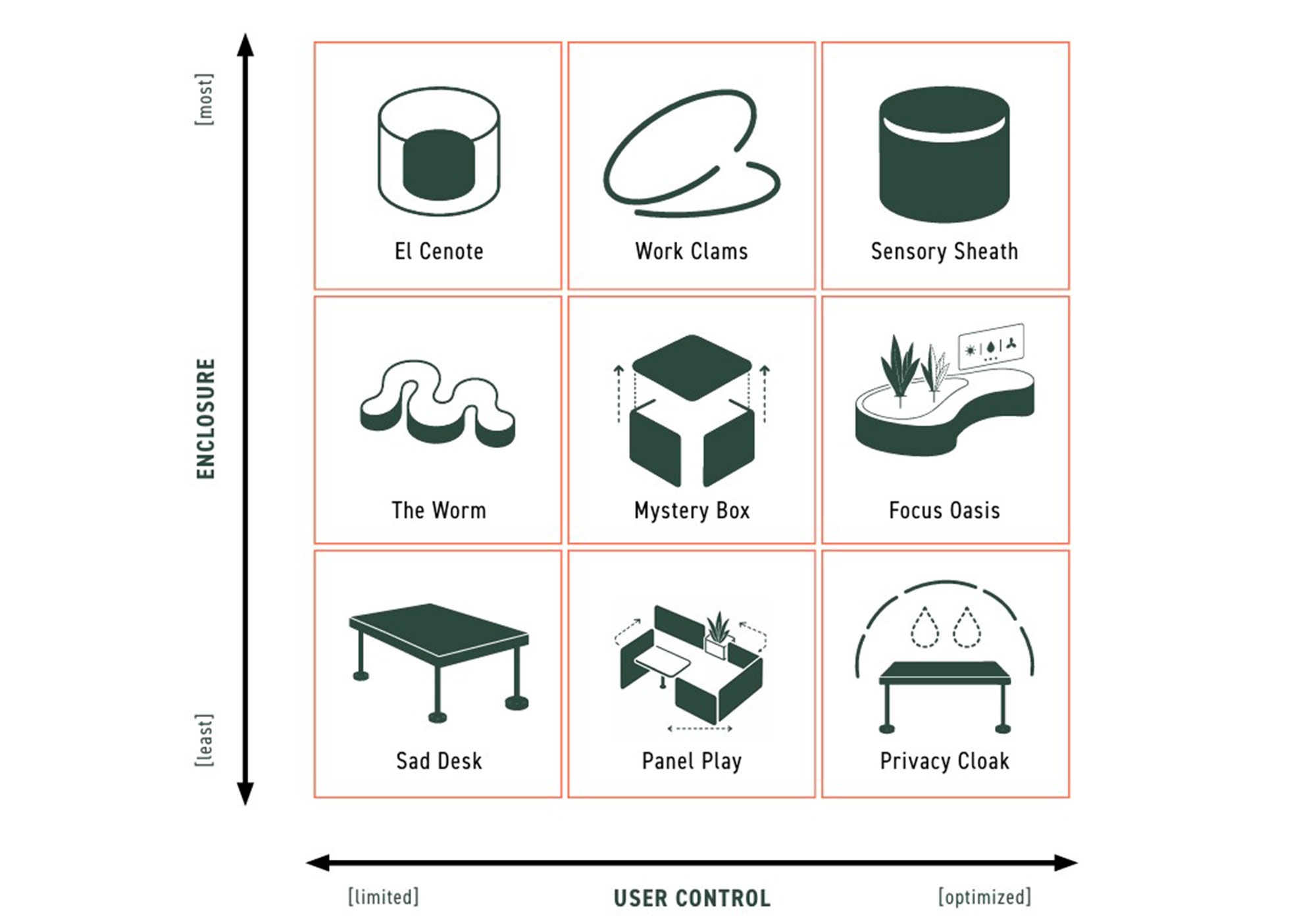
The matrix is organized along two axes: an x-axis for User Control and a y-axis for Enclosure. The User Control axis ranges from limited to optimized, approximately aligned with Dunn’s spectrum of passive self-regulation to active self-regulation. The Enclosure axis ranges from least to most, approximately aligned with Dunn’s spectrum of low/muted sensory registration to high/accentuated sensory registration.
We’ll next explore three examples from the matrix: two built examples (Panel Play, Cenote) and one speculative one (Focus Oasis).
A | Panel Play
Panel Play is optimized for an unknown future of work, one where the desire for enclosure and autonomy could change year to year — or over the weekend. A Panel Play system supports a range of work modes within teams and departments.
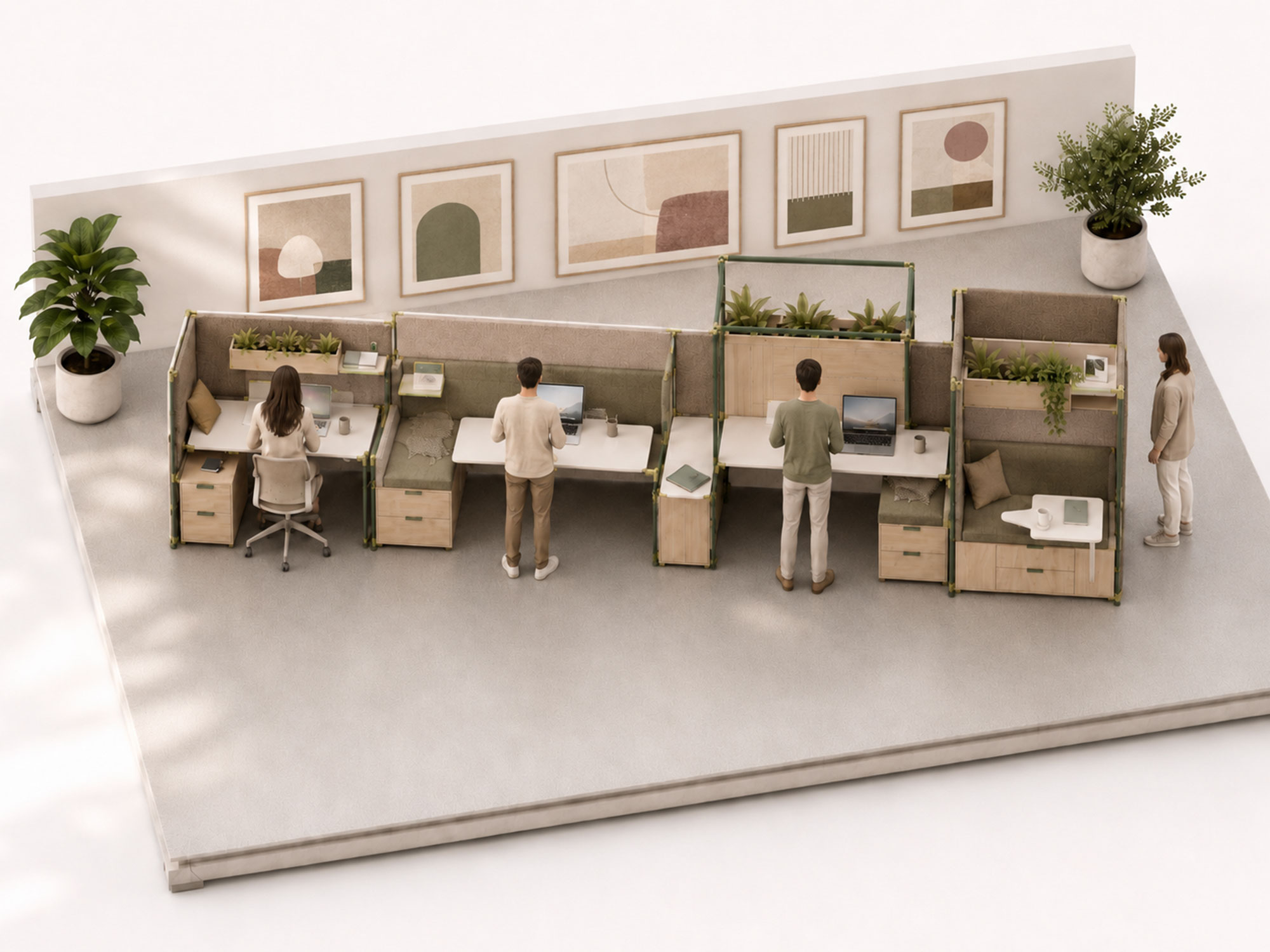
An on-the-market example is the Gradient system, co-designed by Gensler and Pair and optimized for this shifting future of work. Gradient is a minimal, kit-of-parts framework that’s configurable to support a wide variety of work modes, from focus to dynamic collaboration. Its assembly is user-friendly; enclosure-providing panels attach to the framework with button-like thumbscrews, making reconfiguring the system a literal snap.
B | Focus Oasis
Moving to a more immersive, but still manipulable, example, the Focus Oasis imagines an “alone, together” focus area defined by a stationary millwork enclosure, individual temperature and lighting controls, and an abundance of plants. It takes biophilia to the next level, looking at the aggregate impact of biophilic moments and creating a space for ecophilia, a desire to connect with nature as a response to the digital world.
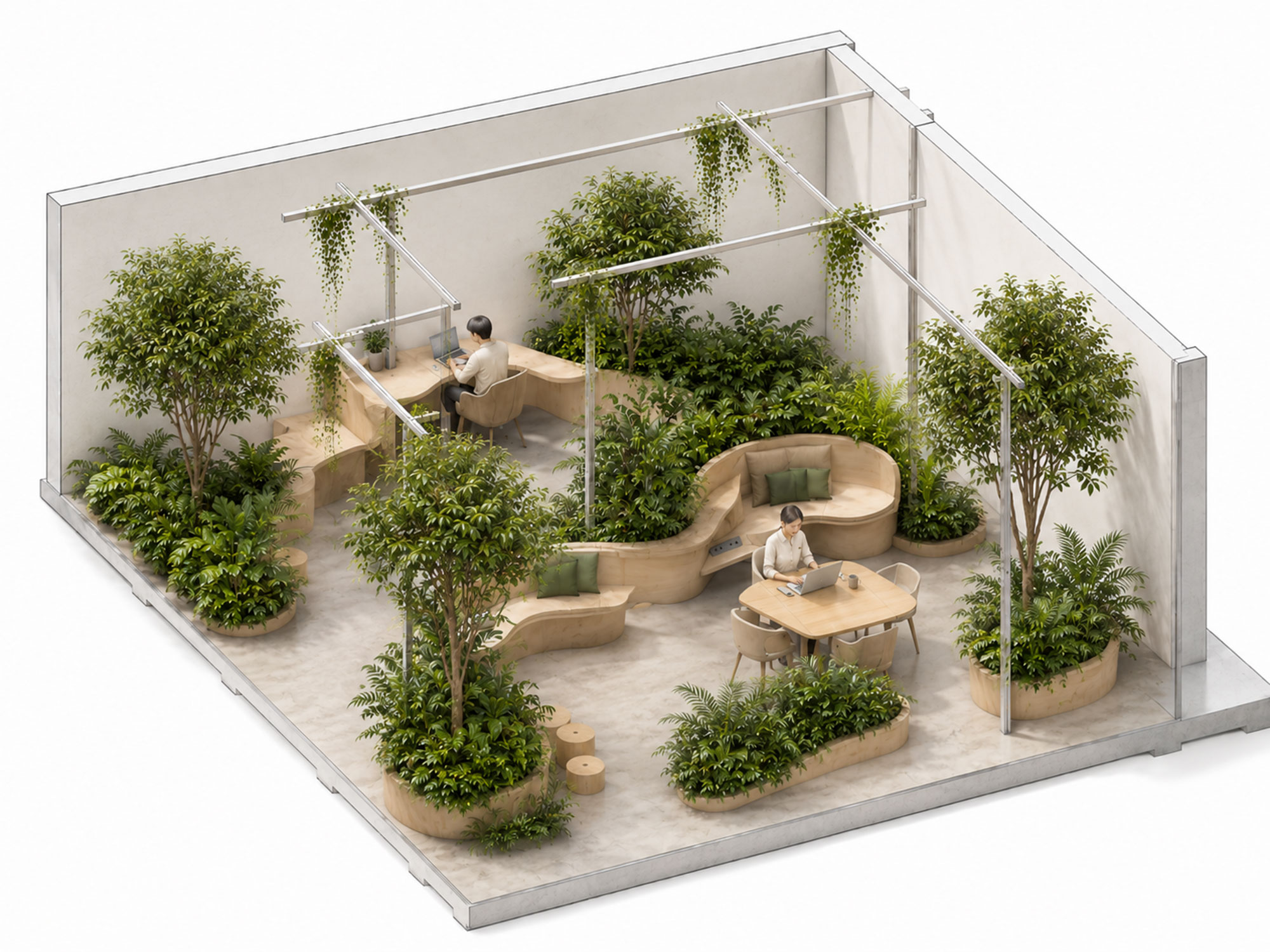
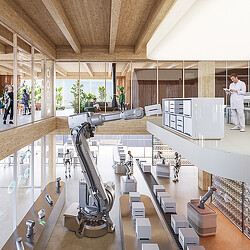
The Focus Oasis takes inspiration from Gensler’s NEXT NEXT research, which investigates a workplace — and an ecosystem of workpoints — that sits at the intersection of sciences and technology. Here, the workplace addresses two ideas of what a sciences space can evolve into, looking at the present and future influence of both AI and robotics. And since labs are sterile environments without opportunities for biophilia, ecophilia takes on added significance — a critical visual connection between lab employees and the adjacent non-lab workplace.
C | Cenote
At the “full enclosure” end of the Microdiversity Matrix’s enclosure axis, the Cenote is a space for escape, imagination, and comfort. A floor-to-ceiling enclosure that blocks out almost all visual and auditory distraction, the Cenote is designed for all employees to do focus work, especially neurodivergent workers with self-regulation needs and sensory sensitivities.
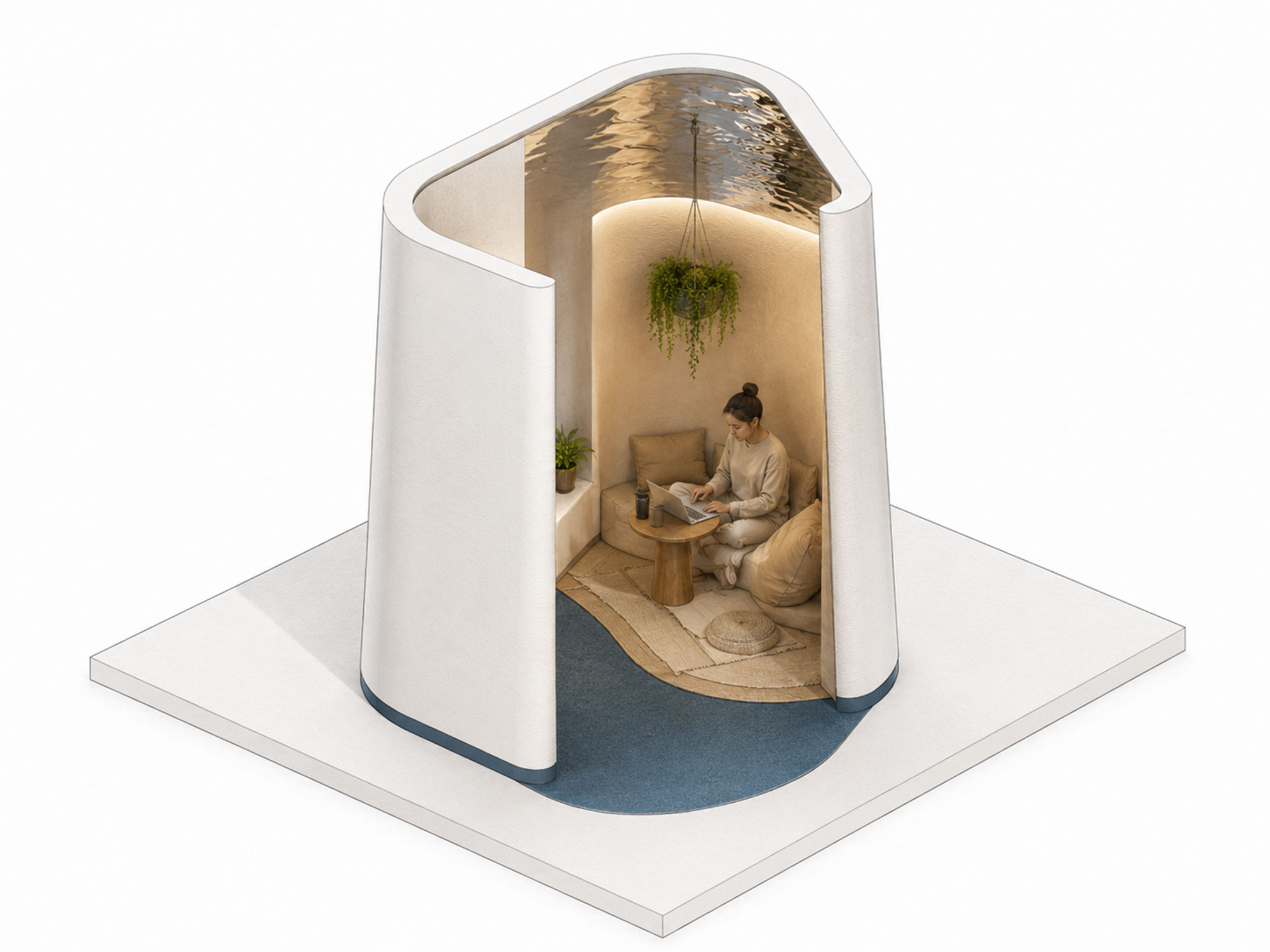
In Mexico City, Gensler piloted a system of cenotes for a confidential high-tech client. In the office, the cenotes are located strategically throughout the work areas, providing opportunities for inspiration at a company with creativity at its core. A passageway into the cenote provides a transition moment between the buzzy workplace beyond and the quiet refuge within. This threshold also provides a quiet moment of reset, signaling to the user that they’re entering a space that relieves their sensory and cognitive loads.
Inclusive Futures
As we continue exploring and expanding this microdiverse ecosystem, we should keep in mind that AI affects people differently. Our collective responsibility as designers and leaders is to optimize this ecosystem for inclusivity and innovation.
In a world where the very nature of human intelligence is at a critical moment of introspection and uncertainty, we need to make sure everyone has a seat at the table — be it a panelized workstation, an immersive oasis, or a protective cenote.
For media inquiries, email .