Built to Flex: The Case for the Portable Office
A new approach to fit-out treats the workplace as a reusable asset across every lease.
For decades, offices have been designed as permanent spaces within temporary leases.
Companies commit substantial resources to designing and constructing their fit-outs. Businesses sign leases that may last five, 10, or 15 years, yet we design their offices as though they are a permanent, fixed element. Contractors build walls, glue down floors, and fix joinery in place, with bespoke fit-outs becoming intrinsically tied to a single location.
When a lease ends and a business moves on, organisations leave behind the workplace they invested in, dismantling, discarding, or demolishing it. The office becomes a stranded asset, despite sometimes being in excellent condition.
This raises the question: if leases are temporary, shouldn’t we design offices that are too?
A new model is emerging in response: spaces designed as a series of adaptable elements that can be assembled, disassembled, or relocated as needed.
What is the Portable Office?
The Portable Office is a workplace designed around the principle that its key physical components can be removed, relocated, and reassembled elsewhere with minimal waste and disruption. Fit-out becomes a reusable kit of parts, with individual elements becoming assets that accumulate value across leases.
Every component, from raised flooring systems and demountable partitions to modular joinery and plug-and-play services, is selected and detailed with future relocation in mind. The result is a workplace that belongs to the business, not the building.
In this model, adaptability becomes a design principle as fundamental as aesthetics or performance. Success could be measured by how well a workplace performs today and how easily it can evolve tomorrow.
Designing for Disassembly
The idea of a Portable Office challenges us to view workplace elements differently. To achieve portability, designers must move beyond designing just for the current workplace and begin designing for future relocation.
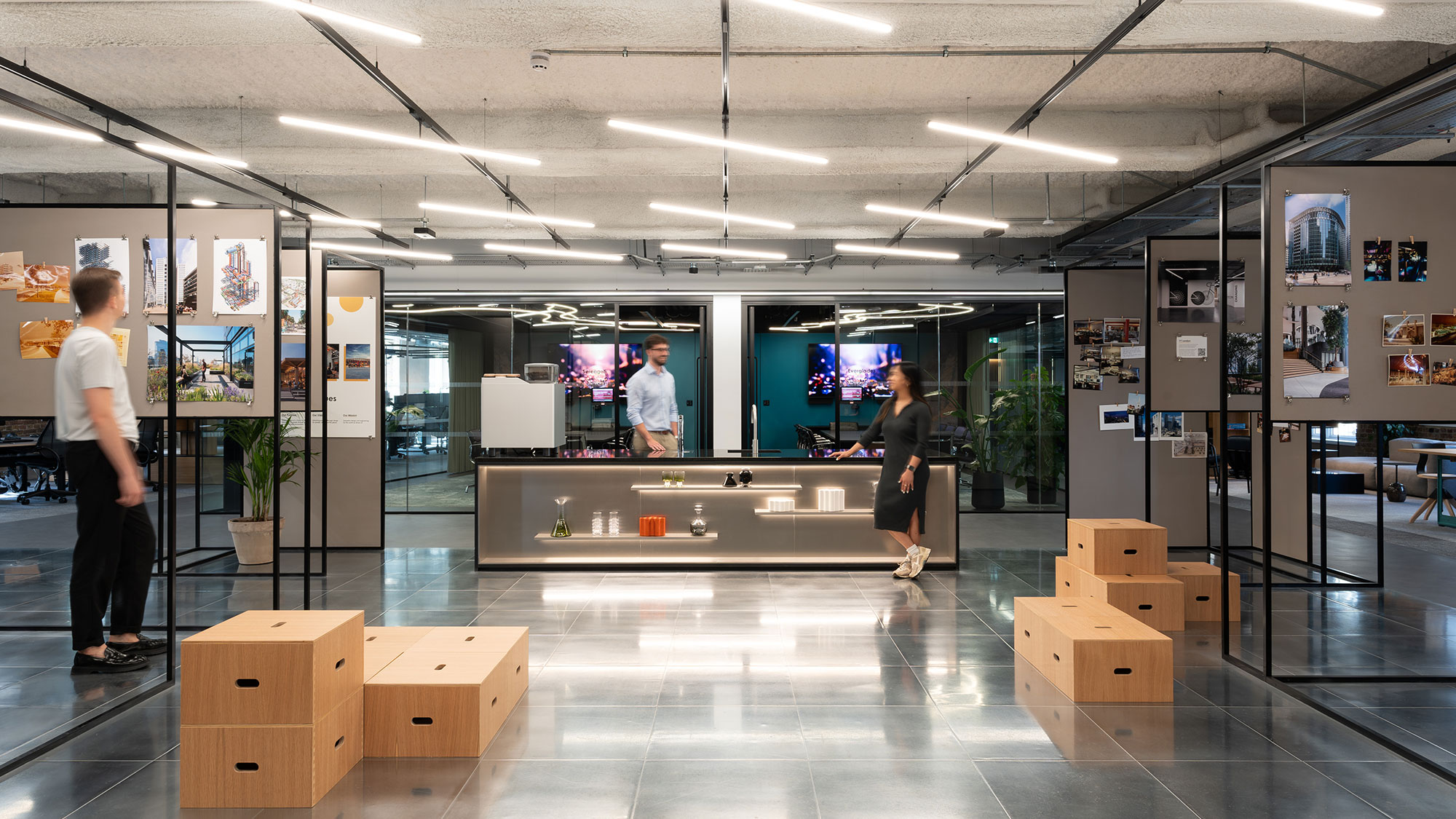
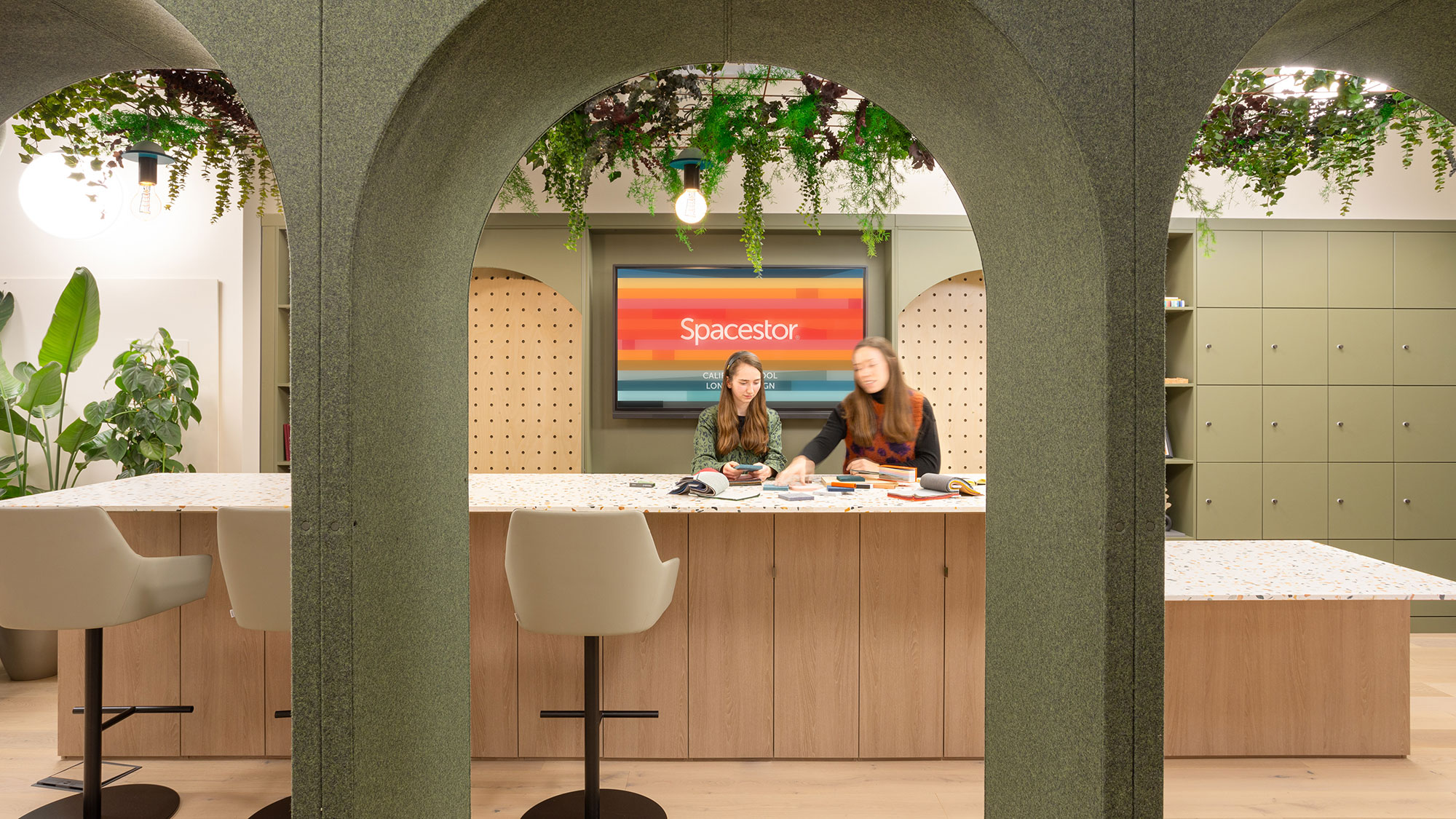
Some suppliers are already creating products built for disassembly, such as demountable and reconfigurable wall systems, modular joinery, plug-and-play technology, and magnetic raised access flooring.
The challenge is creating spaces that feel intentional to the people who use them every day, while remaining flexible in their construction. An office should provide comfort, character, and a strong sense of place, yet still be designed with its next location in mind. Designing for disassembly becomes as important as designing for assembly.
Sustainability Through Portability
The environmental case for the portable office is compelling. Office relocations frequently generate significant waste as materials are demolished and replaced, as the workplace is often designed for a single lifecycle.
One of the most significant benefits of portability is the potential to preserve embodied carbon. Demolition effectively destroys the carbon invested in manufacturing, transporting, and installing a building’s components. Even recycling demands additional energy for processing and remanufacturing. Reuse is the most resource-efficient path forward.
A portable fit-out retains that embodied carbon throughout its full lifespan, reducing the need for new material production with every subsequent installation. For example, using a demountable partition that serves multiple office locations over a 15-year period carries significantly lower environmental impacts than constructing multiple partitions across those sites.
Supporting adaptive reuse and speed to market
The portable office also supports faster delivery. Because components are pre-engineered for assembly, installation programmes can be significantly shorter than traditional fit-out. Businesses operating across multiple sites can relocate their workforce more quickly, scale their footprint more responsively, and reduce fit-out lead times.
The ability to expedite the fit-out process also benefits landlords and developers. Portable workplace systems could support adaptive reuse projects by reducing the need for extensive construction interventions. In a large multi-tenant building, this means other occupiers experience less disruption from construction or noise.
Workplace as a reusable product
The portable office offers an opportunity to create the ultimate kit of parts for every space. Each element, from partitions to joinery to raised flooring, becomes part of a reusable inventory. It travels with the business rather than staying with the building.
Creating individualised spaces for each client remains the priority. The difference is that the subcomponents within those spaces carry the logic of disassembly from the outset, enabling standardised components to be applied across every location a business occupies.
As businesses become more agile and lease strategies become more flexible, the industry has an opportunity to rethink what permanence really means, and designing for relocation could become a standard requirement.
For media inquiries, email .