What Do Employees Hope for in the Future of Work?
Gensler’s Global Workplace Survey 2026 research reveals what workers want for their work and workplace — and what it means for the future.
This is the fifth blog of a series unpacking the detailed findings of Gensler’s Global Workplace Survey 2026. Read part one here, part two here, part three here, and part four here.
For all the talk about AI, automation, and hybrid work, the strongest signals about the future of work may come from someplace more human: employees’ hopes for their work and their workplace. And those hopes point in a clear direction — toward more creativity, more autonomy, and workplaces designed to help people thrive.
As part of Gensler’s Global Workplace Survey 2026, we explored how people work today — how they spend their time, how behaviors have stabilized over the past three years, and how AI is reshaping work patterns. We’ve also seen learning and professional development emerge as a new priority, reflecting the expanding role of the workplace in helping people grow professionally. But to understand what comes next, it’s equally important to understand what people want in the future.
For the first time in Gensler’s Workplace Survey, we asked over 16,400 office workers across 16 countries and 10 industries, not just how they work, but what they hope for: What do you hope for the future of work? What do you hope the future workplace feels like? And what do you hope the physical workplace has? Their answers offer powerful signals for where work — and the workplace — is headed.
Hopes for Work in the Future
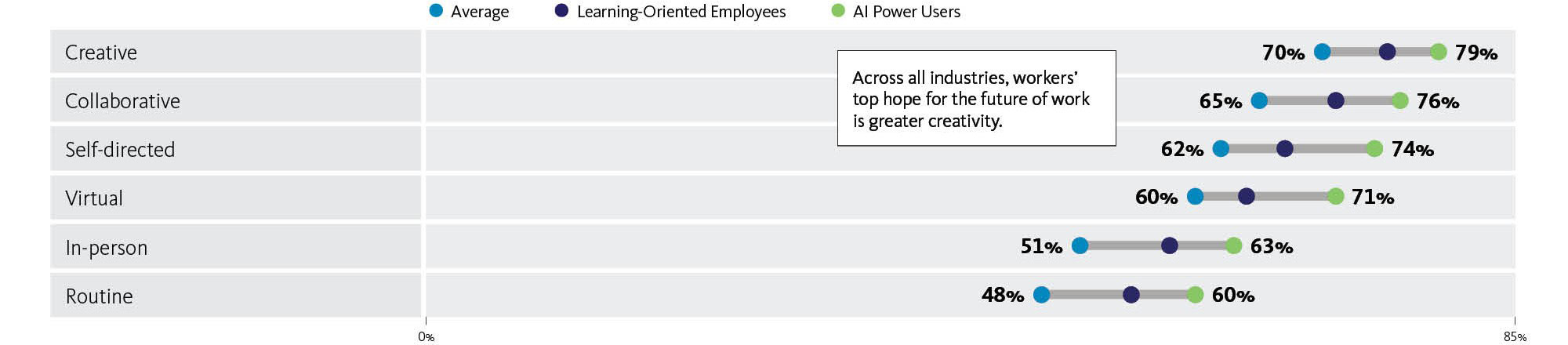
Across industries, roles, and countries, employees share remarkably consistent aspirations for the years ahead. On average, they hope their work becomes more creative (70%), collaborative (65%), and self-directed (62%).
Rather than choosing between virtual or in‑person work, employees want a balanced mix of experiences that support productivity, well-being, and meaningful connection. Their responses point to a desire for autonomy, deeper engagement, and work that draws on uniquely human strengths — creativity, problem‑solving, and collaboration — rather than routine tasks.
To see where these hopes could lead, we examined two groups already leaning into new ways of working: AI power users and learning‑oriented employees, who are actively developing new skills. Both groups express strong hopes for autonomy, collaboration, and the ability to focus on high-value work.
While 48% hope for more routine work, 38% want a blend of both routine and creative work — a reminder that any vision of the future workplace must make room for flexibility. Still, the majority is clear: they want work that taps into creativity, problem-solving, and distinctly human strengths. Together, these hopes suggest a future where work feels more engaging, connected, and meaningful.
Hopes for What the Physical Workplace Will Have
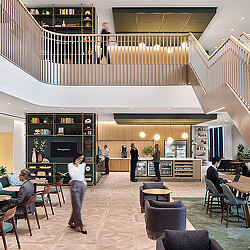
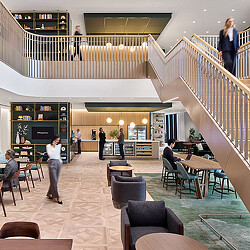
Those hopes don’t stop at the nature of work itself; they extend to the spaces where work happens. Last year’s Workplace Survey found that only 14% of workers preferred a traditional corporate environment. This year’s findings reinforce that trend. Employees aren’t looking to recreate the office of the past — they’re imagining something better.
But what does “better” look like? People want workplaces that feel productive and professional, but also creative and inspiring. They aren’t choosing between reflective and collaborative — they want environments that offer both.
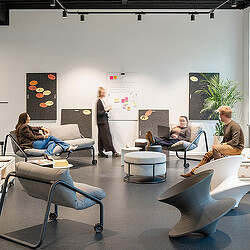
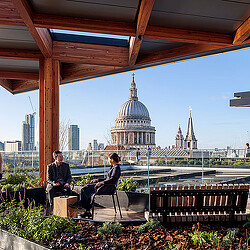
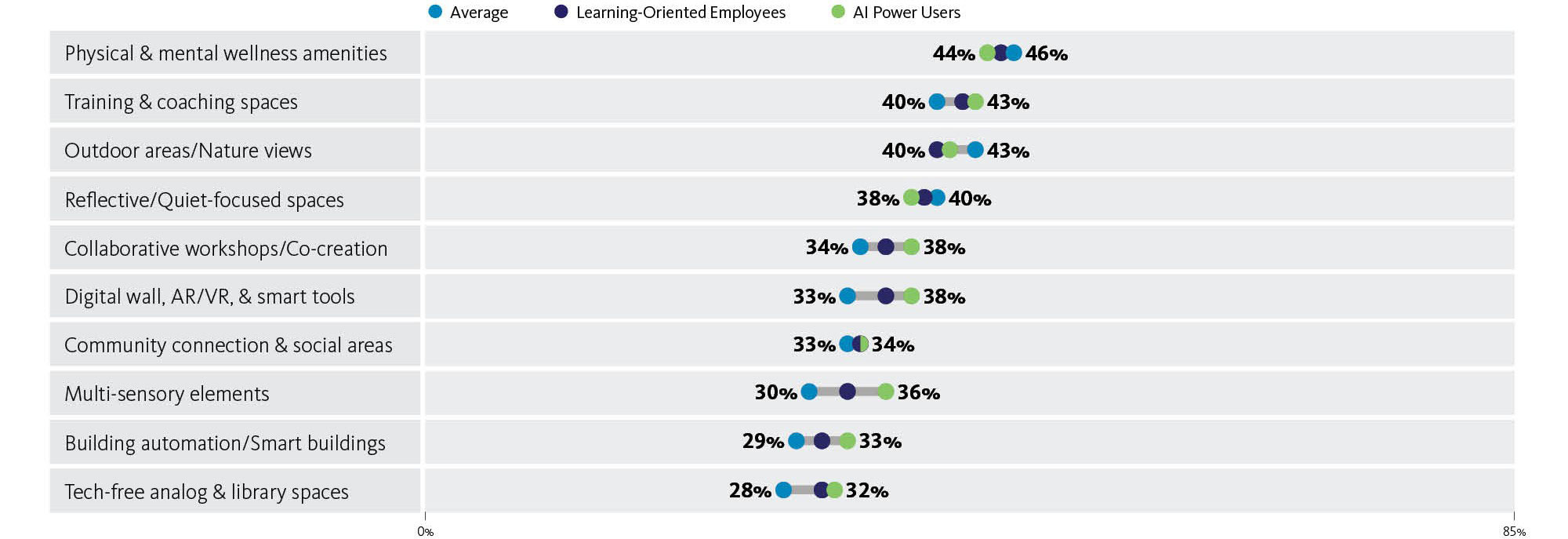
When employees imagine what they hope their physical workplace will be like, wellness rises to the top. Nearly half (46%) of respondents hope for physical and mental wellness amenities, and 43% want outdoor areas and access to nature. Quiet, reflective spaces for focus and reset are close behind (40%), alongside spaces for training and professional growth (40%) and collaborative workshop areas designed for co-creation (34%).
Lower down the list, but still meaningful, are community connection and social areas, digital walls, AR/VR and smart tools, multisensory elements, building automation, and tech-free analogy and library spaces. Together, these hopes point to a future workplace that is restorative and energizing, purpose-built for how people learn, connect, and do their best work.
Technology appears further down the list — a telling signal of what people value most. Employees aren’t imagining workplaces defined by devices or screens. They’re imagining workplaces defined by well‑being, learning, and human connection.
These hopes are even more pronounced among learning‑oriented employees and AI power users, who express stronger expectations across nearly every category. Instead of prioritizing tech features such as digital walls, AR/VR, smart buildings, or even tech-free spaces, they’re looking for environments that enable growth, co‑creation, and meaningful connection — reinforcing that the future workplace must support people across the spectrum of work.
Explore the interactive graphic below to see how priorities shift by country, industry, AI use, and learning orientation.
Hopes For How the Physical Workplace Makes Employees Feel
The number one reason people say they come into the office is to get work done. It’s no surprise, then, that employees want the workplace of the future to make them feel productive and professional. But they also want it to spark creativity and inspiration — a dynamic blend that supports focus while fueling the imagination to generate great ideas and bring them to life.
When employees imagine how they want the workplace to feel, they’re asking for environments that help them do their best work and feel at their best while doing it. That means spaces that help them feel professional, stay engaged, energized, and joyful, with room to feel calm when they need to reset. These emotional cues — feeling productive and professional, yet creative and inspired — are powerful signals for the spaces and places that employees desire in the future.
Design Implications: What This Means for the Workplace
What employees hope for is, at its heart, a human story. They’re imagining workplaces that recognize the full spectrum of how people think, create, learn, connect, and grow. The answers aren’t rooted in technology or trends, but in what people need to do meaningful work and feel supported while doing it. These hopes provide a powerful roadmap: workplaces designed to embrace human strengths and needs become places where people want to be — and where organizations thrive.
For media inquiries, email .