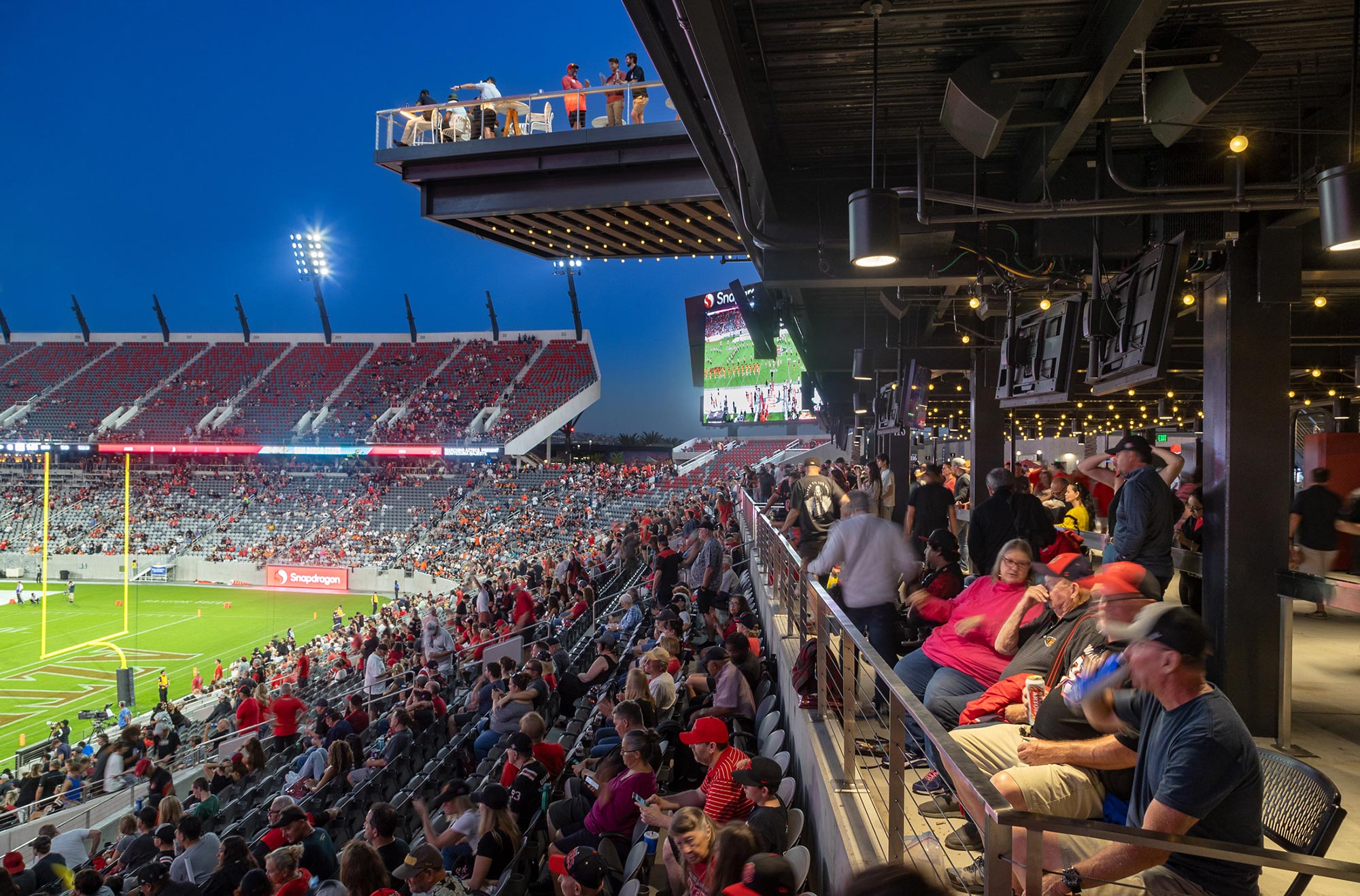
- Multipurpose Venue Hosting Collegiate and Pro Teams
- 5,000-Seat Student Section with 2,900 Safe-Standing Seats
- Designed for Flexibility, with Capacity to Add Up to 10,000 Additional Seats
- LEED v4 BD+C Gold
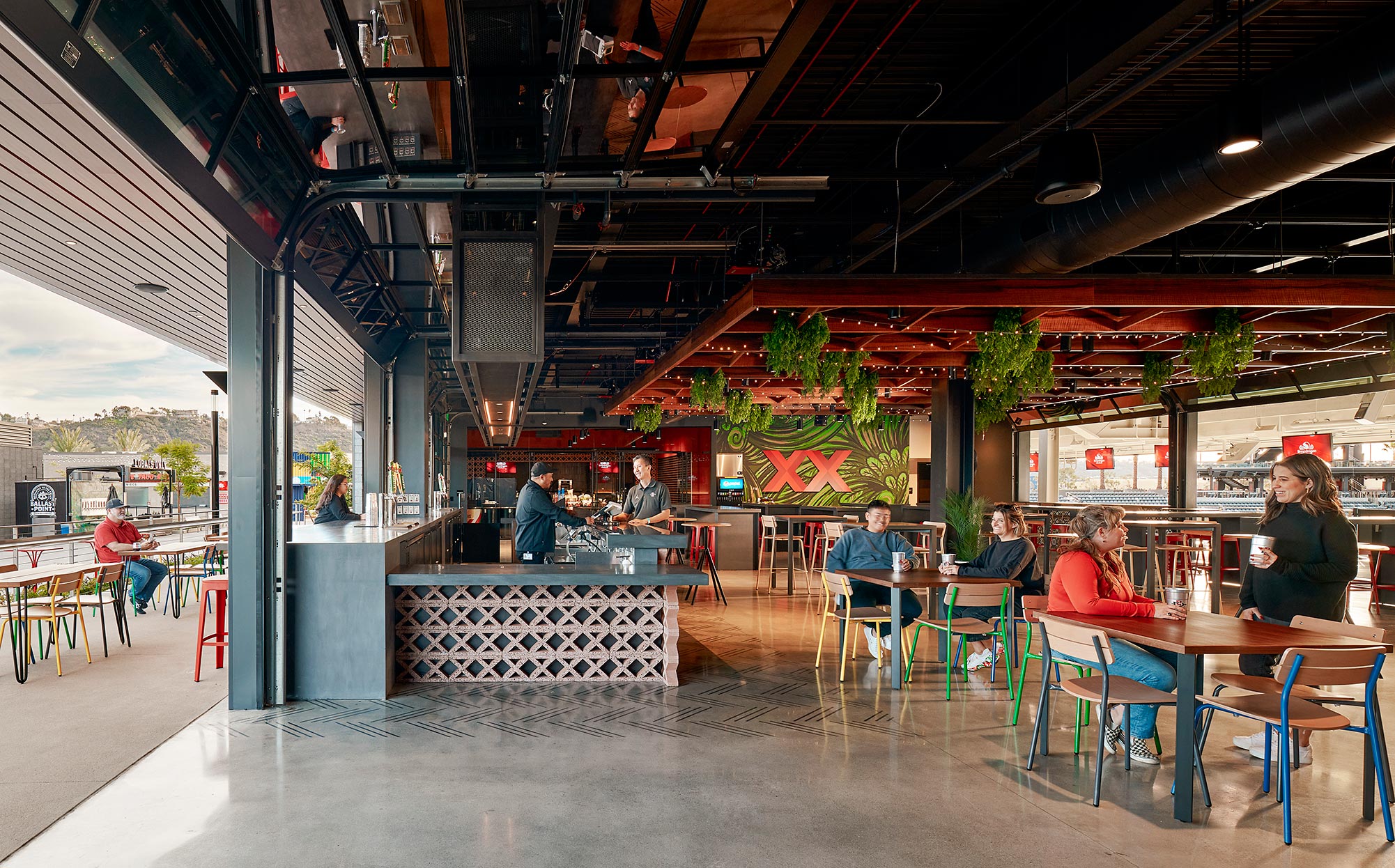
- Native Plants and Landscaped Outdoor Concourses
- Craft Gardens and Plaza Supporting Concerts, Markets, and Community Events
- 3 Elevated Decks Accommodate 500 Guests Across Multiple Levels
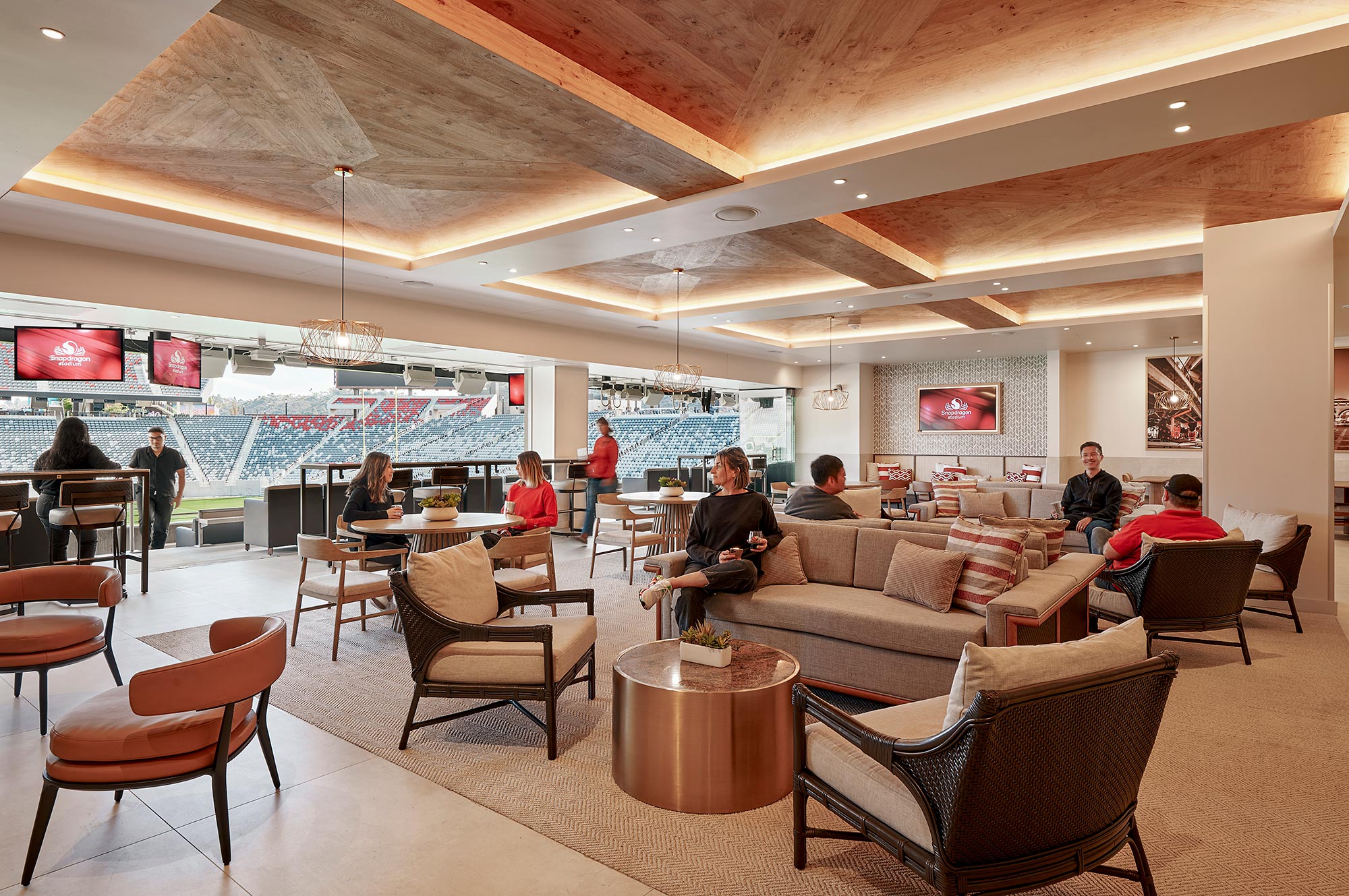
- 16 Suites and 4 Expanded Founders Suites
- 48-Person Founders Club
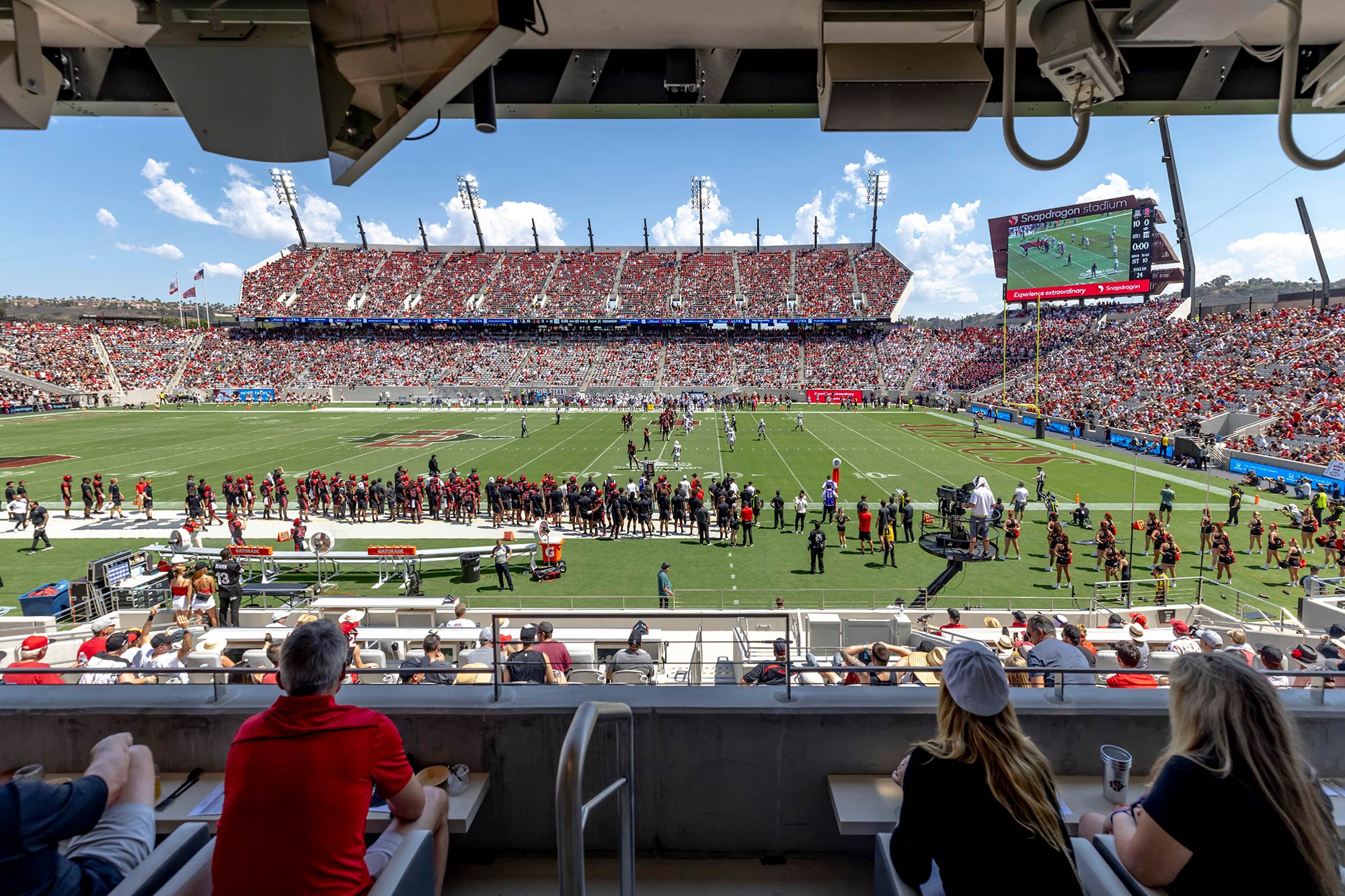
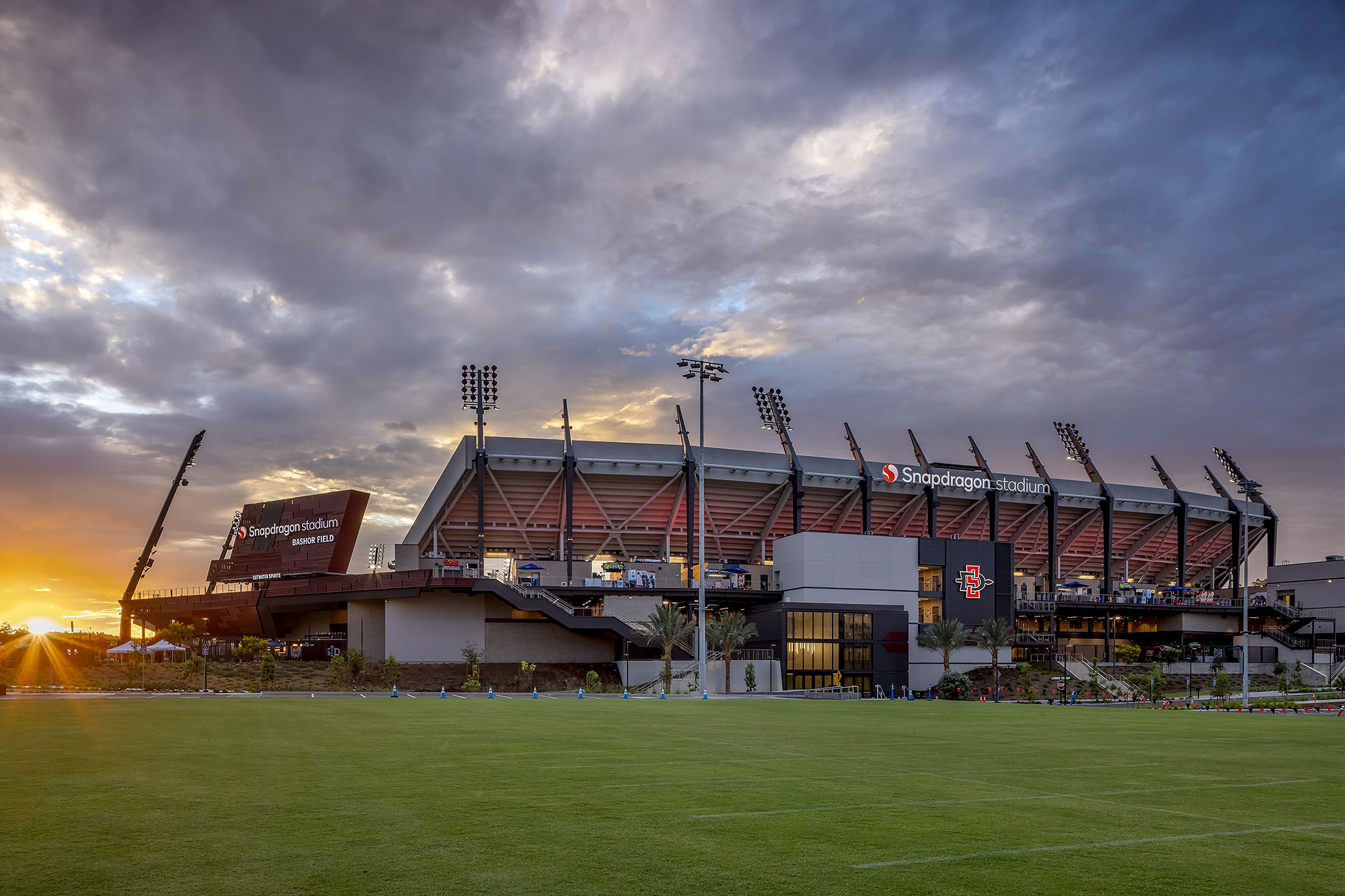
As college athletics grow into a multibillion-dollar industry, universities are rethinking their facilities as strategic business assets — hosting pro teams, driving year-round activity, and competing for fans. For San Diego State University, that meant creating a 35,000-seat Division I stadium that felt authentically “of San Diego.” The university envisioned an anchor for a new entertainment and education district that would redefine the traditional collegiate football experience, host pro and college teams, and deliver a premium yet accessible fan experience.
Delivered via design-build, Snapdragon Stadium reimagines the stadium typology through openness, landscape, and social connectivity. A permeable perimeter dissolves the boundary between venue and city, welcoming fans into landscaped concourses that feel as much like a park as a stadium. Indigenous plantings and open-air circulation reflects San Diego’s climate and culture. Three elevated decks extending over the seating bowl deliver immersive, communal viewing over multiple levels. A 5,000-seat student section, including 2,900 safe-standing seats inspired by European and MLS models, intensifies the atmosphere.
Snapdragon Stadium establishes a new model for collegiate venues that prioritizes landscape, community, and flexibility alongside performance. The LEED Gold stadium integrates indigenous plantings, open-air circulation, and biophilic design that reduce environmental impact. As the anchor of SDSU’s Mission Valley Campus expansion, it supports year-round programming and strengthens community identity. The stadium serves as home to SDSU Aztec football and the National Women’s Soccer League’s San Diego Wave FC, with capacity to host Major League Soccer and large-scale events.
-
Coliseum News reported on the groundbreaking of the 28-acre training facility of the Right to Dream Youth Development Academy, a scholarship-based academy and residence for youth athletes at San Diego FC.
-
Sports Business Journal spotlighted how Gensler’s design of the new Snapdragon Stadium at San Diego State University “embodies the spirit of the city” and offers a spectrum of unique experiences for fans.
-
VenuesNow highlighted San Diego’s new Snapdragon Stadium, which Gensler Design Director Steve Chung says blends various spaces “to create a hyper-efficient football stadium along with a number of hospitality experiences.”

Petco Park, Western Metal Supply Co. Building
University of Maryland, Barry P. Gossett Basketball Performance Center

M&T Bank Stadium
Rose Bowl Stadium Upgrades
Crypto.com Arena
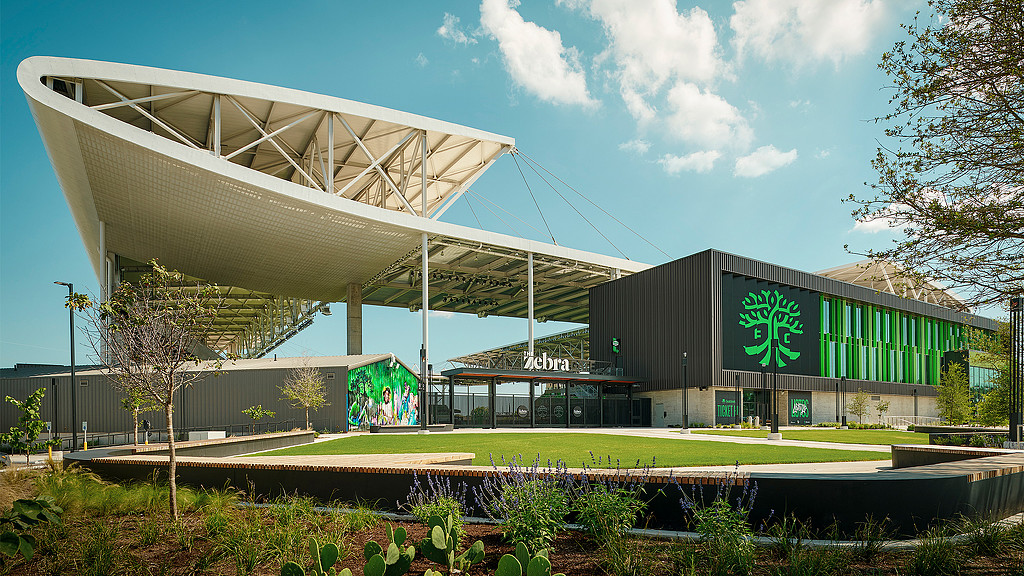
Q2 Stadium
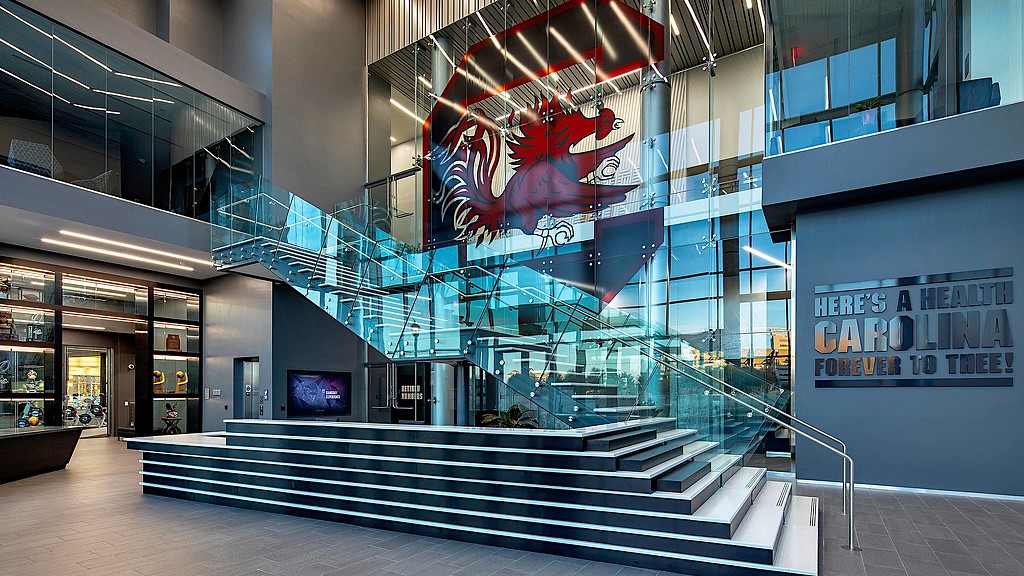
University of South Carolina Football Operations Building

North Carolina Football Club Stadium Concept Design
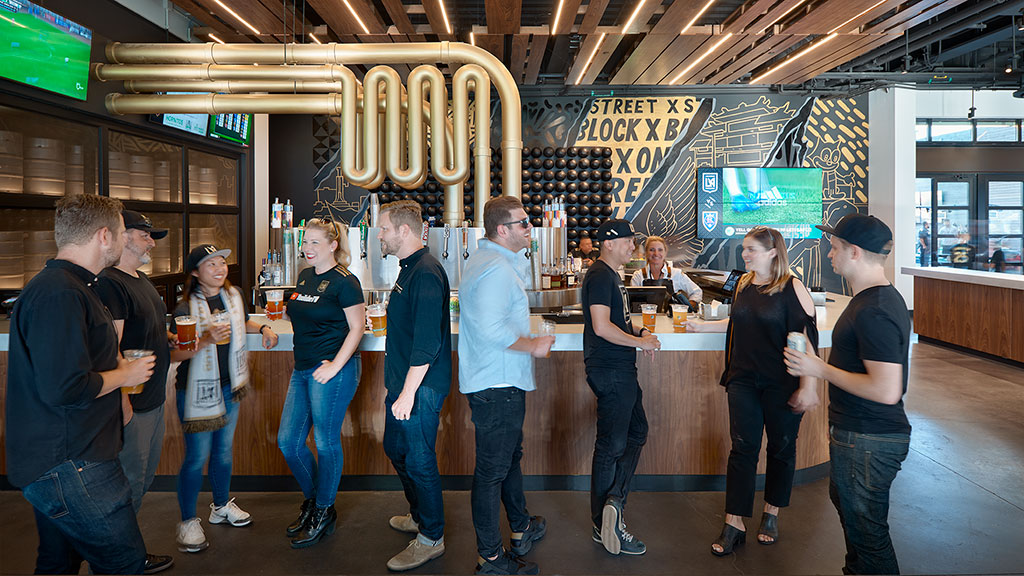
The Evolution of Sports Venue Brand Integration: From Simple to Sophisticated
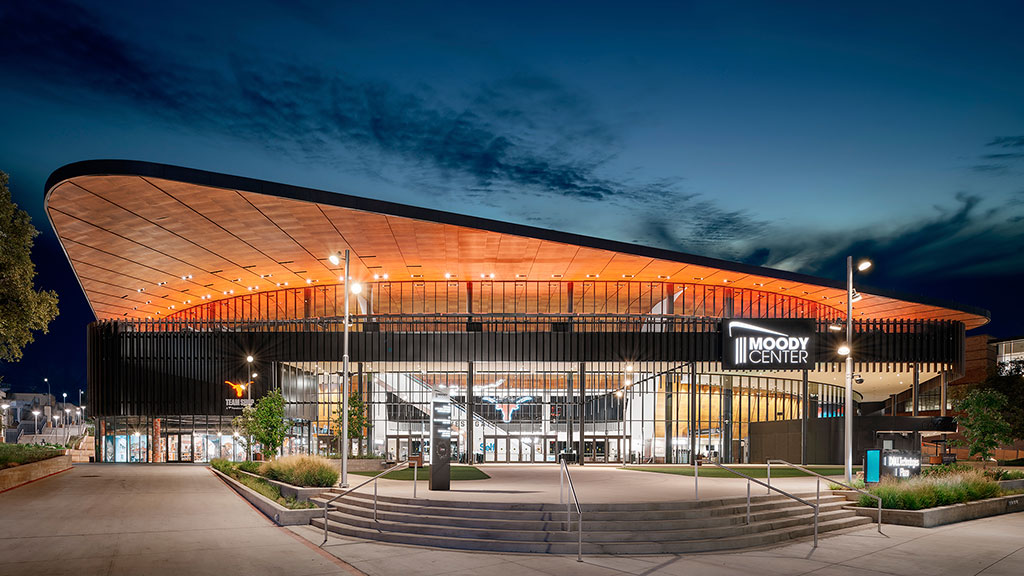
What Two Leading Edge Venues Reveal About the Future of College Sports
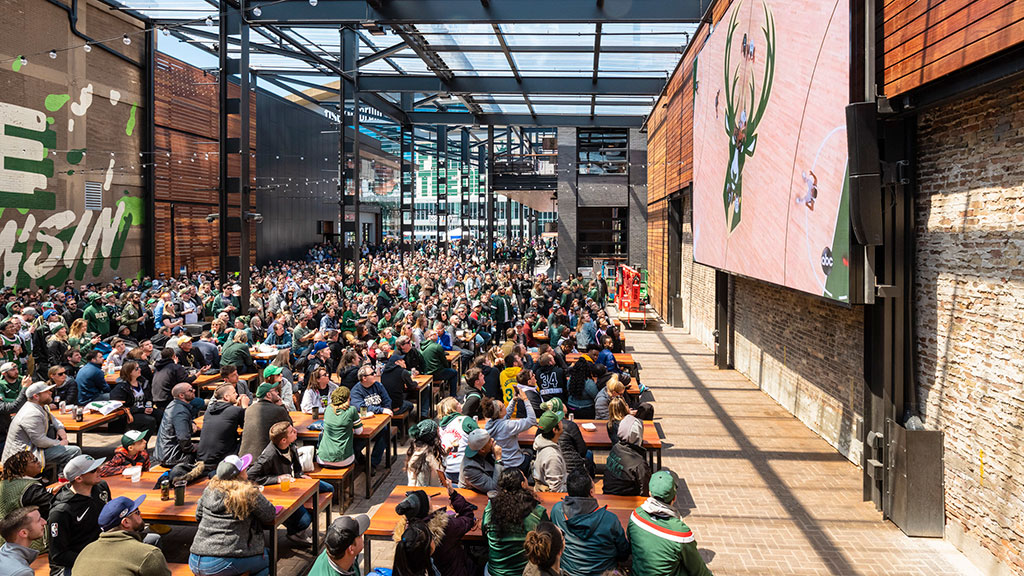
The Future of Sports Venues Is About Creating Vibrant, Multiuse Districts
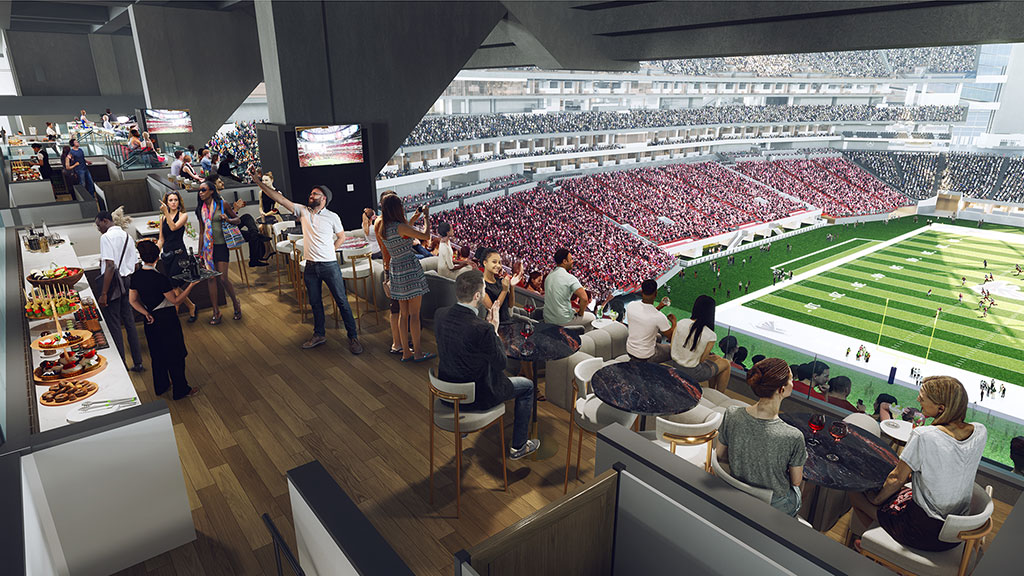
Fans Are Hungry for New Seating Options at Sports Venues

From College Playoffs to the Super Bowl: How Can We Reimagine Live Sports Experiences?