More Human, Not Less:
Rethinking the Office with AI
Why the future of work depends on spaces that amplify human potential.
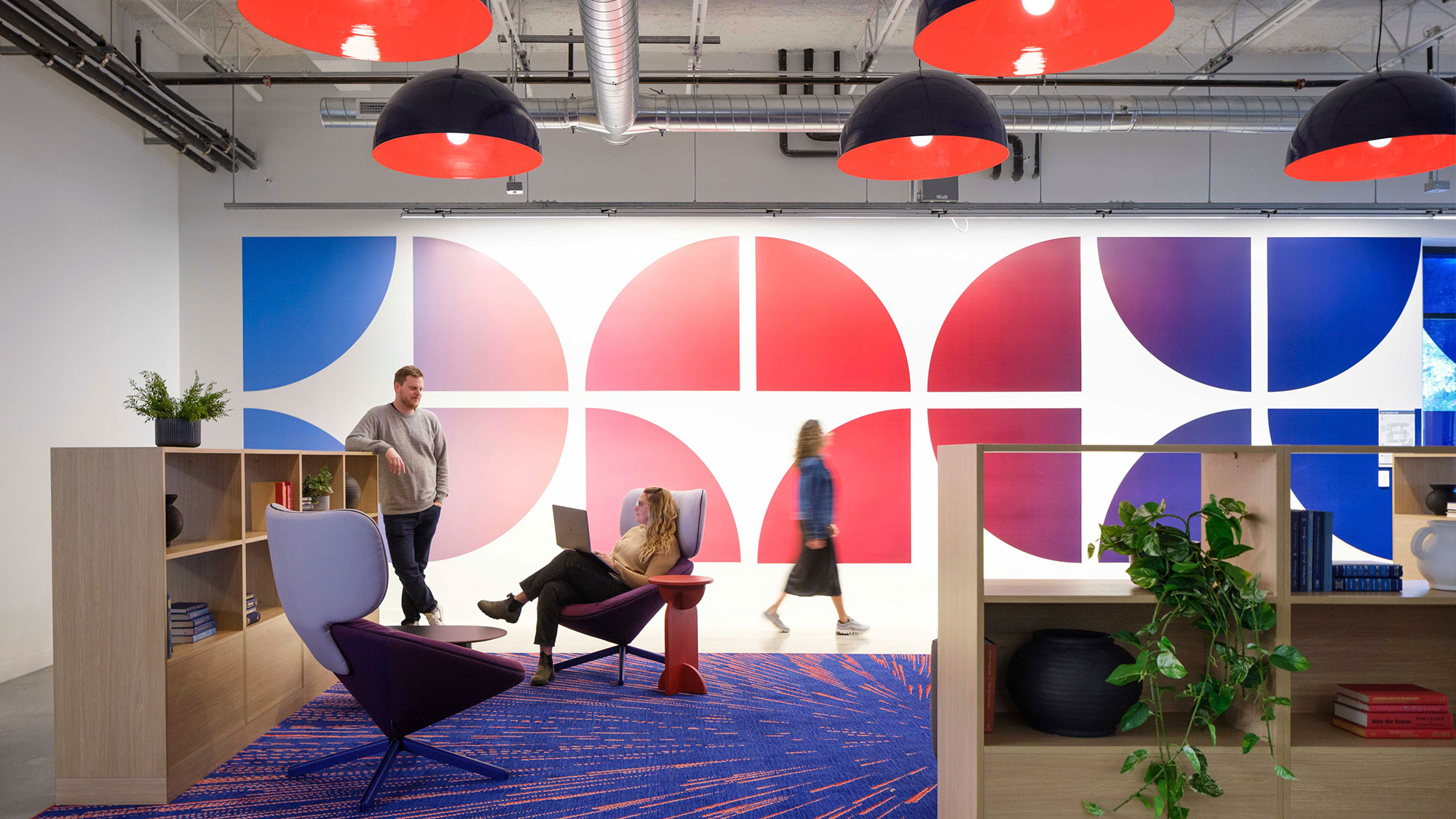
We are entering a transformative moment in the world of work. Artificial intelligence expands the possibilities of what we create, how we interact, and how space adapts to us. This shift is prompting organizations to rethink the role of physical space. The most valuable opportunities now emerge from environments that enhance human creativity and purpose.
The important question we need to solve for every workplace is not “How do we put AI in the office?” but, importantly, “What tasks or work does AI remove from the office?”
At Gensler, we are exploring how physical space can support people in their work with intelligent systems. Our focus is on how design nurtures imagination while fostering collaboration and culture.
Human Creativity is the Differentiator
AI makes workflows more efficient. The ‘productivity’ realm of the machine is about speed and reducing costs for companies. Human work is the opposite. We rely on dreaming, imagination, and innovation. Unlike AI, we use empathy and judgment to shape ideas into meaningful outcomes. These human qualities drive top-line growth for companies. And they’re increasingly essential in every field. As basic tasks are automated, the human-centric, physical workplace becomes a canvas for creative problem-solving and collaboration.
Improving bottom-line impact through efficiency has a floor, but top-line growth through creativity and new innovations has no boundaries. We see design as a tool to foster the curiosity that fuels growth. What spaces help people generate new ideas? How can architecture promote open dialogue and deep thinking? These questions shape how we plan and build environments for the future.
Speed and Reflection: A Rhythmic Design Approach
Some moments at work require momentum and responsiveness. Others call for calm and contemplation. Both matter, and both require space that aligns with the human rhythms behind them.
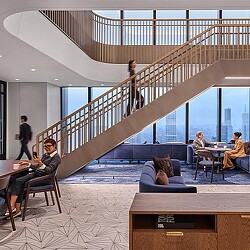
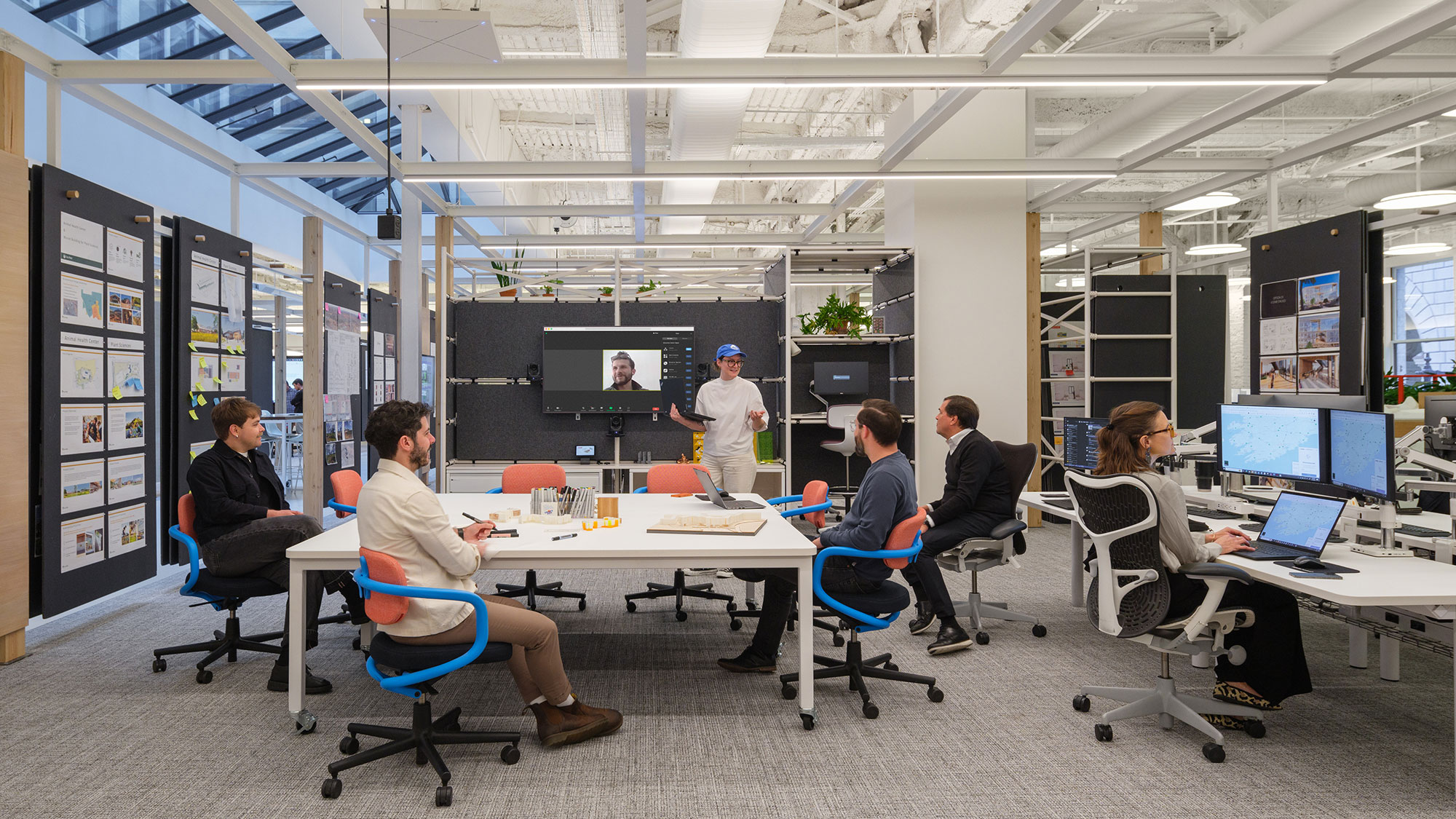
A future-ready workplace supports this full spectrum. Designers integrate spaces for fast-moving collaboration and AI-assisted tasks alongside quiet areas for focus, synthesis, and recovery. The rhythm of work becomes something people can engage with intentionally throughout their day. We all have different needs and rhythms. Our workplace and processes need to support the best outcome for everyone at any time they need.
Designing with Selective Friction
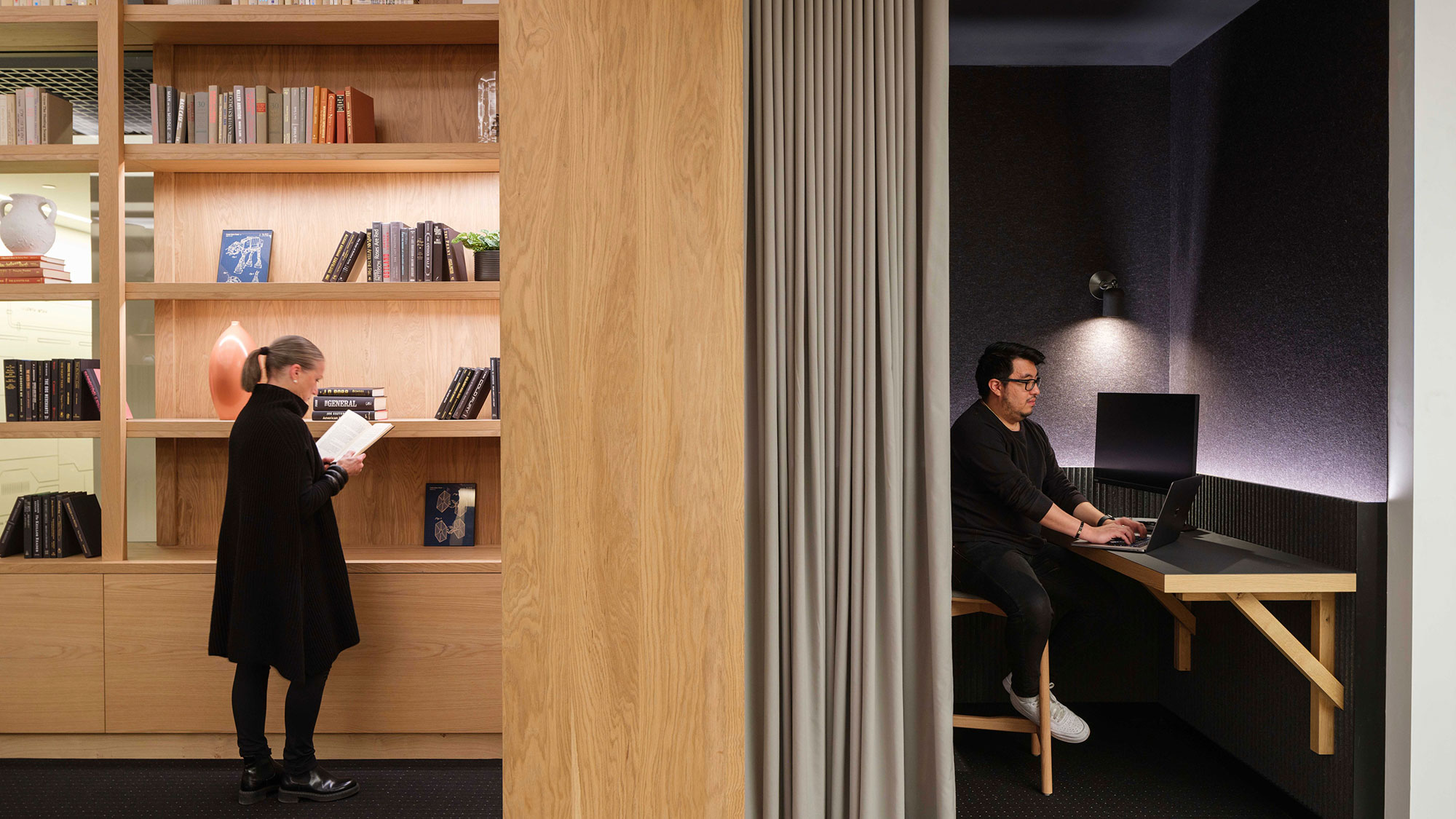
For decades, technology’s role has been to reduce friction, cognitive load, and decision-making. Removing friction encourages speed to action and the perception of ease. As humans living in the physical world, we need friction strategically applied or removed at the right moments. Positive friction supports connection. When space prompts people to pause, observe, or engage, it enriches their experience. Design choices that invite interaction or discovery build shared culture and trust.
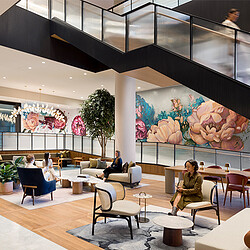
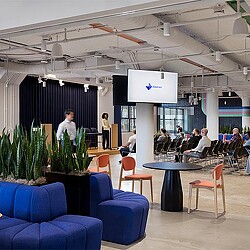
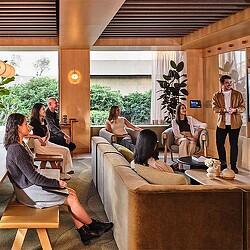
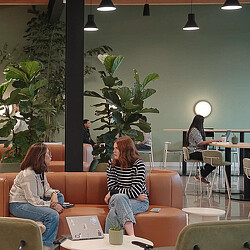
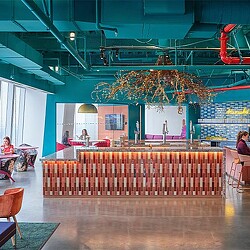
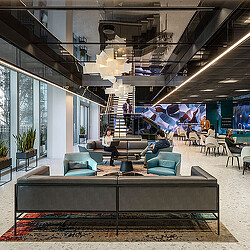
One powerful way to introduce meaningful friction is by starting with hospitality. Spaces such as reception areas, cafés, and informal lounges play an essential role in shaping the workplace experience. These environments encourage people to slow down, reset, and transition into their day or during switching moments. A welcoming café or a comfortable lounge creates space for unplanned conversations, quiet reflection, and opportunities for human connection. In an increasingly fast-paced world, comfort and connection become deliberate outcomes shaped by design.
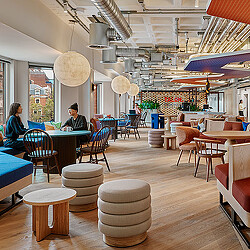
We are exploring ways to introduce these moments of friction without slowing down essential work. From creative materials to unexpected seating arrangements, space can provide gentle invitations that spark insight and strengthen community.
Ambient Technology That Enhances Experience
Voice-activated systems, subtle displays, and adaptive controls now integrate into the modern workplace. These technologies streamline daily tasks while reducing visual clutter and cognitive fatigue. Humans speak up to three times faster than they can type. The voice-enabled workplace and computing platforms will become the norm over the next several years.
When integrated thoughtfully, these tools allow people to stay immersed in what they’re doing. Ambient systems assist without pulling focus. They act as quiet collaborators, offering information, environmental control, or reminders in ways that feel natural and helpful.
The Office as a Living Digital Platform
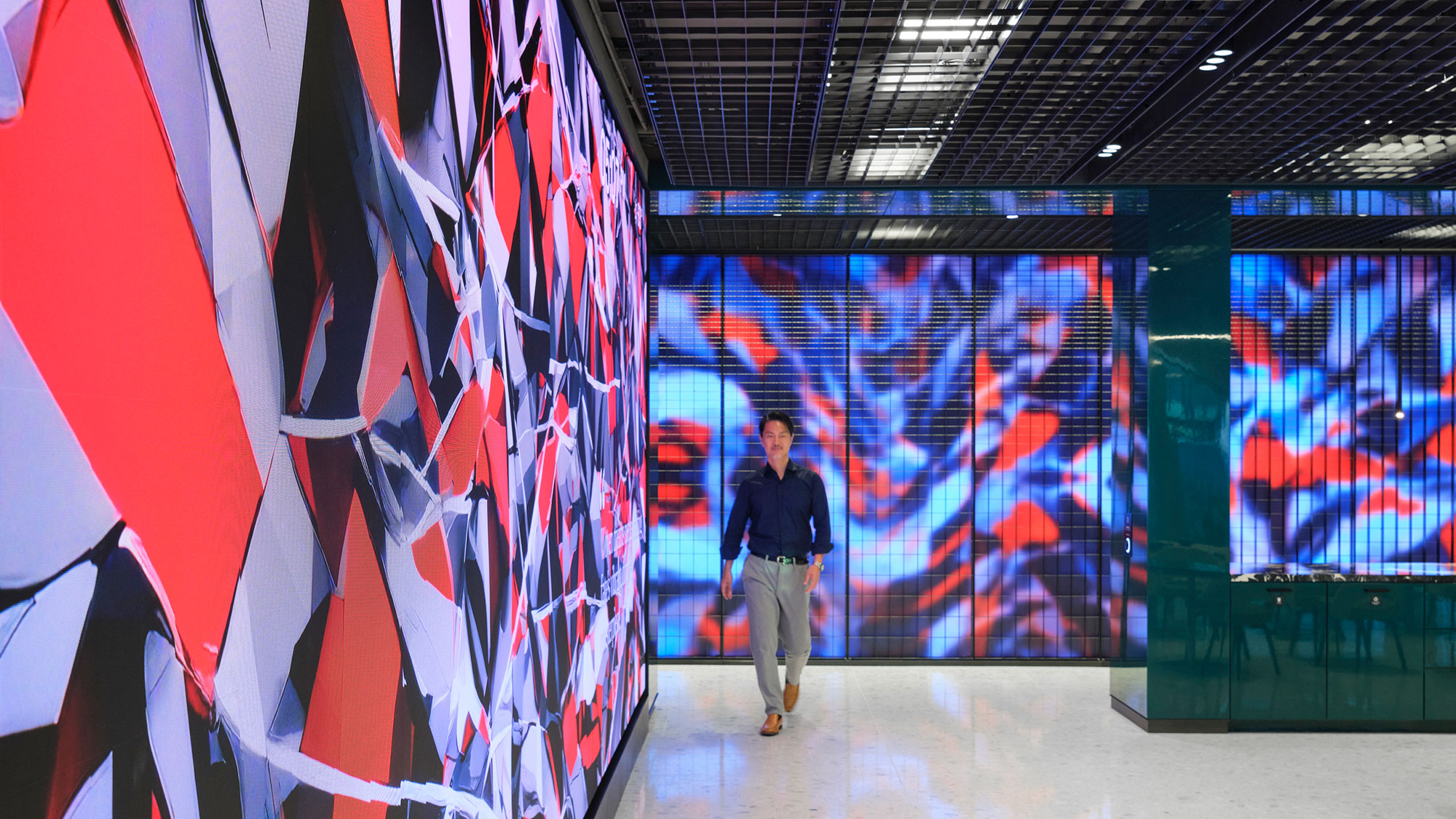
Workplaces now operate as responsive environments. With digital twin technologies and real-time data, a space can learn, adapt, and support people’s needs with increasing precision and immediacy. Recent installations we have developed use AI to operate immersive content. For example, the “Dreamwall” at AB’s New York office in Hudson Yards is an AI-powered art installation that features custom algorithms and motion-responsive elements that create an interactive, ever-changing dreamscape.
At a building scale, we’re exploring the use of experiential digital twins, virtual copies that mirror real-time conditions in and around the building. Designers can shape environments that evolve based on use and preference, from lighting and temperature to room booking. The result is a more intuitive experience that aligns with how people work and interact.
A Moment for Exploration
As new tools emerge, the definition of productivity expands. We are collaborating with clients to test new ideas and experiment with spatial systems that support how people want to work today and into the future. AI is an important part of this story, yet the focus remains on people and their potential to imagine and create great things together.
For media inquiries, email .