The Experience Economy Is Real. Is Your City Ready to Compete?
Cities are no longer just places people live — they’re products people choose.
The data is clear: people are moving. According to the Gensler City Pulse 2025: The Magnetic City — a global study of 33,000+ urban residents across 65 cities — 32% of respondents say they’re likely to leave their current city. Newcomers (0–5 years of residency) are the most restless, with 41% saying they’re likely to move again. And when people do decide to move, 67% intend to stay in an urban environment. They’re not leaving cities. They’re trading up between them.
So what makes a city win that trade? City Pulse identifies the five strongest predictors of whether someone stays: they don’t feel bored, they feel at home, they’re proud of their city, they see it getting better as a place to age, and their sense of belonging has grown over time. Notice what’s not on that list: parking, tax rates, or square footage. The cities winning the population competition are the ones creating genuine emotional attachment — and that’s a design and programming challenge as much as a policy one.
The experience economy has a real, growing, and demanding audience.
This isn’t fringe anymore. According to the Gensler 2025 Immersive Entertainment & Culture Industry Report (Evolving Immersive), 62% of respondents attend immersive experiences frequently or often — and 76% say their city doesn’t have enough of them. That’s not a niche demand signal. That’s a mainstream gap.
The willingness to spend is equally striking. Per the same report, for a 2–3 hour immersive experience, 45% of general audiences will pay $100–$199. For the segment that travels specifically to attend immersive events — and 12% do so five or more times per year — 34% will spend $200–$499 for a single experience. These are not casual consumers. They’re a loyal, high-value audience that will move their bodies and open their wallets for something worth it.
But this audience has standards. Evolving Immersive data shows what they want most is a high level of interactivity (ranked #1 by 187 respondents), overall uniqueness of experience (167 respondents), and the chance to interact with a purpose-built environment (164 respondents). What they don’t want: poor and inconsistent quality, lack of depth, and experiences that misrepresent what “immersive” actually means. The era of projection-mapped Van Gogh as a premium product is over. Cities and developers entering this space need to understand that quality isn’t a nice-to-have — it’s the whole game.
This is still an emerging industry — and it needs a running start.
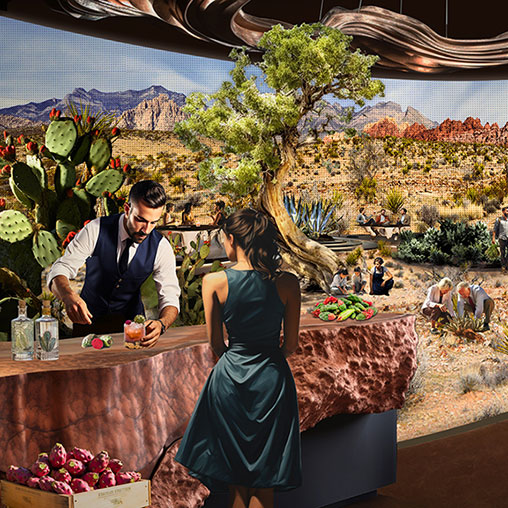
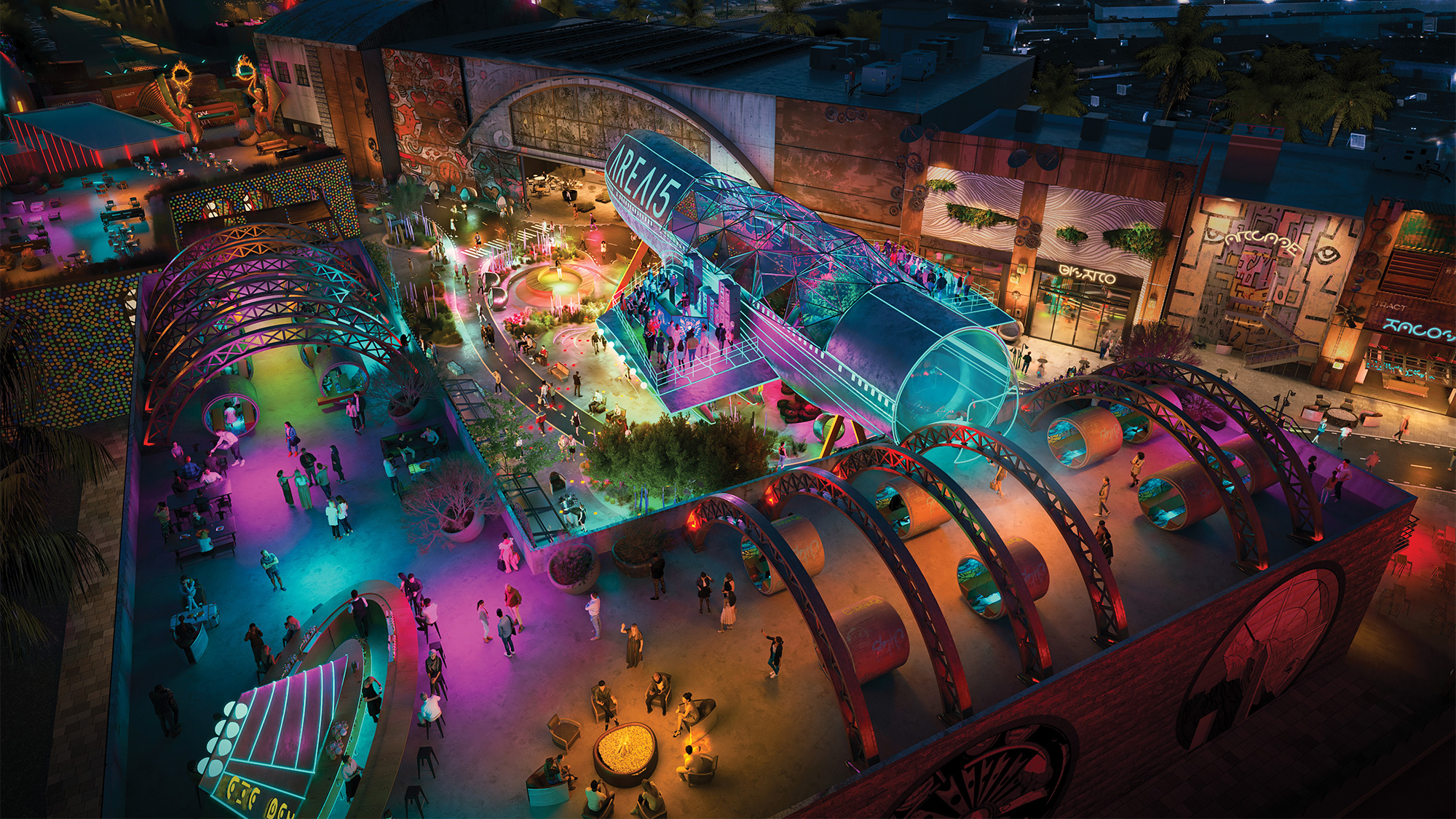
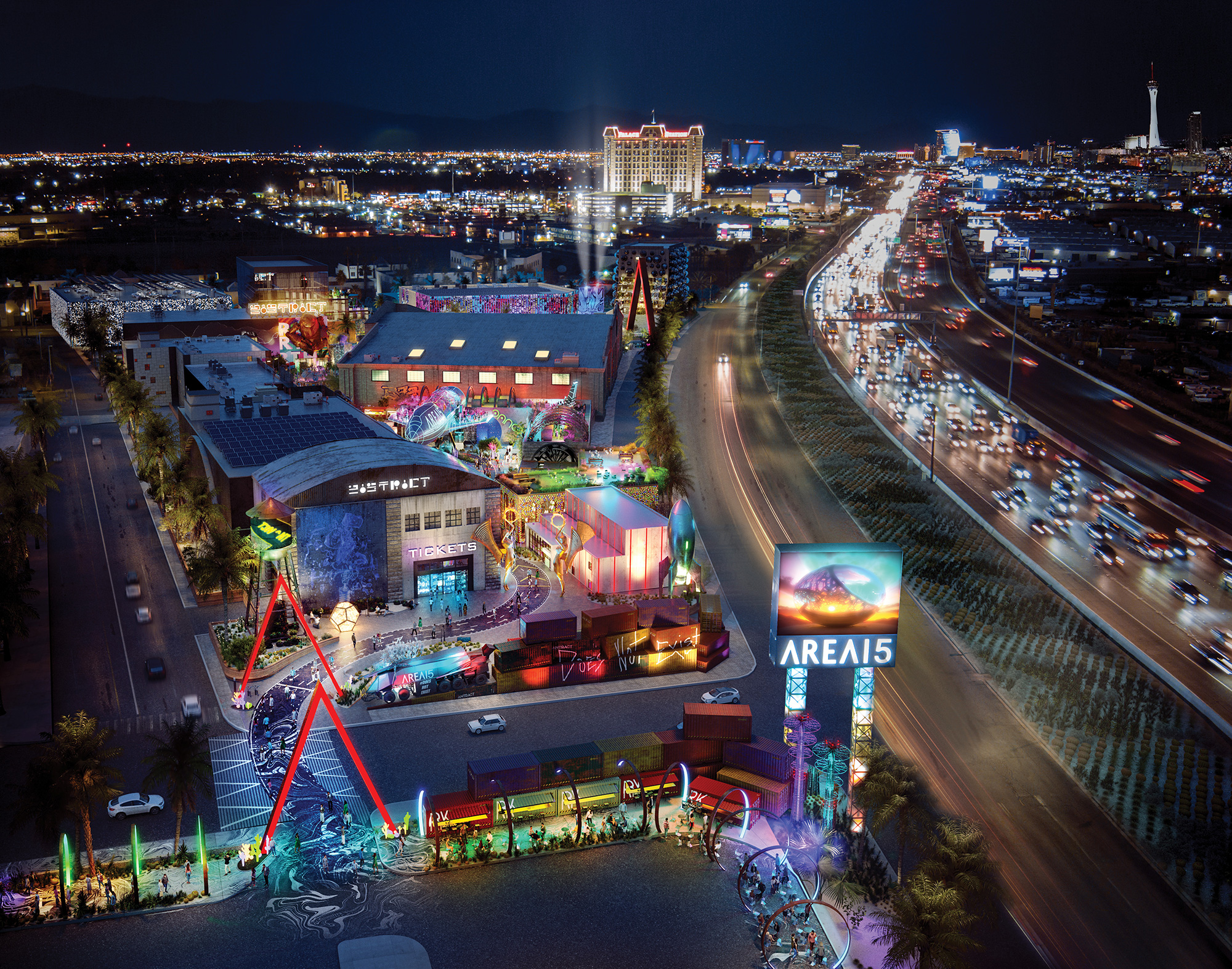
Area15, Cosm, Meow Wolf — these are the proof points that location-based entertainment districts work. But they didn’t happen by accident, and they didn’t happen cheap.
For established operators, the barriers are less financial and more regulatory. The capital is there. The vision is there. What slows these groups down is process — permitting timelines, zoning restrictions, parking minimums, and operating-hour constraints that weren’t written with a nighttime experience economy in mind. Reducing that friction is the most direct thing a city can do to attract proven players.
For emerging creators — those with vision but not yet a balance sheet — the calculus is different. Access to grants, tax abatements, below-market leases, and pilot program structures that allow concept-testing before permanent build-out are what make the difference between an idea that gets built and one that doesn’t. Both profiles matter for a healthy district ecosystem, and the public sector tools need to reflect that distinction.
What often gets overlooked in both conversations is that the most compelling pitch a city can make to any operator isn’t a tax break — it’s data. Cities and BIDs that can provide credible foot traffic projections, visitation patterns, and spending behavior for a specific corridor give operators something they actually need: a business case they can take to investors. That kind of market intelligence is a competitive advantage most cities don’t know they have, and almost none are packaging it proactively.

The bottom line: districts win, not destinations.
A single venue doesn’t make a city magnetic. What creates pull is density — of experiences, dining, and discovery — within a walkable area that builds its own identity. City Pulse 2025 data shows that families with children are already the most optimistic demographic about their city’s future (71% report optimism, compared to just 54% of established adults without children), and the most likely to report a positive city experience overall (80% of families with a partner/spouse). That’s the audience that stays, spends, and advocates. Building districts that serve them — alongside young adults (62% optimistic) and older adults (61% optimistic) — is how cities stop losing people and start becoming the place everyone wants to move to.
Through our work in this space, the Gensler Entertainment team has identified five universal attributes that define successful immersive design — and they translate directly into how we think about district planning: story-driven environments, distinctive location and setting, sensory and emotional engagement, participatory and memorable programming, and elements of transformation. These aren’t just experience design principles — they’re placemaking principles.
The question for city leaders, developers, and experience makers isn’t just what do we build — it’s what are we building together, and what does this block feel like at 9pm on a Tuesday?
The cities taking that question seriously are the ones people are choosing to call home.
For media inquiries, email .