The Hardest Part of Game Day Is Getting Home: How Relay Nodes Extend the Fan Experience
How Transit Relay Nodes can ease the stadium exit crush and extend the fan experience into the surrounding city.
The final whistle blows. Seats empty. Within minutes, tens of thousands of people are funneled toward the same curb, waiting for the same rides, in the same crush.
For fans, the night does not end at the turnstile. It ends at home. The thrill lingers, the low hum of the crowd, the sense of having been part of something larger than yourself. We design every minute inside the venue with intention, yet leave the journey out to chance. So, the question is simple: what if the walk home was designed as carefully as the seat, the sightline, and the show?
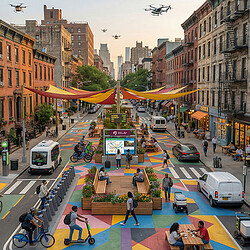
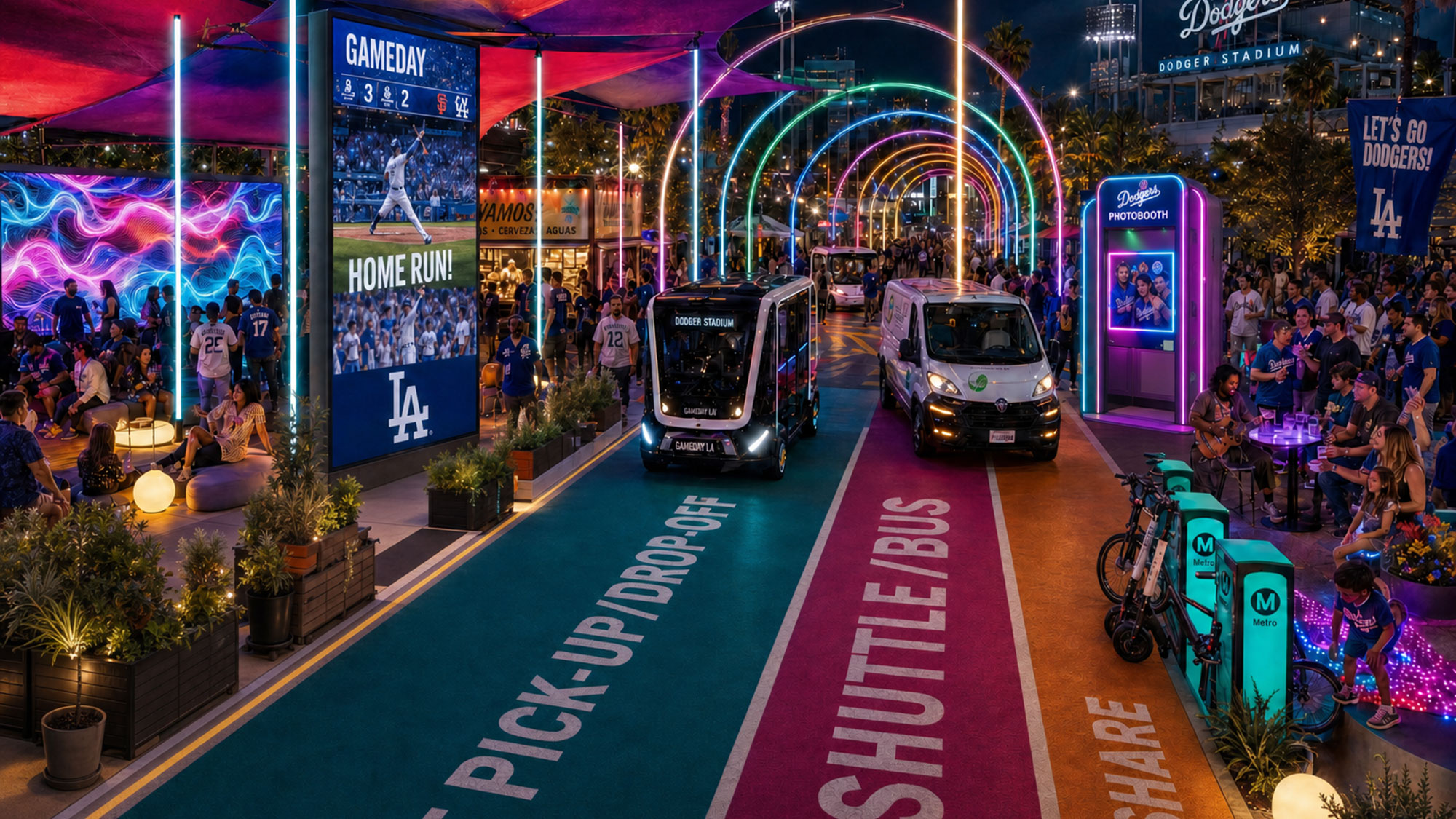
Gensler’s Mobility Lab is designing a solution: not a single point as a threshold, but a system of dispersal. Transit Relay Nodes are multimodal pick-up and drop-off microhubs where public transit, rideshare, micromobility, and pedestrian flows are coordinated into a single network. Distributed around the venue, they spread demand across the city instead of concentrating it at a single curb. The network absorbs the surge and creates a better ecosystem around the venue.
This creates an opportunity to knit large events into the urban fabric, extending the fan experience all the way home.
The Crush at the Gate
A successful event is meant to unfold over time, with fans arriving in a slow trickle and leaving the same way. In practice, they don’t. They arrive in a rush just before showtime and leave all at once the moment it ends.
The curb was built for a steady stream of people, not a wall of them arriving together. In the first few minutes after the show, an exhausted crowd surges against a curb already at capacity. You know the scene: penned behind a line of idling rideshares, watching a stalled car inch forward, with no idea when your ride will actually reach you.
What should feel like the easy part, just getting home, becomes the most uncertain stretch of the night.
How Transit Relay Nodes Solve for Surge
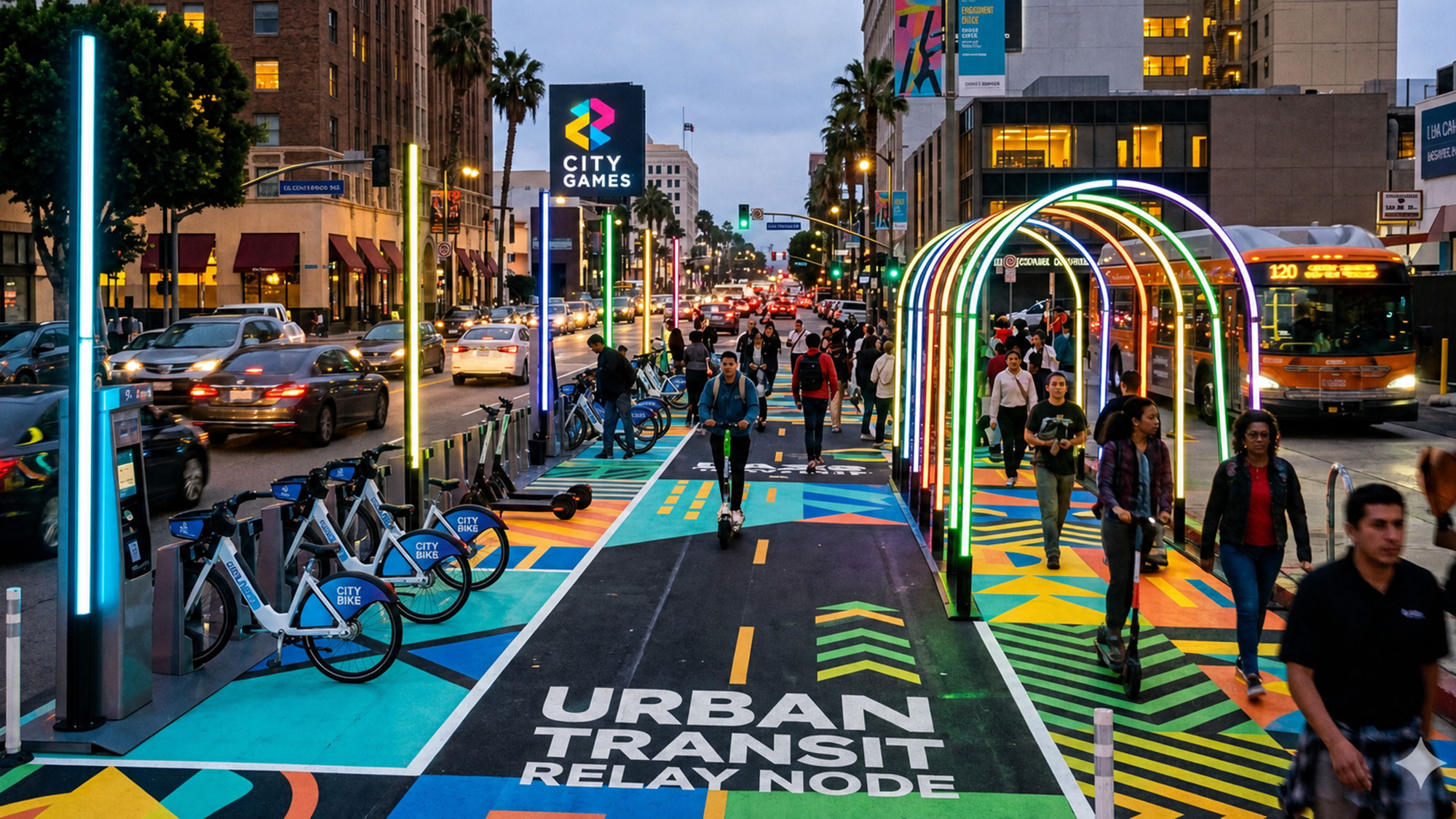
Transit Relay Nodes are curbside mobility microhubs that organize pickup and drop-off across a distributed network. Instead of concentrating demand at a single curb, they turn multiple streets into coordinated access points.
At each node, the modalities that stack and coordinate are contextual, variable, and planned adaptively. Rideshare, driverless vehicles, local buses, and bike systems converge in one place, alongside pedestrian amenities and space for vendors. The curb transforms from leftover space to active civic infrastructure, offering choice, flexibility, and communal placemaking.
As these nodes repeat across blocks, they build a network that driverless cars can sync with, that pedestrians can reach easily, and that small businesses and communities can use as a platform for visibility. Each node is designed with clear wayfinding, pedestrian amenities, and choices of modalities, including private and public transit. Relay Nodes are as much about creating fluid transfer between modalities as they are about pickup and drop-off, accelerating dispersal and reducing traffic friction.
The system works with human behavior, not against it. Crowds break into smaller groups, sorting naturally by route and mode. What begins as a surge resolves into steady, distributed movement.
The Drumroll: Shaping Excitement Across the City
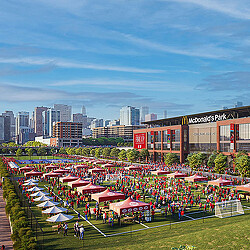
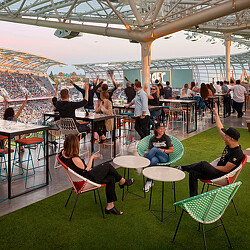
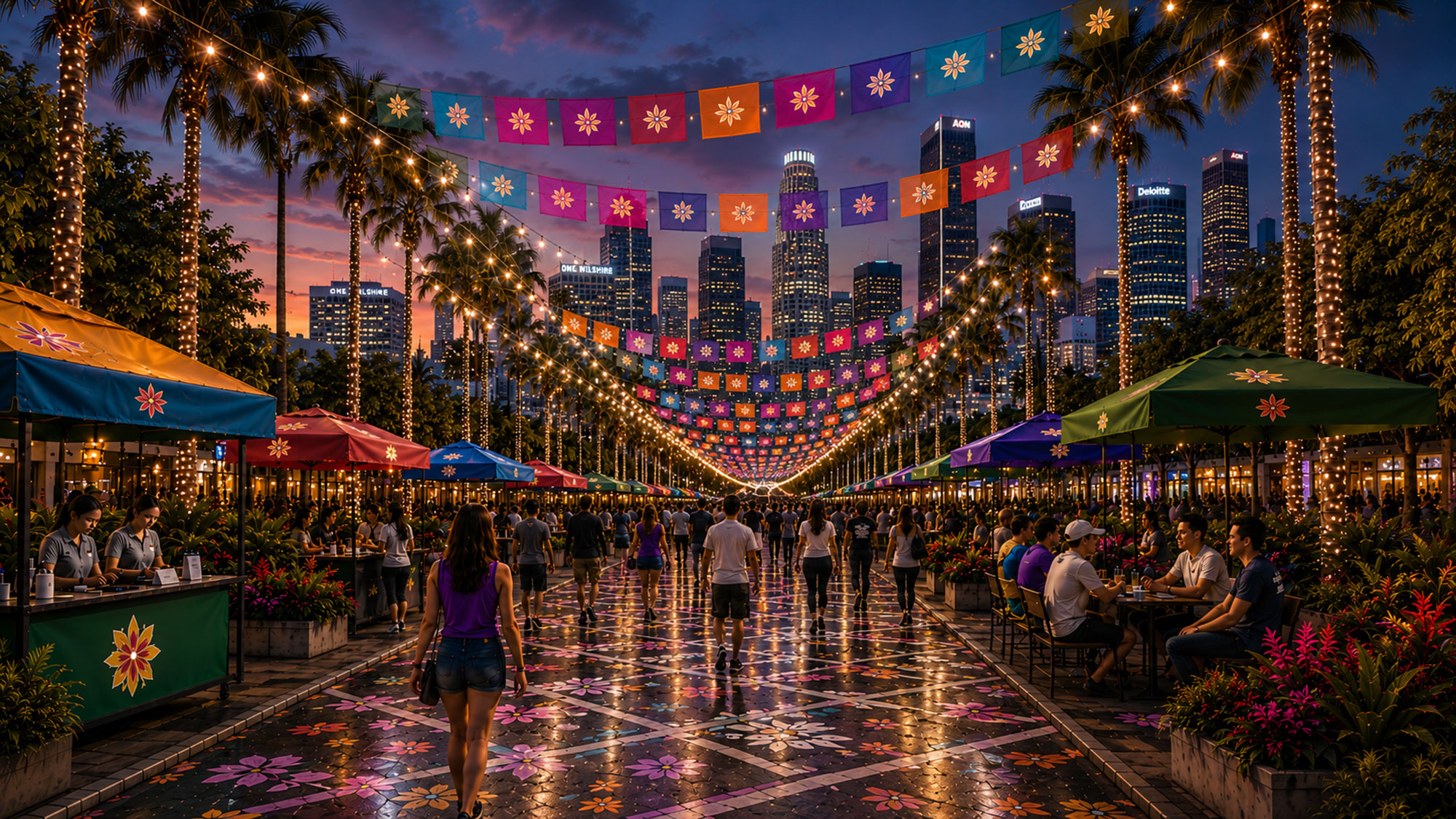
On game day, these nodes play a greater role than just pick-up and drop-off. These become locations to stage fan experience multipliers, taking cues from the changing economics of venue design: temporary fan lounges, multi-tiered fan experiences, and a chance for local sports and entertainment clubs to monetize through small vendor stalls and pop-up amenities.
The payoff runs both ways. Fans funnel towards different destinations based on how they want to travel and what choices are most conveniently available to them. The approach mitigates the inconveniences that deter more fans from attending large events by simplifying last-mile travel. The network becomes a drumroll at the beginning of an event, and a gentle send-off at the end.
Speed is a False Metric on Game Day
A predictable journey feels faster than standing still in uncertainty. We’re optimizing for scalability, adaptability, and high throughput, not speed. Fans do not need to leave a venue faster; they just need to keep advancing. Traditional transportation planning often measures success by how quickly vehicles move through a corridor. Instead, we focus on continuity.
Autonomous vehicles may eventually make distributed pickup networks even more efficient, but the underlying strategy does not depend on them. Gensler's City Pulse 2026 research found that activated, walkable streets are among the strongest drivers of downtown vibrancy — relay nodes are designed to deliver exactly that. Cities can begin implementing relay node concepts today using existing rideshare services, public transit, temporary wayfinding, and curb management strategies.
Reclaiming the Fan Journey
By designing the journey home as intentionally as the venue itself, cities and venue operators can create a more seamless fan experience for national and international fans and unlock greater value for the surrounding community.
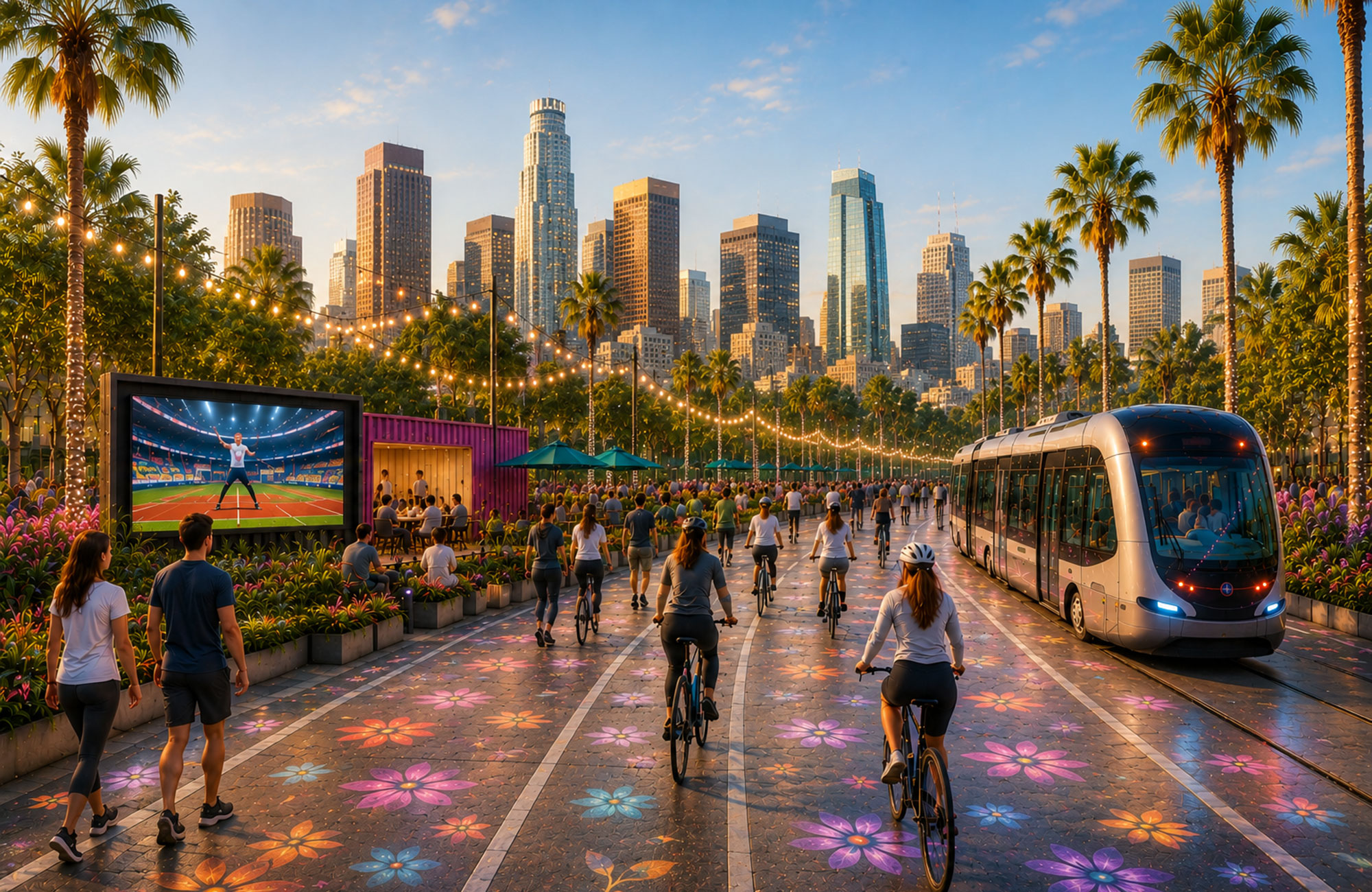
Relay Nodes can dot around the city’s landmarks, local businesses, and neighborhoods to create a richer fan experience. Gensler’s Voice of the Fan research informs how these nodes can be strategically programmed for game day. Food vendors, local retail, entertainment, and sports activities can turn that catchment point into a chance to engage with the surrounding neighborhood rather than simply standing in line for a ride.
These flexible Relay Nodes can naturally integrate with existing public transit and hospitality infrastructure, connecting entertainment, sports, and hotel drop-offs into a single network. For locals, this is greater connectivity and visibility.
Tactical Programming: Letting the Show Go On
Our approach is inspired by the temporality offered by tactical urbanism that can allow cities to test these setups at low cost and program the nodes around average day versus surge events fluidly. Through simple, temporary pavilions, graphic signage, lighting design, planning, and wayfinding, these geofenced pickup locations create a canvas for the events’ experience to pour out as fan touchpoints, pop-up activities, and pedestrian amenities.
After game day, these operate as simple, low-cost shaded areas for an everyday mobility network. Their adaptability, simplicity, design, and planning make them a sustainable, simple alternative to how our mobility systems interact with our curbs. Through strategic, data-driven programming, planning, and siting, cities can use this network of nodes year-round for multiple stakeholders and their communities to explore and socialize — making their streets more magnetic and safer through greater pedestrian activity..
The LA28 Olympic Games are a case in point: a strict no-build mandate and a car-free ambition, 40 distant venues, and a curated Los Angeles experience. Relay Nodes fit these criteria: simple, no-build, and scalable tactical interventions. They offer cities a low-risk opportunity to test new mobility strategies, measure results, and refine operations before making long-term infrastructure investments.
Whether it’s the Super Bowl or a Taylor Swift concert, this strategy can help cities rethink mobility around entertainment districts, convention centers, transit hubs, and anywhere thousands of people move through shared public space in short periods.
With Relay Nodes, the experience continues long after the crowd disperses. The event envelops the city, and the experience extends well beyond the gates. In our view, distance, not speed, is what lets the show go on.
For media inquiries, email .