Beyond Matchday: Why Europe’s Next Sports Districts Must Be Designed as Everyday Places
The most successful sports districts of the next decade will function as interconnected civic ecosystems.
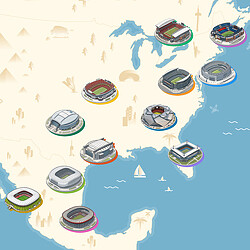
As the 2026 FIFA World Cup kicks off in North America, Europe is already preparing to host the 2030 FIFA World Cup across Spain, Portugal, and Morocco. And with it comes a larger question about the future of stadiums and arenas: how do these venues contribute to city life long after the final whistle?
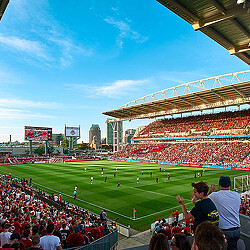
For decades, sports venues have been designed around episodic intensity. Matchday generated the crowds, the atmosphere, and the commercial return. Outside those moments, many venues become dormant and quiet, even as the city moves around them.
That model is under pressure. Rising land values, higher operating costs, shifting audience behaviours, and growing expectations around social value and ESG performance are forcing venue owners, developers, and cities to rethink what sports infrastructure should actually do.
Across Europe, where stadiums are often embedded within dense urban fabric and deeply established neighbourhood identities, venue owners, developers, and cities are redefining what sports infrastructure means for city life — designing districts that feel active, social, and culturally relevant every day of the week.
From Destination Venue to Civic Infrastructure
Europe’s most successful stadium districts have always understood this intuitively. Long before fans reach their seats, the district is already alive. Cafés and bars fill up hours before kick-off, and public squares, transit routes, local rituals, and shared anticipation turn an event into a collective urban experience. What’s changed is the expectation that the venue itself should be a destination in its own right — generating that energy beyond matchdays.
That relationship between venue and city is being fundamentally rethought as sports and entertainment districts evolve into mixed-use destinations that combine hospitality, retail, culture, workspace, housing, and public realm into a more continuous urban model.
This shift is particularly visible across Europe, where many cities are exploring how major sports investment can support broader regeneration and deliver lasting urban value beyond the event itself.
The upcoming 2030 World Cup presents a significant opportunity to rethink this relationship. For host cities across Spain, Portugal, and Morocco, the tournament will bring global visibility and economic activity. But the longer-term legacy will depend on whether these venues become part of daily urban life or remain isolated assets designed primarily for peak moments.
The real challenge is to design a better urban ecosystem around the stadium.
5 Principles for Common Ground in Venue-Led Placemaking
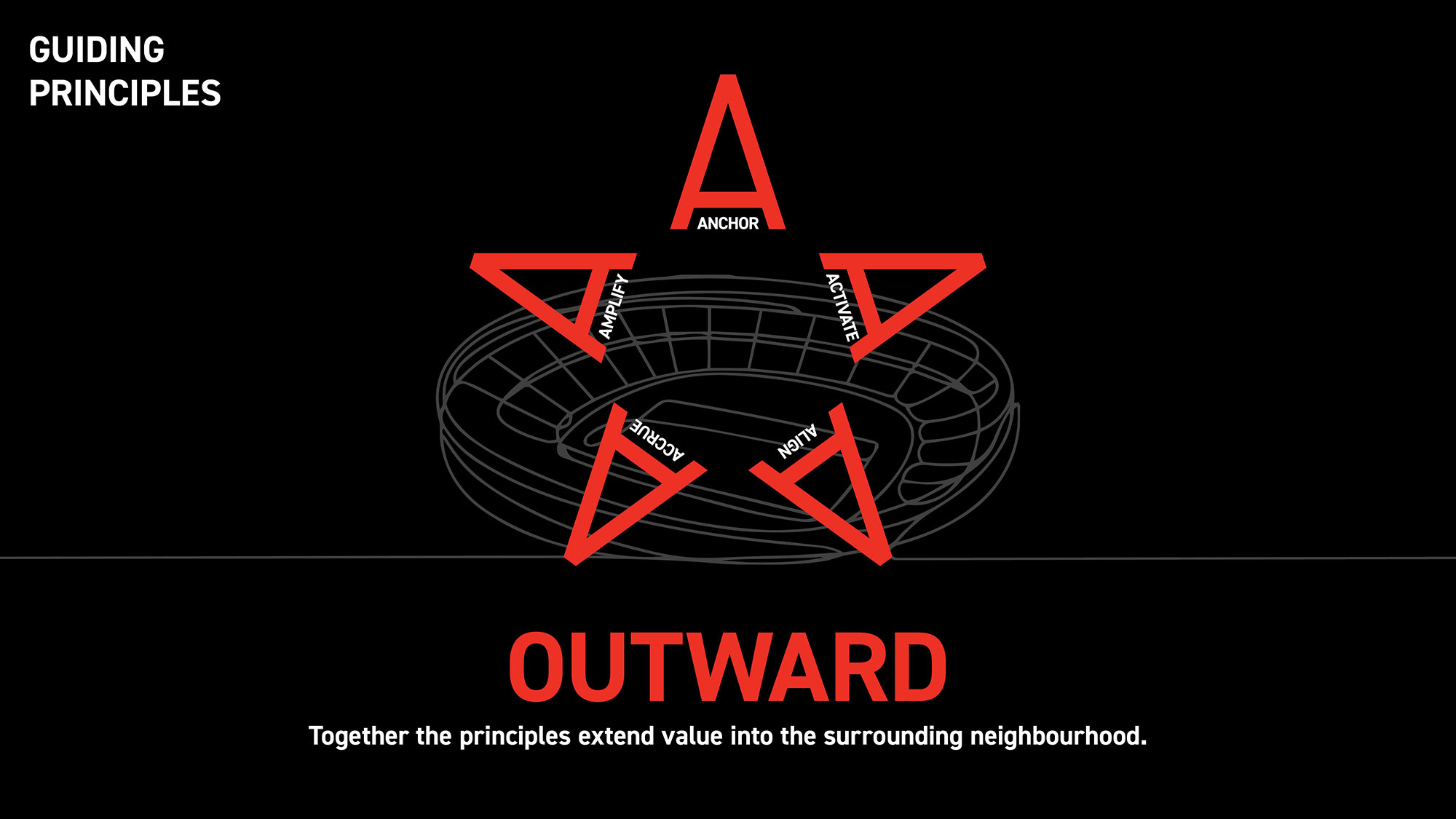
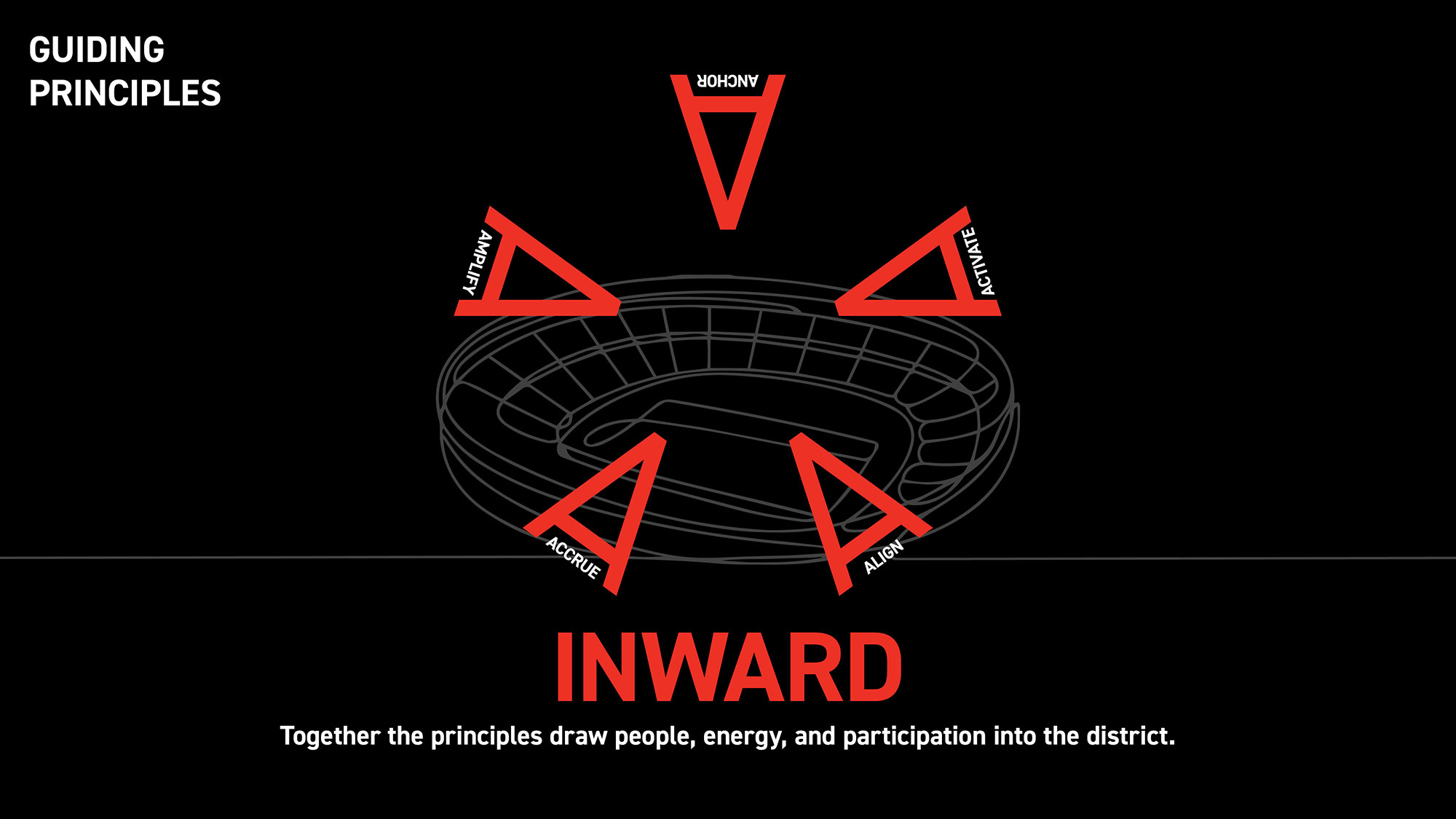
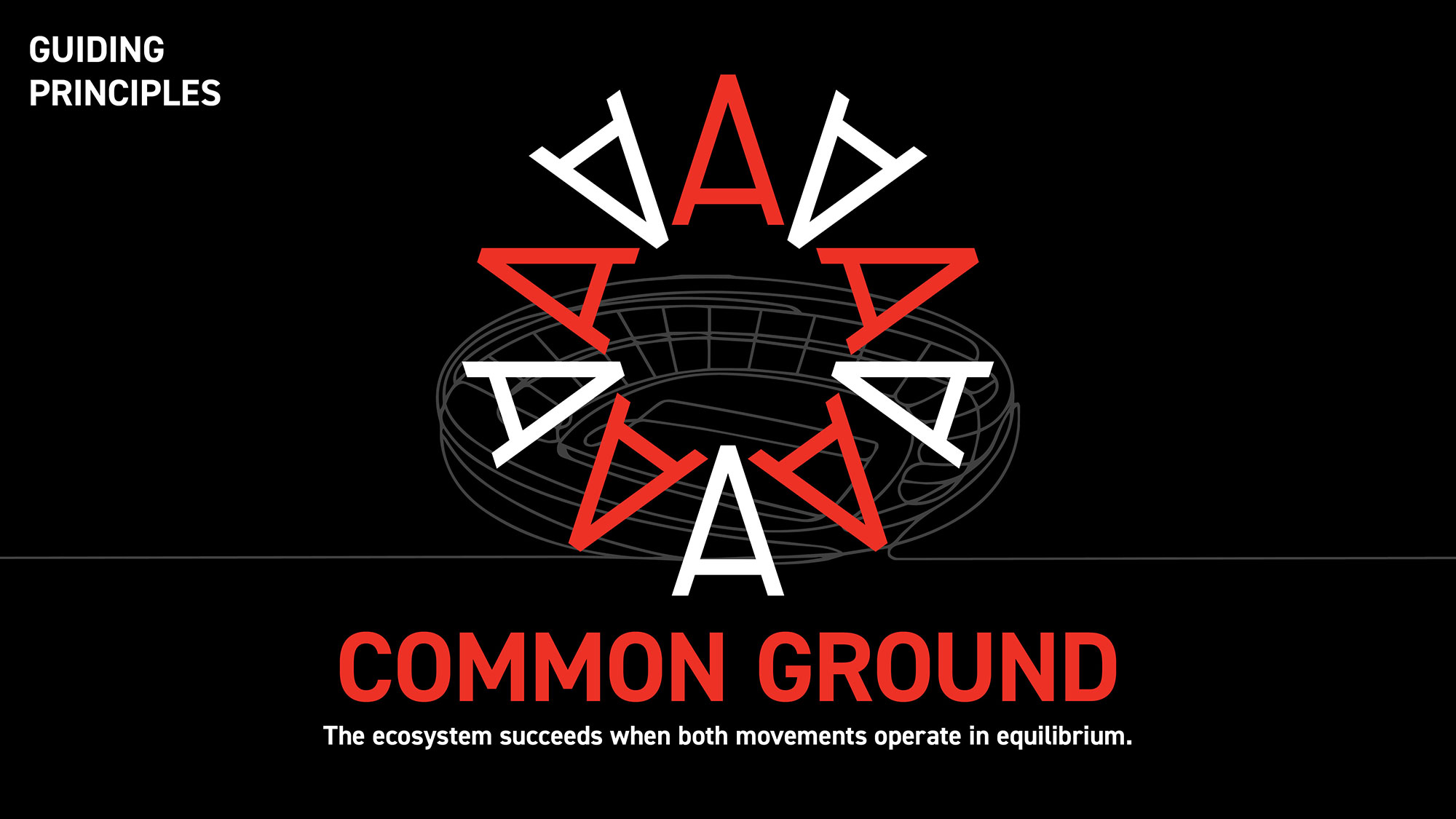
At Gensler, we describe this shift through the idea of “Common Ground” — a framework for thinking about sports and entertainment venues as civic anchors embedded within a wider social, cultural, and economic network.
The framework is built around five interconnected principles:
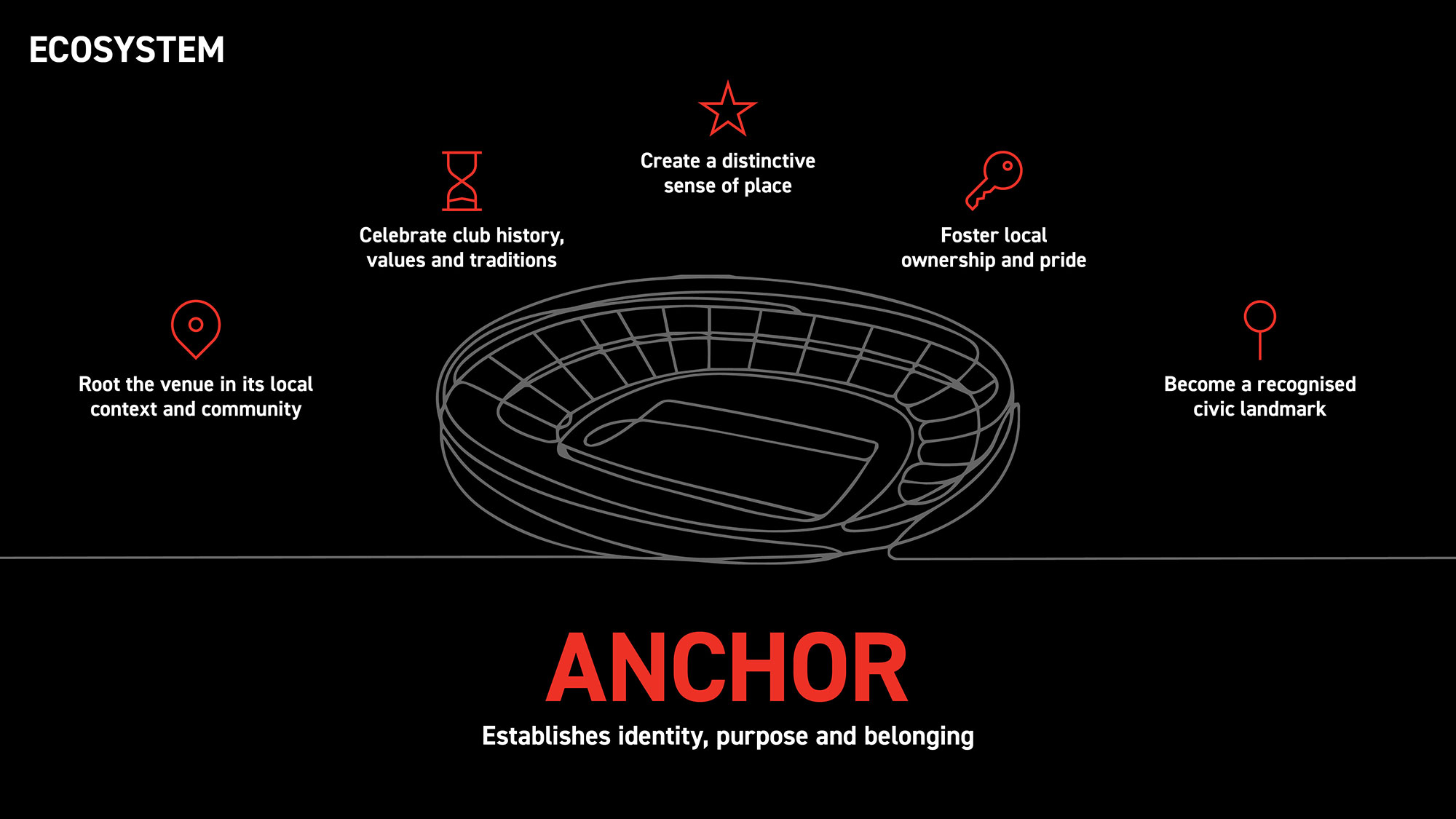
Anchor – establishing the venue as both an emotional and economic centre for the district.
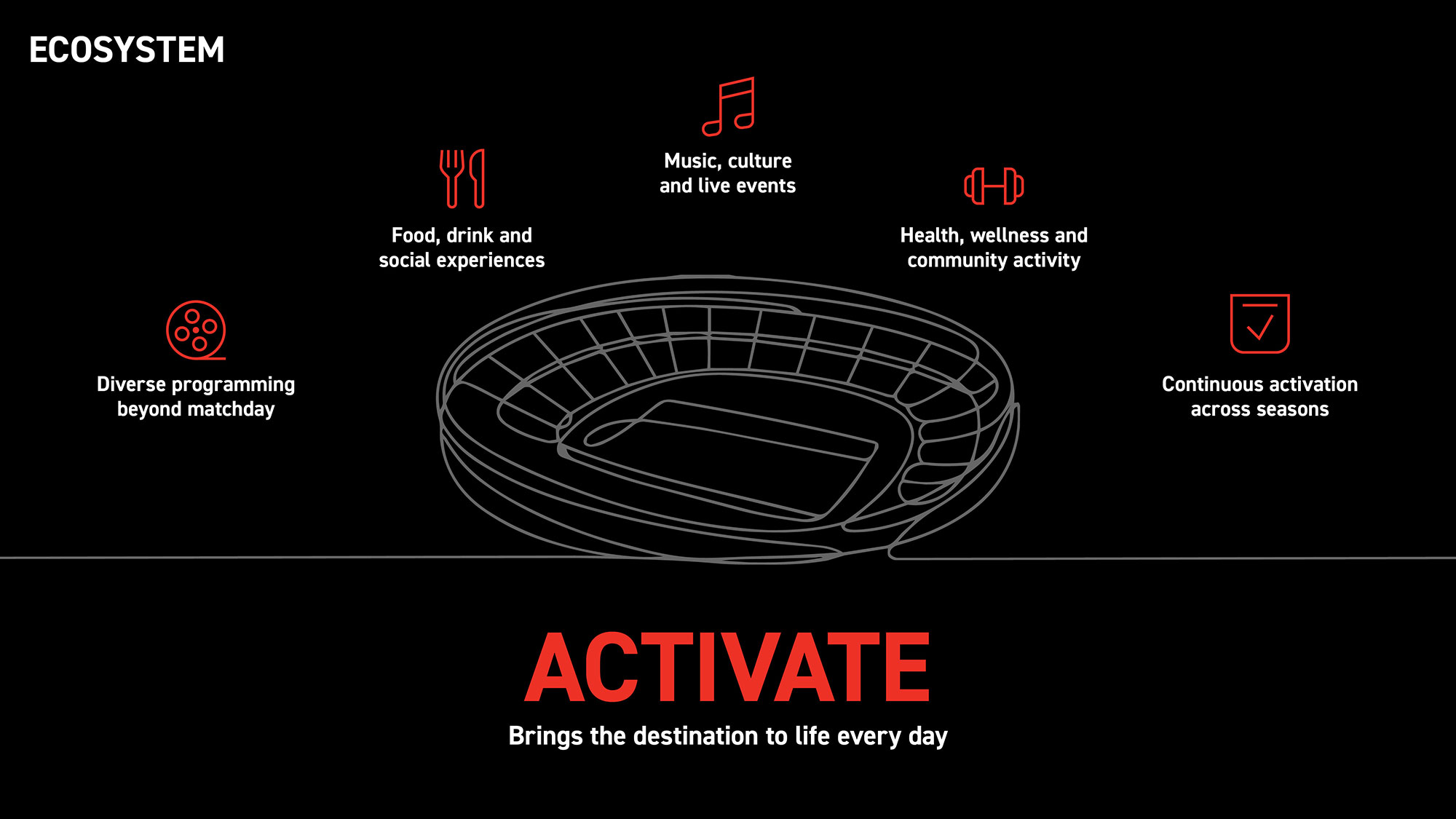
Activate – creating reasons for people to return beyond event days through layered programming, hospitality, recreation, and public activity.
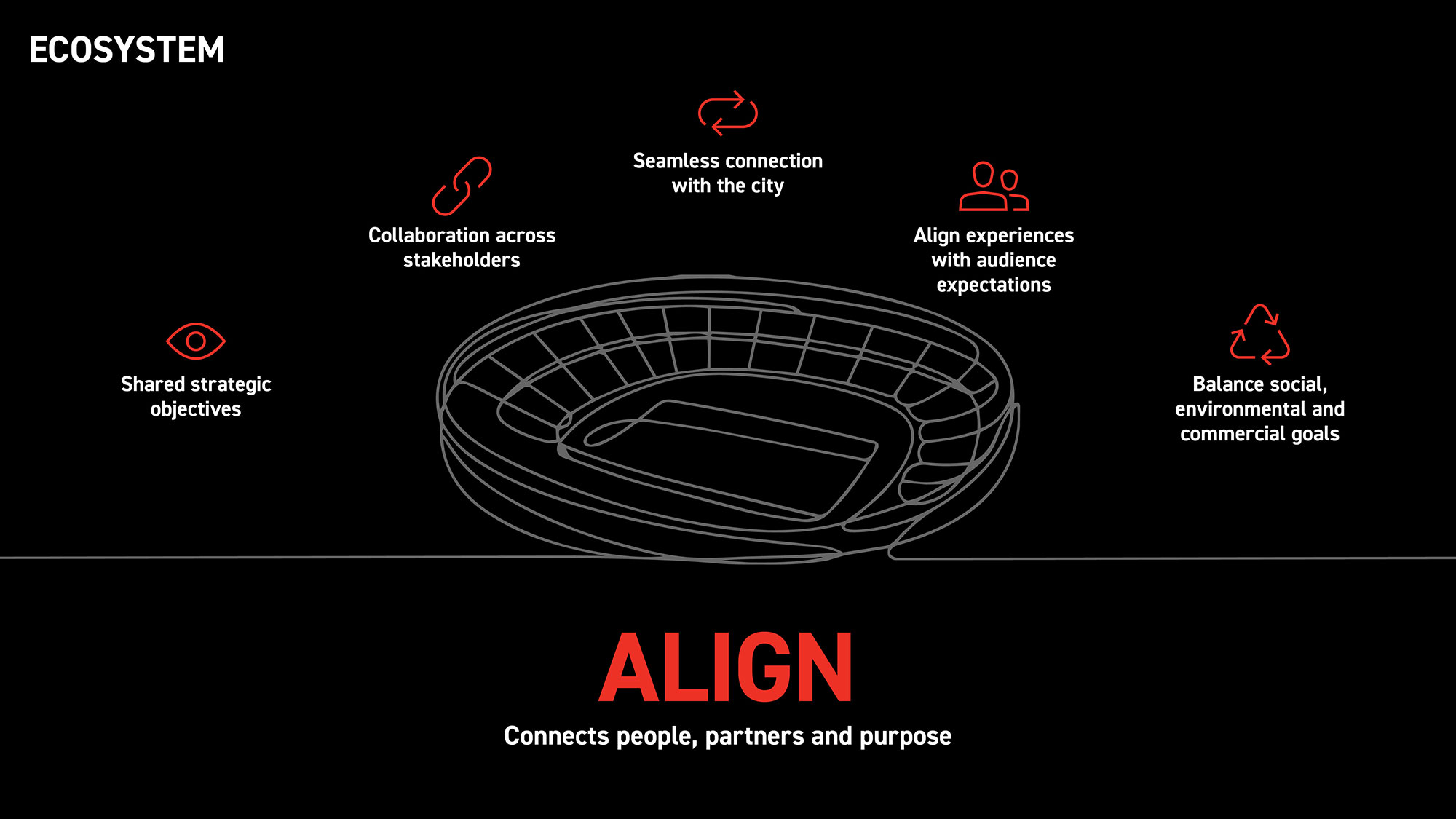
Align – responding to local culture, community identity, and neighbourhood behaviour rather than applying a universal formula.
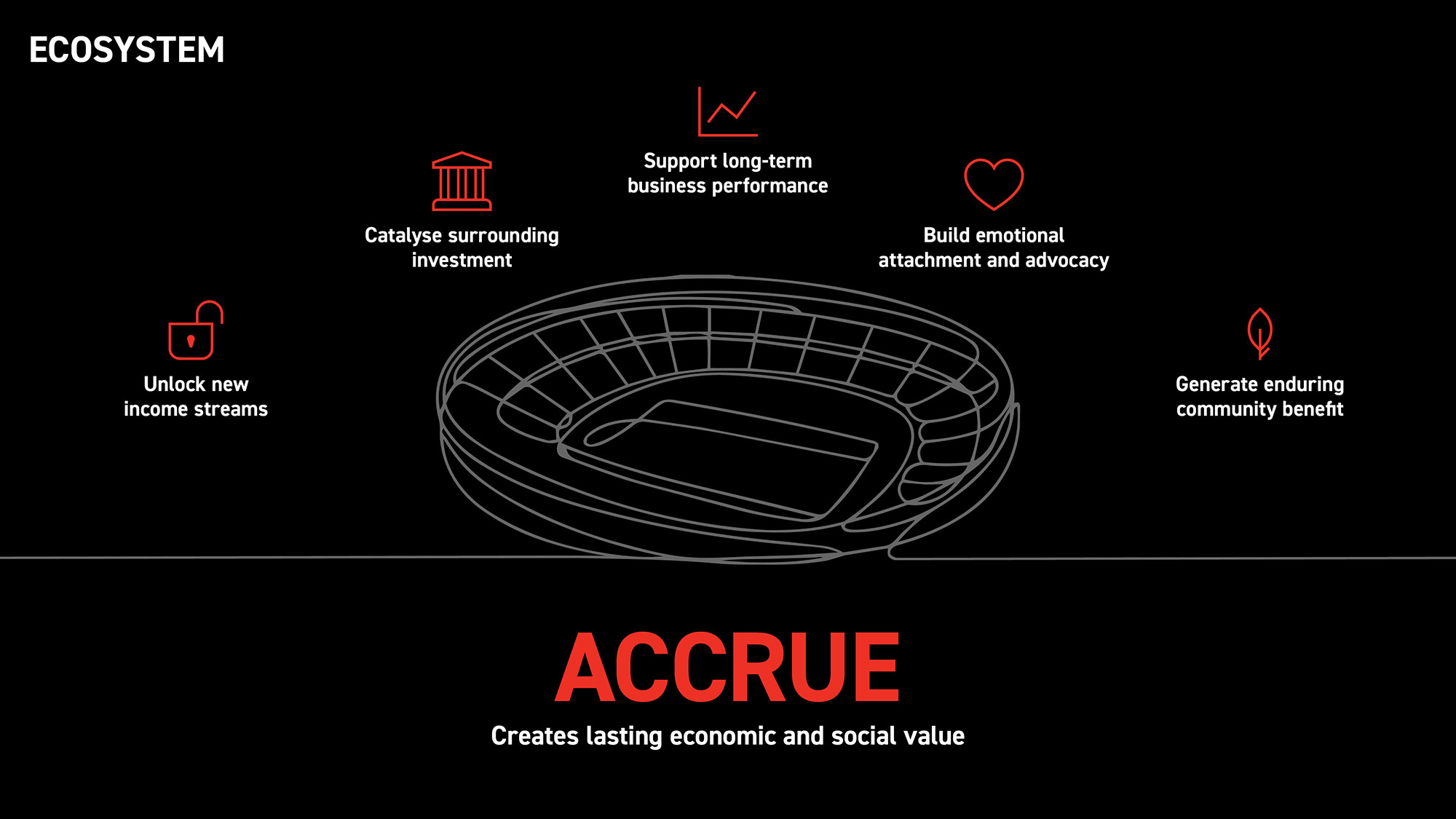
Accrue – generating long-term civic and commercial value through diversified revenue and resilient mixed-use integration.
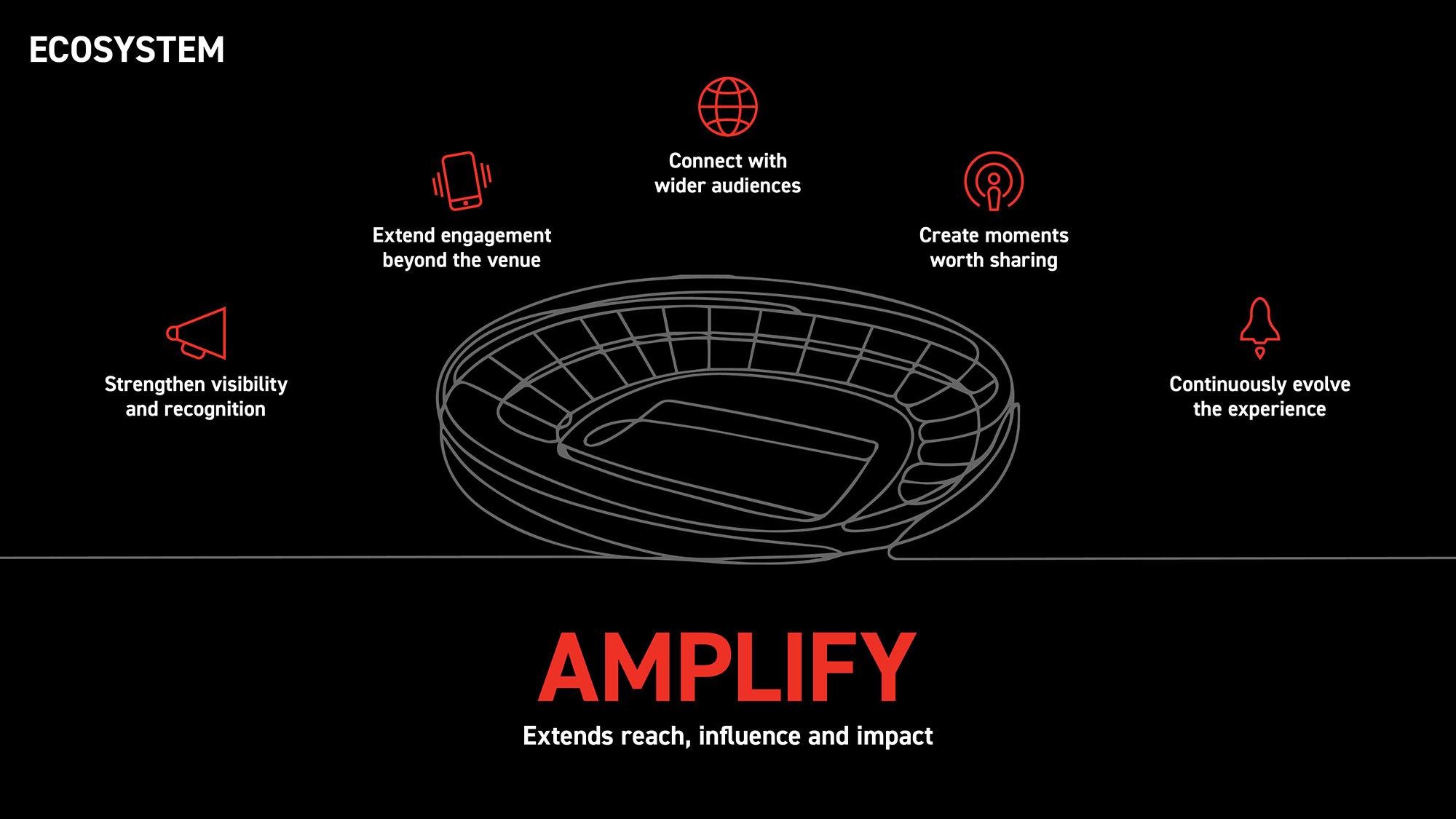
Amplify – extending the influence of the district through storytelling, media, culture, and collective identity.
Together, these principles reframe the venue — from destination to everyday infrastructure. A successful district blends spectacle with local identity, resisting the pull of generic placemaking. The balance between these forces determines whether a venue becomes embedded within urban life or remains episodic infrastructure.
That balance will look different everywhere. A sports district in Madrid will operate differently from one in Manchester or Milan. Likewise, the social rituals surrounding football culture in Casablanca will create entirely different expectations around movement, gathering, public space, and hospitality than those found elsewhere in Europe. There is no universal template for venue-led placemaking. Context matters too much for that.
Designing for Life Between Events
Activation in sports-led development rarely begins with programming. It begins with space.
The physical structure of a district determines whether people feel invited to linger, return, and participate. Streets, public realm, permeability, transit connectivity, and active edges all influence whether a venue integrates into city life or disconnects from it.
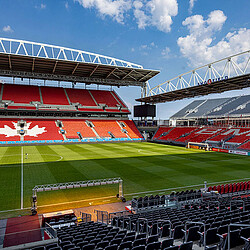
Too many arenas and stadiums still operate like islands — inward-facing objects surrounded by inactive perimeters and oversized security buffers that create separation from surrounding neighbourhoods.
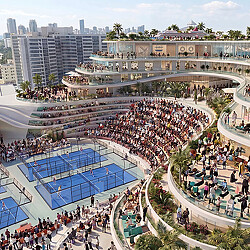
The most successful contemporary districts reverse this relationship. Ground floors become porous and active. Public routes move through the site rather than around it. Food, retail, recreation, and cultural uses create activity at multiple scales throughout the day. Public spaces operate as infrastructure — supporting informal gathering, community use, and civic life alongside major event moments.
In these environments, the district expands for spectacle and contracts back into everyday life without losing energy, embedded within existing neighbourhood patterns to create a sense of belonging.
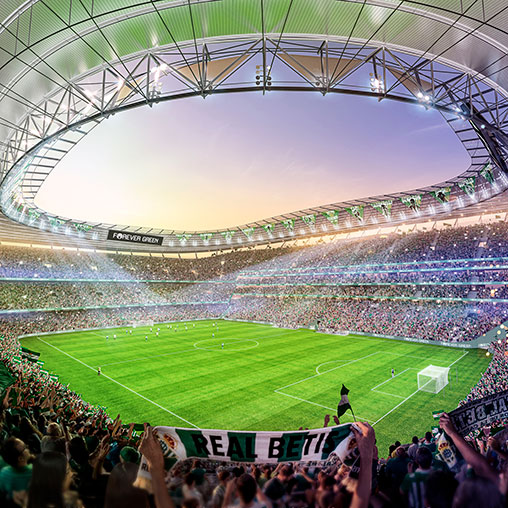
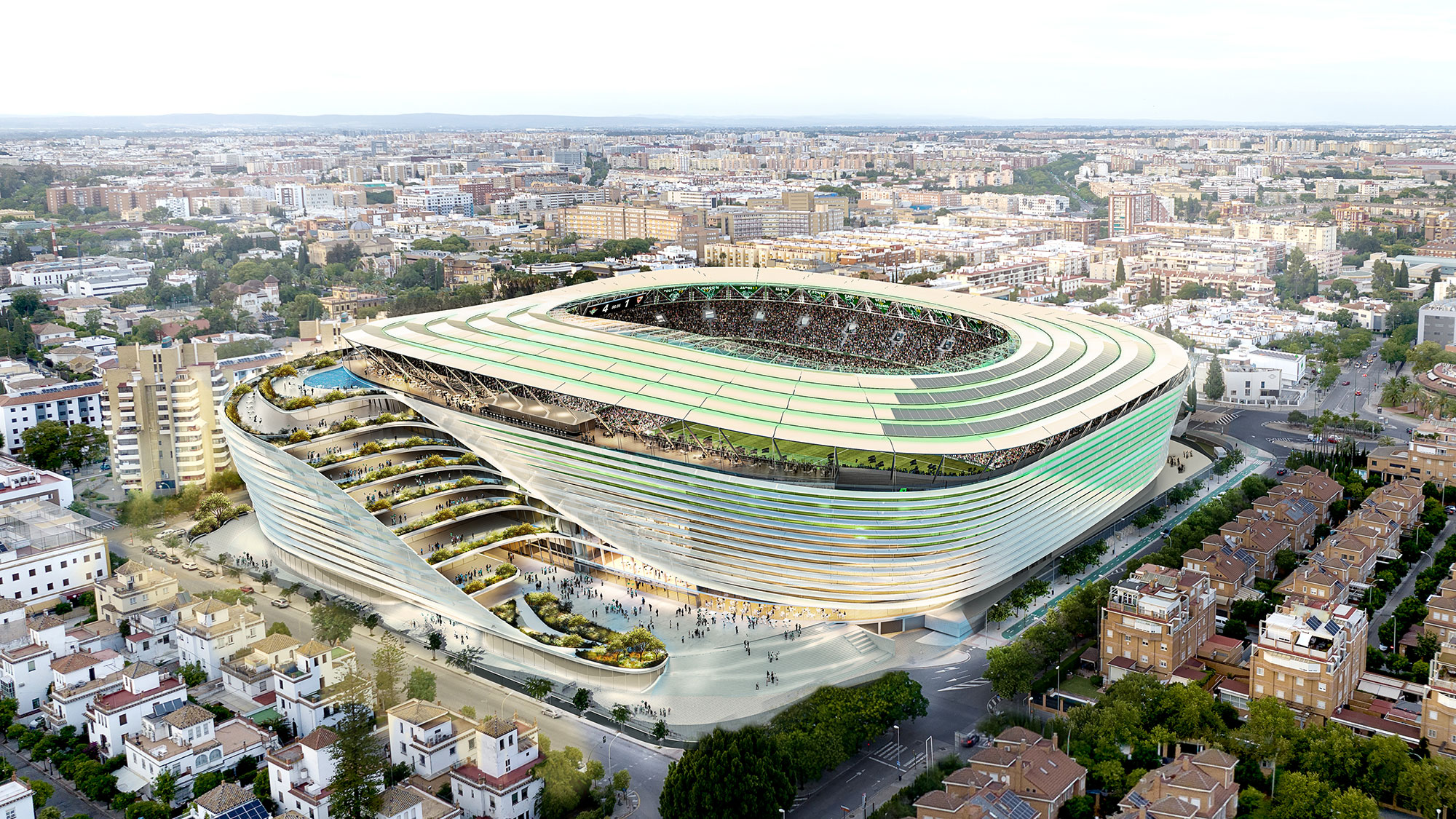
In Spain, Gensler’s redesign of Real Betis Balompié's Villamarín Stadium in Seville, in partnership with Spanish architecture firm Rafael de la-Hoz, demonstrates how existing venues can evolve into year-round destinations. Located within the city’s urban fabric, the redevelopment extends far beyond the matchday experience, introducing public plazas, food markets, shops, cafés, hospitality spaces, and community amenities designed to attract visitors throughout the week. By integrating mixed-use programming, sustainability initiatives, and new public-facing spaces without losing its connection to the club’s 110-year history, the project reimagines the stadium as both a sporting venue and a civic asset.
Closer to the existing fabric of European football, Gensler’s appointment as lead architect for the redesign of Hellas Verona’s Stadio Marcantonio Bentegodi reflects the same ambition — reimagining a beloved ground as a year-round destination without severing its ties to the neighbourhood.
The Long-Term Opportunity for European Cities
The global attention surrounding major tournaments often focuses on short-term economic impact, visitor numbers, and broadcast reach. But increasingly, cities are asking harder questions about what remains after the event itself.
The issues cities are now grappling with go beyond visitor numbers: Does the investment generate lasting value and remain relevant once the tournament is over? Does the district contribute to communities and everyday urban life?
These questions are integral to how sports and entertainment developments are evaluated — particularly as public funding, ESG accountability, and community expectations continue to rise. For European cities preparing for the next generation of venue-led development, the opportunity is larger than sport alone.
The most resilient districts will support local businesses, enable housing and mixed-use growth, create new forms of public life, and strengthen civic identity over time. At its best, the stadium becomes part of the city’s everyday operating system. That is the true measure of success.
For media inquiries, email .