Innovation Districts, Affinity Districts, and the City of the Future
February 14, 2022 | Q&A with Dan Van Leeuwen, Sofia Song, and Steve Wilson
We spoke with Dan Van Leeuwen, who is a development lead with Canderel out of Toronto and Calgary, Canada. He is embarking on a new development on native Canadian, or “first nation” land on the outskirts of the city. In addition, we talked with Sofia Song, Gensler global Cities lead, and Steve Wilson, a Cities & Urban Design leader for Gensler’s North Central region.
There is a spectrum of innovation happening within cities because of market changes, behaviors around COVID, and technological innovation. What do you think that spectrum might include in the future?
Wilson: From the physical planning side, what I see is that innovation is happening at a variety of scales. What I am focused on mostly in my work is the traditionally defined innovation district, with its anchored uses focused on research, incubating products, and then accelerating to get to market, but supported now with significant emphasis on urban housing and mixed use around it.
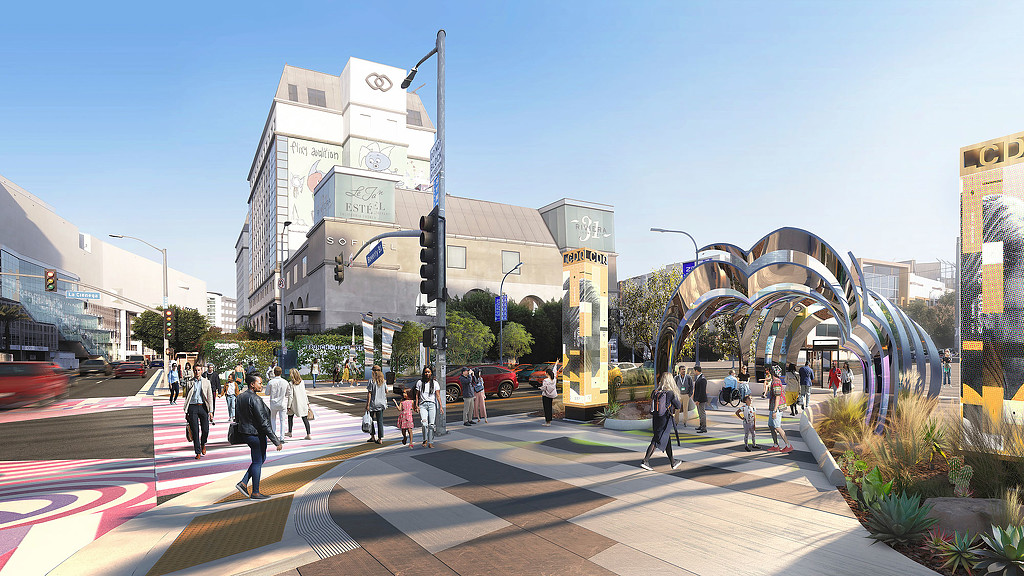
Second, you have affinity districts, which are mixed-use areas that bring diverse people together through their day-to-day behaviors to promote innovative living.
Finally, there are opportunities to retool Central Business Districts (CBDs) around regionally supportive urban neighborhoods, which includes adaptive reuse of office buildings and dead malls, adding new transit, mobility infrastructure, and amenities like parks, gardens, groceries, and events that make urban living truly viable.
What is an “affinity district” and how does it differ from an “innovation district”?
Van Leeuwen: While most cities are focused on creating an innovation district, not everyone can find a big tech or biotech anchor, so what are they to do? We think affinity-based planning is a great strategy in that it focuses on bringing people together in unexpected ways through their day-to-day behaviors.
Yes, we need family and friends to be a part of a community — these relationships are called “strong ties” — but we also need what are called “weak ties,” pleasant familiarity with people we don’t know very well. The shopkeeper, the neighbor, etc.
And the street is where different constituencies often meet most comfortably. It’s where we are exposed to other points of view. For example, a skilled nurse who lives in a cohousing development might run into a researcher on gerontology and an active senior who all shop at the same vegetable stand. There is a chance for interaction there that might spark an idea, the beginning of an innovation. Through thoughtful planning we can promote these sparks by bringing people together with common affinities. It’s not an innovation district but it is an affinity district that promotes innovation.
Wilson: That’s a good point. Innovation districts are expensive to start and maintain because of the levels of investment in infrastructure and the partnerships required for them to work. Whether you are doing a true innovation district or something more like what Dan is describing, creating great places where people feel compelled to come together is essential to revitalization. Whether that area becomes a true innovation district or not is almost secondary. For example, Boston Seaport was promoted as an innovation district at first, but then pivoted to become an extension of downtown. What it has are great places that bring people together to make it successful.
Do you think Central Business Districts are changing in how they function? What evidence can you point to that proves that is true?
Song: We just finished our Gensler City Pulse Survey research on how Central Business Districts are trying to pivot because of the pandemic. North American Cities especially have been built as this business-first place, but what we are seeing is that office space is no longer a primary driver to successful downtowns. Shopping and culture are much more important to people who are seeking experiences they cannot get in their own neighborhoods. The CBD as a workplace is way down the list in terms of what people are looking for.
Van Leeuwen: I agree. Calgary remains one of the most desirable North American cities, but that’s mostly because of the lifestyle it offers; a connection to nature; a close, caring community; and great infrastructure that gives people freedom to be mobile with where and how they work. And although Greater Calgary is growing, downtown is going through a bit of an identity crisis. Right now, we are at 30% vacancy for office space in the CBD.
We find the amenities that our residents want are focused on wellness, especially healthy food, and events that bring community together. Agrihoods are very desirable because they provide a healthy food source, purify the air, provide recreation, and are collaboratively run, and they look good as well. If you can connect people with preferred paths of movement (walking and biking paths linking neighborhoods to key amenities and services) that’s also beneficial.
Song: Some of the cities with the highest satisfaction rating in our survey offer some spectrum of experiences, both urban and natural, that tie them to their region. I think it’s most important to be clear in trying to find the special qualities that amplify what a region is all about economically, environmentally, and culturally. The anchor use is now most often lifestyle. COVID has just accelerated that change to one having more control about how one wants to interact and where.
What are the key market dynamics that cities should focus on?
Song: People are always looking for the big four: opportunity, safety, affordability, and convenience. For rising cities like Austin and Charlotte, offering jobs in new sectors like fintech are popular, but perhaps also growing too fast. Housing prices have gotten to be too much in many of these places, which compromises their ability to grow further.
Van Leeuwen: That’s why COVID has been such a game changer. If you can leave a big city with affordability problems and move to another place that’s more affordable, safer, and more convenient, that drives growth. Smart developers can add urban formats that expand housing choices, add amenities, and improve safety for walking and biking.
Wilson: We are seeing that shift in smaller markets as well. We are working on an innovation park at University of Kansas. It has a research function but the housing, and the convenience, retail, and placemaking are what make it go. That’s an affinity district that promotes innovation.
Song: I think CBDs will become more like neighborhoods. The 15-minute city or 20-minute neighborhood is nothing new — it’s just now, we have the market dynamics to really make it happen on a significant scale.
For media inquiries, email .
