The Link Between Patient Health and Provider Well-Being
What Gensler’s 2026 Healthcare Workplace Survey reveals about the link between hospital design, provider burnout, and retention.
For patients, a hospital is a place of healing. For nearly eight million people in the United States alone, it is also where they work. And the conditions of that workplace are straining the entire healthcare system. A 2026 Nurse.org national survey found that 43% of nurses were likely to leave bedside care within the next year. Physician burnout alone is estimated to cost the U.S. healthcare system $4.6 billion annually, largely through turnover and reduced clinical hours. When providers leave, patients feel it. Staff well-being and patient outcomes are directly linked.
Environmental quality directly influences provider stress, retention, and ability to deliver care. Gensler’s 2026 Healthcare Workplace Survey, drawing on responses from 1,204 frontline providers in the United States and Canada, positions the built environment as a measurable workforce strategy. When hospital spaces support the realities of care, collaboration, and focused work, providers report lower burnout and are less likely to plan to leave hospital work in the next three years.
The built environment is one factor that hospital leaders can act on, and our survey identifies links between better design, reduced stress, lower burnout, and stronger retention.
From Stress to Retention: The Role of Environment
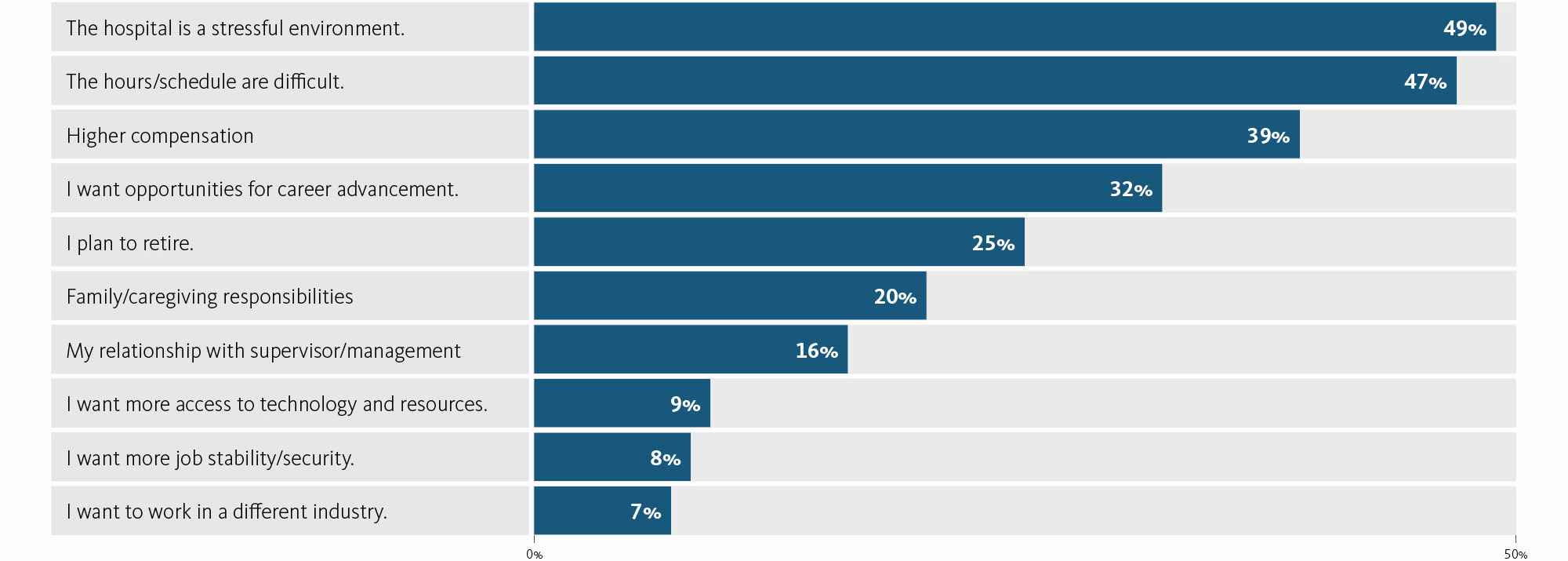
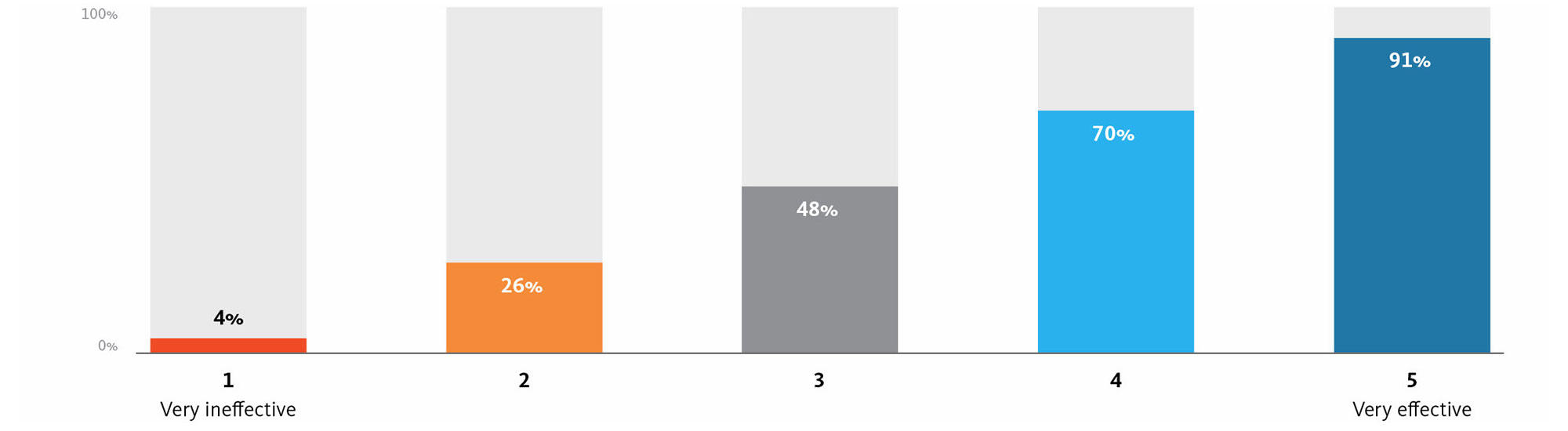
Gensler’s 2026 Healthcare Workplace Survey reveals a clear progression: stress is the most common reason providers plan to leave hospital work; providers who rate their environments as more effective report lower burnout and are less likely to plan to leave; and the quality of patient care spaces is one of the strongest predictors of the overall working experience. This makes the built environment more than a backdrop to care. It is an actionable retention tool.
Using the validated Oldenburg Burnout Inventory, the survey found that providers planning to leave hospital work in the next three years had average burnout scores that were about 17% higher than those not planning to leave. Stress ranked ahead of difficult hours, compensation, and limited advancement opportunities as a reason for planning to leave. Providers who reported stress as a reason for their leave plans had burnout scores that were 20% higher than those who planned to leave but did not select stress, and 29% higher than those who planned to stay. Although design cannot resolve every workforce challenge, it can directly reduce environmental stress by making care delivery easier and safer, supporting recovery, and creating calmer, more functional settings throughout the workday.
What Defines a Highly Rated, Effective Environment?
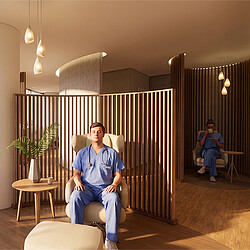
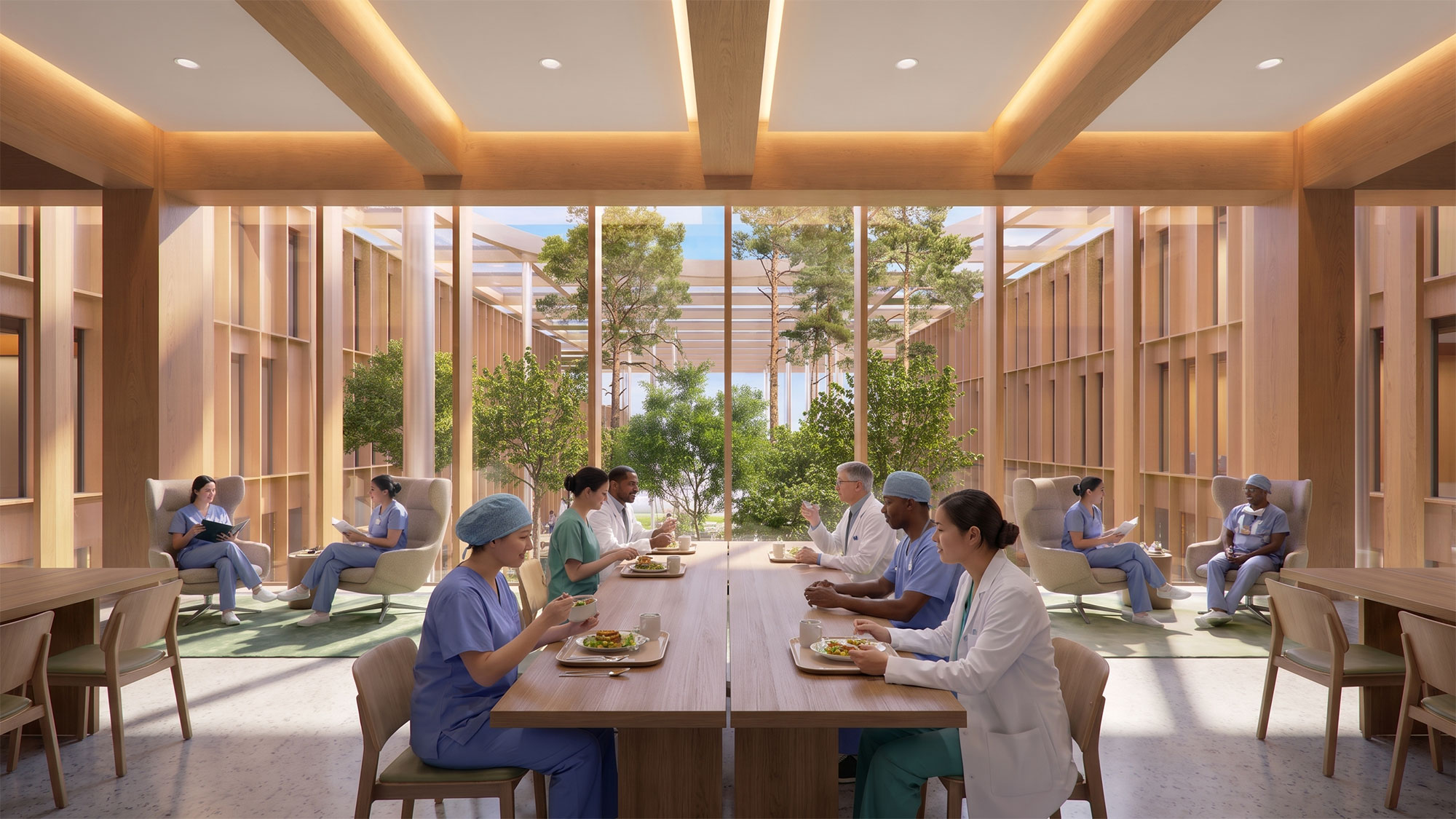
An effective hospital environment supports three essential work modes: caring for patients, collaborating with coworkers, and working alone. It reduces friction through intuitive layouts, privacy, cleanliness, good air quality, noise control, adaptable furniture and equipment, and comfortable spaces for focused work and confidential conversations. It also places basic and restorative staff amenity spaces close enough to use during demanding shifts.
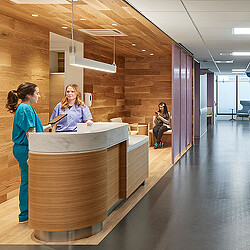
Patient care spaces are especially important because they are both clinical settings and providers’ primary workplaces. Respondents who reported that their patient care spaces were effective were also much more likely to say that their hospital offered a great working experience than those who reported that their patient care spaces were not effective. Improving patient care spaces may therefore advance patient experience, staff well-being, and retention at the same time.
The Value of Amenities
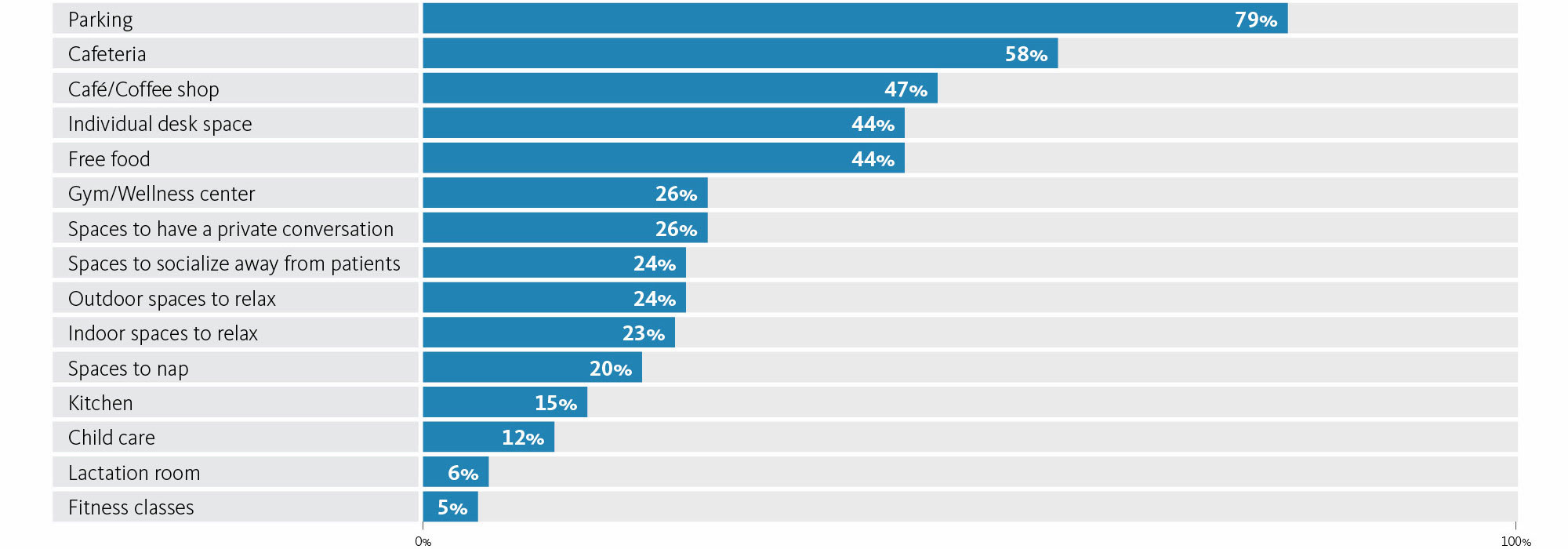
The survey reveals an important distinction between what amenities staff prioritize, what they use, and what may impact their well-being. Respondents most often prioritized everyday conveniences such as parking, food service, and individual work areas. Spaces to store and heat food were the most commonly used amenity.
Yet spaces that support human needs, such as places to relax and recharge, socialize, make a personal call, or grieve, are more closely associated with provider well-being. Amenities must be convenient and close to the point of care, because providers may not have time to cross the hospital during a shift. Low use may reflect poor location or limited time rather than low value.
Nature as a Differentiator
Views of nature consistently distinguish effective spaces from ineffective spaces across the hospital. Similarly, accessible outdoor areas are associated with better staff well-being. Yet most hospitals do not provide easy access to the outdoors, and an amenity that is distant or difficult to reach may offer little practical benefit during a demanding shift. The design challenge is to integrate brief, realistic opportunities for restoration into daily routines.
Design for Privacy, Flexibility, and Focus
In our survey data, privacy is the attribute most closely associated with effectiveness in patient care spaces, alongside air quality, cleanliness, layout, and the ability to rearrange furniture and equipment. Confidential conversations with patients and families require comfortable, private settings, while individual workspaces must offer flexibility and noise control to support focused tasks such as charting.
Meeting and collaboration spaces similarly depend on effective layouts, availability, technology, comfort, and acoustic control. Across these settings, the goal is consistent: support clinical work, teamwork, concentration, and recovery without adding unnecessary friction or stress.
Generational and Regional Differences
Perceptions of hospital effectiveness varied somewhat by age, but the differences were less pronounced than anticipated and do not suggest a single generational design formula. Career stage, autonomy, and the ability to choose where and how work happens may be equally important. These patterns warrant further study rather than prescriptive conclusions.
U.S. respondents rated their hospital environments as more effective than respondents in Canada, particularly for patient care. But the broad finding is consistent across both countries: Environmental effectiveness is linked to burnout and the likelihood of planning to leave.
What’s Next? Designing for Impact
Because these survey findings captured perceptions and did not account for differences in funding, operations, and facilities, they should be treated as correlations rather than causal relationships. Still, the evidence points to a practical design mandate. Hospital leaders should first improve patient care spaces, reduce environmental stressors, and ensure that every setting supports care, collaboration, and focused individual work. Leaders should locate staff support spaces within easy reach, and evaluate design performance by each space’s ability to genuinely help providers do their work and recover during demanding shifts.
Design cannot solve compensation, scheduling, or staffing shortages on its own. But it can remove daily sources of stress, make essential work easier, and create conditions that help providers sustain their well-being and remain in hospital practice. That makes environmental effectiveness a workforce, patient care, and business priority.
Questions for hospital leaders and designers:
- Do patient care spaces support both safe care delivery and a positive provider experience?
- Can staff easily find private, quiet, and flexible settings for focused work, collaboration, confidential conversations, and recovery?
- Are staff-support spaces close enough to use during a typical shift?
- How will the organization measure whether design reduces friction, stress, burnout, and intent to leave?
The answers will shape both the workplace and the future of healthcare itself.
About the Research
We surveyed 1,204 frontline healthcare providers (physicians, nurses, medical assistants, and technicians) between October 22 and November 11, 2025, using a third-party panel provider to ensure anonymity and impartiality. Respondents lived in the U.S. and Canada, were employed full-time, and spent at least some of their time caring for patients in a hospital setting; they represented a diverse cross-section of roles, ages, tenure, and hospital sizes.
For media inquiries, email .