What Do Hospital Staff Really Need?
The Amenities That Matter Most May Surprise You
What Gensler’s 2026 Healthcare Workplace Survey reveals about the amenities that support providers through the demands of hospital work.
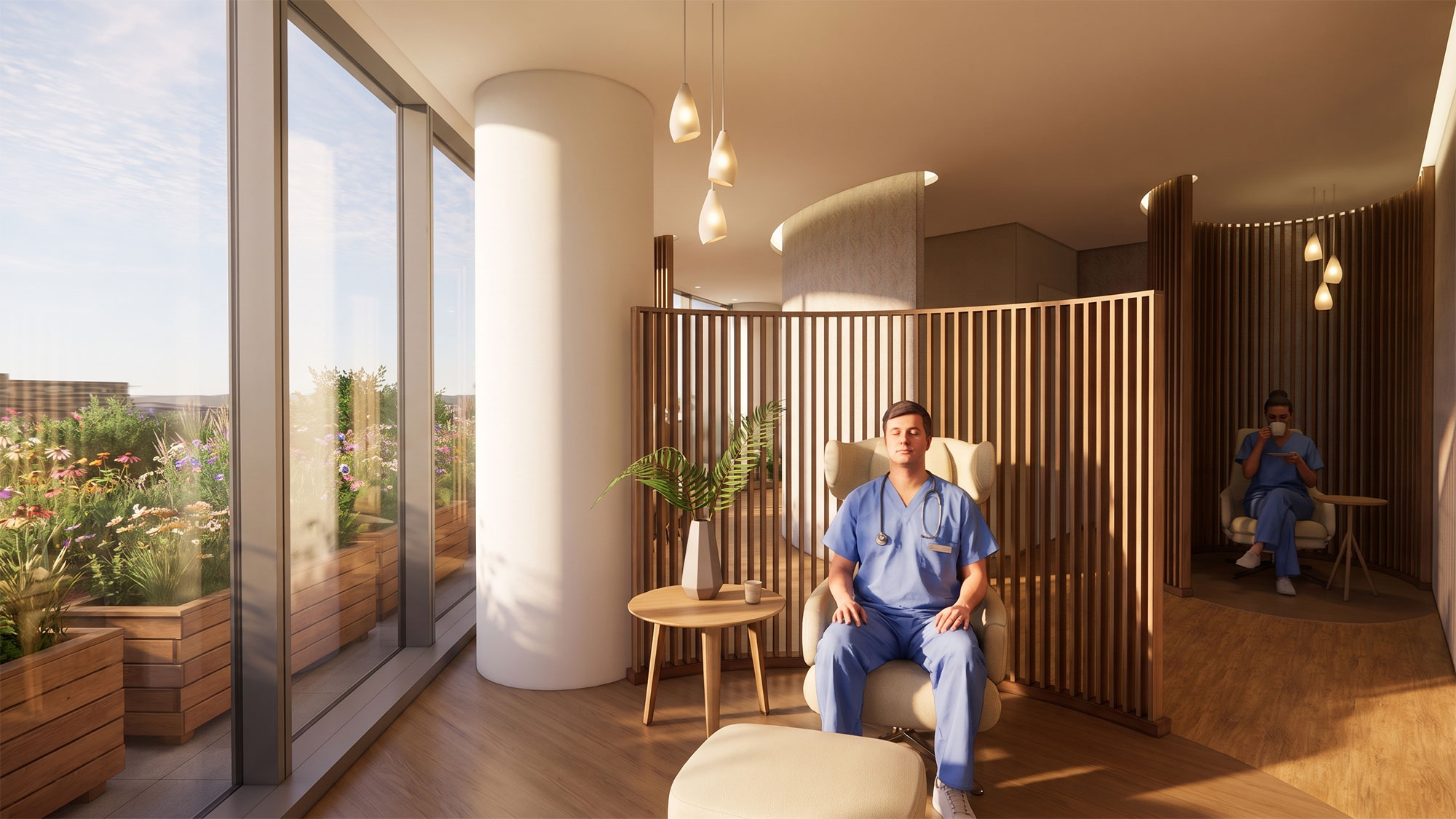
When asked which amenities matter most, hospital staff prioritize everyday conveniences: parking, food service, and individual desk space are essential to supporting their basic needs and helping them navigate long, time-constrained shifts. But Gensler’s 2026 Healthcare Workplace Survey surfaces a more surprising finding: the amenities most closely associated with lower burnout and reduced intent to leave are not always the ones staff rank highest.
Access to the outdoors and spaces to grieve show some of the strongest links to better workforce outcomes, even though they are used less often and prioritized less frequently than everyday conveniences. Understanding that gap requires asking not just what staff want, but what they use, what prevents them from using it, and which spaces are actually associated with their well-being.
Design for Daily Needs and Lasting Impact
When we asked respondents which amenities they used in a typical week, spaces to store and prepare food, places to socialize, and places to make personal phone calls rose to the top. But stated importance and frequent use tell only part of the story.
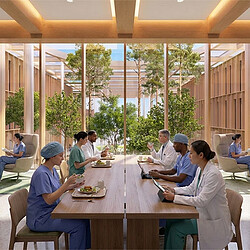
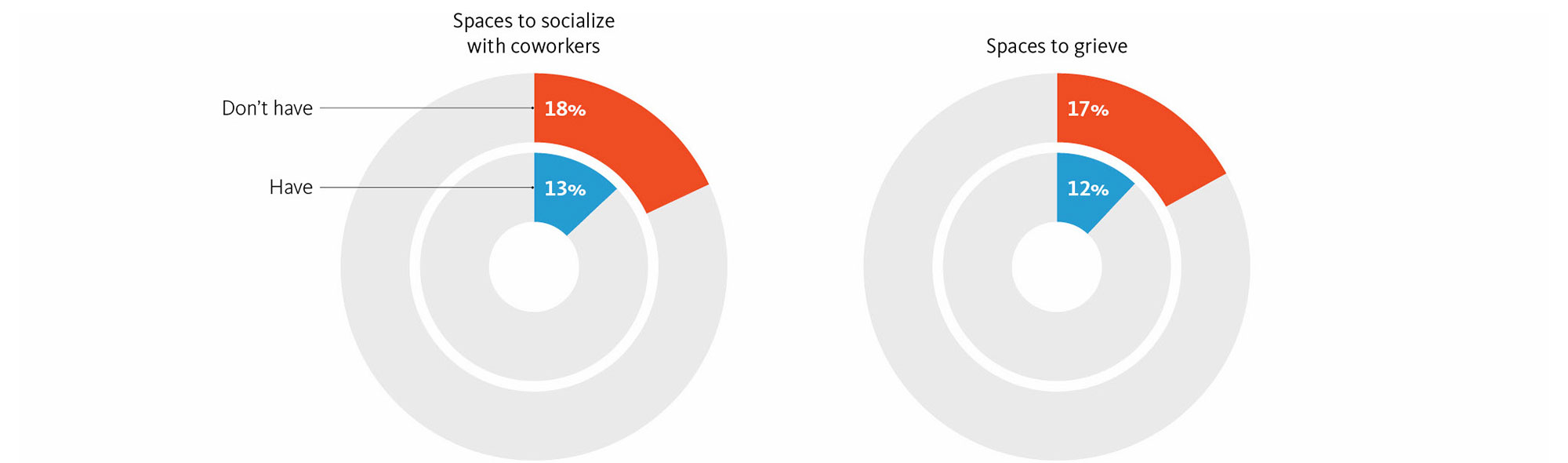
Our analysis revealed that access to key wellness amenities was associated with better workforce outcomes. In particular, the results suggest that outdoor spaces and food spaces are associated with lower burnout, while spaces to socialize are associated with a lower likelihood of planning to leave hospital work in the next three years. Spaces to grieve are associated with both lower burnout and lower leave intentions. One exception: spaces to sleep are associated with a higher likelihood of planning to leave, likely because providers who need on-site sleep are working in conditions that are harmful to their well-being.
These findings point to the need for a balanced approach that provides practical amenities while investing in restorative and emotionally supportive spaces that may be used less often but likely have an outsized impact. Because the study identifies associations rather than proving causation, hospital leaders should treat amenities as one component of a broader workforce and operational strategy.

Cross-Industry Comparisons
Gensler’s 2026 Global Workplace Survey found that office workers across sectors value food halls and cafés, social spaces, quiet focus areas, rest spaces, and outdoor workspaces — a baseline healthcare shares. The difference is delivery. Hospital staff need these amenities close to the point of care. They may also need spaces for grief, spiritual practice, or sleep — needs shaped by the emotional intensity, confidentiality requirements, and around-the-clock nature of hospital work.
While office workers may be able to use a café, lounge, or outdoor workspace for an extended period, hospital staff often need distributed, nearby options that work within short and unpredictable breaks. What differs is proximity, duration, privacy, and operational support. These factors determine whether an amenity works in practice.
Proximity Determines Whether Amenities Deliver Value
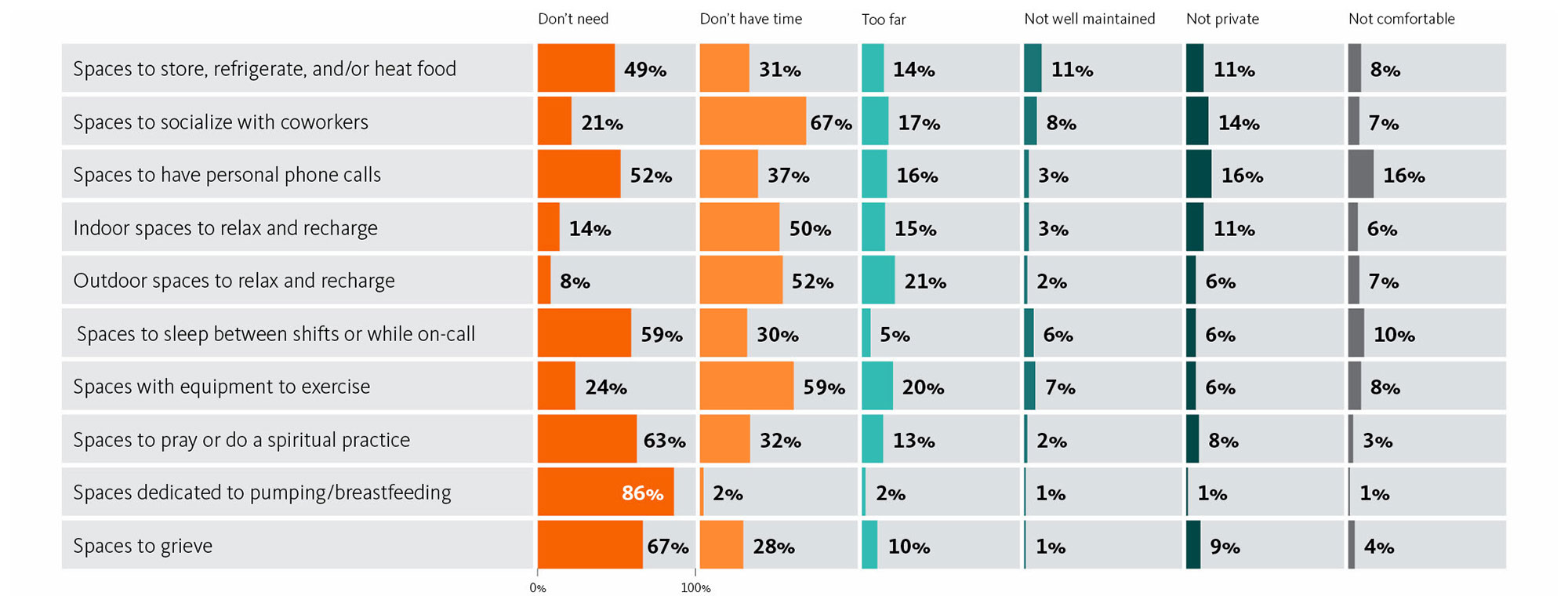
Just because an amenity is available doesn’t mean it’s accessible. While spaces for food storage and preparation were common and heavily used, spiritual-practice, sleep, lactation, and grief spaces showed much larger gaps between availability and weekly use. Respondents who had access to these spaces but didn’t use them most often said they had no need for the amenity.
But low use does not necessarily signal low value. Some amenities address occasional but consequential needs, or needs vital to only a subset of people, and others may be undermined by distance, time pressure, staffing coverage, or workplace norms. Respondents frequently cited a lack of time as a reason for not using available amenities, especially outdoor and indoor recharge spaces. A remote amenity hub can look generous on a plan while remaining functionally out of reach.
Design and operations must work together. Hospitals can improve access by locating amenities along staff routes and near clinical areas, distributing smaller respite settings across departments, protecting privacy, and designing for both brief and extended use. Leadership and staffing practices must also make breaks possible; without them, even well-designed spaces go unused.
A Layered Amenities Strategy
The best amenities strategy integrates the right spaces with accessible locations, supportive operations, ongoing service, and evidence-based refinement. Here are eight priorities for building an amenities portfolio that works in practice:
- Secure the baseline. Ensure reliable food and hydration support, convenient, individual work settings, and private places for calls or confidential tasks.
- Invest in spaces linked to better outcomes. Include accessible outdoor areas and views of nature, food access, places to grieve, indoor recharge settings, and social spaces as part of your well-being and retention strategy.
- Offer settings for different needs. Provide social, quiet, focused, and collaborative environments — from spaces for grief and spiritual practice to lactation and sleep — so staff can choose a setting that fits the activity, level of privacy, and time available.
- Build a network of micro-amenities. Supplement larger destinations with hydration points, window seats, niches, planted alcoves, and other brief respite opportunities embedded along staff routes and near patient care areas.
- Make nature access dependable year-round. Layer outdoor settings with daylight, views, indoor planting, shade, shelter, weather protection, and maintenance so restorative contact with nature is available across seasons and shifts.
- Make breaks possible. Align staffing coverage, break practices, management behaviors, and communication so people can use amenities without feeling they are stepping away from care.
- Support amenities as an ongoing service. Plan for replenishment, cleanliness, food availability across shifts, intuitive wayfinding, and consistent upkeep so the experience performs as intended after opening.
- Measure access and refine over time. Track travel and wait time, availability by shift and role, barriers to use, satisfaction, and workforce outcomes. Pilot concepts at a small scale before committing capital, and use feedback and operational data to refine the solution.
The most effective amenities strategy is the most accessible one. Hospital leaders who audit what amenities are available, where they’re located, and who can realistically reach them will find a clearer path to investments that reduce burnout, support retention, and help providers sustain the work of care.
About the Research
We surveyed 1,204 frontline healthcare providers (physicians, nurses, medical assistants, and technicians) between October 22 and November 11, 2025, using a third-party panel provider to ensure anonymity and impartiality. Respondents lived in the U.S. and Canada, were employed full-time, and spent at least some of their time caring for patients in a hospital setting; they represented a diverse cross-section of roles, ages, tenure, and hospital sizes.
For media inquiries, email .