What Happens to the Workplace When AI Becomes Our Coworker?
How AI is reshaping Australian workplaces — and what Gensler’s 2026 Global Workplace Survey data tells us about what comes next.
As AI rapidly reshapes industries around the world, one question is becoming increasingly urgent for organisations across Australia: to what extent does the workplace need to evolve to help employees navigate an AI-enabled future?
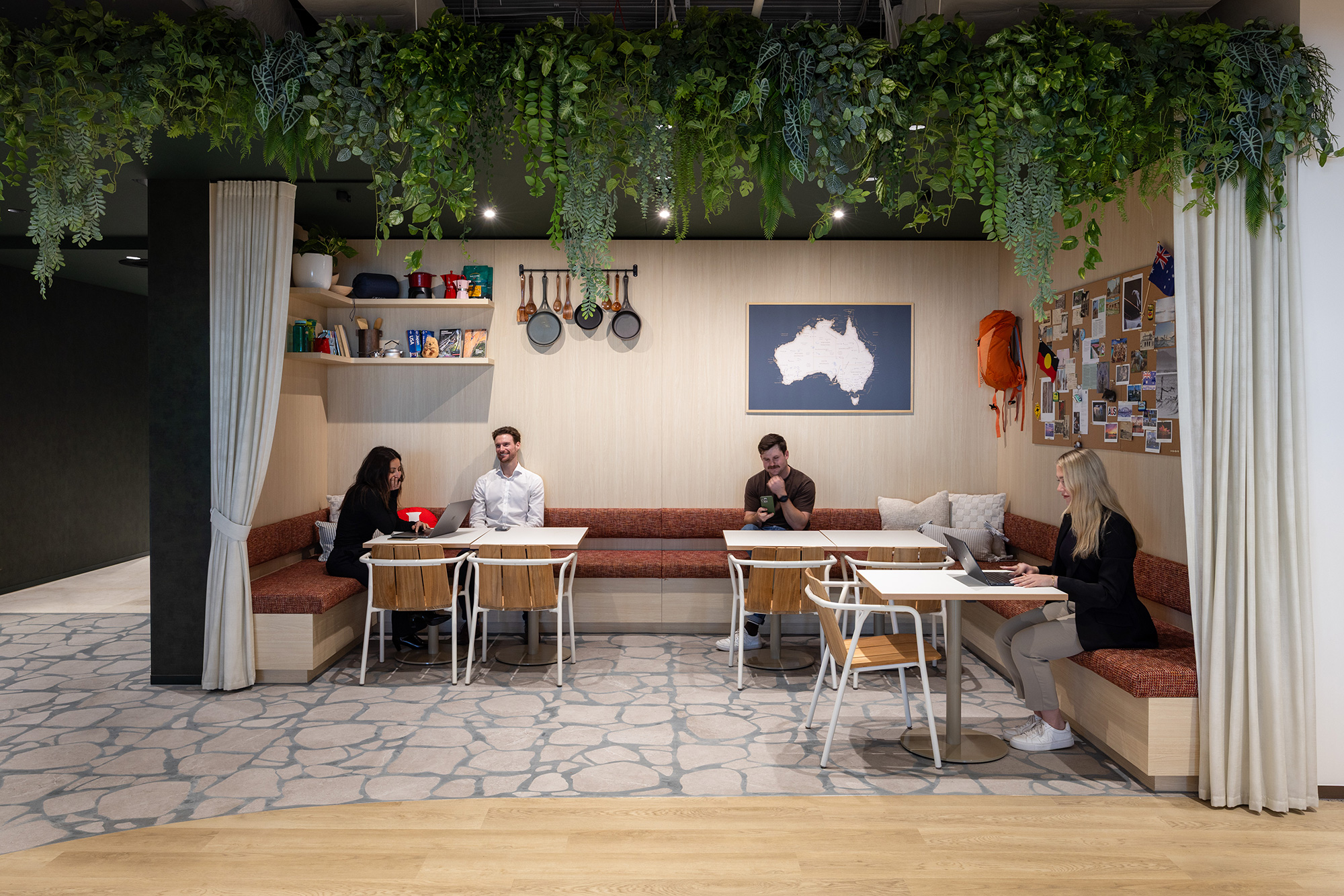
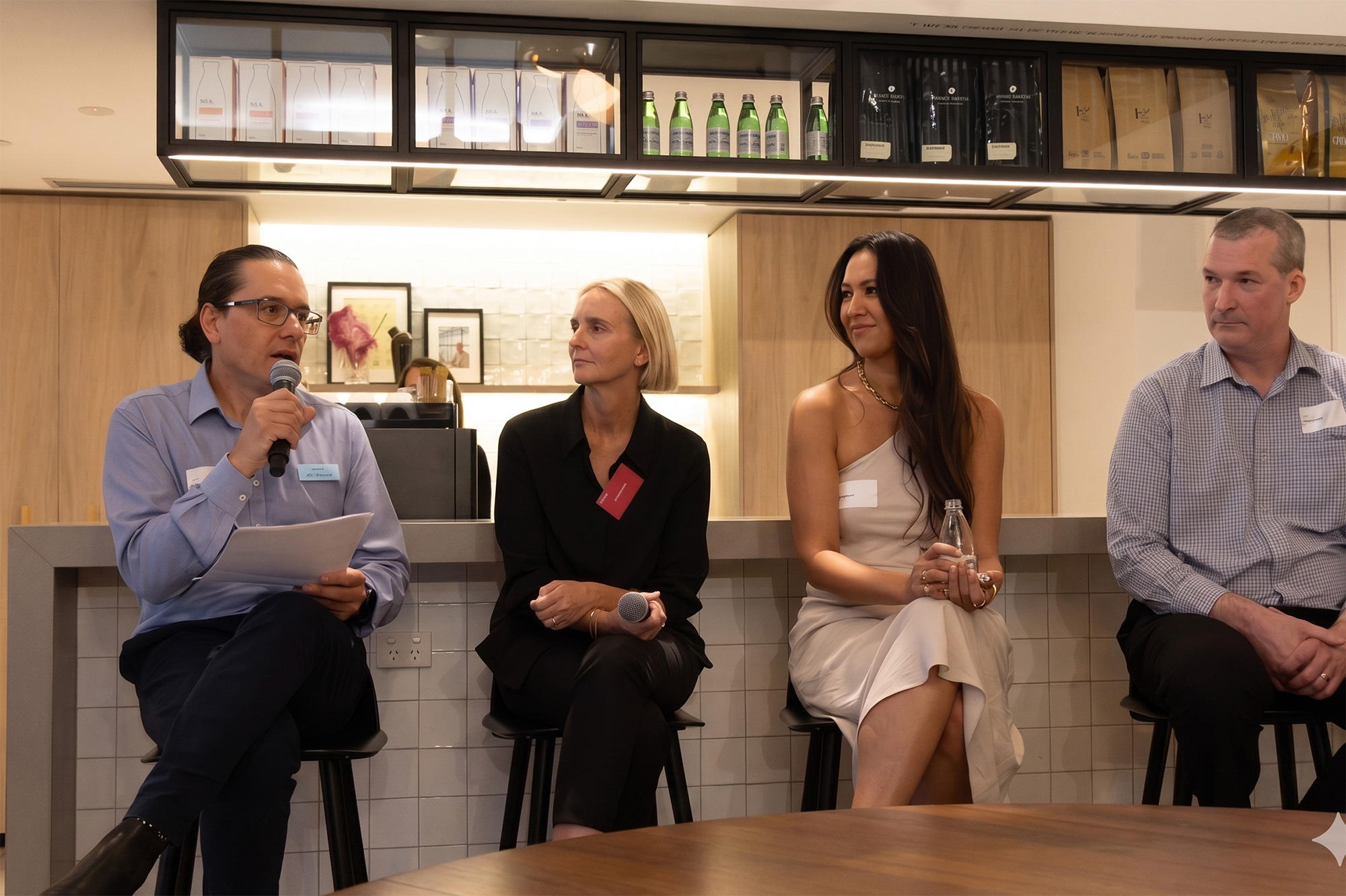
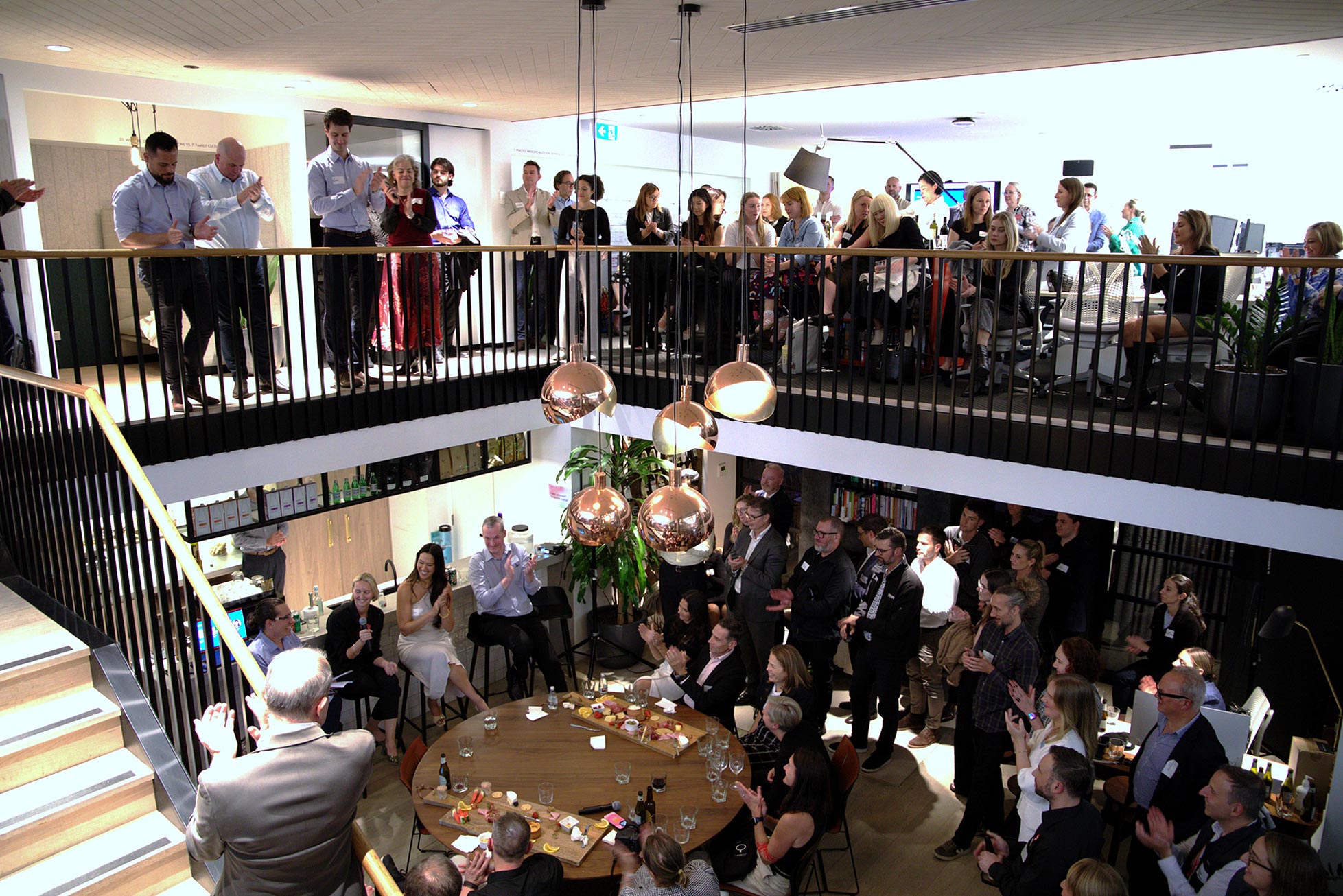
That question drove a recent panel discussion hosted by Gensler and CoreNet Global’s Australia Chapter at the Gensler Sydney office, where workplace strategists, technology leaders, and designers came together to unpack the opportunities and tensions emerging as AI transforms how people work, collaborate, and learn.
The panel of experts — including Lisa Munao, Managing Director, Gensler Australia; Lara Wood, Future-Proofed Workplaces Specialist, Cisco; Peter Tylor, Workplace Technology at ASX; and moderator Michael Marafioti, SKS Technologies — shared anecdotes around their personal and professional experiences with AI against the backdrop of Gensler’s 2026 Global Workplace Survey (GWPS) findings, which reveal a workforce in rapid transition.
Employees are adopting AI tools faster than many organisations can adapt, while simultaneously redefining what they need from physical workplaces. Globally, the survey found that people still come into the office primarily for two reasons: to focus on individual work and to collaborate with teams. Yet many existing workplaces are struggling to support either task effectively. That disconnect is becoming more visible as AI accelerates the pace of work.
From Workplace to Work Experience
The discussion spotlighted a key shift: AI is no longer simply a productivity tool layered onto existing workflows. Instead, it is fundamentally changing the experience of work itself.
Panellists described a future where AI functions less like software and more like a “digital coworker” — a system that learns from employees, anticipates needs, automates repetitive tasks, and supports faster decision-making. In this environment, work becomes increasingly fluid, adaptive, and continuous. But while AI promises efficiency, it also exposes the limitations of traditional workplace models.
Workplaces must now support entirely new behaviour patterns. Supporting human adaptability, learning, critical thinking, and meaningful collaboration remains a core goal, and the rapid rate of change makes it more urgent than ever.
The “Messy Middle” of AI Adoption
AI adoption is accelerating, and many organisations find themselves in what panellists described as the “messy middle”: the uncertain space between experimentation and meaningful integration. Unlike previous technological shifts, AI has entered workplaces at unprecedented speed. Several panellists noted that most organisations are still trying to establish governance, security standards, and workflows while employees are already actively using AI tools day-to-day.
This tension is reflected in broader workplace trends. According to Gensler’s research, employees increasingly expect workplaces to offer greater flexibility, autonomy, and variety in how they work. Yet many companies continue to operate within rigid systems and spatial models designed for pre-AI ways of working.
The panel discussed four major pressures organisations are currently navigating:
- Time: The pace of technological change is accelerating faster than most businesses can adapt.
- Trust: Security, sovereignty, and governance remain significant blockers to adoption.
- Talent: Organisations are still learning how human workflows evolve alongside AI systems.
- Technology: Many workplaces lack the infrastructure needed to effectively support AI-enabled work.
Critically, AI is also surfacing pre-existing organisational challenges. Fragmented data systems, inconsistent workplace policies, and inefficient workflows become more visible, and more problematic, when layered with AI technologies.
The most successful organisations will rethink how people, technology, policy, and physical space work together as an integrated system.
Time Isn’t Just Managed — It’s Designed
The discussion reinforced a clear reality: physical workplaces remain critical, and their purpose is evolving.
The Australian data from Gensler’s Global Workplace Survey 2026 reveals that employees continue to value the office as a place for focus, connection, mentorship, and team collaboration. Similarly, recent data from the Australian Bureau of Statistics (ABS) shows that work-related training and learning are declining, and that the biggest barrier isn’t access, but time. Nearly half (44% of people surveyed said they’re simply too busy to learn, despite having access to more technology that, in theory, should help streamline work processes.
Both data sets reveal why a well-functioning workplace prioritises time well spent. GWPS shows that employees are already “hacking” their environments to make work happen. Conference rooms are being used as private offices. Hallways have become impromptu meeting spaces. Teams are constantly adapting spaces not designed for the complexity of hybrid collaboration, focused work, and digital interaction. When the workplace isn’t fully supporting how work happens, learning takes a backseat.
Protecting Creativity and Critical Thinking
Much of the conversation focused on opportunity, and panellists also raised important questions about the long-term cultural impacts of AI adoption. As AI increasingly handles administrative and analytical tasks, organisations face a new challenge: preserving human creativity and critical thinking.
Several speakers warned against becoming overly reliant on automation at the expense of curiosity, experimentation, and deeper problem-solving. They emphasised that AI can accelerate outputs, but it cannot replace human judgment, empathy, or strategic thinking. This creates an important balancing act for organisations: AI can free employees from repetitive tasks and create more time for innovation, but only if workplaces and organisational cultures intentionally support creative thinking.
This is reflected in Gensler’s Global Workplace Survey, which indicates that AI power users spend more time learning and socialising than other employees — allowing them to prioritize more human-centred activities rather than purely transactional output. When organizations support the human role in AI workflows, what grows in its place is “deeper reflection, creative problem-solving, mentorship, and developing new skills.”
For designers and workplace strategists, this reinforces the need to create environments that encourage learning, collaboration, and reflection rather than constant efficiency alone. The future workplace must nurture the uniquely human capabilities that AI cannot replicate.
Designing for an Uncertain Future
The clearest takeaway from the evening is that organisations are actively working through questions that the industry as a whole has not yet resolved.
AI is evolving faster than most industries can fully predict. Technologies are advancing at extraordinary speed, reshaping workflows, business models, and employee expectations in real time. Yet uncertainty does not remove the need for action. The challenge is how thoughtfully businesses respond.
The workplaces that succeed in the coming years will likely be those designed not around fixed assumptions, but around adaptability itself: environments designed to seamlessly adopt technology prompted by human intelligence to prioritise experience, culture, and connection. As AI changes the way work happens, workplace design will determine how people experience that change.
To learn more about Gensler’s 2026 Global Workplace Survey, download a copy of the report here.
For media inquiries, email .