How a New Generation of Sports Districts Is Rewriting the Rules of Suburban Development
The first generation of suburban sports districts proved they could attract people beyond game day. The next must sustain year-round economic and civic life.
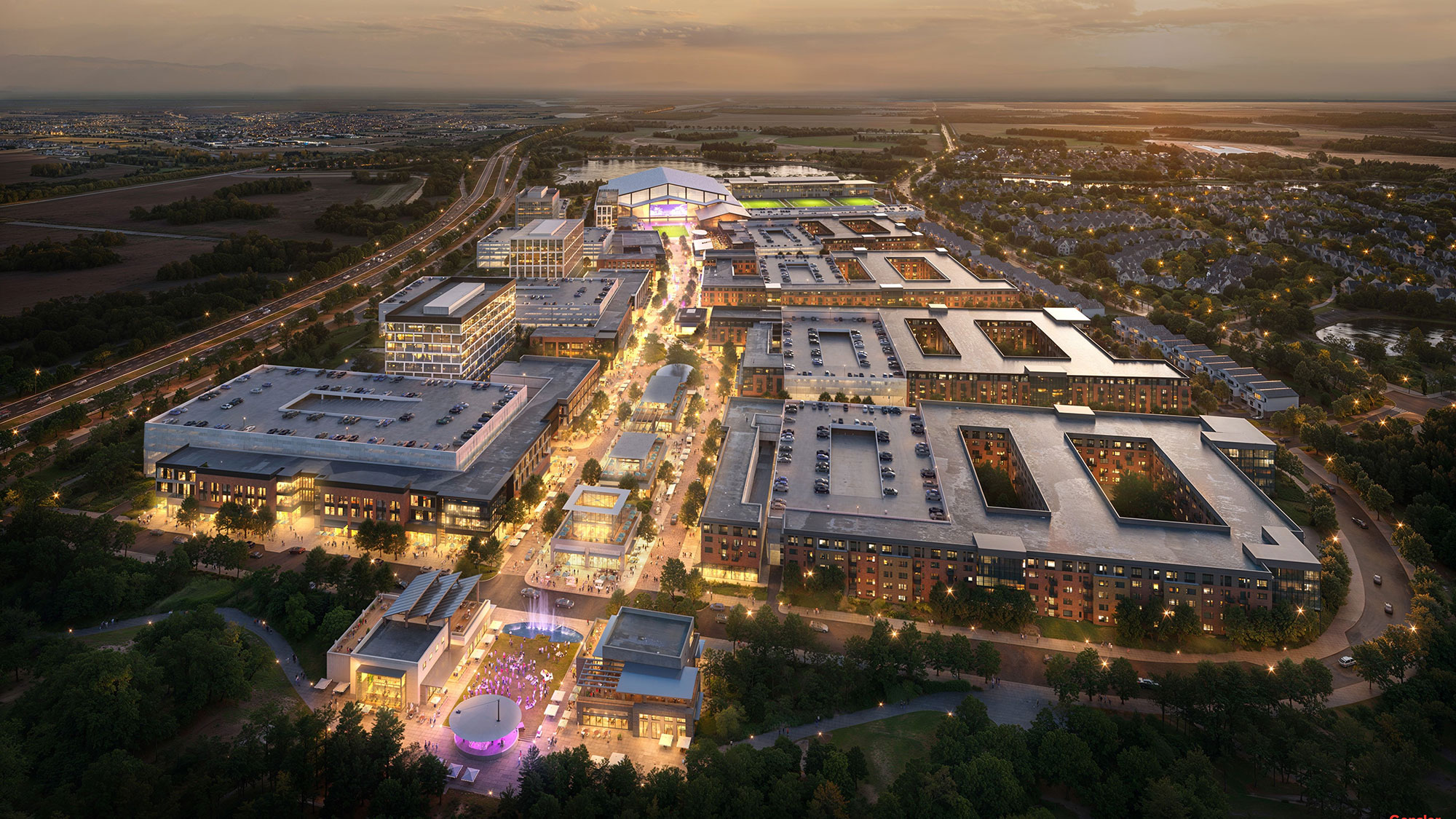
Something is happening in the Sun Belt suburbs that the first wave of sports real estate didn’t fully anticipate. The populations flooding into places like Cypress, Texas — and dozens of comparable communities across the Houston, Dallas, Phoenix, and Charlotte metros — are arriving with urban expectations.
They want density, walkability, amenity richness, and spontaneous social energy. The gap between what these communities offer and what their residents now demand is growing.
Sports franchises are uniquely positioned to close that gap. Projects like The Star in Frisco proved that a team’s brand could anchor a place, and that a multi-stakeholder model, shared between a franchise, a city, and a school district, could keep it active well beyond game day. The concept worked.
The next question is whether these districts can perform reliably over time as civic, commercial, and social infrastructure for entire communities, not just destinations for peak moments.
The Expectation Gap
The suburban migration story of the last decade is well documented, but its design implications are still catching up. Increasingly, sports-anchored districts serve suburban populations seeking the vibrancy of urban life without moving to the urban core, while also acting as powerful engines for job creation, investment, and long-term commercial growth in emerging markets.
Across growing metros, the franchises that have figured this out treat districts as the product, not the stadium. When a sports franchise embeds its headquarters and training operations into a mixed-use environment, it changes the entire value proposition of the surrounding real estate. Proximity to the team becomes a lived experience rather than a periodic event.
This shift transforms passive spectatorship into active participation, driving loyalty and spending. Districts that integrate team operations with public-facing amenities consistently see higher visitation rates, stronger tenant performance, and higher property values.
From Game Day to Always On
What early sports districts underestimated was volatility. Sold-out weekends don’t compensate for empty weekdays, and rapid population growth exposes that imbalance.
The next generation of sports districts faces a question of scale: Can the always-on model pioneered by first-generation projects serve as the primary civic, commercial, and social infrastructure for an entire suburban population?
The answer lies in health and performance co-tenancy. When training, sports medicine, rehabilitation, and wellness uses are embedded in a district, they generate consistent, daily visitation independent of any event calendar. That’s a traffic model standard mixed-use development cannot replicate.
A New Generation of Suburban Sports Districts
The Star in Frisco established the template. The Dallas Cowboys’ 91-acre world headquarters and training facility — built through a public-private partnership with the City of Frisco and Frisco ISD — demonstrated that a sports-anchored district could be multistakeholder and active year-round, activated with high school sports, concerts, and community events.
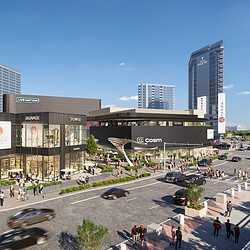
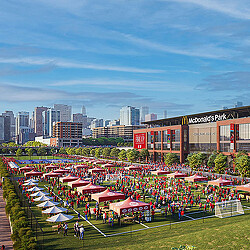
The proposed 85-acre Toro District represents the next step. Centrally located within Bridgeland, the 11,000-acre master planned community developed by Howard Hughes Communities in Cypress, Texas, the district integrates the Houston Texans’ headquarters and training facilities with 300,000 square feet of retail, 1 million square feet of office, 1,300 multifamily households, and civic space. It also includes a county service center, which brings residents into the district for reasons unrelated to sports or entertainment.
The district reimagines how proximity, experience, and economic development intersect. At its core, it is a powerful idea: bringing fans physically closer to the team, delivering urban-quality amenities in a suburban setting, and leveraging that combination to unlock sustained economic value.
Rather than relying on periodic surges in attendance, the district is designed to create a steady economic ecosystem supported by residents, workers, visitors, and co-tenancies based on health, sports performance, rehab, and therapy. The projected long-term economic impact is approximately $34 billion, with more than 17,000 jobs expected to be created across the region over time.
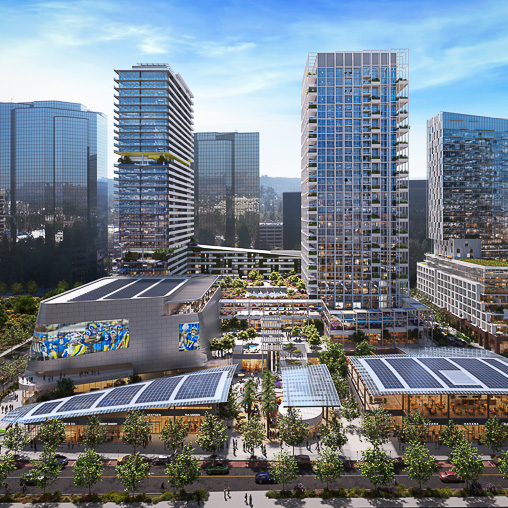
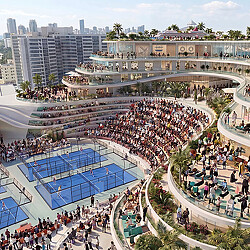
Rams Village at Warner Center is the next evolution of this model. The 52-acre development will house the Los Angeles Rams’ headquarters and training facility within a mixed-use district, integrating high-rise residential, retail, office, hotel, and extensive public open space. Woodland Hills has historically been a suburban area of the San Fernando Valley, but Rams Village is transforming the site into a walkable, high-density urban core — a suburban-to-urban conversion structured around the city’s Warner Center 2035 Specific Plan.
Together, these projects suggest that the demand for urban-quality environments in the suburbs is reshaping not just how sports districts are programmed, but how fast-growing metros plan around them.
Designing for What’s Next
For venue owners and franchise operators, the district is the asset. Decisions about tenant mix, civic programming, and health infrastructure carry the same weight as decisions about the playing surface. A suburb with tens of thousands of new residents is a community waiting for a center of gravity — and an opportunity for franchises to build lasting value.
For city planners and municipal partners, sports-anchored districts in fast-growing communities are increasingly capable of anchoring retail corridors, generating tax revenue, attracting employers, and creating an authentic civic identity. The question worth asking is whether the district planning and programming can deliver on that promise over time, well past opening day.
The teams and cities that get this right will provide the answer with urban cores that the suburbs have been missing.
For media inquiries, email .